Black Range Blog
Focused primarily on the Natural History of the
Black Range, New Mexico

West of Wicks
March 21, 2026
(Links are enabled, enjoy the videos.)


Blog Posts

• West of Wicks: March 21, 2026
• Yellow-bellied Sapsucker et al.: March 18, 2026
• Aquarius remigis, North American Common Water Strider
- March 9, 2026
• More Owl and Side Canyon Videos: February 4, 2026

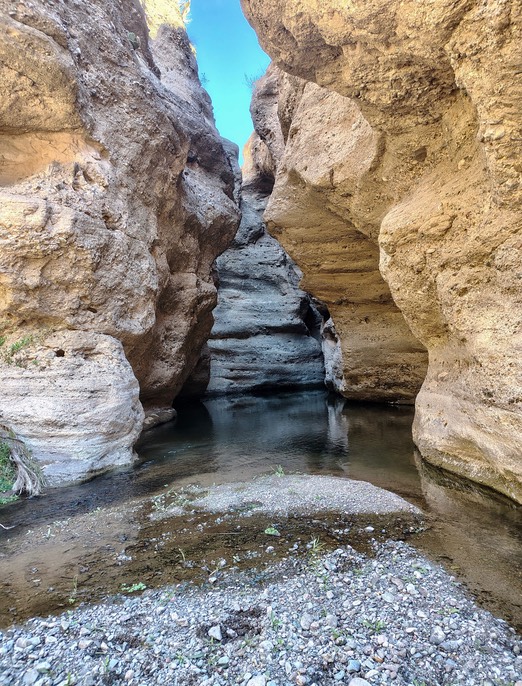
As part of our effort to add to the Walks of the Black Range rewrite we walked down Ready Pay Gulch on the 19th ("Canyon A” variant in the Percha Box section of the Follow the Contours Page) to Percha Creek and then east down the creek to the Wicks Slot. This is a 7-mile round trip, the first part (Canyon A) is a slog down a sandy wash (with some interesting micro-slots), and it was a hot sunny day - little shade. So a "come home and take a nap" kind of walk. If you are not familiar with 360° video take a gander at the micro-slots clip, play the video, place your cursor over the image and "move the video around" as it plays.

We wanted to accomplish four things on this walk:
1. "Map" the section of the Percha Box from where Canyon A meets Percha Creek west to the Wicks Slot;
2. Record some 360° video in Wicks Slot;
3. Record aerial video of the Percha Narrows for inclusion in the 2nd Volume of "Rock Stars of the Black Range" video series (see Volume 1 here); and
4. Record the walk through the narrows in support of the third edition.

We had mixed results. After all a plan describes what could have happened, not what happened. Percha Creek West of Wicks Gulch - video of the Percha Narrows from the Percha-Wicks confluence west to the middle part of the Percha Box has been posted and is available for viewing. Check number 4 off our list.

We mapped the walk and this variant to the Percha Creek walks and segment has been included in the 3rd edition of "Walks". Check number 1 off our list.

We recorded the aerial video of the narrows at Wicks Slot and that material will be added to the second Volume of "Rock Stars of the Black Range". Check number 3 off our list.

As for number 2, the 360° video of Wicks Slot - nada. When I arrived at the slot it surprised me once again. In two decades of visiting this slot I thought I had seen all of its moods and variations - it literaling is never the
same - and that proved true on this occasion. It was different. It was flooded. Percha Creek had rerouted into the slot on the west side and out on the east side.

I was hot, I was tired, I was grumpy, I was hungry, I - I suspect you get the picture. I sat down and ate lunch. In retrospect I should have waded into the slot (any quicksand would have been minimal because of the bedrock - I think) and the water was not that cold. The video would have been dramatic. I just was not up to the task.
Yellow-bellied Sapstucker et al.
March 18, 2026

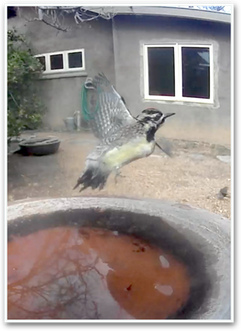
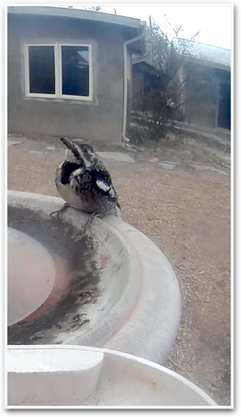
On 10 March 2026, a female Yellow-bellied Sapsucker (Sphyrapicus varius) showed up at a yard in Hillsboro, species number 179 on the yard list, and has remained a regular visitor. This individual often visited a bird bath where a bird cam has been installed. Images from the bird cam are shown at the right.

The genus Sphyrapicus is composed of four species. Three of them, including the Yellow-bellied Sapsucker are members of a super-species. The other two species are the Red-breasted (S. ruber) and the Red-naped Sap-sucker (S. nuchalis). Where the ranges of these species overlap they hybridize freely and the hybrids are often fertile.

The typical species of this area is the Red-naped Sapsucker. When a sighting of a Red-breasted or a Yellow-bellied Sapsucker is reported in New Mexico flags are immediately raised and the observation is subject to a certain amount of scrutiny. Although the Yellow-bellied Sapsucker’s range is sometimes shown as extending up the Rio Grande to about Las Cruces. Several sources do not believe that the species’ per-manent range extends into New Mexico. Note however, that there are research grade observations of Yellow-bellied Sapsucker from Las Cruces (see Gordon Berman’s report from October 30, 2024, for instance).

More on this species and on the observation of it in Hillsboro will be published in the July issue of The Black Range Naturalist.

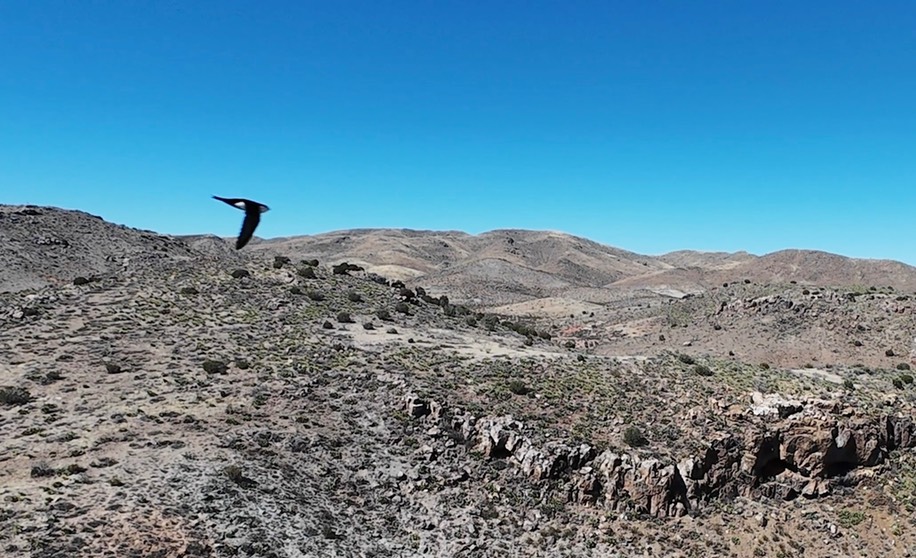
The White-throated Swifts, Aeronautes saxatalis, have shown up in their traditinal spots in the Percha Box, east of Hillsboro, see photo below.

The Harris’s Sparrow, Zonotrichia querula, first seen in Hillsboro in early December continues to be seen daily. Although it has been seen several times in the past decade here, this is the longest period it has remained during any of the pervious years. (Addendum: This bird was not seen after April 1.)


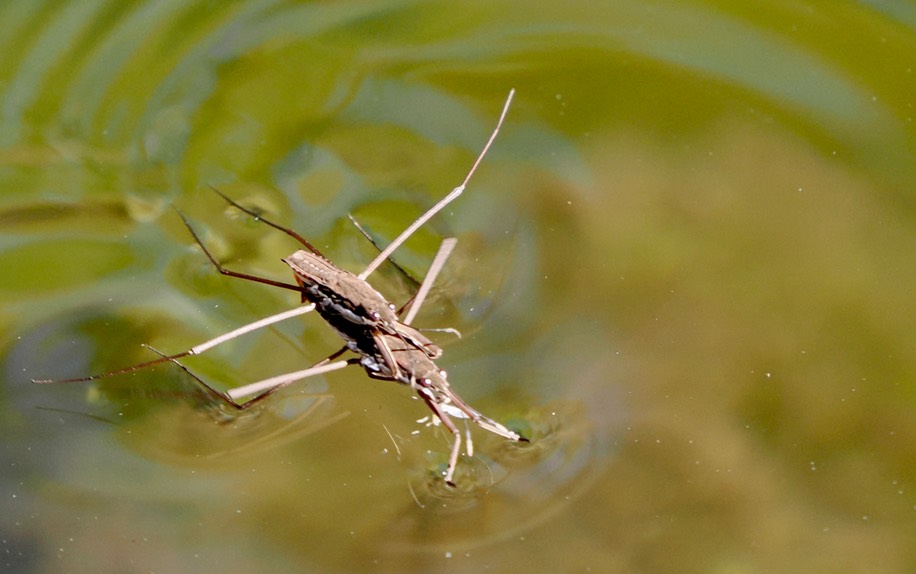
Aquarius remigis, North American Common Water Strider - March 9, 2026

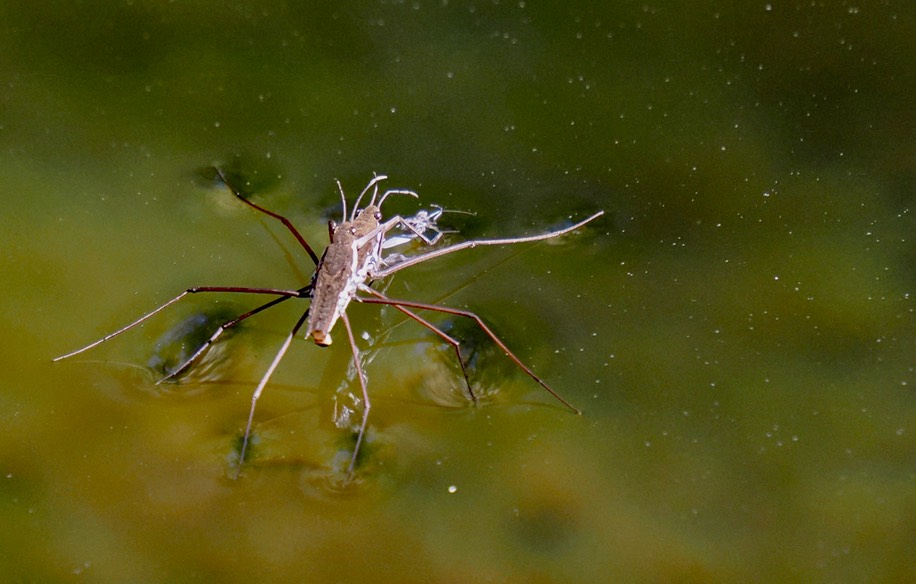
This entry is about a water strider, but only in part. Like much of the material on the Black Range website there is more going on than the title. But before we venture off into other topics, let us dispense with this small creature of just barely over a centi-meter in length, a small creature that darts about without warning, a bug, a small bug, and thus difficult to identify in the best of conditions. Let’s get the boxing, a human prediliection to put things in boxes, out of the way. I believe the creature featured here should be placed in the Aquarius remigis (North American Common Water Strider) box. The folks at iNaturalist agree. The folks at bugGuide concur as well. Aquarius remigis is the water strider typically reported from this area. Aquarius remigis was first described by Say in 1832, although he placed it in the genus Gerris.

Boxed and set on the rack. I photographed these individuals on March 4 in Railroad Canyon, on the west slope of the Black Range.

Dolomedes gertschi, New Mexico Fishing Spider, preys on water striders. According to bugGuide its range is restricted to the Gila River drainage in Arizona and New Mexico. The waters of Railroad Canyon are in the Mimbres watershed, which drains into north central Mexico - but not at the surface. However, there are observations of this species of spider from Albuquerque and the Jemez Mountains listed at bugGuide and on iNaturalist from the Mimbres River. It is safe, I think, to state that fishing spiders found in this area will be of this species - by range. Why is this of any importance, given that I did not see this spider? BugGuide lists the following (unattributed) statement: "(Aquarius remigis) Faces a conflict when deciding which habitat refuge to use when responding to predators. Predation by sunfish (Lepomis) means these bugs need to retreat to the stream banks. But they must move away from those banks when avoiding fishing spiders (Dolomedes).” Now the stream in Railroad Canyon does not have any sunfish, but it is likely to have some fishing spiders. As a result, I suspect that I will be sitting near small pools in Railroad Canyon looking for water striders and fishing spiders - something I have not done before, but look forward to doing.

But a key point from the above may have been hidden from plain sight. The stream had water. It appears that the snow we had in the Black Range will pay dividends for a while, the flowers may bloom, the water striders may dart about, and a profusion of birds may be found this season!


More Owl and Side Canyon Videos
Feb 4, 2026

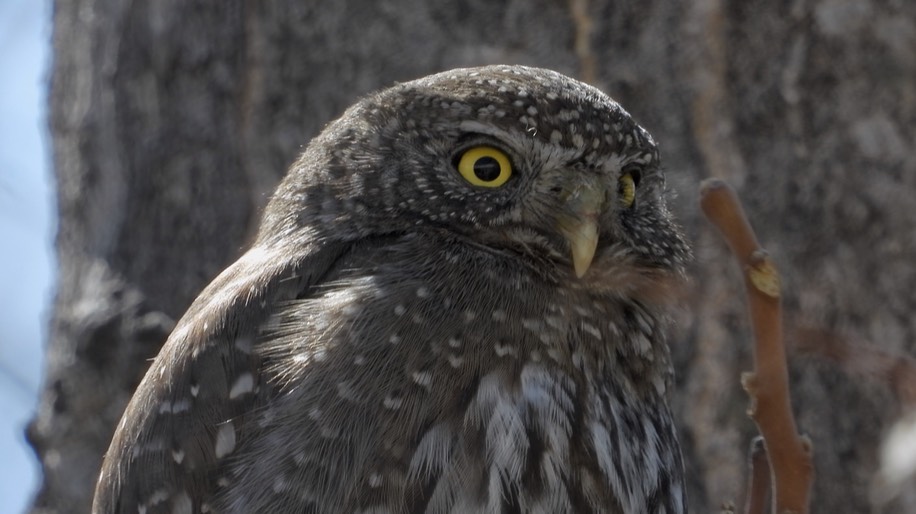
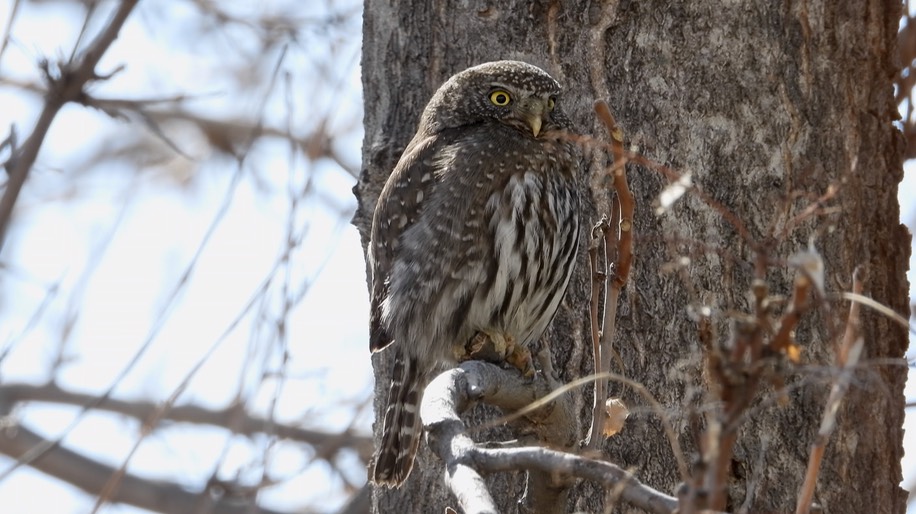
Yesterday we posted video of Mountain Pygmy-Owl which we recorded in the yard earlier in the day. See the January 8, 2026 post for earlier photos and information. The video has been included in The Birds of New Mexico video portfolio.

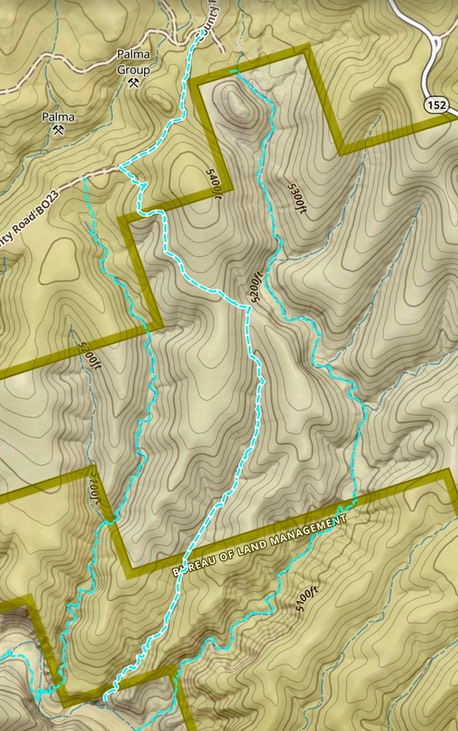
We also posted video of a walk up one of the Percha Creek side canyons, the middle route on the map below, in support of the 3rd Edition of Walks in the Black Range.