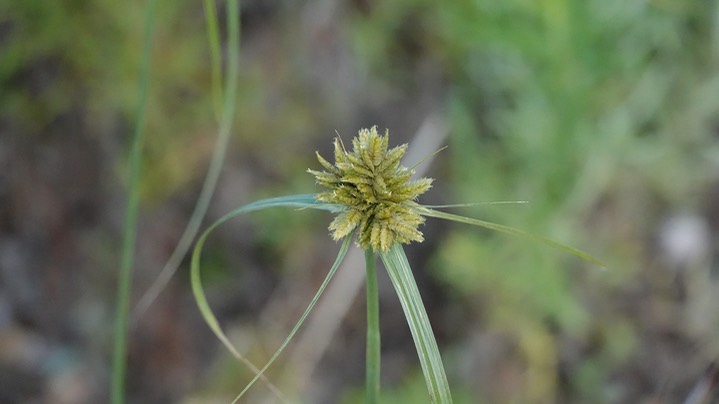
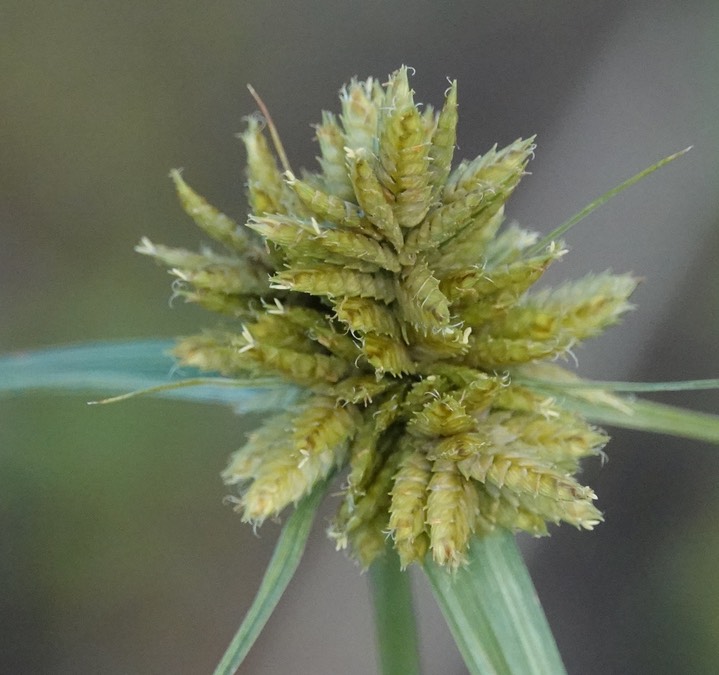
Caesalpinia gilliesii
Bird of Paradise Bush
Hillsboro
New Mexico
The “FLORA" of the Black Range
“C"
Caesalpinia gilliesii
Bird of Paradise Bush
Hillsboro
New Mexico
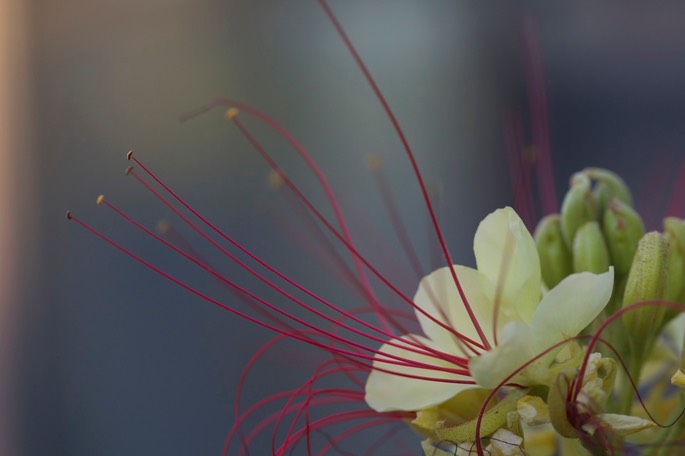
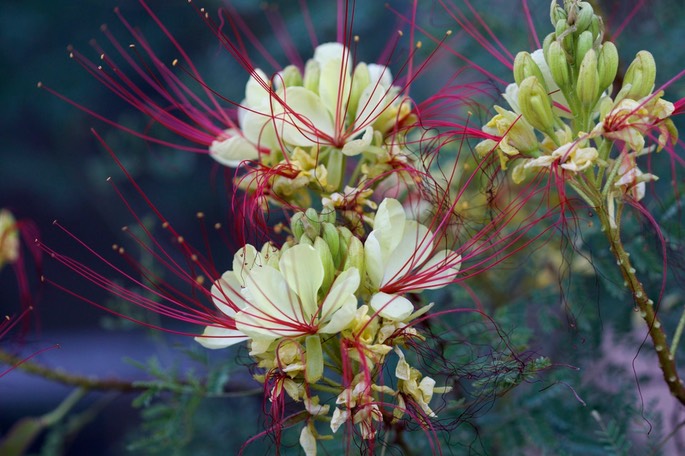
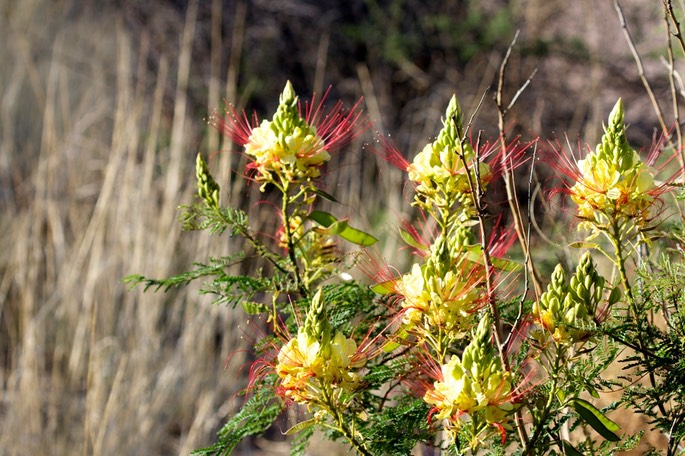
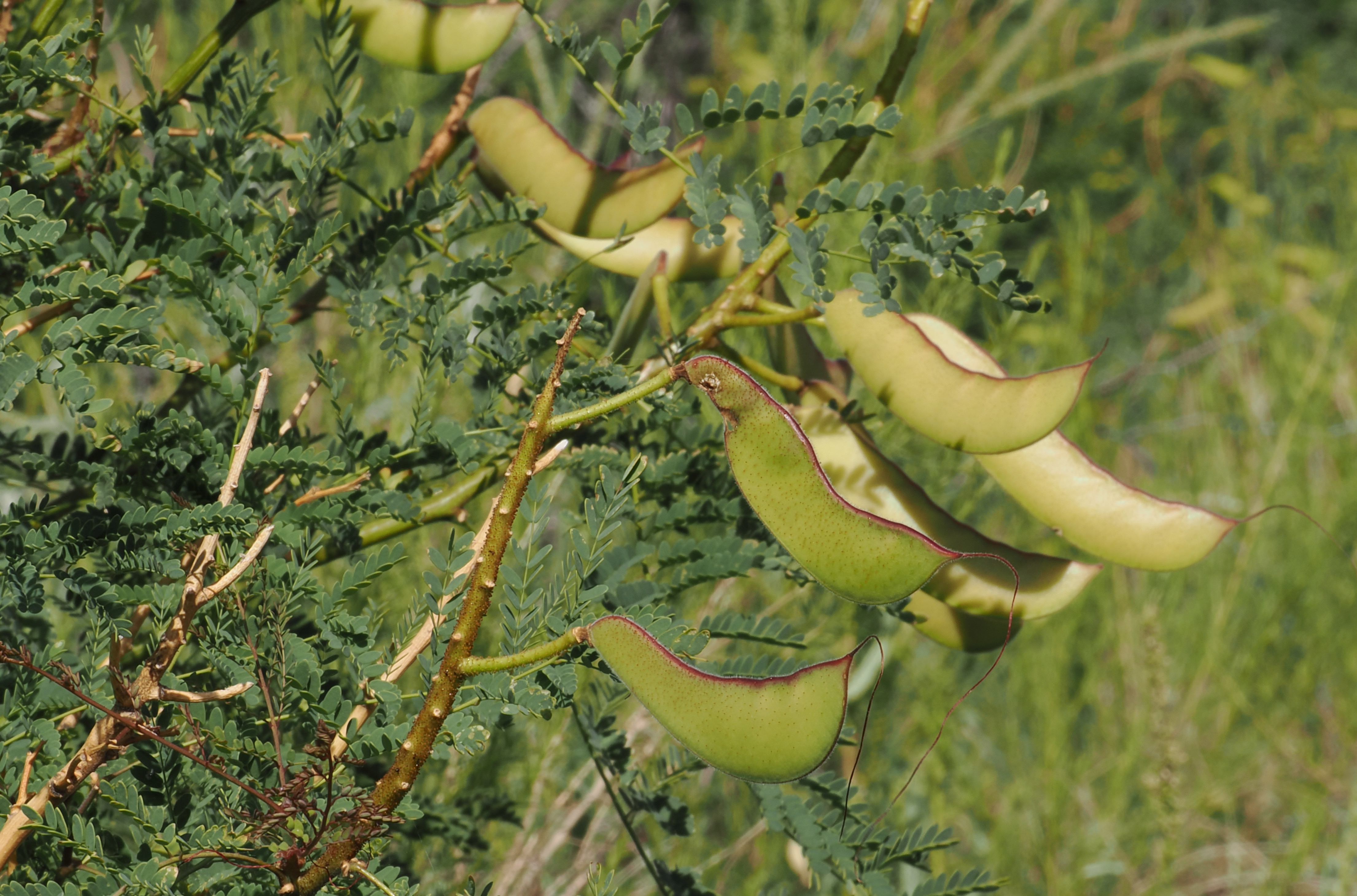
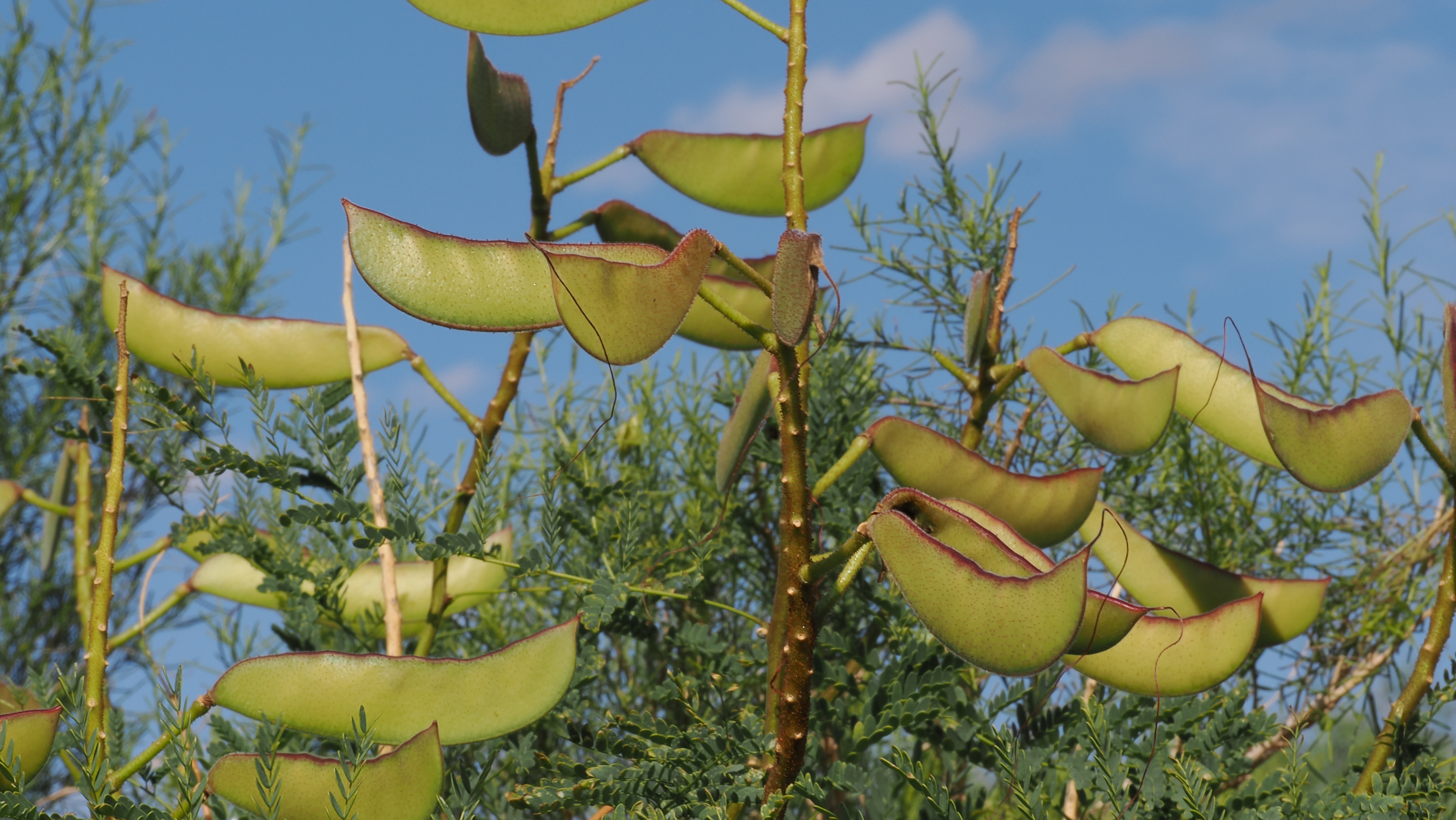
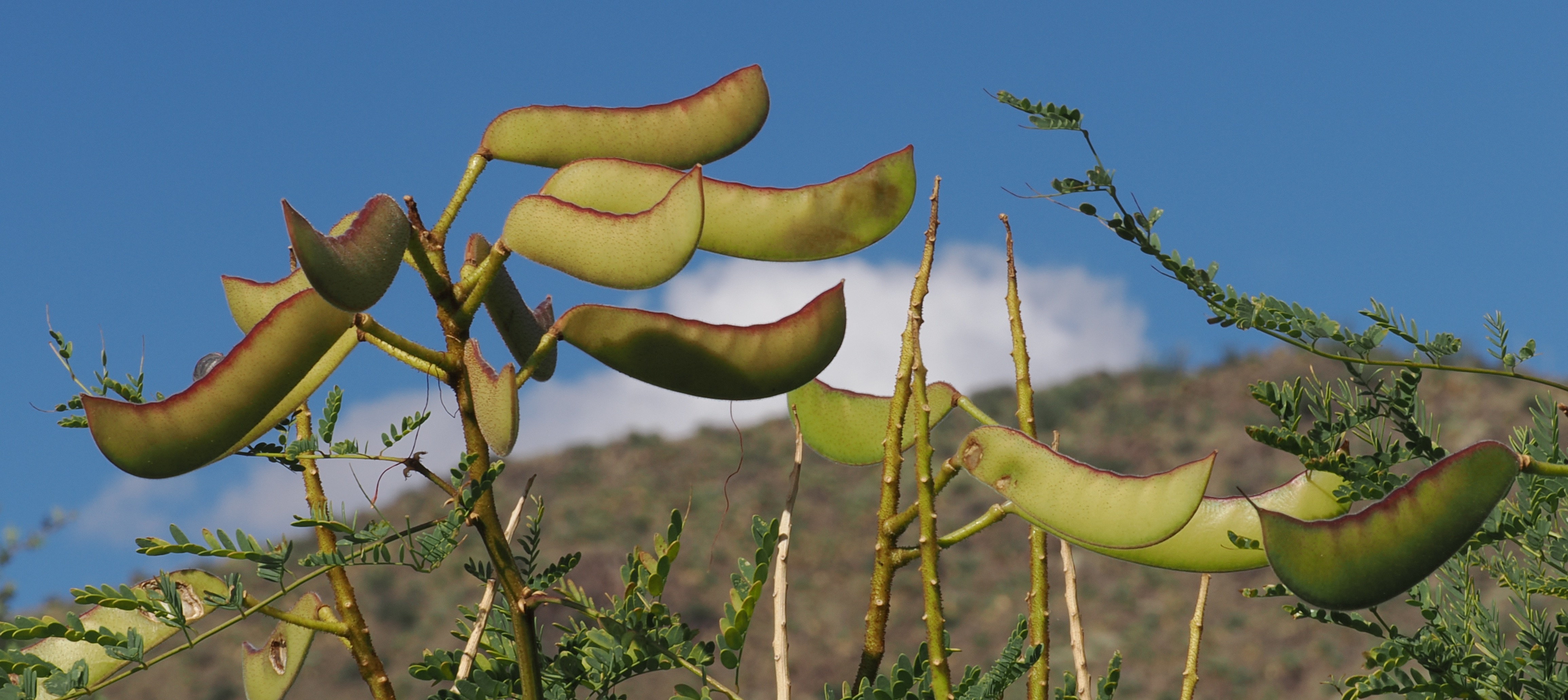
This species is an exotic in our area, thought to have come from Argentina originally. It goes by several common names (mostly with a “bird of paradise” descriptor) but it is not related to the Bird of Paradise plants in the genus Strelitzia found in the tropics (as in Costa Rica). Its other English Common Names include Desert Bird of Paradise and Yellow Bird of Paradise. In Spanish it is known as Barba de Chivo. Its scientific synonyms include Poinciana gillesii and Erythrostemon gillesii It is native to the Amazon where shamans use it to cure fever, various sores, and persistent cough. It is also used as an abortion drug.
Calliandra eriophylla
Fairy Duster
South slopes of Mimbres Mountains
Black Range
New Mexico
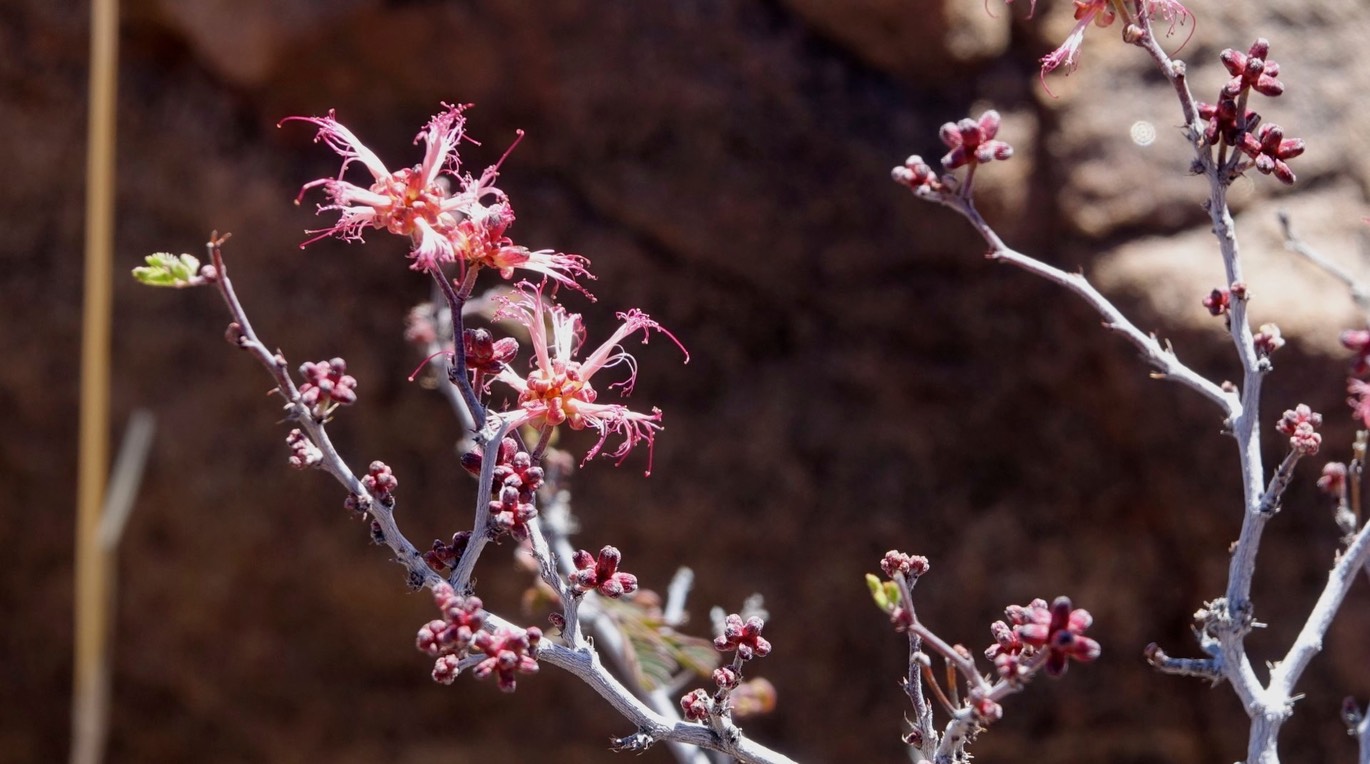
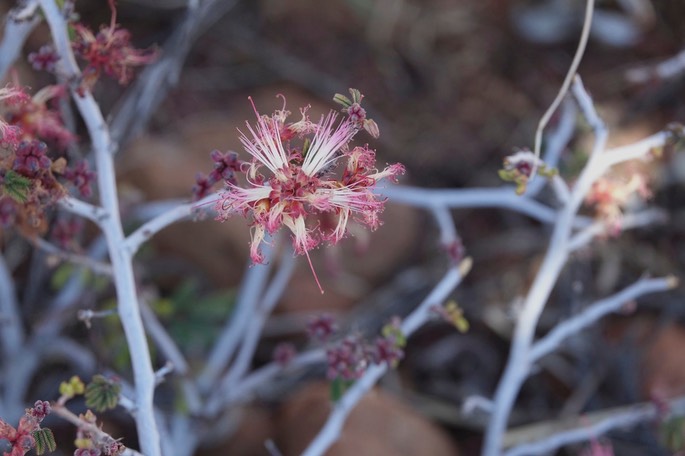
According to various sources, Fairy Duster, Calliandra eriophylla, is not found in Sierra County - although some specimens are known from Luna and Grant counties. The specimen shown here is from the northern part of Luna County, on the south slope of the Mimbres Mountains (treated as part of the Black Range for the purposes of this website).
This species is found in the southwestern United States, south to the southern part of Mexico. It is likely that the spot where these photographs were taken is one of a very few where this species appears in the Black Range, it seems to prefer elevations of less than 5,000 feet.
Scientific synonyms for Calliandra eriophylla include two varietal names, Anneslia eriophylla and Feuileea eriophylla. It was first described by George Bentham in 1844. Other English Common names include, Fairyduster, Pink Fairyduster, Mesquitilla, Baja Fairy Duster, and Mock Mesquite.
The Native American Ethnobotany Data Base indicates that the Yavapai used a decoction of leaves and stems from this species as a gynecological aid following childbirth.
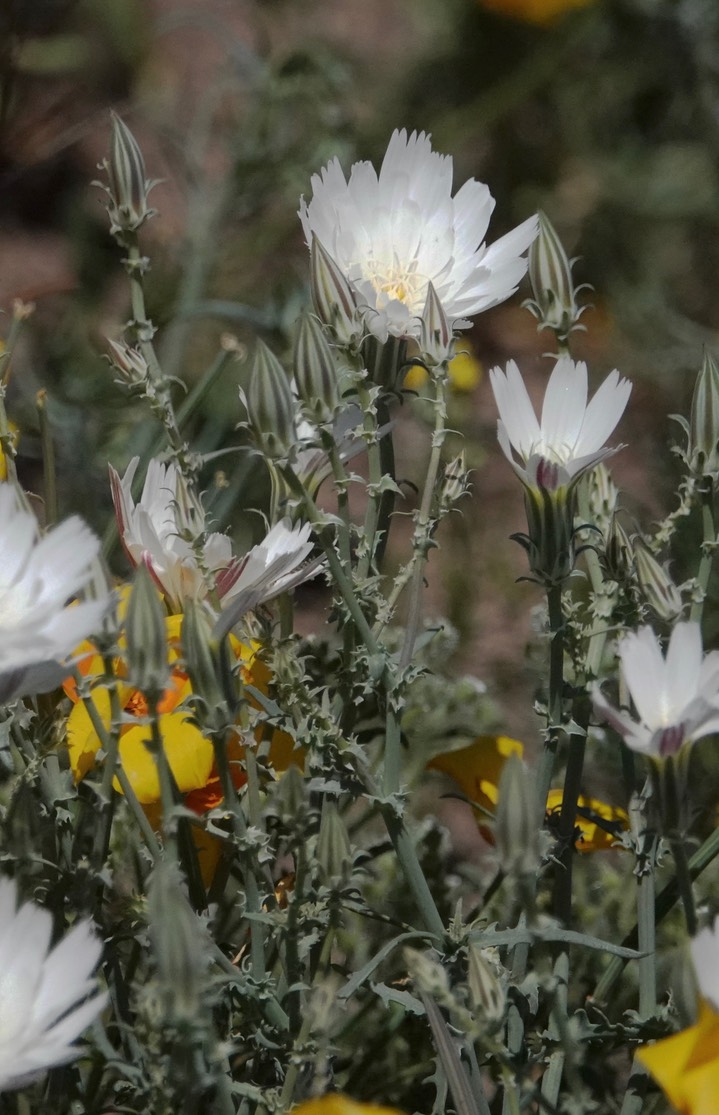
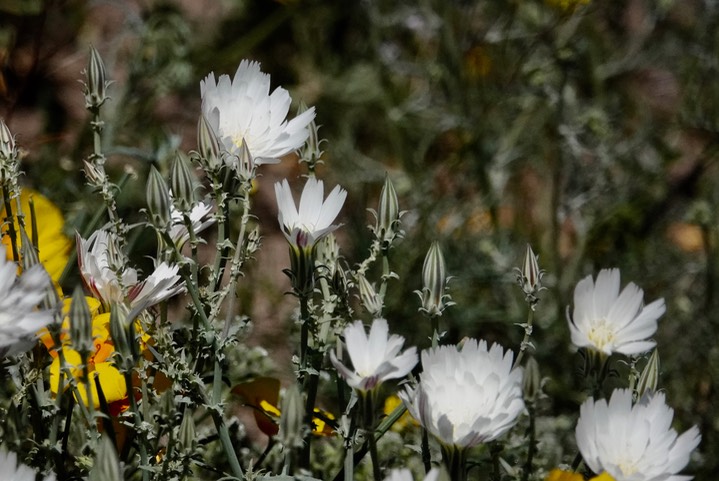
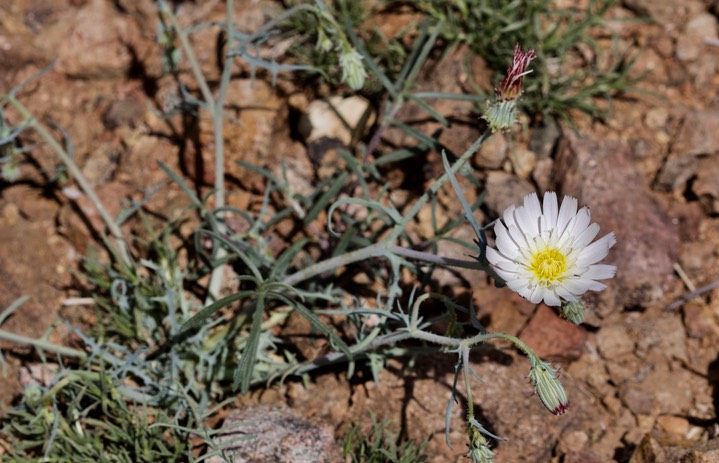
Calycoseris wrightii
Wright’s Tackstem
North Wicks Canyon
East of Hillsboro
and northwest of
Nutt
New Mexico
Campanula rotundifolia
Harebell (a.k.a. Bluebells of Scotland)
October
Railroad Canyon &
near Sawyer Peak
Black Range
Grant County
New Mexico
August & October
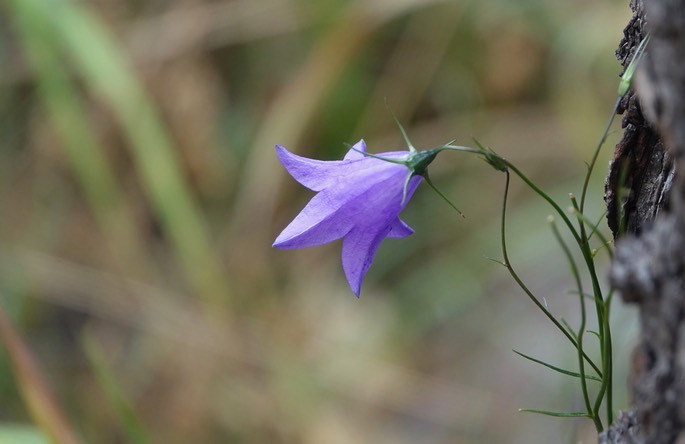
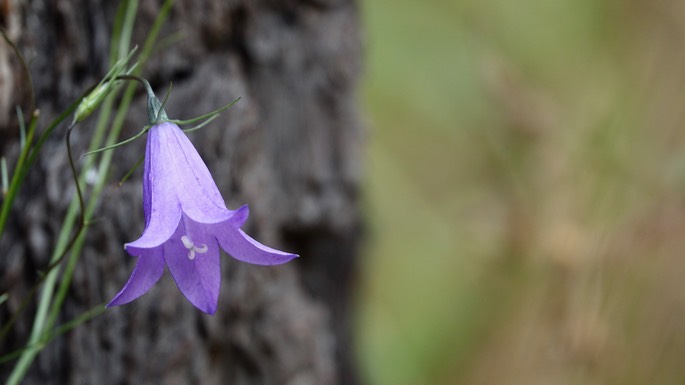
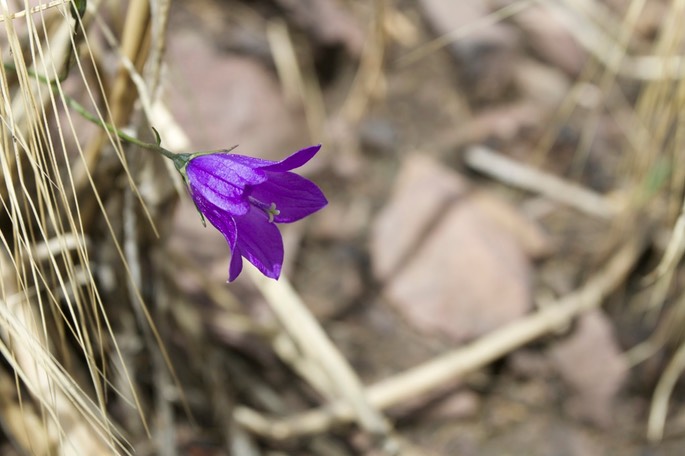
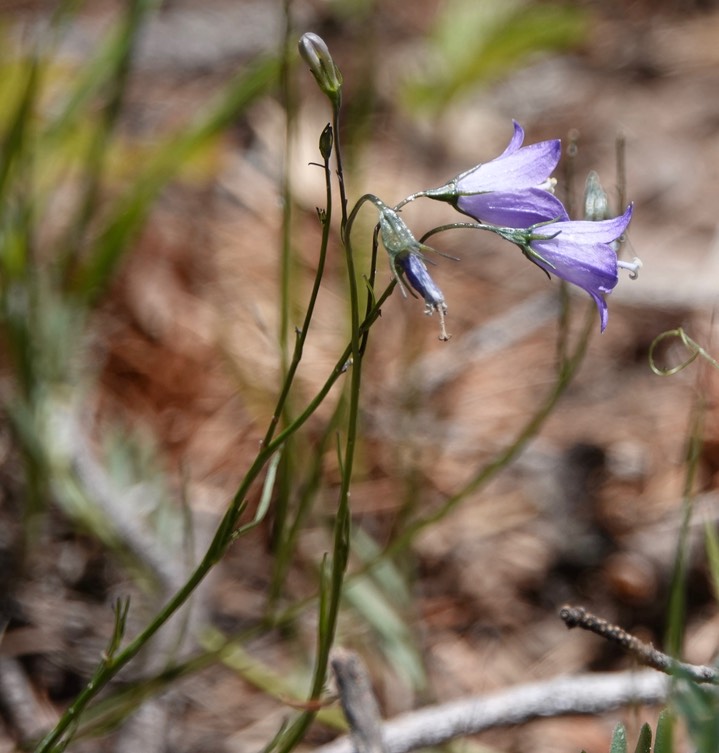
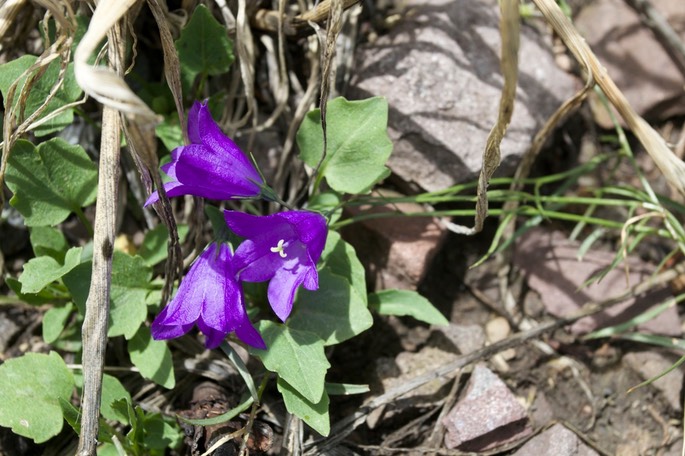
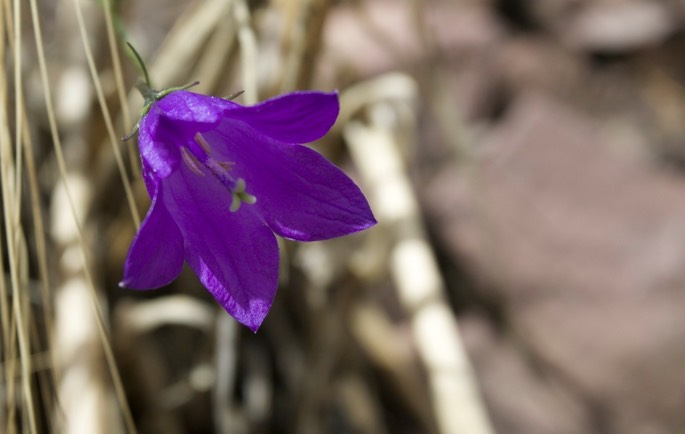
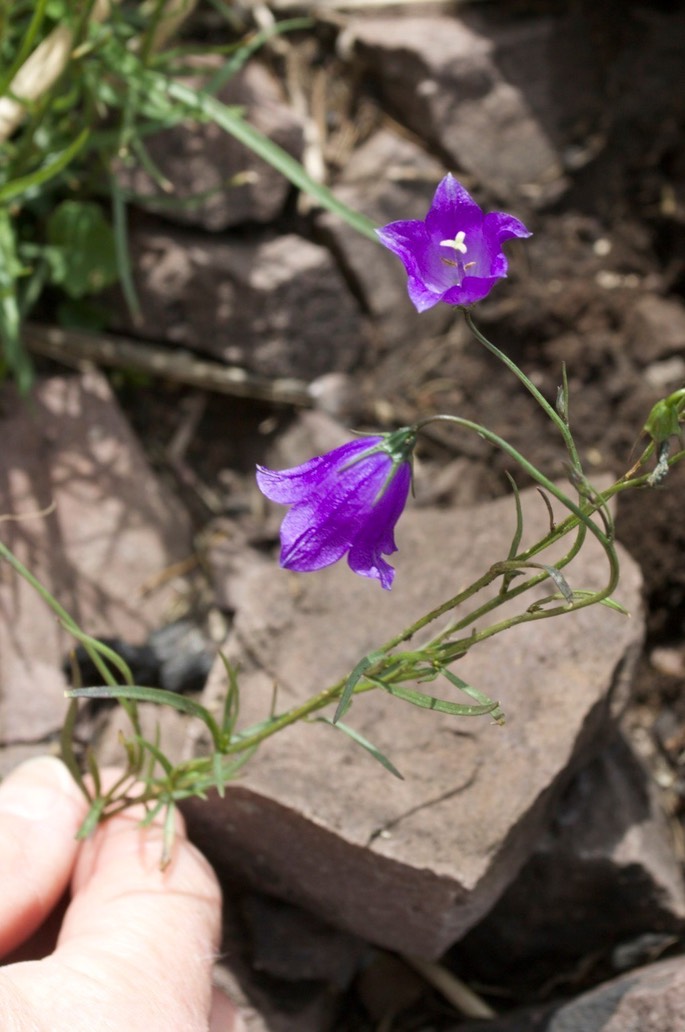
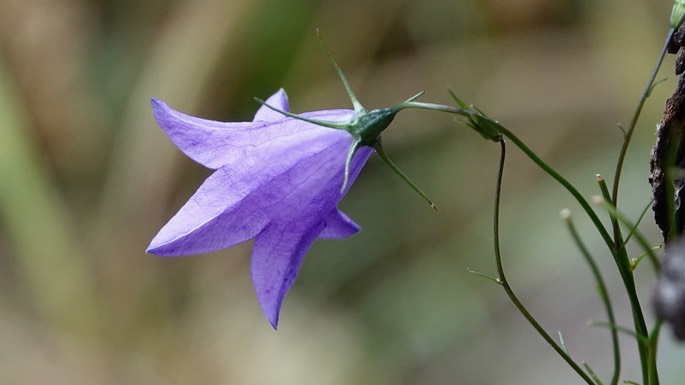
This species is found in appropriate habitat in northern Europe and North America. It is found in all of the provinces of Canada and most of the states in the United States, being absent - primarily - from the southeastern states. It is also found in the mountains of northern Mexico. It seems to prefer poor soils, temperatures below freezing in the winter and moderate summer temperatures. It is sometimes pollinated by bees but is also self-pollinating. This species has a large number of scientific synonyms and goes by a variety of English Common Names.
In August, Campanula rotundifolia can be found along Sawyers Peak Trail in the Black Range. Harebell, is an interesting plant in that (unlike what is shown here - photo above) the basal leaves, for which it is named, have usually fallen off of the plant before the flower appears - leaving only the small linear ones on the stems (photographs above). Trying to understand where the scientific name came from, when looking at a flowering plant, is almost impossible in that circumstance.
Capsella bursa-pastoris
Sheperd's Purse
Railroad Canyon
Black Range
New Mexico
May
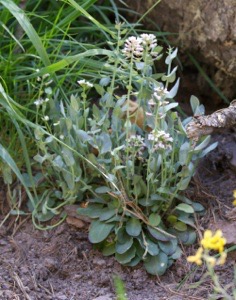
Shepherd’s Purse is an exotic species which originated in Europe and has spread throughout much of the world. In an appropriate clime it will bloom year round. It is used as a food source for humans and other animals and in traditional medicine.
Castilleja integra
Foothills Paintbrush
Eastern Foothills
Black Range
New Mexico
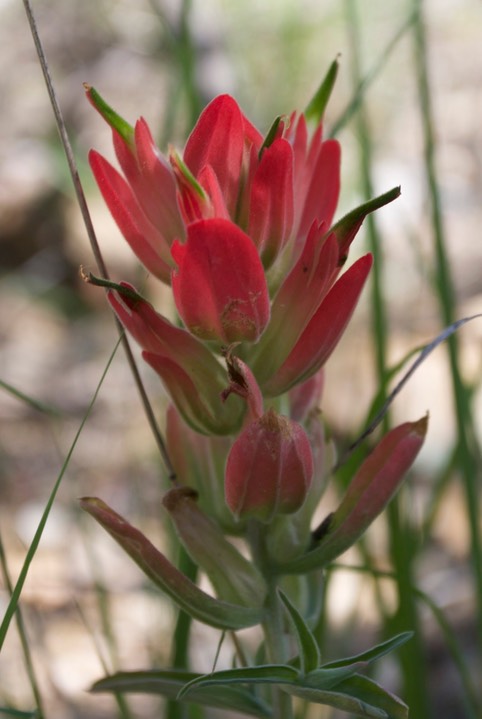
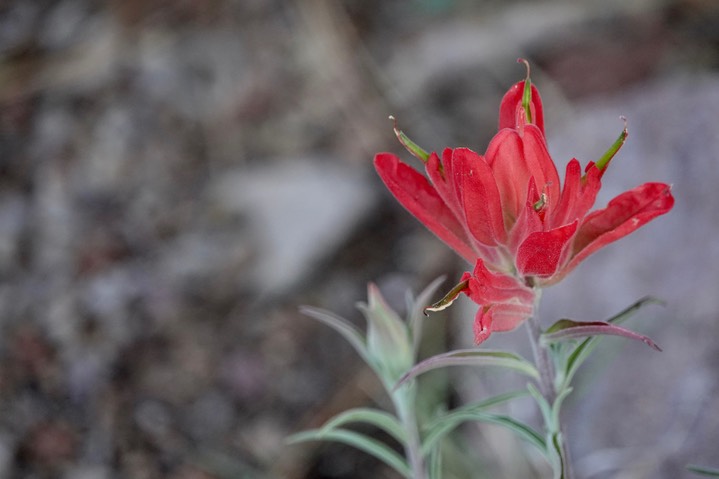
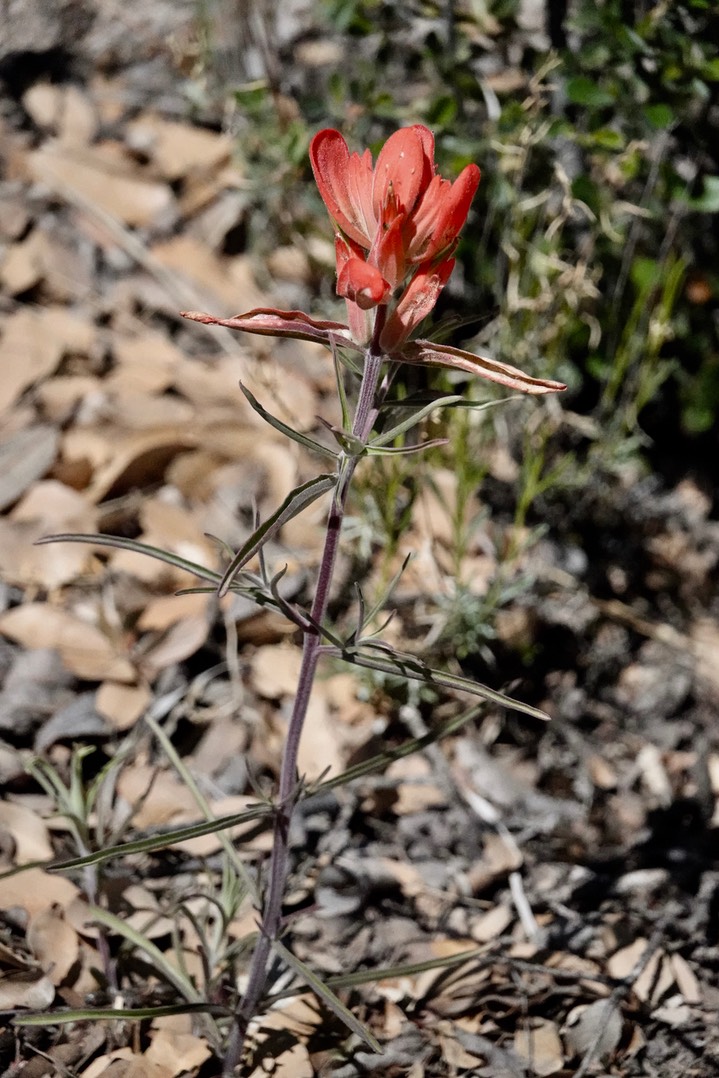
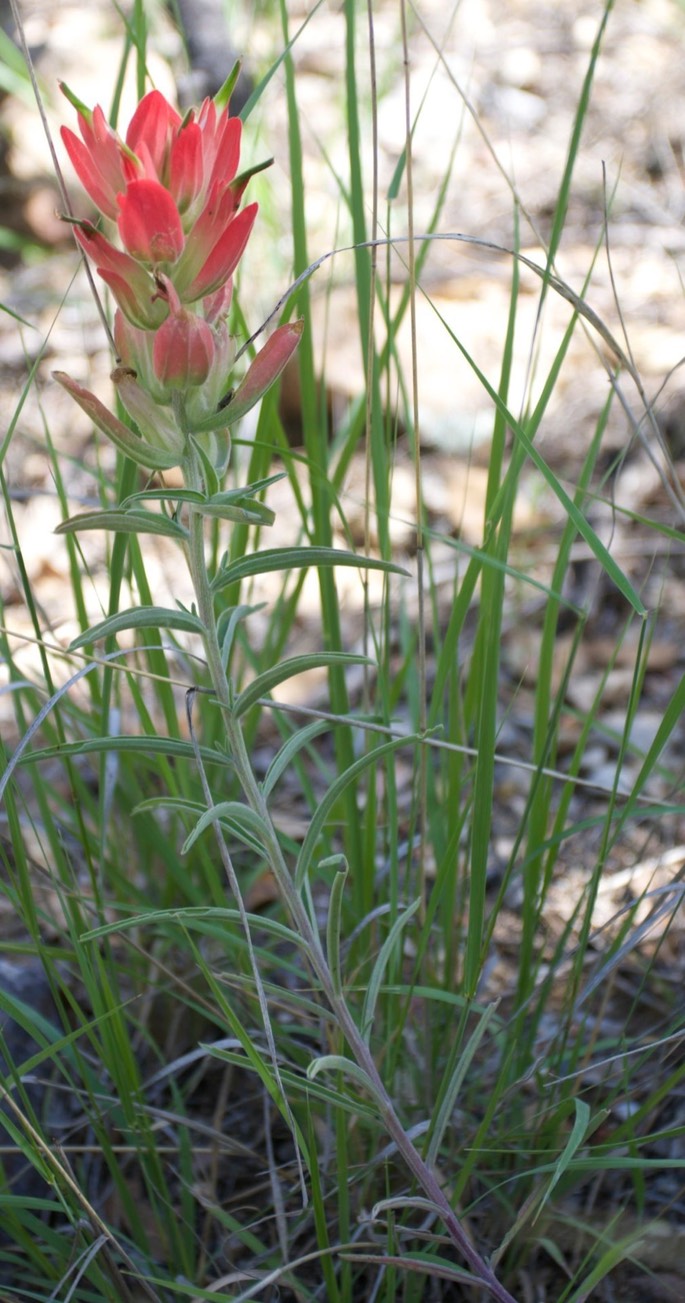
Vascular Plants of the Gila Wilderness notes that Castilleja integra, Foothills Paintbrush (a.k.a. Southwestern Indian Paintbrush, Squawfeather, and Wholeleaf Indian Paintbrush), is the most common Indian Paintbrush at middle elevations in the Black Range (Pinyon/Juniper and Ponderosa ecosystems).
There are two subspecies of this plant, we have the nominate form here. It is found in Texas, Colorado, Arizona, New Mexico, and northern Mexico. The other subspecies, C. i. gloriosa, is found in Arizona.
Paintbrushes are parasitic. Their roots will grow until they encounter the roots of another plant, at which point they will parasitize that plant. This species will often parasitize grasses. It is because of this “relationship” that paintbrushes transplant so poorly.
The indigenous peoples used this species as a medicine, as a dye, and as a food preservative.
In these photographs the flower, the small green tube surrounded by the red bracts, is clearly visible.
Asa Gray first described this species in 1858, from a specimen collected by Charles Wright in1852 in the Organ Mountains (just east of present day Las Cruces, New Mexico). That specimen, and the rest of his collection, was the basis for Asa Wrights “Plantae Wrightianae Texano - Neo Mexicanae - An Account of A Collection of Plants Made By Charles Wright...” published in 1852-3.
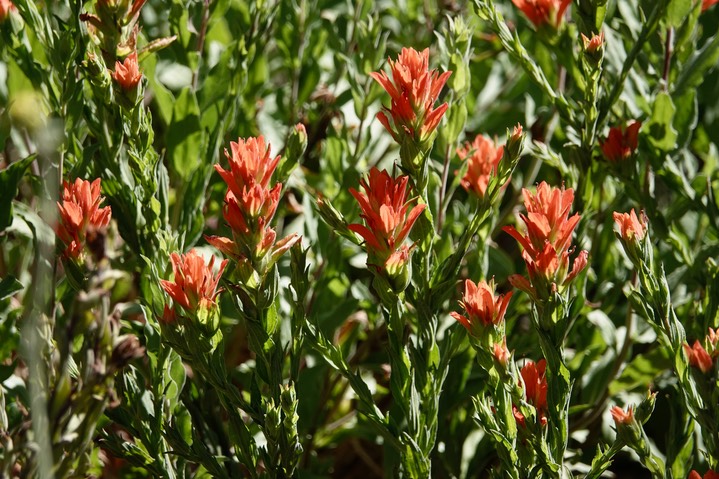
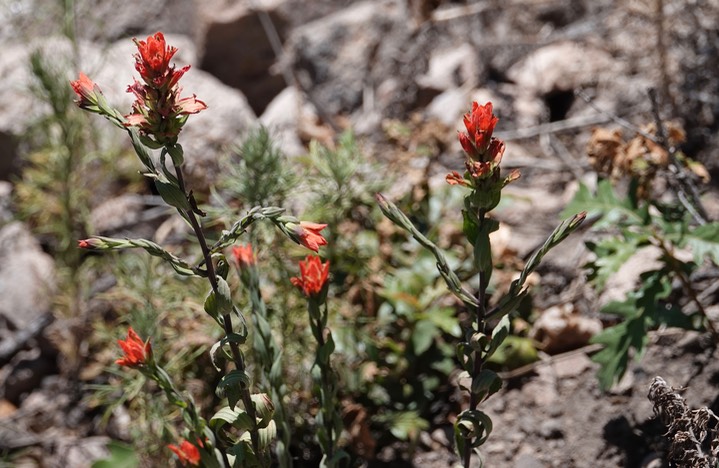
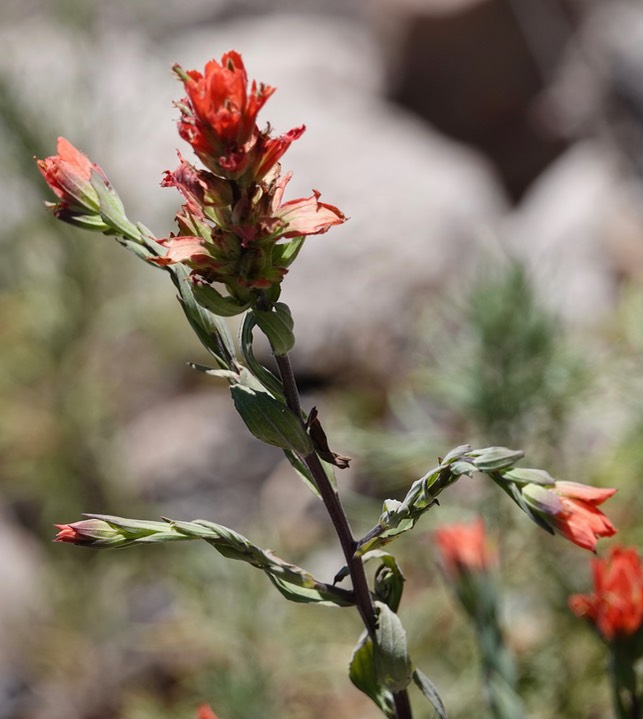
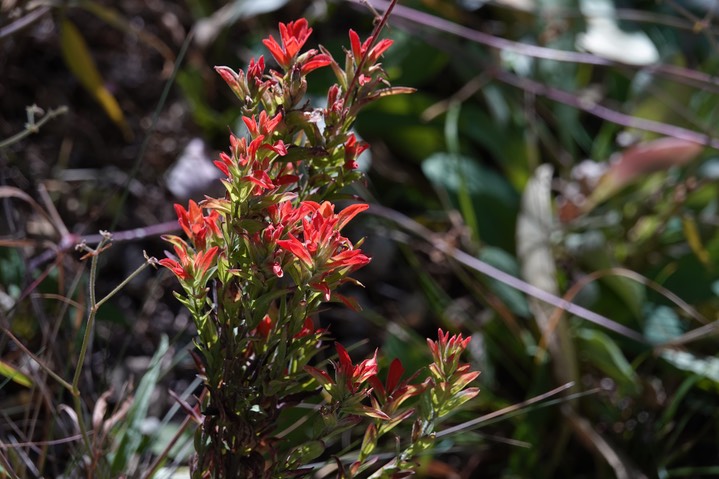
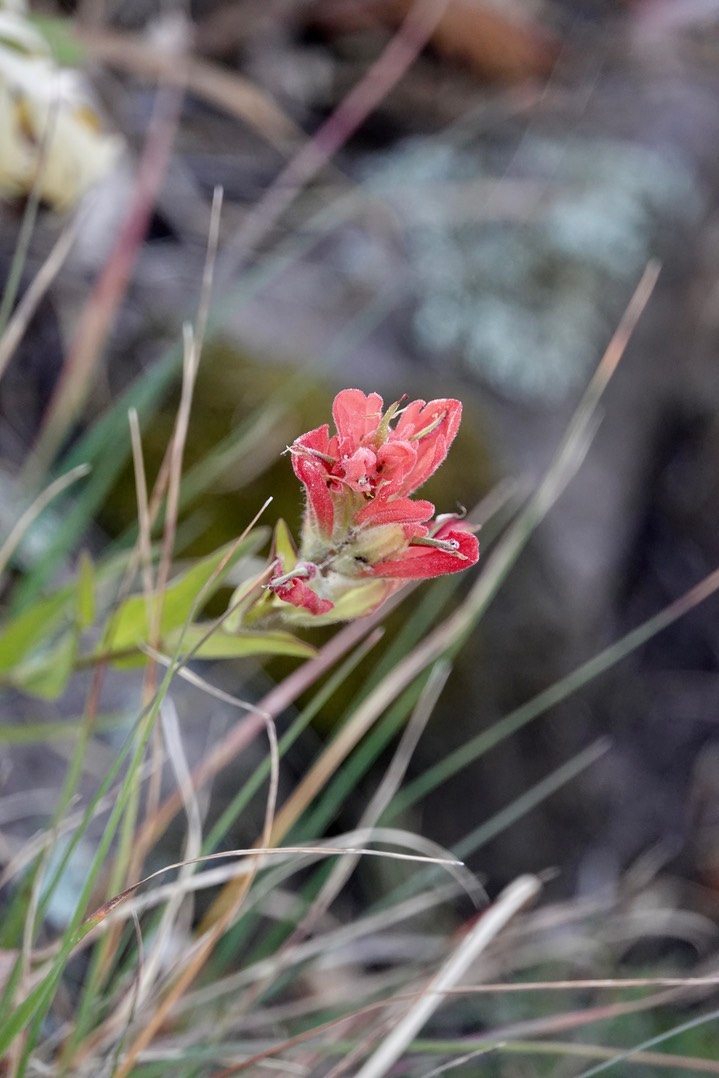
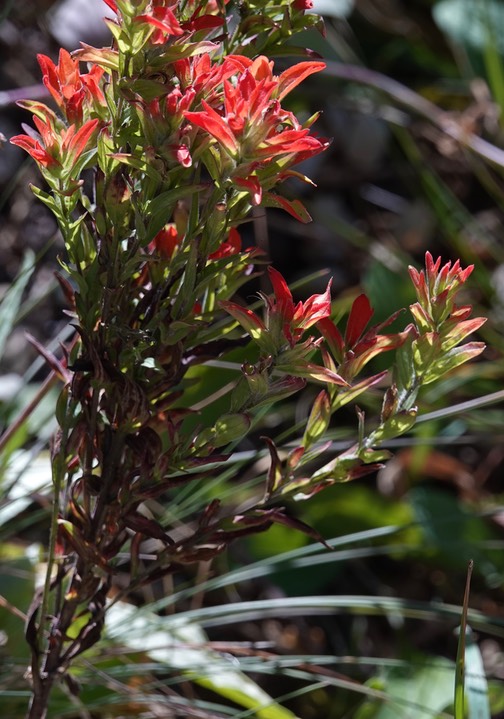
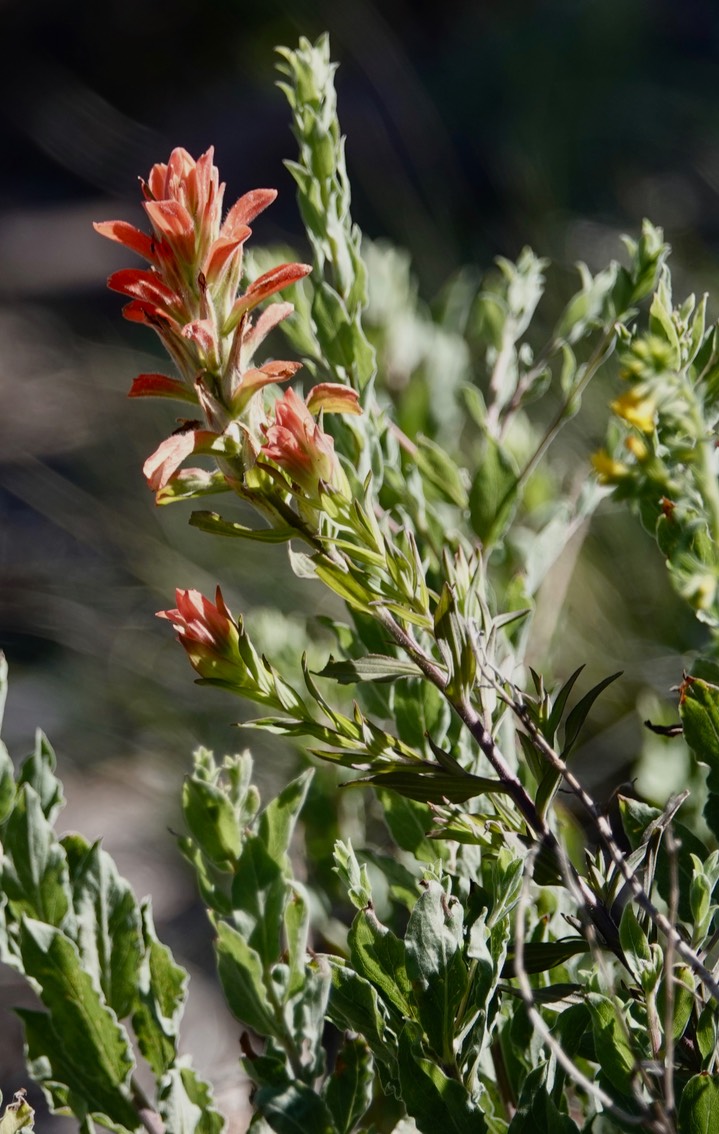
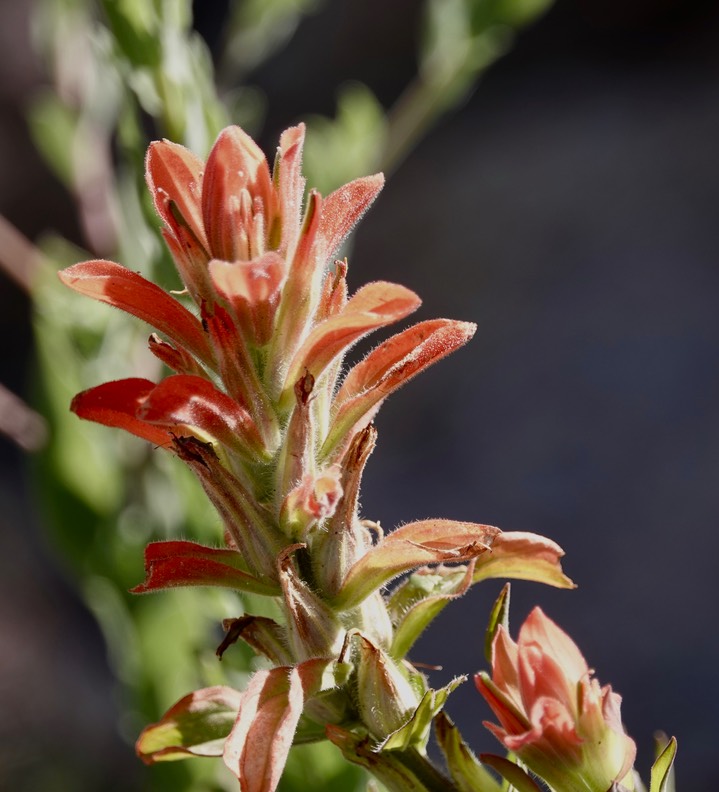
Castilleja nelsonii
Southern Mountain Paintbrush
Various locations Black Range Crest Trail
Black Range
New Mexico
Formerly Castilleja austromontana
October
Castilleja sessiliflora
Downy Paintbrush
East of Hillsboro
New Mexico
March-August
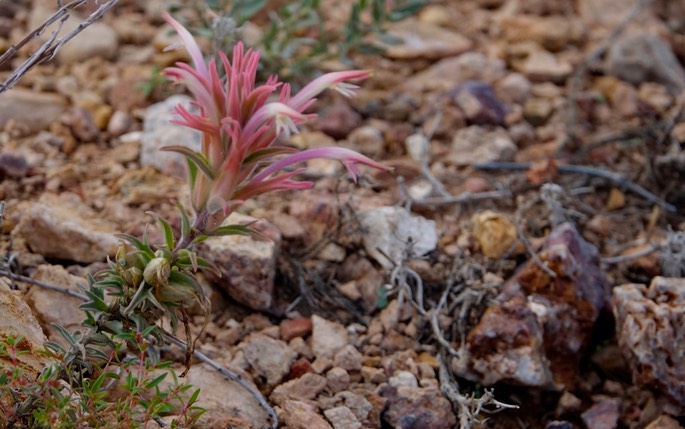
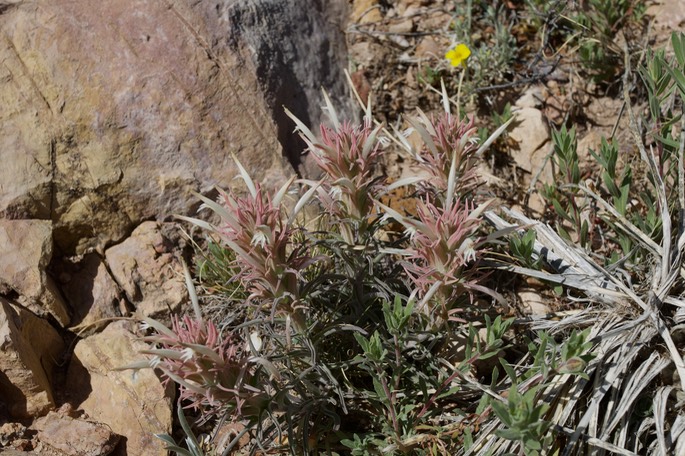
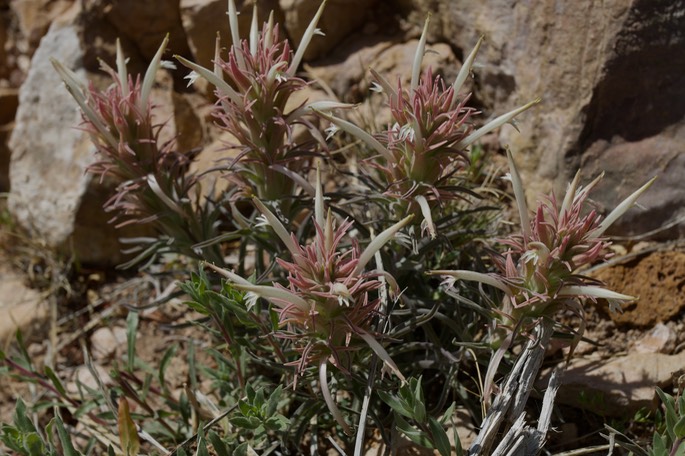
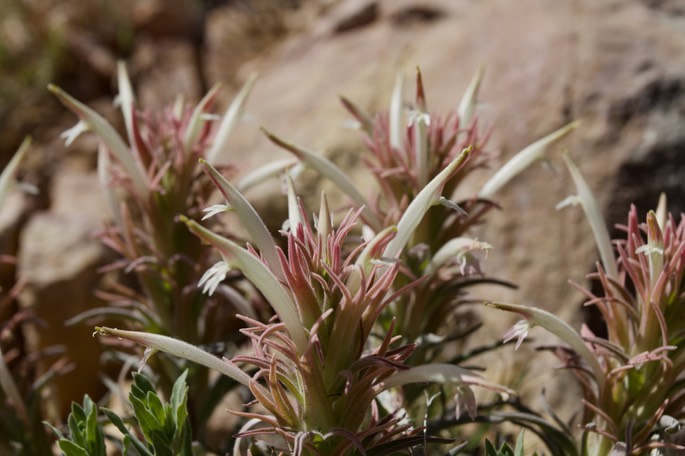
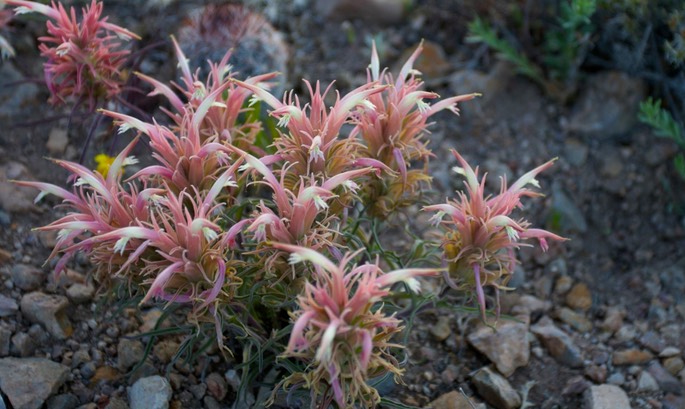
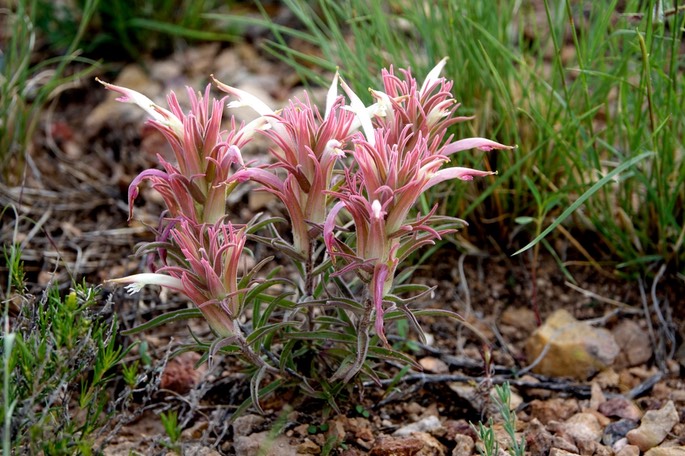
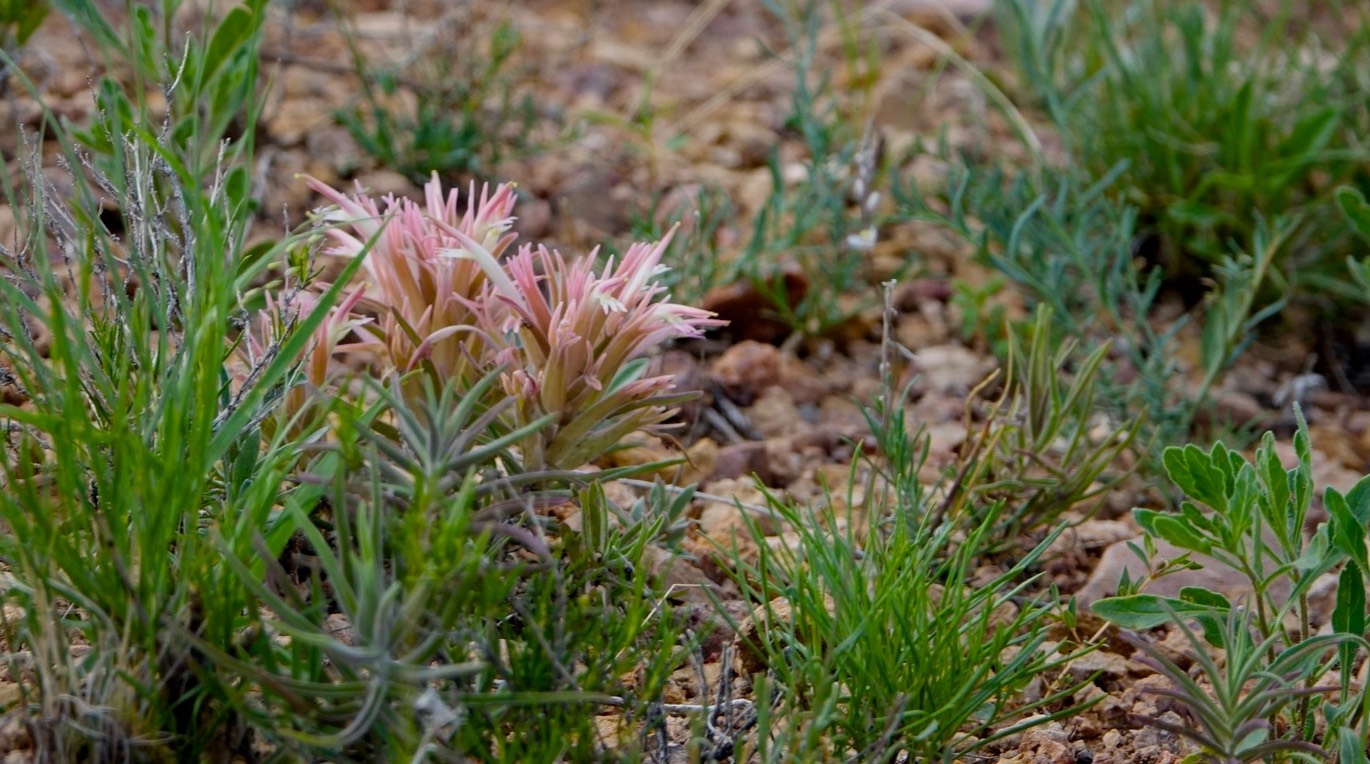
The spring of 2015 was a good season for wildflowers with many species in flower. A good season, in particular, for the Downy Paintbrush (aka Downy Painted Cup, Great Plains Paintbrush, and Great Plains Indian-Paintbrush) - Castilleja sessiliflora. It is one of the most beautiful plants in the Castilleja (Indian Paintbrush) genus. Paintbrushes are hemiparasitic. It was not apparent from the paintbrush’s location what plant it was parasitizing.
The Common English Name of Great Plains Paintbrush is descriptive of its range in the United States and Canada. It is also found in the northern parts of Mexico.
The Menomini Indians macerated the flowers and leaves “in bear grass and used the result as an invigorating hair oil” (Ethnobotany of the Menomini Indians, Huron H. Smith, 1923, p. 53) and the Cheyenne used the flower nectar (The Ethnobotany of the Northern Cheyenne Indians of Montana, Jeffrey A. Hart, 1981, p. 39).
The Downy Paintbrush was first described by Frederick Traugott Pursh, who worked in the eastern United States and Canada from 1799 to 1820.
Ceanothus fendleri
Fendler’s ceanothus
Railroad Canyon
& Black Range Crest Trail
Black Range
New Mexico
June & July
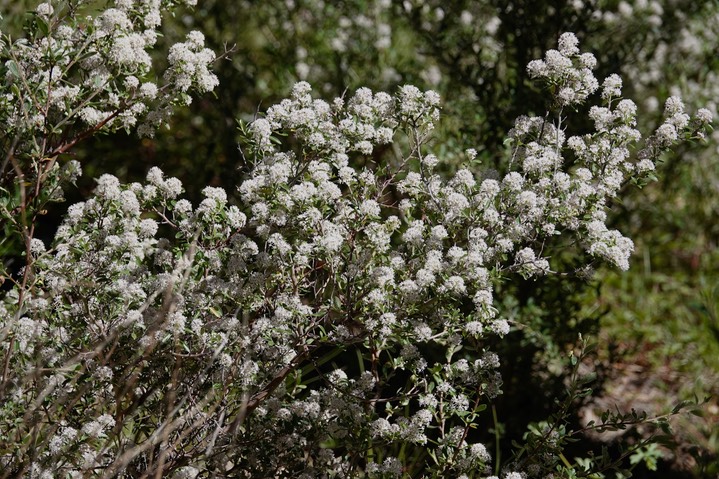
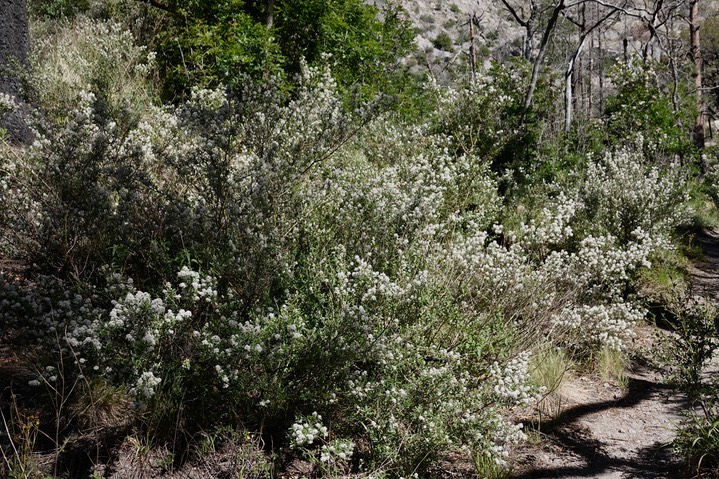
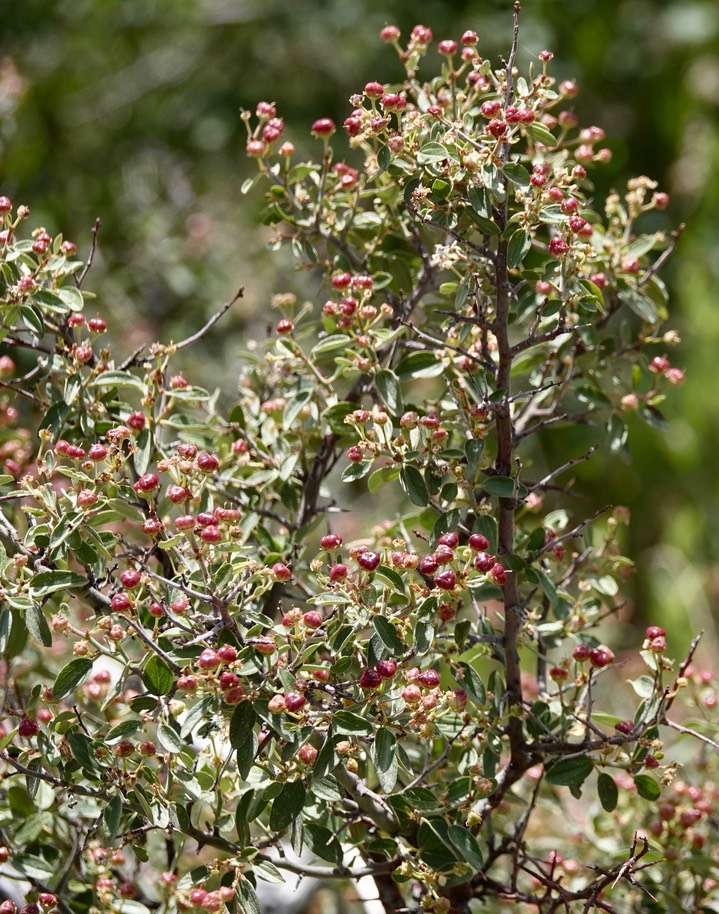
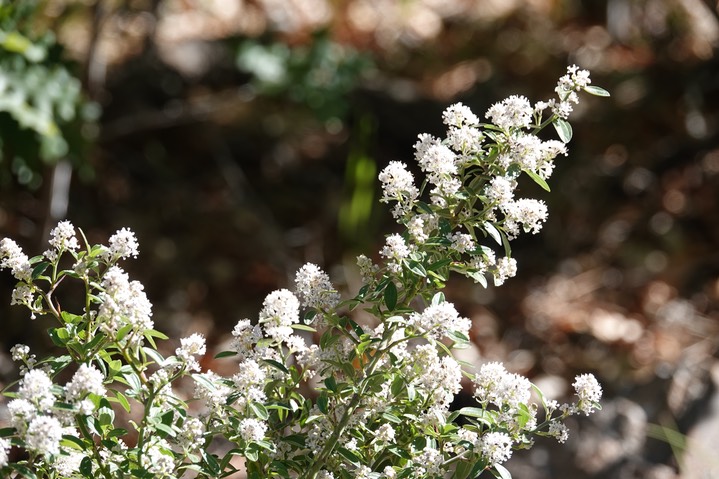
There are three species of Ceanothus in the Black Range. Within the United States this is a species is found in the mid to southern Rockies. In Mexico, it is found in Chihuahua, Coahuila, and Sonora. Typically it is found at elevations between 1400 and 2700 meters. Asa Gray described the species from a specimen collected east of Santa Fe in 1847 by Augustus Fendler.
Celtis reticulate
Netleaf Hackberry
Percha Creek east of
Hillsboro
New Mexico
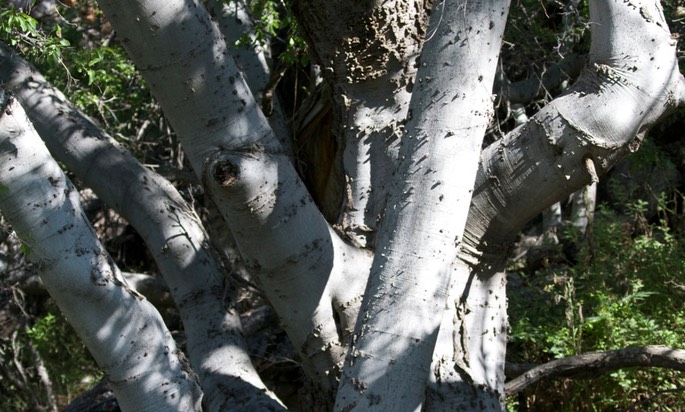
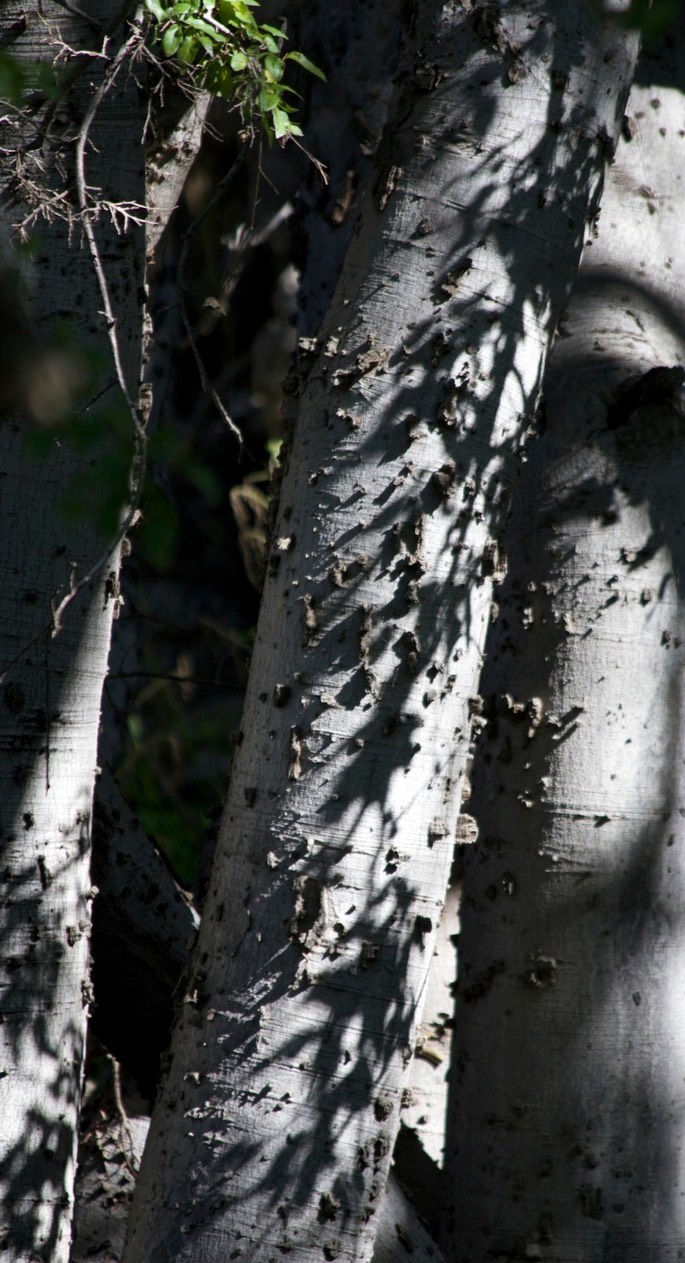
This is a trees with character (like Madrone, Torrey Pine, or Mountain Mahogany). The Netleaf Hackberry, Celtis reticulate, grows in the washes of the foothills in the Black Range. There are nice specimens of this tree along Warm Springs Wash and near the Percha Box, east of Hillsboro, New Mexico, for example. It requires the equivalent of 18 inches of precipitation a year, which is the reason it is only found along streams and in established washes in this area. A specimen can grow to 20 or 30 feet and often has a canopy spread of an equal amount.
The leaves are simple, about 2.5 inches long, darker green on the upperside and light green beneath. At the base of the leaf, one side is broader than the other. The texture of the leaf is interesting, it feels like a piece of medium grit sandpaper. Its bark is smooth in sections and nubby in others, grayish in color.
The pea-sized berries of the Netleaf Hackberry (a.k.a. Western Hackberry) are relished by many bird species and are often found in mammal scat. Hominini have foraged on hackberry (various species) berries for thousands of years. In the Sonoran and Chihuahuan Deserts, the berries of the Netleaf Hackberry were eaten fresh, and processed, by the Apache tribes (especially the Chiricahua and Mescalero).
The range of the Netleaf Hackberry is limited (for the most part) to the southwestern United States and Northern Mexico. Specimens are found as far north as the Columbia Basin in Washington/Oregon, USA. It generally grows at an elevation of 2,500 to 6,000 feet (and almost always at elevations lower than 7,500) and is hardy to 0 degrees Fahrenheit.
Celtis reticulate was first described by John Torrey (for whom the Torrey Pine is named) in the Annals of the Lyceum of Natural History of New York 1: 247. 1824, from a specimen collected by Hinton in Mexico. John Torrey's work on the natural history of the southwest included writing and publishing the reports on plants collected during the Fremont Expedition to the Rocky Mountains (1845), the plants collected by Emory on his expedition from Kansas to San Diego, California (1848), and those collected on the Mexican Boundary Survey of 1859.
Cevallia sinuata
Stinging Serpent
East of Hillsboro
New Mexico
August
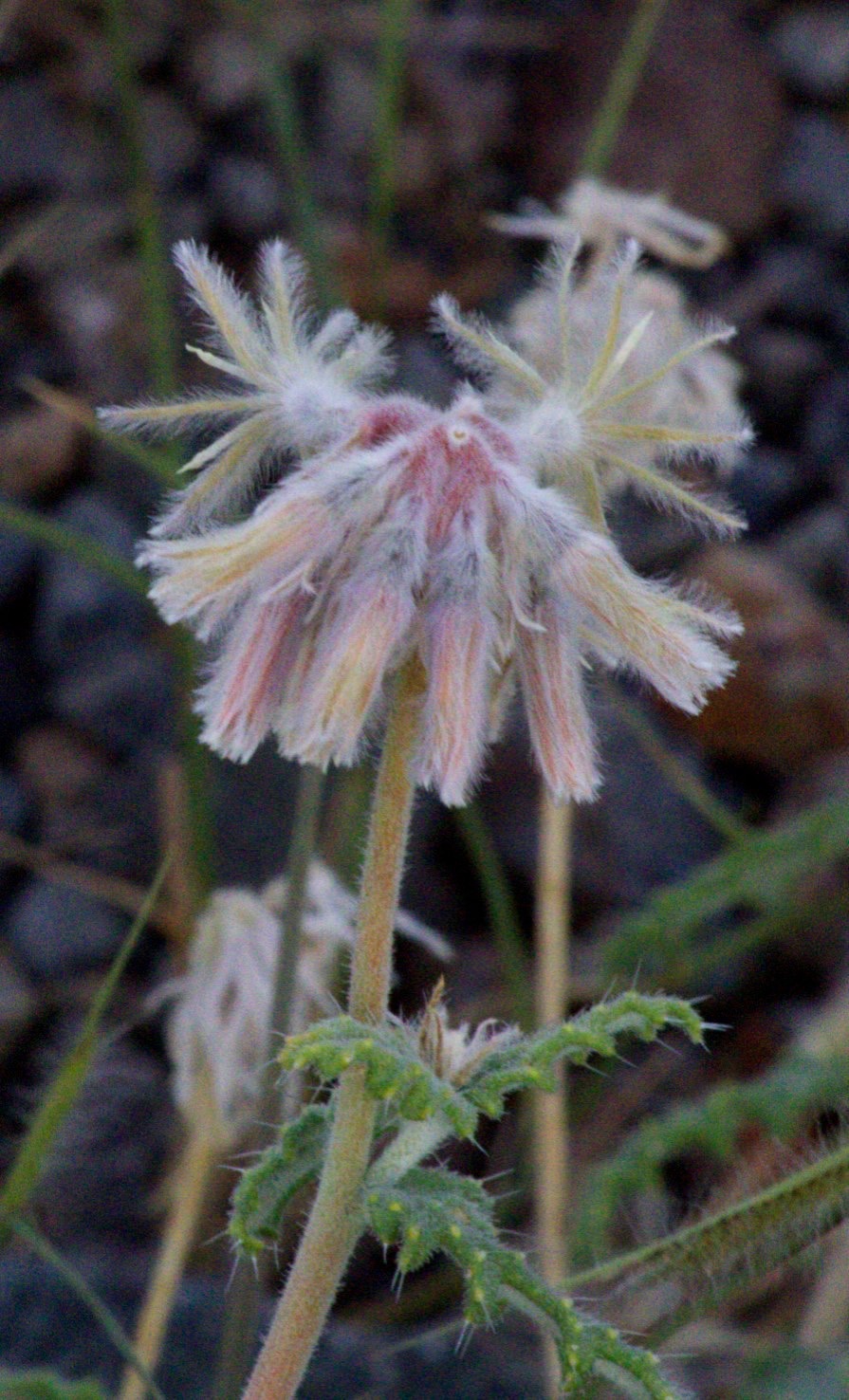
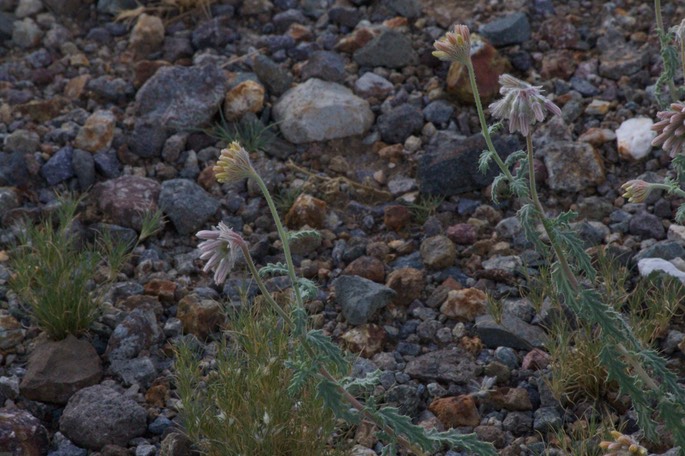
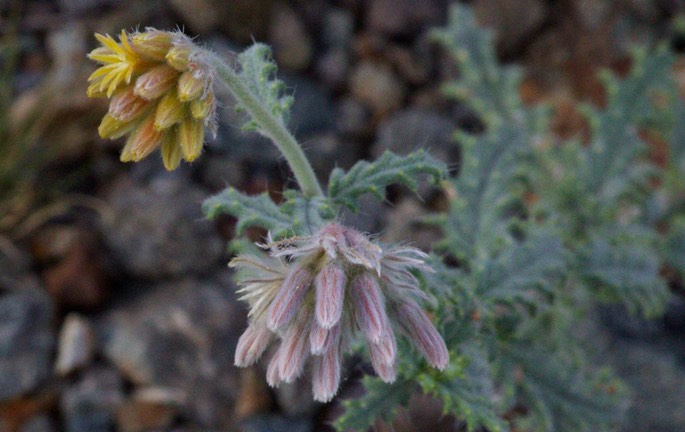
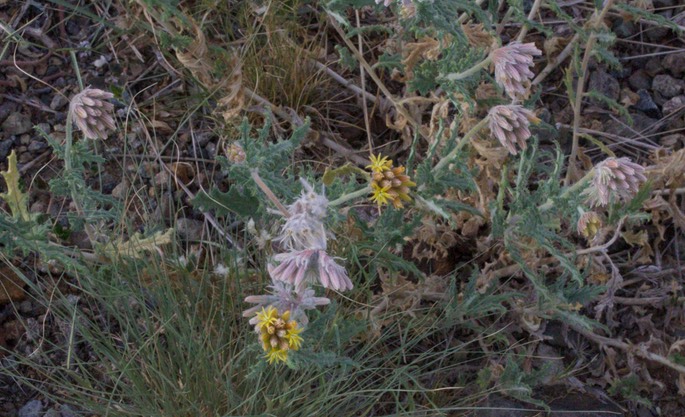
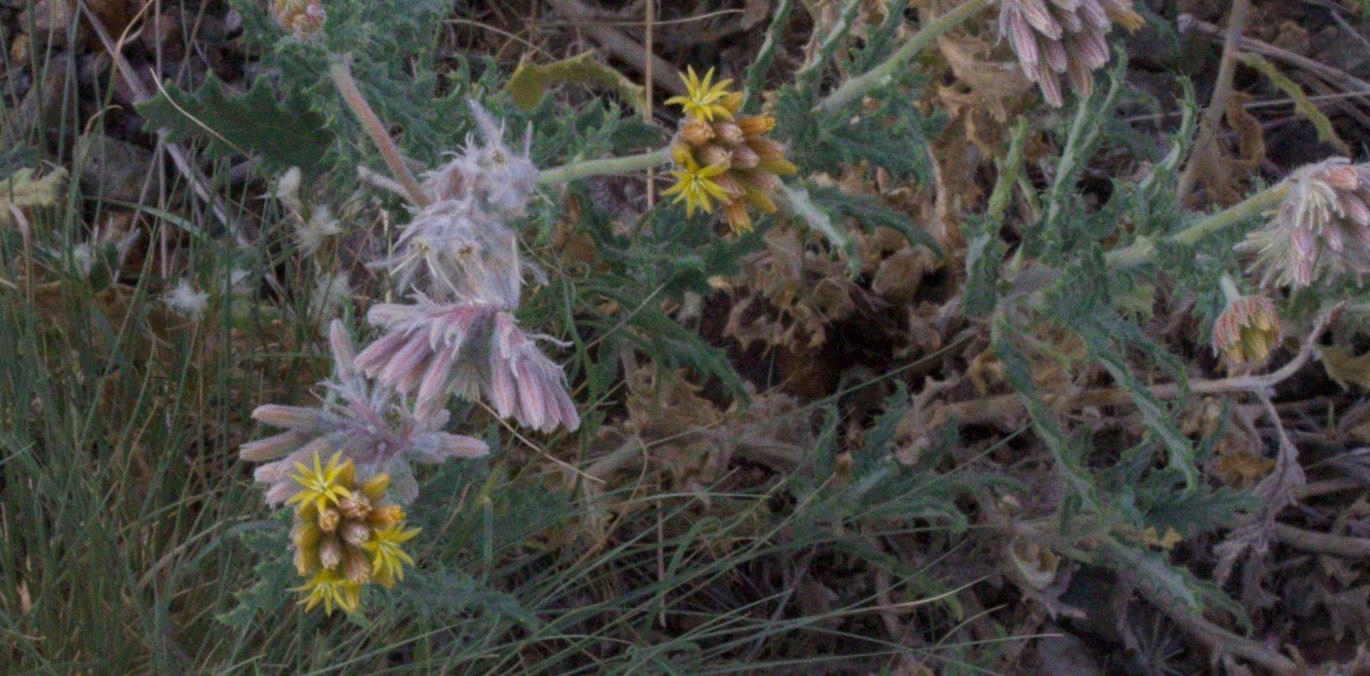
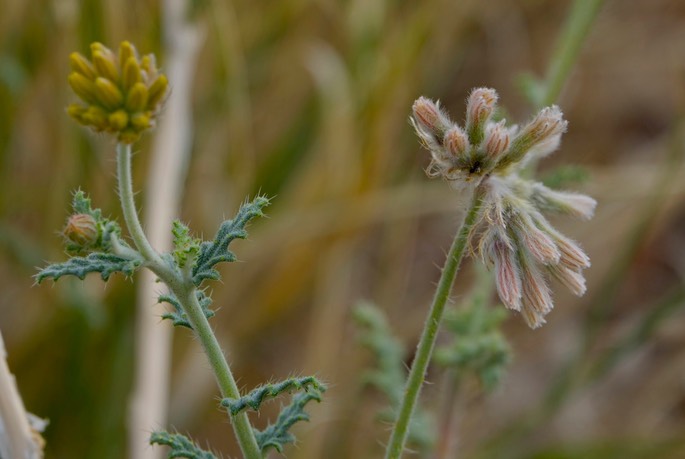
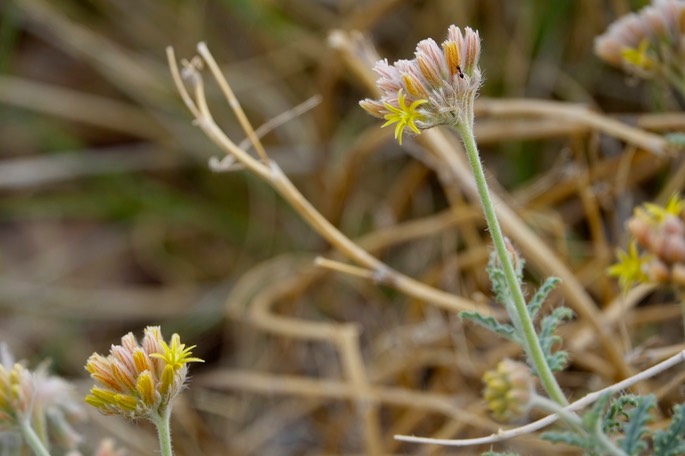
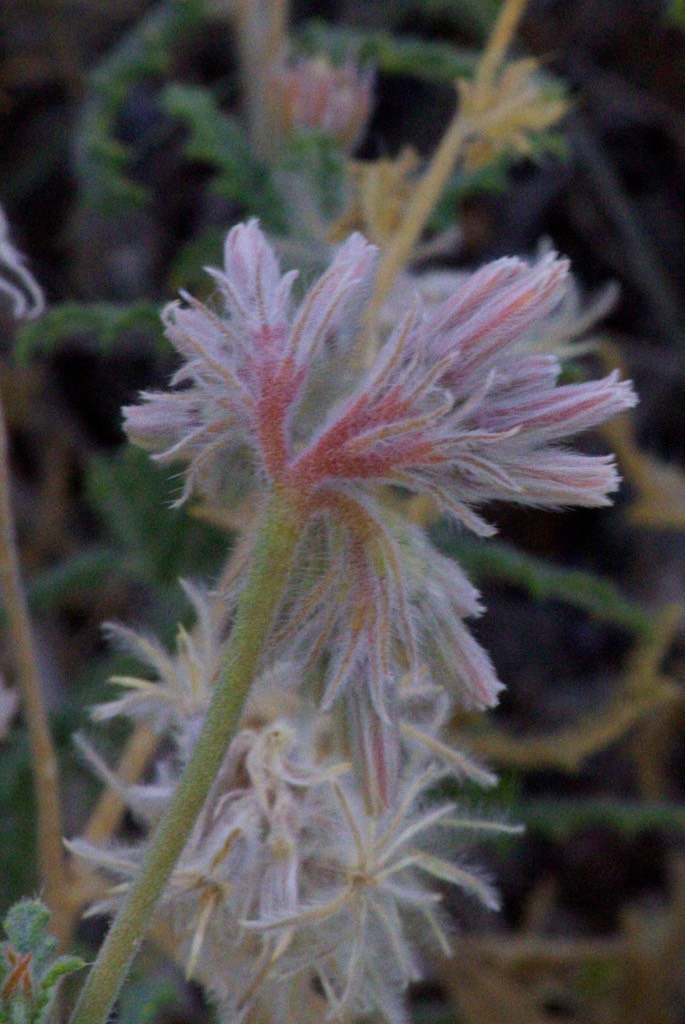
This is a nocturnal blooming species, so it is quite rare to find blooming plants. In some of these images, the flowers have gone (are going) to seed. Note the spines on the leaves in the images. The hairs of this species inflict a painful experience when encountered but are said to “stab” rather than irritate the skin.
The genus is monotypic and there are no described subspecies of Stinging Serpent. The species was first described by the Spanish botanist Mariano Lagasca.
This species generally grows between the elevations of 2,500’ and 5,000’ on dry slopes and mesas. It has a range limited to Arizona, New Mexico, and Texas in the United States and extends into the northern part of Mexico.
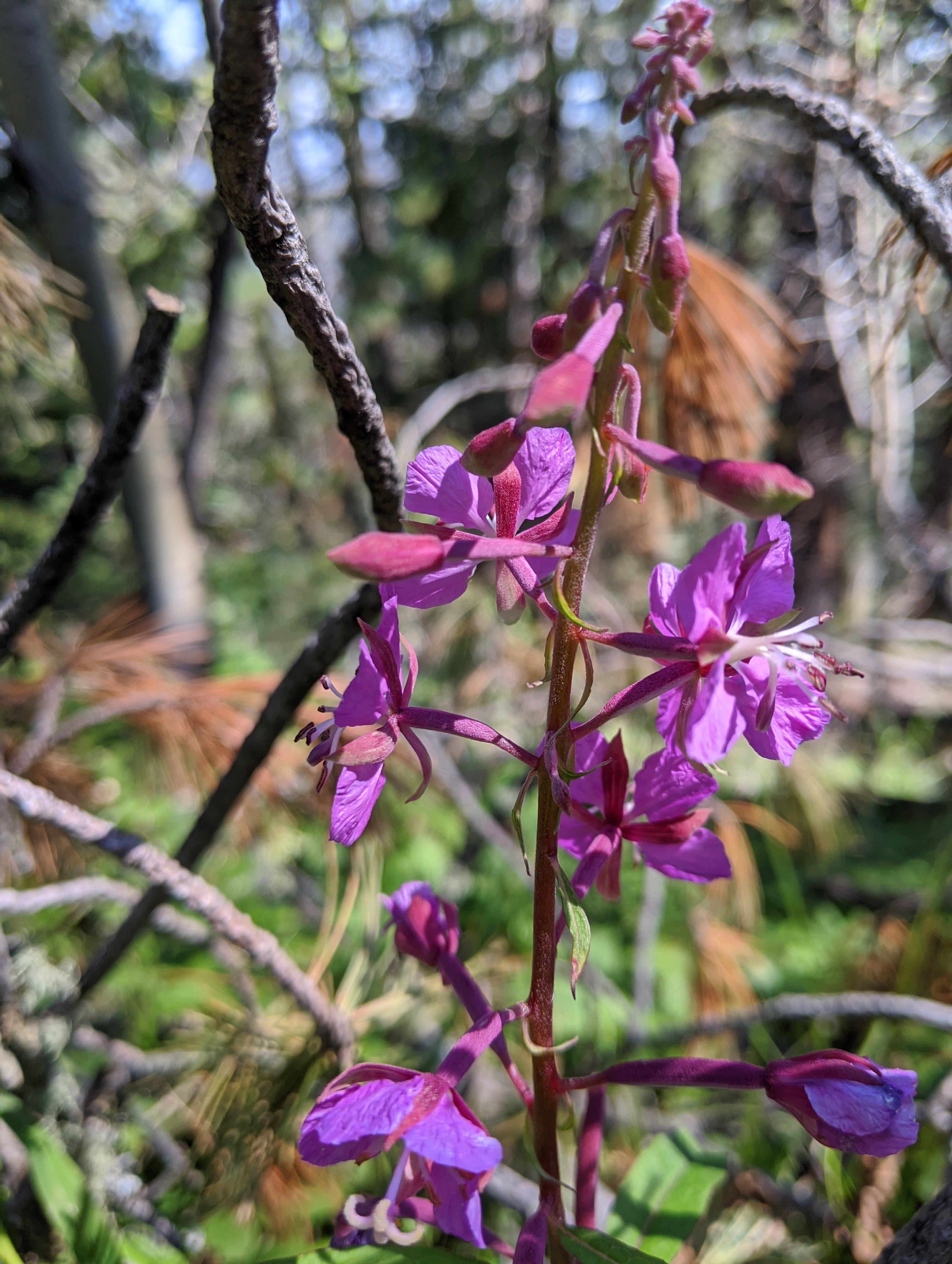
Chamaenerion angustifolium circumvagum
Fireweed
Hillsboro Peak Trail
Black Range
New Mexico
Photograph by Rebecca Hallgarth
September
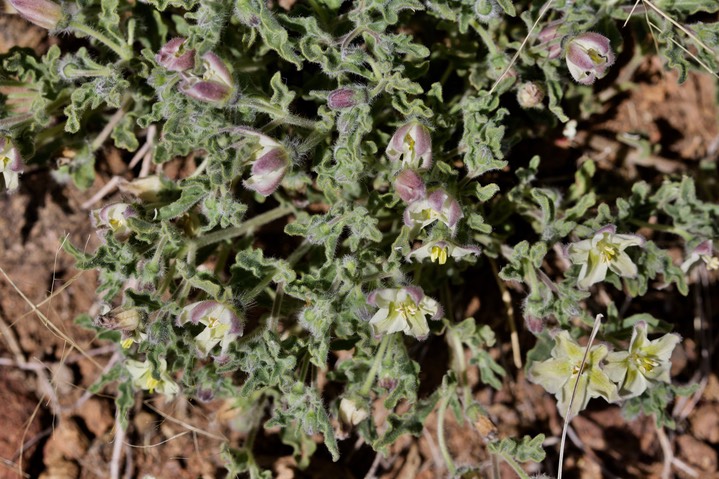
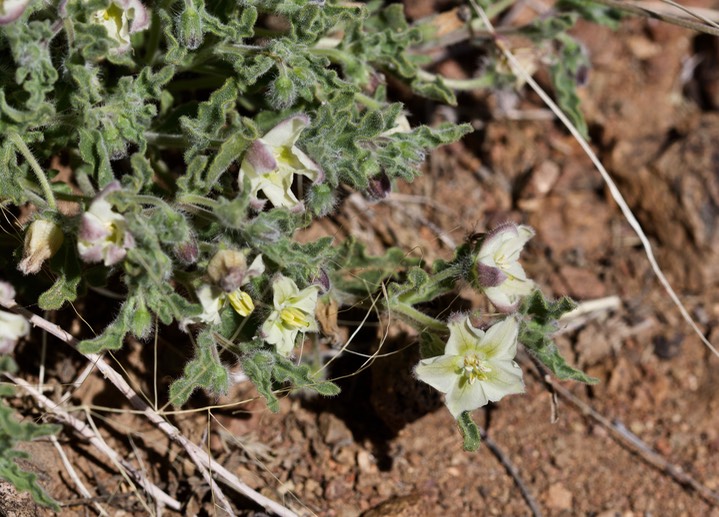
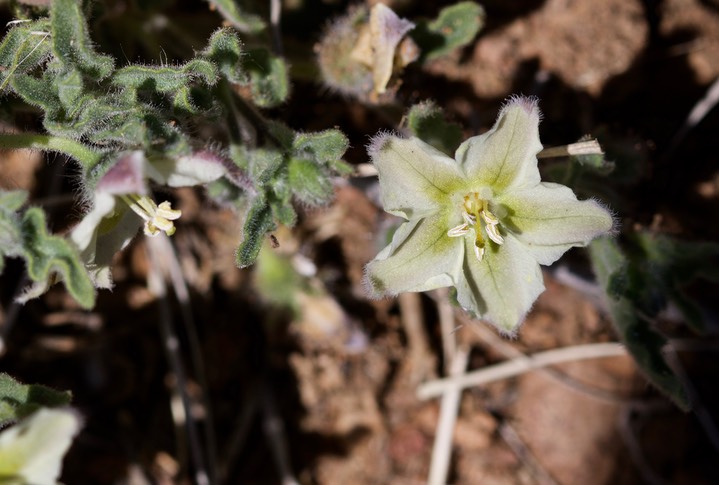
Chamaesaracha sordida
Hairy Five Eyes
Apache Peak
N. of Lake Valley
and e. of Hillsboro
Black Range
New Mexico
April
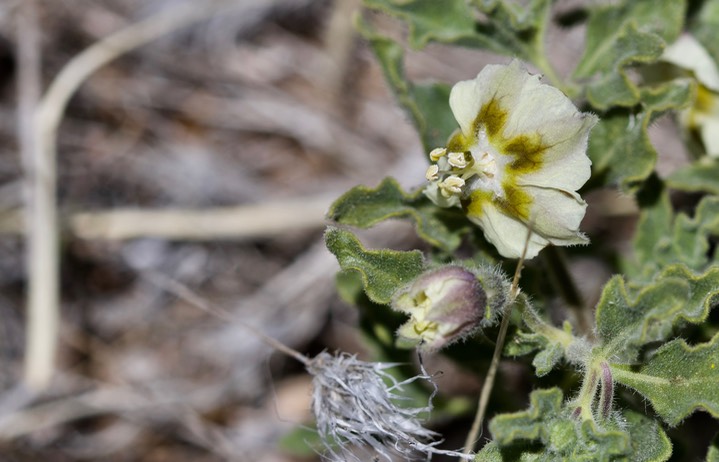
Cheilanthes yavapensis?
Graceful Lip Fern
FR157 E of Bald Hill
Black Range
July
See Index of the Ferns of Southwestern New Mexico
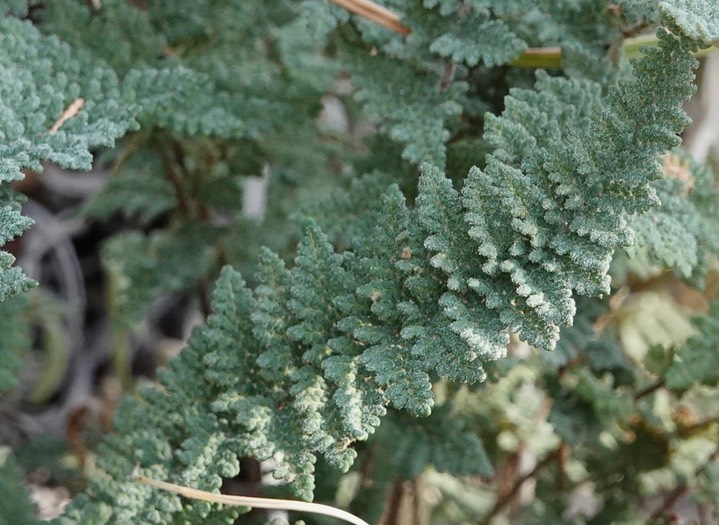
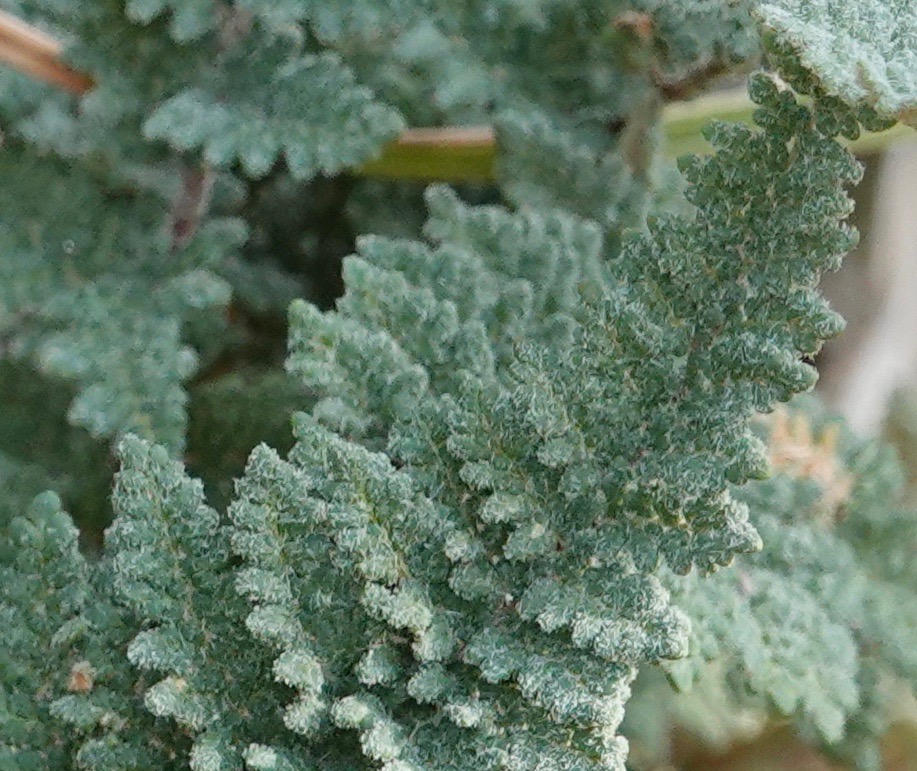
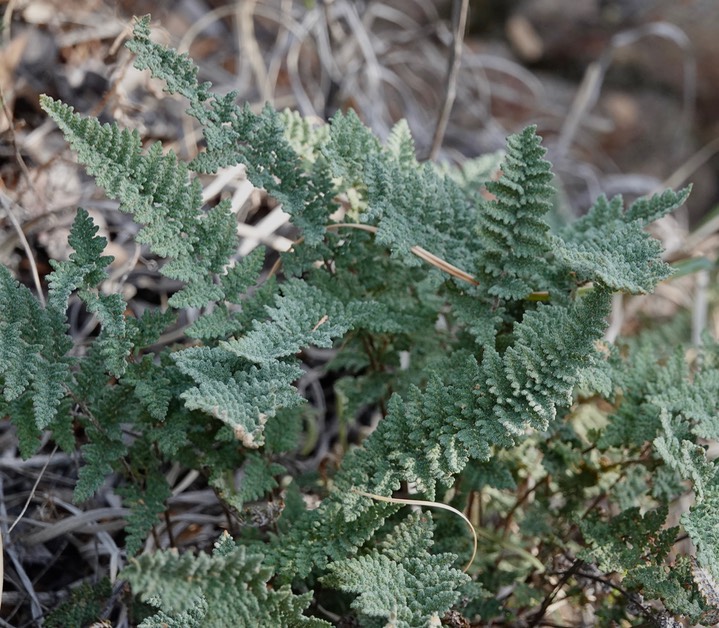
Chilopsis linearis
Desert Willow
Frying Pan Canyon
Black (Cooke's) Range
New Mexico
May
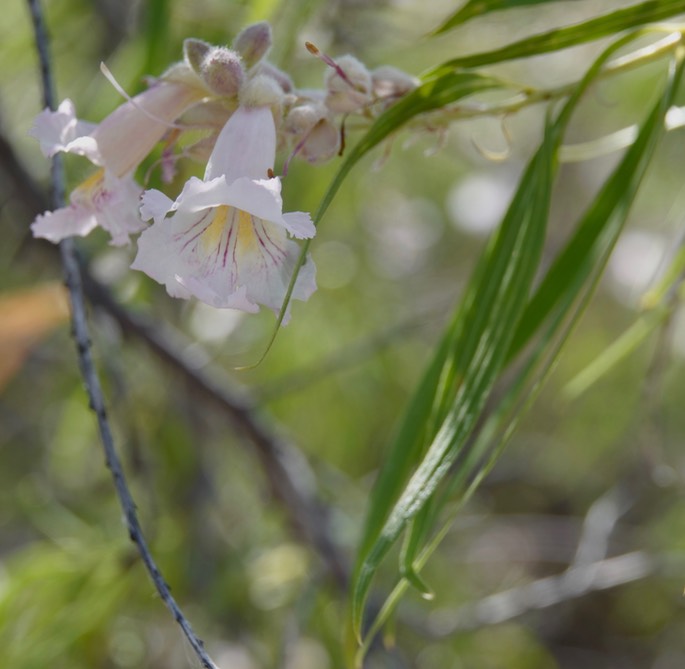
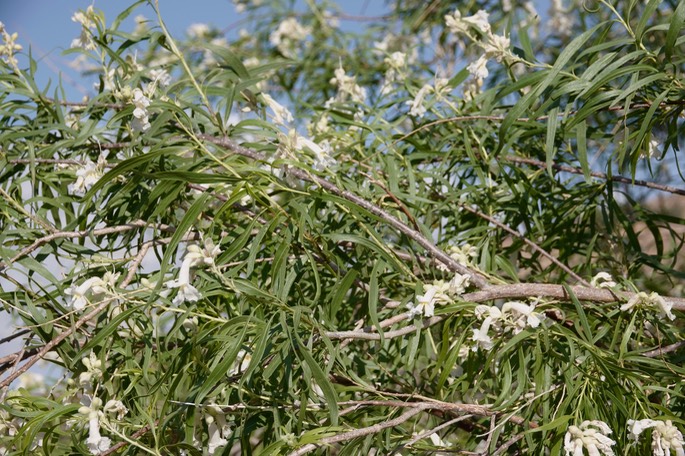
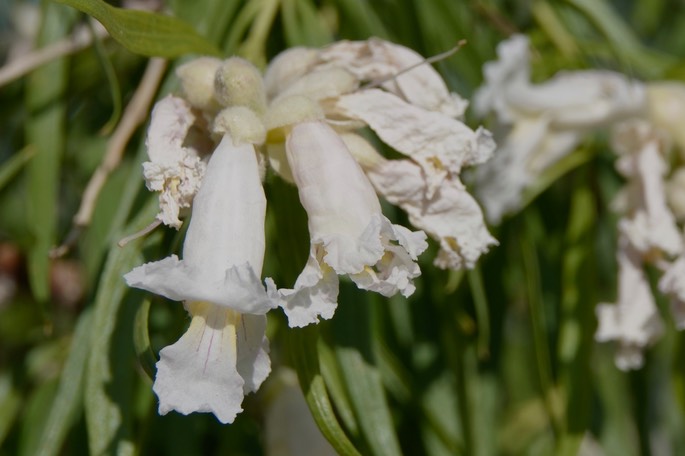
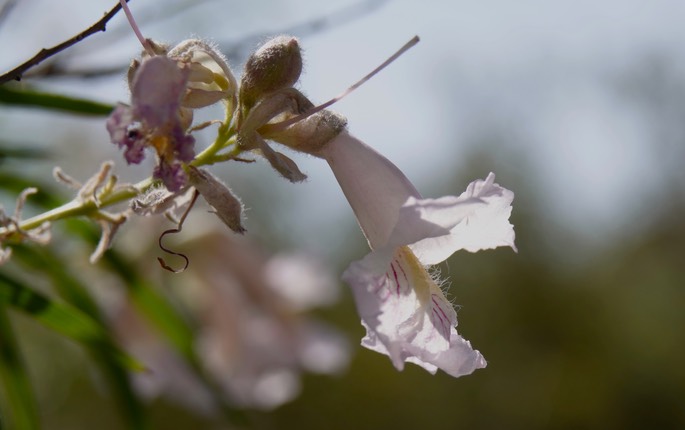
The common name of “willow” was apparently applied because of the plants long narrow leaves. The scientific name for the plant is Chilopsis linearis linearis (the genus is monotypic but the species is, obviously, not). In general, Desert Willows grow at elevations below 6,000 feet. Their geographic range extends from New Mexico and Arizona south into Baja, Sonora, and Chihuahua. They can be quite dramatic in appearance. Although they are usually less than 25’ tall, they have large showy flowers which will bloom from May until the first frost. Like many plants in our region, it has a traditional medicinal use - in this case, the Desert Willow was used to treat fungal infections like Athlete’s Foot.
Chrysactinia mexicana
Damianita
Sawmill Canyon
Black Range and
City of Rocks S.P.
New Mexico
June
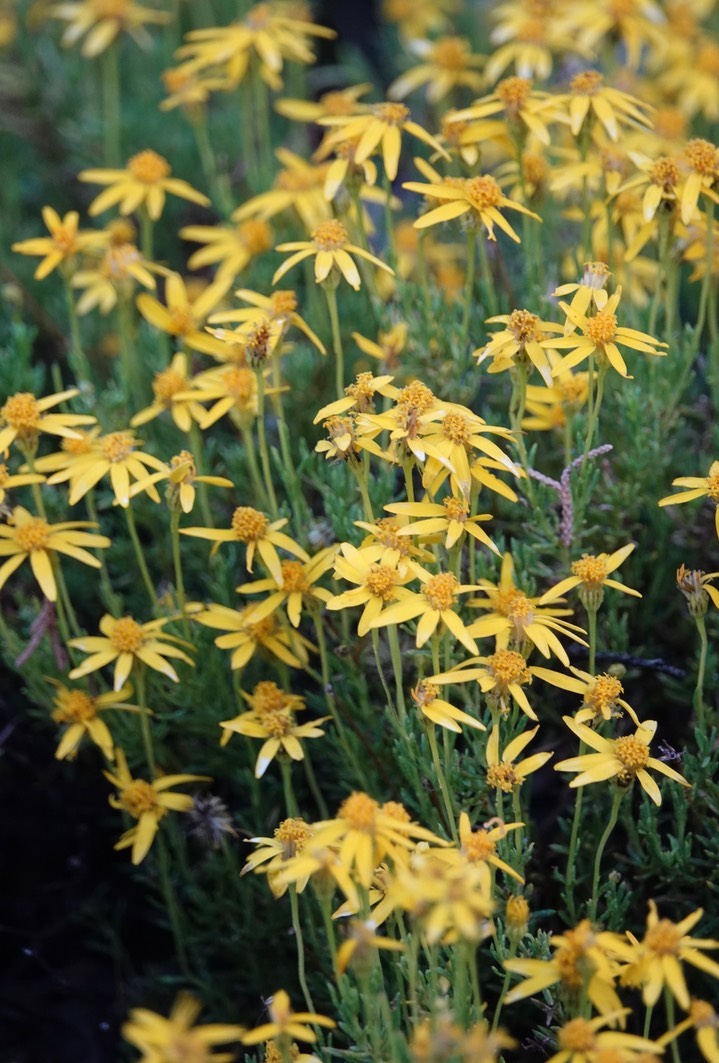
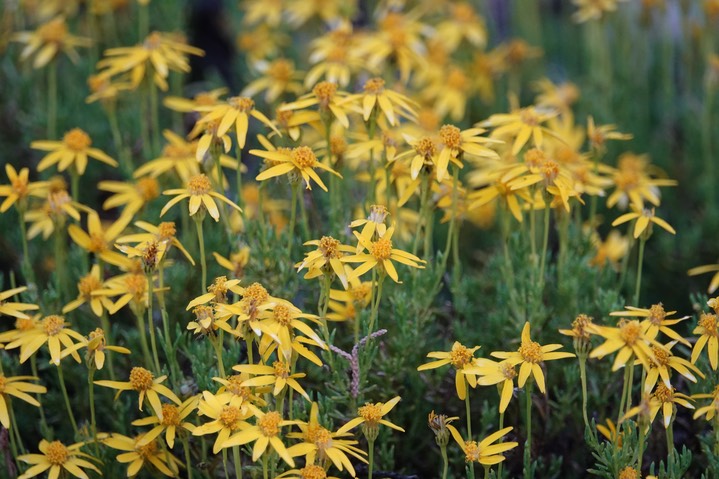
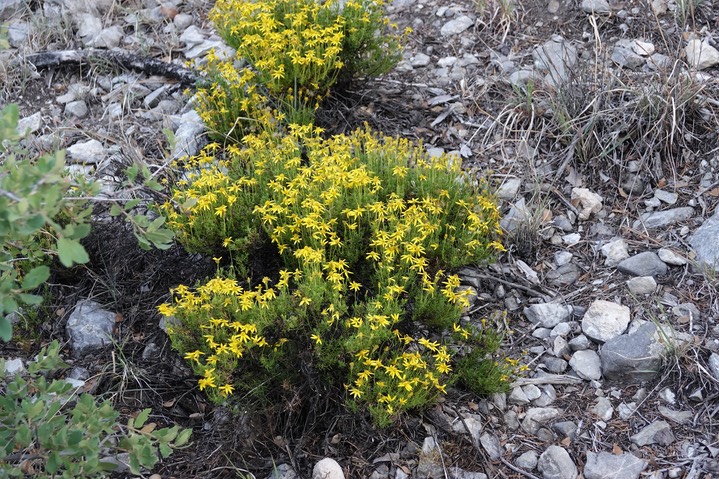
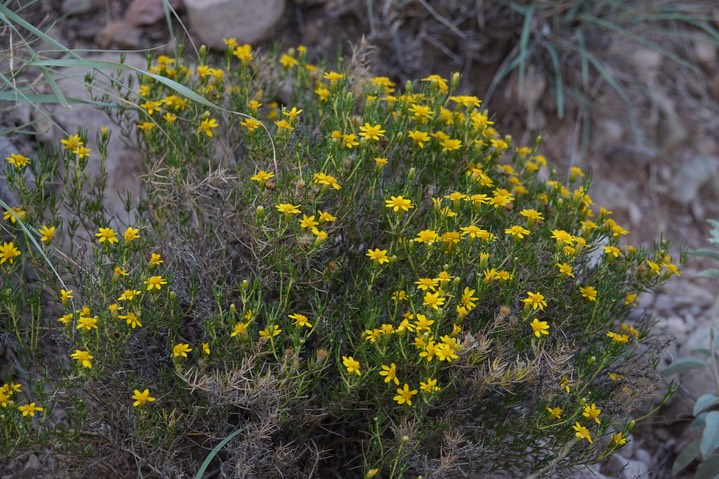
Cirsium arizonicum var. arizonicum
Arizona Thistle
West of Emory Pass
Black Range
New Mexico
July
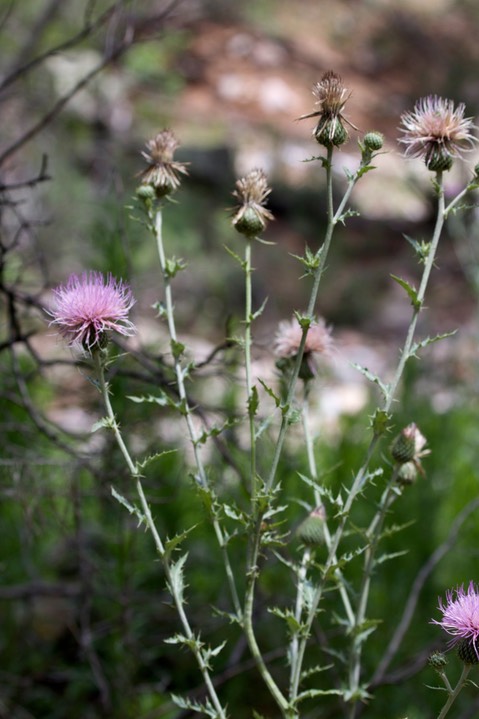
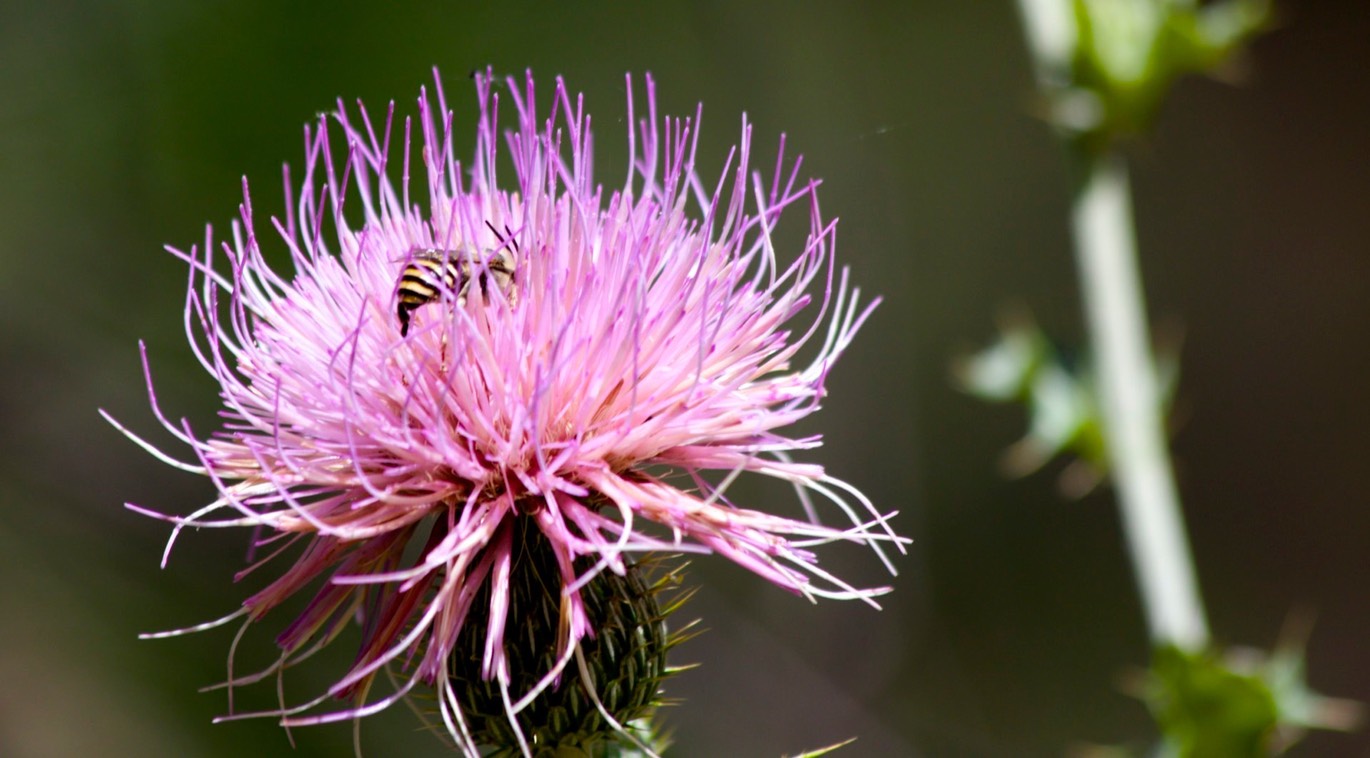
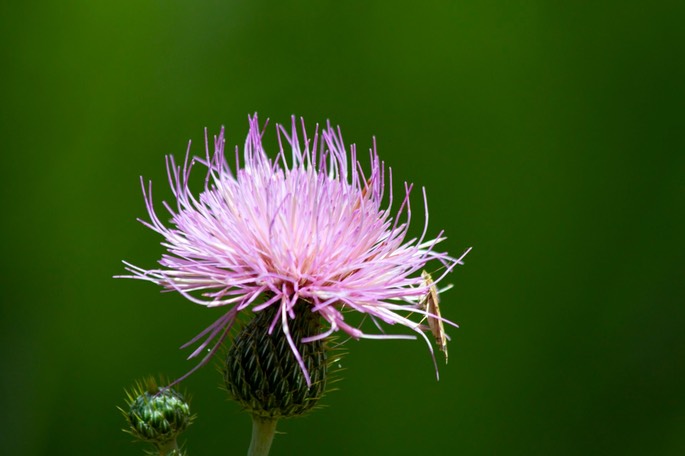
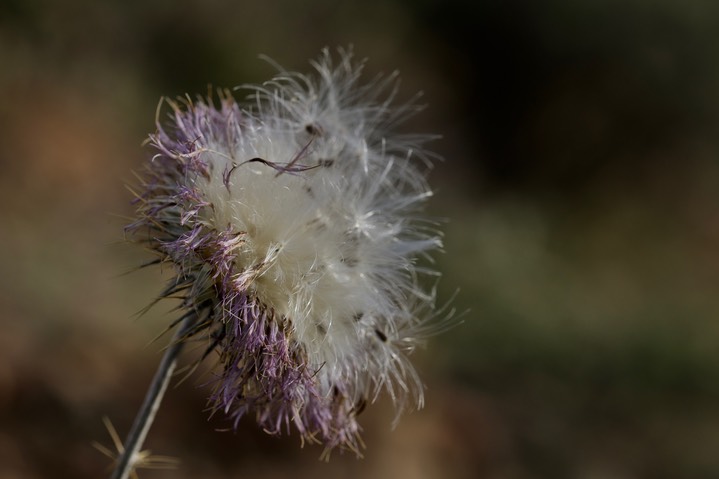
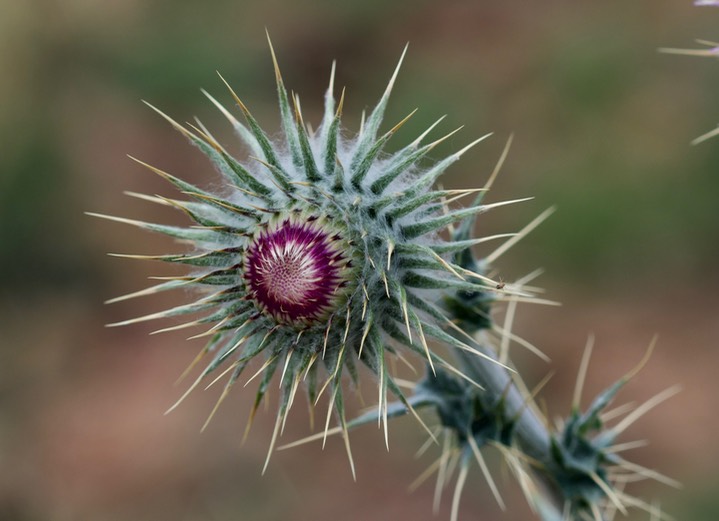
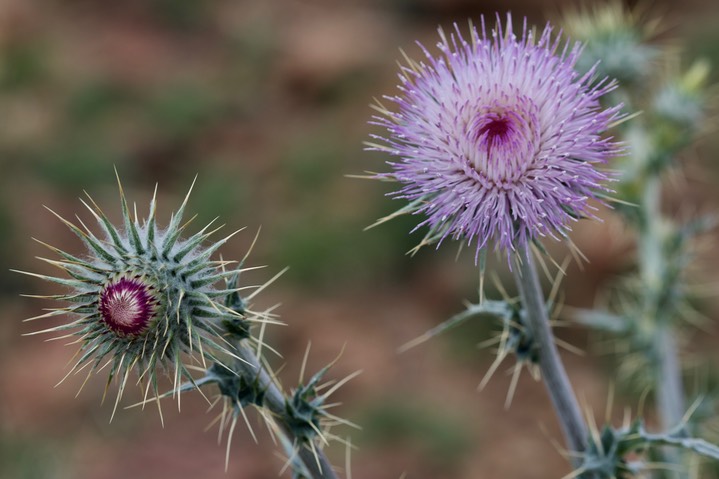
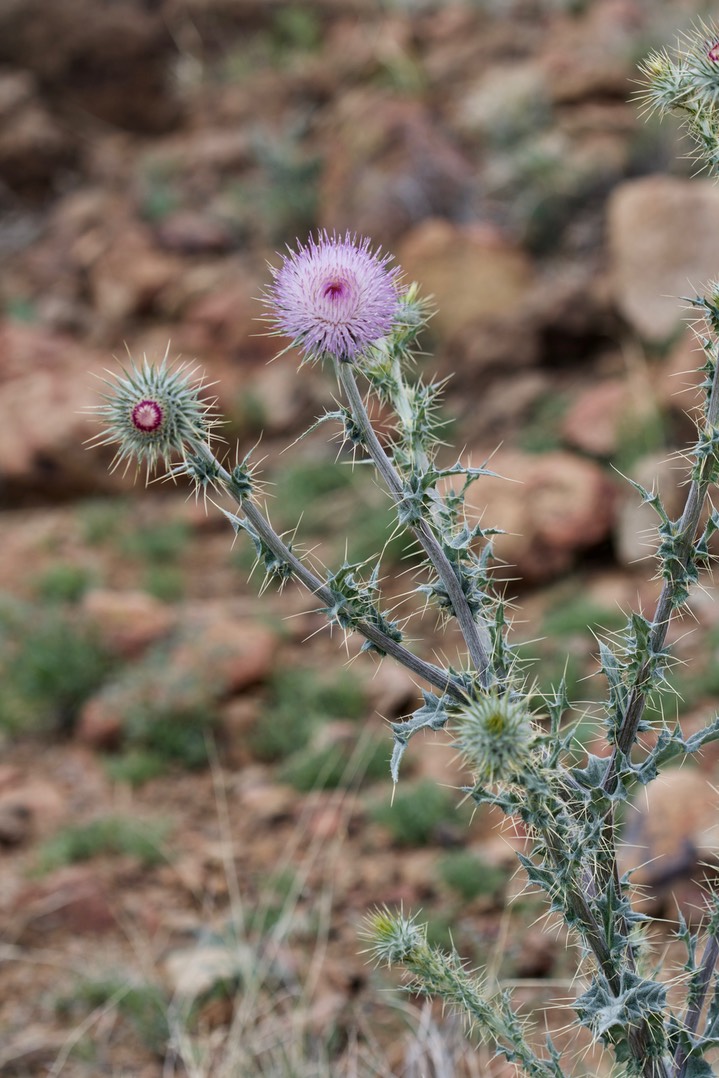
The species found in our area is Cirsium arizonicum (Gray) Petrak var. arizonicum. (Please remember that I am not a botanist, so misidentification is always a possibility.) The range of this species is limited to the Southwest, within the United States. It is also found in northwestern Mexico. This species is known as Arizona Thistle. Scientific synonyms for the species include Cirsium nidulum and Cnicus arizonicus. The Native Plant Society of New Mexico has published a key and identification guide to the thistles of New Mexico. This species is a composite and a member of the Aster Family (Asteraceae).
David Kell, who is an expert on this genus, and who is responsible for the Flora of North America entries on this genus, has this to say about this species:
“The Cirsium arizonicum complex is widely distributed from the Sierra Nevada, White Mountains, and New York Mountains of eastern California across the mountains of the southern Great Basin and Colorado Plateau to the mountains of eastern Colorado, Arizona, and New Mexico. This group of plants comprises a series of intergrading races with intricately overlapping patterns of variation. For plants that I am treating as C. arizonicum (in the broad sense), F. Petrak (1917) recognized three species, one with a variety and two subspecies plus his unstated type subspecies and variety. R. J. Moore and C. Frankton (1974b) revised the complex, recognizing six species, three of them newly described, for the plants I treat as C. arizonicum plus C. turneri, which I do not include in C. arizonicum. P. L. Barlow-Irick (2002), in a work focused on statistical analyses of variation patterns, recognized six species also, but circumscribed very differently from those of Moore and Frankton. Two of the species proposed by Barlow-Irick have not been formally described.
I have wrestled with how to treat these plants since beginning my research for this treatment. After careful consideration of the complex patterns of variation among members of the C. arizonicum complex, I acknowledged the futility of trying to distinguish more than one species. Any character combinations that I or others have attempted to use to distinguish species break down hopelessly when enough specimens are examined. Instead I have chosen to recognize that in this complex, as in several others, the plants in question are a work of evolution in progress. Cirsium arizonicum is a rapidly evolving, only partially differentiated assemblage of races that have not reached the level of stability that is usually associated with the concept of species. Certainly there is much variation within the group that deserves a level of taxonomic recognition, or at least should be mentioned, but I think it much more prudent to recognize varieties – entities that may be expected to freely intergrade – rather than species. The geographic area where these plants occur, the highlands of the American Southwest, has had a turbulent history in the Quaternary with major shifts in climate, vegetation, and elevational zonation accompanying the vicissitudes of glacial and interglacial episodes. The complicated patterns of variation in C. arizonicum reflect both that history and the geographic and topographic complexity of the region.”
His entry in eflora.org contains a key for differentiating the varieties of this species - noting the quote above.
The original description of this species was by Asa Gray in the Proceeding of the American Academy of Arts 1874, Volume 10, page 44 (see below).
Cirsium neomexicanum
New Mexico Thistle
East of Hillsboro
New Mexico
May
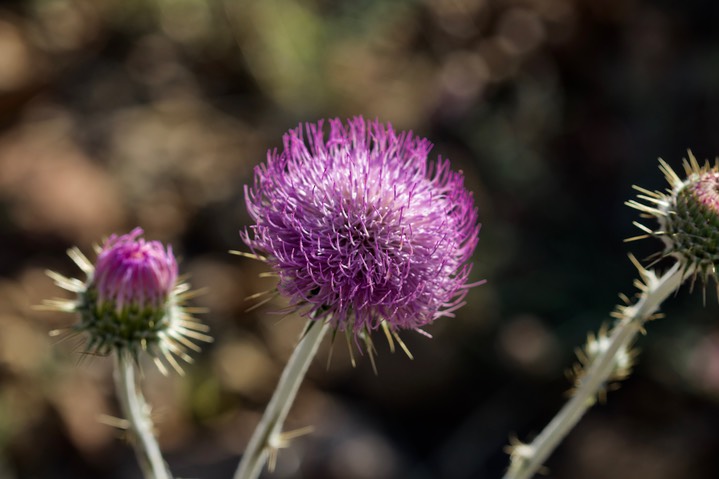
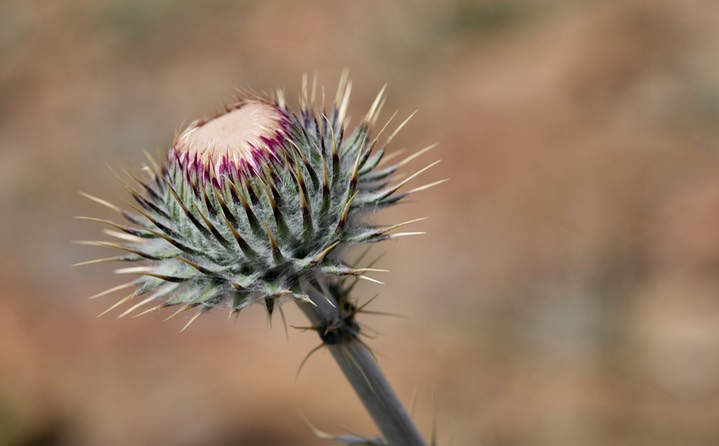
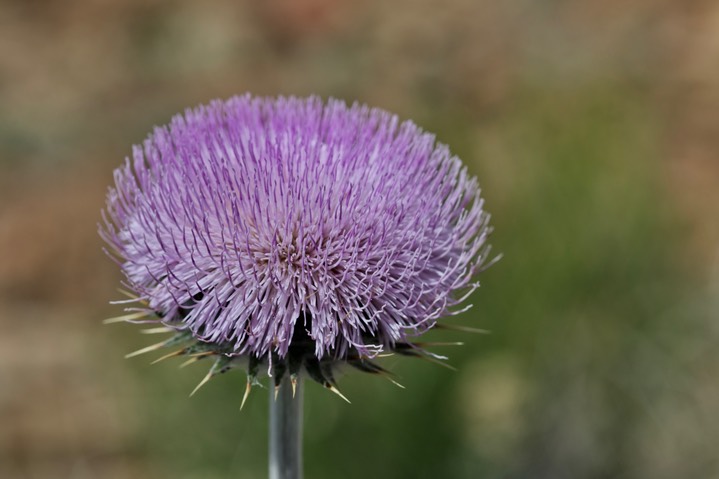
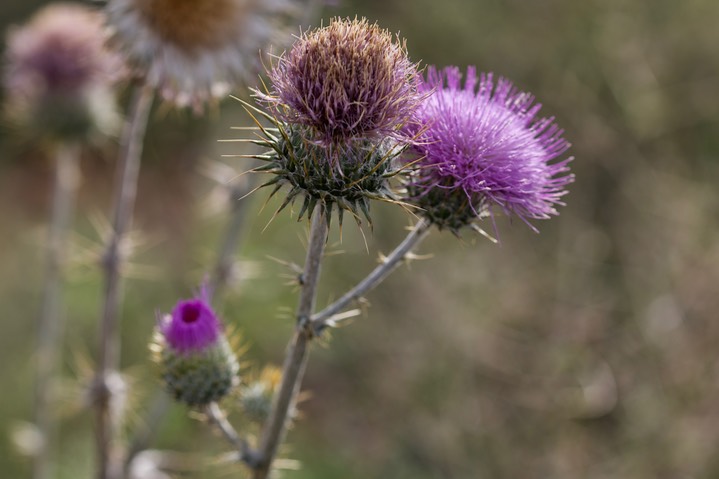
Cirsium ochrocentrum Gray var. martinii
Martin’s Thistle
Forest Trail 796
Kingston to
Emory Pass
Black Range
October
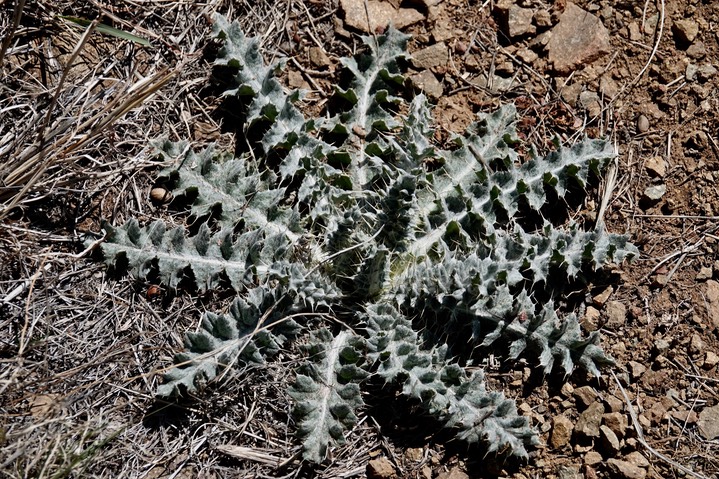
Cirsium vulgare
Bull Thistle
Iron Creek Campground
Black Range
September
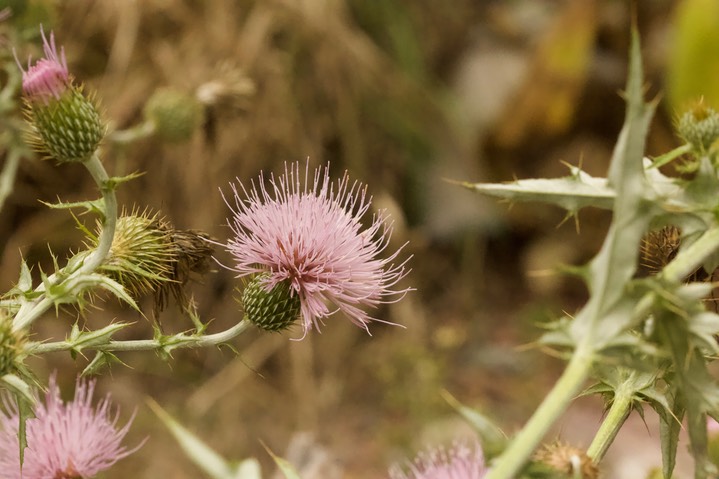
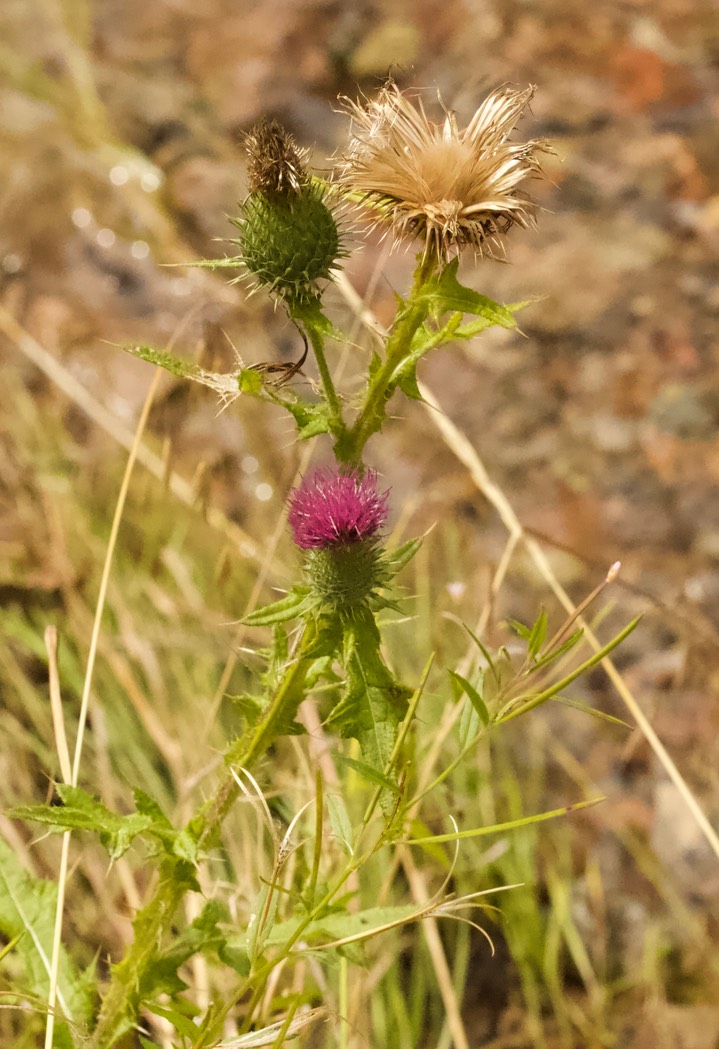
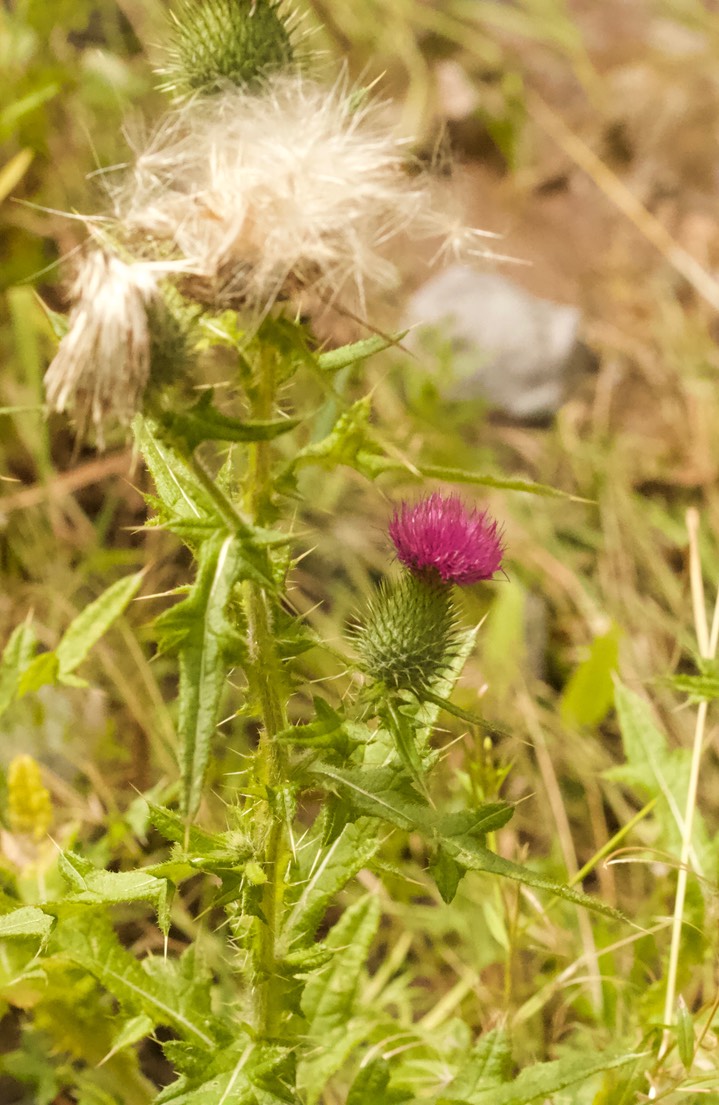
Clematis columbiana
Columbian Virgin's Bower
Crest Trail
Black Range
New Mexico
April & May
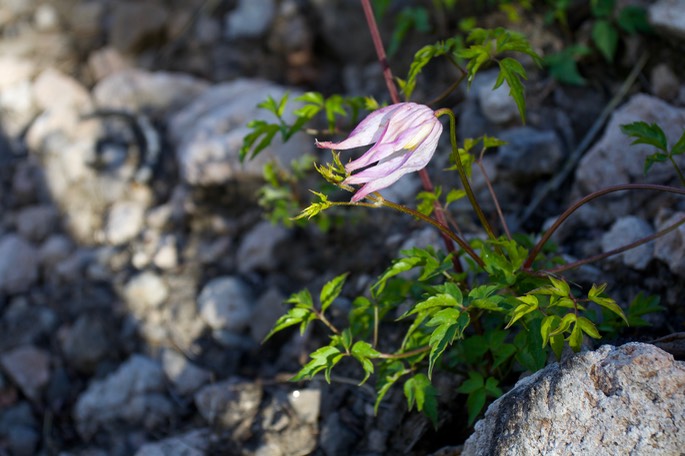
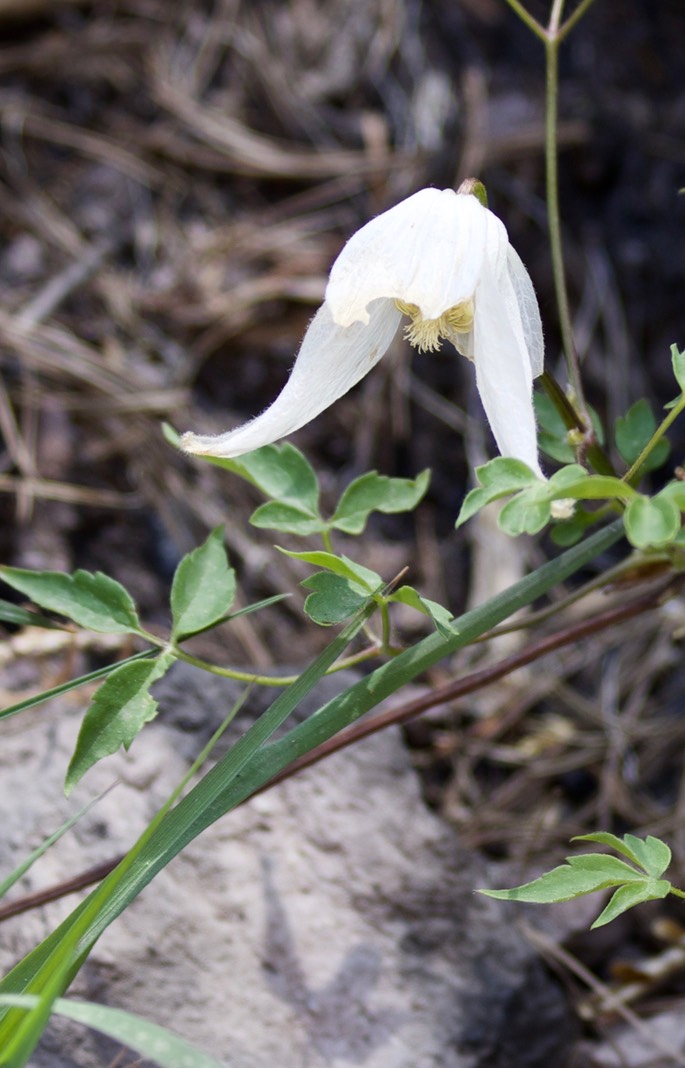
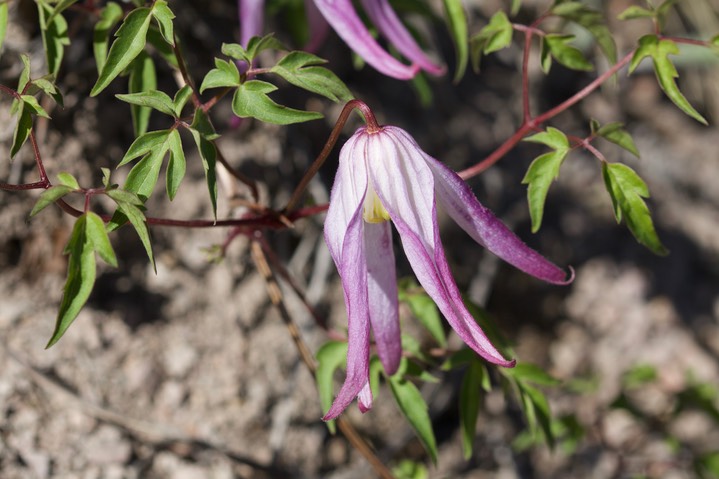
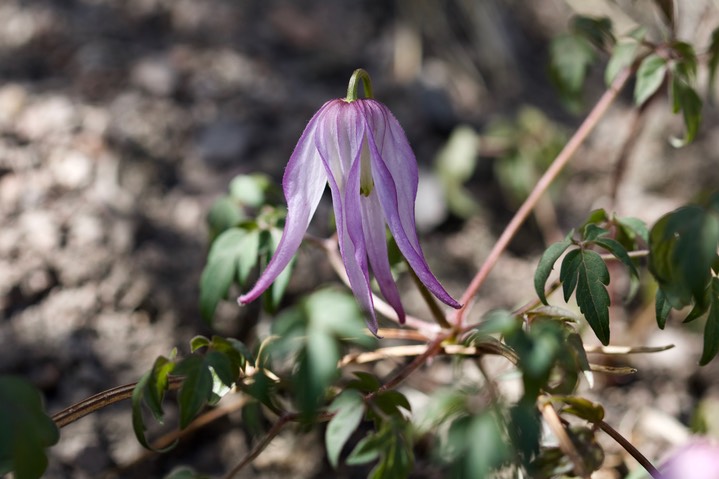
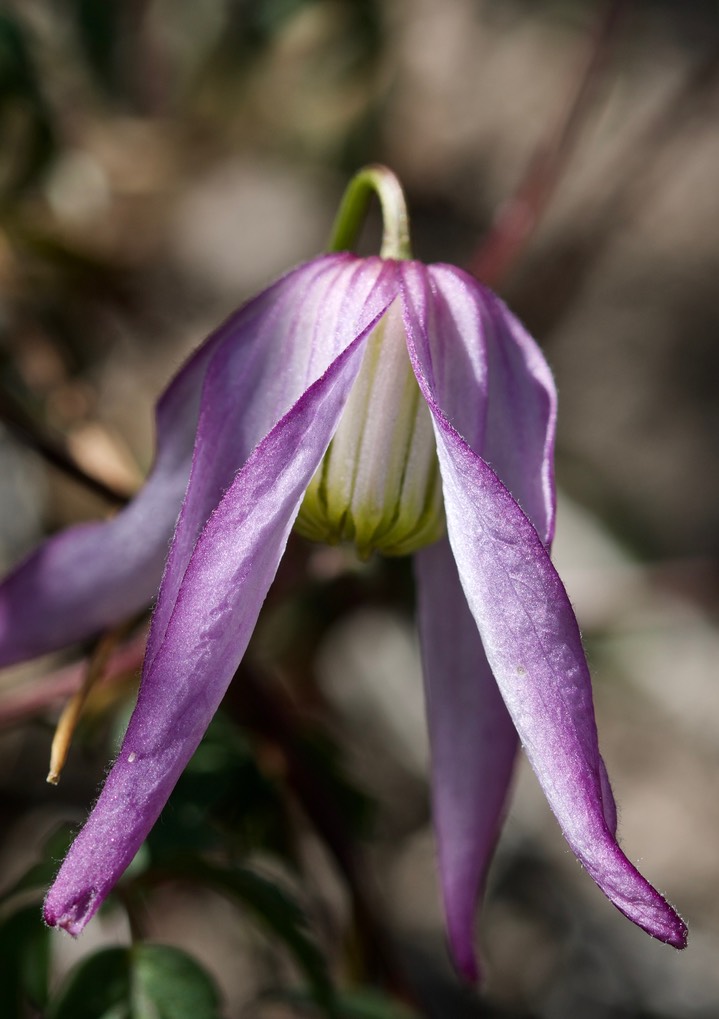
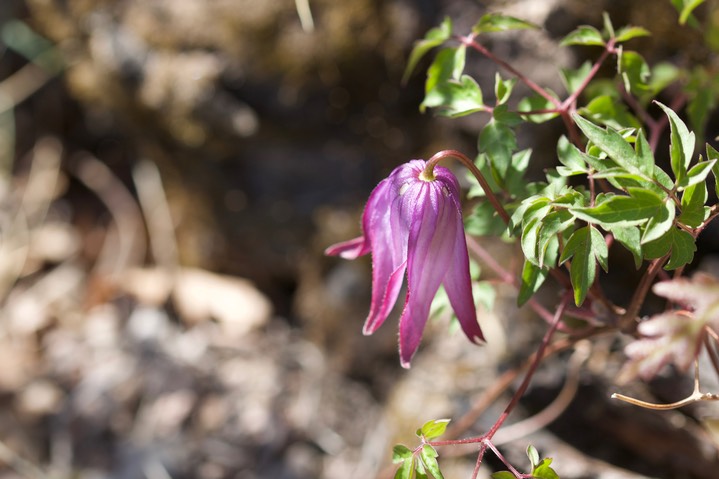
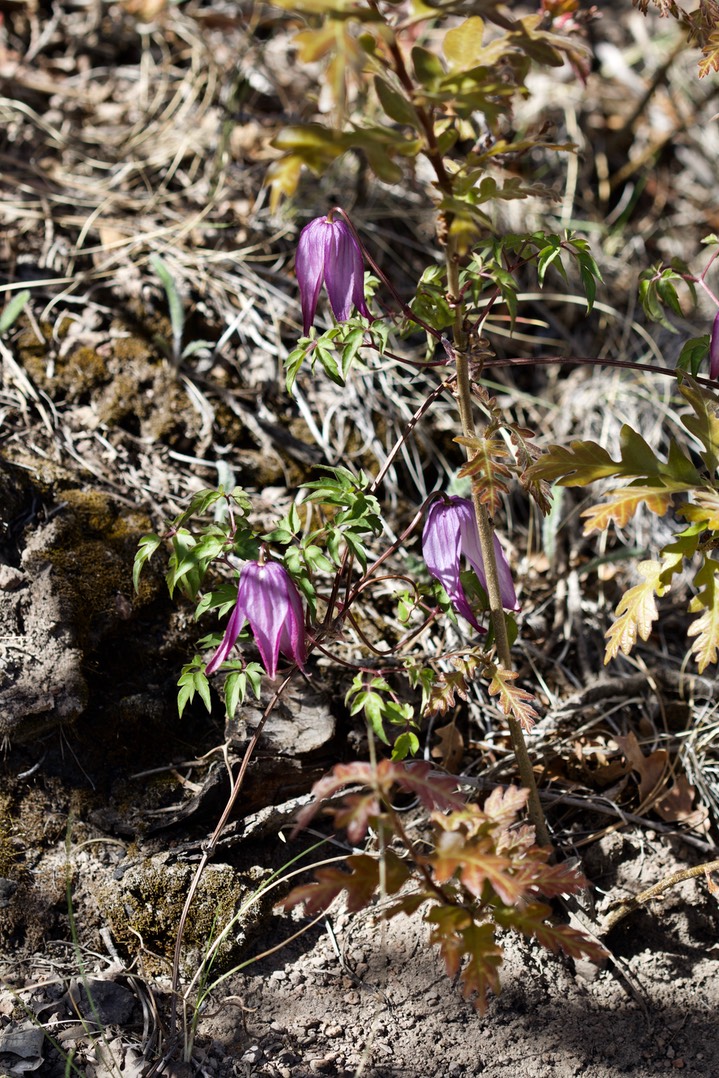
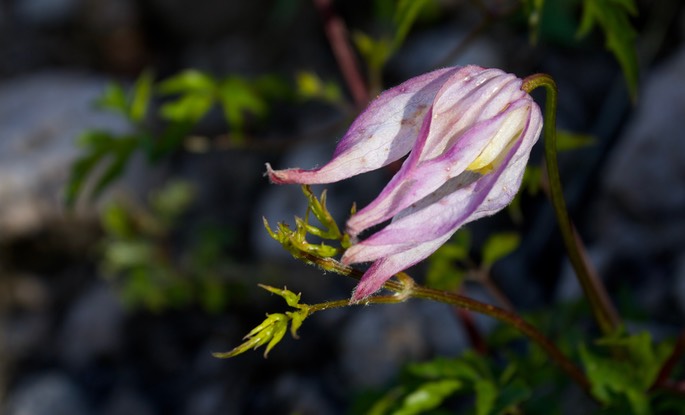
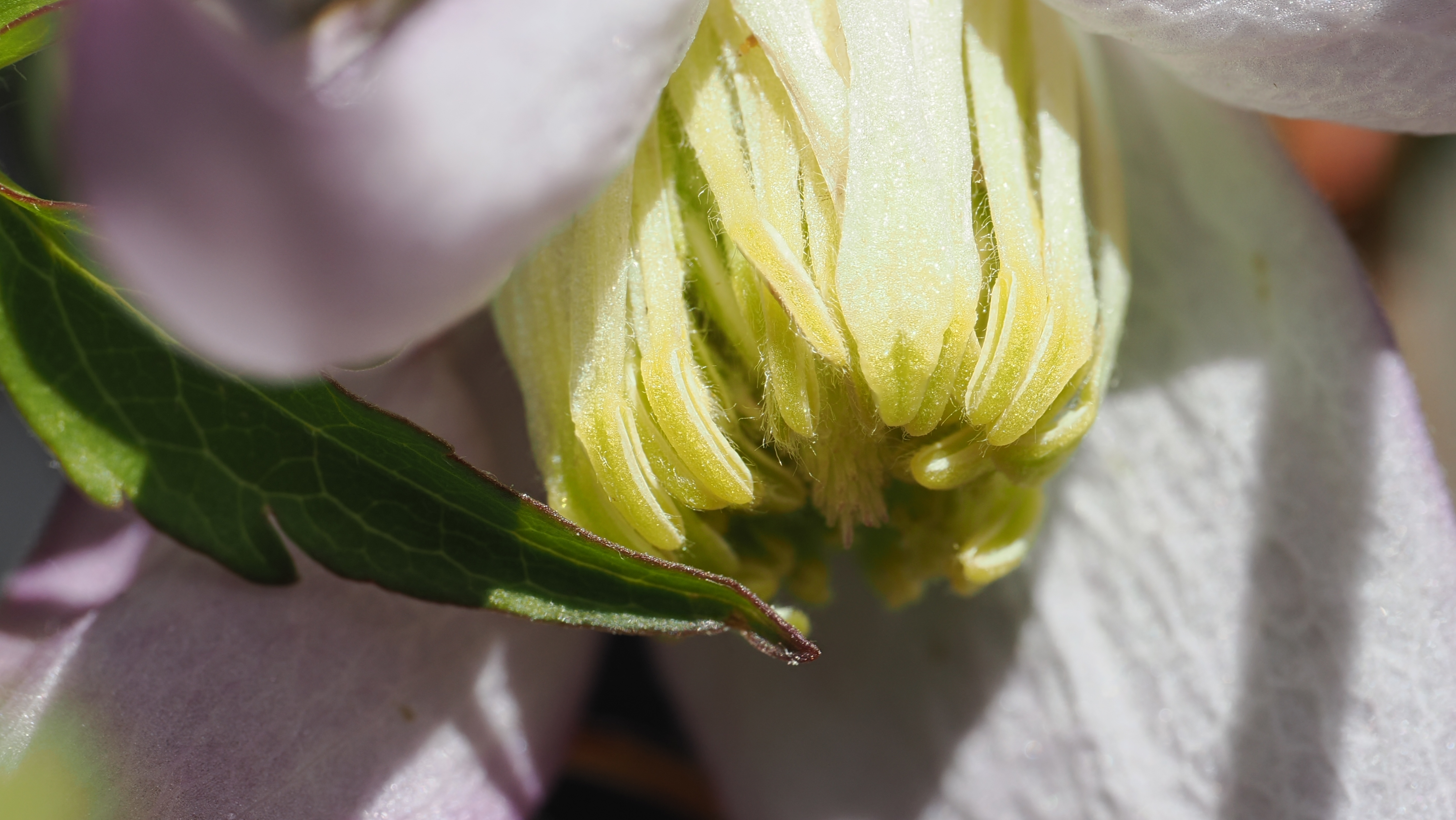
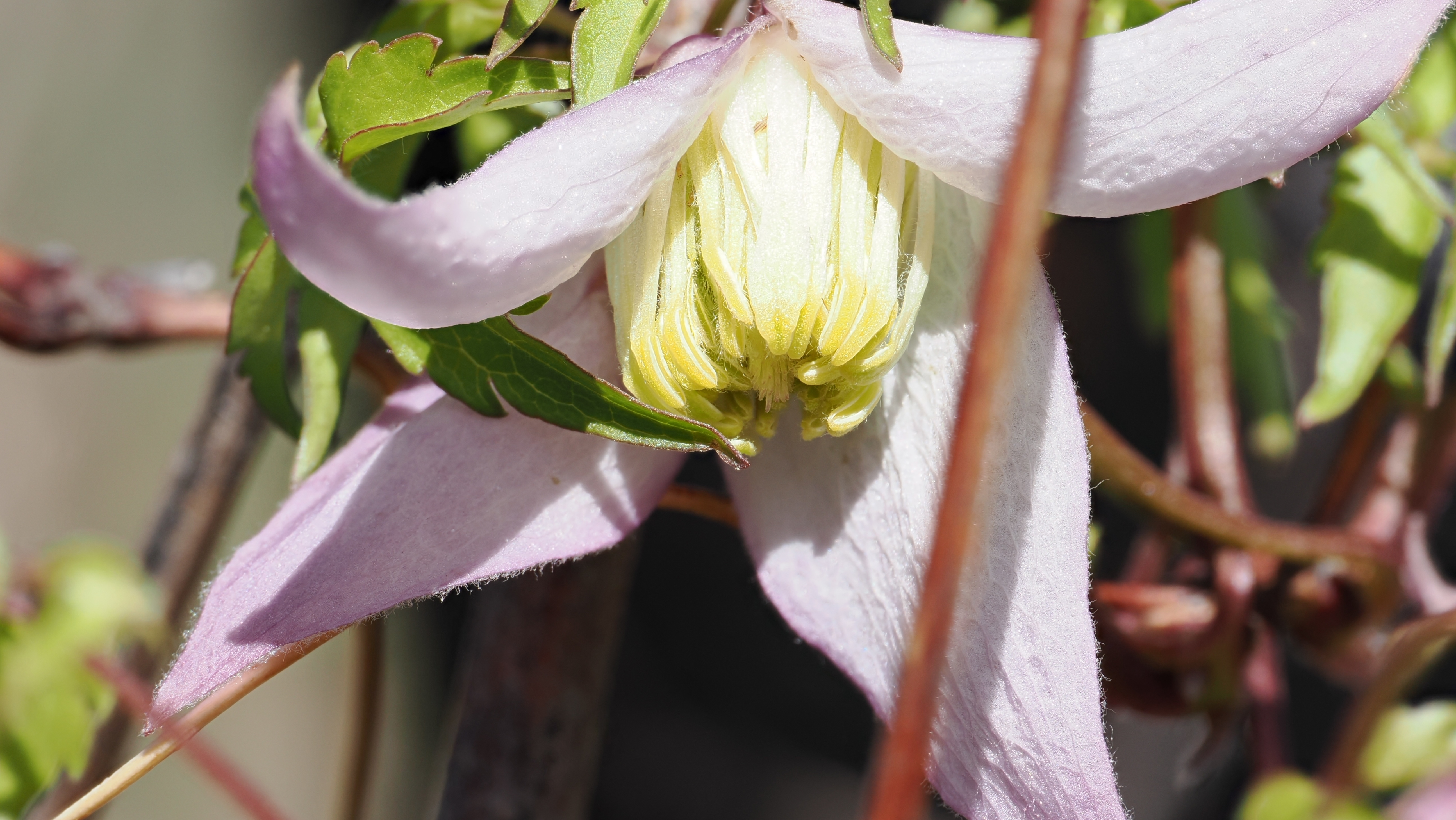
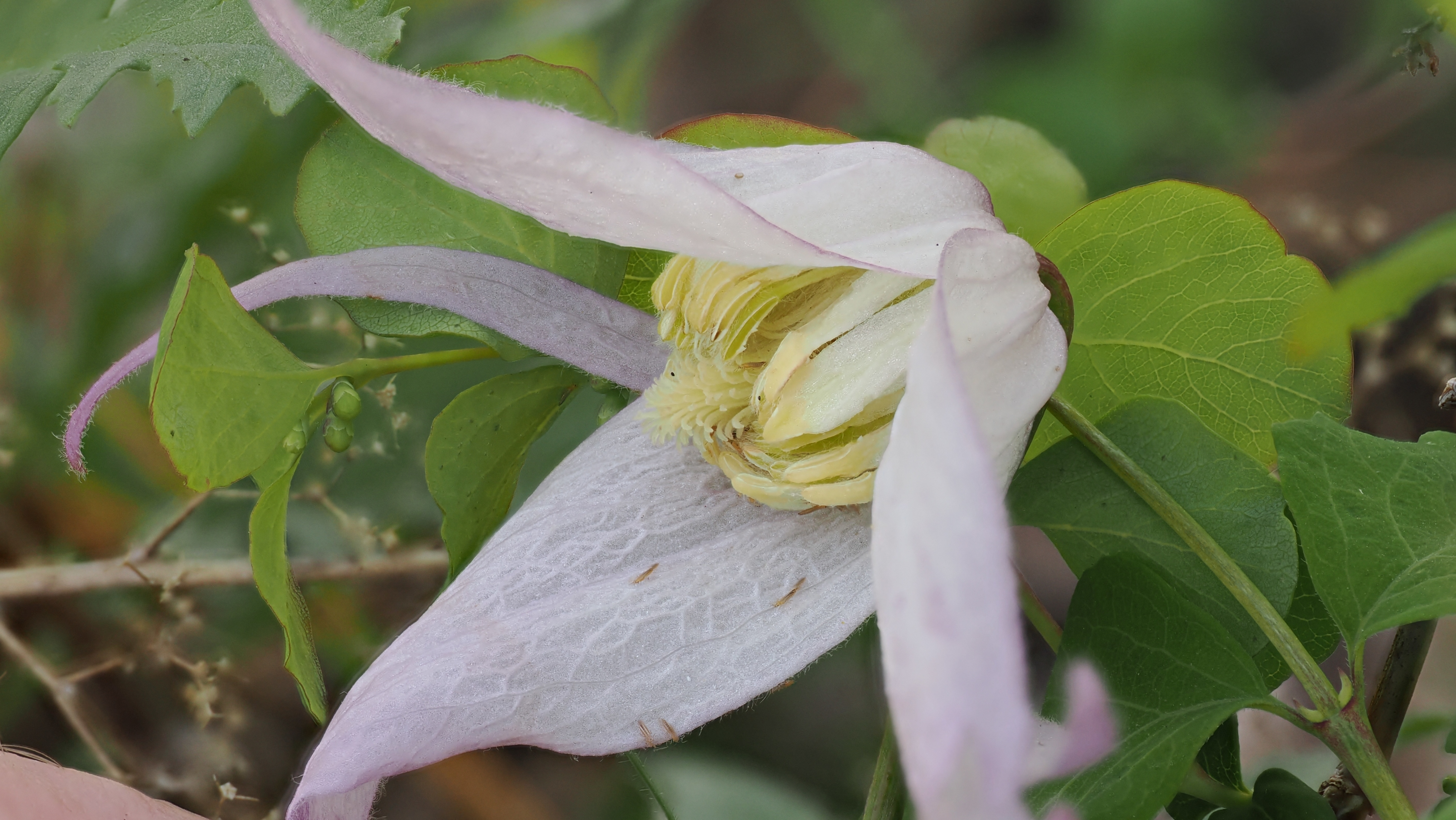
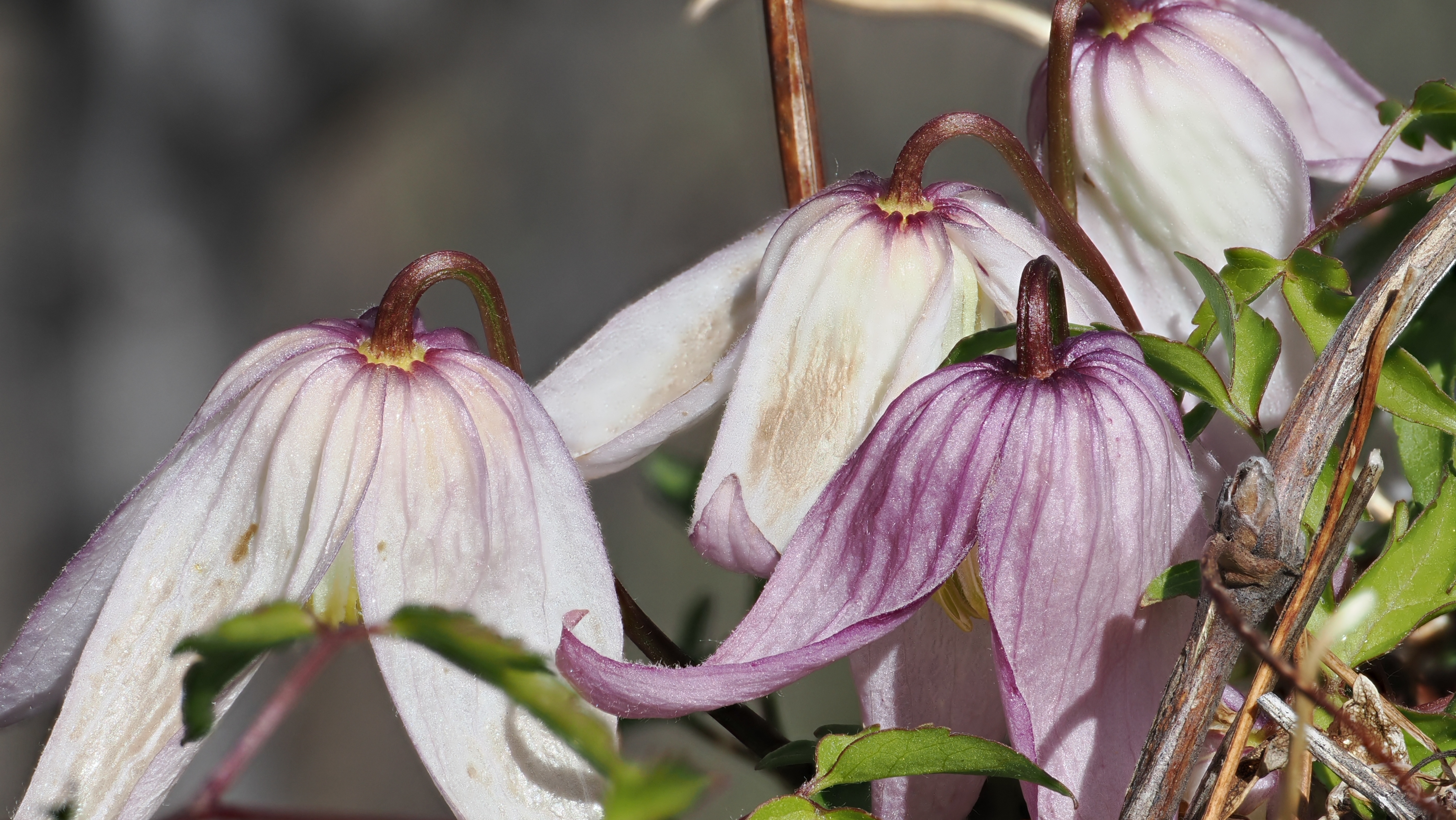
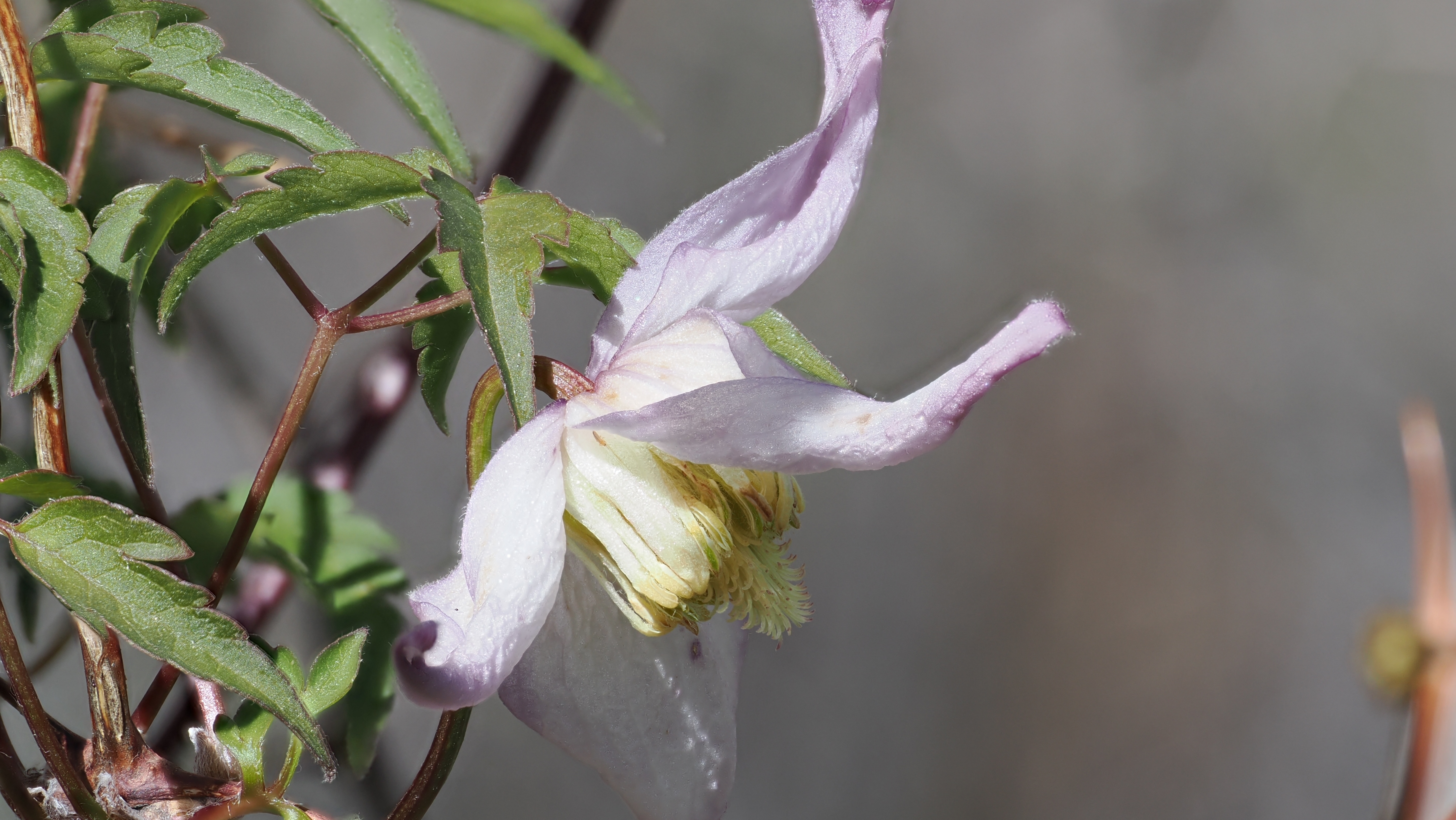
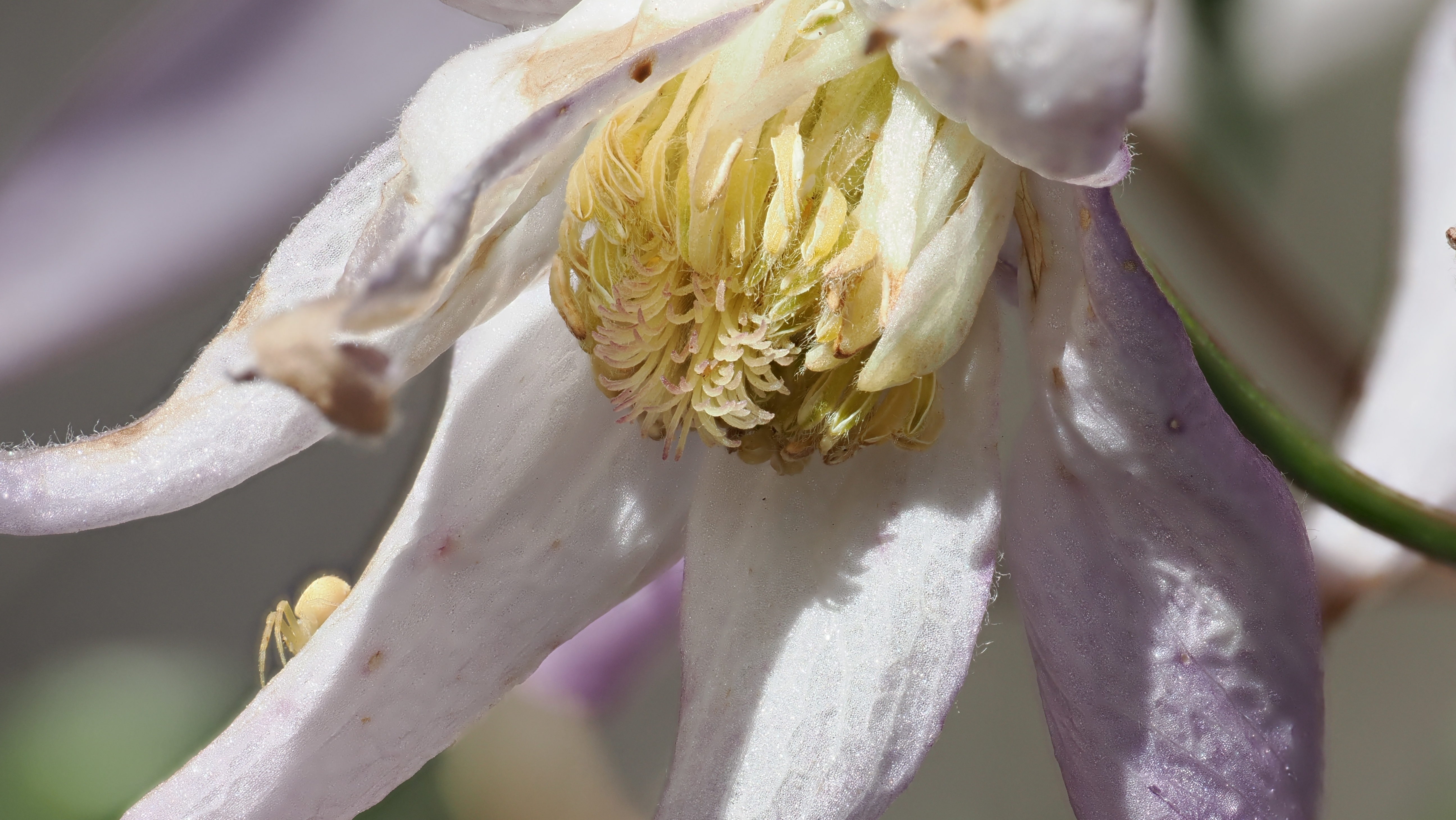
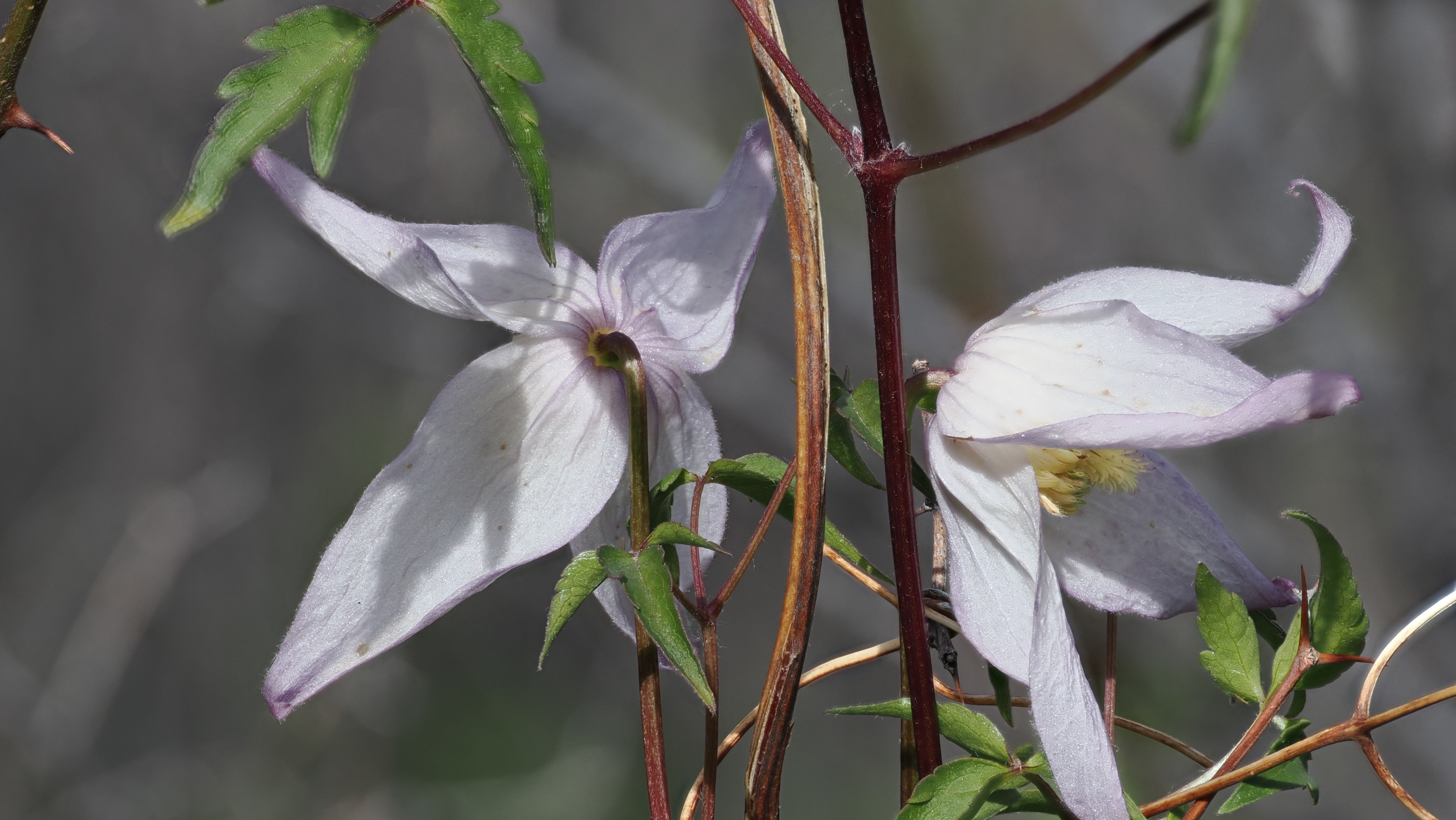
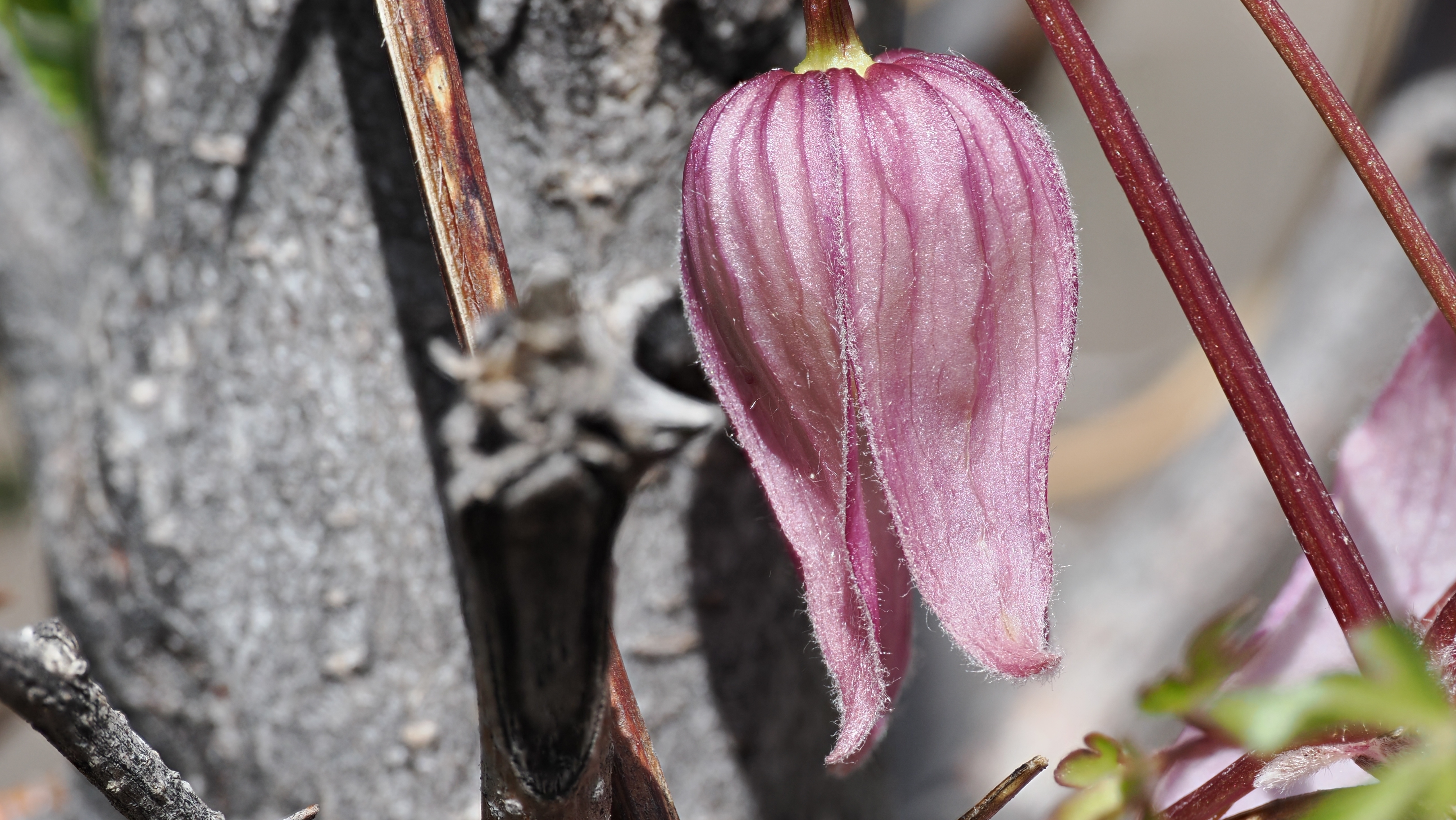
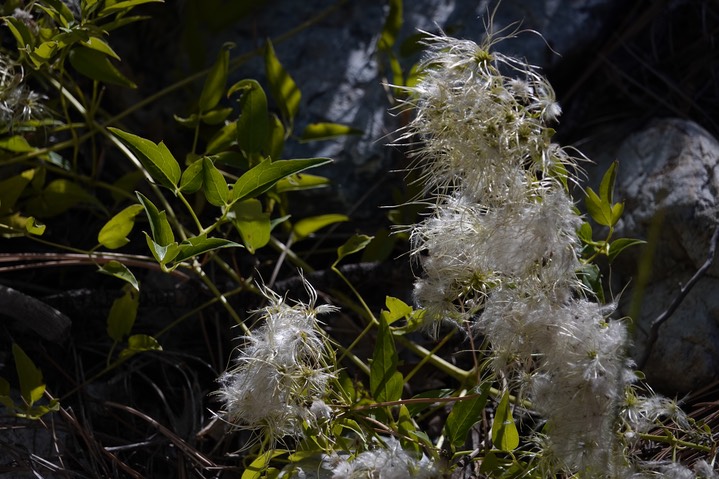
Clematis c. columbiana, Columbian Virgin’s Bower (a.k.a Rock Clematis), is a plant typically found in moist areas at higher elevations in the Black Range. In spring this species can be found in bloom along the Black Range Crest Trail and in such places as Railroad Canyon.
The species was first described (as Atragene columbiana) by Thomas Nuttall in 1834, in the Journal of the Academy of Natural Sciences. John Torrey and Asa Gray gave it its current scientific name in 1838, in the Flora of North America. Synonyms (previous scientific names) include Clematis pseudoalpina and Atragene pseudoalpina.
The Nlaka’pamux (Thompson Indians) are reported to have used this species in preparing a head wash for scabs and eczema.
Augustus Fendler collected a specimen of this species during May/June 1847 when he was collecting near Santa Fe, New Mexico. Fendler is a name well known to botanists in the southwest of the United States and is often credited as being the first botanist to collect in this region. Many of the plants in our region bear his name as part of their common or scientific name in recognition of his significant contributions.
Fendler and George Engelmann (another huge name from our botanical history) became friends in the mid-1840’s. It was Engelmann who acted as Fendler’s sponsor and arranged for the Army to provide free transportation and provisions for his first collecting trip to the area around Santa Fe, New Mexico. An excellent biography of Fendler exists, see “Augustus Fendler (1813-1883), Professional Plant Collector: Selected Correspondence With George Englemann” by Michael Stieber and Carla Lange, published in the Annals of the Missouri Botanical Garden, Vol. 73, No. 3, 1986. This article can be read, for free, via a subscription to JSTOR.
Less known are his efforts to understand gravity. In 1874, he published The Mechanism of the Universe and the Primary Effort-Exerting Powers...Twenty-Four Propositions on Gravitation...
Those who make significant contributions often do so at significant personal hardship, this is certainly true of Fendler. It makes a walk up Hillsboro or Sawyer Peak to see a specimen of this species seem trivial.
Clematis ligusticifolia
Virgin's Bower
Silver Creek Canyon
Black Range
New Mexico
September
Cologania angustifolia
Long Leaf Cologania
Forest Service Road 157, East slope of Bald Hill
Black Range
New Mexico
August
Commelina dianthifolia
Birdbill Dayflower
South of Iron Creek Campground
Railroad Canyon
& E. of Hillsboro
Black Range
New Mexico
August
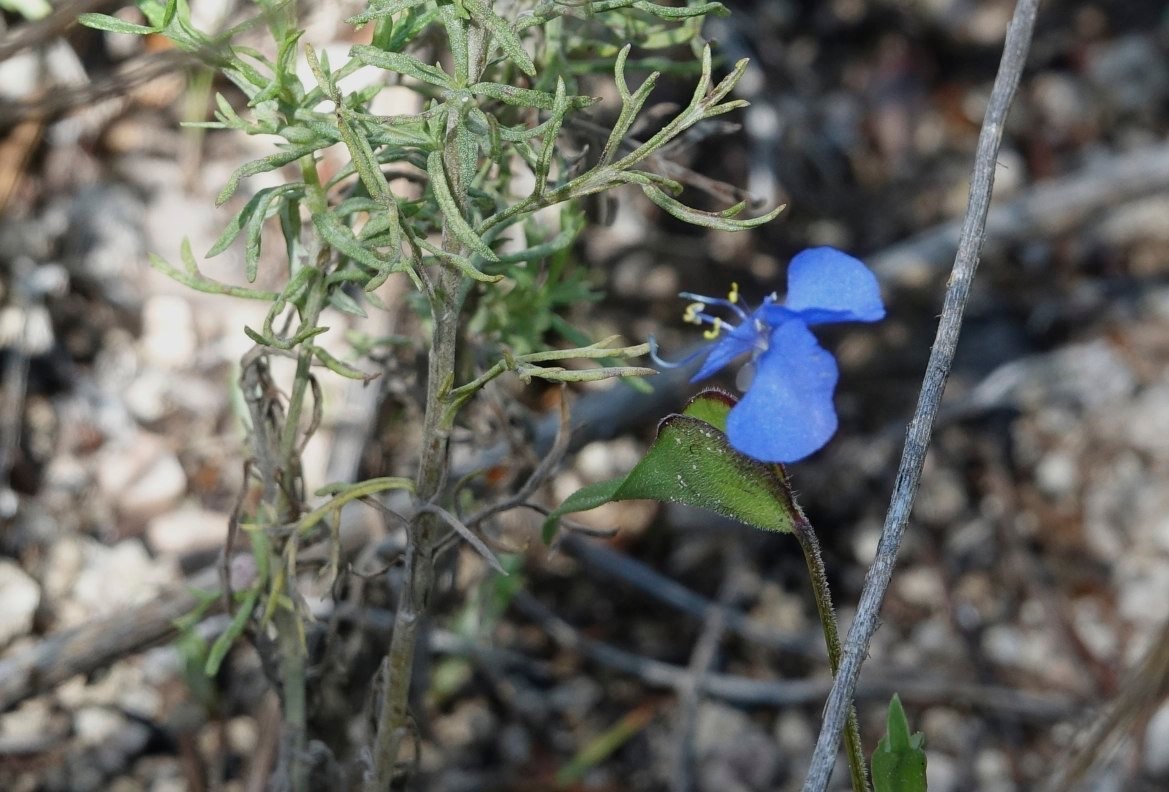
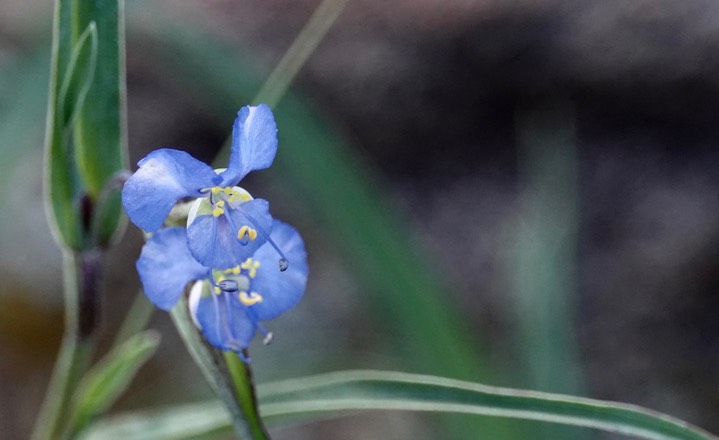
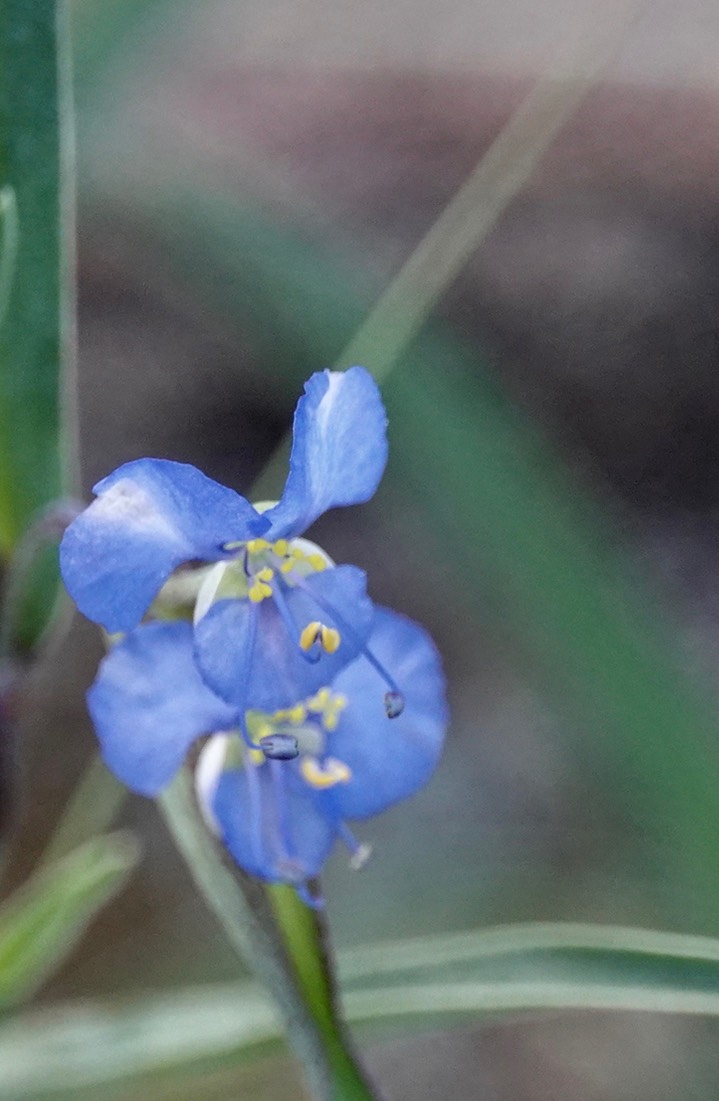
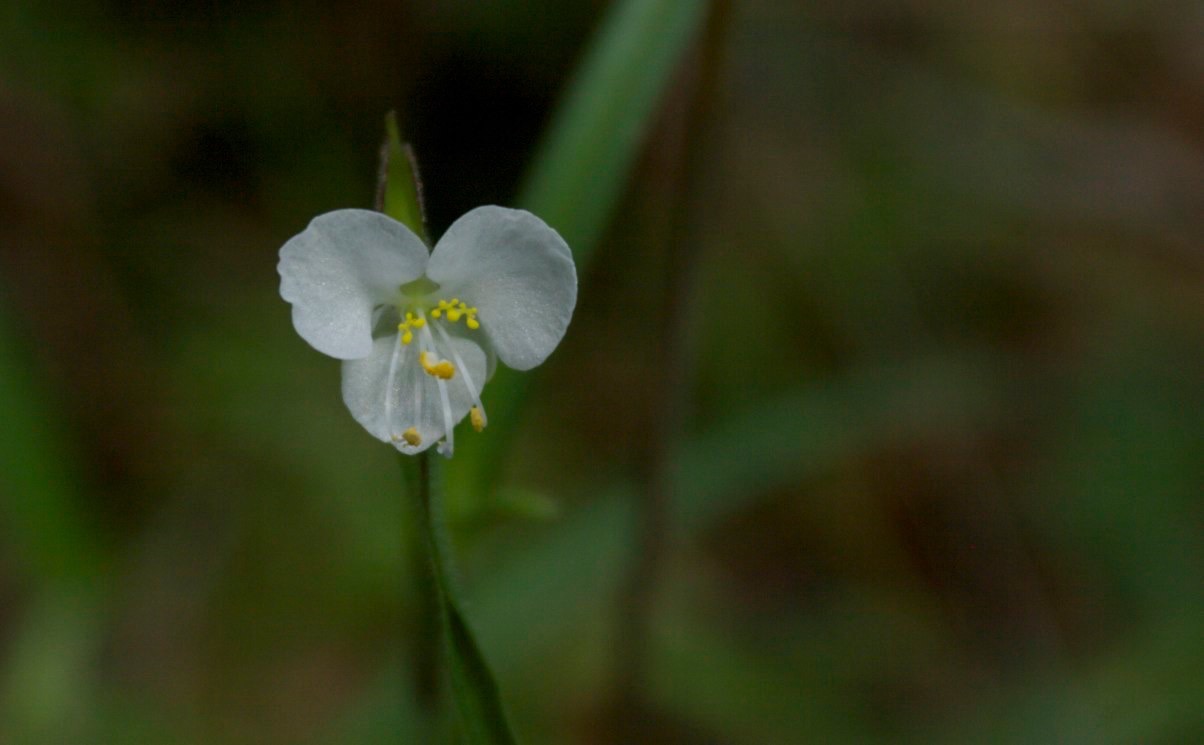
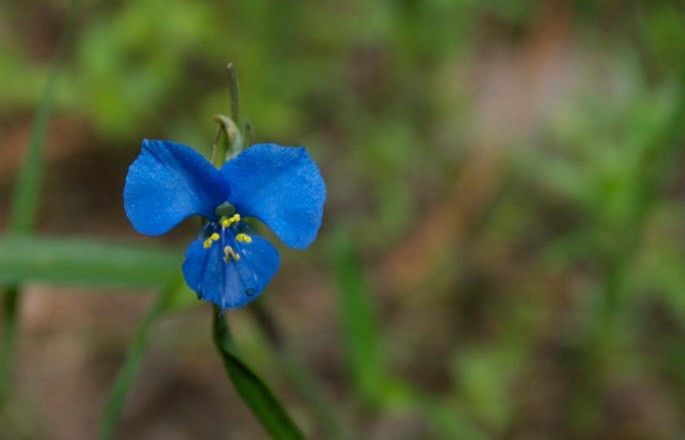
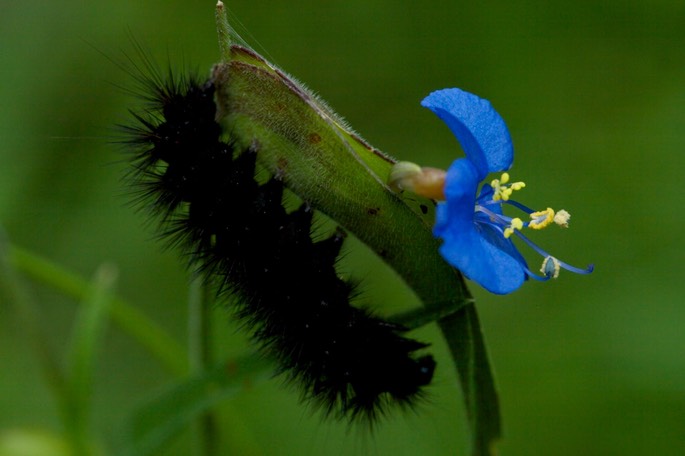
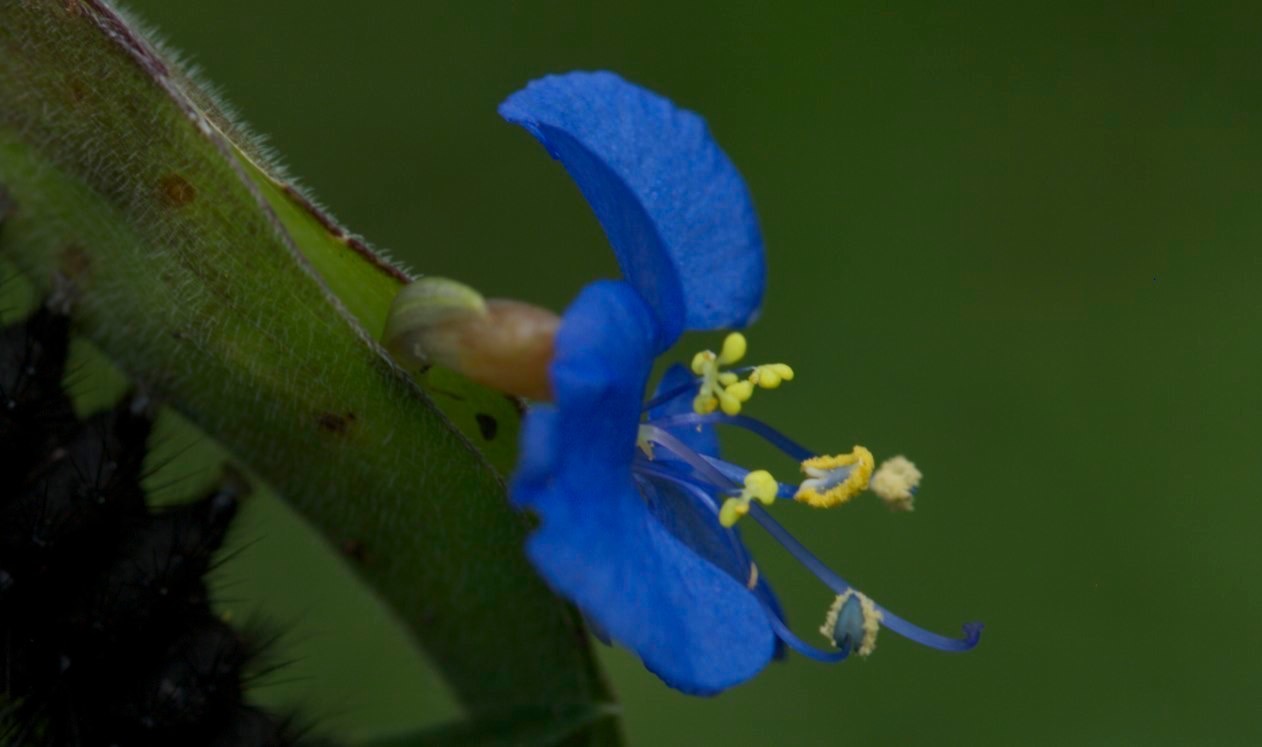

On August 12, 2016, we were hiking south of Iron Creek Campground, along NM-152 in the Black Range, trying - unsuccessfully - to get some exercise before being caught by a thunderstorm and getting quite wet. The hillsides had a significant number of plants in bloom, including the Birdbill Dayflowers, Commelina dianthifolia, shown here. This species was first described by Alire Raffeneau Delile in 1812. Since that time we have seen this common flower many times in nearby Railroad Canyon and even east of Hillsboro.
This species has a limited range in the United States, being confined (primarily to Arizona and New Mexico). It is also found in northern Mexico.
There are two varieties of this species, the nominate form, and C. d. var. longispatha but because these two varieties overlap so broadly some argue that it is not useful to continue to recognize these varieties.
C. d. var longispatha was first described by George Bentham as Commelina linearis. John Torrey later added the varietal name of longispatha and the current description of this variety was first made by C. K. Brashier in 1966. Other synonyms include C. dianthifolia var. filiformis and C. dianthifilia var. longispatha. The daguerreotype of Torrey was taken in 1840.
The Keres used an infusion of this species to strengthen individuals with tuberculosis.
As shown in the gallery, the flower is sometimes very white. Blue flowers are often close by when there are white flowers. The website for the Arizona - New Mexico Chapter of SEINet has photographs of white flowers from the same general locale.
Conopholis alpina var. mexicana
Alpine Cancer-Root
Railroad Canyon, Iron Creek, and east slopes of the Black Range
New Mexico
April & May
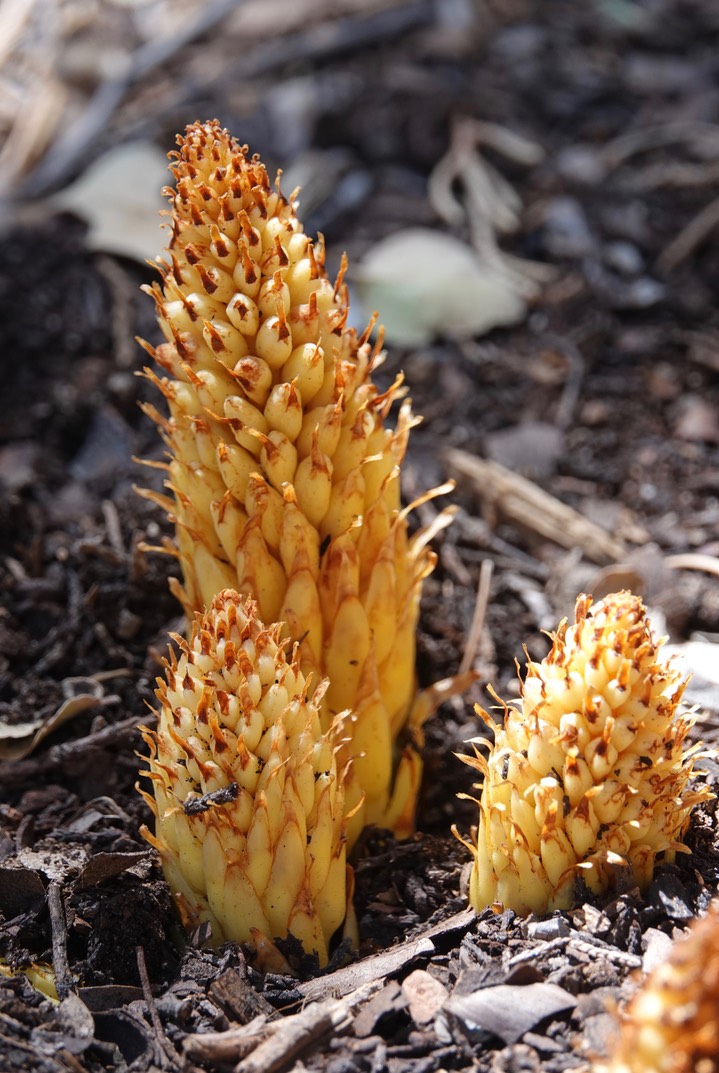
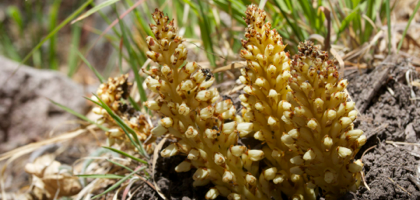
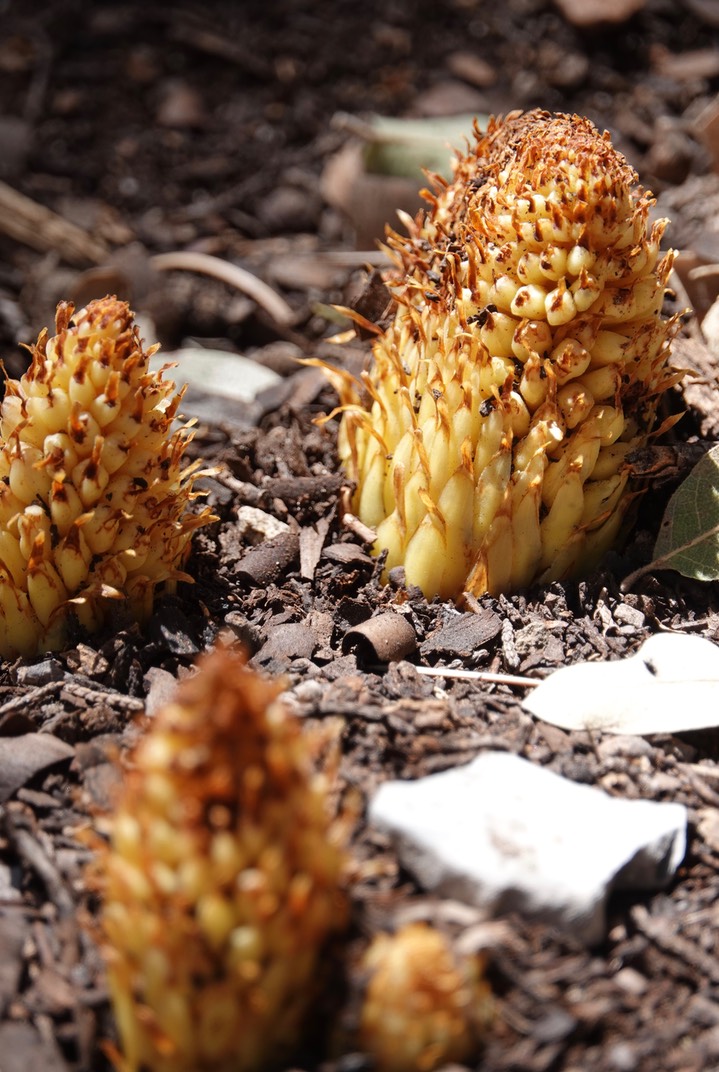
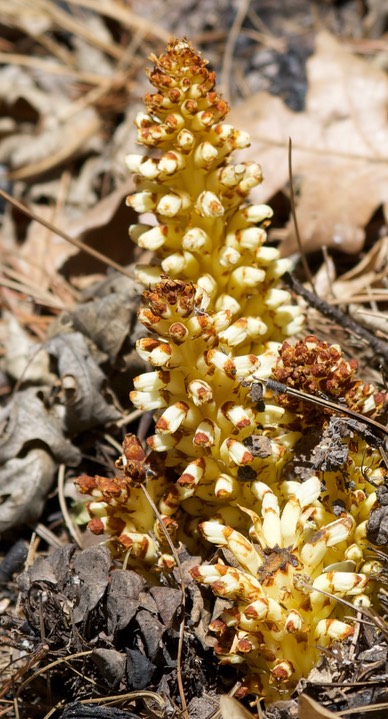
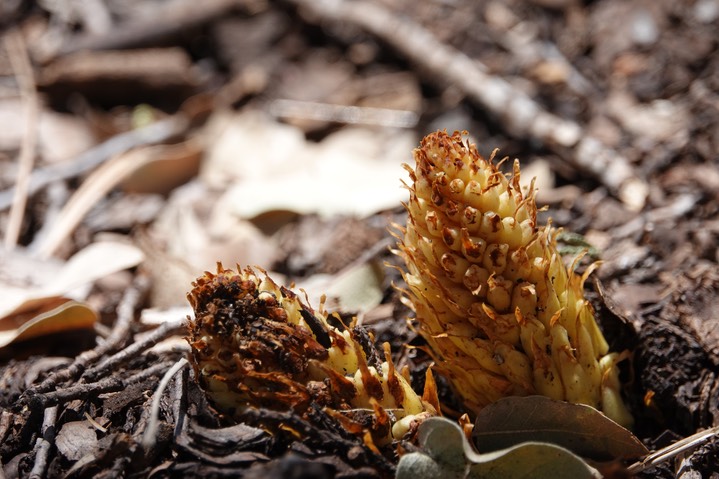
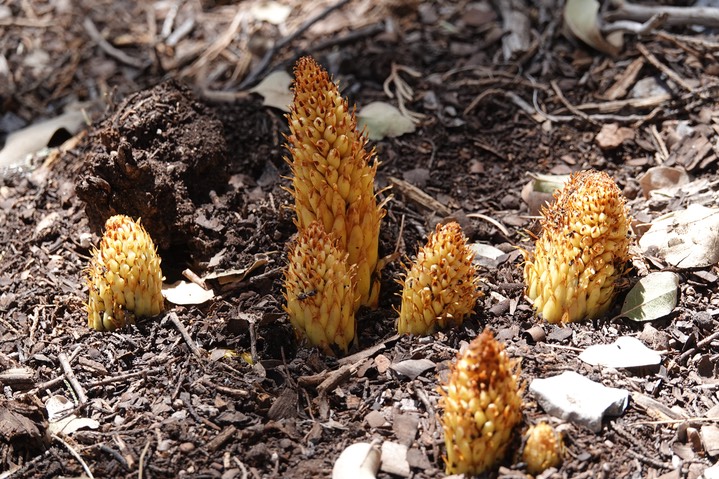
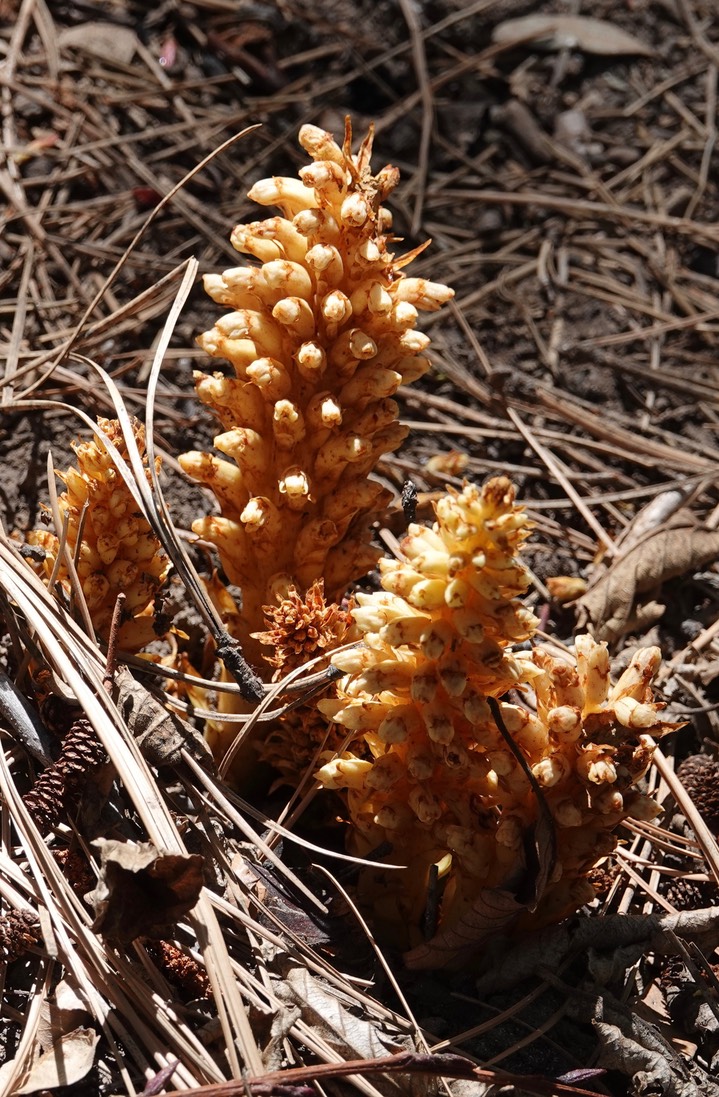
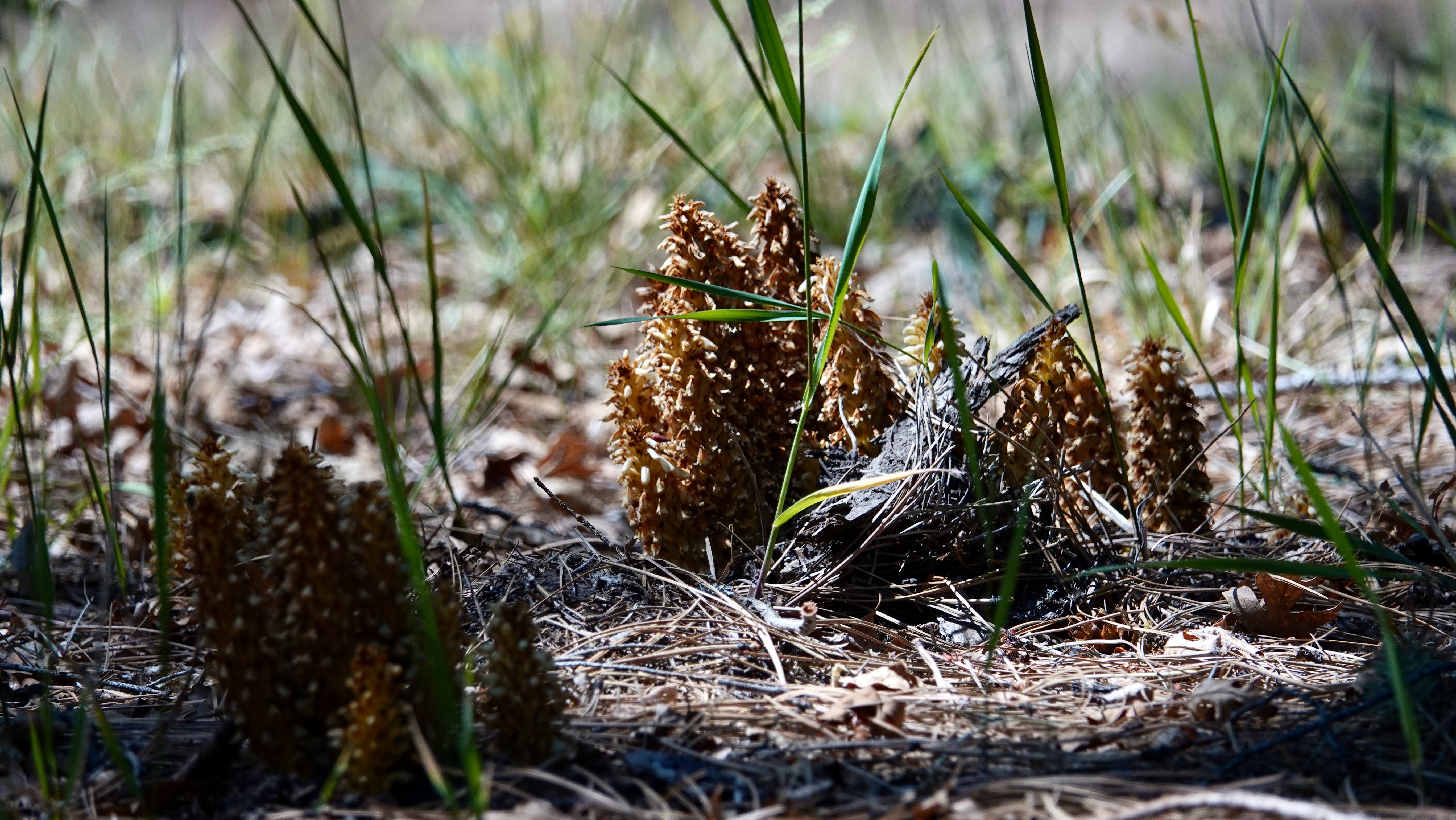
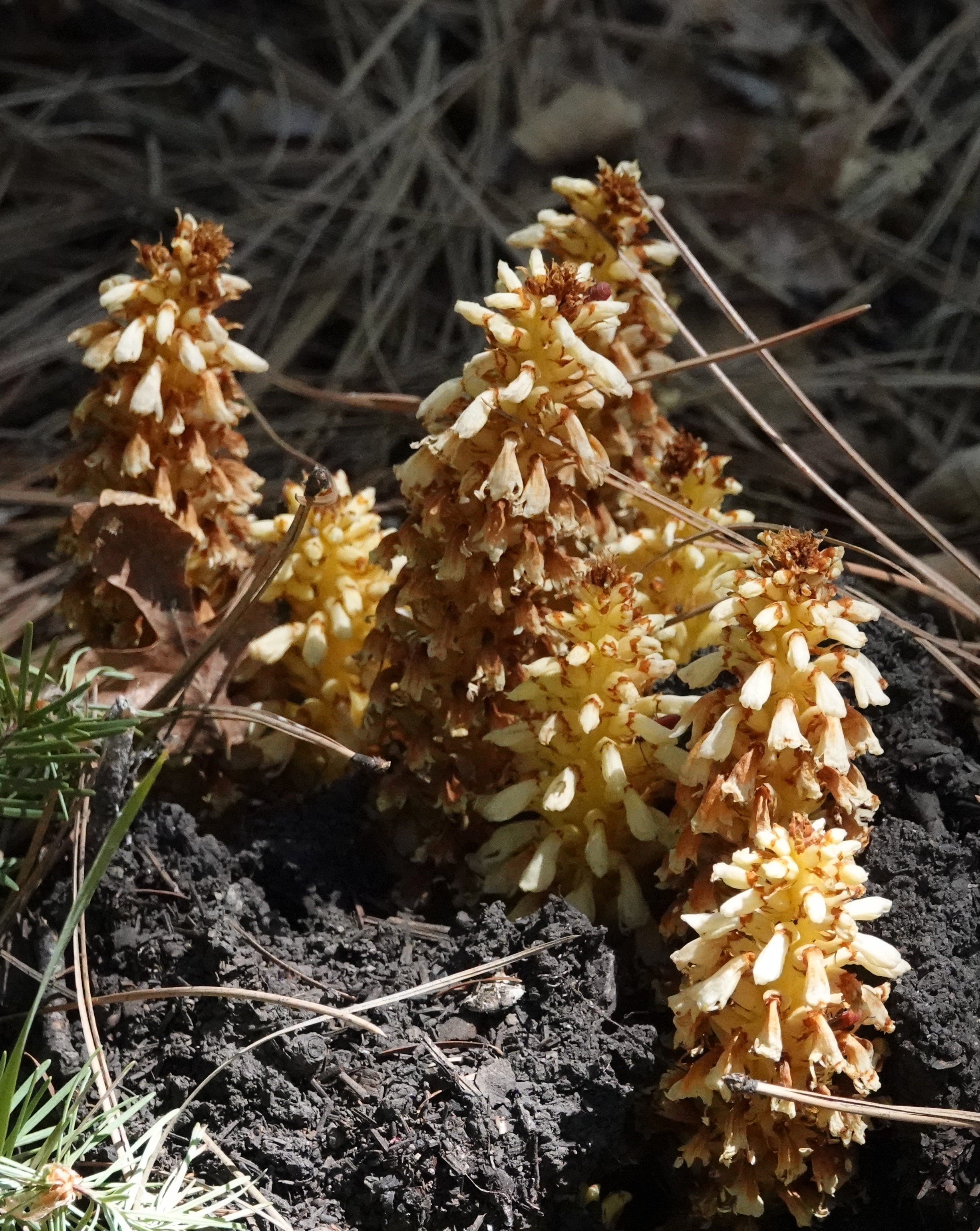
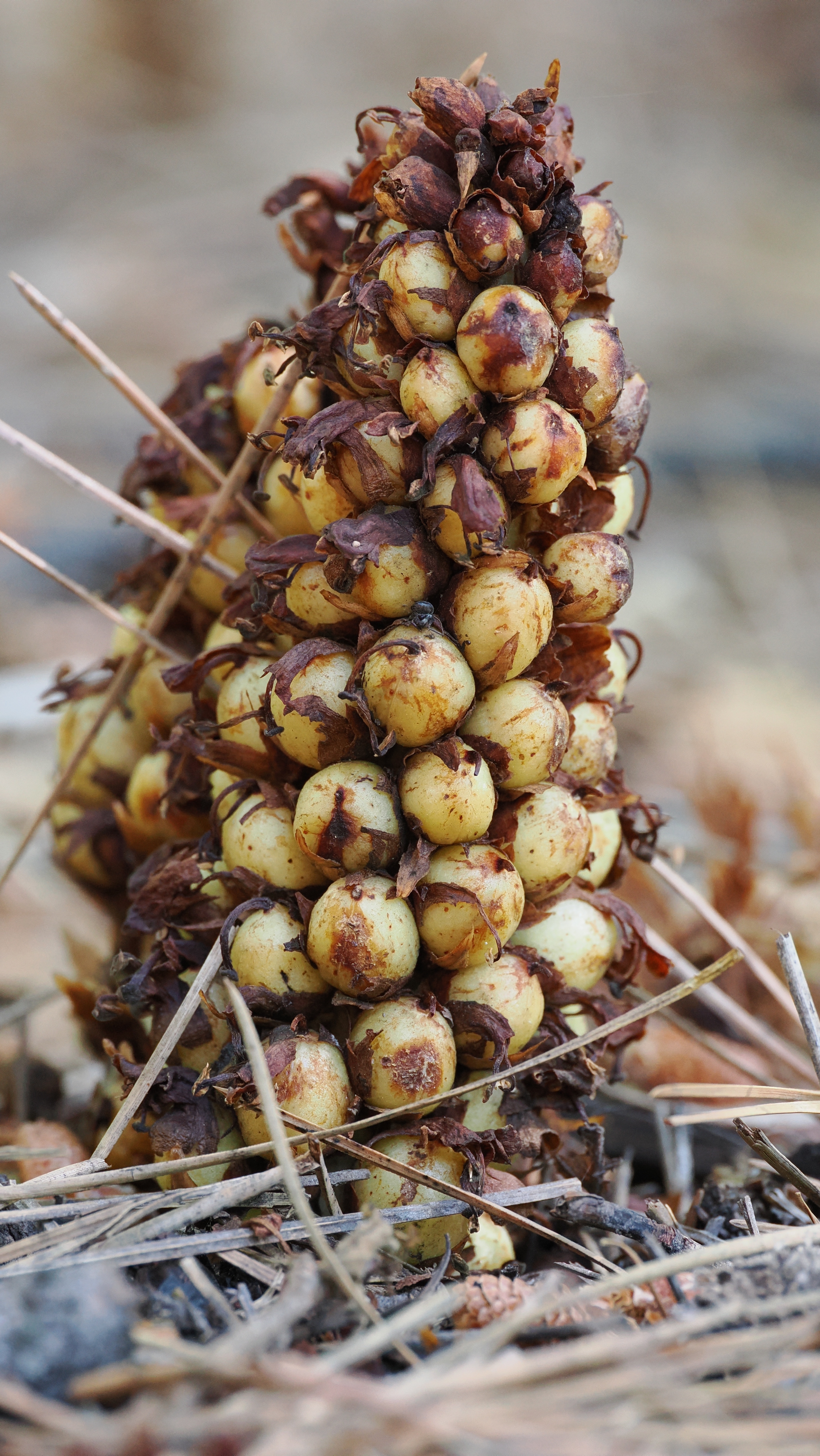
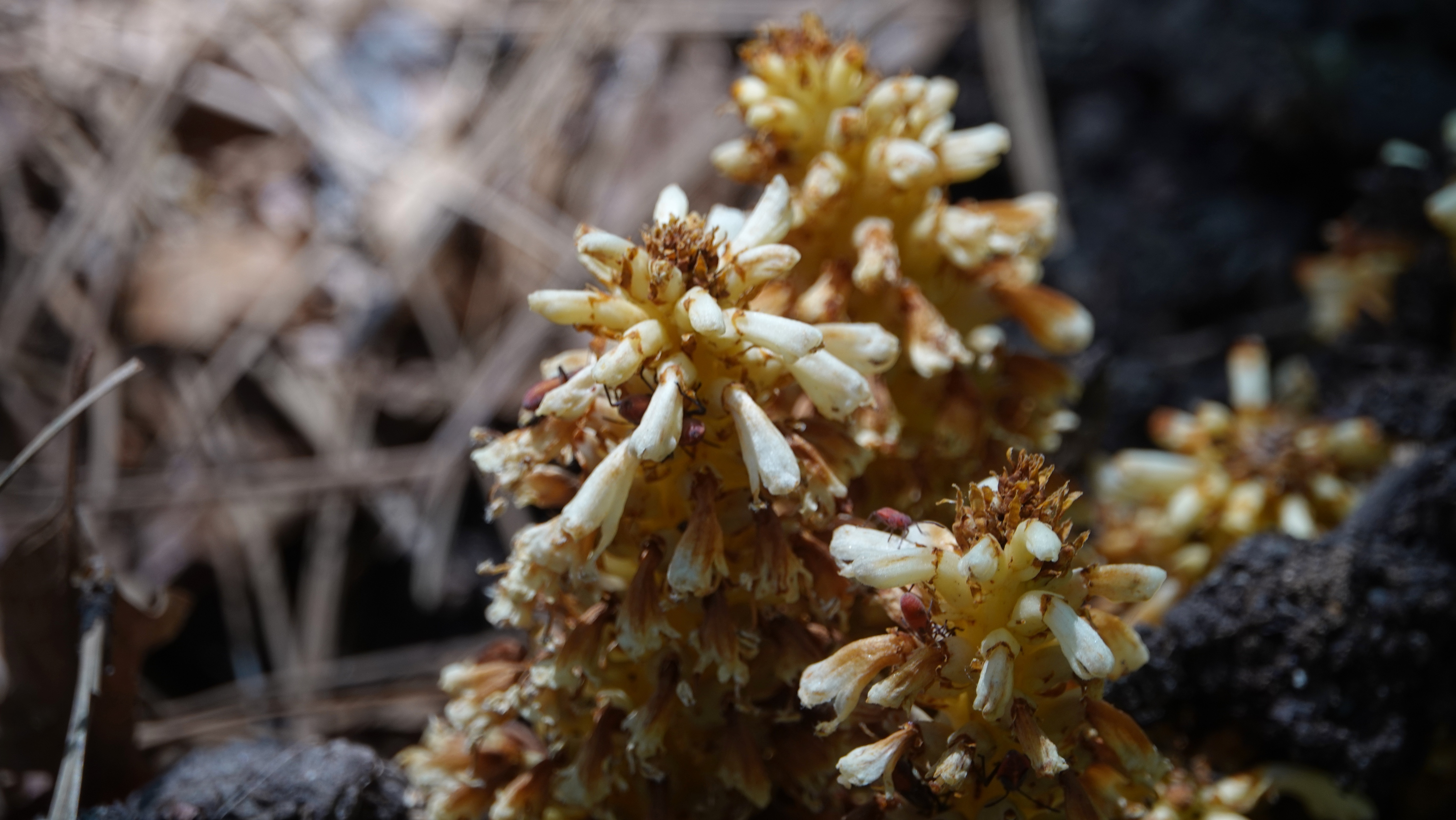
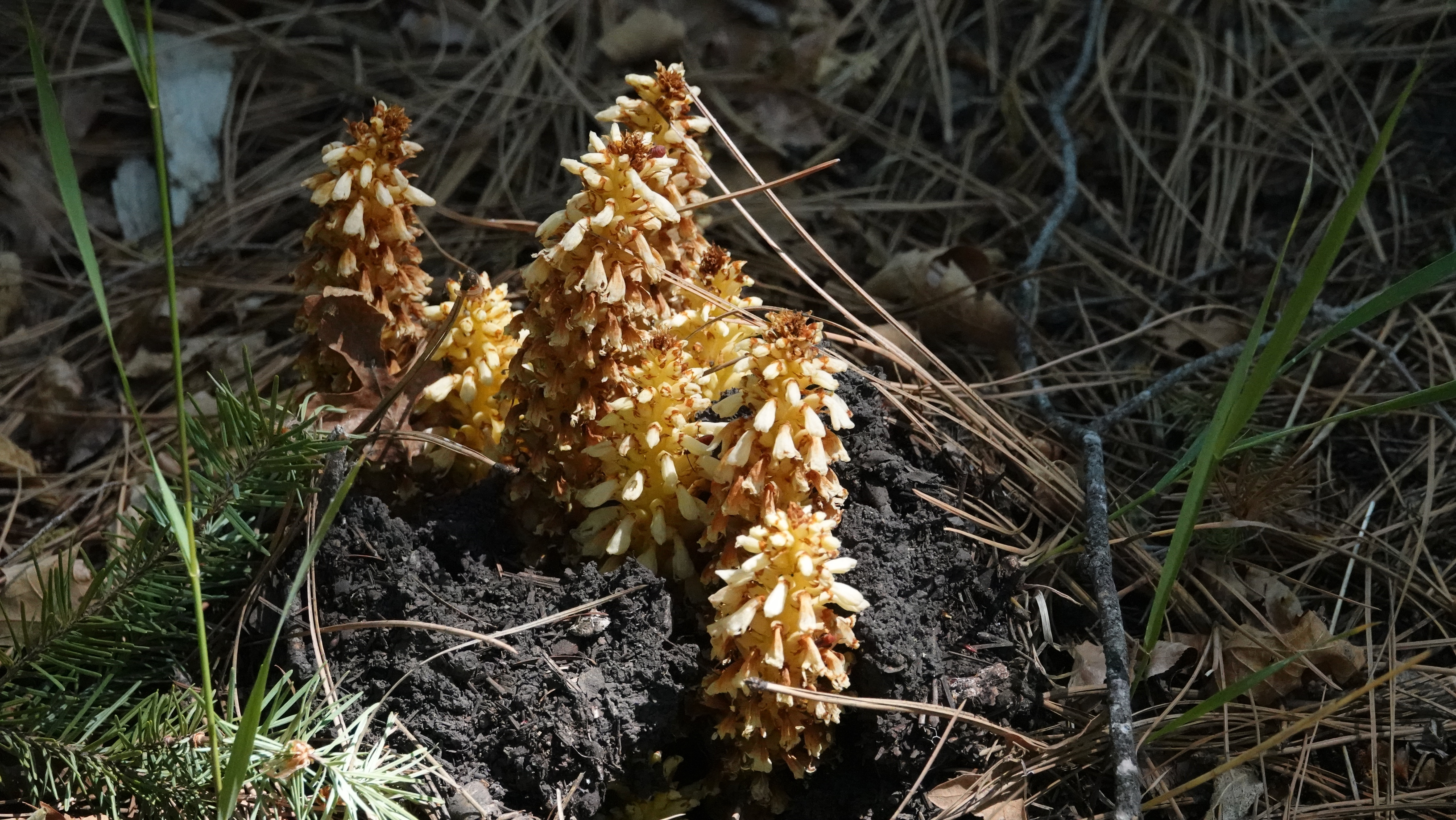
This species is also known as Mexican Cancer-Root, Alpine Squawroot, and Ground Cone. Its scientific synonyms include Conopholis mexicana, Orobanche multiflora var. xanthochroa, and Orobanche xanthochroa. Some authorities do not recognize subspecies within this species.
This is a root parasitic plant (holoparasite) which lacks chlorophyll (achiorophyllous).
Its range within the United States is limited to parts of Arizona, New Mexico, and west Texas. In Mexico, it is found as far south as Oaxaca.
The flowers of this species (protruding from all sides of the cone shaped structure) are cream colored, while the bracts (visible beneath the flowers) are brown. In the Black Range this species is generally found beneath Ponderosa Pine.
Convolvulus arvensis
Field Bindweed
San Lorenzo
and east of
Hillsboro
New Mexico
July
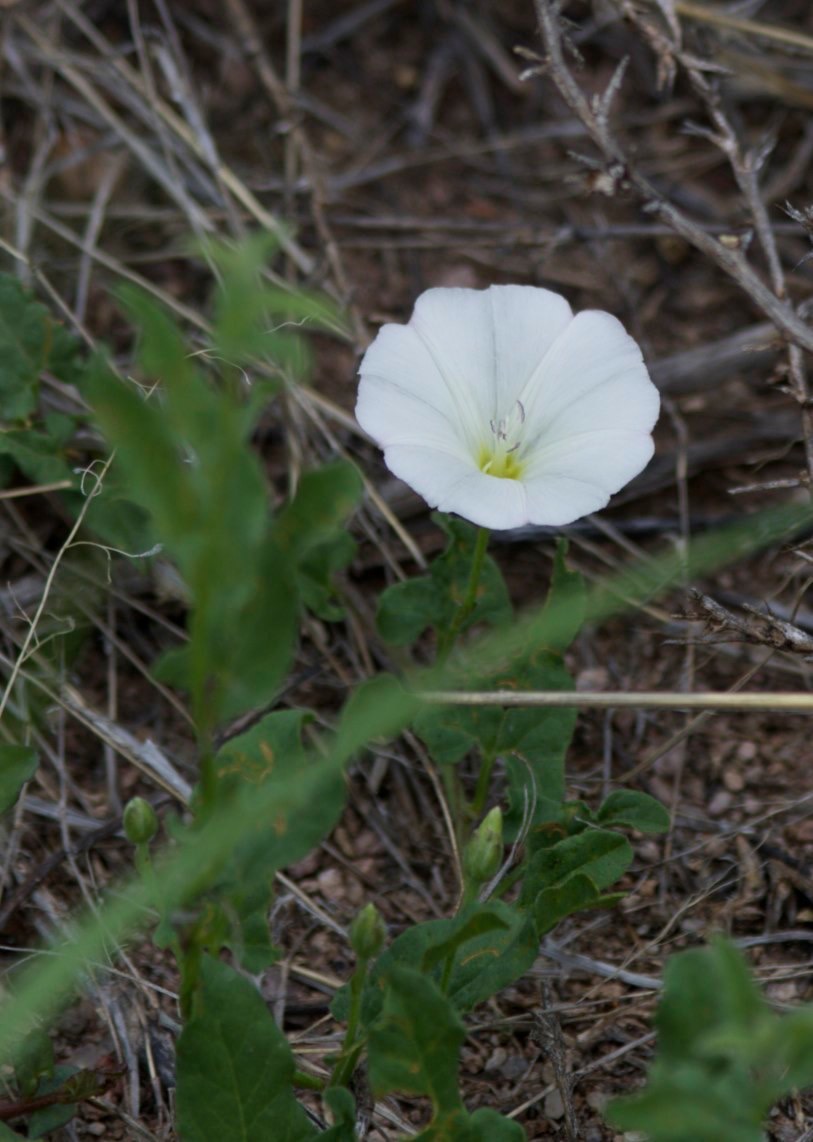
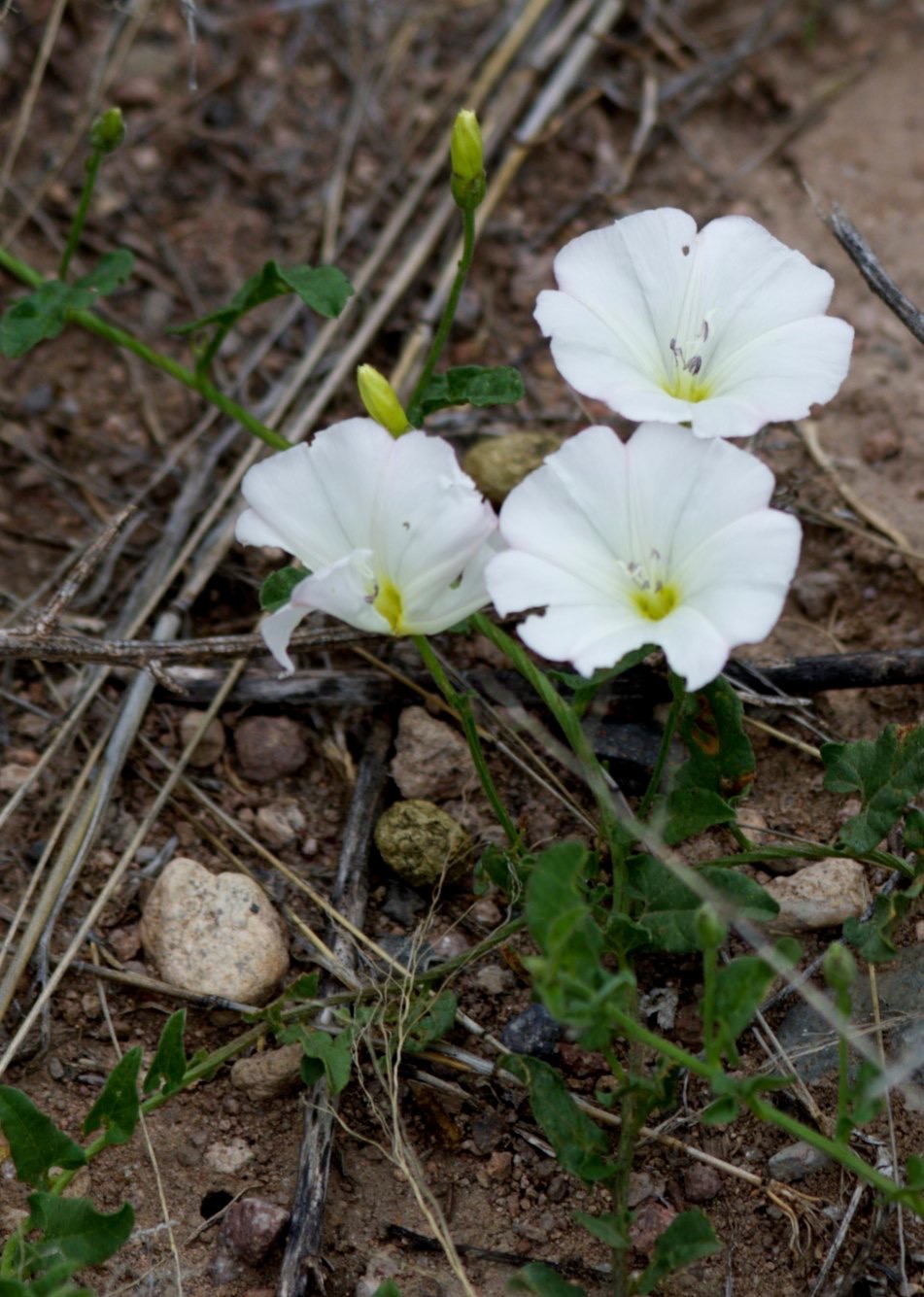
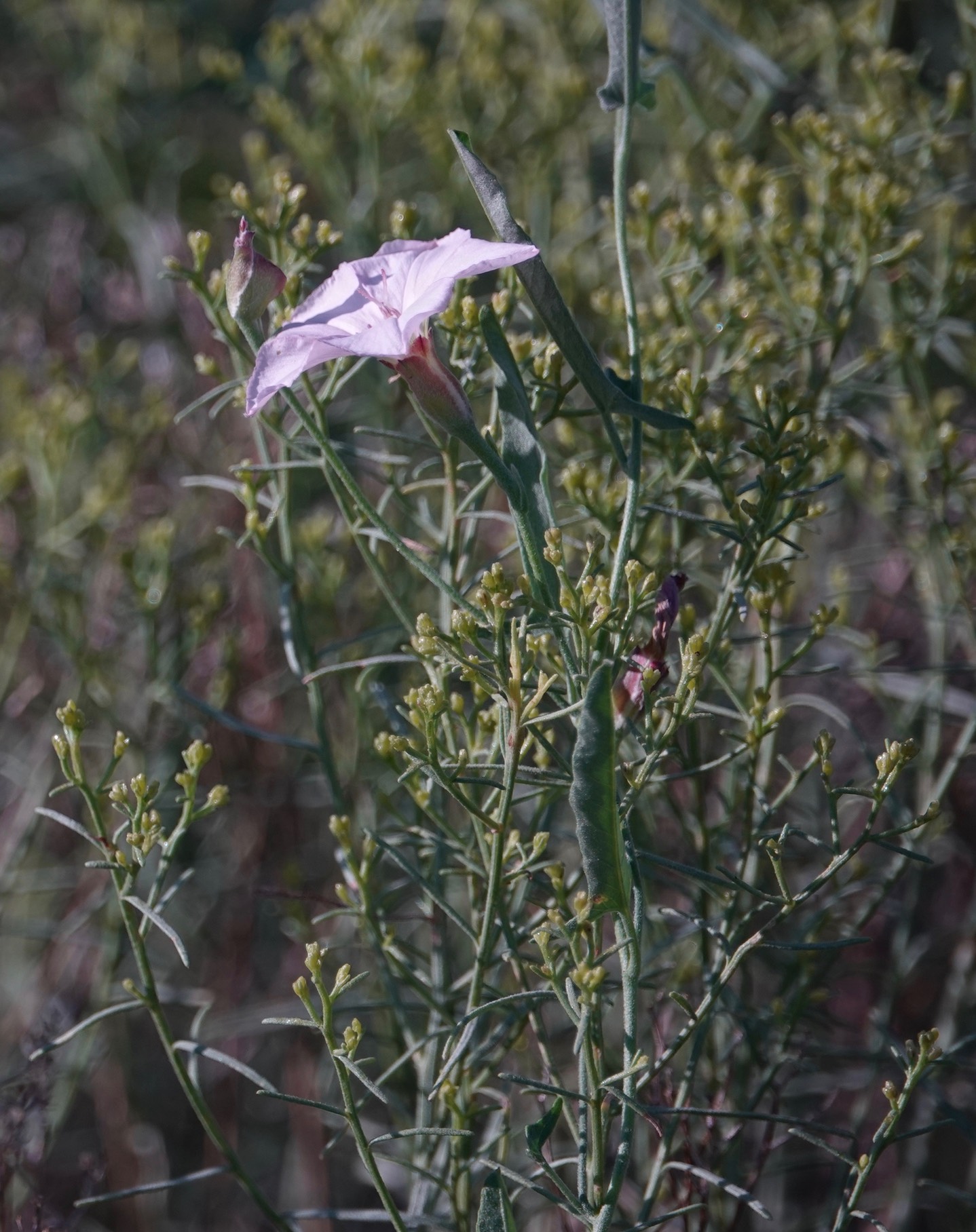
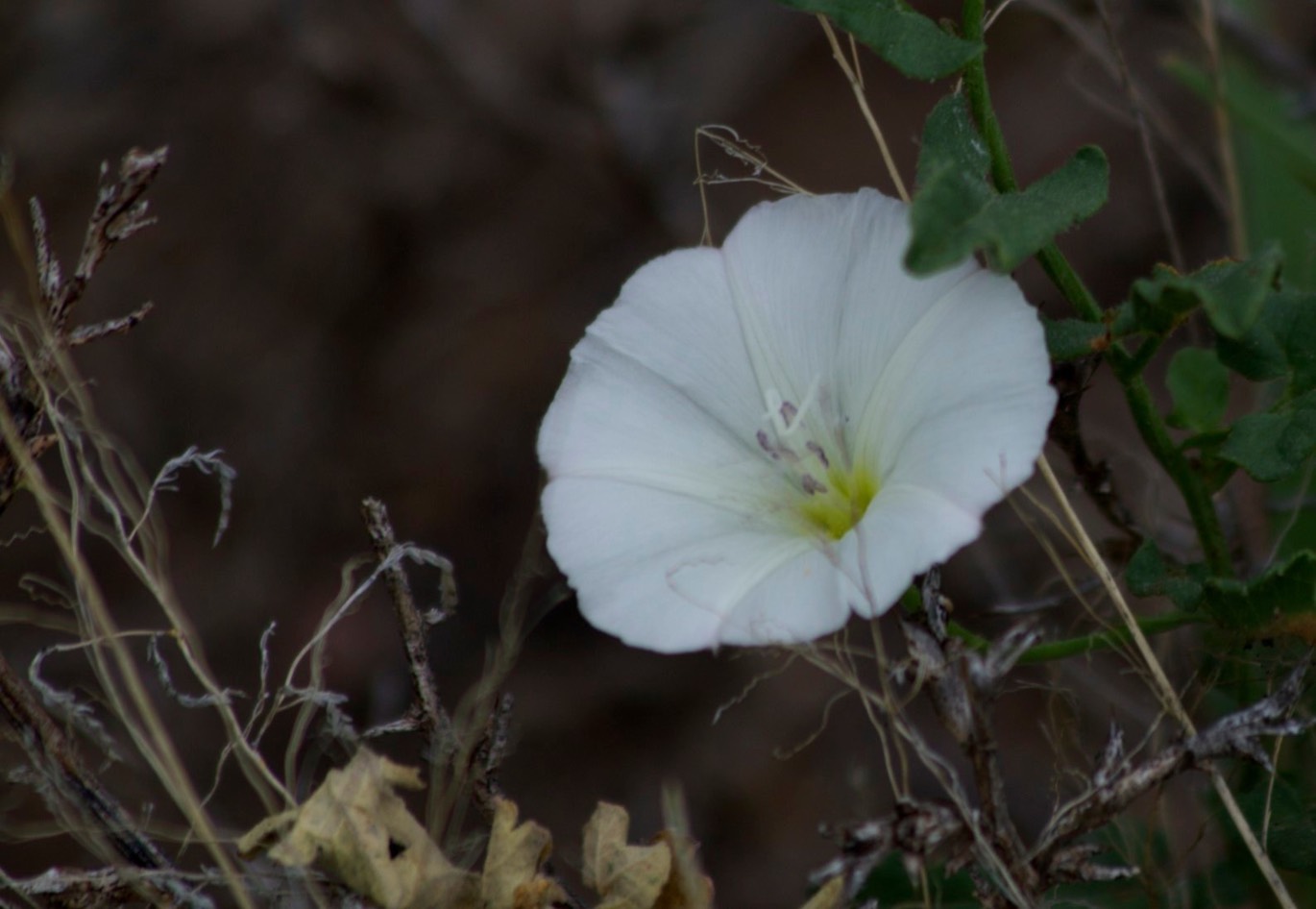
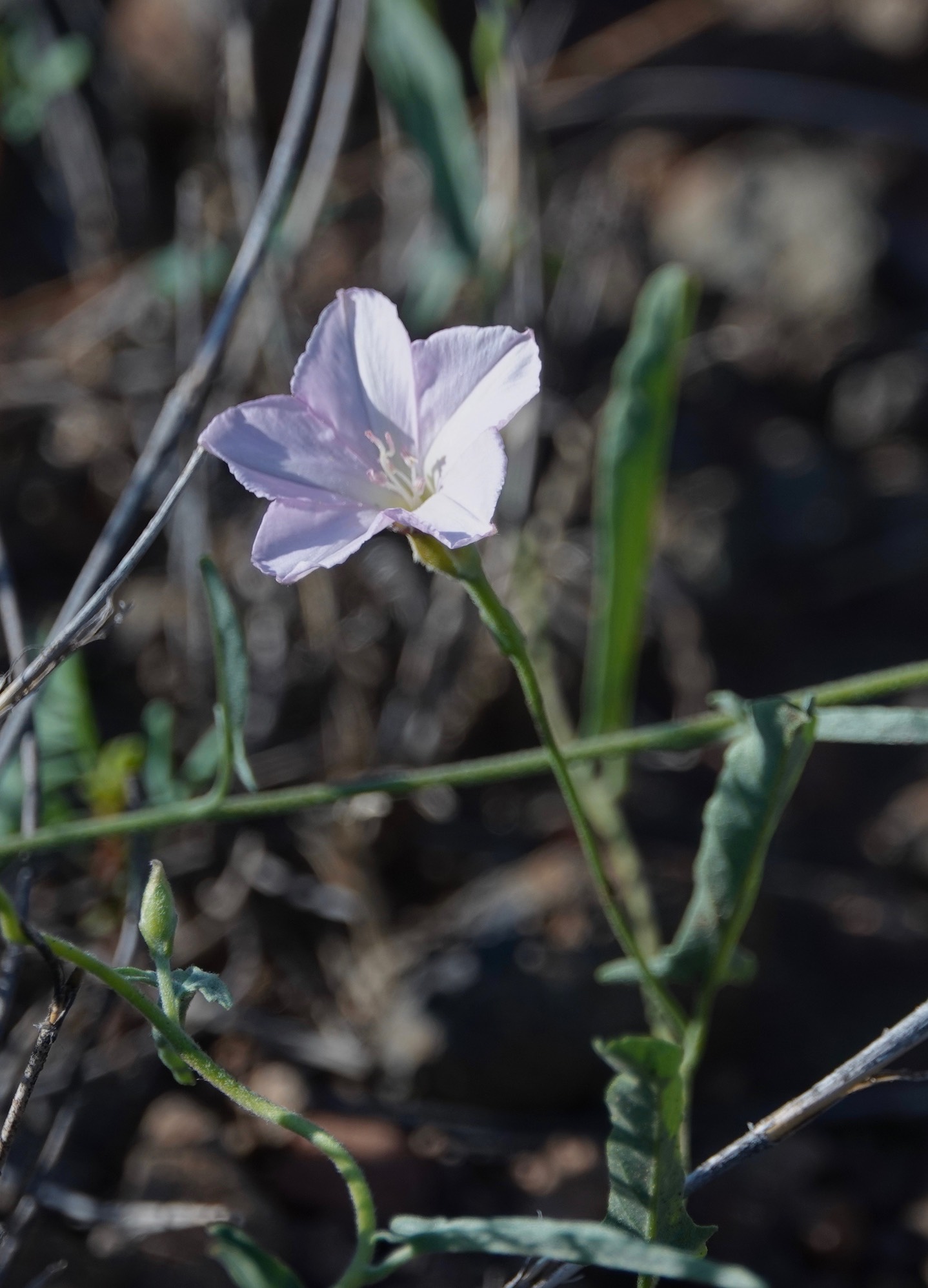
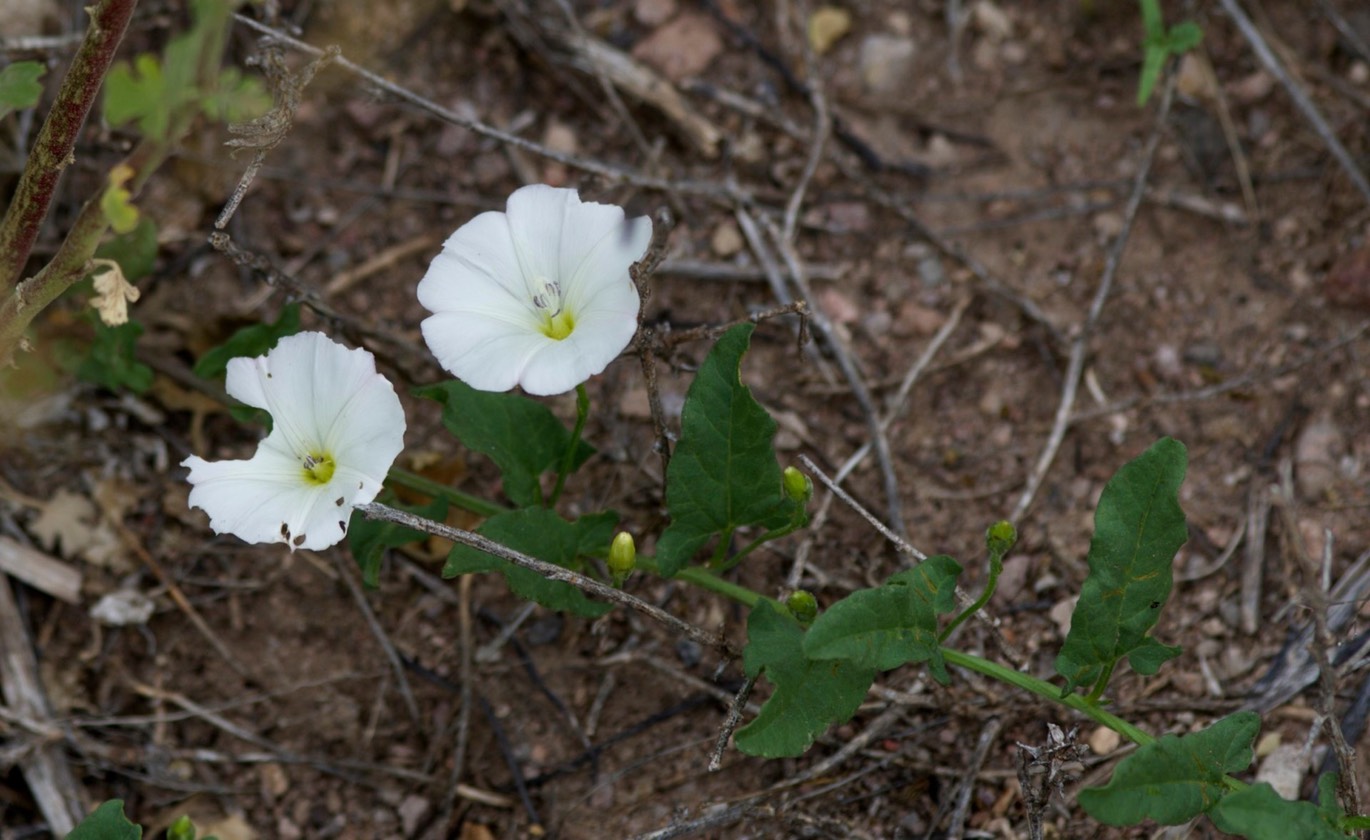
When this plant first blooms the flower is white. In just a few hours they will age to pink or a faint purple.
Field Bindweed is not native to the Americas, it was introduced into North America in about 1739, from Eurasia.
Other common names for this species include; Smallflowered Morning Glory, Lesser Bindweed, Perennial Morning Glory, Creeping Jenny, .... At this juncture it grows in much of the world and the common names proliferate. There are, however, only three scientific synonyms; C. ambigens, C. incanus, and Strophocaulos arvensis.
Most of the entries found on the internet have to do with the eradication of this species because of its detrimental impact on the economics of agriculture. There are so many entries because it is a difficult species to eradicate. For instance, on the surface the leaves and flowers take up very little space and, except in mass, do not proclaim themselves broadly here in the southwest. But they have root systems which may reach depths of 20 feet, easily reaching water in many of the flood plains of the southwest.
Convolvulus equitans
Dagger Bindweed
East of Hillsboro
New Mexico
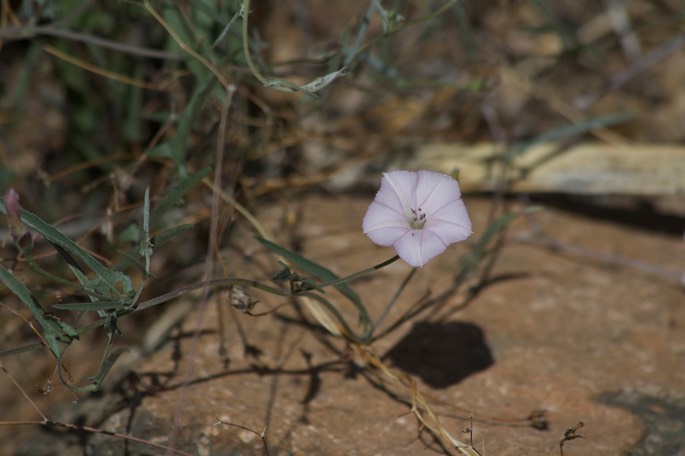
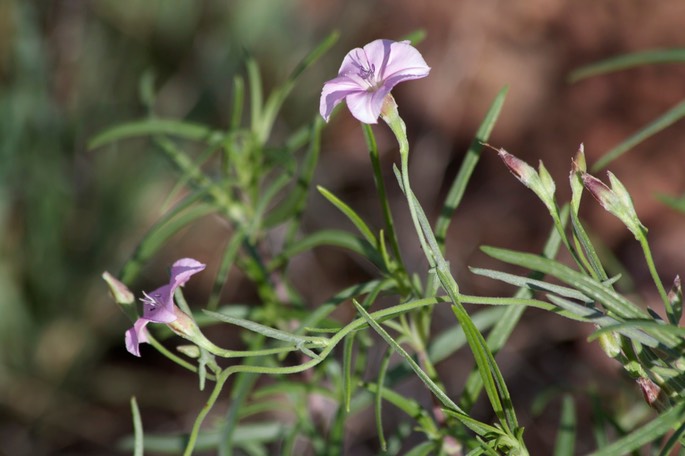
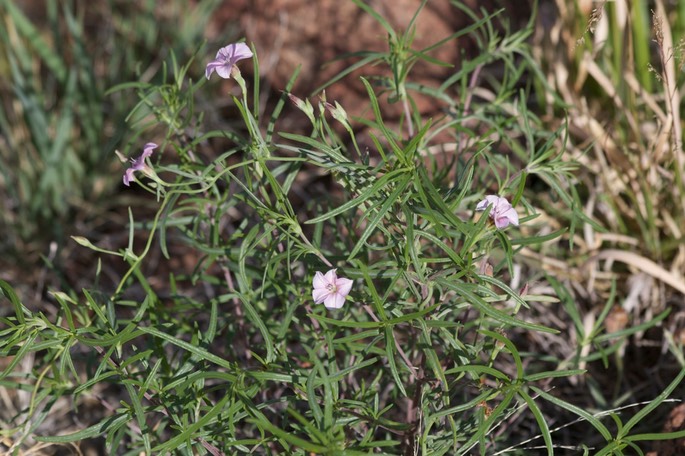
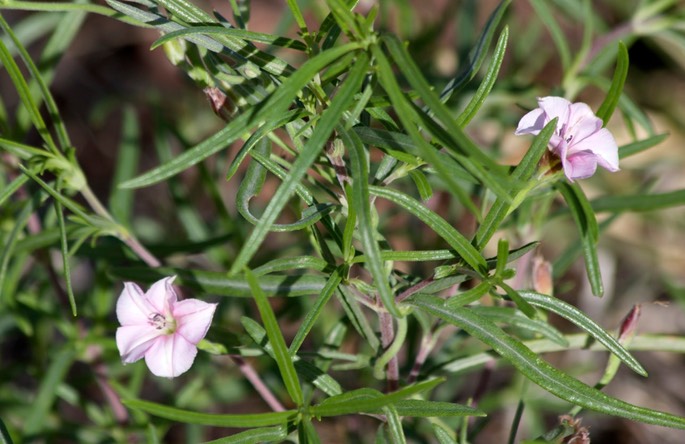
Dagger Bindweed (a.k.a. Texas or Gray Bindweed), Convolvulus equitans, is by no means a rare plant in our area. During the summer it is common on any of the walks around Hillsboro. Its low habit and distinctly shaped (arrowhead-like) leaves make this a fairly easy identification. It is most commonly found in disturbed areas in the southwestern United States (as far east as Texas, Oklahoma, Arkansas, and parts of Kansas) and northern Mexico.
The vines of this plant can grow to 6’, it hugs the ground, and like many Convolvulus is tenacious. There are from 200 to 250 species within the genus Convolvulus and the genus is cosmopolitan in its distribution.
This species was first described by George Bentham. Bentham was an English botanist who is considered the premier systematic botanist of his time, he never visited this area.
Corydalis aurea
Golden-smoke
Hillsboro
New Mexico
April
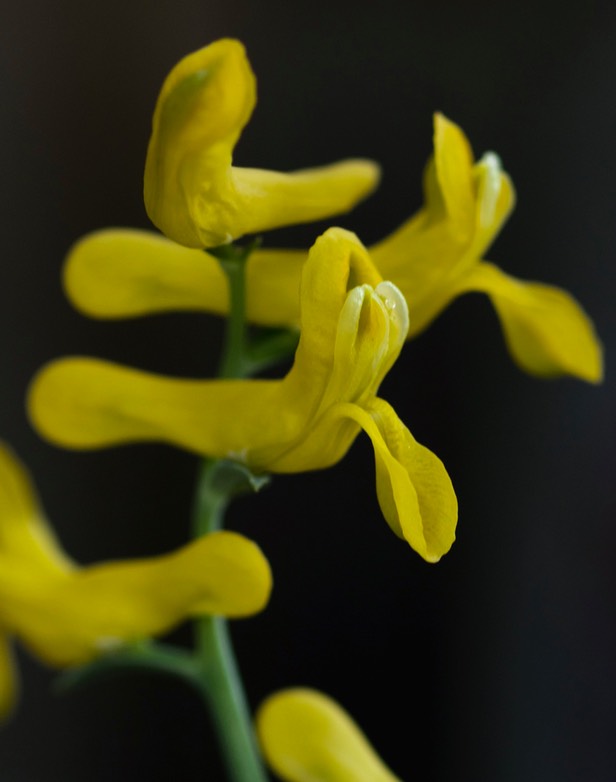
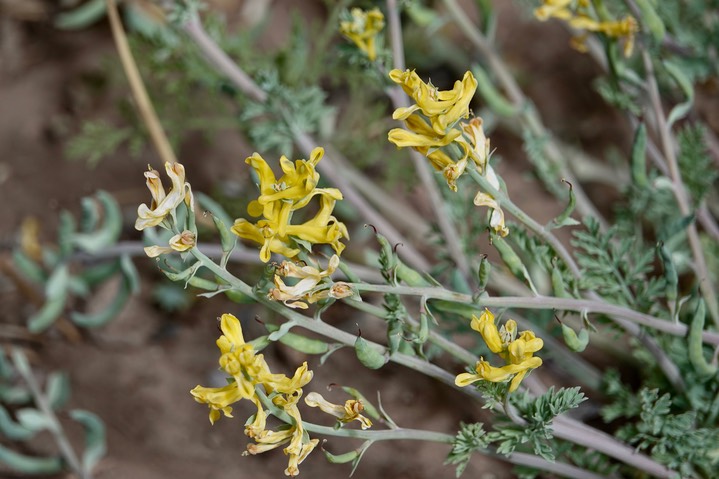
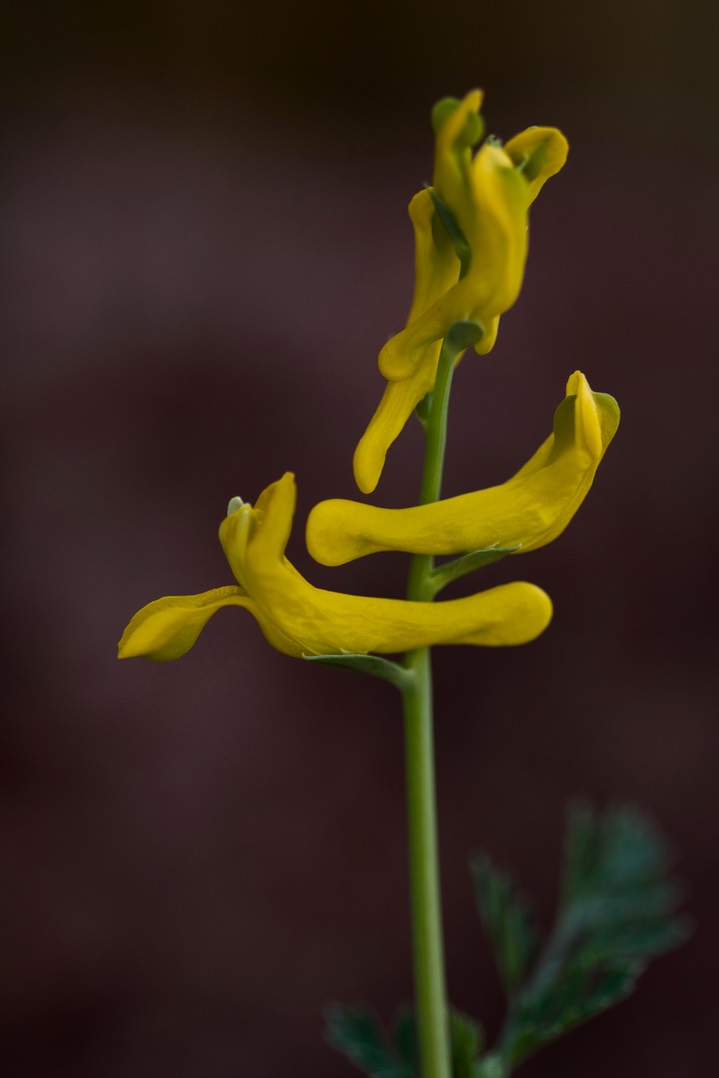
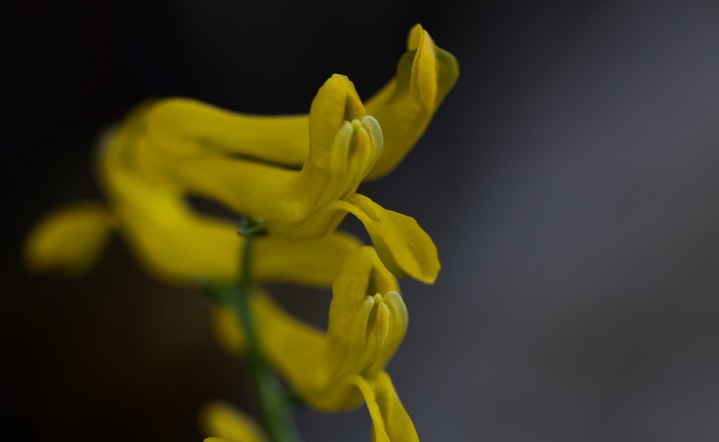
This species is prolific in the washes and hillsides on the east side of the Black Range. It has an interesting approach to seed dispersal. The seeds of this species are covered in an oily substance which repels mammals, mammals that might otherwise eat the seed. The smell of the substance apparently reminds some ant species of the smell of a dead comrade, they take the seeds back to their colony and the oily substance gets eaten. Once eaten the seed is regarded as trash and is deposited on the debris pile of the colony. Debris piles are rich in organic material, the perfect place for a young Corydalis aurea seedling.
Cryptantha barbigera
Bearded Cat’s Eye
North Wicks Canyon
East of Hillsboro
New Mexico
April
Cryptantha cinerea
Bow-Nut Cryptantha
East of Hillsboro
New Mexico
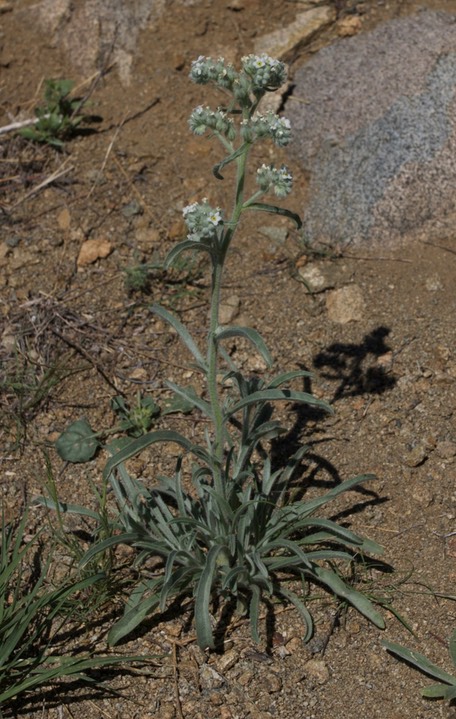
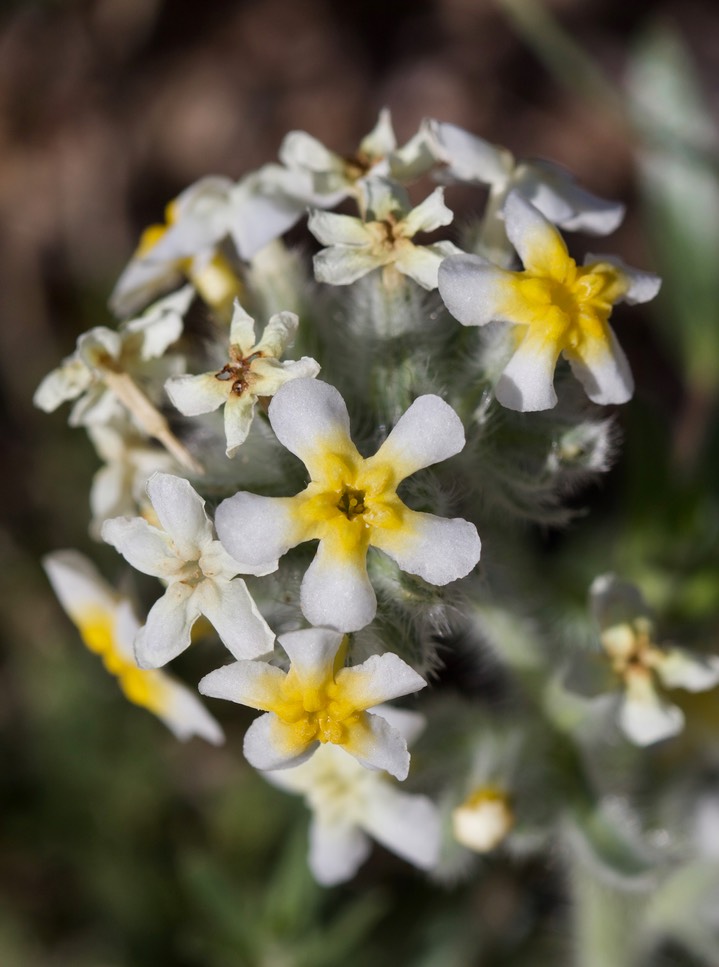
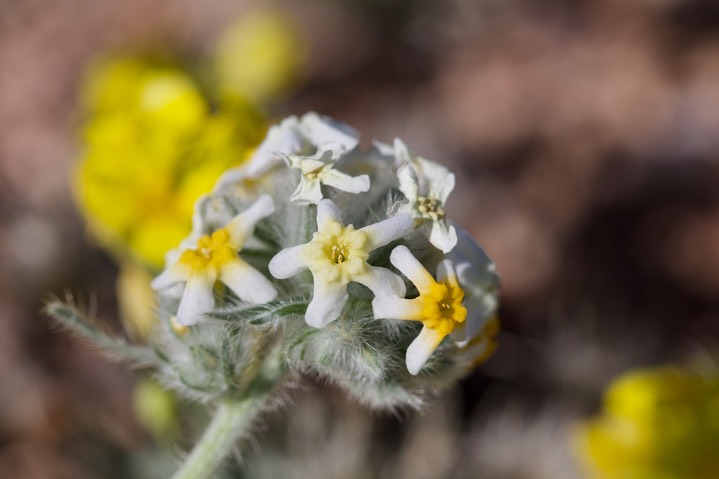
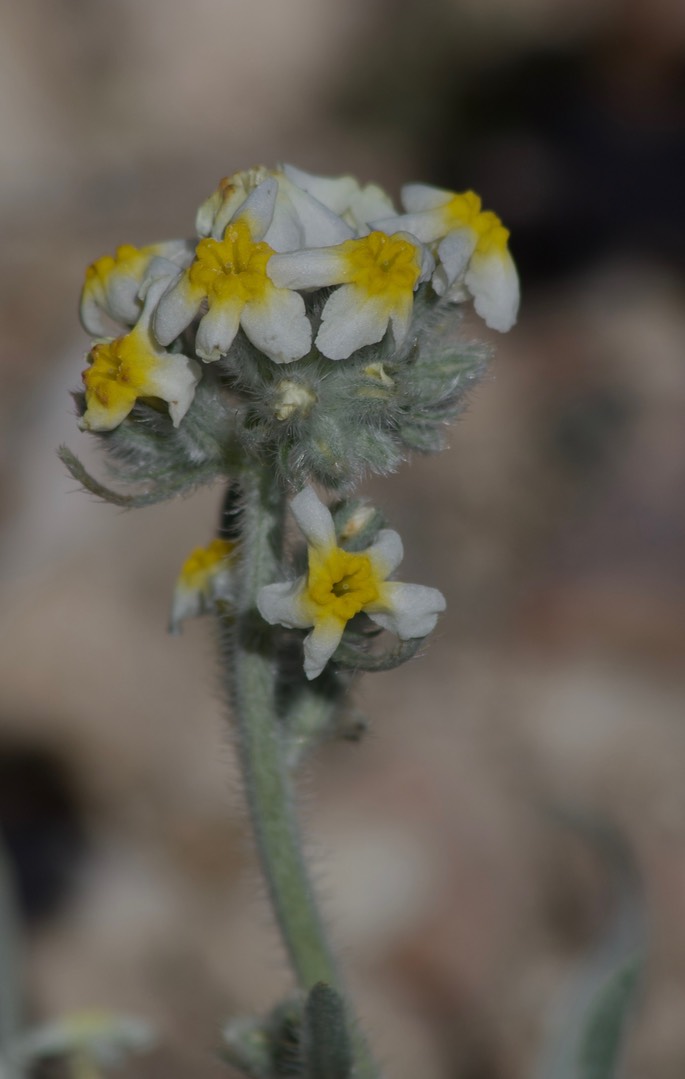
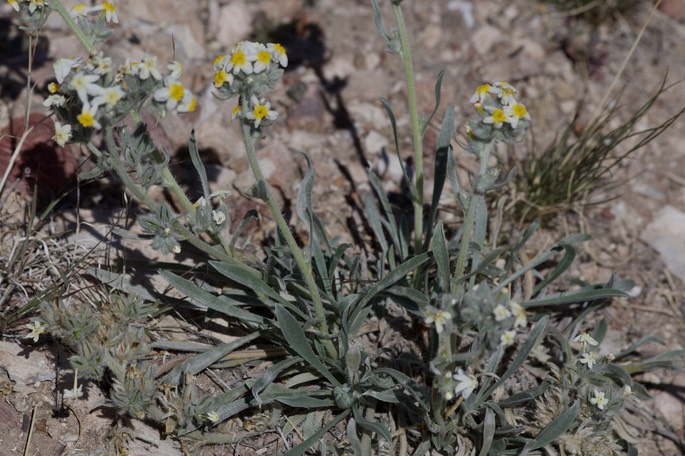
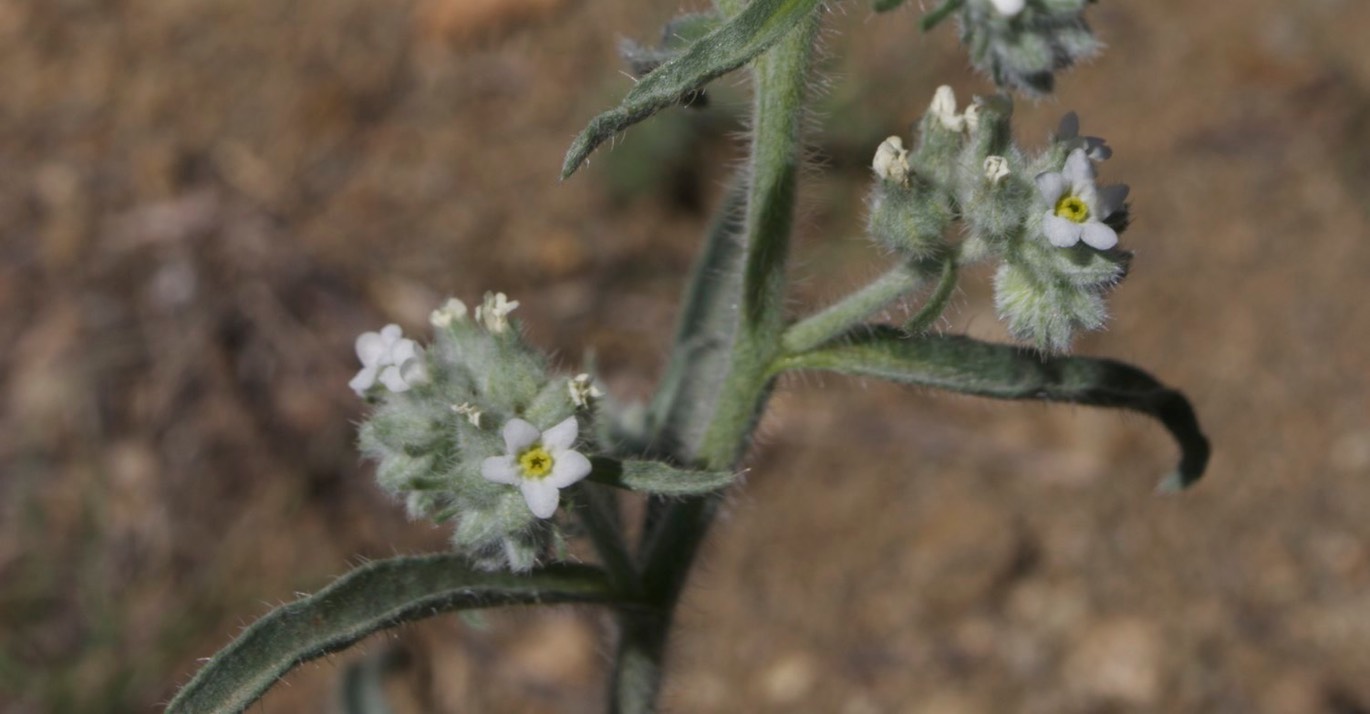
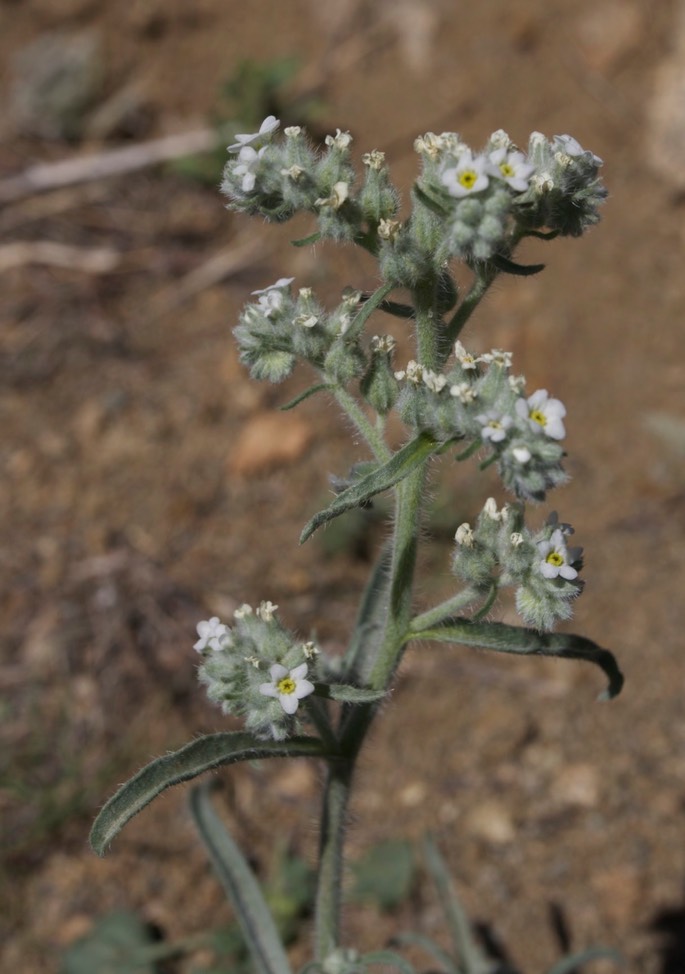
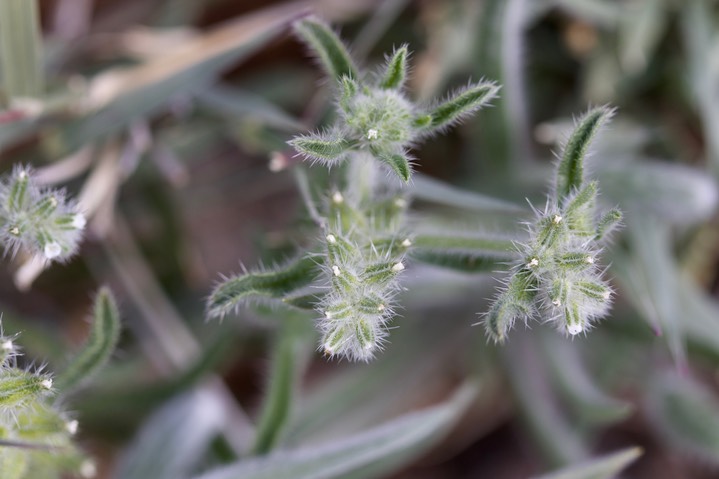
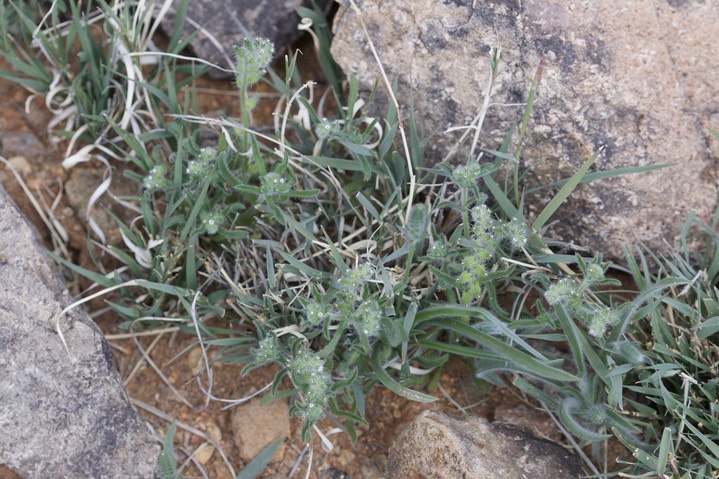
Bow-nut Cryptantha, Cryptantha cinerea, is in the Forget-Me-Not-Family, which is characterized by very hairy foliage. The CRC World Dictionary of Medicinal and Poisonous Plants states that this species is used for “snakebites, roots used in sores, skin diseases. Veterinary medicine, for snakebite.”
There are at least four varieties of this species found in New Mexico. Some of the varieties have been considered full species in the past and there are, as a result, several scientific synonyms. This species is also known by the English common name of James’ Cryptantha.
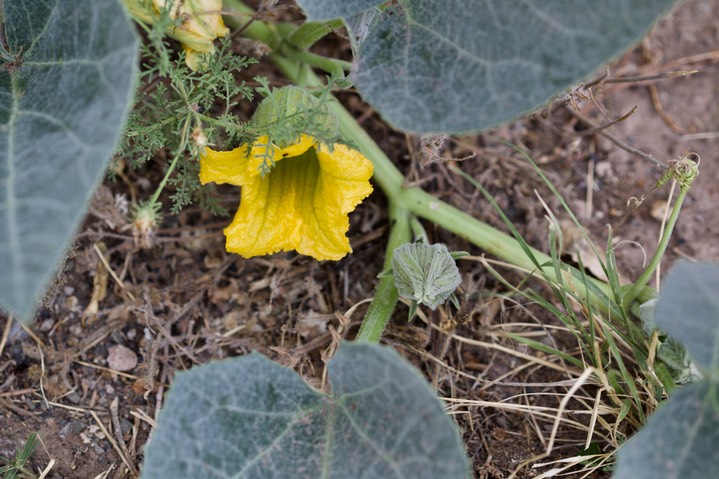
Cucurbita foetidissima
Buffalo Gourd
Hillsboro
New Mexico
May
Cupressus arizonica var. arizonica
Arizona Cypress
North of Cooke’s Peak
New Mexico
February
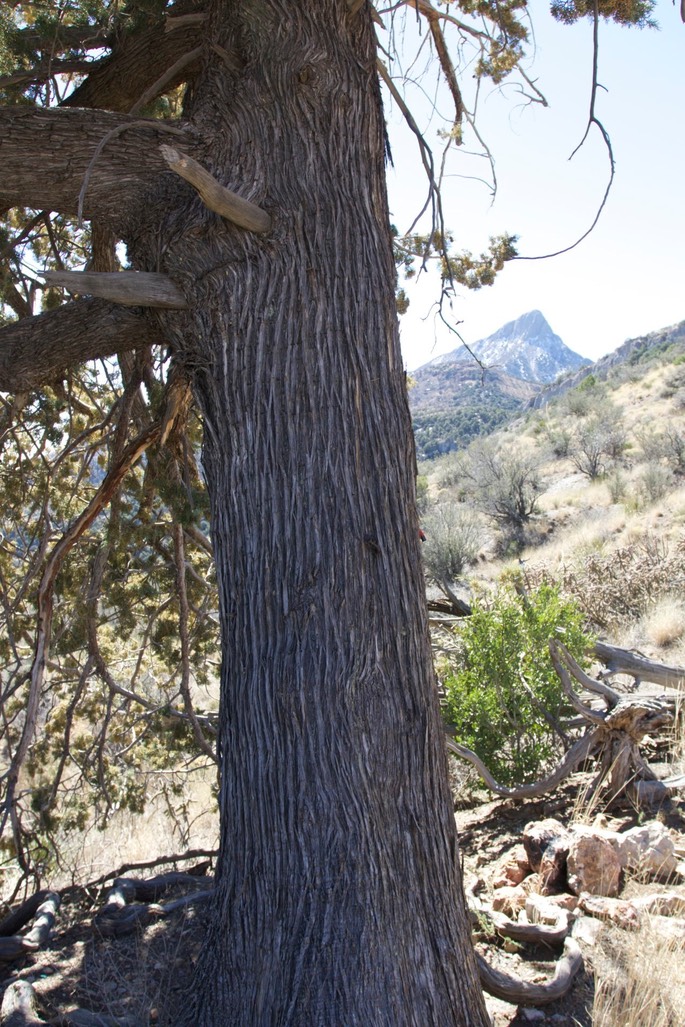
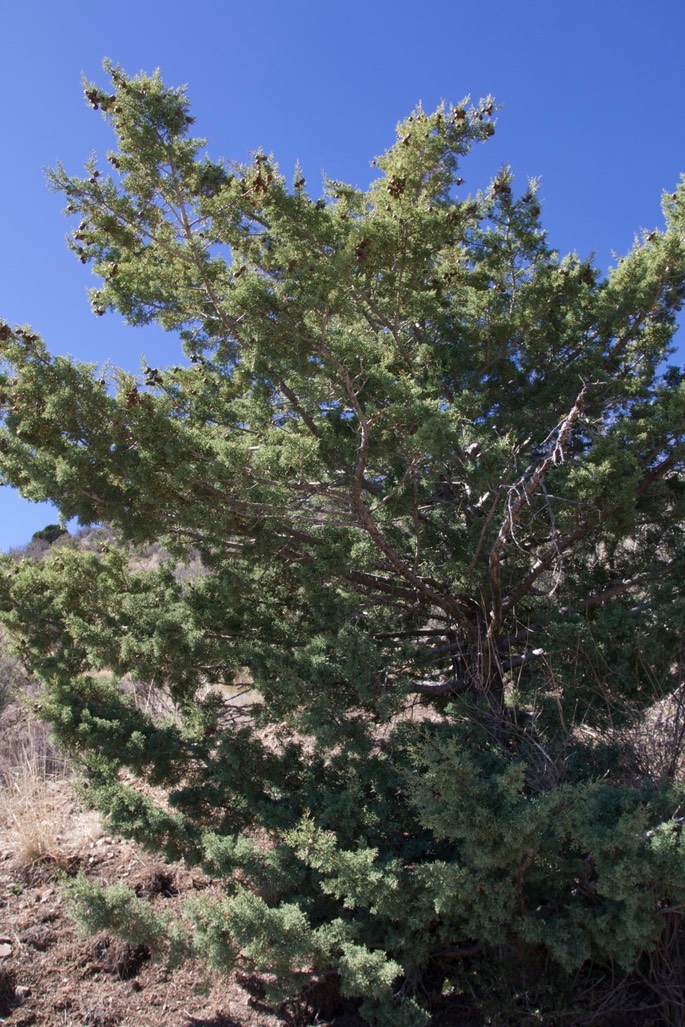
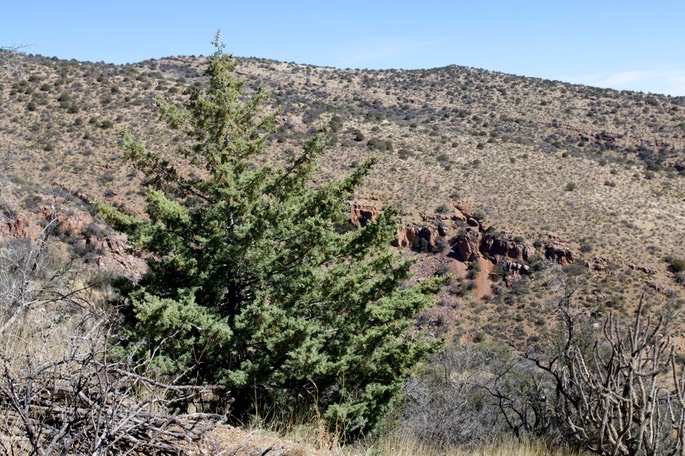
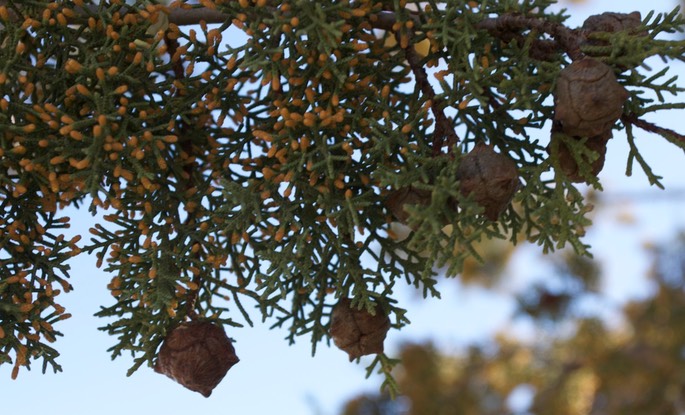
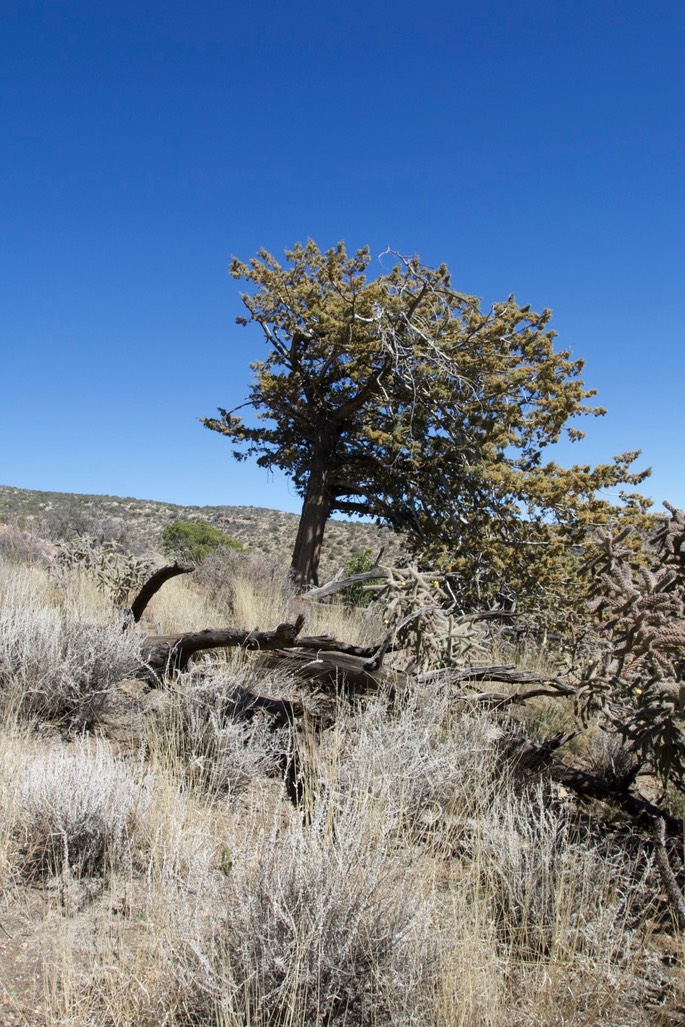
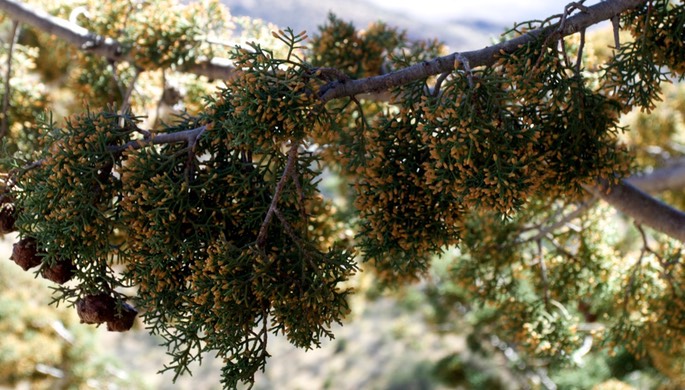
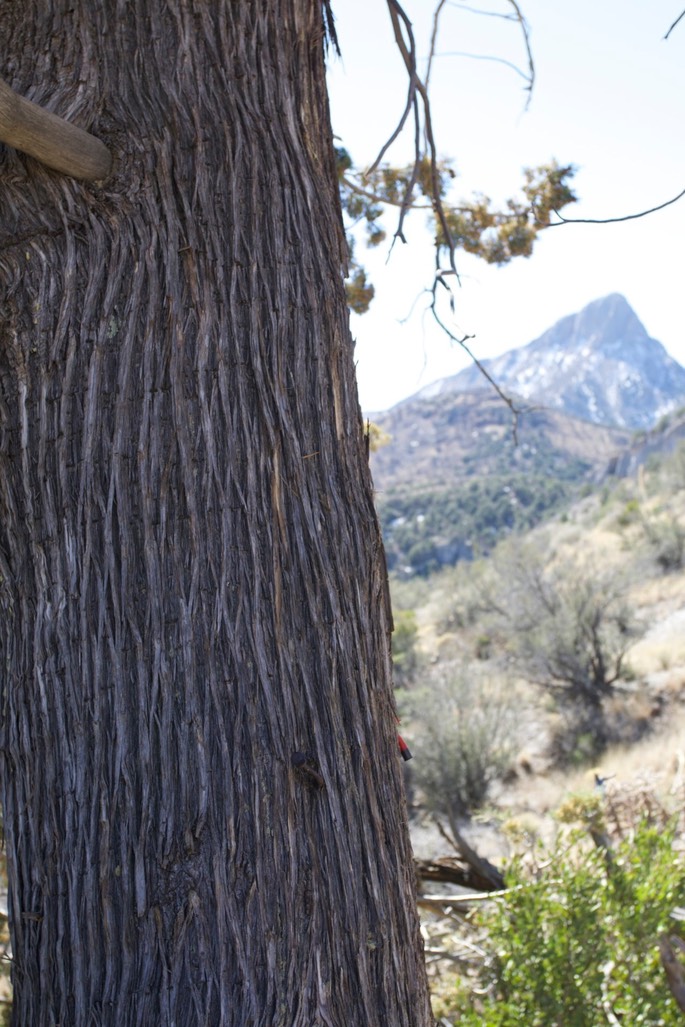
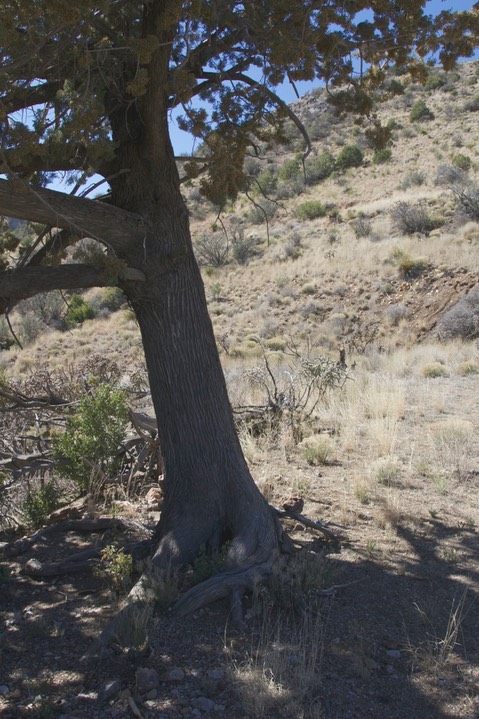
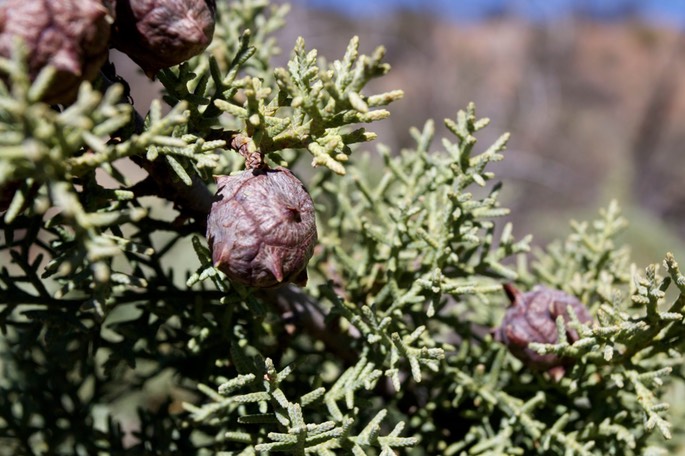
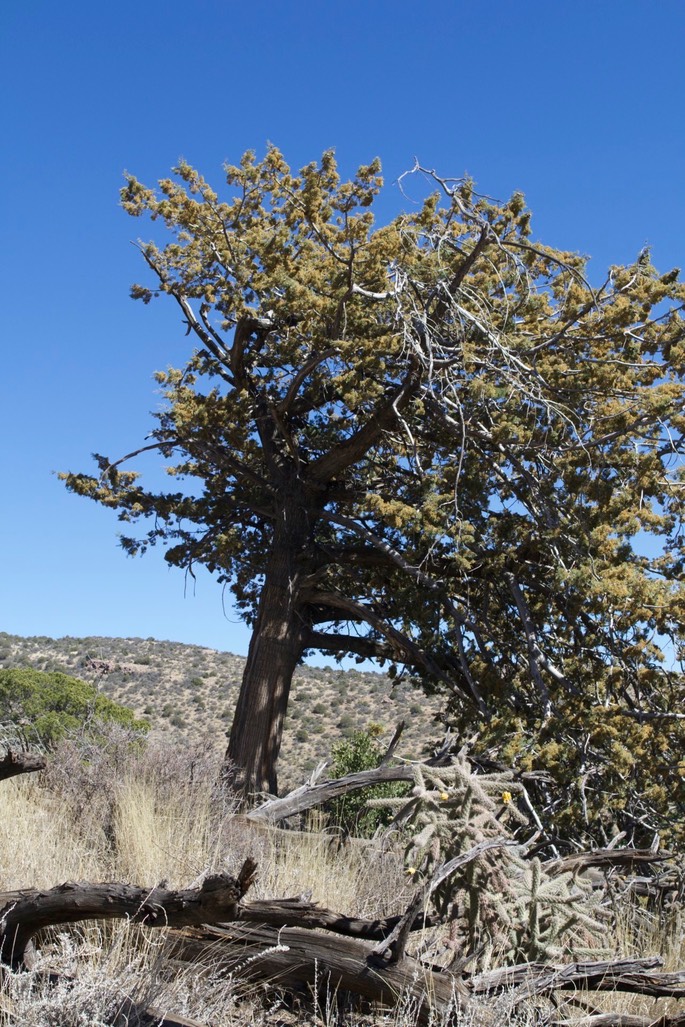
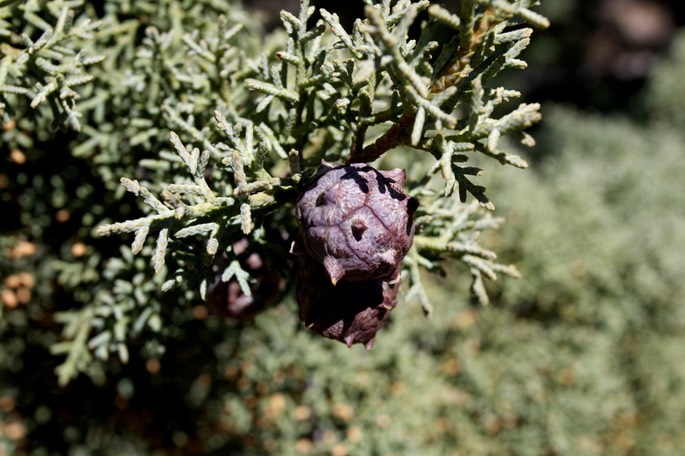
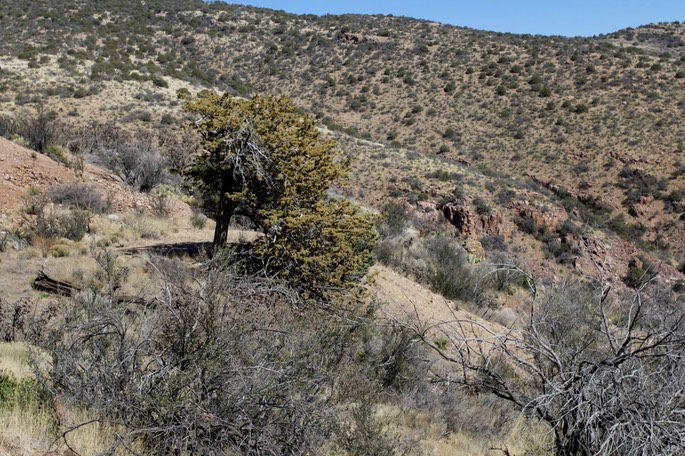
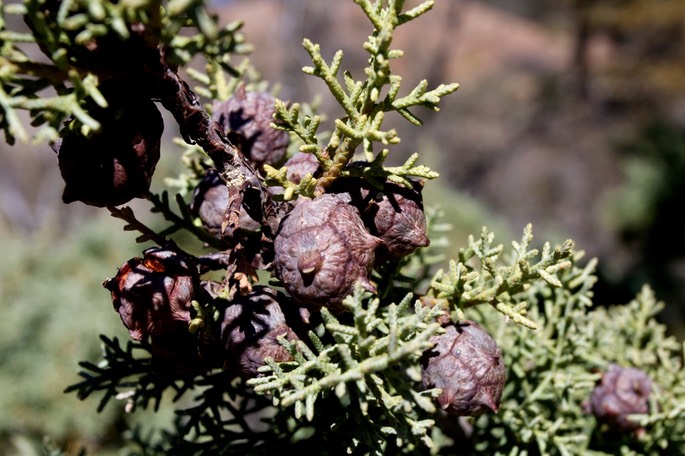
There is a relict stand of Arizona Cypress, Cupressus arizonica var. arizonica, just north of Cooke’s Peak. This variety is generally known as “Rough-bark” Arizona Cypress. This species, and this stand in particular, was the topic of an article in the July 2022 issue of The Black Range Naturalist (Volume 5, Number 3).
Cylindropuntia leptocaulis
Christmas Cholla
East of Hillsboro
New Mexico
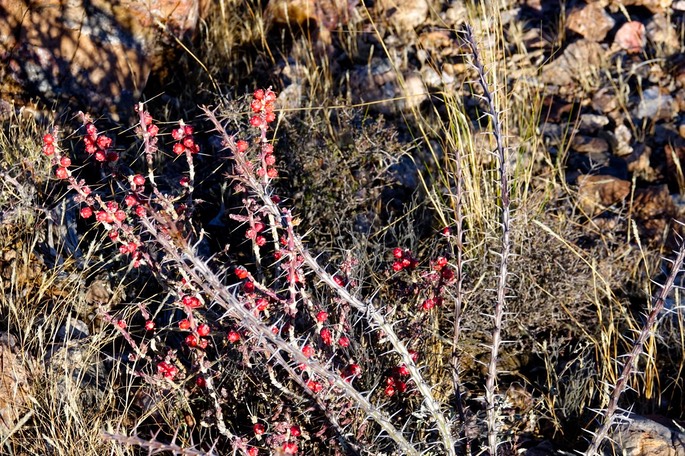
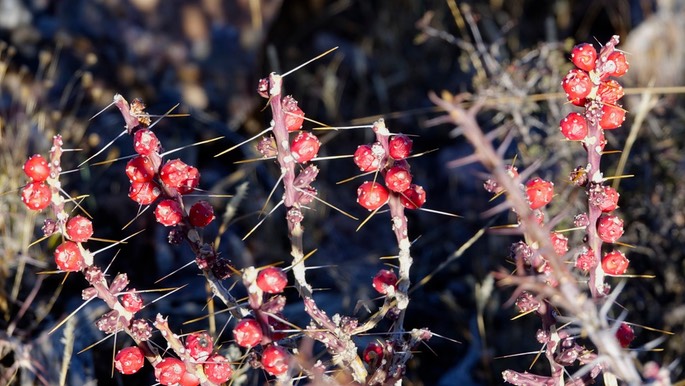
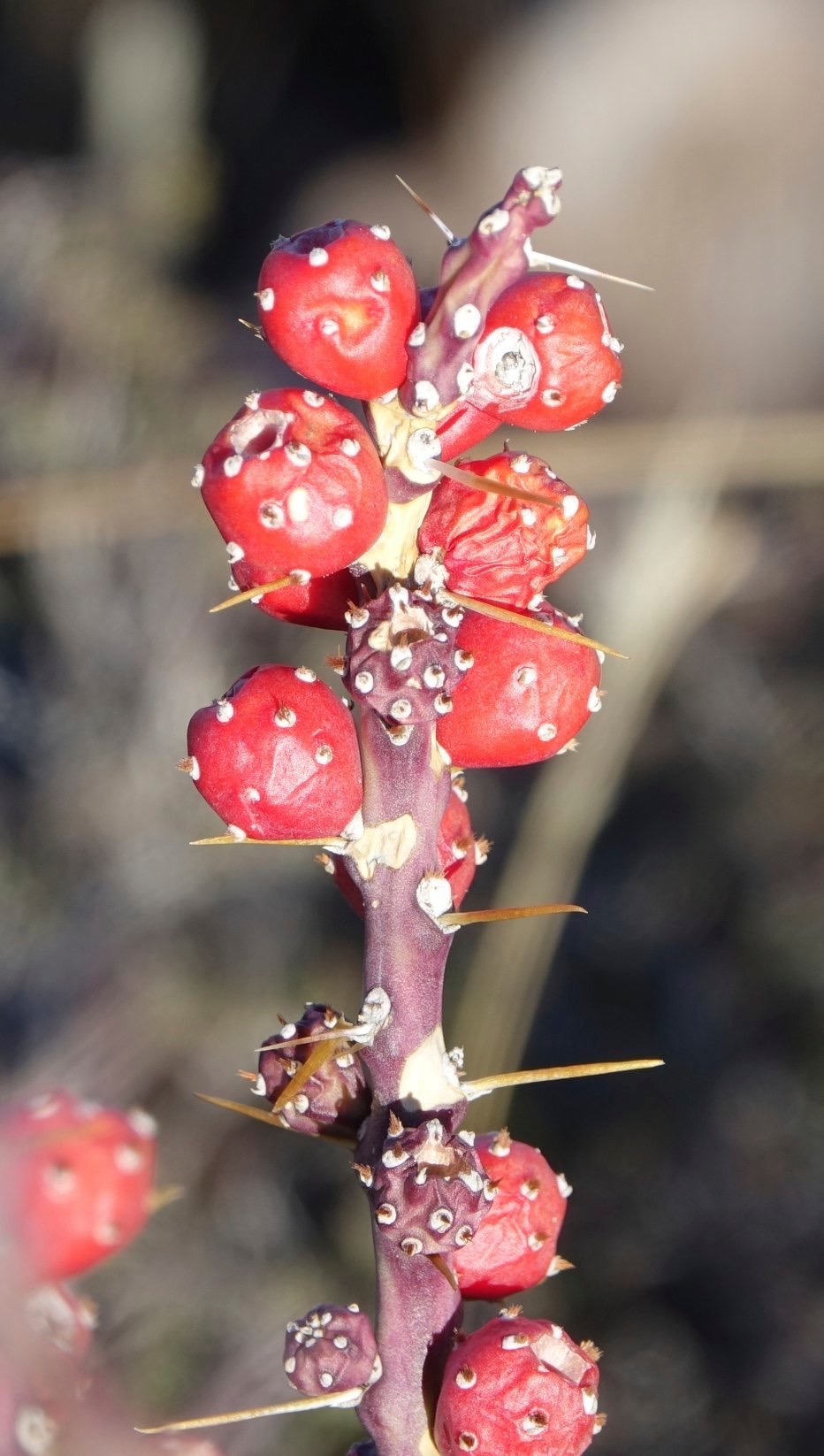
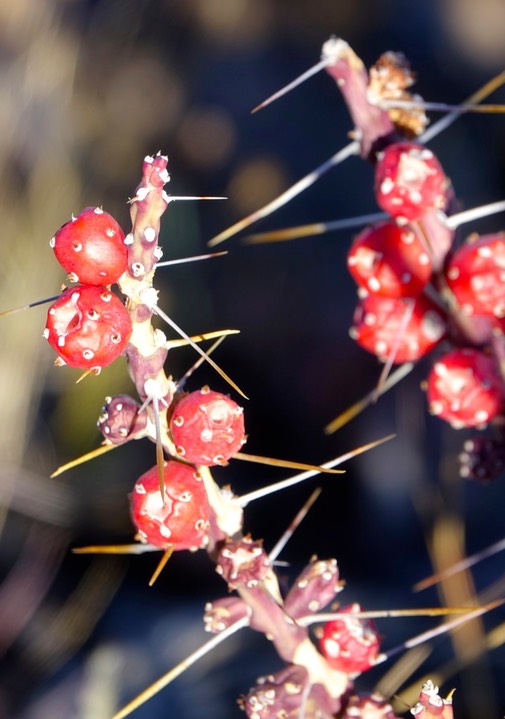
The Christmas Cholla (Desert Christmas Cholla in some sources), Cylindropuntia leptocaulis, is a low growing species, it is generally about two feet tall. It is found at lower elevations. The individual shown here was found at about the highest elevation this species grows, near the Hall Mine on the south rim of the Percha Box, east of Hillsboro.
The fruit is beautiful and very cholla-like in shape. Perhaps the most striking feature of the plant is the spines, which seemed oversized for the plant. The circumference of the stems is similar to that of a pencil or pen.
This species has a limited range within the United States (Southern California east into Texas and Oklahoma). It is also found in Northern Mexico (Chihuahua, Coahuila, Durango, Nuevo León, Sonora, Tamaulipas, and Zacatecas. It flowers in spring and early summer (but sometimes in the early fall as well).
The red berries can have “an intoxicating effect” when consumed. The Apache - Indé (Mescalero and Chiricahua) used the berries as a narcotic. The Pima ate the berries raw, as a food source.
In the past, this species was included in the genus Opuntia, as Opuntia leptocaulis.
Cylindropuntia spinosior
Cane Cholla
Frying Pan Canyon
Black (Cooke's) Range and near
Hillsboro
New Mexico
May
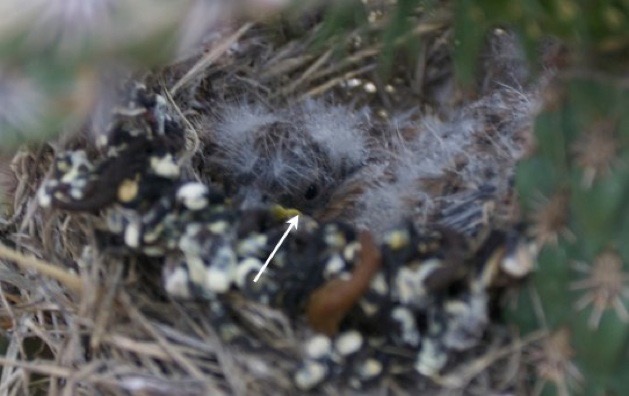
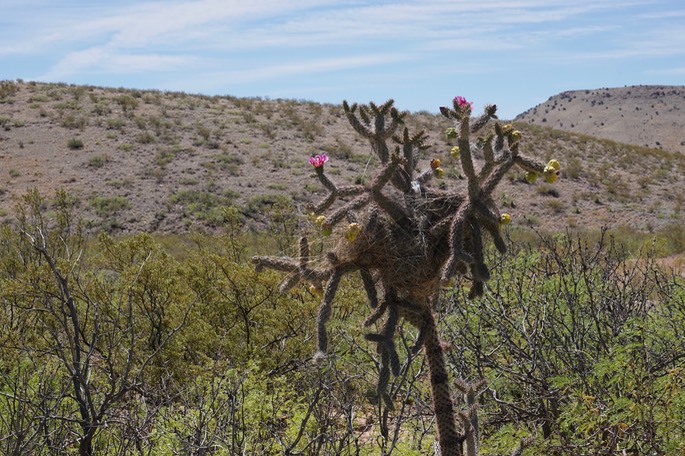
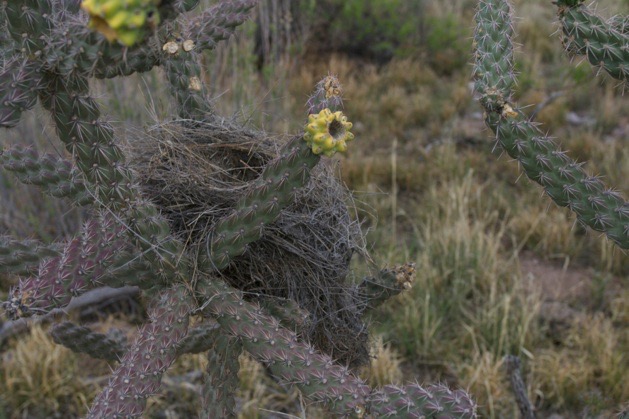
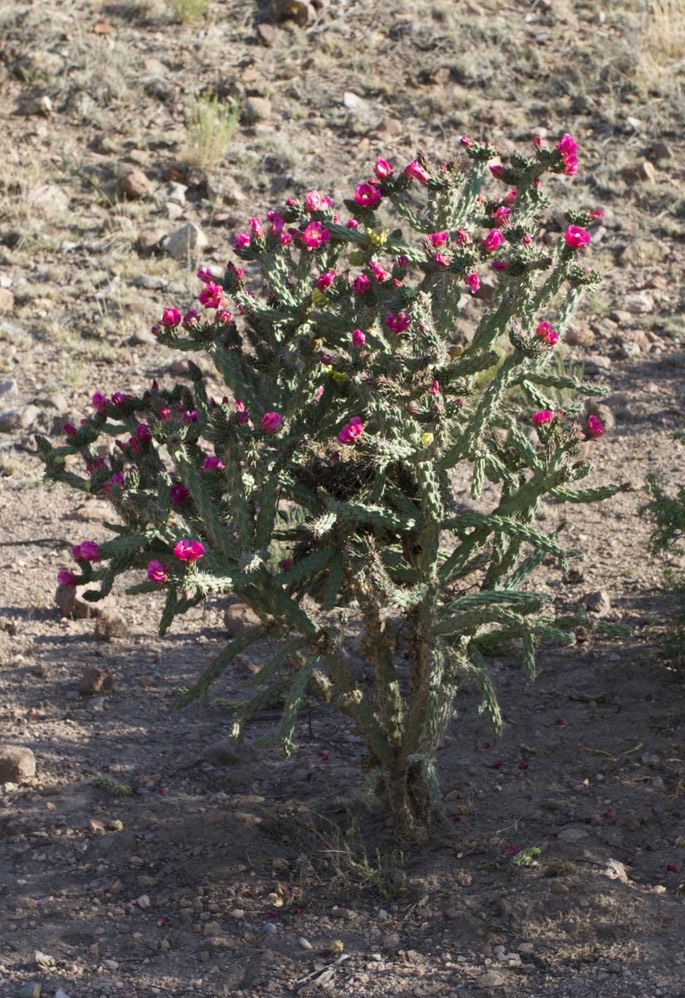
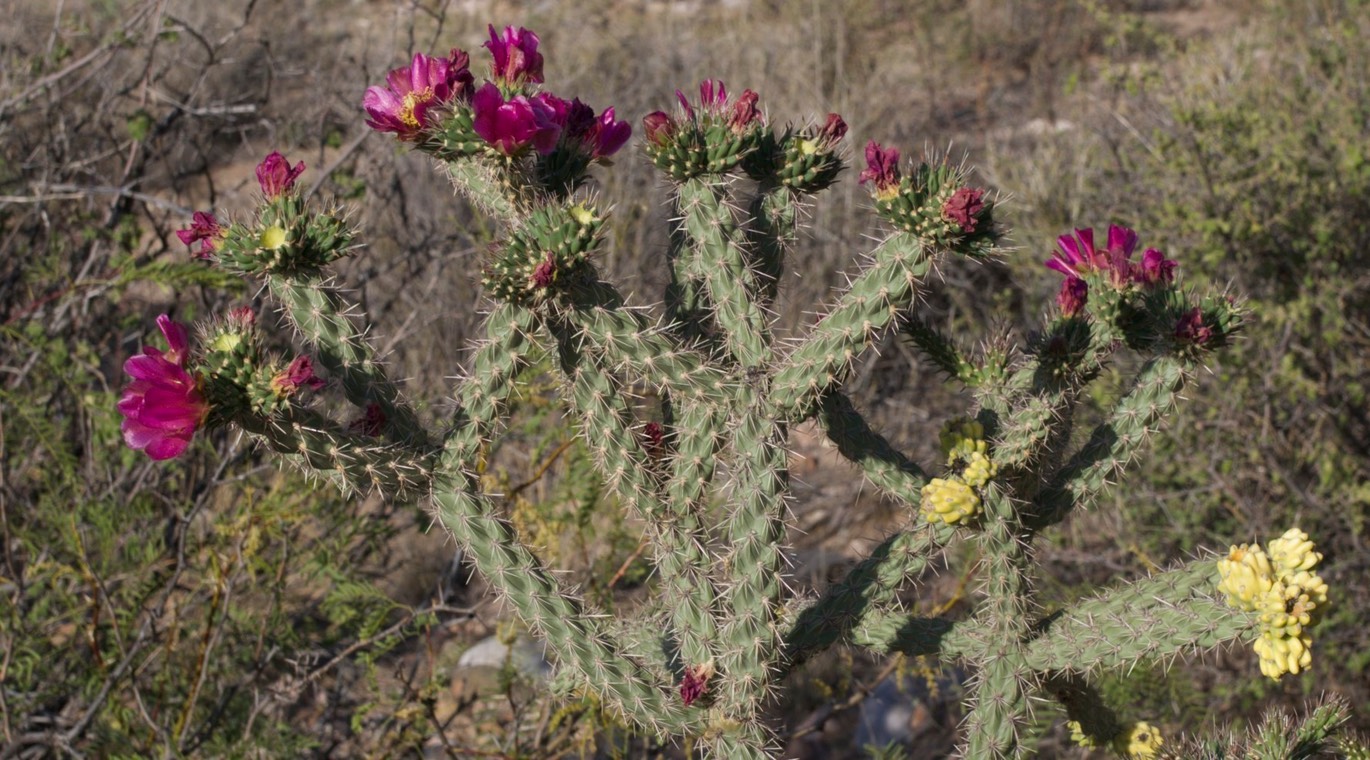
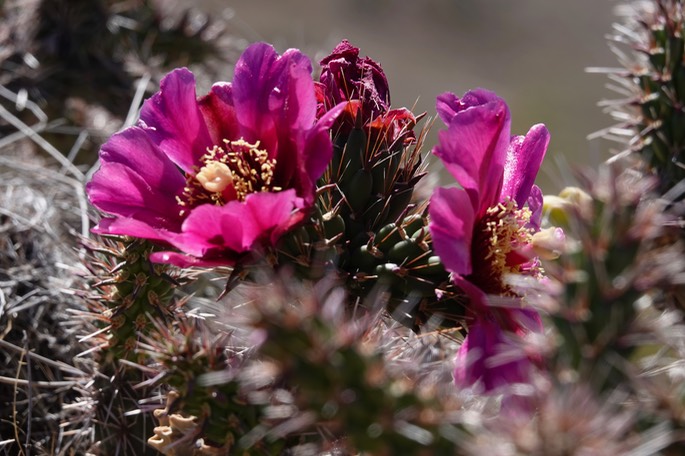
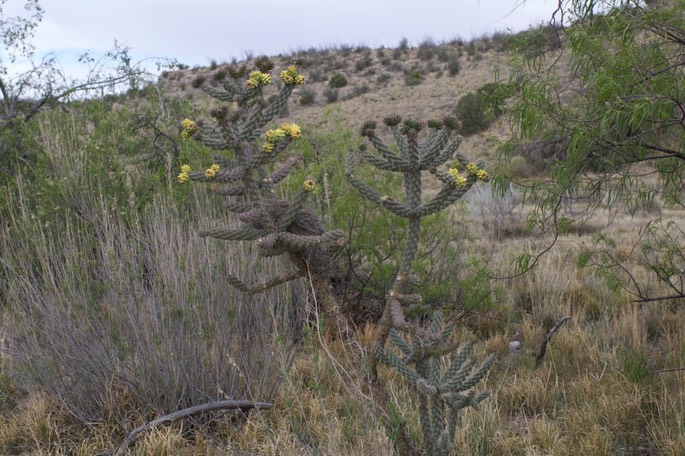
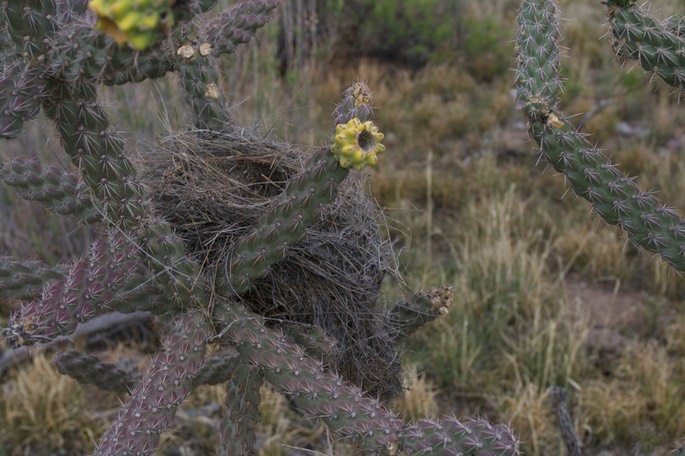
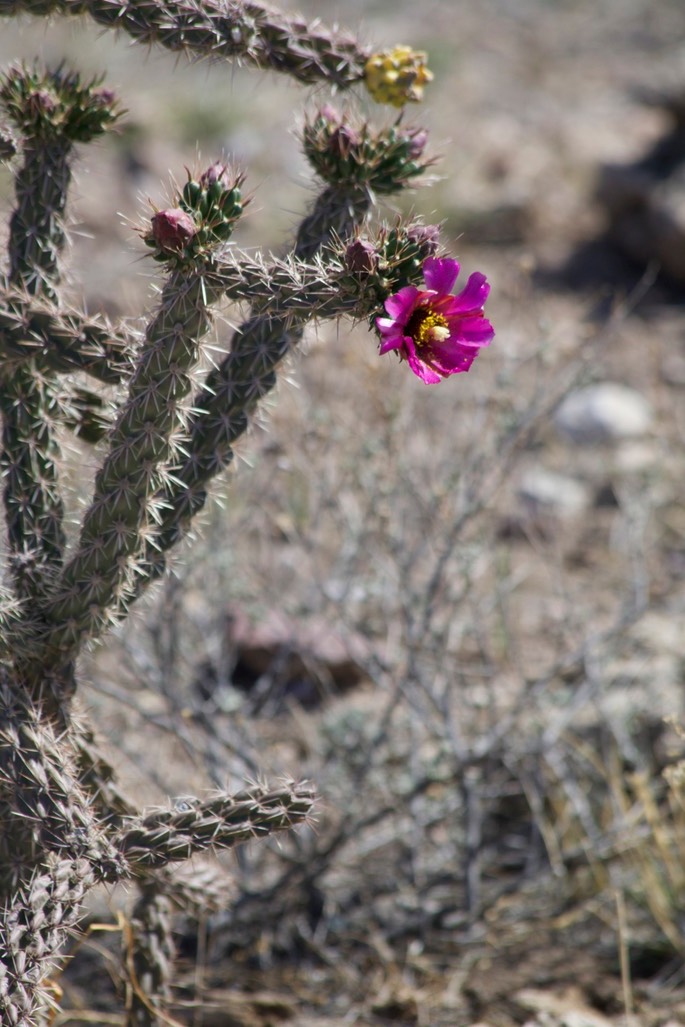
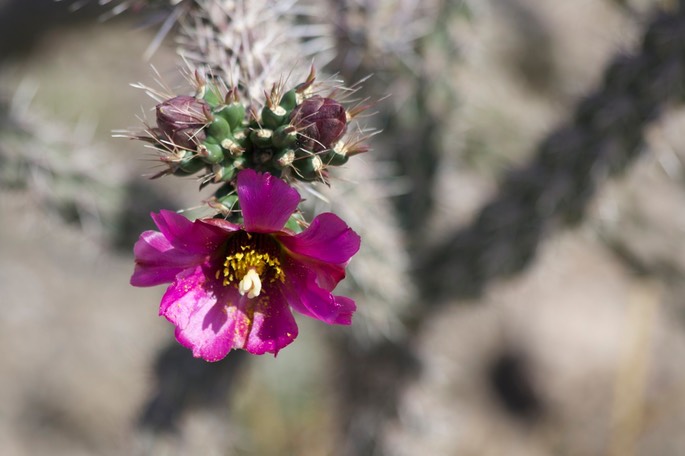
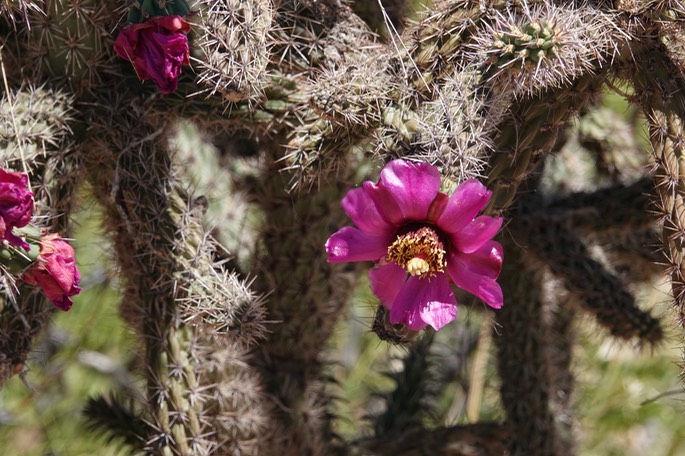
First image: Several bird species like to build nests in this cholla species because of the obvious protection which it offers. Most are empty when you look at them, but even if they are not identification of the bird species can be difficult if you do not see the adult. That is assuming you see the nestling, in the photo at the bottom, the eye of the nestling is at the head of the white arrow.
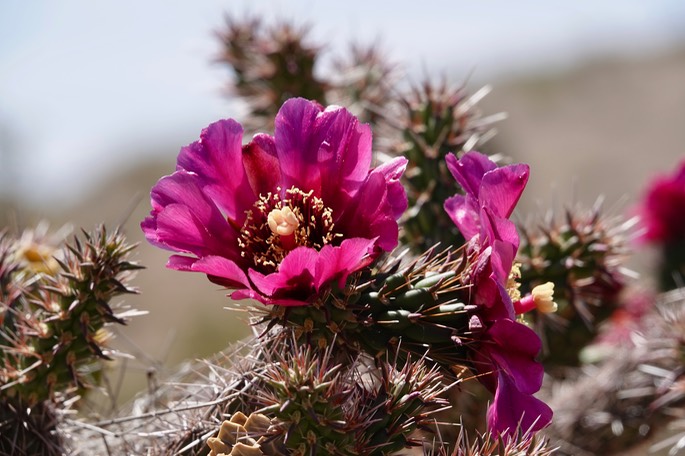
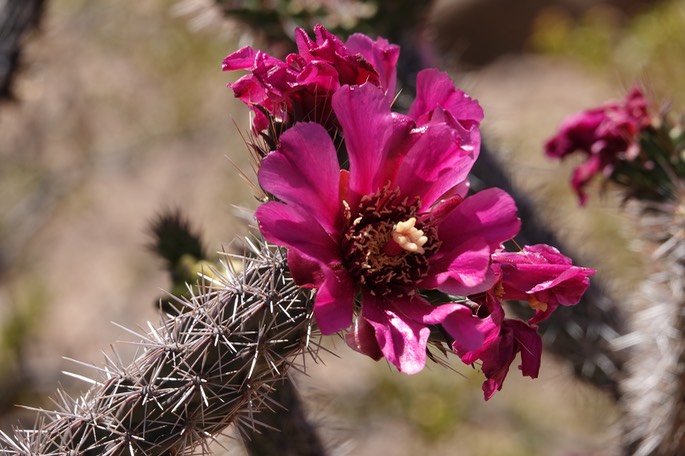
The beautiful flower of the Cane Cholla, Cylindropuntia spinosior gives way to a yellow fruit, see photos below.
This species grows throughout the Black Range, reaching the 8,500 foot level in many places. In the United States the range of this species is limited to Arizona and New Mexico. It is also found in Chihuahua and Sonora.
This species hybridizes with other Cylindropuntia species, especially C. acanthocarpa, C. arbuscula, C. fulgida, and C. leptocaulis.
This species was originally described as Opuntia whipplei by Engelmann and Bigelow, then as a variety (O. w. spinosior) by Englemann in 1856. Tourney later upgraded it to a full species O. spinosior and then as a variety O. s. var. neomexicana. Knuth later placed it in the current genus Cylindropuntia.
The Pima and Papago Indians pit baked the buds, fruits, and joints of this species and considered it a staple food. The indigenous peoples of this area undoubtedly did the same.
Cymopterus lemmonii
Mountain Parsley
Crest Trail south of
McKnight Mt. and at Sawyer Mt.
Black Range
New Mexico
May
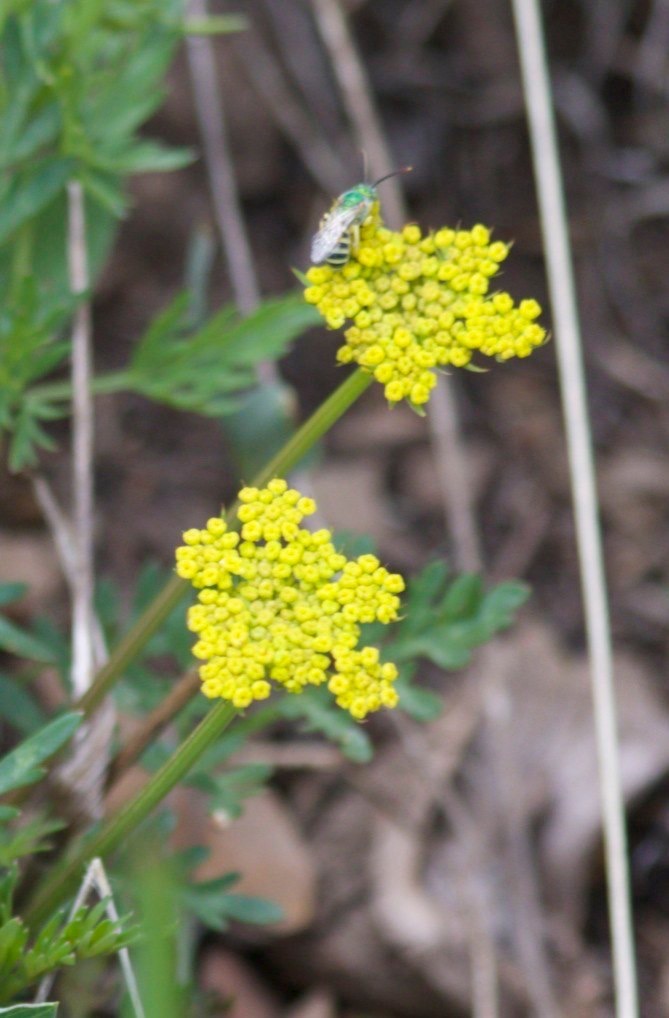
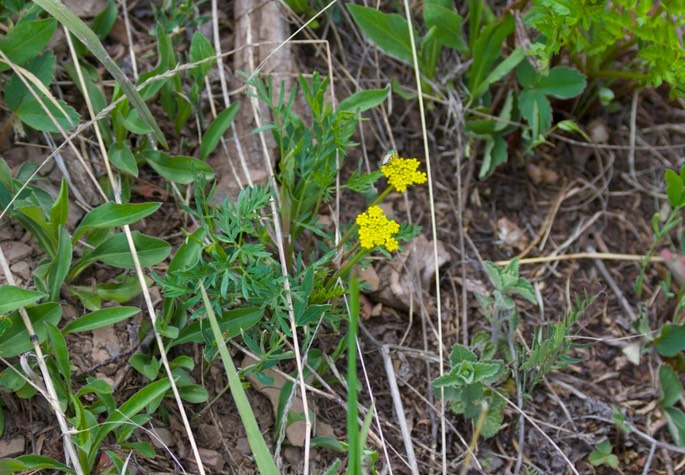
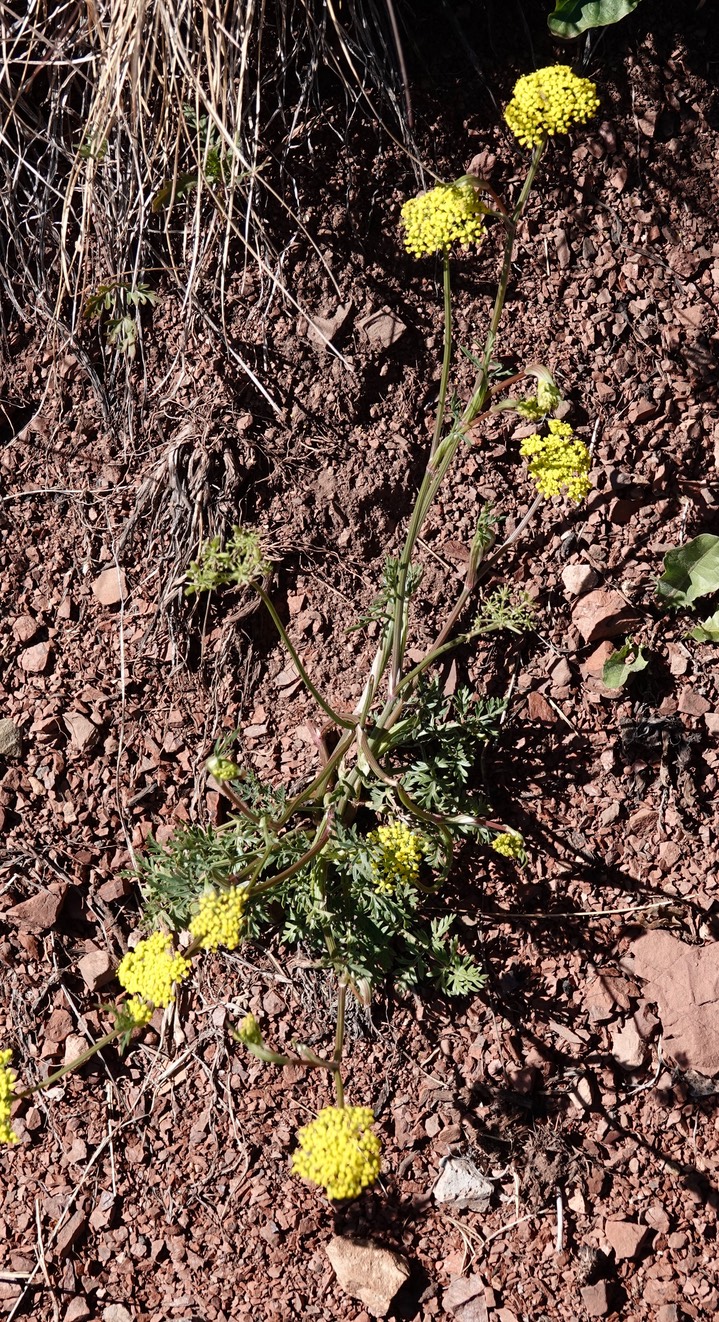
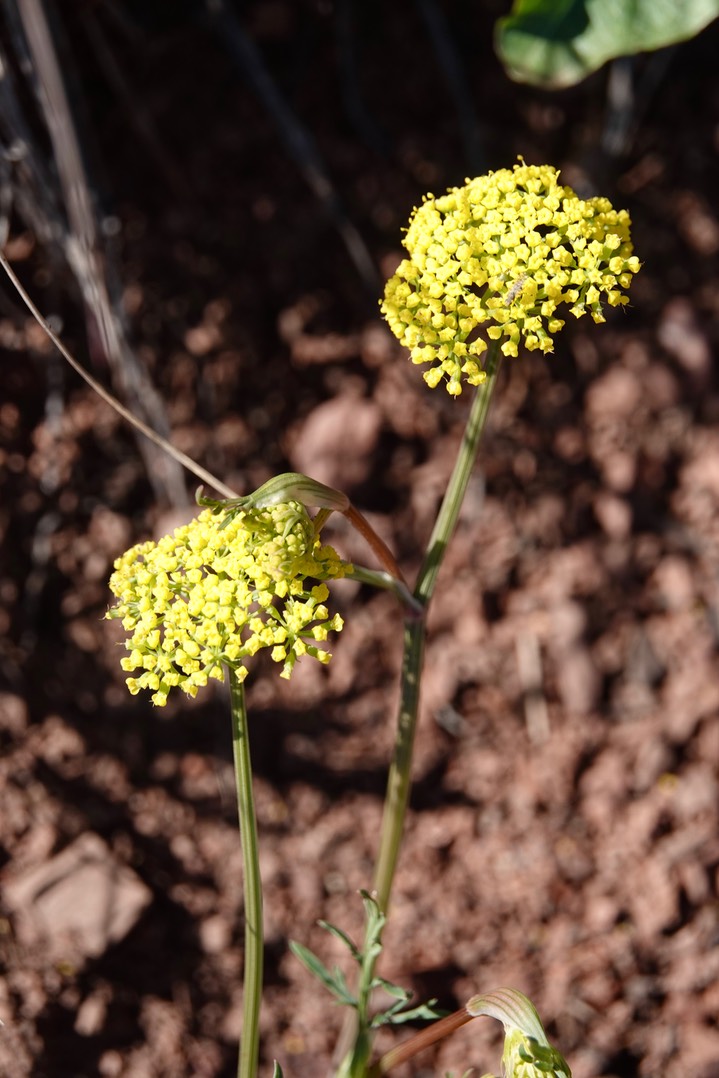
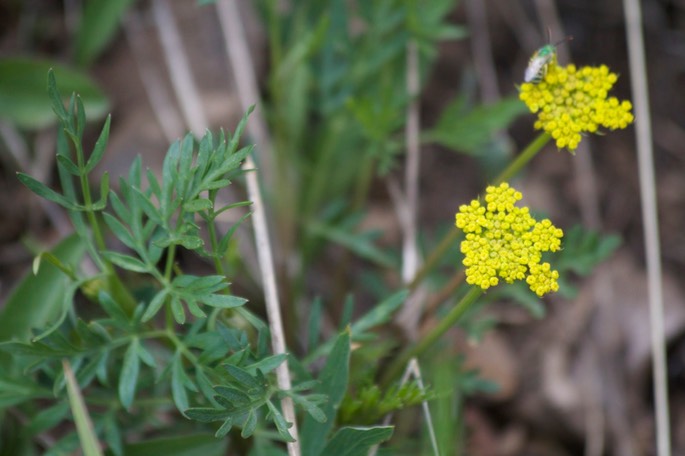
Cymopterus lemmonii, Mountain Parsley (or Alpine False Springparsley), is a plant of the southwestern United States (Arizona, Nevada, Utah, Colorado, Wyoming, New Mexico, and Texas) and northern Mexico. Synonyms for this species include; Pseudocymopterus montanus, Pseudocymopterus tidestromii, and Thaspium montanum.
Within our region, this species exhibits an interesting color variation in its flower color. Plants from the Burro Mountains have red flowers while those farther north have yellow flowers. The petals of the individual flowers fold backward, giving the flower a very “globular” appearance.
Mountain Parsley (Vascular Plants of the Gila Wilderness) was used as a ceremonial emetic by several Navajo groups. But it was also eaten by both the Navajo and Hopi; as a green, its leaves were boiled in cornmeal, and the ground root was cooked with meat.
Cymopterus multinervatus
Corkwing Wafer-Parsnip
South end of Black Range
New Mexico
Late February
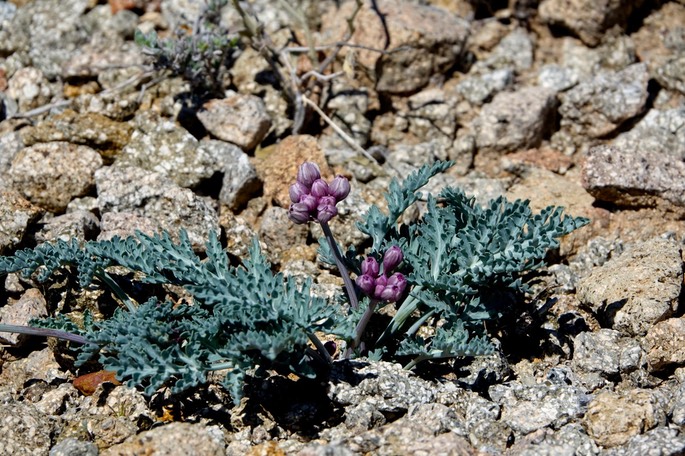
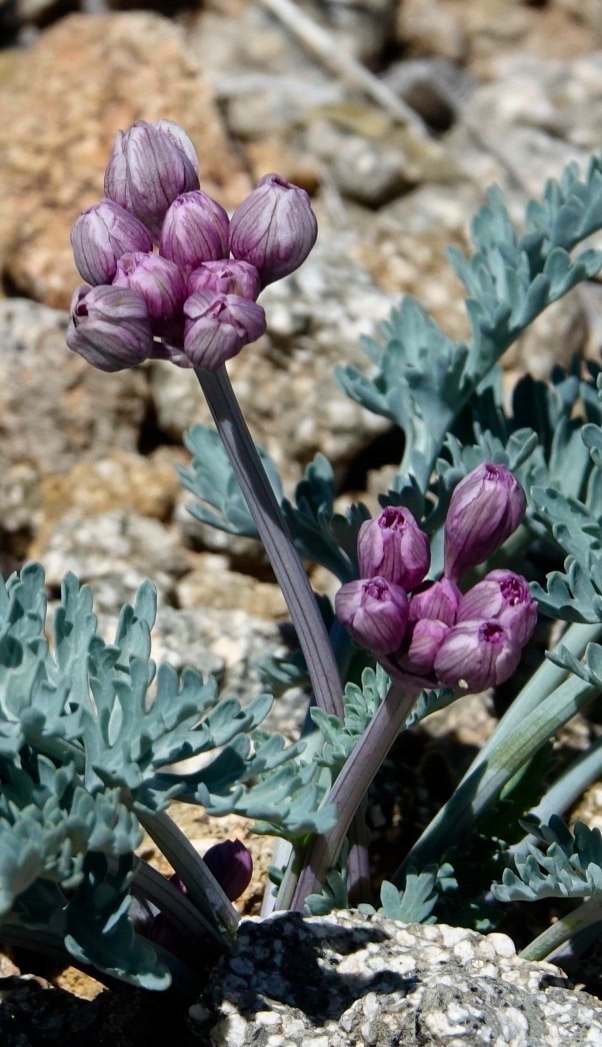
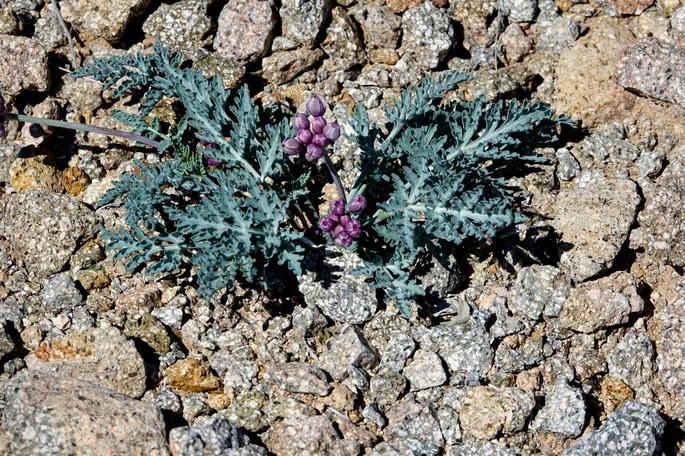
These specimens of Cymopterus multinervatus were photographed on the southwest slopes of the Cooke’s Range (southern Black Range). They were growing on a dry slope with a gravel cover. Scientific synonyms for this species include Phellopterus multinervatus and Vesper multinervatus. The Vascular Plants of the Gila website calls this species Corkwing Wafer-Parsnip. Other sources refer to it as Purplenerve Springparsley, Arizona Springparsley, and Wild Parsnip.
Its current scientific name was established by Ivar Tidestrom (1864 - 1956) in 1935. He is credited with naming more than 200 species. He published the Flora of Utah and Nevada in 1925. In 1941 he published Flora of Arizona and New Mexico with Sister Mary Teresita Kittell an important figure in the study of New Mexico flora.
This species has a limited range in the southwestern United States. In Mexico it is found in at least the state of Baja California. It is generally found at elevations below 5,000’.
The Native American Ethnobotany Data Base indicates that this species was used by the Hopi as food.
This species is a fairly early bloomer, blooming during March and April (and in this case, late February). Its leaves radiate basally from the taproot, there is no stem.
Cyperus fendlerianus
Fendler Flatsedge
Hillsboro Peak Trail
Black Range
August