Acaciella angustissima
Whiteball Acacia
East fork of Ready Pay Gulch, North of NM-152
East of Hillsboro, New Mexico
The “FLORA" of the Black Range
“A"
Acaciella angustissima
Whiteball Acacia
East fork of Ready Pay Gulch, North of NM-152
East of Hillsboro, New Mexico
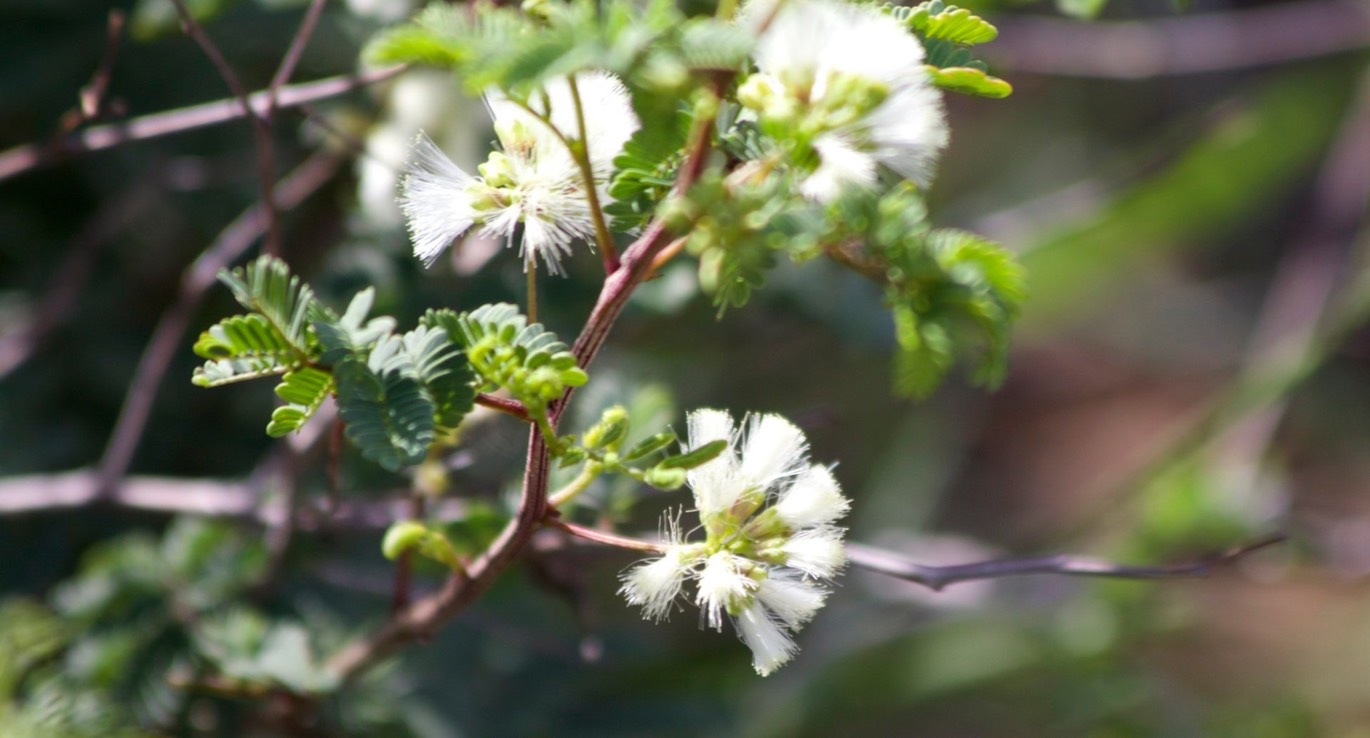
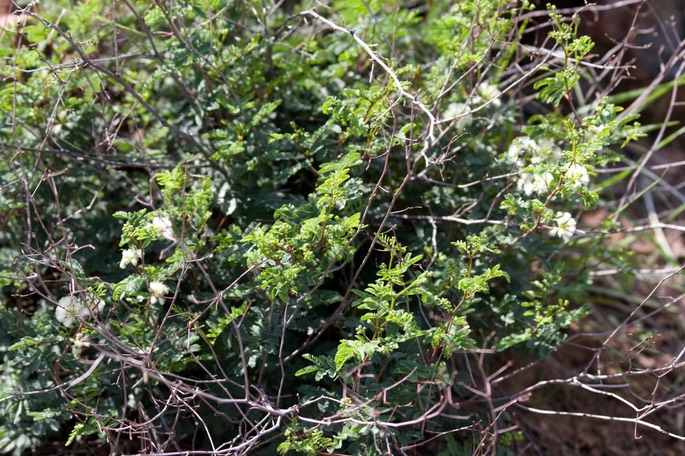
The Whiteball Acacia (a.k.a. Prairie Acacia), Acaciella angustissima, is fairly abundant on the hillsides of the ridge which separates North Wicks Canyon and Ready Pay Canyon. It is low growing, lacks thorns, and is covered in white tufts when in bloom. Although it was once placed in the Acacia genus it is now classified as Acaciella, so its common name is a bit misleading. This species is native to the southern United States, south through most of South America. In our area it generally remains fairly short because it requires at least 27 inches of precipitation to survive - clearly something it does not get here - thus its typical hillside habitat - the hillside tending to concentrate the water which is available.
This species was first described by Philip Miller in 1928 and over time it has had a significant number of synonyms.
Acer glabrum
Rocky Mountain Maple
Railroad Canyon
Black Range
June 9, 2019
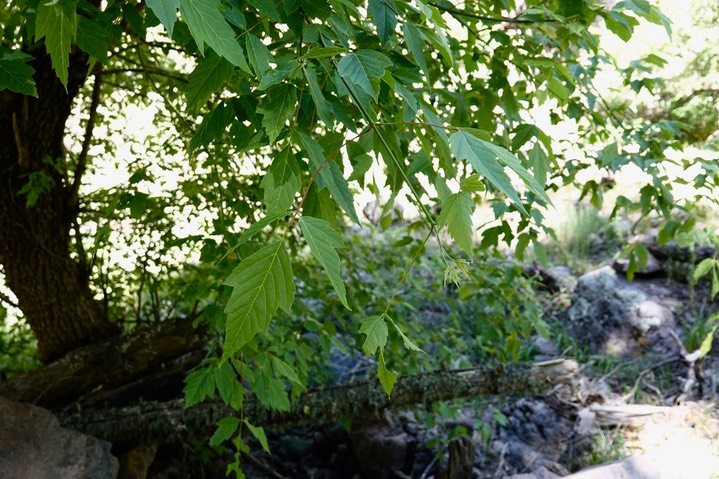
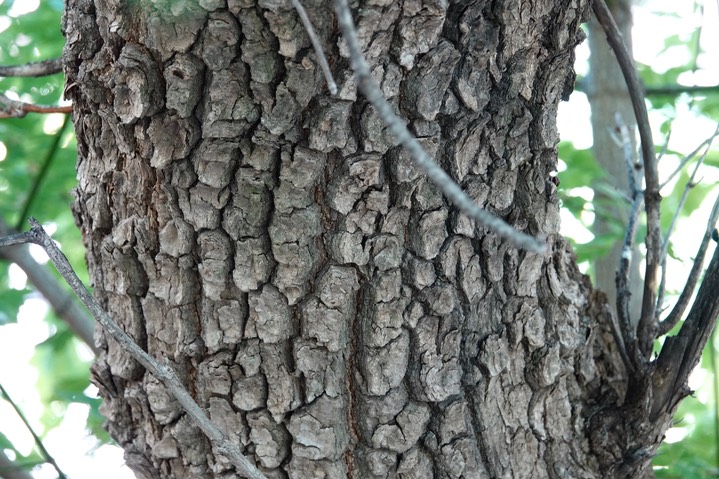
There are three species of Maple in the Black Range. One of the three (A. grandidentatum) does not have compound leaves. As the name implies, this is a species of the west. Its range extends northward through British Columbia to the panhandle of Alaska and southward into Chihuahua. There are from four to six varieties of this species, some are treated as subspecies.
Achillea millefolium
Western Yarrow
Trail 79, south of McKnight Mountain
Black Range
New Mexico
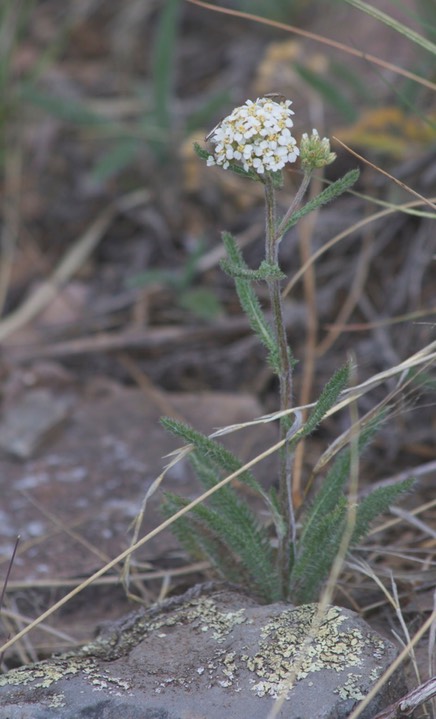
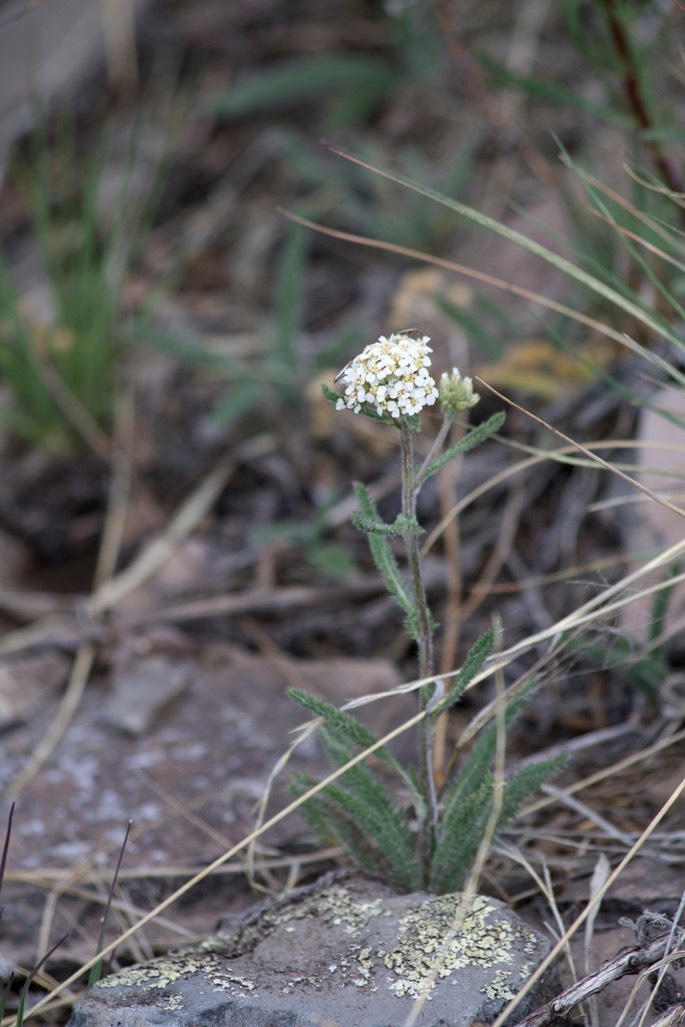
The Western Yarrow, Achillea millefolium, is also called Wooly Yarrow and White Yarrow. It has numerous scientific synonyms and common names. In the Black Range it is found primarily in association with Ponderosa Forest. This specimen was photographed just south of McKnight Mountain along the Black Range Crest Trail (Trail 79). A. m. alpicola and A. m. occidentalis are subspecies which are possible here.
Yarrow is a cosmopolitan species found in many areas of the Northern Hemisphere and has been widely used for medicinal purposes.
Acourtia nana
Dwarf Desert Holly
East of Hillsboro
New Mexico
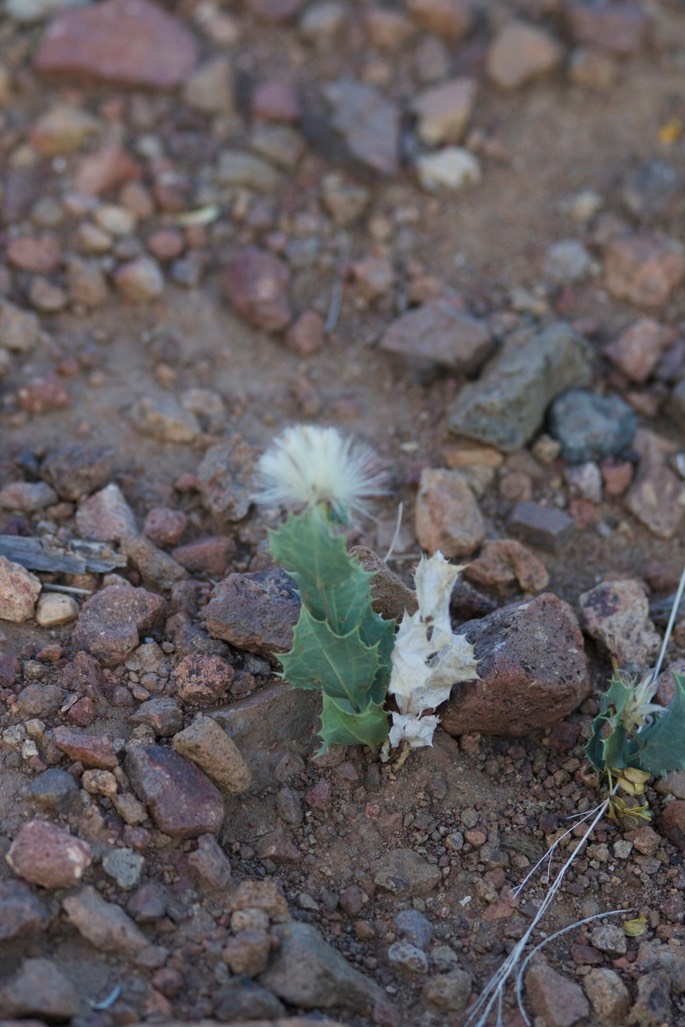
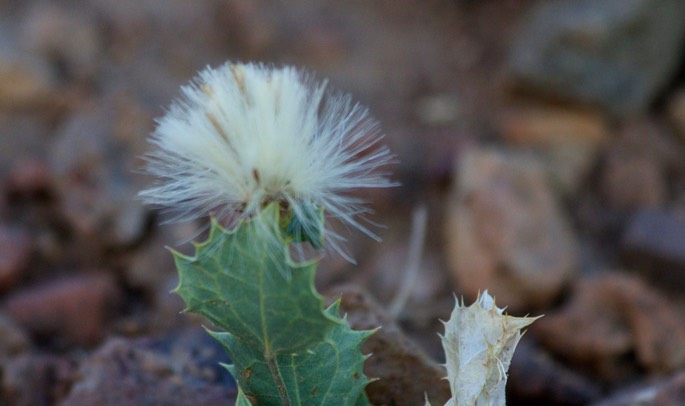
Dwarf Desert Holly, Acourtia nana, is found in the foothills which border the Black Range but is nondescript and often easy to miss. When I first saw this species, I was struck by the large number of miniature hollies that covered the ground - clearly there was no “mature” holly around. I have since learned that it is not a holly, it simply has the stereotypical holly leaves.
Other common names for this species include Desert Holly and Dwarf Desertpeony. It was first described by Asa Gray, as Perezia nana, in 1849. It has a limited range: being restricted to Arizona, New Mexico, and Texas in the United States; and Chihuahua, Coahuila, Nuevo León, San Luis Potosí, Sonora, and Zacatecas in Mexico.
Agastache pallidiflora neomexicana
New Mexico Giant Hyssop
Railroad Canyon &
Black Range Crest Trail
New Mexico
Sep. and Oct.
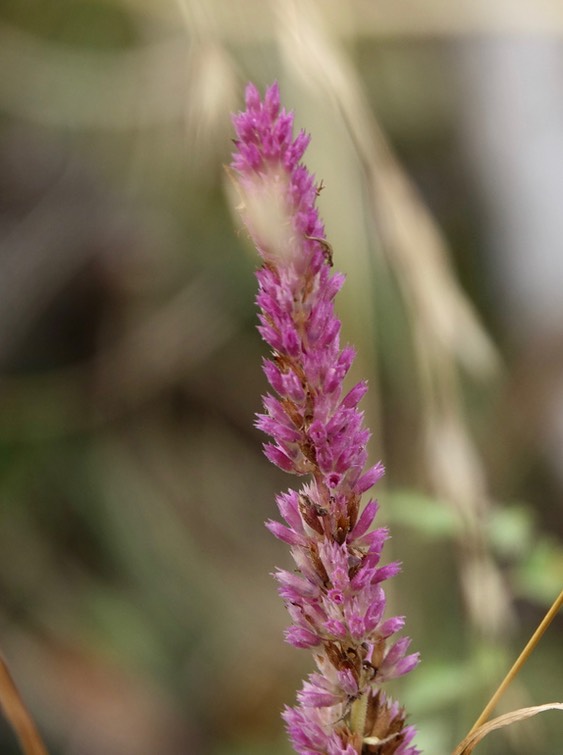
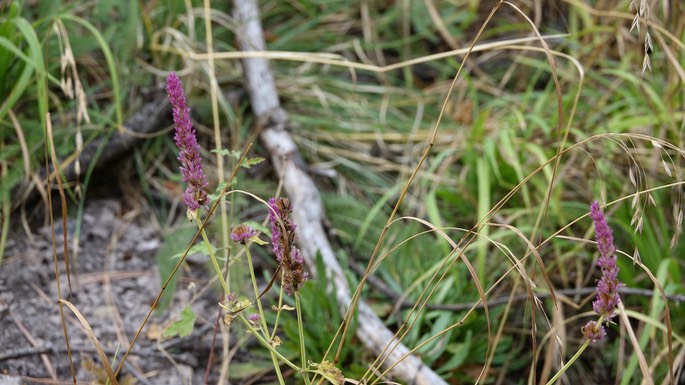
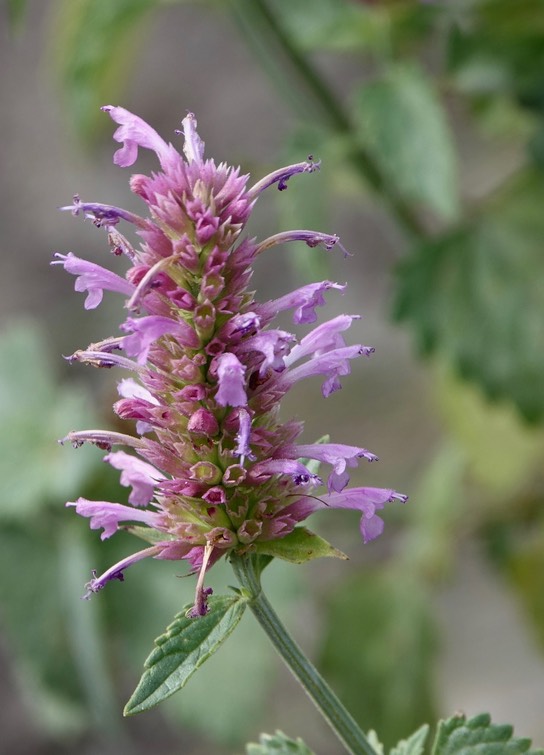
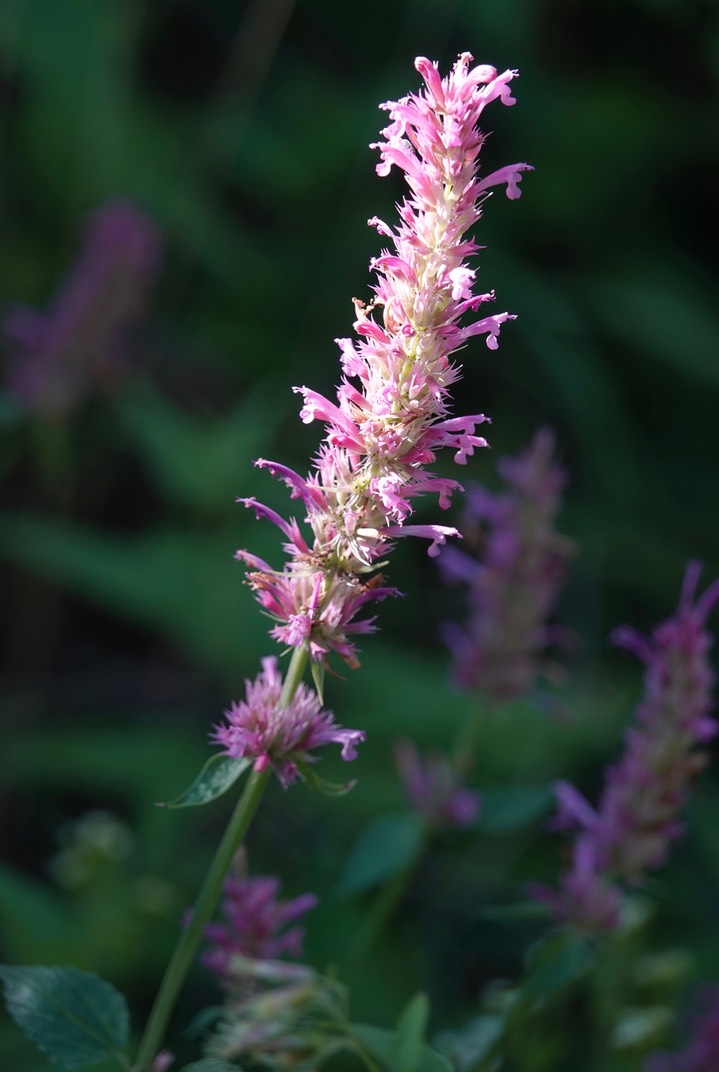
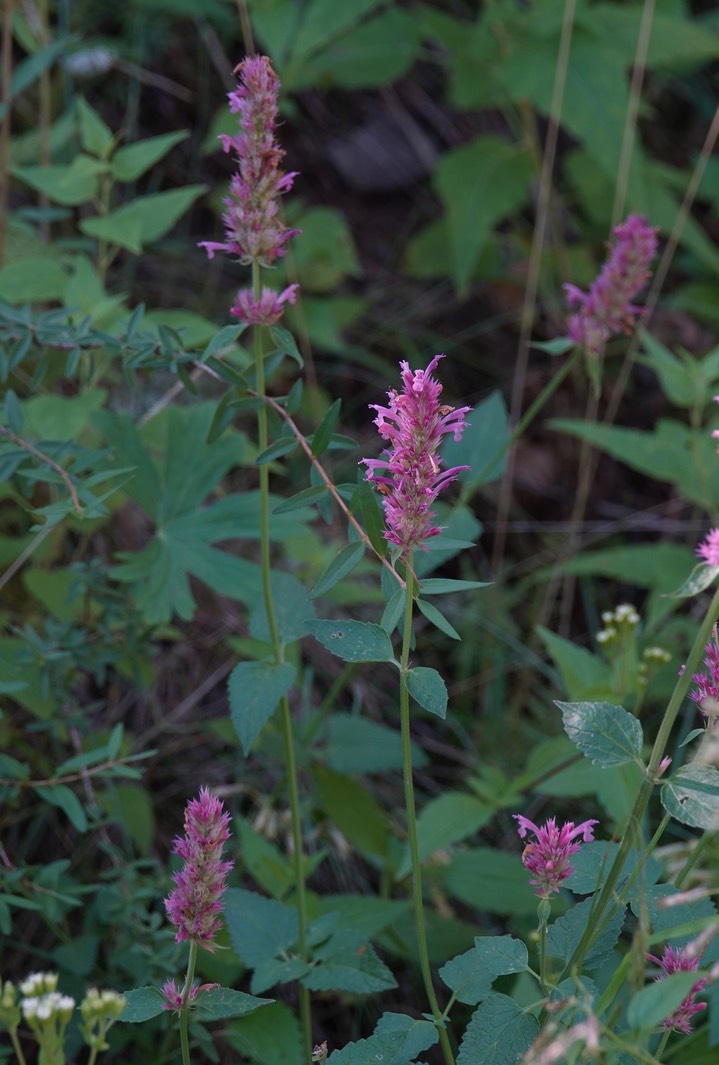
Synonyms include A. breviflora, A. neomexicana, and A. pallidiflora havardii. An alternate English common name is Bill Williams Mountain Giant Hyssop. There are two varieties of the subspecies; A. p. n. neomexicana and A. p. n. havardii. There is also another subspecies - A. pallidiflora, which has three varieties. This species is in the mint family and so has square stems. "Ethnobotany: This species was used as an infusion to treat fevers and coughs, the root was pulverized and used to treat cankers, and the whole plant was used as a fumigant to treat deer sickness. The plant was an important food source, and its leaves were used during cooking as a seasoning. This plant was also used to protect against witches."
Agave parryi neomexicana
New Mexico Agave
East of Hillsboro
New Mexico
May 25, 2016
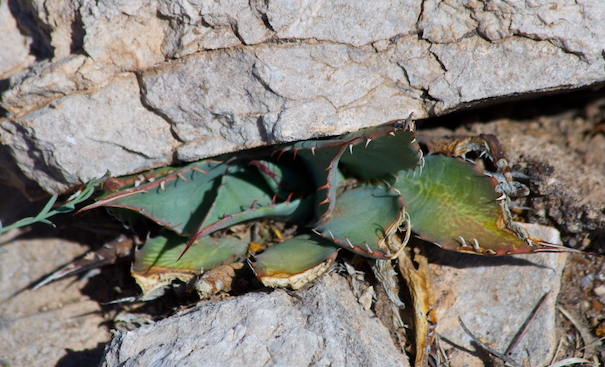
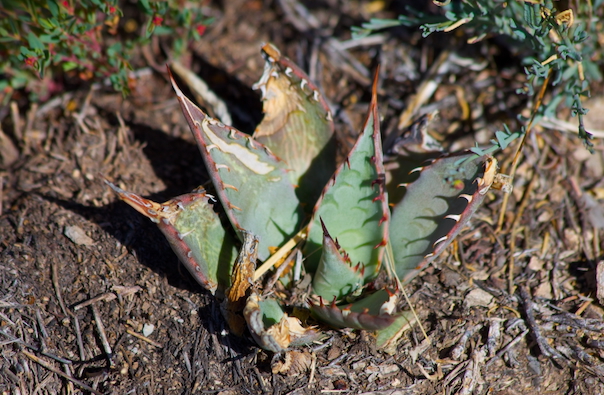
Jim Laupan recently discovered a colony of Parry’s Agave, Agave parryi, east of Hillsboro. All of the plants were small, the rosettes are no more than 3 inches across. Although there are more than three score on the crest of a small knoll they would be difficult to find if you did not know they were there, and how Jim found them I do not know, but am envious of the skill.
Now for the interesting part. Are these plants Agave parryi neomexicana or are they Agave parryi parryi? Vascular Plants of the Gila Wilderness lists only var. parryi for this area. In general, var. neomexicana is restricted to the counties in Texas and the southeastern counties of New Mexico as well as in the state of Coahuila, Mexico. It is quite possible that these plants represent a range extension of the subspecies A. p. neomexicana. Currently, some authorities believe the species has only these two subspecies, with each subspecies having varieties.
A. p. neomexicana was first described by Wooton & Standl. and has been considered a full species (A. neomexicana) at times and a variety (A. p. var. neomexicana) at times. Its range is not known to extend this far west. The species plant is known as Parry’s Agave and the subspecies (A. p. n.) is known as New Mexico Agave and New Mexico Century Plant. It is a small agave (the rosette being about a foot tall and two feet across at maturity).
The leaves are more narrow in neomexicana than in parryi, lending some support to the idea that this is in fact A. p. neomexicana and it is listed as such here. See also Mulford’s “The Agaves of the United States".
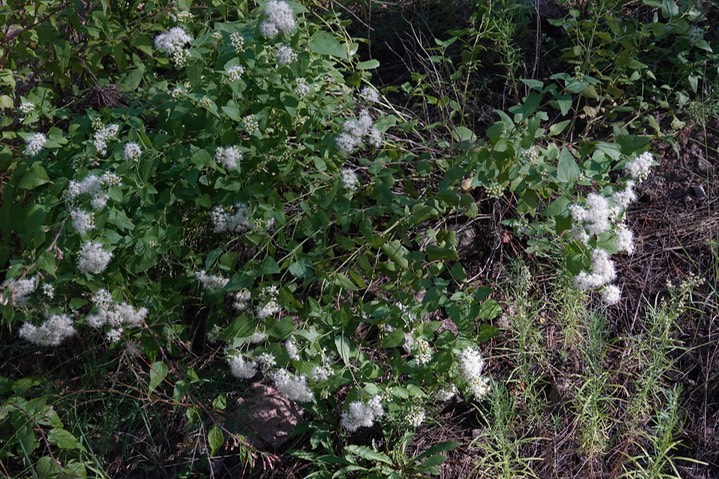
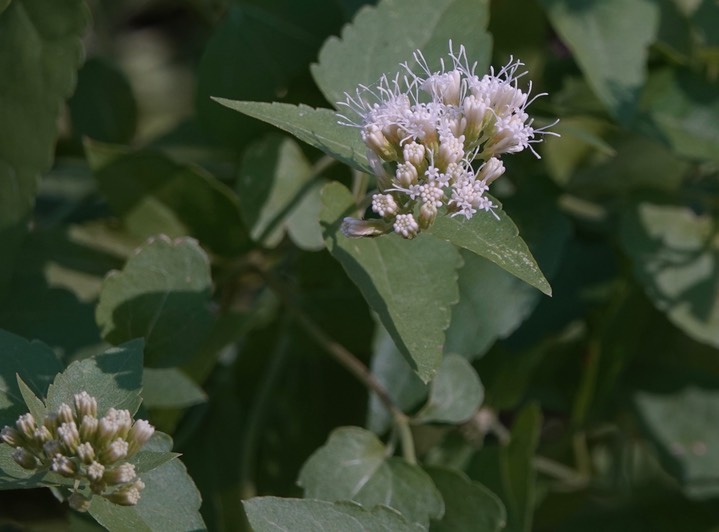
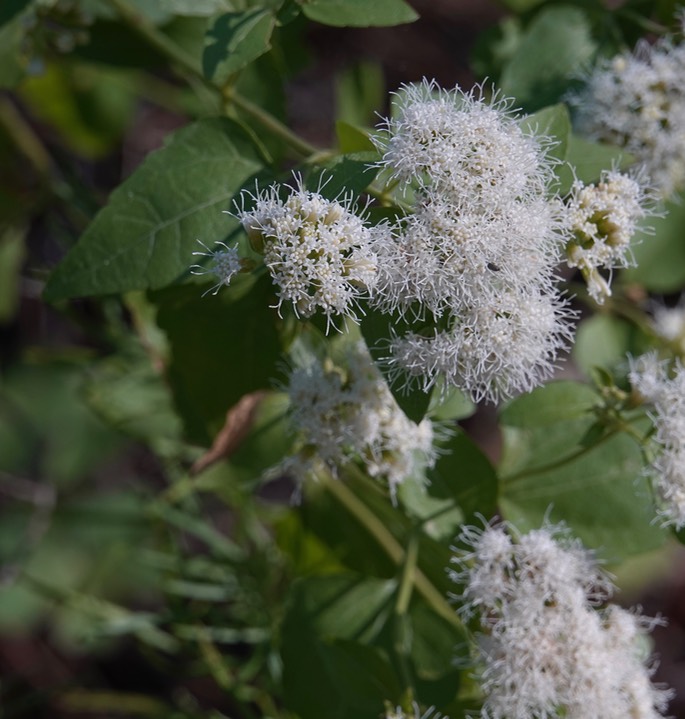
Ageratina herbacea
White Thoroughwort
Railroad Canyon
Black Range
September 16, 2020
Aldama cordifolia
Rough Goldeneye
East fork of Ready Pay Gulch
North of NM-152
East of Hillsboro
New Mexico
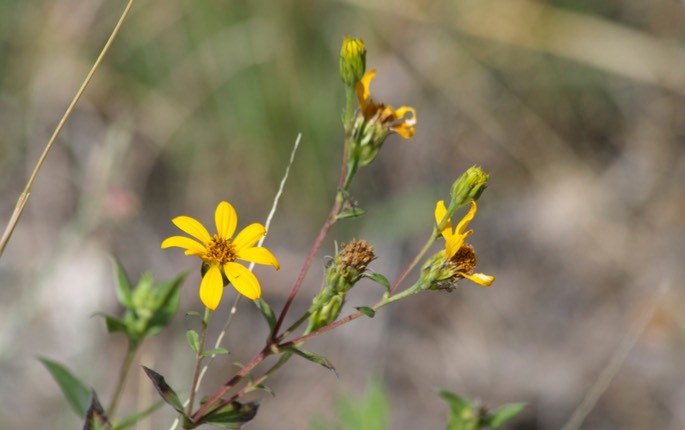
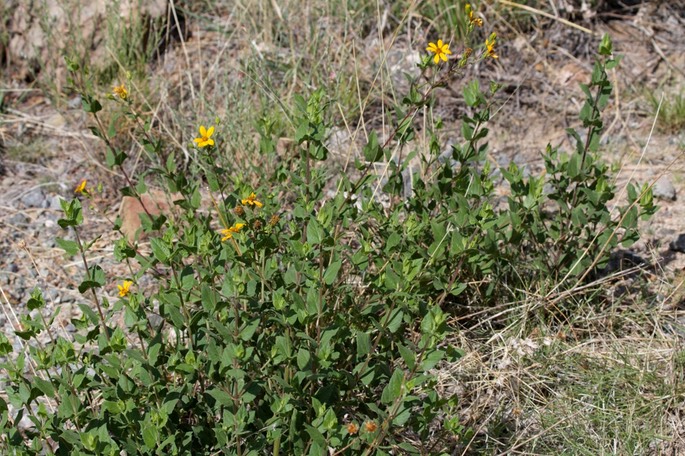
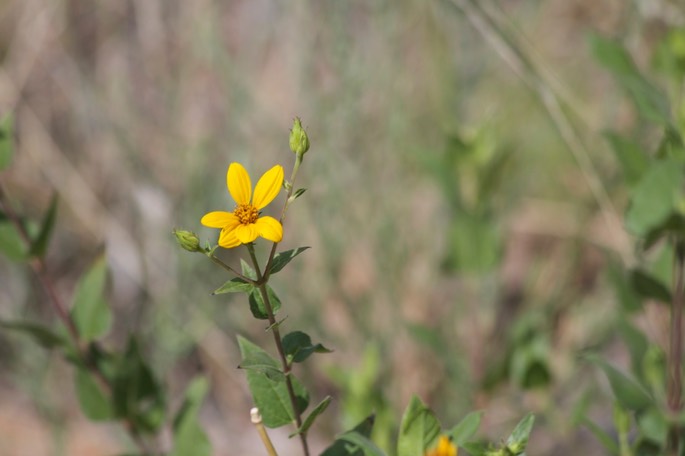
Composites! There are a lot of reasons that I am ambivalent about composites. Sure they are often pretty, showy, even extravagant - but they are so difficult to identify. We found this Rough Goldeneye (a.k.a. Heartleaf Goldeneye), Aldama cordifolia, near an adit in the east wash of Ready Pay Gulch, north of NM-152, east of Hillsboro, New Mexico. The haphazard flower of this species helps with the identification, but the leaves are quite distinctive - covered with little glands which make the plant feel rough and sticky. An impression which is augmented by its stiff upright habit and almost woody stem structure.
This species was originally described as Viguiera cordifolia by Asa Gray. In 2011, Schilling and Panero, published a major revision of this subtribe of plants based on DNA analysis, resulting in the scientific name change for the subject species.
Allionia incarnata
Trailing Windmills
Hillsboro
New Mexico
August 29, 2016
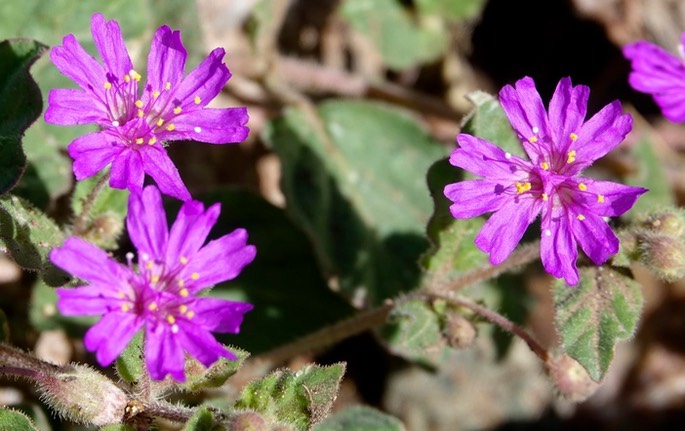
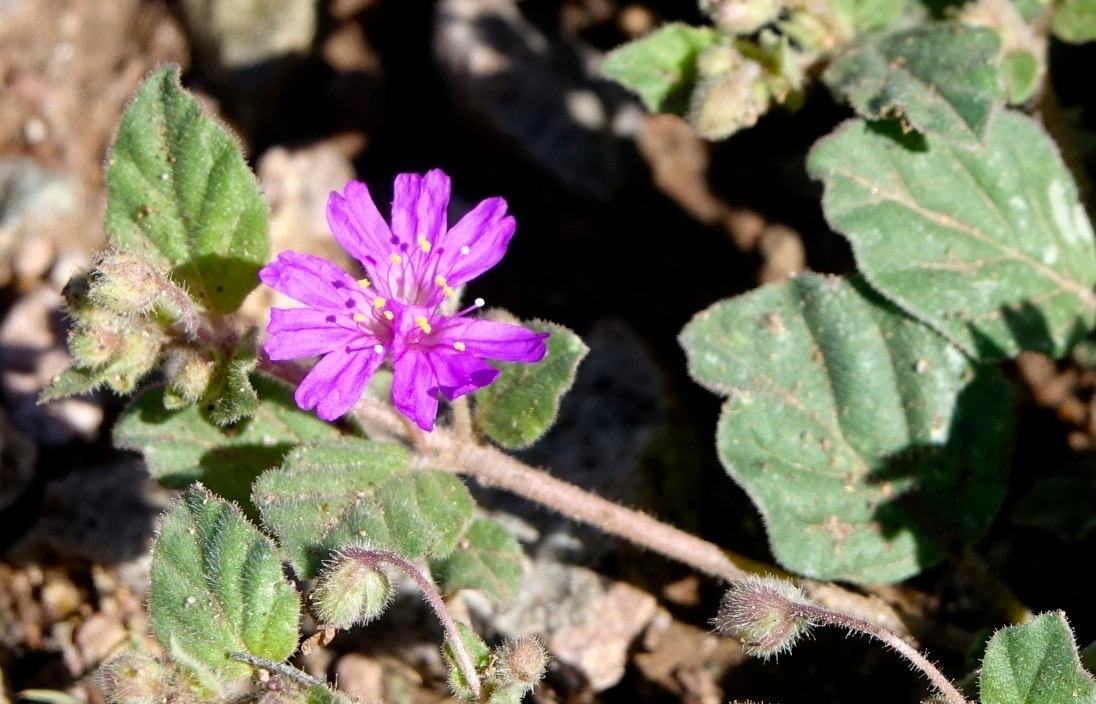
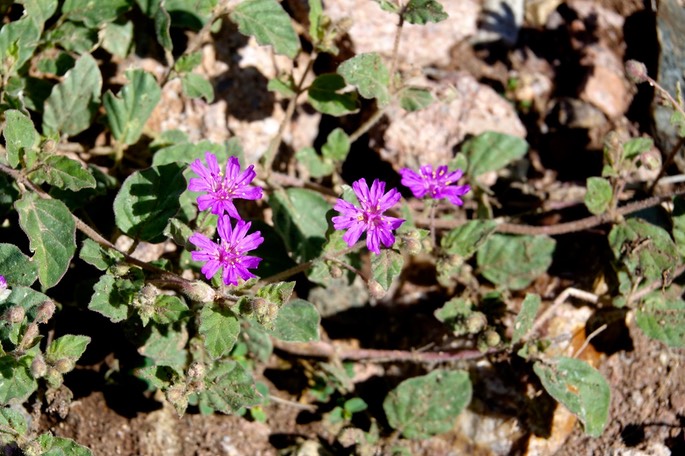
There is something about this flower which makes it quite exotic and is not readily apparent - each of the blooms you see in the photographs are in fact three blooms, each of which is bilaterally symmetric and bloom at the same time. Each flower is composed of three petals, since they bloom at the same time and are immediately adjacent, they give the appearance of one flower. There are two species in the genus Allionia and both share this characteristic and both have paired leaves of uneven sizes along the stem.
The genus, Allionia, is named in honor of Carlo Allioni, an Italian botanist and professor of botany at Turin. He was also director of the Turin Botanical Garden.
The range of Allionia incarnata extends from the southwestern United States southward through the West Indies, Central America, and South America.
As noted above, there are two species in this genus, the other is Allionia choisyi, which looks quite similiar but the flowers are generally paler and smaller (distinguishing between the two requires an inspection of their fruit). Allionia choisyi is found in Arizona, Utah, New Mexico, and Texas in the United States and southward through Mexico into South America.
A scientific synonym for Allionia incarnata is Wedelia incarnata. English Common Names for the species include Pink Three-Flower, Pink Windmills, Trailing Allionia, Trailing Four-O’clock, Trailing Windmills, and Umbrella-wort.
Allium cernuum neomexicanum
Nodding Onion
Dry Creek West of Kingston
Black Range
New Mexico
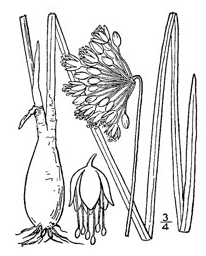
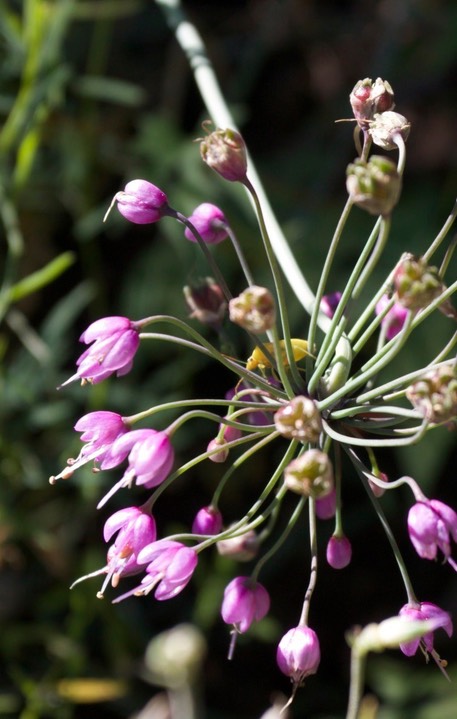
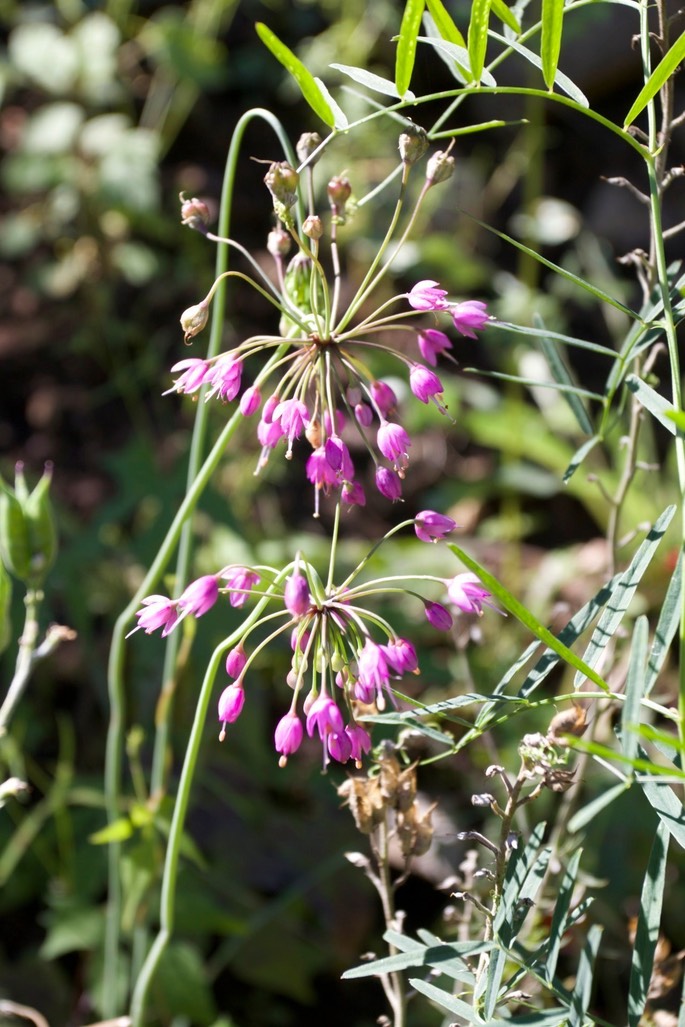
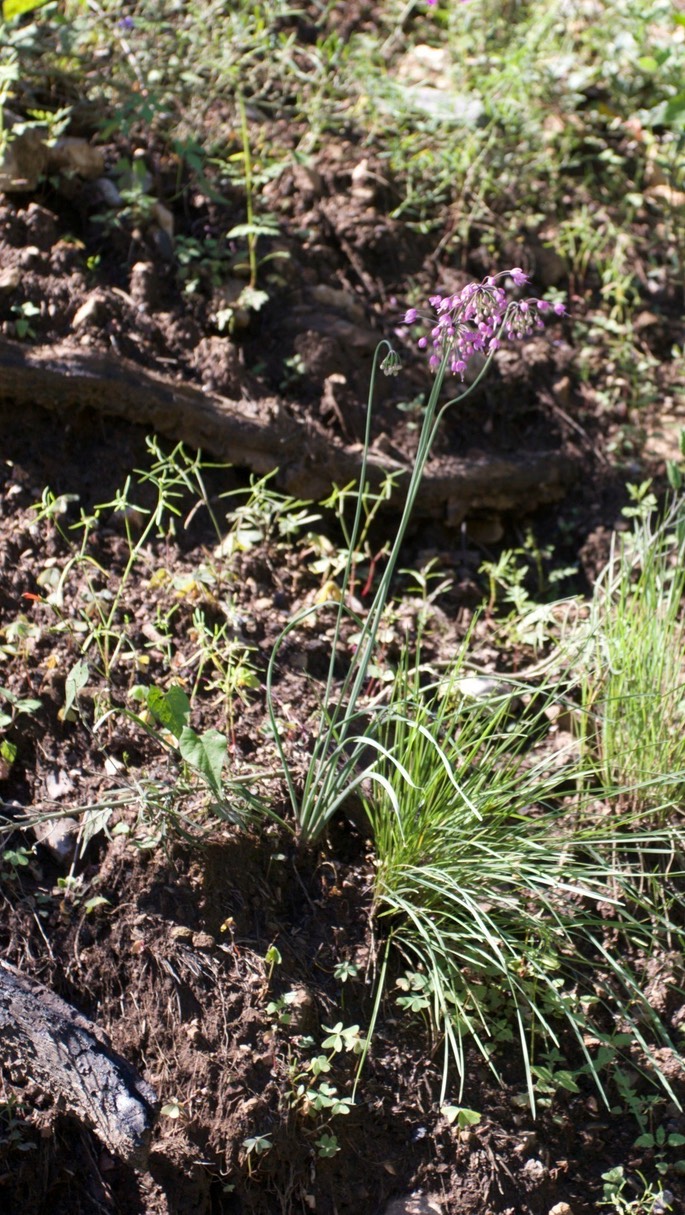
Most Allium species in our area have flowers which stand upright. Allium cernuum, Nodding Onion, gets its name from its downward facing flower pedicel. Note, however, that the seed capsules face upward once they form. For an onion, it is rather large, from 1’ to 1.5’ (sometimes 2’) tall. It is a butterfly attractor.
This species is found throughout much of the higher elevations of North America (Canada to Mexico). We found this specimen in Dry Creek, just west of Kingston (Black Range, New Mexico, USA). In the past, Nodding Onion was added to stews, eaten raw, etc. but this is generally not done today. (Decades ago my climbing partner, Terry Carlin, and I were hiking into the north face of Mt. San Jacinto in southern California, USA. We stopped for an evening meal beside a beautiful stream, took out our dehydrated food, boiled water, added the stuff in the packet, added a few native onions from around the stream to spice up the meal -- and smelled strongly of onion for a week.)
The line drawing in the gallery is from “Illustrated Flora of the Northern States, Canada and the British Possessions”, Volume 1, p. 498, by N. L. Britton and A. Brown, 1913. A full description of the species is available at Flora of North America.
The plant shown in these photographs is probably, Allium cernuum neomexicanum (New Mexican Nodding Onion). This subspecies was first described by Per Axel Rydberg who characterized it as a full species, Allium neomexicanum, in 1899. He described roughly 1,700 species during his career. The type specimen was collected by E. O. Wooton on October 14, 1894, in the Organ Mountains east of Las Cruces. He studied that area extensively during the course of his career. See Contributions from the United States National Herbarium, Vol. 19 - Flora of New Mexico, by E. O. Wooton and Paul C. Standley, 1915. The species A. neomexicanum was reclassified to a subspecies, A. c. neomexicanum, by James F. Macbride (who is known primarily for his study of the flora of Peru).
E. O. Wooton was the moving force in the establishment of the Jornada Experimental Range. He had started cooperative range investigations in 1904, primarily in southern New Mexico, and was concerned primarily with the carrying capacity of range land. In 1908 he published The Range Problem In New Mexico. In 1912, the Jornada Range Reserve was established and he was in charge of the operation until 1915 when it was transferred to the USDA Forest Service.
A fascination bit of history, arrived at by way of an onion.
Allium macropetalum
Arizona Onion
East of Hillsboro
New Mexico
Late March to
Early April
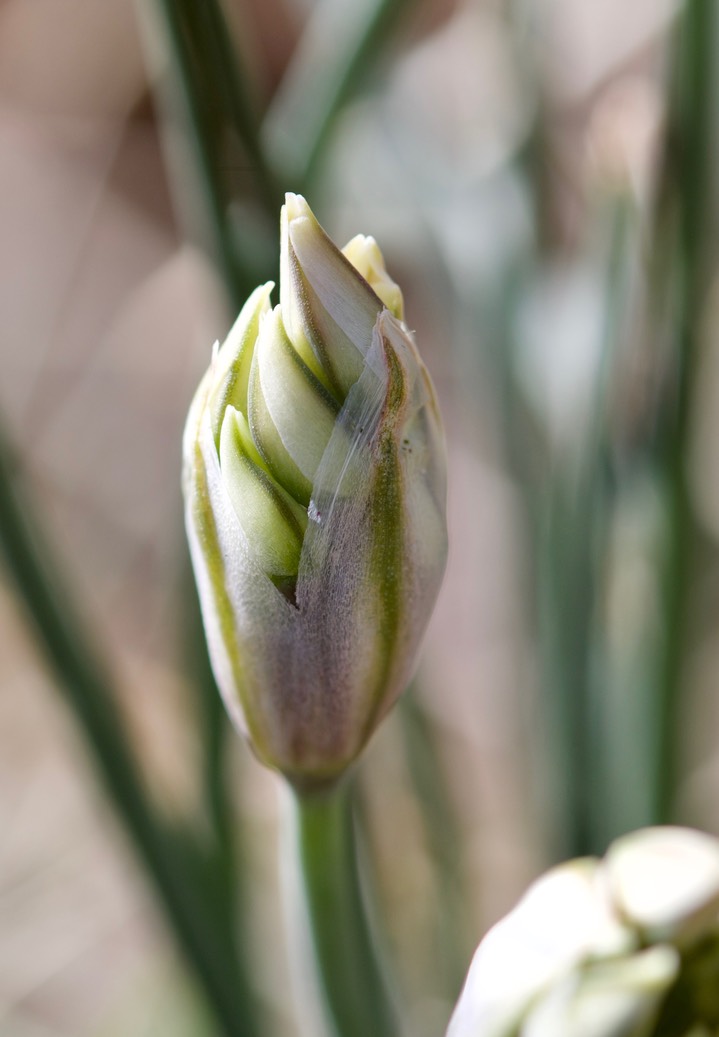
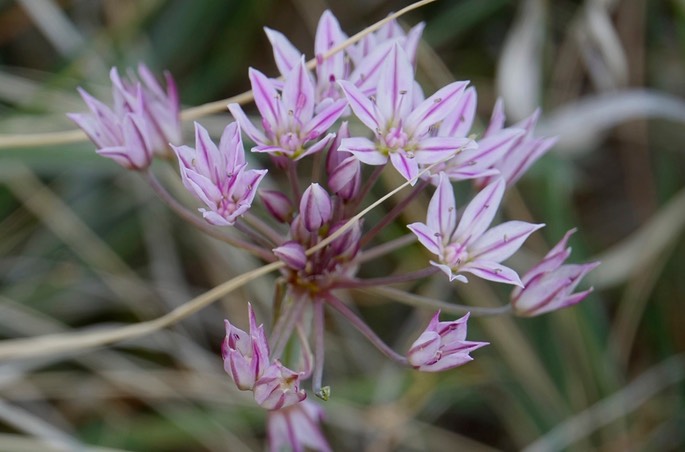
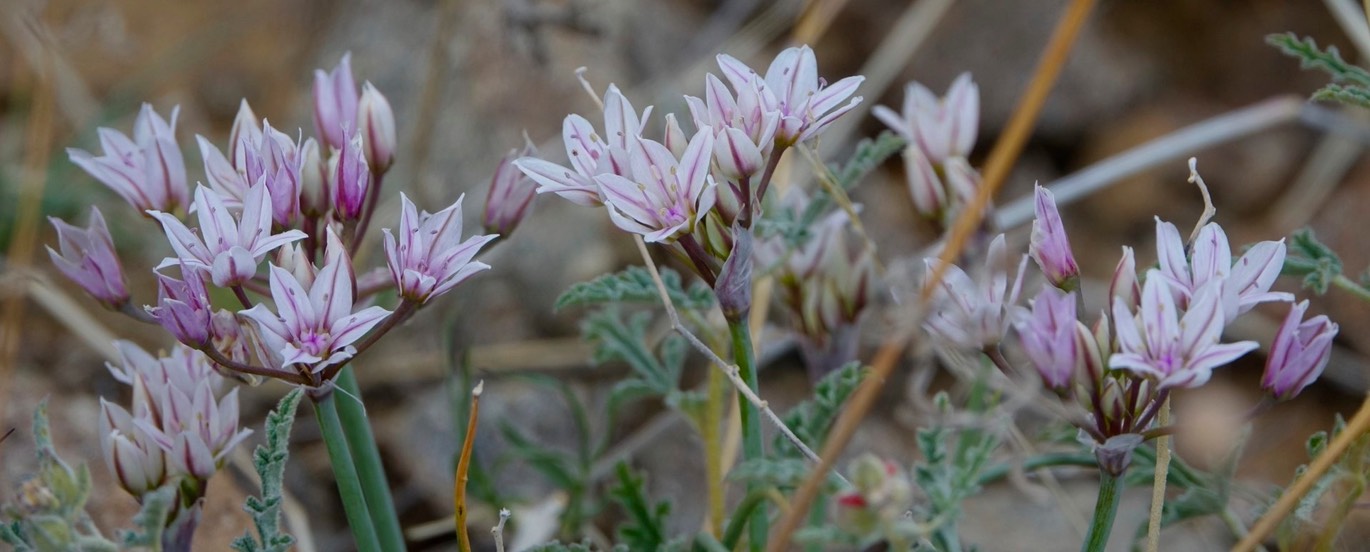
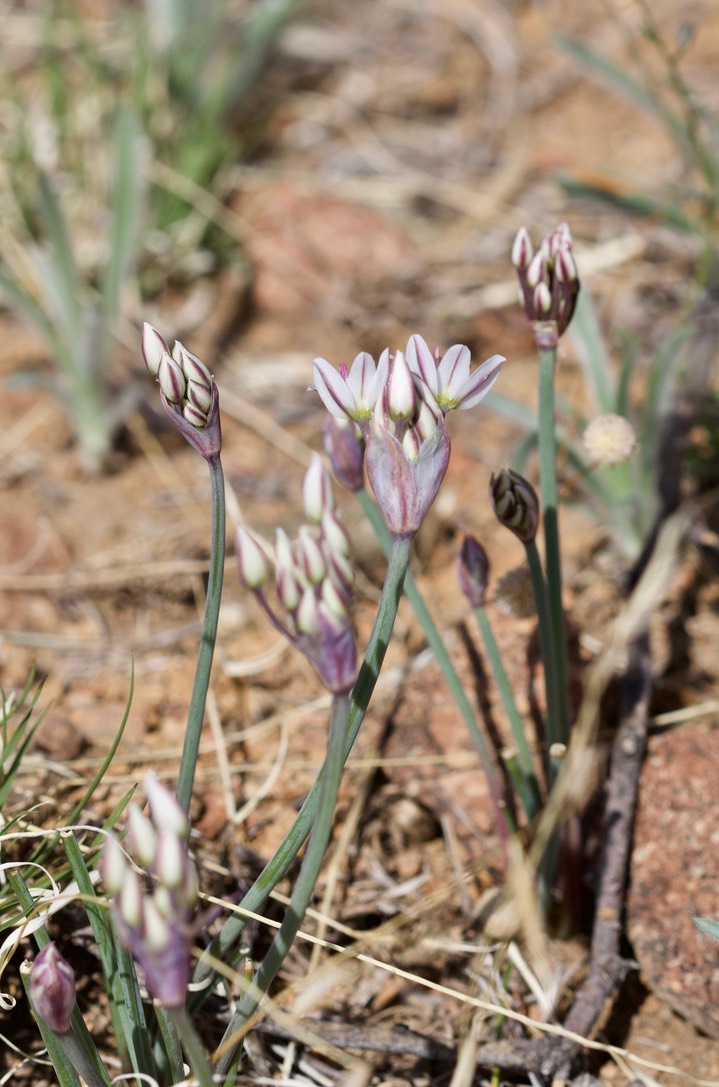
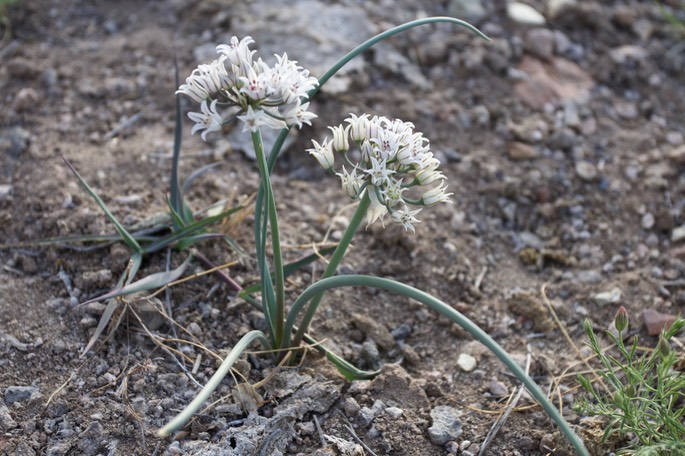
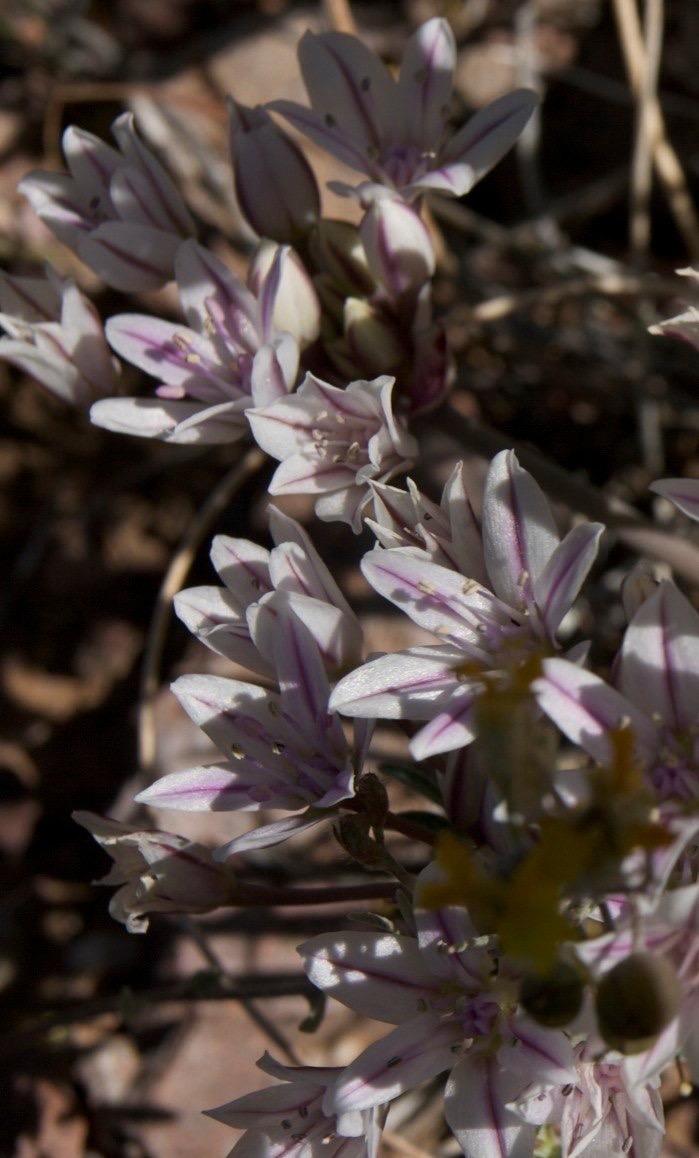
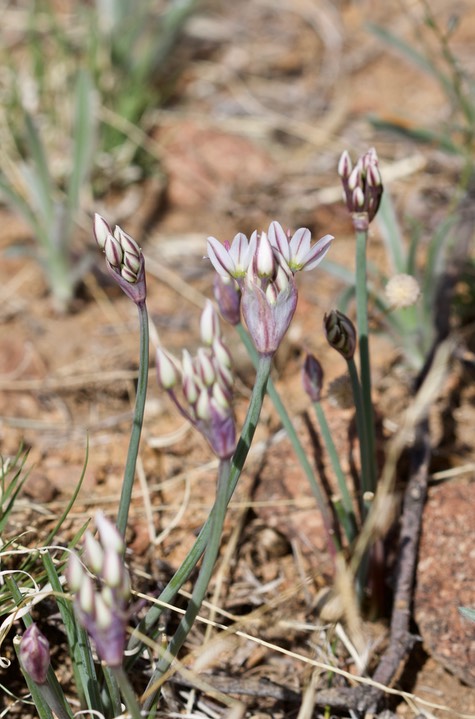
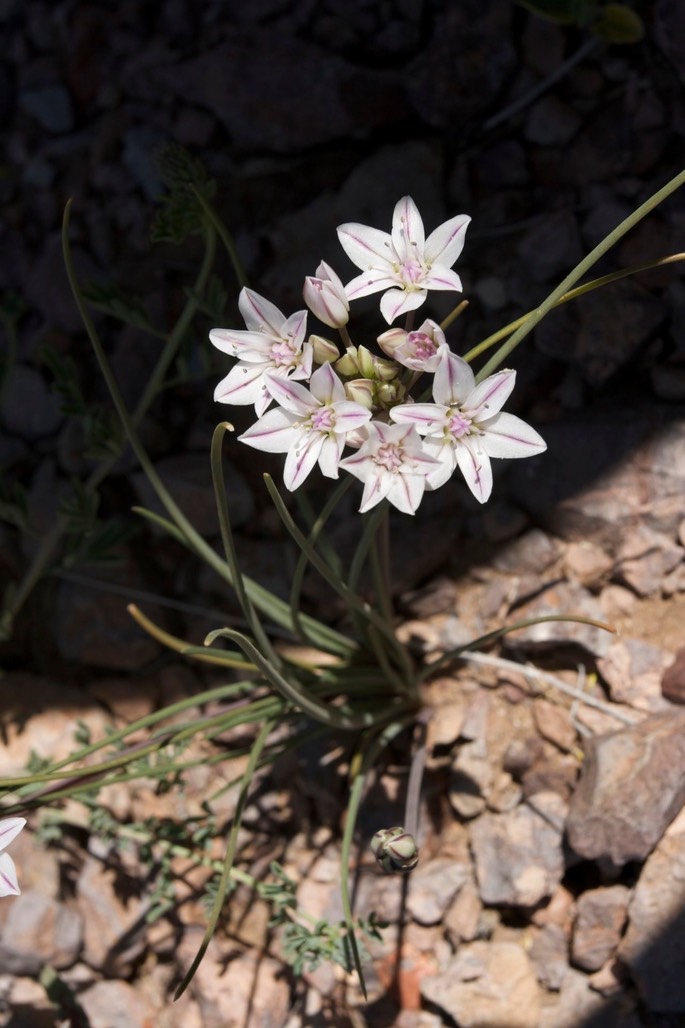
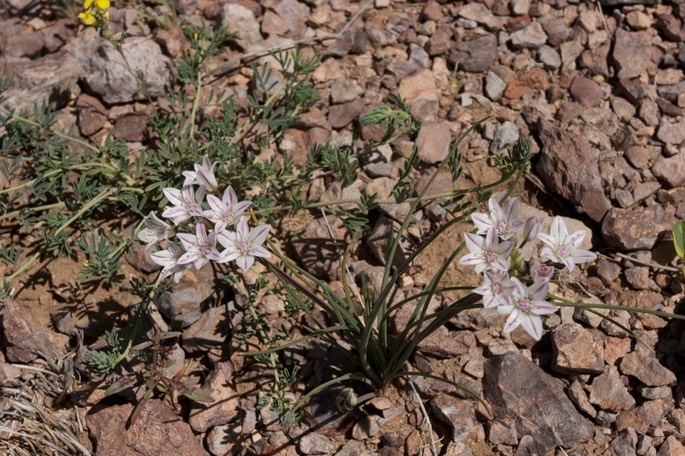
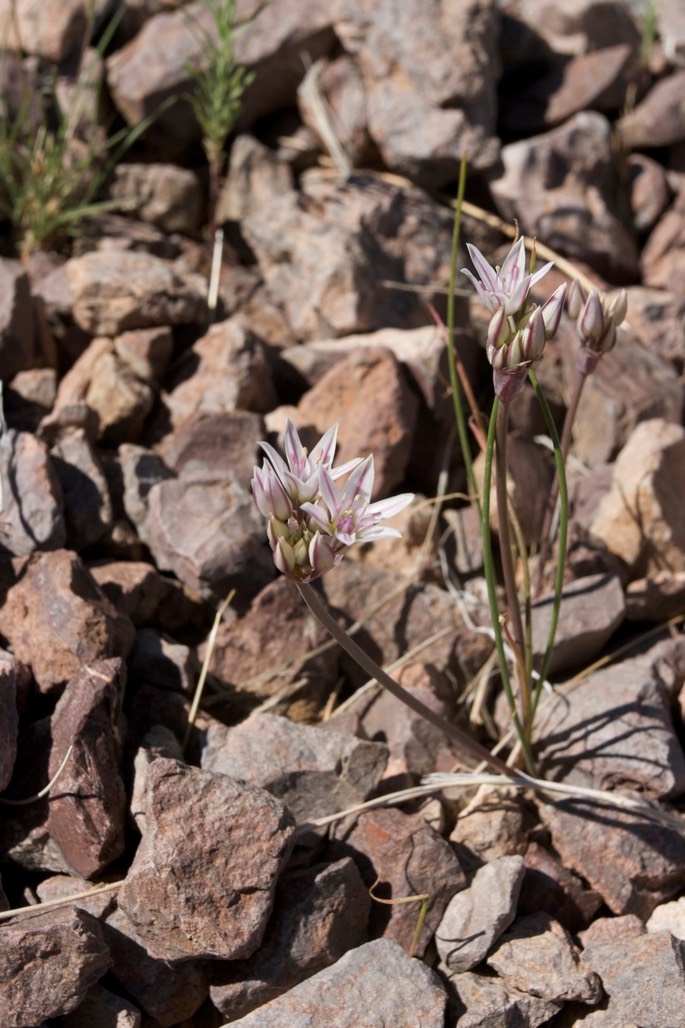
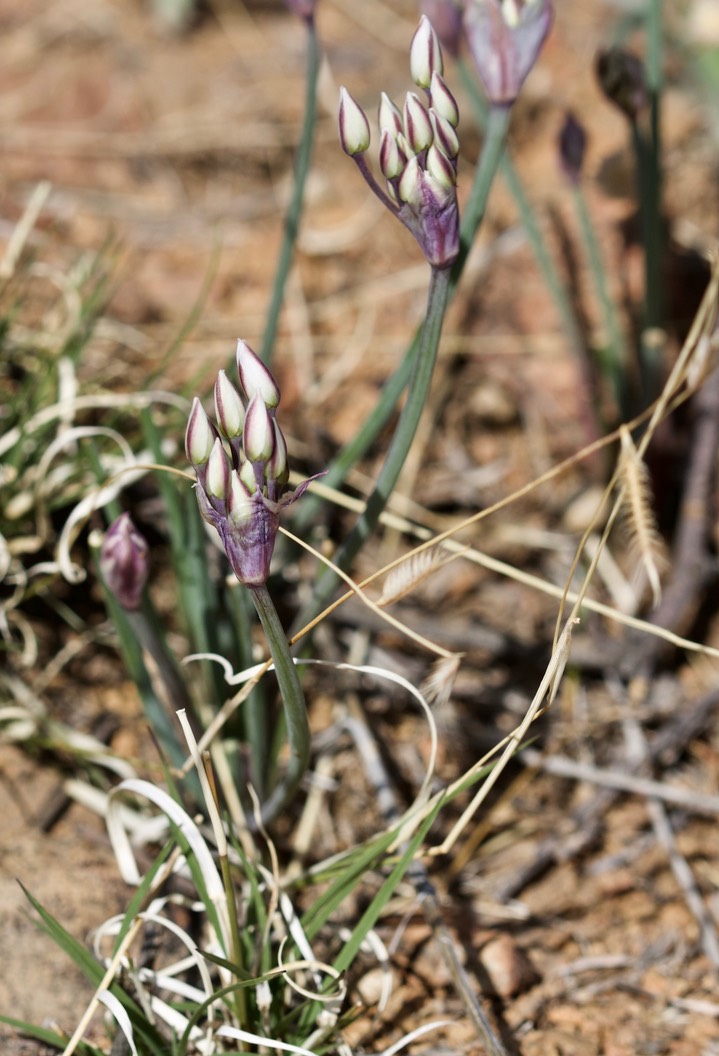
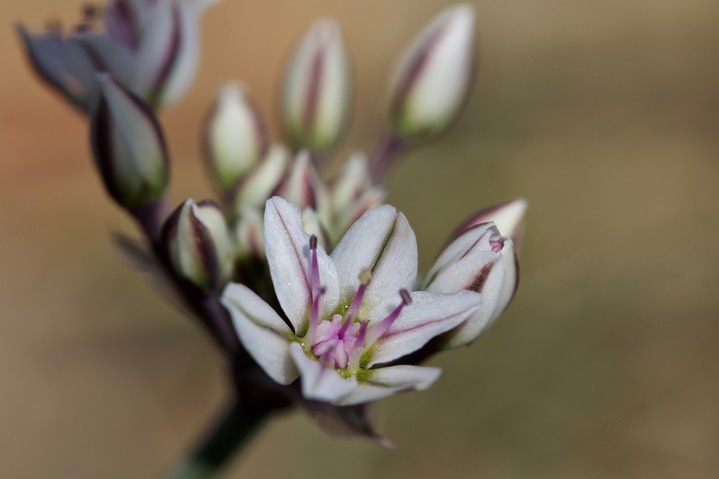
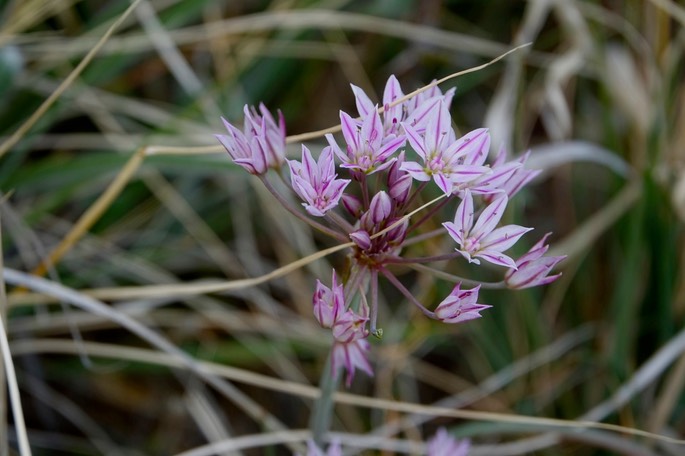
The range of Allium macropetalum, in the United States, is limited to Arizona, Utah, Colorado, New Mexico, and Texas (which considers it a noxious weed). It is also found in Sonora, Mexico.
This species is also known as Largeflower Onion, Large-petal Onion, Desert Onion, and Desert Onion Lily. Scientific synonyms include Allium deserticola (see Flora of New Mexico, Volume 19, p. 142 by Elmer Ottis Wooton and Paul Carpenter Standley) and Allium reticulatum. The current description of this species was made by Per Axel Rydberg, in 1904, from a specimen collected in Colorado by C. S. Crandall on 14 May 1898.
If there has been rain, Allium macropetalum can be common in the Ready Pay Gulch area east of Hillsboro in late March and early April. In A. macropetalum the fiber covering which surrounds the bulb is interlaced (as in A. geyeri and A. textile). This is different from most other Allium species, species which typically have non-fibrous coverings or the fibers are parallel (not woven).
The Navajo used this onion as a food source. The growth pattern of the root fibers which cover the bulb is often useful in identifying onions to species, see Southwest Colorado Wildflowers, for an image.
Allium rhizomatum
New Mexico Onion
Continental Divide Trail
East of Poverty Flat
Black Range
New Mexico
August
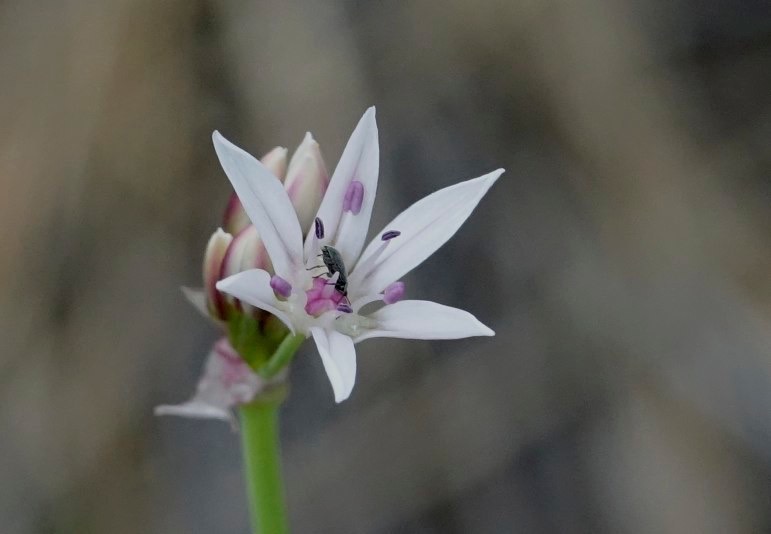
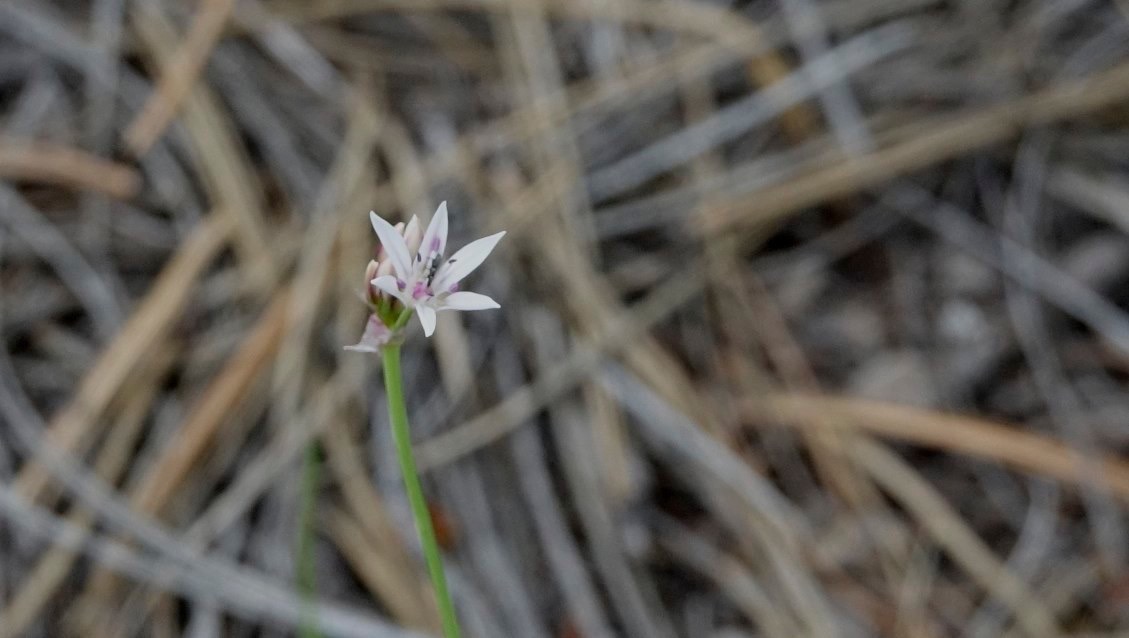
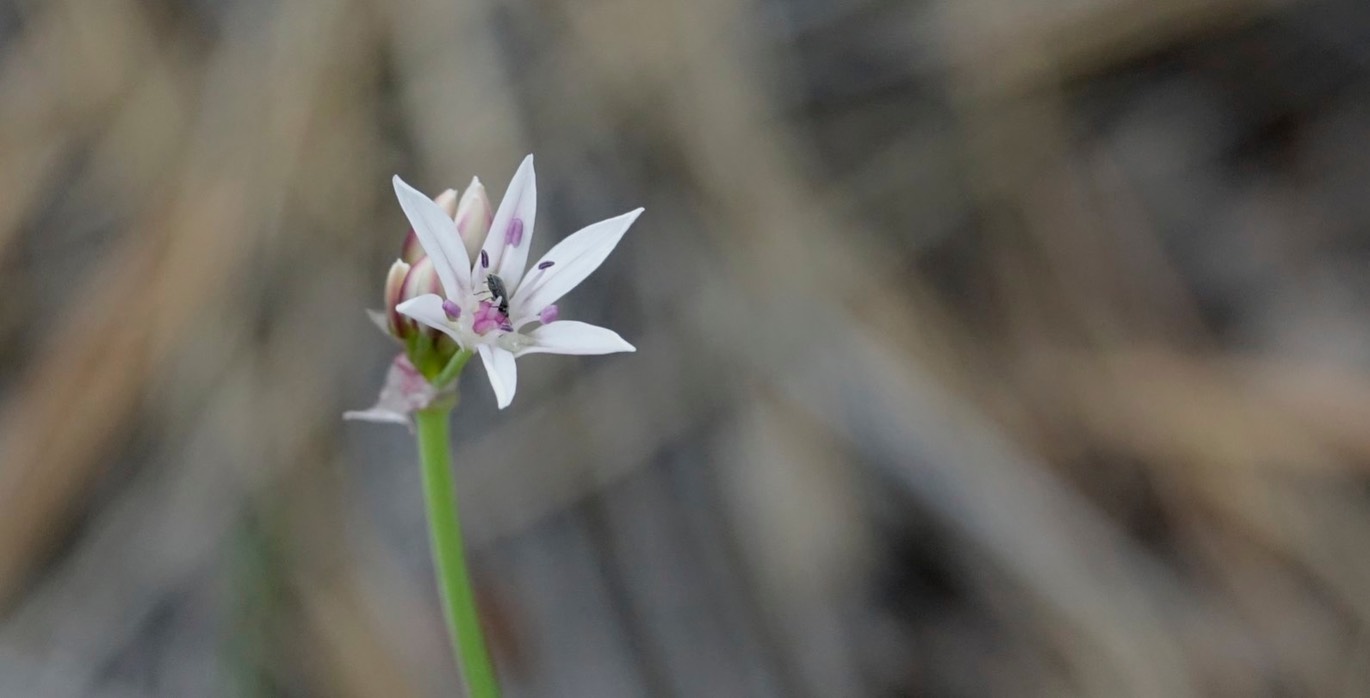
Allium rhizomatum is an easy plant to miss, the leaves are thin and “onion-like” and the flower is small - but very beautiful. It is truly a “New Mexico” species. Other than in New Mexico, it is also found in northern Mexico although the range is confused because some authorities include this species within Allium glandulosum.
Allium rhizomatum was first described by Elmer Ottis Wooton & Paul Carpenter Standley in 1913. See their description, from “Contributions From The National Herbarium” page 114 (Part 4 - February 12, 1913).
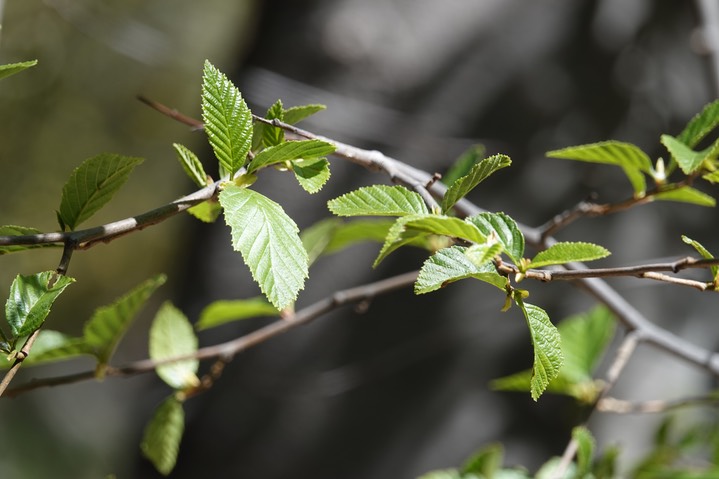
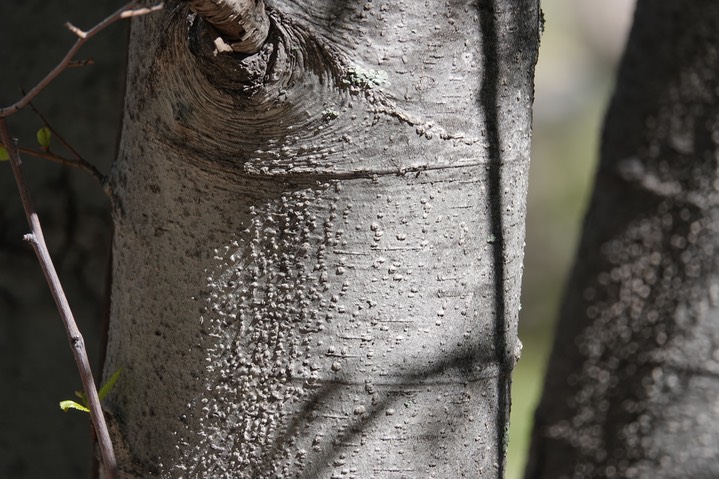
Alnus oblongifolia
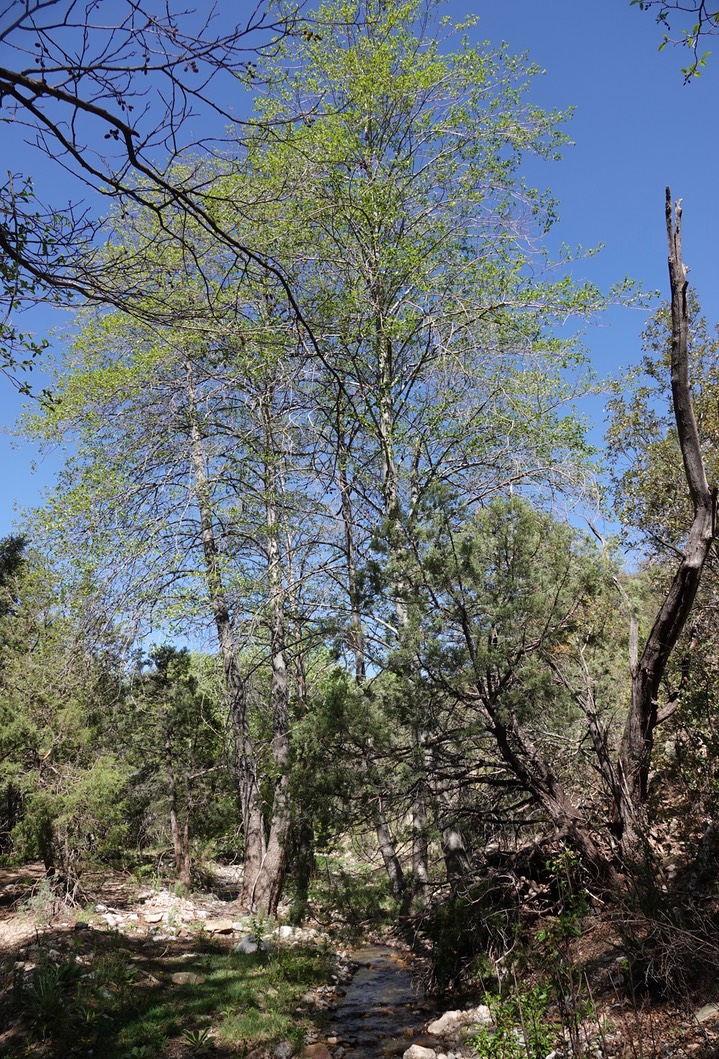
Arizona Alder
Trail 134, Black Range
New Mexico
Ambrosia monogyra
Burrobrush
Warm Springs Wash
NE of Hillsboro
New Mexico
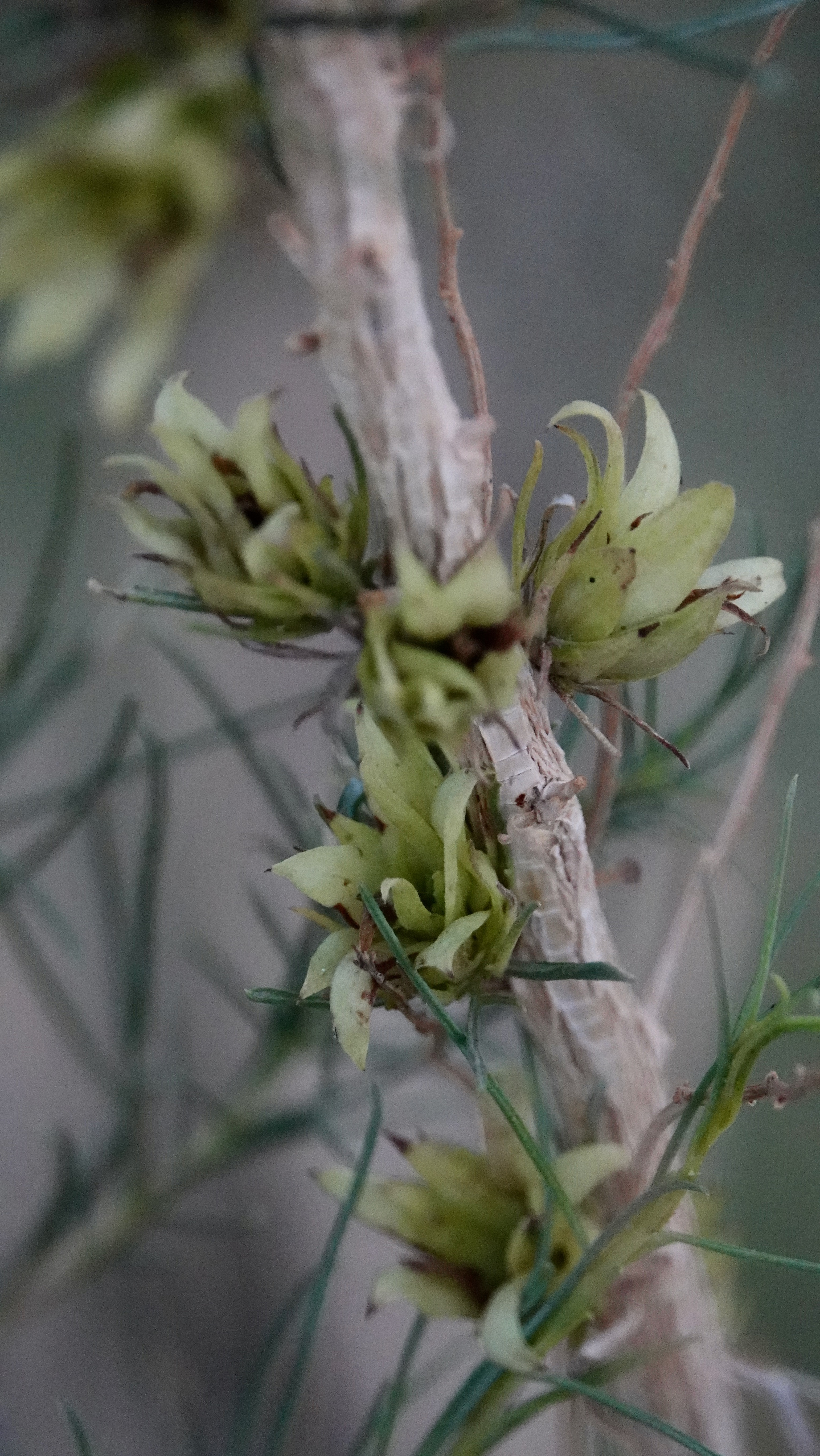
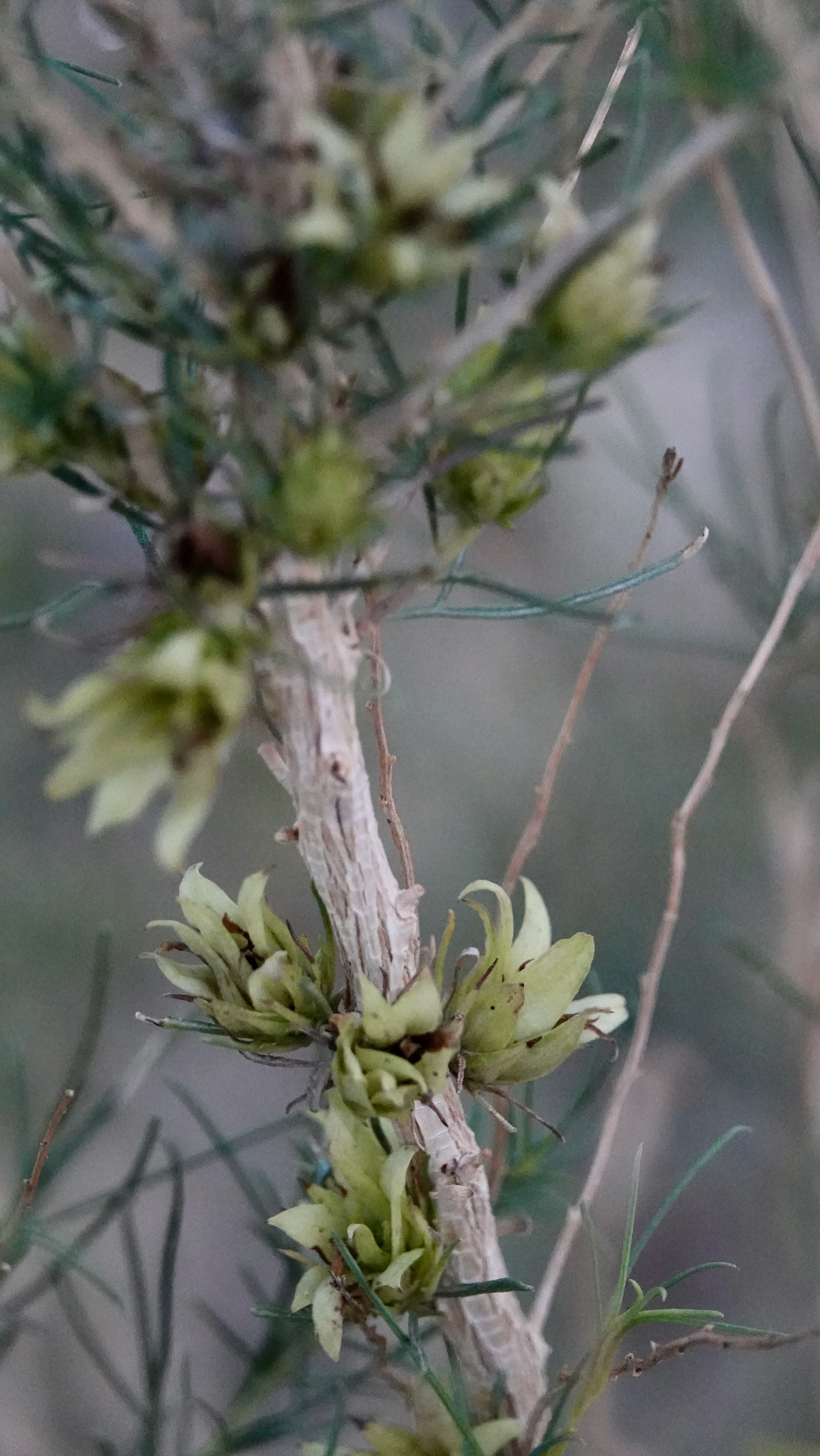
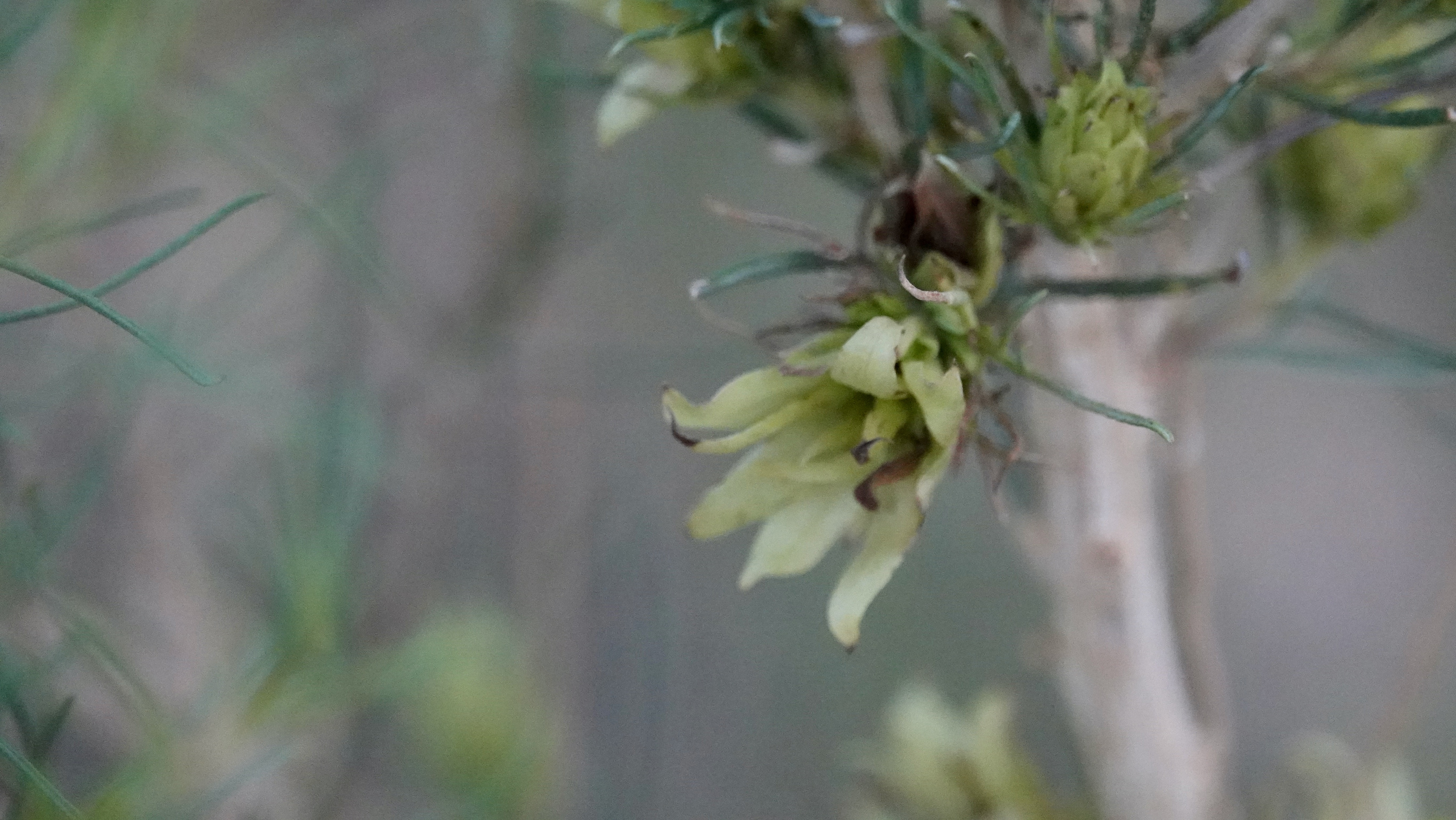
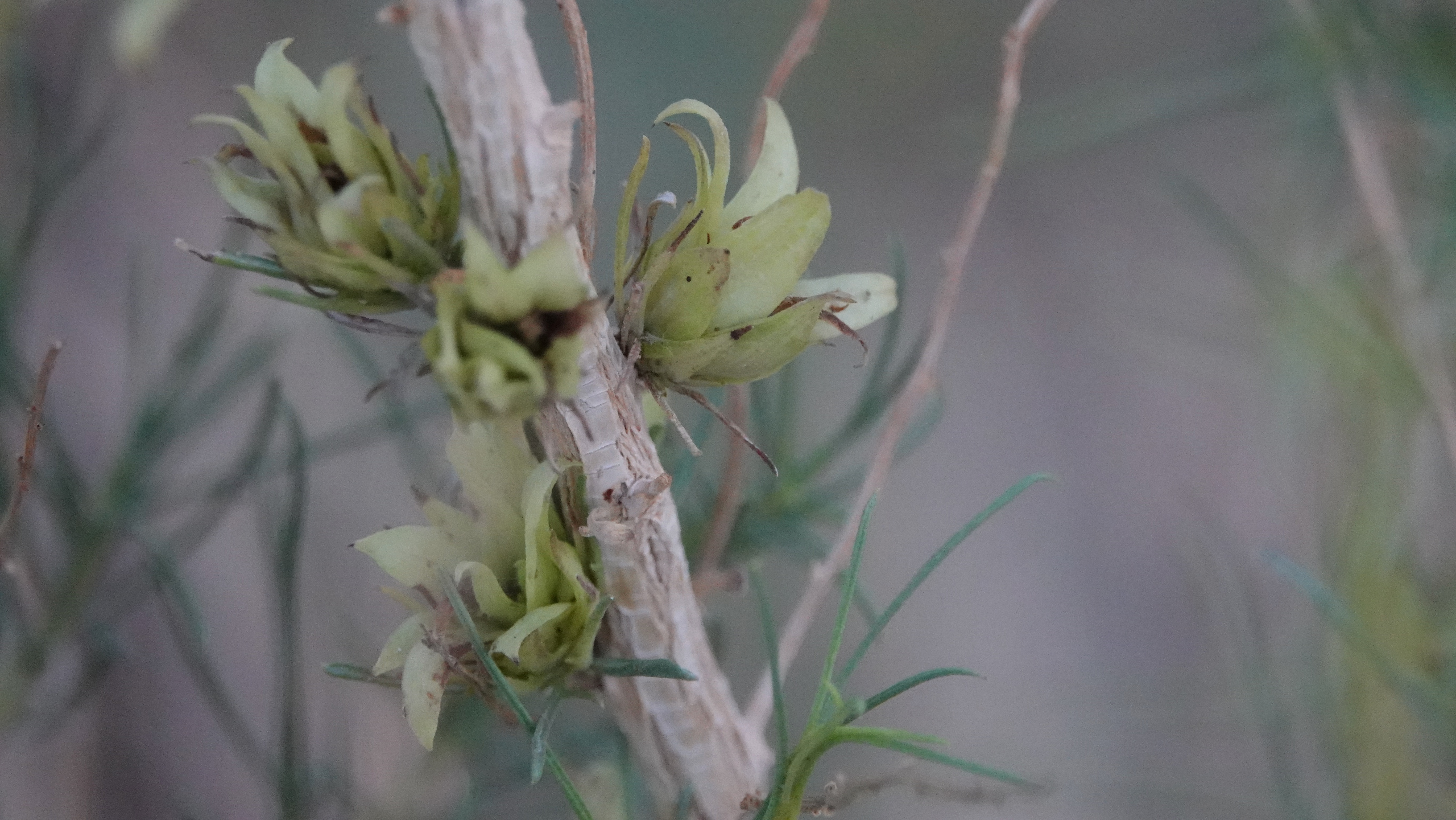
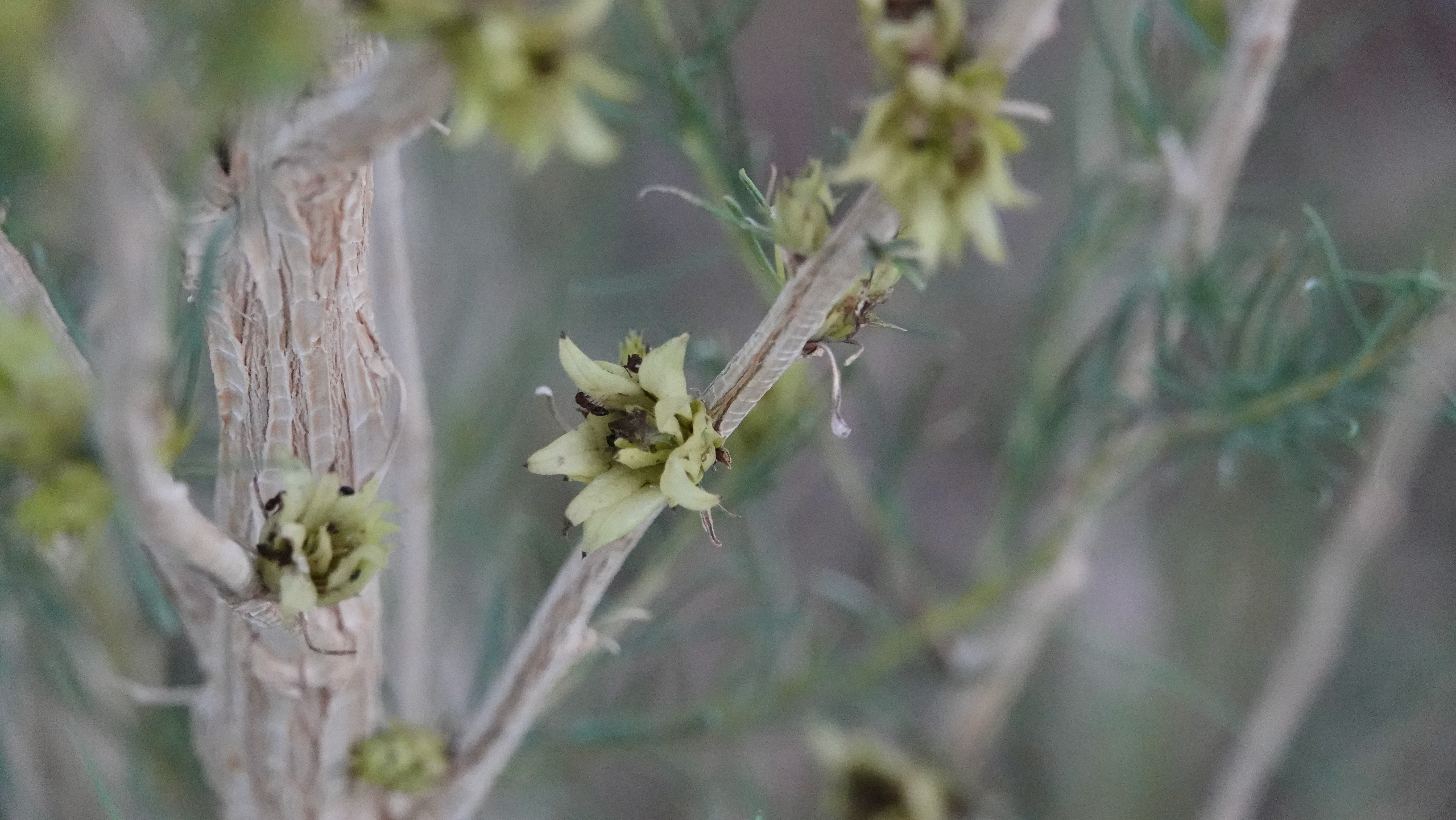
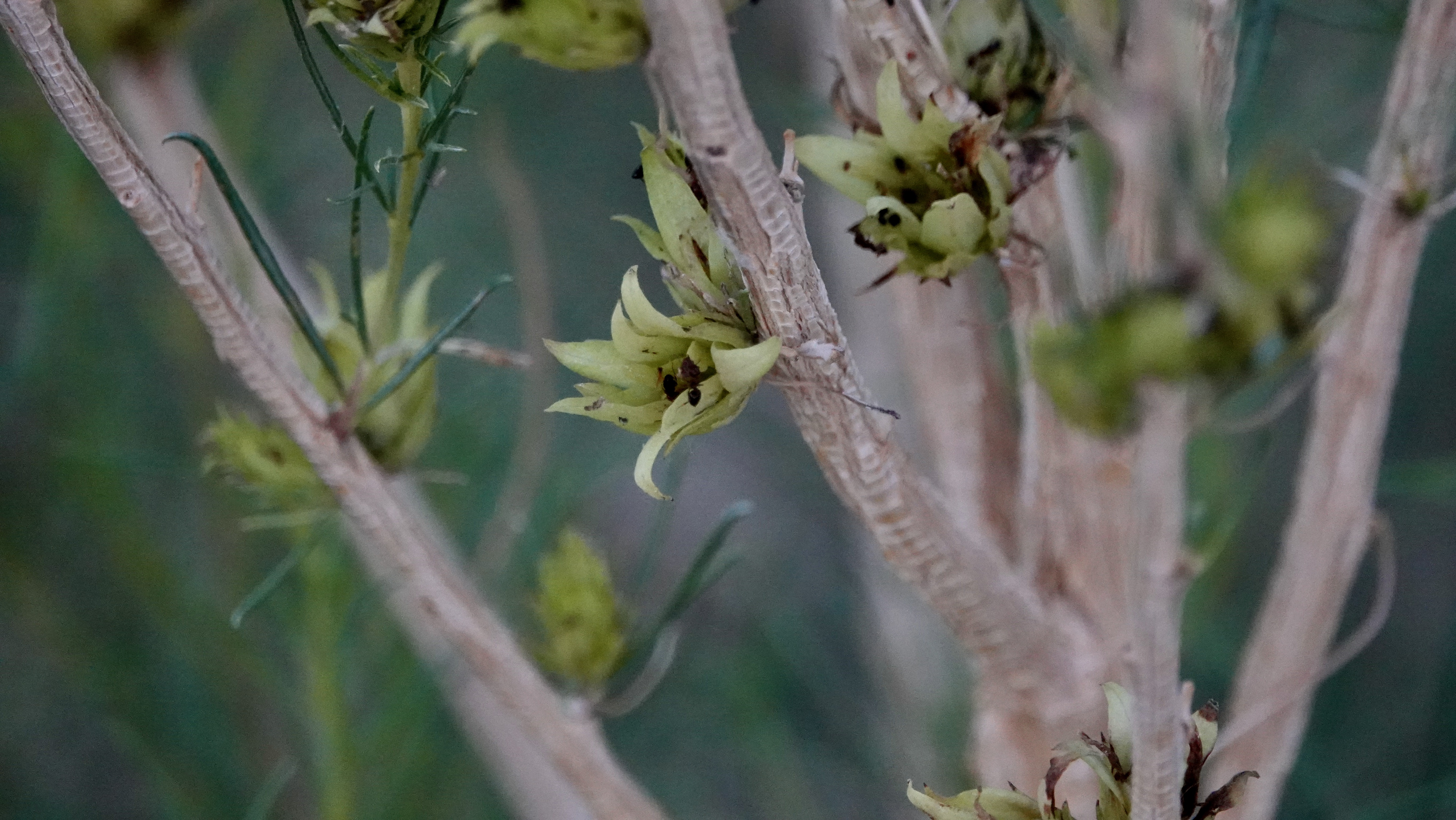
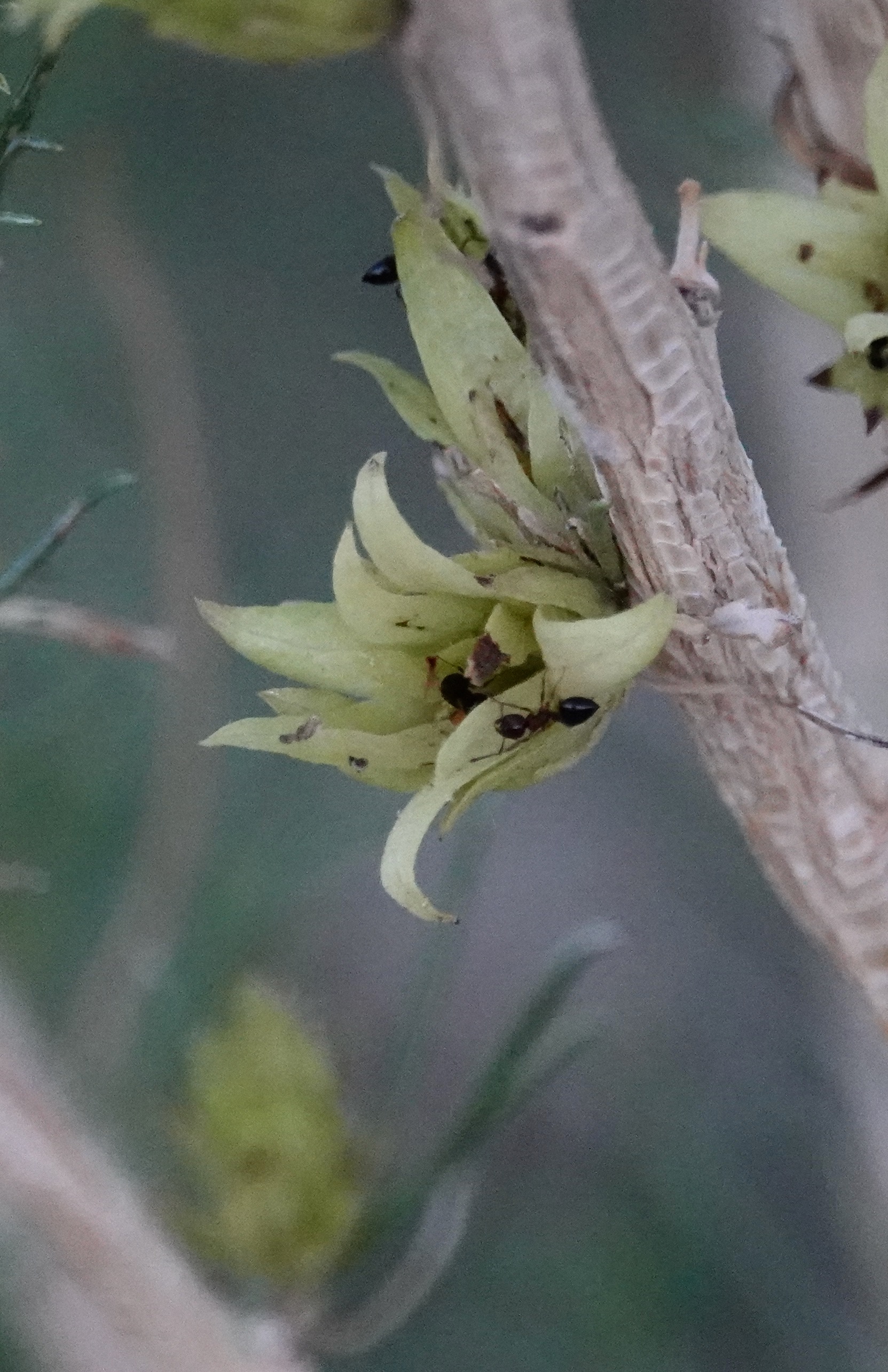
This species is also known as Cheesebush and Singlewhorl Burrobrush. It was first described as Hymenoclea monogyra by Torrey and Asa Gray in 1849. It is a species of the arid regions of North America, being found in California, Arizona, Texas, New Mexico, Baja California, Baja California Sur, Sonora, Sinaloa, Chihuahua, and maybe in western Nevada.
Anoda cristata
Spurred Anoda
Hillsboro Peak Trail
Black Range
New Mexico
September
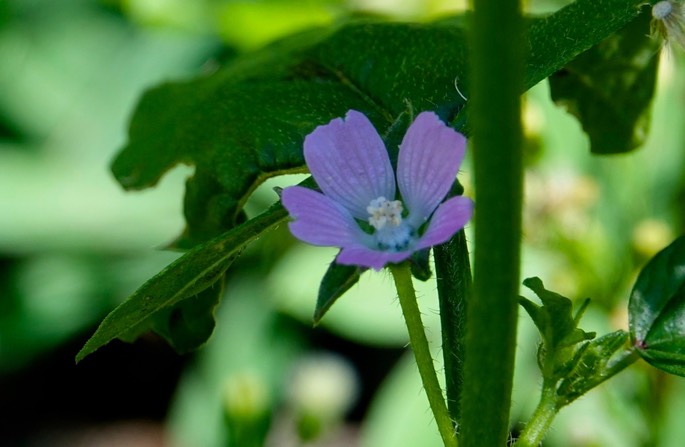
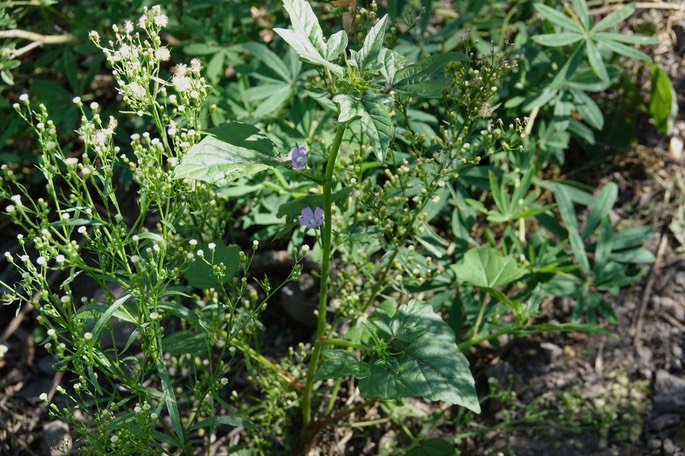
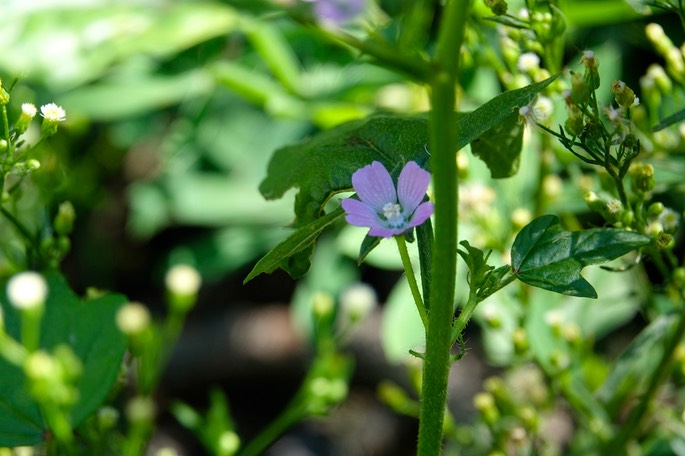
Not only is the flower delicate and beautiful but, at least in this case, it had a wonderful habit of blooming from the stalk of the plant (solitary in the leaf axis). Note the purple staining on the midrib of the leaves, it is diagnostic of this species.
Anoda cristata has a number of scientific synonyms, including, Anoda arizonica, Anoda acerifolia, Sida cristata, and Anoda lavaterioides. Other Common English names included Crested Anoda, and Violettas.
This species is native to and not rare within several counties in New Mexico, Arizona, and Western Texas. It has been introduced in a number of other locales and is considered a noxious weed in some of those areas. It is native in areas southward to Central America or perhaps South America. The flowers of this species, in the southern part of its range, can be quiet large and showy.
Antennaria parvifolia
Nuttall’s Pussytoes
Railroad Canyon
Black Range
New Mexico
May
Nuttall’s Pussytoes (also known as Small-leaf Pussytoes) is told from the closely associated Antennaria marginata by the fact that its leaves are hairy on both sides. It is native to most of Canada, most of the western United States and northern Mexico (Chihuahua and Nuevo León). This is an interesting species because populations in New Mexico and Colorado are dioecious and can reproduce sexually. Other populations are gynoecious and reproduce apomictically (apomixis does not include forms of asexual reproduction like growth from cuttings). Plants which form from apomixis reproduction are genetical identical to the parent plant.
Scientific synonyms include A. aprica (including various varieties), A. aureola, A. dioica, A. holmii… Thomas Nuttall described this species in the Transactions of the American Philosophical Society 1841.
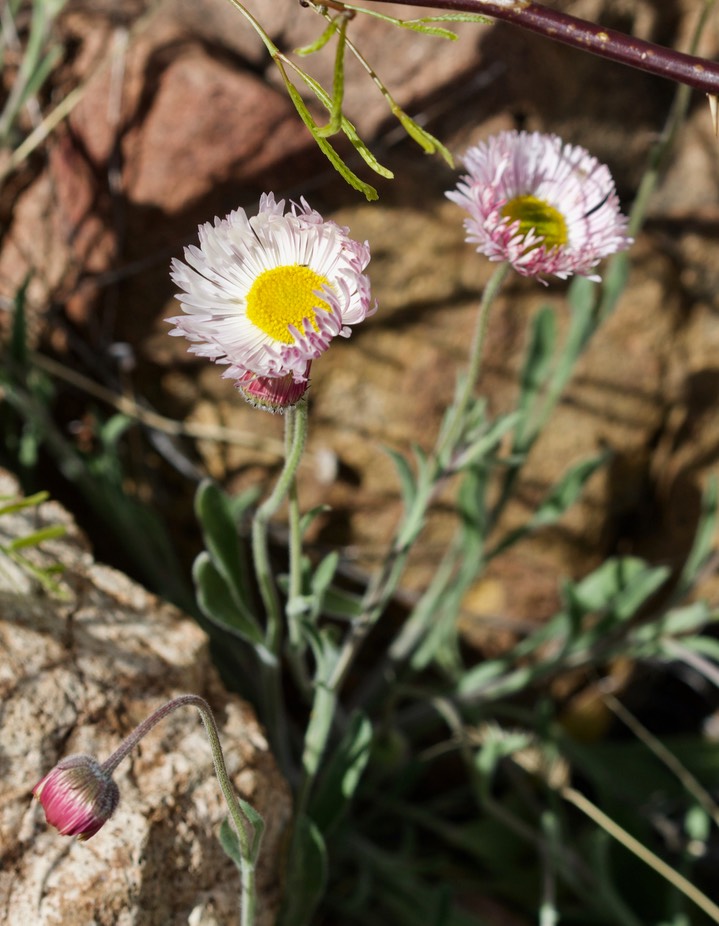
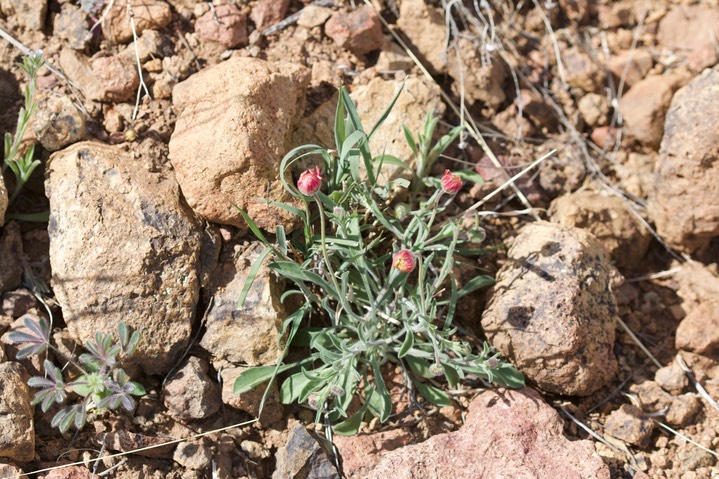
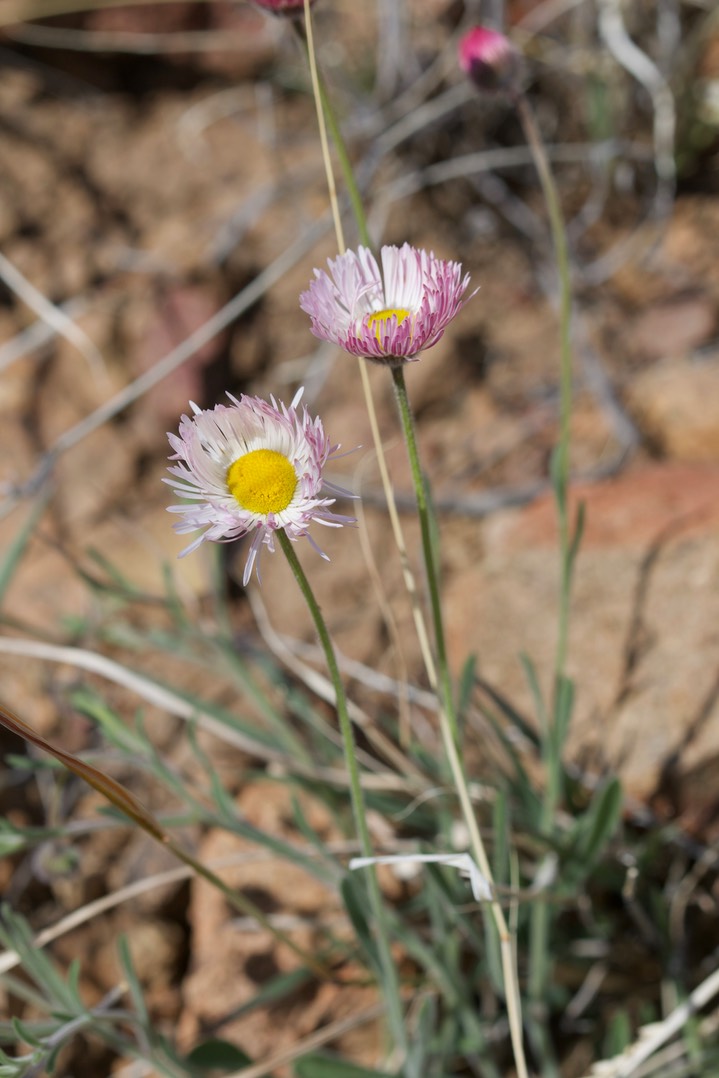
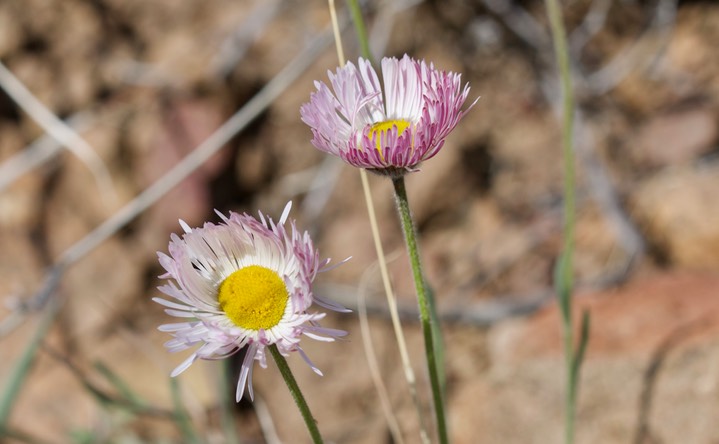
Aphanostephus ramossissimus
Plains Dozedaisy
North Wicks Canyon
East of Hillsboro
New Mexico
April
Argremone pleiacantha pleiacantha
Southwestern Prickly Poppy
San Lorenzo &
Hillsboro
New Mexico
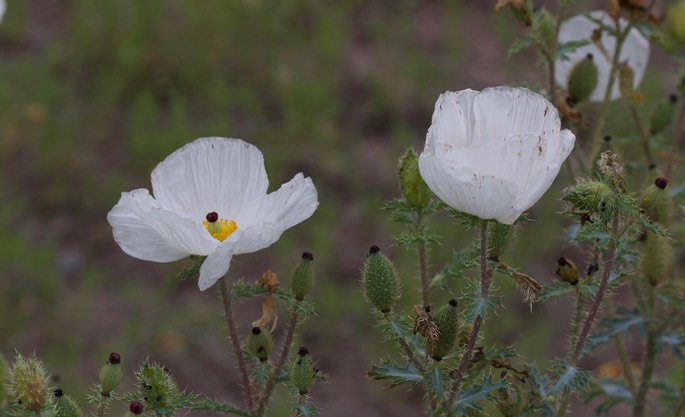
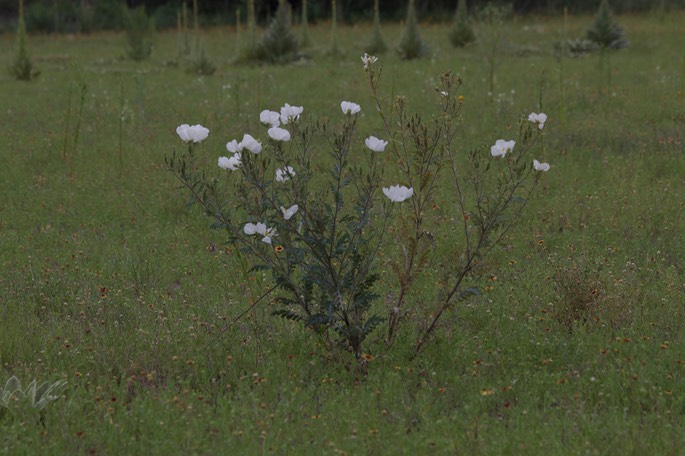
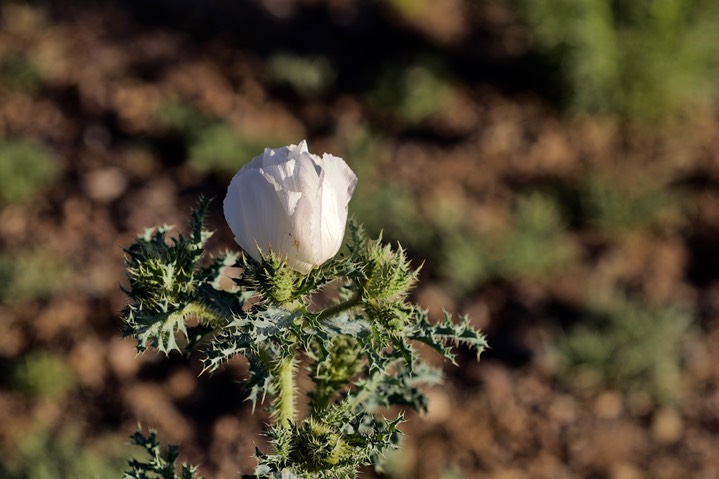
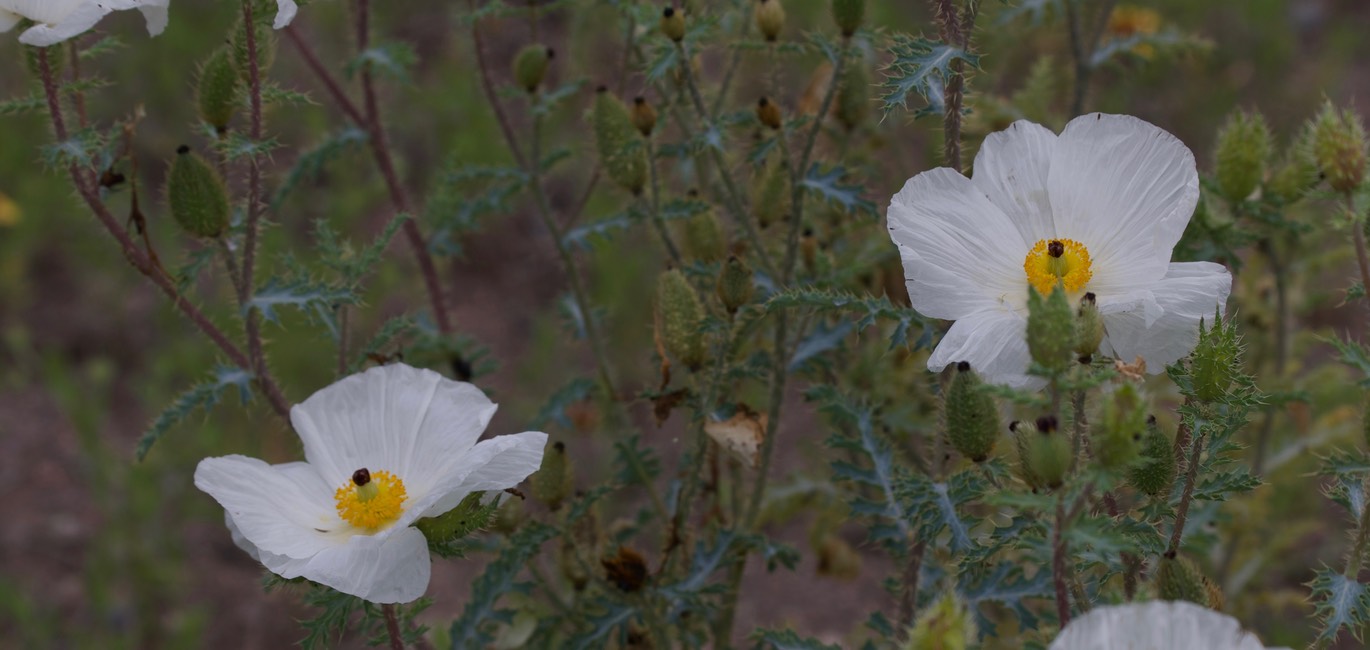
In most years, the Southwestern Prickly Poppy is widespread and abundant during the summer. In July 2015 the ante was upped, however, it seemed that everywhere you looked there was Prickly Poppy and Datura. The subspecies of Prickly Poppy that we have in our area, Argemone p. pleiacantha, is found only in Arizona, New Mexico, Chihuahua, and Sonora. There is only one other subspecies, A. p. ambigua, which is endemic to Arizona.
The Sacramento Prickly Poppy, A. pinnatisecta, was formerly considered to be another subspecies, found only on the west slopes of the Sacramento Mountains in New Mexico, A. p. pinnatisecta. That subspecies was not described until 1958. This “splitting” has not been universally adopted. The Sacramento Prickly Poppy, is considered endangered by both the United States and New Mexico.
Edward Lee Greene first described the Southwestern Prickly Poppy in 1908. The type specimen was collected by Orrick Baylor Metcalfe near Kingston on July 6, 1904.
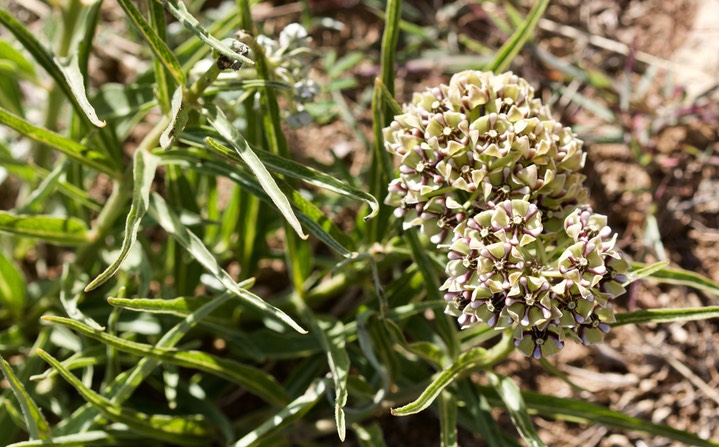
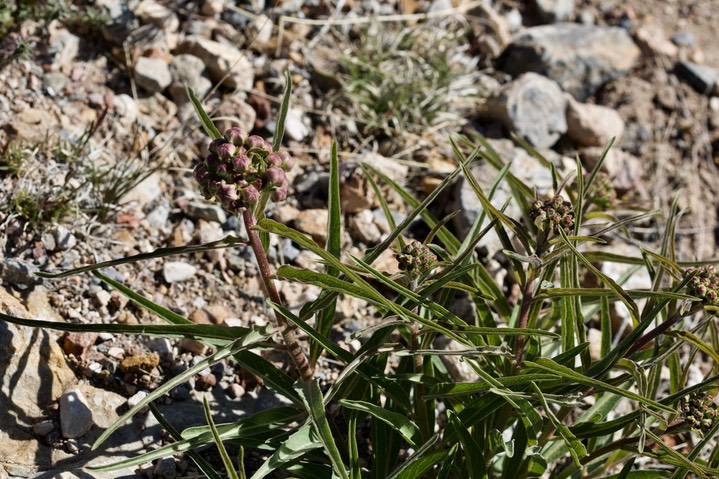
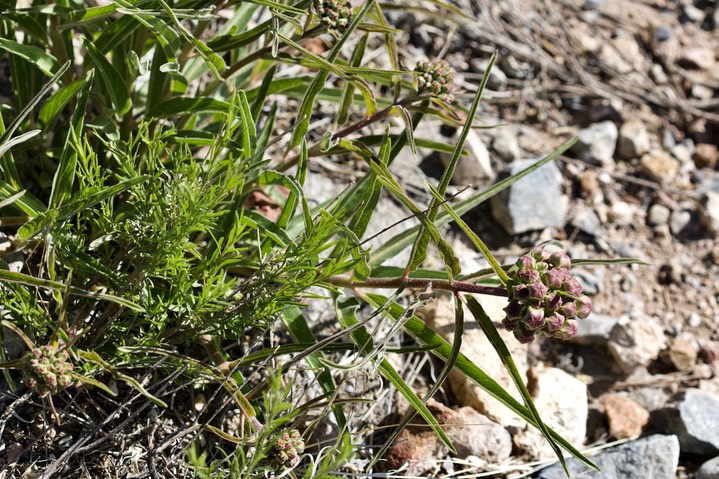
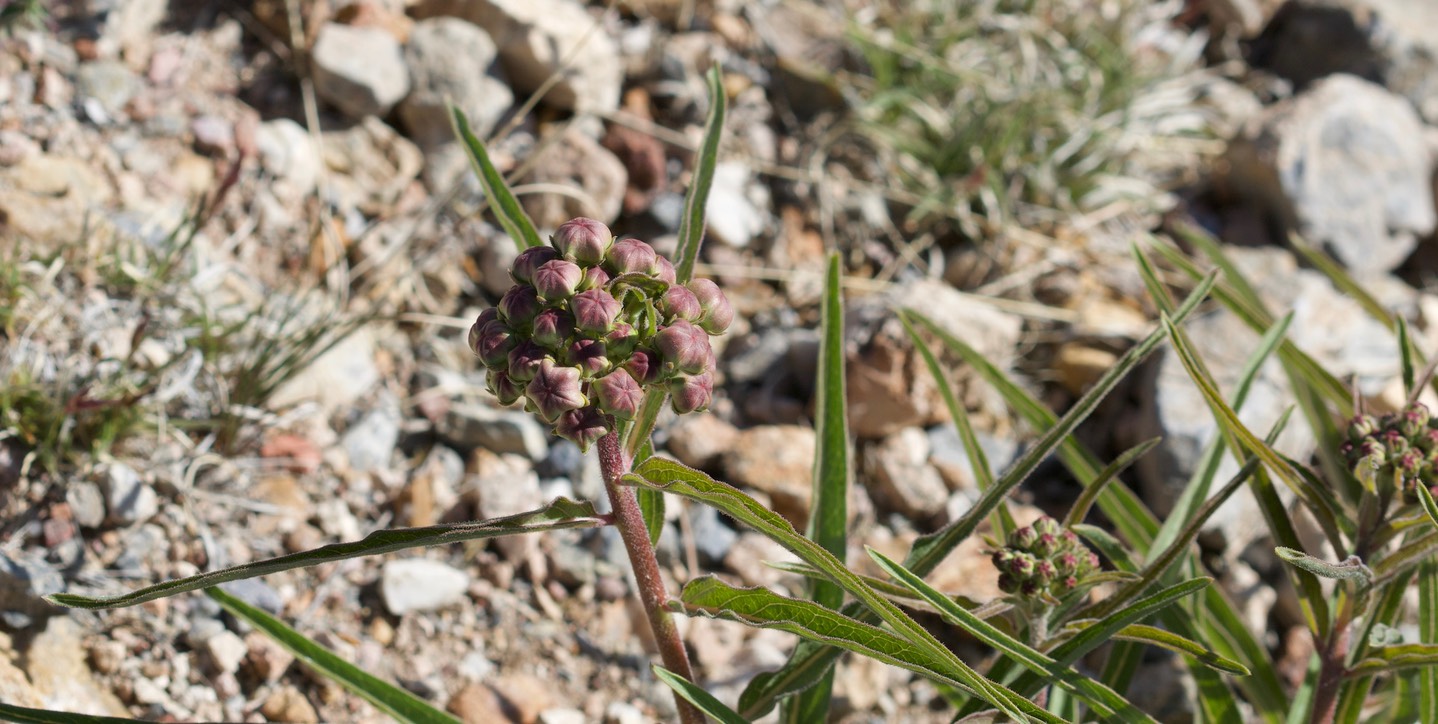
Asclepias asperula
Antelope Horns Milkweed
East of Hillsboro
New Mexico
April & May
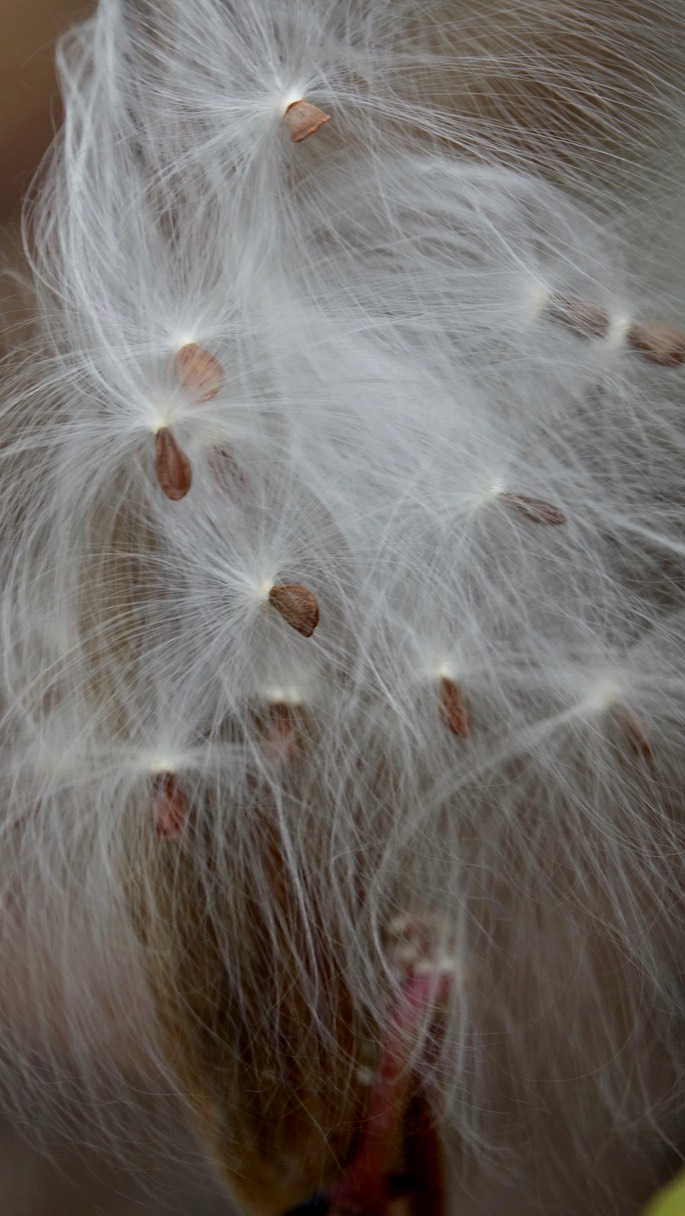
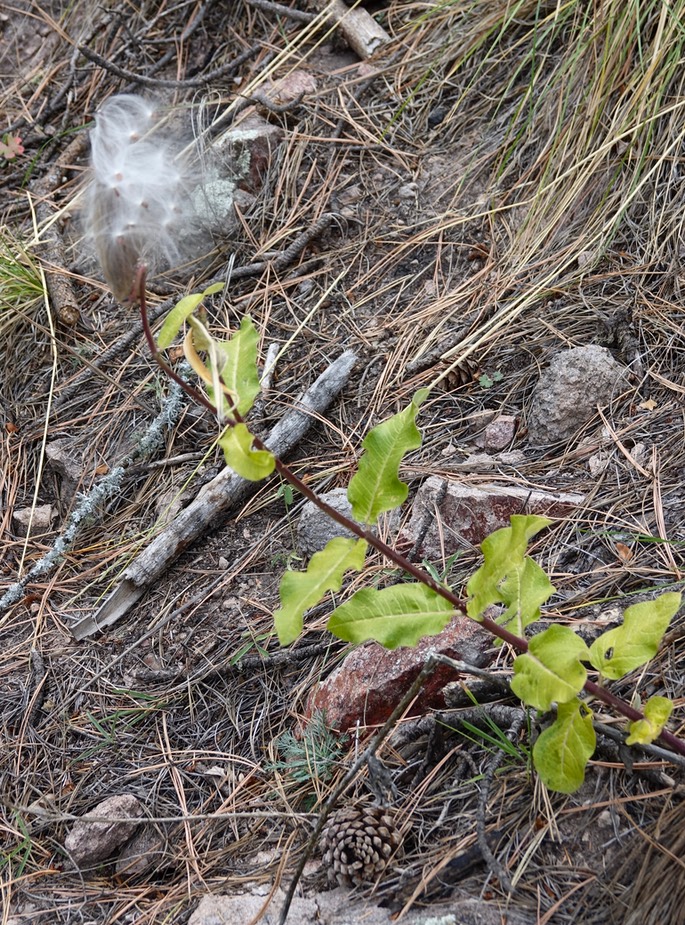
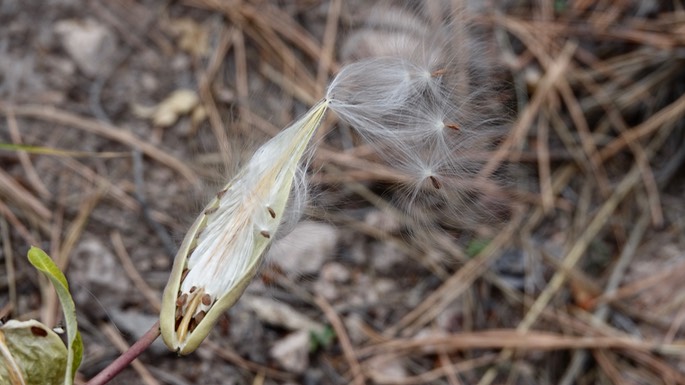
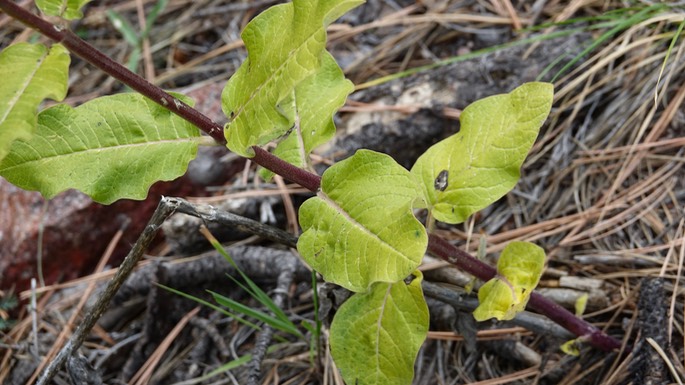
Asclepias speciosa
Showy Milkweed
Railroad Canyon
Black Range
Grant County
New Mexico
October
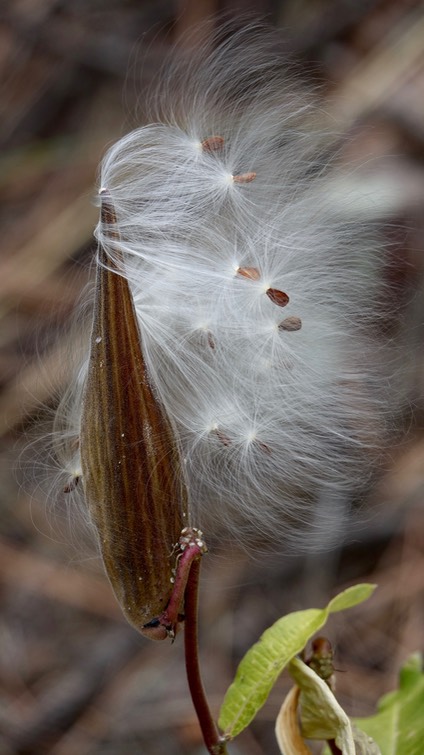
Asclepias tuberosa interior
Butterfly Milkweed
Middle Percha
Black Range
New Mexico
(and Metallic Green Bee - Agapostemon sp.)
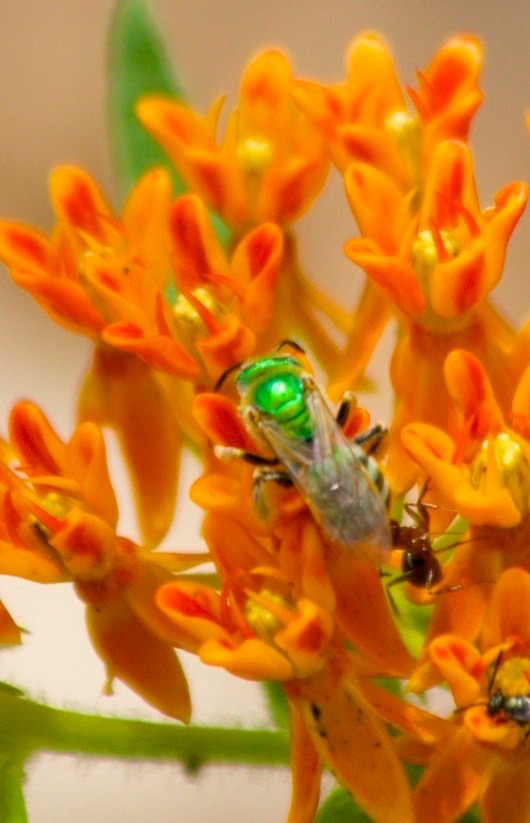
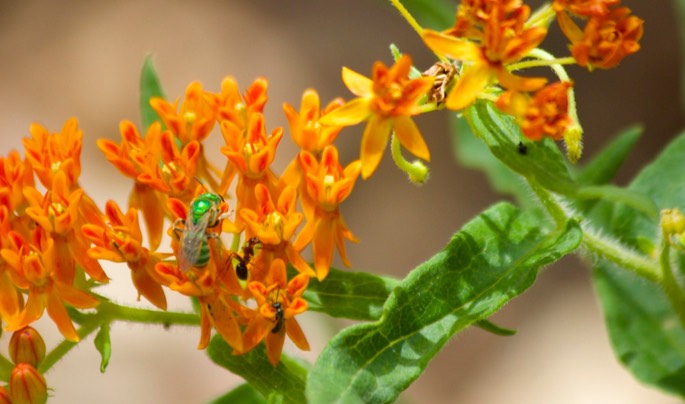
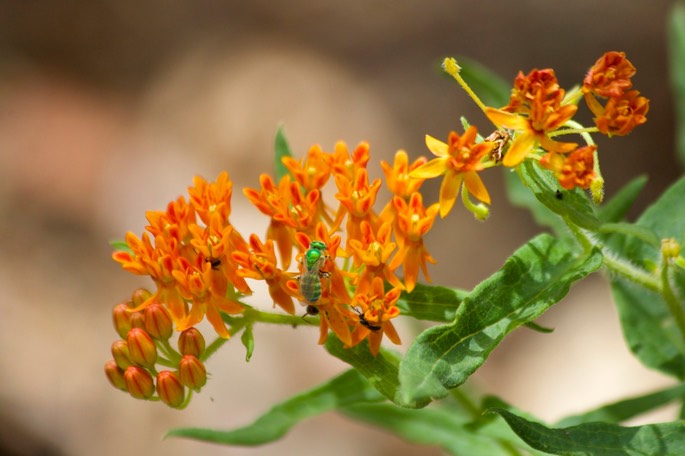
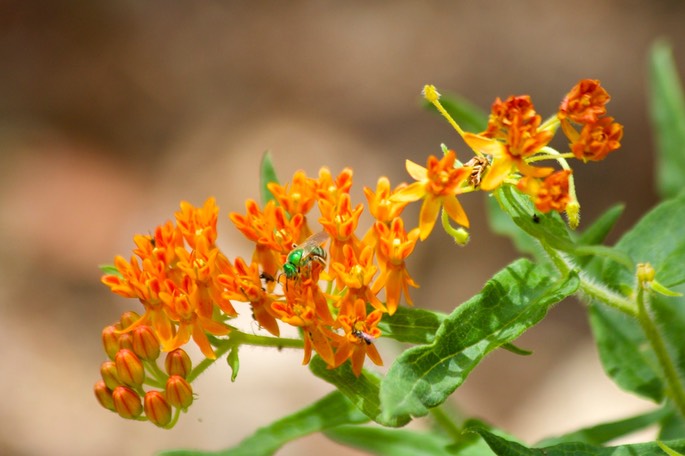
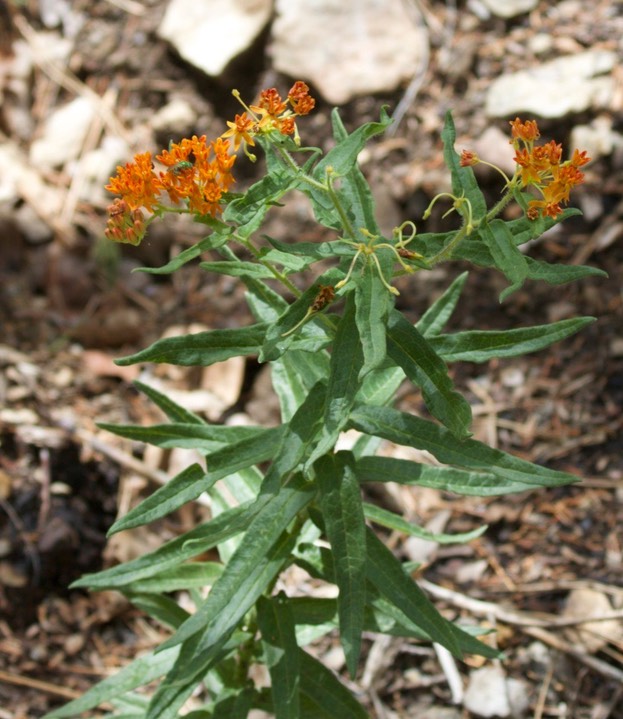
Butterfly Milkweed, Asclepias tuberosa interior, is an insect attractor. Butterflies, as the name indicates, are particularly attracted to this species. In mid-July, we found this specimen in the Middle Percha, west of Kingston in the Black Range. At that time, it was a Metallic Green Bee (of the genus Agapostemon) which was being attracted.
This species is found in much of the United States and parts of Canada. The subspecies, A. t. interior, which we find here is a disjunct western population.
The root of this species was used to treat lung inflammations in the past. One of its common names is Pleurisy Root, for that reason. Other common names include Butterflyweed, Orange Milkweed, and Chigger Flower (that sounds dastardly). Unlike other milkweeds, this species does not have milky sap.
This subspecies (A. t. interior) was first described by Robert Everard Woodson in 1944. (Annals of the Missouri Botanical Garden, Vol. 31, 1944, pp 363 - 370, “Notes on Some North American Asclepias”).
Asparagus officinalis
Scenic Trail 796
Kingston Cemetery to Emory Pass
Black Range
October
Astragalus mollissimus
Woolly Milkvetch
North Wicks Canyon
East of Hillsboro
New Mexico
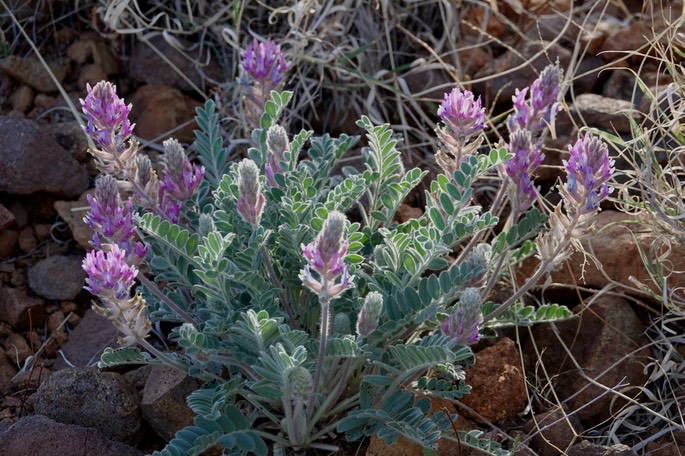
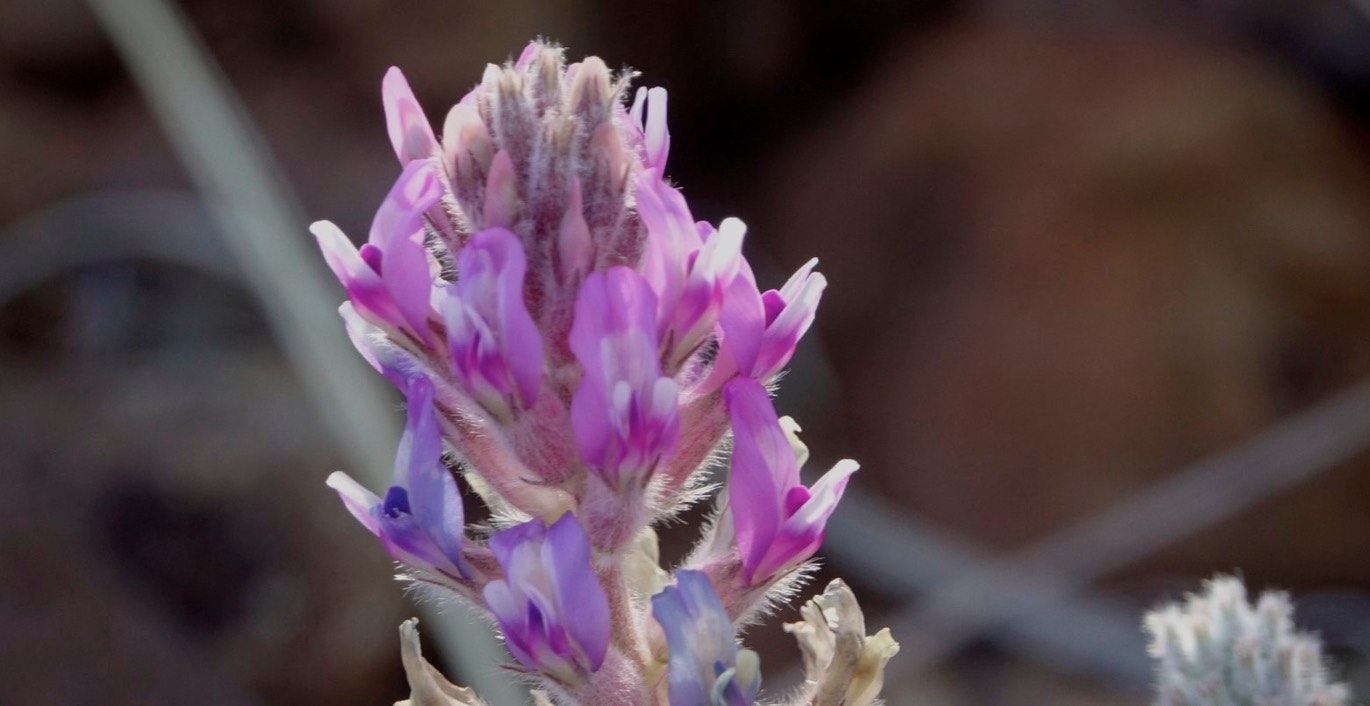
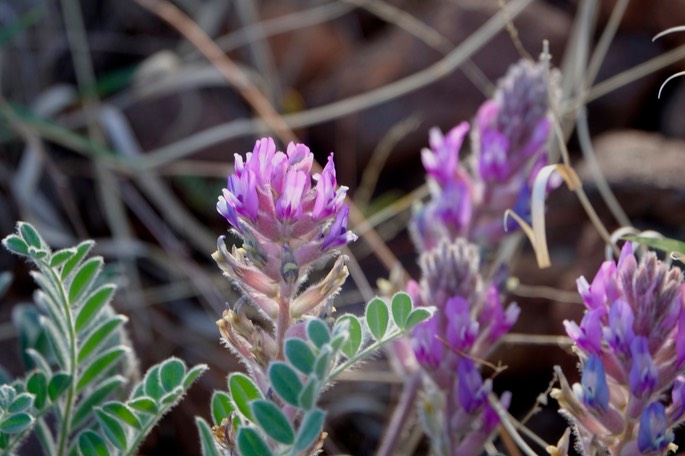
To say that this is Woolly Milkvetch, Astragalus mollissimus, is only part of the story. Seventy-five species of Astragalus are known to exist in New Mexico. Seven varieties of the subject species are known to exist in the state - I make no attempt to key this individual to variety. Astragalus mollissimus is also known as Woolly Locoweed, Purple Locoweed, and Woolly Loco.
This species contains swainsonine (an indolizidine alkaloid) which can be poisonous to cattle. Swainsonine can cause several toxicological problems, everything from neurological and cardiovascular damage to emaciation. The Navajo used this species in various ceremonies, as an emetic, and as forage for sheep (?).
The stems and leaflets of this species are covered in hairs, giving the plant a very silvery appearance.
Astrolepis
Cloak Fern
East of FR 157 at
North Percha Creek
Black Range
New Mexico
September
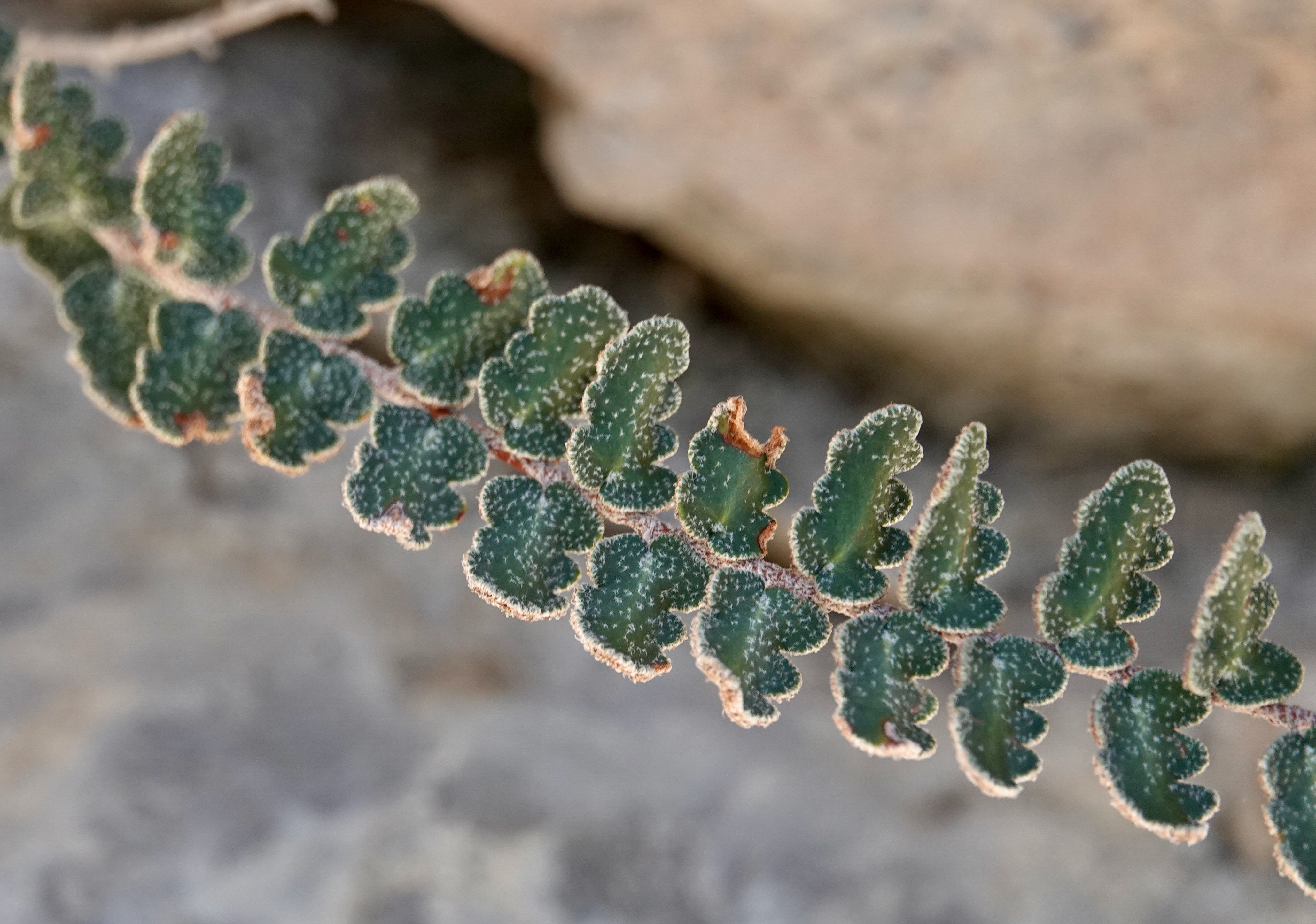
Astrolepis cochisensis
Jimmyfern
Near the west entrance
to the Percha Box
Hillsboro
New Mexico
April
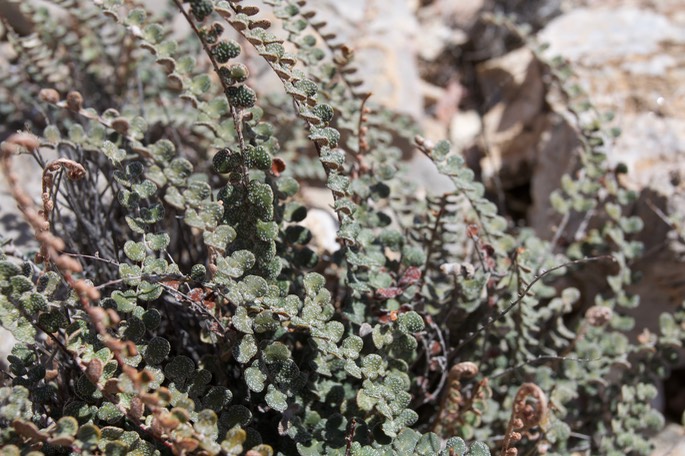
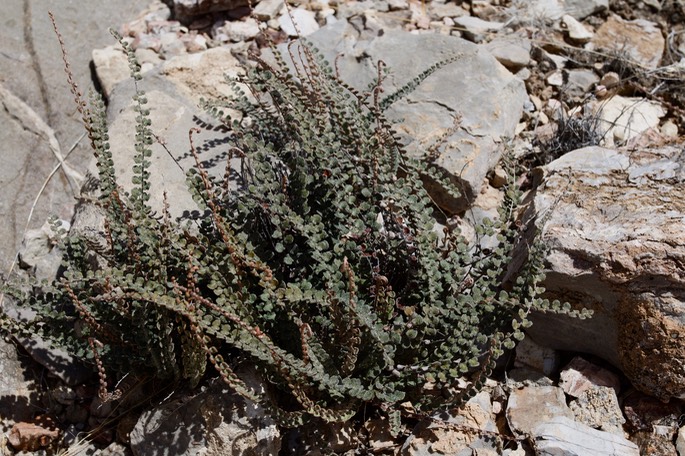
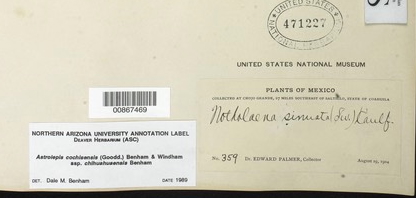
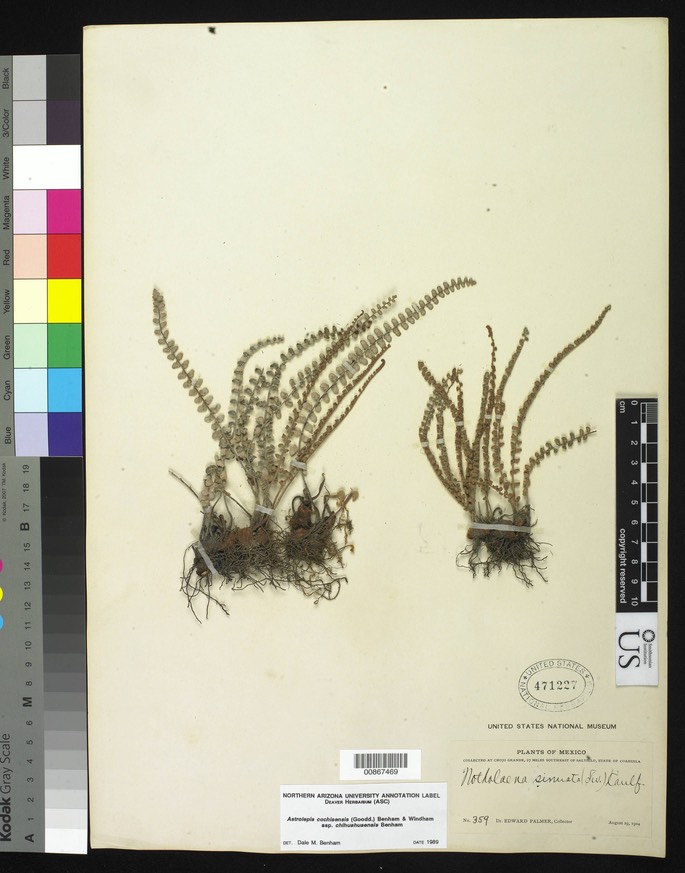
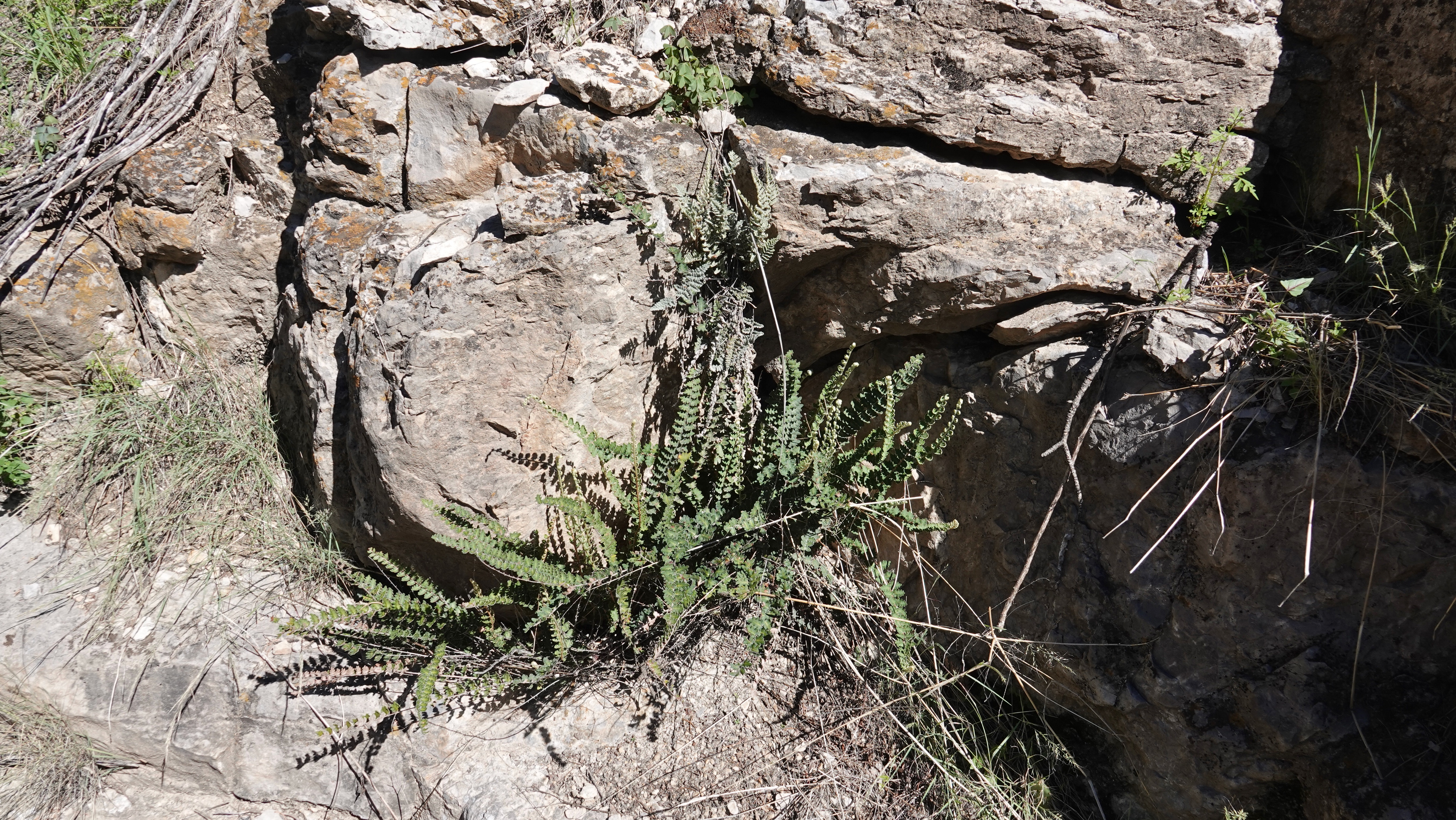
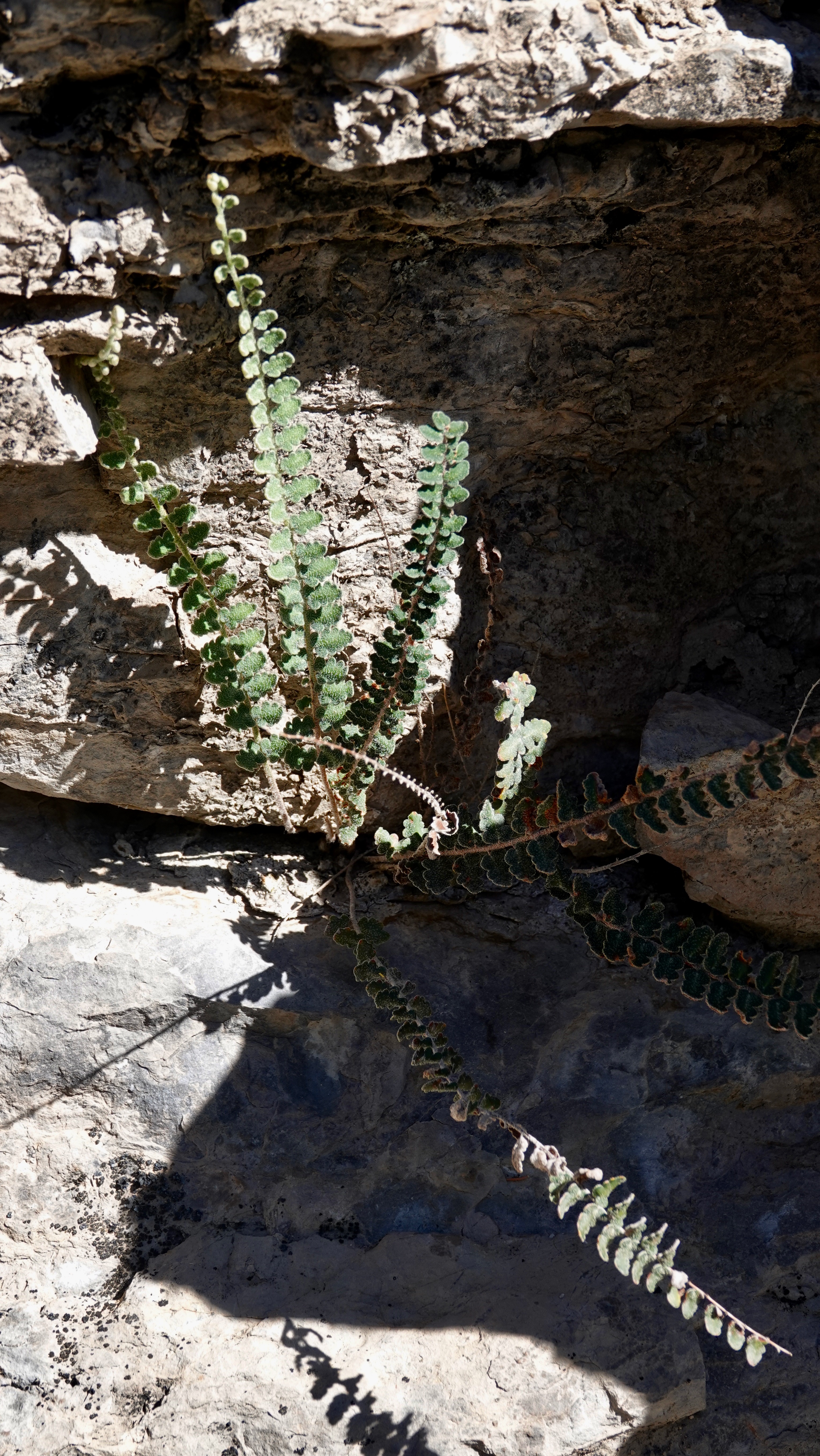
This specimen of Astrolepis cochisensis (a.k.a. Jimmyfern and Cochise Scaly Cloak Fern) was found on the top of an outcrop of Lake Valley Limestone. There are two subspecies, A. c. cochisensis (which has spore cases containing 32 spores) and A. c. chihuahuensis (which has spore cases of 64 spores). This according to Flora Neomexicana III - An Illustrated Identification Manual by Kelly W. Allred and Robert DeWitt Ivey.
Flora of North America, identifies a third subspecies, A. c. arizonica, which is not found in our area. It describes the speciation as “three cytotypes that occupy different ranges and/or habitats have been identified and are treated here as subspecies”. Noting the complexity of such evolutionary change the Flora of North America entry notes that “other taxa remain to be discovered within the Astrolepis cochisensis complex.
The specimen sheet shown in the gallery was created by Edward Palmer on August 29, 1904. The original description of the plant as Notholaena cochisensis was performed by Leslie Newton Goodding. Later, Benham & Windham described a new genus and this particular specimen was described as A. c. chihuahuaensis by Dale M. Benham in 1989. Edward Palmer (1830-1911) was ”an English born American botanist, naturalist, explorer, archaeologist, ethnobotanist, and plant collector”. Palmer was a fantastic naturalist during an era of greats.
In the American Fern Journal, "Additional Taxa in Astrolepis” p. 59, Benham described the full genus (first described in 1988) in detail.
Athyrium filix-femina var. californicum
Southwestern Lady Fern
Gallinas Canyon Trail
Black Range
New Mexico
June
Atriplex canescens
Four-wing Salt Bush
City of Rocks State Park
New Mexico
May
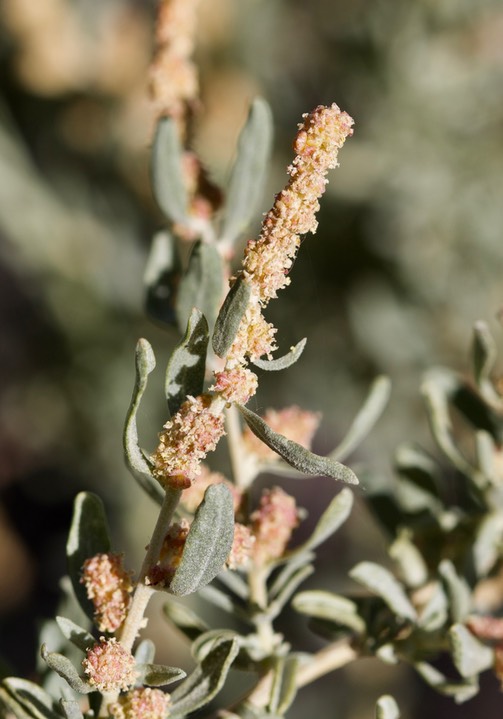
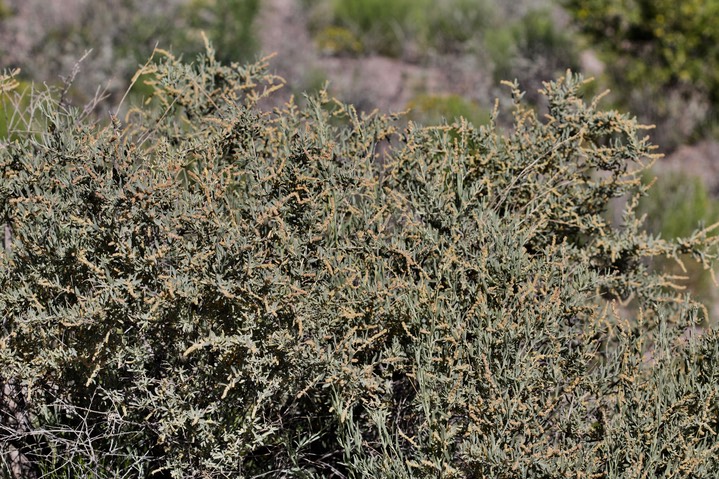
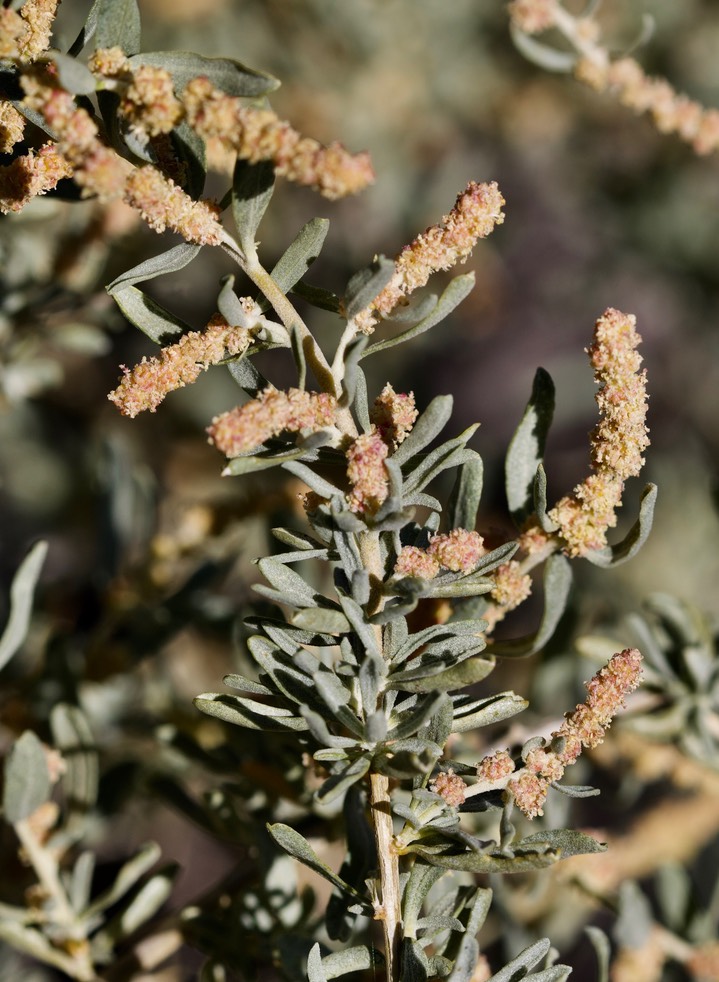
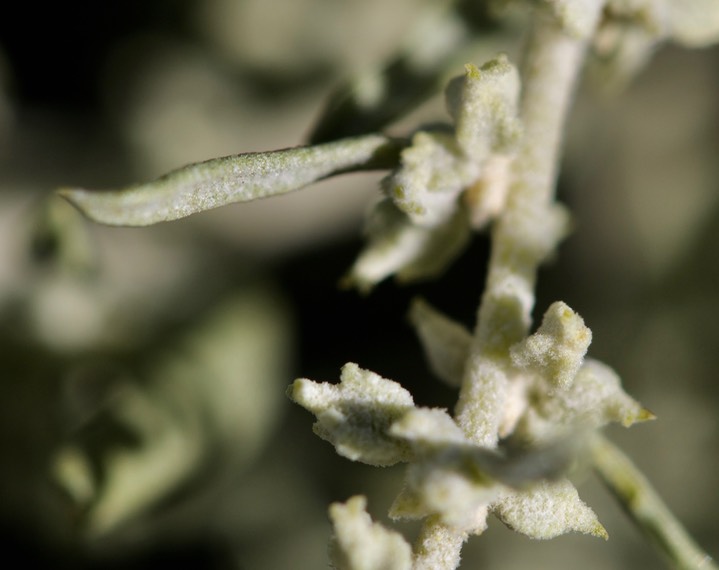
Four-wing Salt Bush, Atriplex canescens, is found in much of the western United States (and is common in th Black Range) and southward to southern Mexico. Vascular Plants of the Gila Wilderness notes that “The silvery appearance of the leaves is not due to hairs, but rather due to a covering of flaky scale-like structures, almost like dandruff.” (See photo in the gallery.) This species readily hybridizes with others in its genus, causing some disagreements about specific specimens. In the case of the type specimen for this species there is the following from Flora of North America:
“Materials from the vicinity of the type locality of the species in South Dakota are low subherbaceous plants that differ from our shrubby tall material. However, the type area is presently covered with water from a dam on the Missouri River, and it is not possible to exclude the possibility of A. canescens as it has been interpreted for the past century to have existed at that site during the Lewis and Clark Expedition, if that is indeed where the lectotype was collected.”