Baccharis salicifolia
Seepwillow
Percha Creek Box
East of Hillsboro
New Mexico
July
The “FLORA" of the Black Range
“B"
Baccharis salicifolia
Seepwillow
Percha Creek Box
East of Hillsboro
New Mexico
July
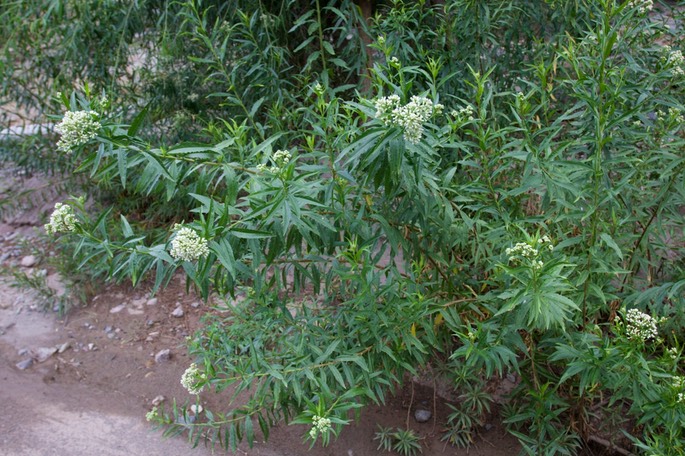
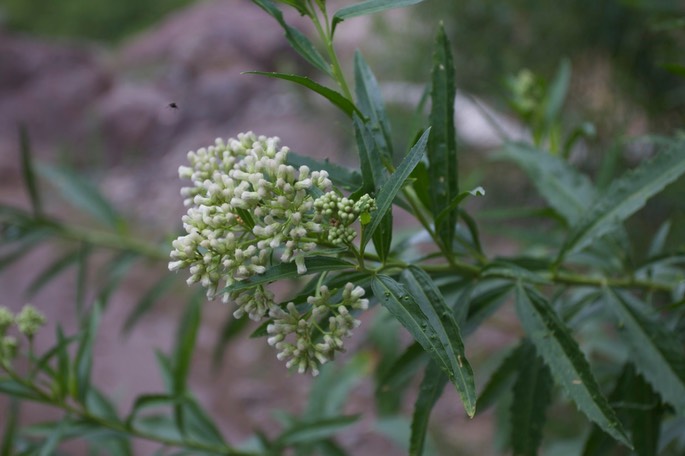
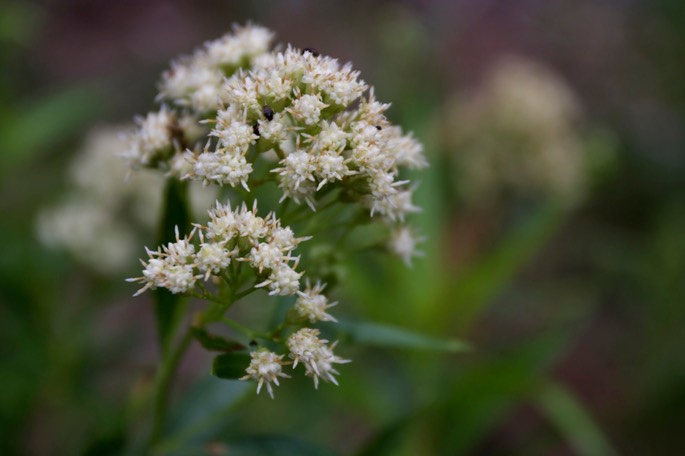
Seepwillow, Baccharis salicifolia, is also known as Willow Baccharis, Water-wally, and Mule’s Fat. Scientific synonyms include B. glutinosa, B. viminea, and Molina salicifolia. “Salicifolia” means willow-leaved, but this plant is not a willow, it is a member of the aster family. This species is distinguished from the very similar Baccharis salicina by the fact that in this species, the mature leaves are serrated along their entire length.
Various Native American tribes used this plant for medicinal purposes.
This species is found in the southwestern United States, Mexico, and in parts of South America.
This is one of the desert riparian species. It is typically found growing either on the banks of Percha Creek or in Percha Creek.
This species was first described by Hipólito Ruiz López and José Antonio Pavón Jiménez. They were Spanish botanists who were on the first Spanish botanical expedition to the Americas (to Chile and Peru in 1777-78).
Baileya multiradiata
Desert Marigold
East of Hillsboro
New Mexico
April
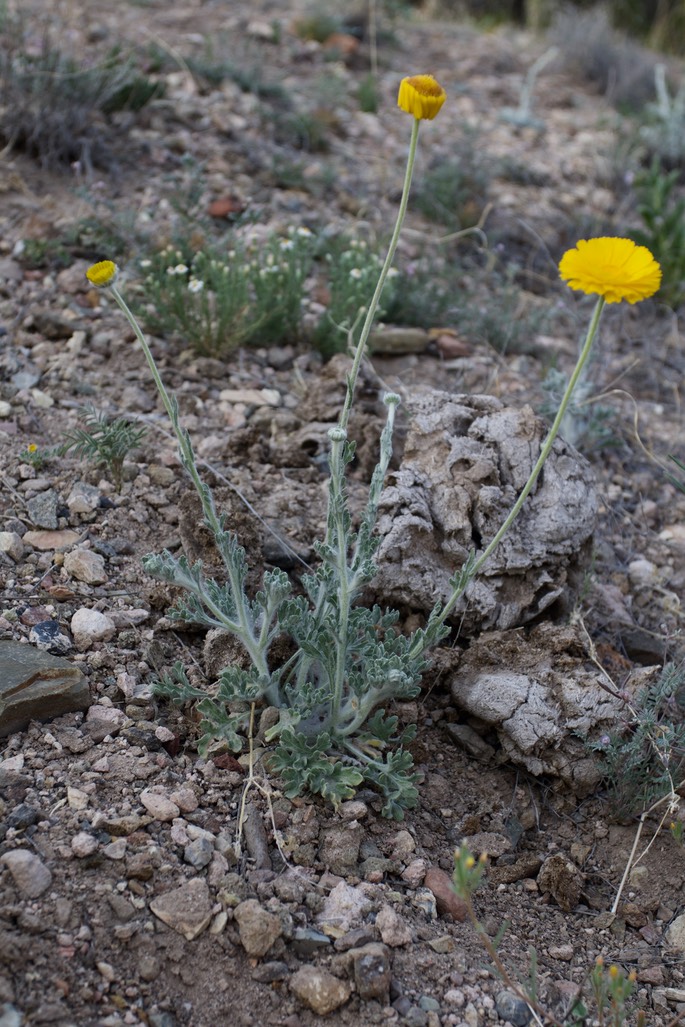
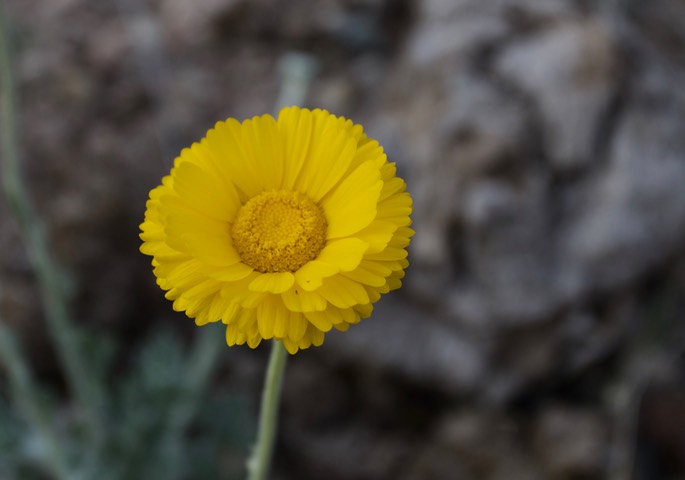
In April and May 2014, Baileya multiradiata, were blooming in large numbers east of Hillsboro (north of the Percha Box). In April 2025, none were to be found. Such are the vagaries of water. Its English Common Names include Desert Marigold, Showy Desert Marigold, Paper Daisy, and Desert Baileya. Its scientific synonyms include Baileya pleniradiata and Baileya thruberi. It gets its name, Paper Daisy, because the flowers turn light brown and “papery” when the are “gone past”. This species will bloom from early spring into the fall.
The range of this species in the southwestern United States, southward through Mexico to Durango and Aguascalientes.
The Xerces Society for Invertebrate Conservation notes that Baileya multiradiata is "recognized by pollination ecologists as attracting large numbers of native bees”.
The blossoms of this species resemble those of Baileya pleniradiata when it blooms in the fall, having smaller flower heads with fewer rays. “The shape of the style apex is a useful character to distinguish between fall-blooming specimens.”
The chemicals found in Baileya multiradiata are known to affect mammal species. The species is reported to be toxic for sheep and goats, a problem in the over grazed land where this species thrives. In this case the chemical is hymenoxon, a poisonous sesquiterpene lactone. Many plant species contain sesquiterpene lactone, including; Chamomile, Lettuce, Sagebrush, Artichoke, Gaillardia, etc. Artemisinin, another sesquiterpene lactone, is effectively used in the treatment of some types of malaria. Other chemicals found in this species have been shown (in tests) to be effective agents against tumors and some types of leukemia.
Depending on plant or locale, it is a biennial or short-lived perennial. Baileya multiradiata was first described by Harvey and Gray in 1849. This species is a host for the Desert Marigold Moth (Schinia miniana).
Berberis haematocarpa
Red Barberry
South of Hillsboro
& West of Kingston
New Mexico
May
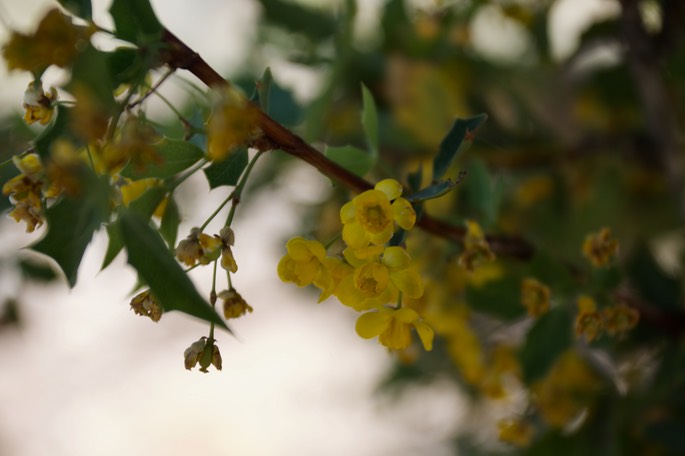
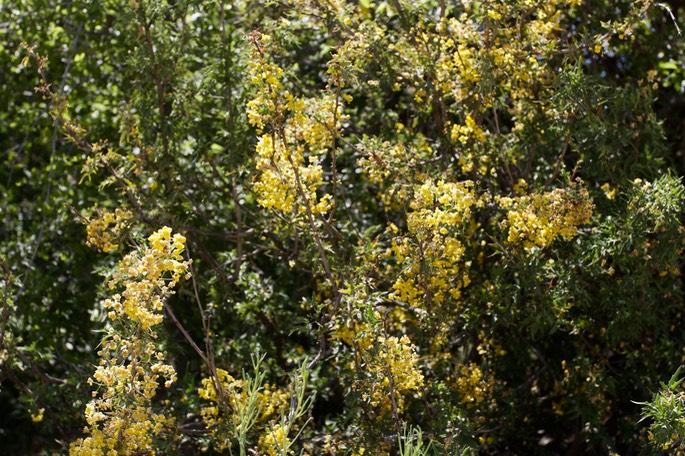
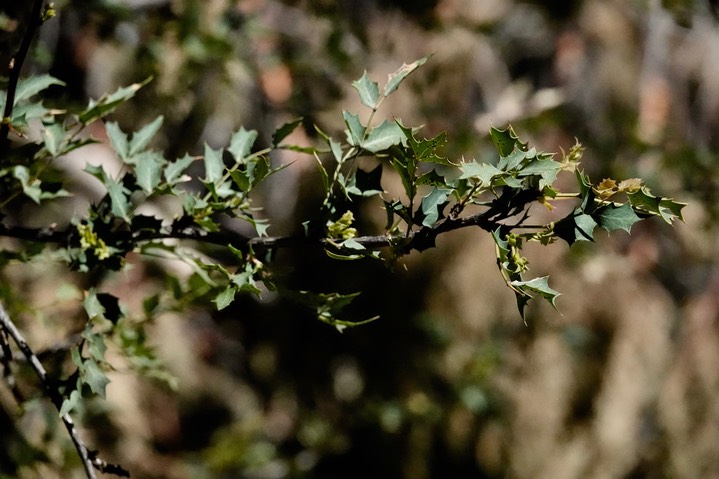
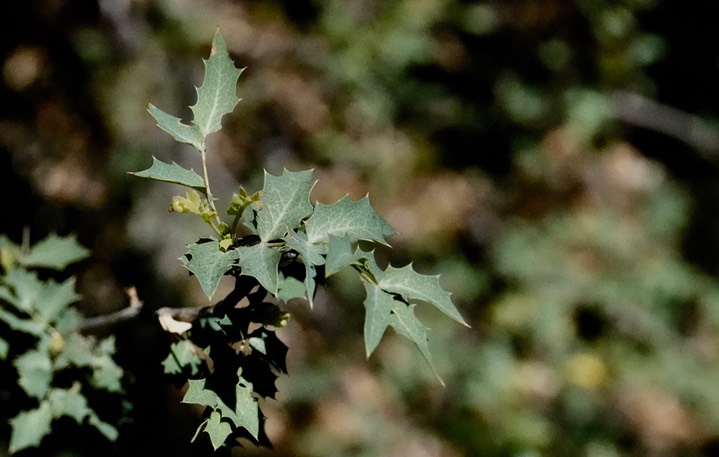
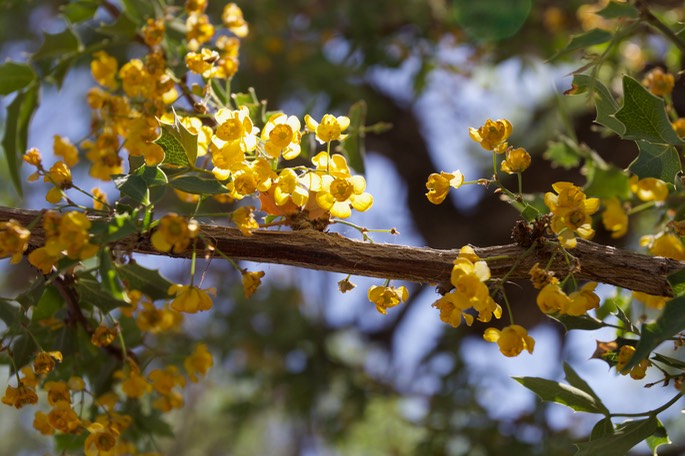
Growing at the base of an Arizona Ash, we found Berberis haematocarpa (Red Barberry), south of Hillsboro in early May (the plant in bloom in the gallery). Other English Common Names include Algerita and Red Oregon-Grape. Its scientific synonyms include Berberis nevinii var. haematocarpa, Alloberberis haematocarpa, Mahonia haematocarpa, and Odostemon haematocarpus.
The range of this species extends from the southwestern US south into Sonora - Chihuahua?.
The flowers have 6 petals, 6 sepals, and 6 stamens. They turn into a red berry. The Red Barberry is a small tree (large bush) with many branches. This species was first described by Elmer Ottis Wooton in the Bulletin of the Torrey Botanical Club 25(6): 304–306. 1898.
Berlandiera lyrata
Chocolate Flower
North Wicks Canyon
East of Hillsboro
New Mexico
March & September
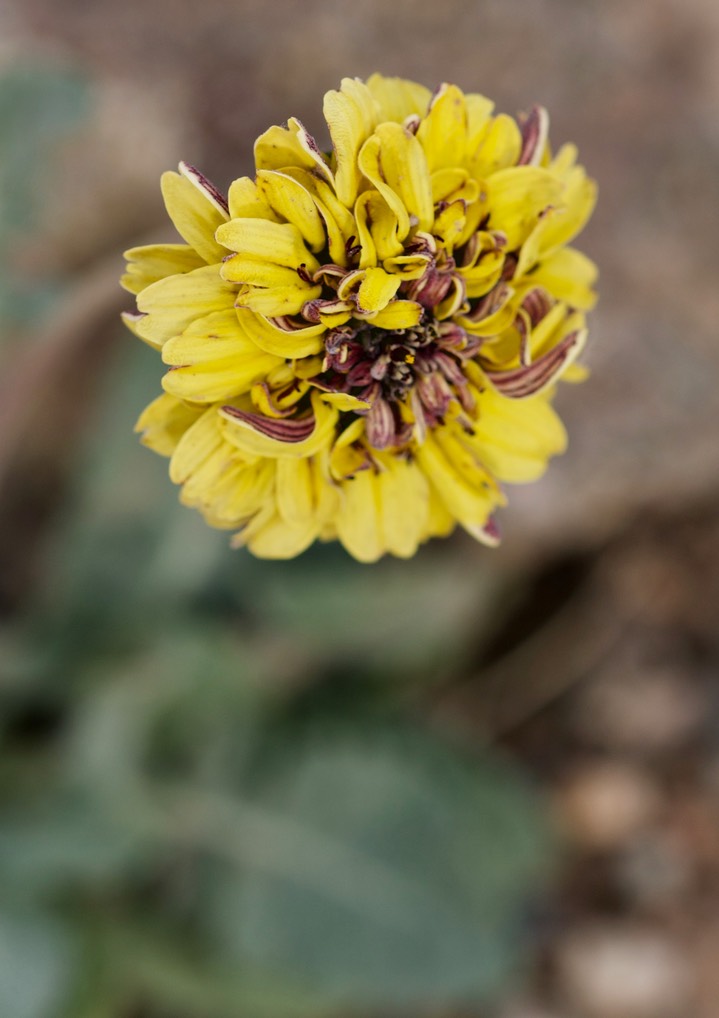
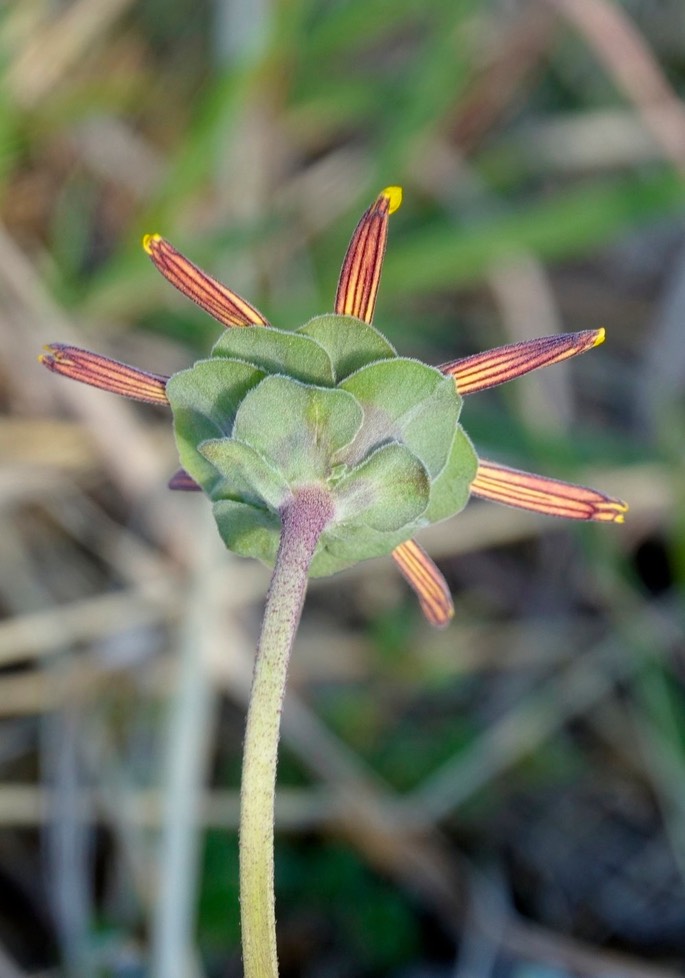
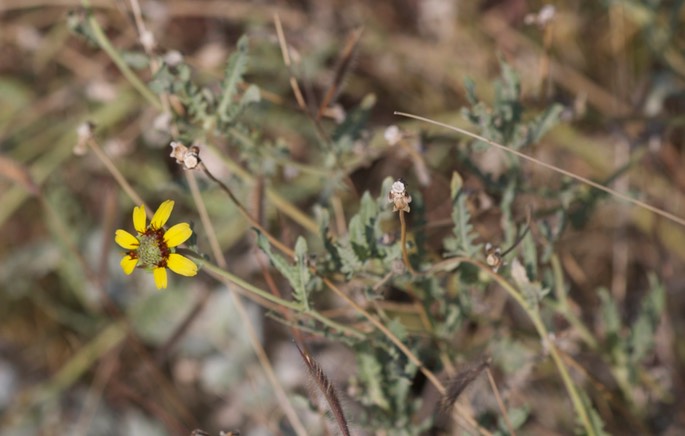
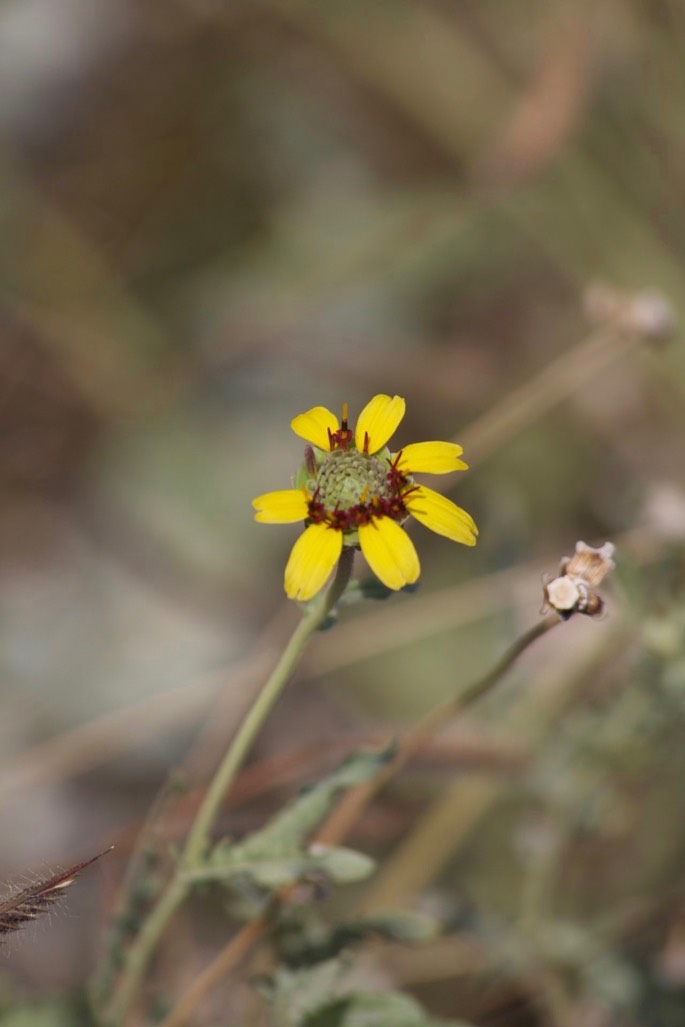
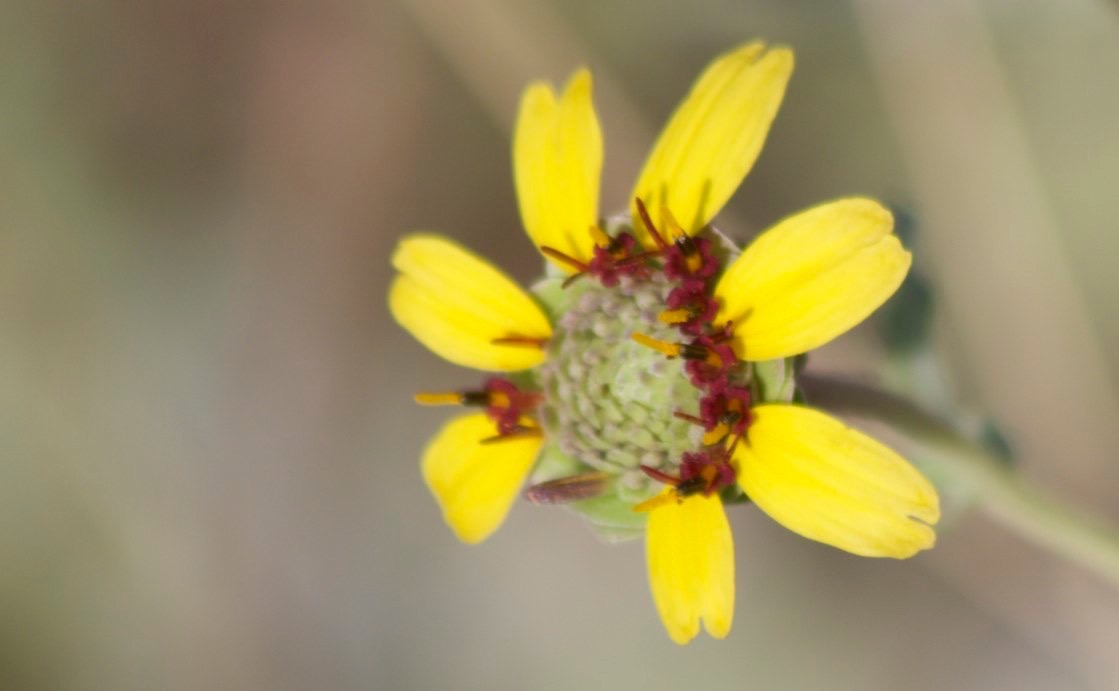
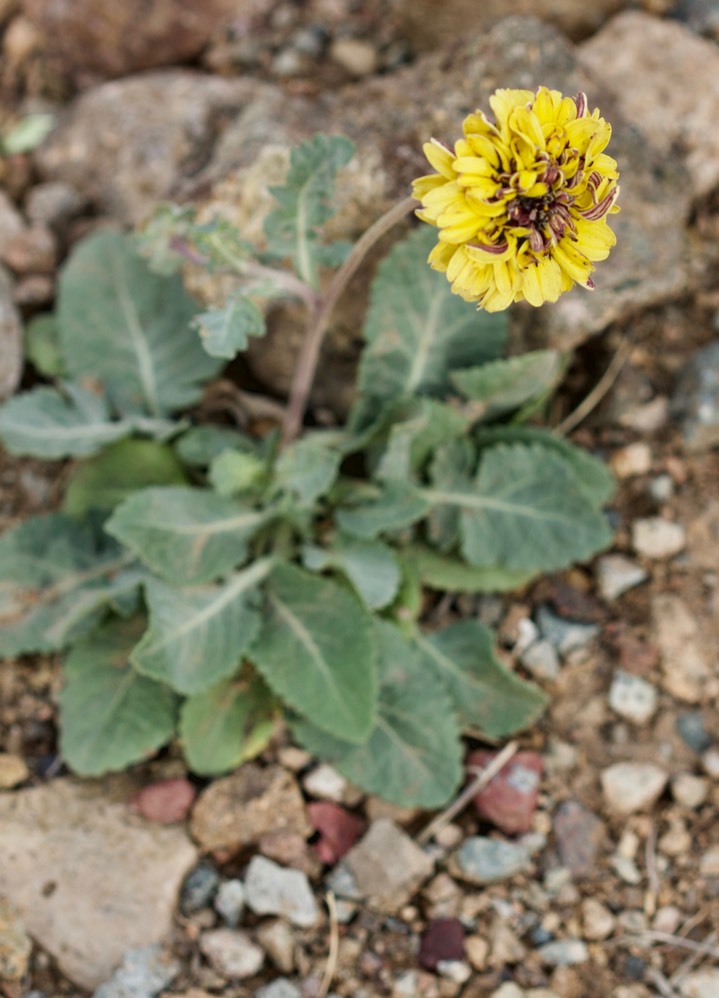
The flowers pictured above were blooming in March and in September, indicative of the long blooming season of this species. Another English Common Name for this species is Green Eyes, because of the green central disc which becomes even more obvious after the petals fall off the plant. Other English Common Names for this species are Chocolate Daisy and Green-eyed Lyre Leaf. This species was known by the synonym, B. incisa, as it was described by John Torrey and Asa Gray. George Bentham is the person who described the species as B. lyrata. The scientific name of this species honors Jean-Louis Berlandier who was a French naturalist who collected plant specimens in Texas and Mexico in the first half of the 1800’s. He also recorded information about the Indigenous Tribes of that area and in 1848 was appointed to the (first) International Boundary Commission which defined the border between the United States and Mexico.
The stamens of this species are said to have a chocolate flavor and are edible (North American indigeonous peoples used this plant for medicinal purposes and as a spice). If the flowers are picked from the plant they often exude a chocolate fragrance. The red and dark structures with orange stems protruding from them are the disc flowers of this species, the “petals” are called ray flowers. The gallery above includes two photographs of a “doubled flower” - a sport.
The range of the Chocolate Flower includes the southwestern United States, south into Jalisco in Mexico.
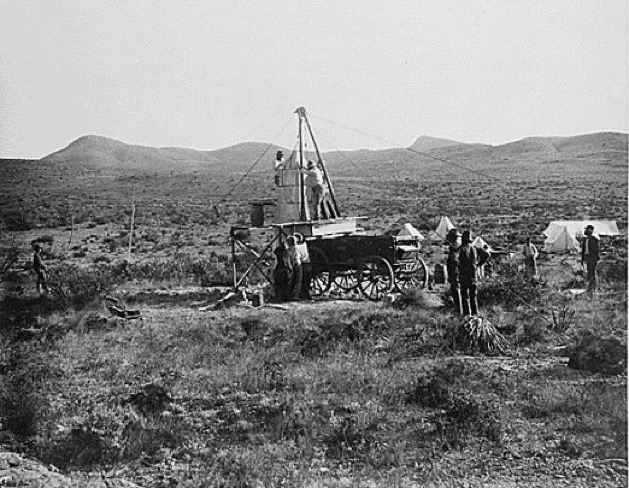
In 1889, another (temporary) International Boundary Commission was formed. It is for that Commission that Edgar A. Mearns did most of his collecting. He collected a specimen of Chocolate Flower on May 9, 1892 at Monument 40. The photograph in the gallery was made by D. H. Payne and is entitled “Rebuilding Monument 40”, the original image is maintained by the National Archives of the United States.
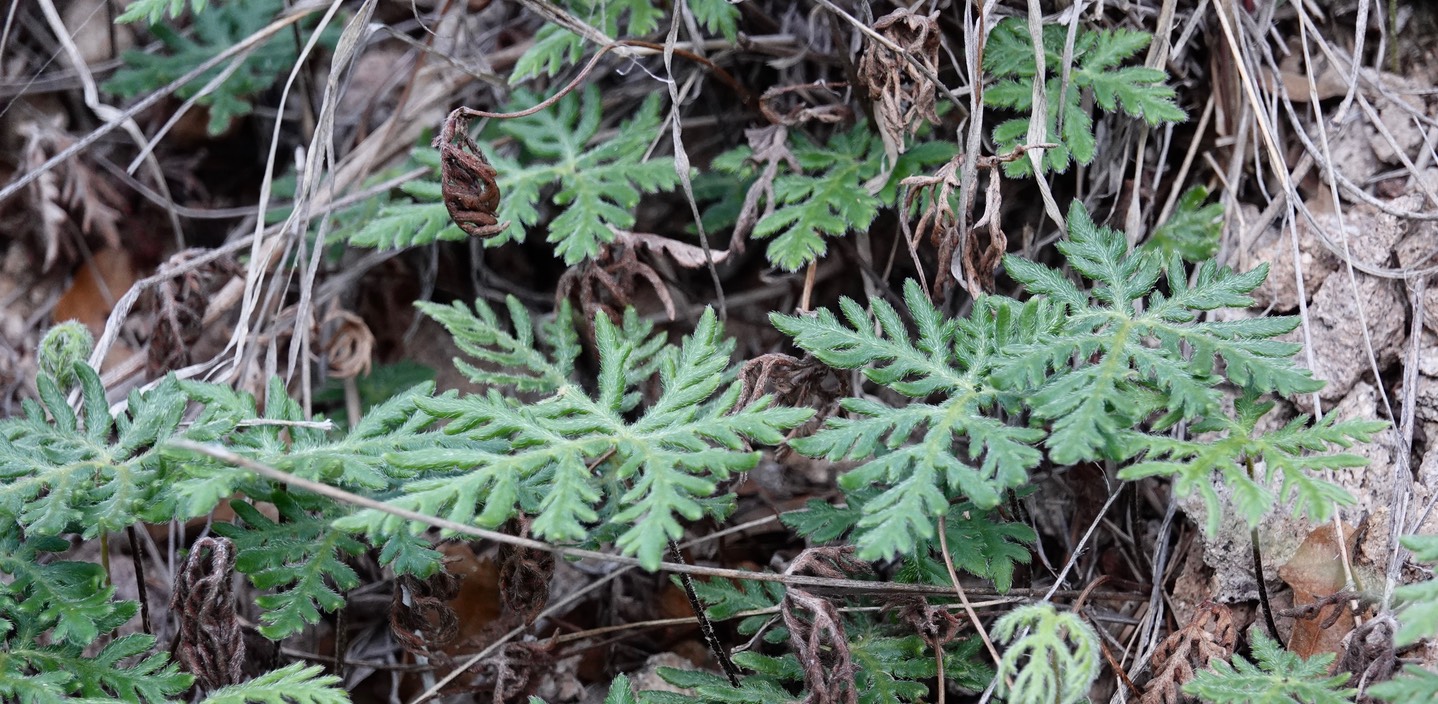
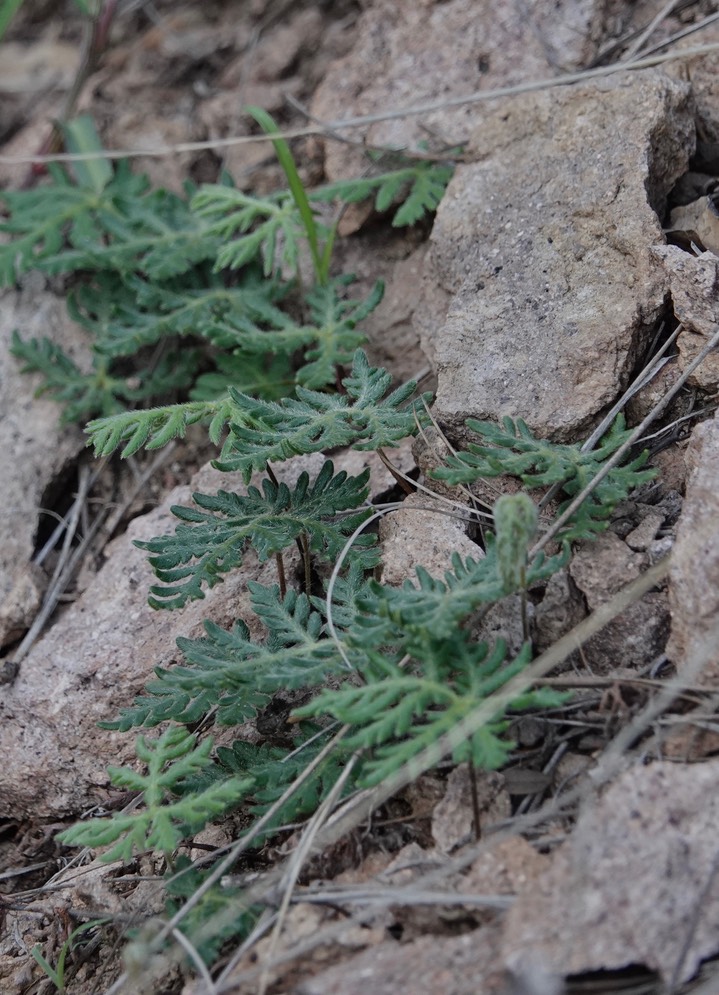
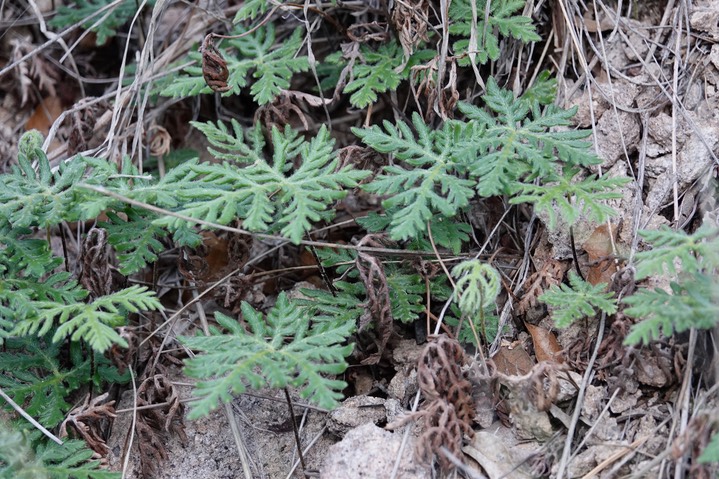
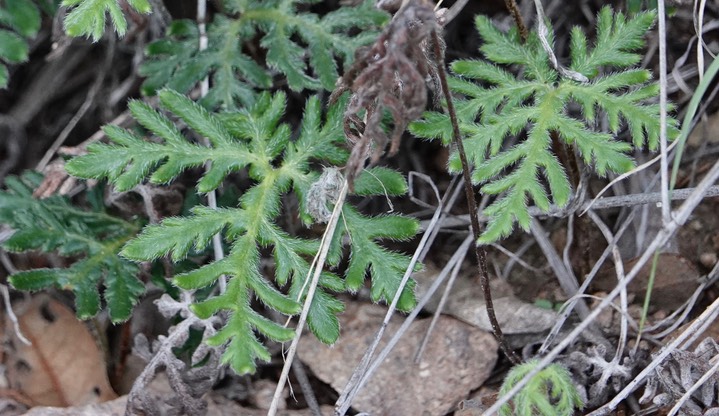
Bommeria hispida
Copper Fern
Forest Road 157
East Slope of Bald Hill
Black Range
New Mexico
August
Brickellia californica
California Brickellbush
Ready Pay Gulch
East of Hillsboro
New Mexico
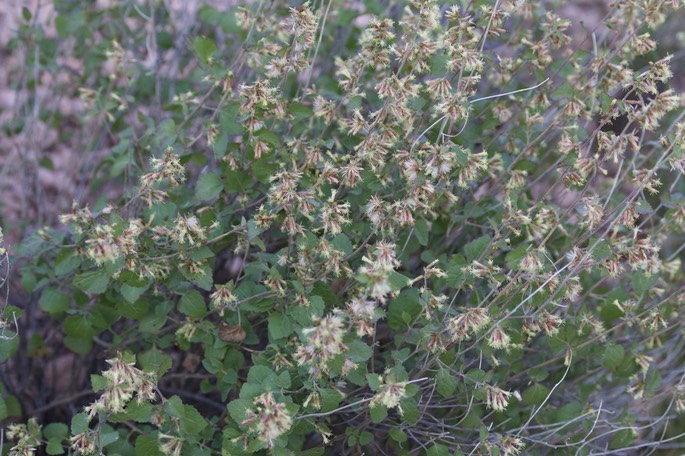
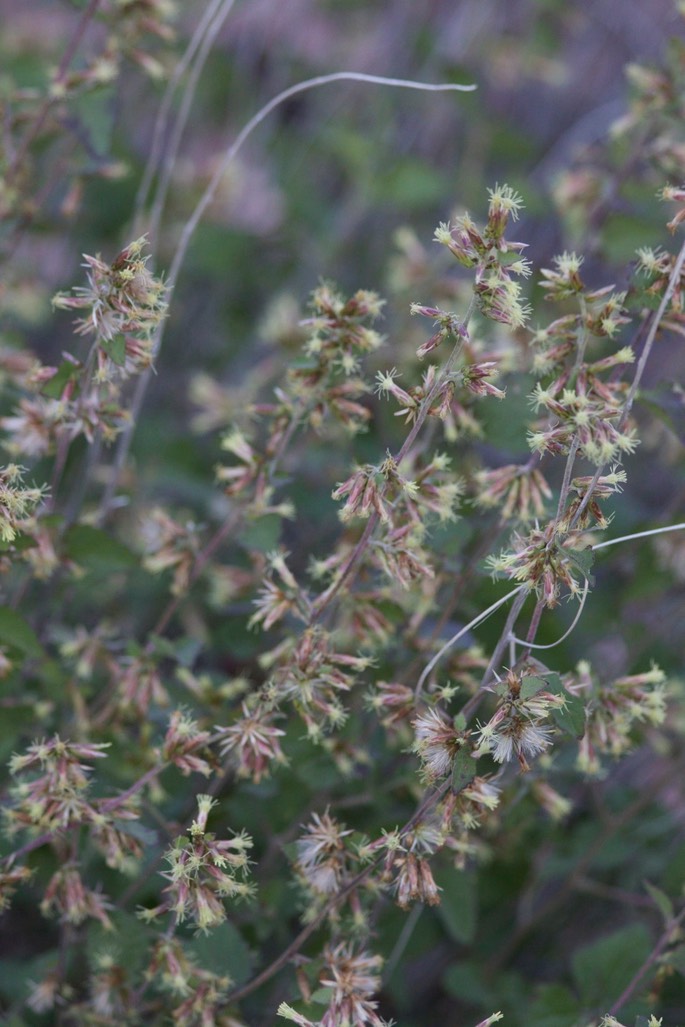
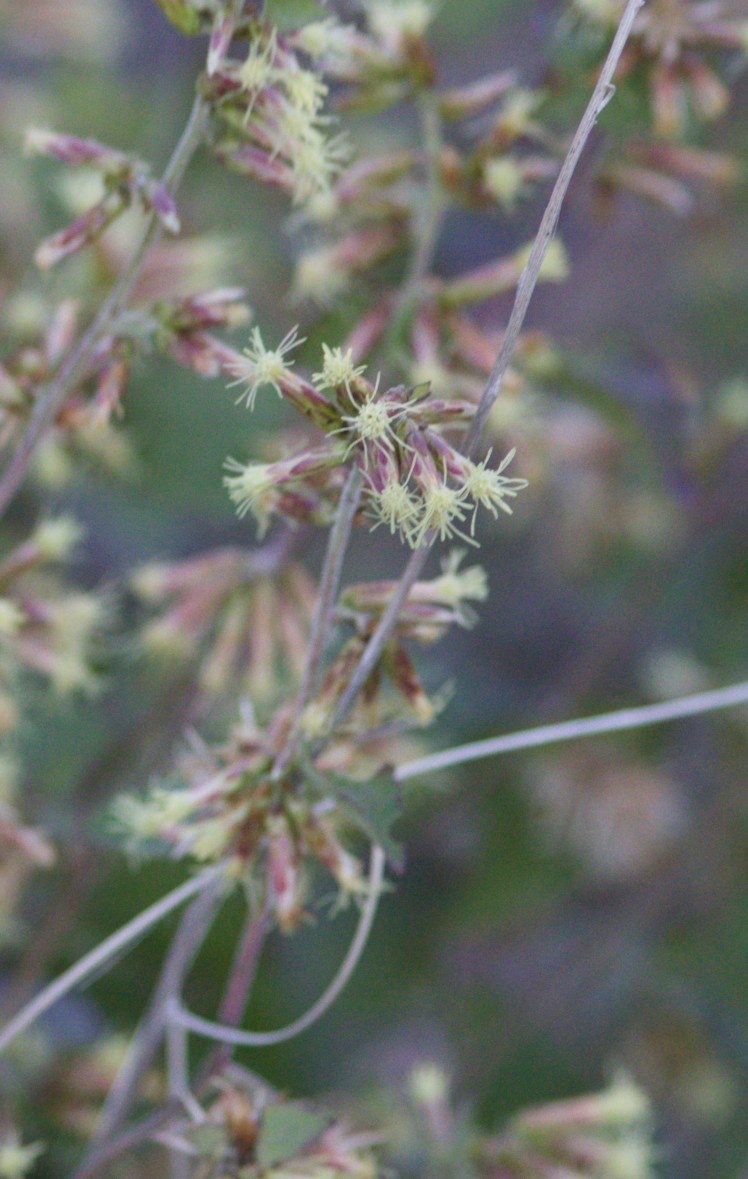
This blooming California Brickellbush, Brickellia californica, was in Ready Pay Gulch (Pink Canyon) east of Hillsboro, New Mexico in late September. It has a range which extends through most of the western United States (being absent in Oregon, Washington, and Montana) as well as Oklahoma, Texas, and Baja California. A description of the species can be found at Flora of North America.
This species was first described as Bulbostylis californica by John Torrey & Asa Gray, in Flora of North America, Part 2, page 79, in 1841. In their original description they raised the possibility that it was "perhaps not sufficiently distinct from Brickellia".
Brickellia grandiflora
Tassel Flower
Bloodgood Spring Trail
Black Range near Kingston
New Mexico
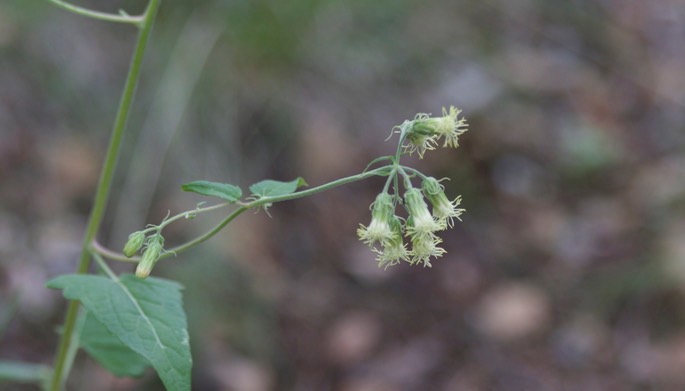
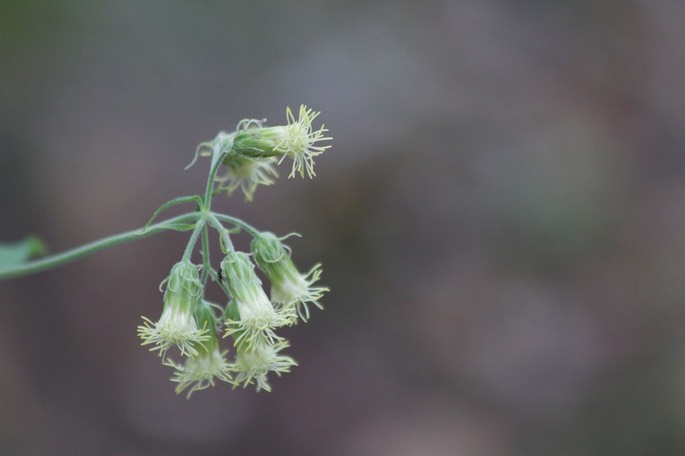
This Brickellia grandiflora, Tassel Flower, was photographed along the old road bed between Bloodgood Spring and the old Bloodgood homestead - half a mile or so south of Kingston in September. This species was formerly classified as Coleosanthus grandiflorus and as Eupatorium grandiflorum. Its other common names are Large-flowered Brickellbush, Mountain Brickellbush, and Tasselflower Bricklellbush.
This is a western species, being found from the western provinces of Canada south into northern Mexico. The American Indigenous peoples used this species for medicinal purposes.
The species was first identified by William Hooker and redescribed by Thomas Nuttall. Nuttall was one of the cadre of great American naturalists, publishing in both the fields of botany and ornithology.