Larrea tridentata
Creosote Bush
East of Hillsboro
New Mexico
February & May
The “FLORA" of the Black Range
“L"
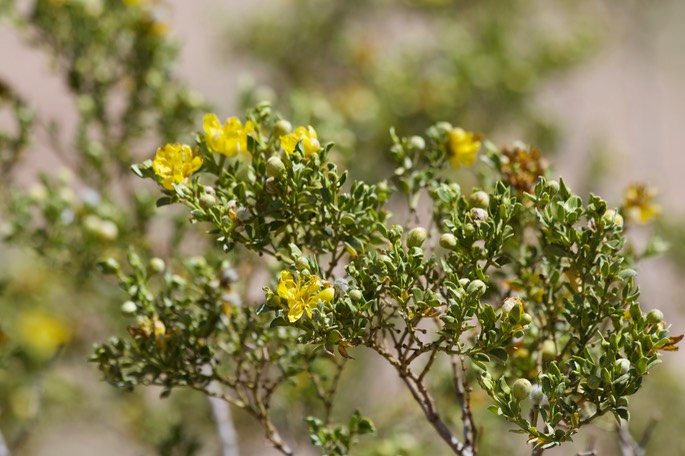
Larrea tridentata
Creosote Bush
East of Hillsboro
New Mexico
February & May
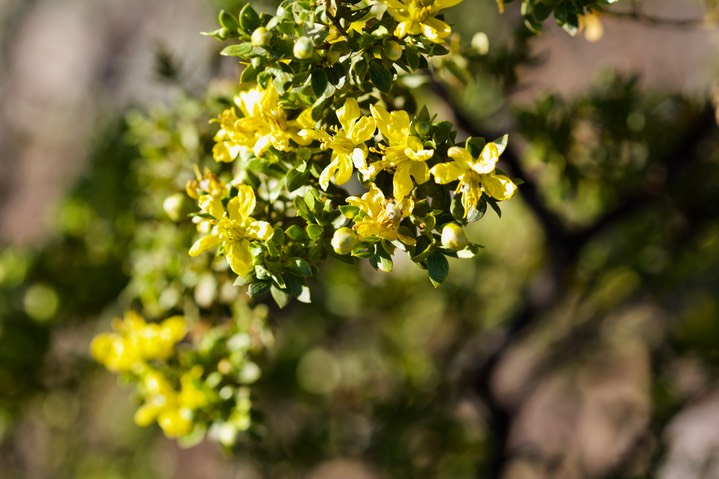
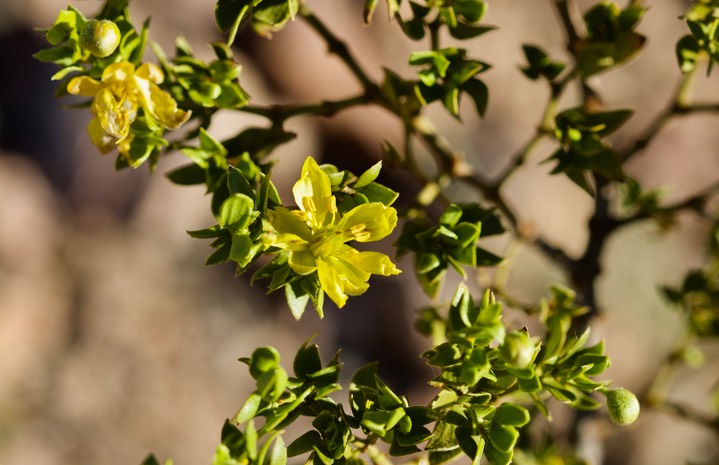
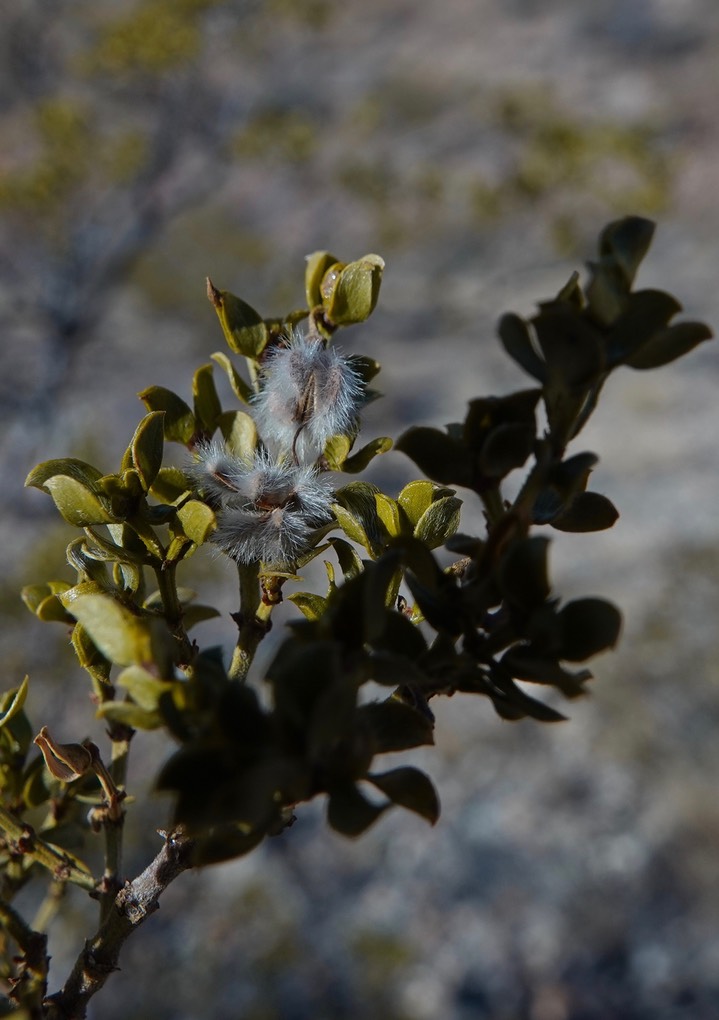
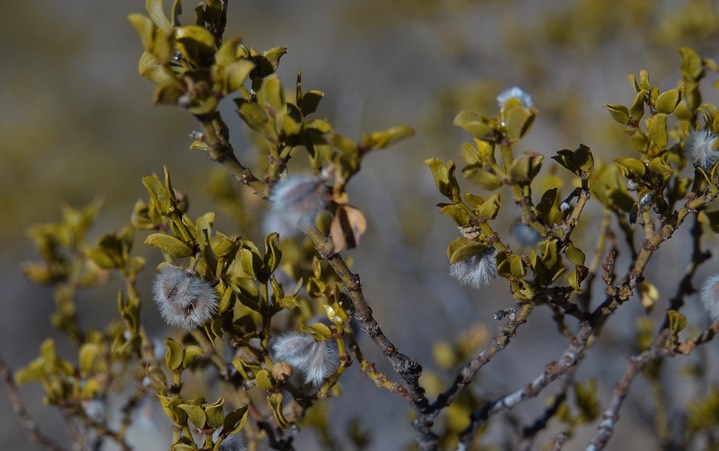
Certainly not rare, but quite beautiful, the Creosote Bushes, Larrea tridentata, can have a long bloom time. Also known as Greasewood, Hediondilla, Governadora, and Guamis. Scientific synonyms for this species include Zygophyllum tridentatum, Larrea divaricata var. arenaria, Covillea tridentata, Neoschroeterea tridentata, Schroeterella tridentata, Larrea glutinosa...
A bush of this species, known as King Clone, is believed by some to be about 11,700 years old - making it one of the oldest living organisms on Earth. That estimate is based on present growth rates, however, and is subject to error. That date has not been substantiated by other methods.
Preparations from this species are used as antiseptics and emetics.
The range of this species, in the United States, is limited to the southwest. To the south it is found as far as central Mexico. It is the dominant shrub at lower elevations of the Chihuahuan, Sonoran, and Mojave Deserts.
Lathyrus graminifolius
Grass-leaved Peavine
Railroad Canyon
Black Range
New Mexico
May
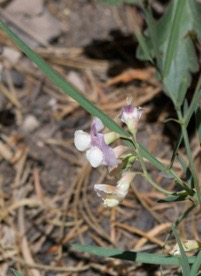
Lathyrus graminifolius, Grass-leaved Peavine (also called Grassleaf Pea and Grass-Leaf Vetchling), is especially interesting because of the leaves. The flowers of this species are associated with stalks/leaves which look like any number of grasses. With age, the flowers of this species will turn orange.
If you wish to take the time, plants in the genus Lathyrus can be told from those of Vicia by removing all of the petals and stamens so that you can see the stigma. "In Lathyrus the style is hairy up and down an entire side, whereas in Vicia there is just a tuft of hairs below the apex."
The range of this species within the United States is limited to Arizona, Newmexico and a bit of southwest Texas. In Mexico, it is found in Chihuahua and Sonora.
This species is also known as L. palustris (several varieties) and Orobus dissitifolius.
Lathyrus leucanthus
Rocky Mountain Sweetpea
Railroad Canyon
Black Range
New Mexico
May
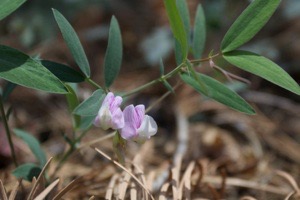
Whether the Rocky Mountain Sweetpea, Lathyrus leucanthus, is a full species or not is a matter of dispute. Some authorities consider it a variety of Lathyrus lanszwertii. The authorities who wrote "Intermountain Flora" consider the taxonomy of this and other pea species in the region to be problematic, saying that "a settled taxonomy for the complex series of small-flowered mountain [Peas]... will remain unattainable unless differential characters more reliable than those presently known can be found.... The flowers and pods of [these peas are] essentially identical... [but] pubescence..., number and [shape] of leaflets, development of tendrils, and size and color of petals are subject to much variation…."
Per Axel Rydberg described the species in 1901 from a specimen he collected in Ojo, Colorado the year before. The species has no scientific synonym but does go by the alternate English Common Name of Nevada Pea.
Linum puberulum
Plains Flax
East of Hillsboro
and at Apache Hill
Black Range
New Mexico
April
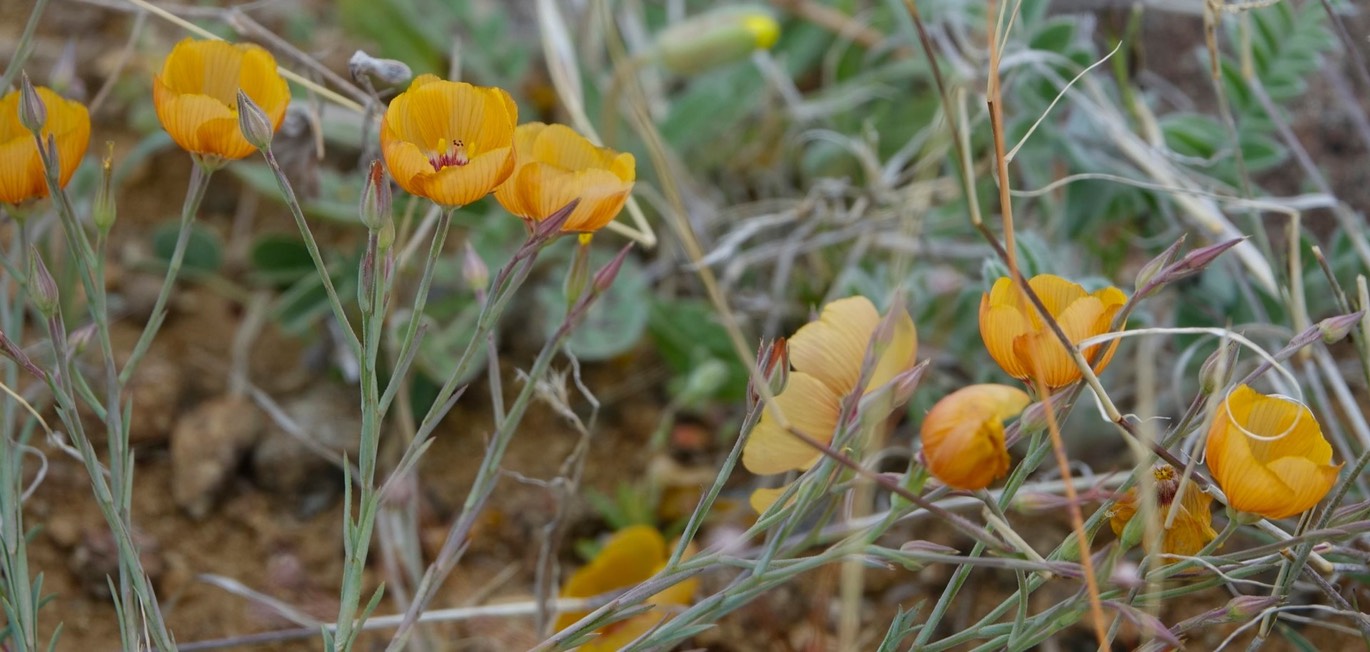
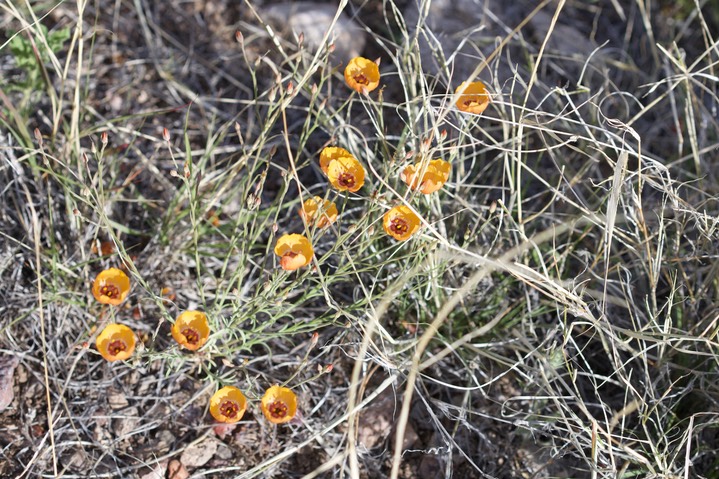
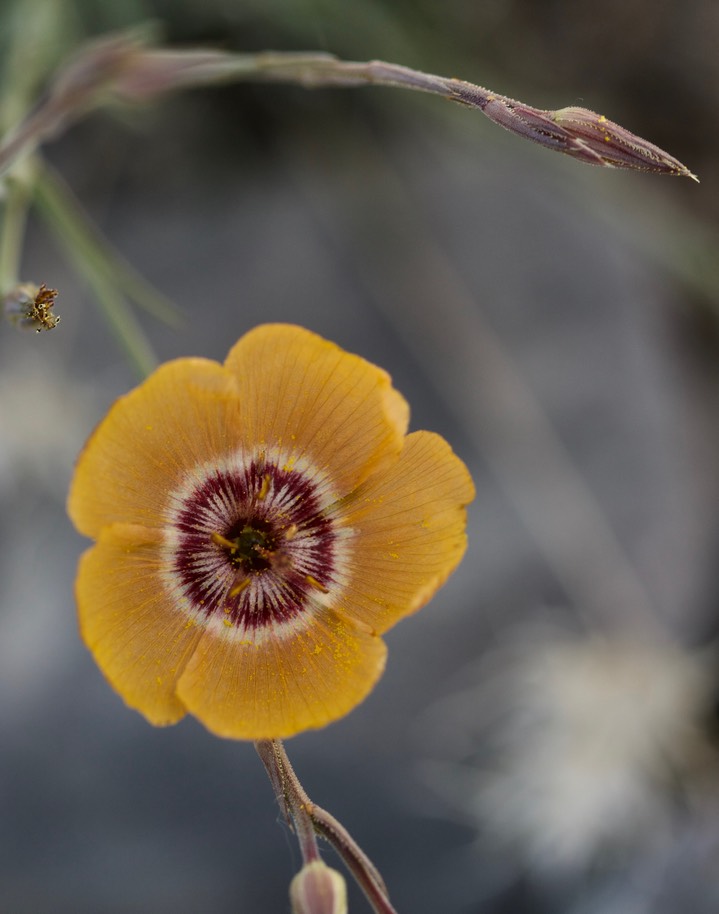
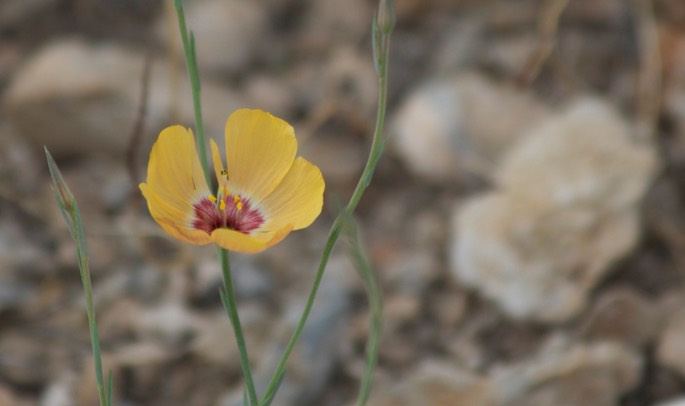
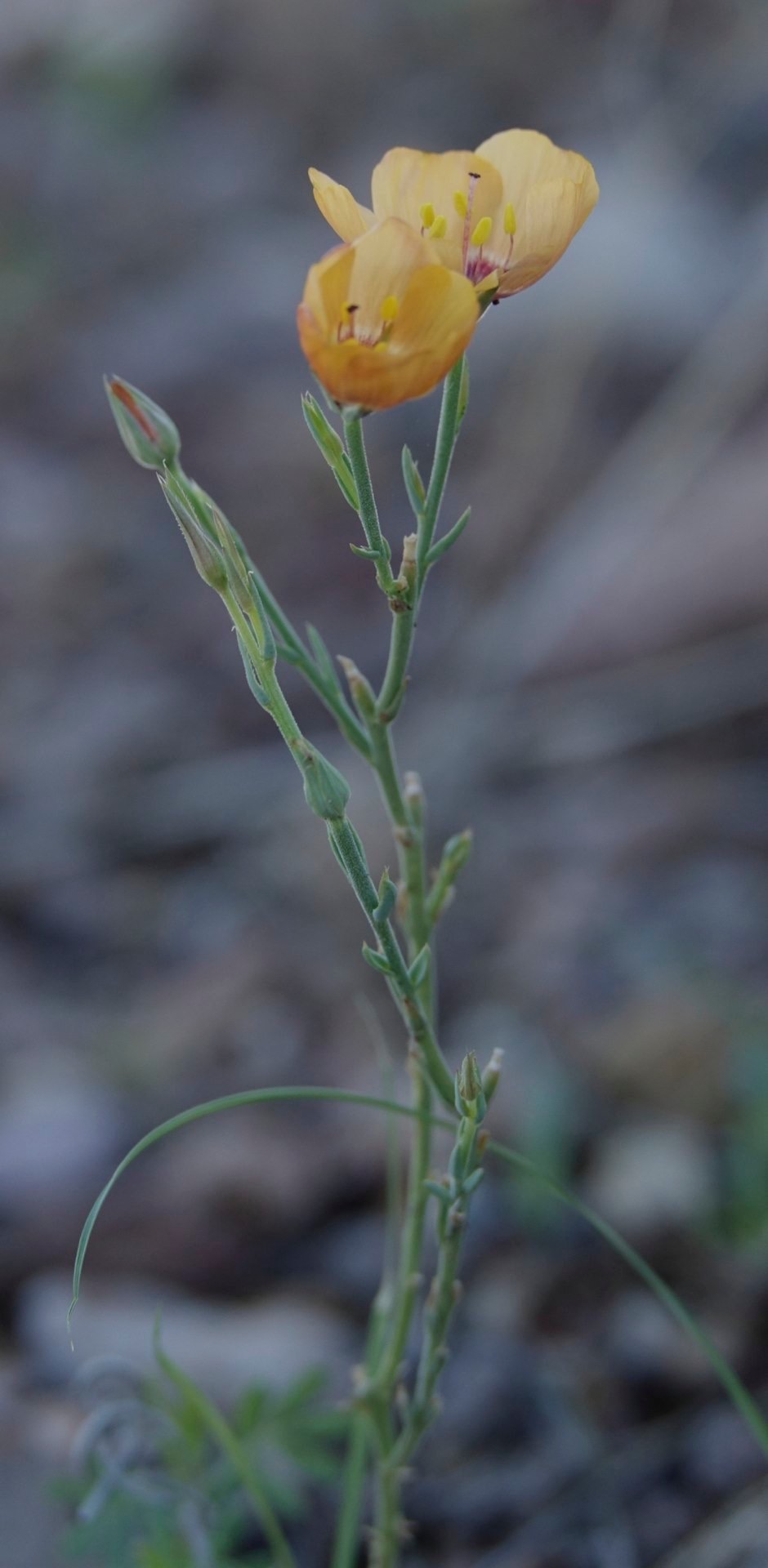
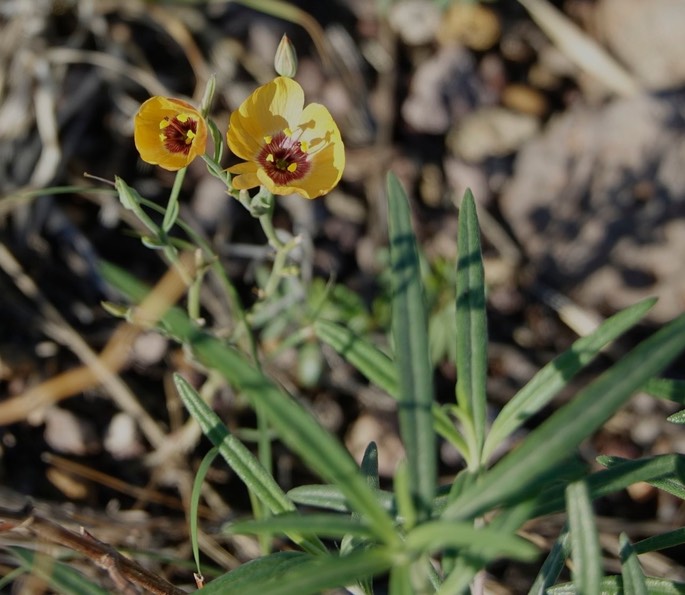
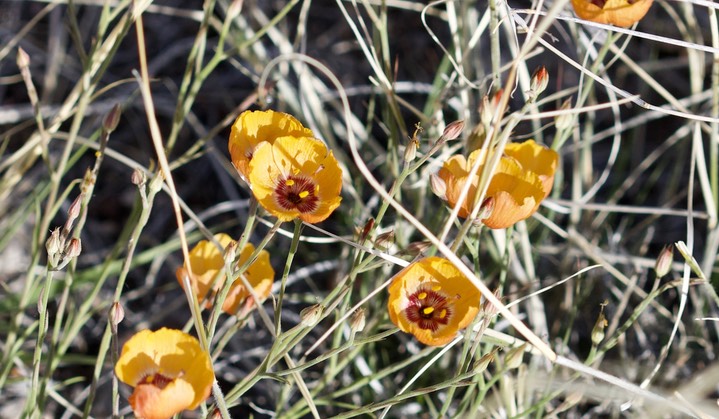
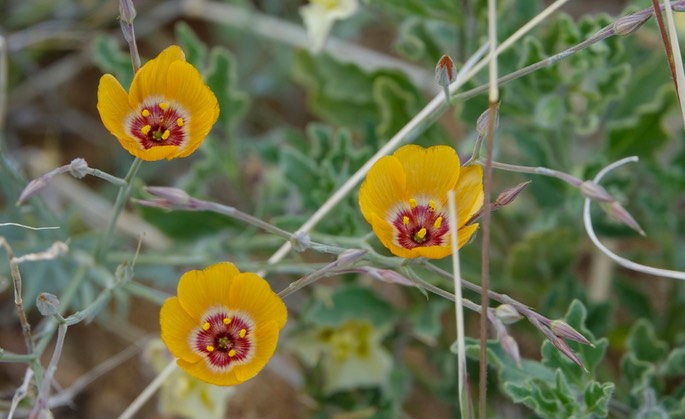
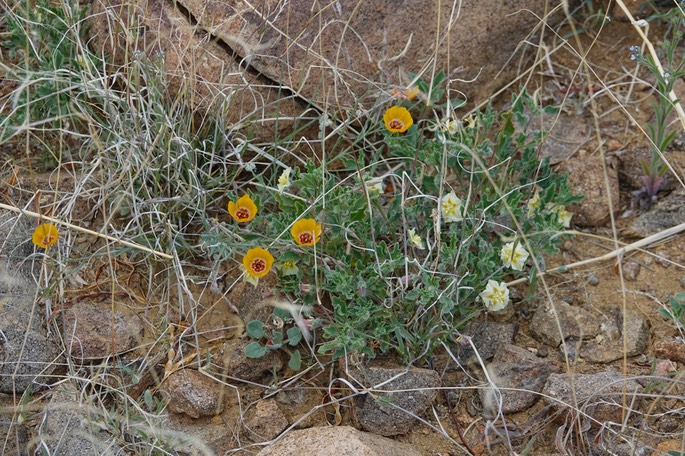
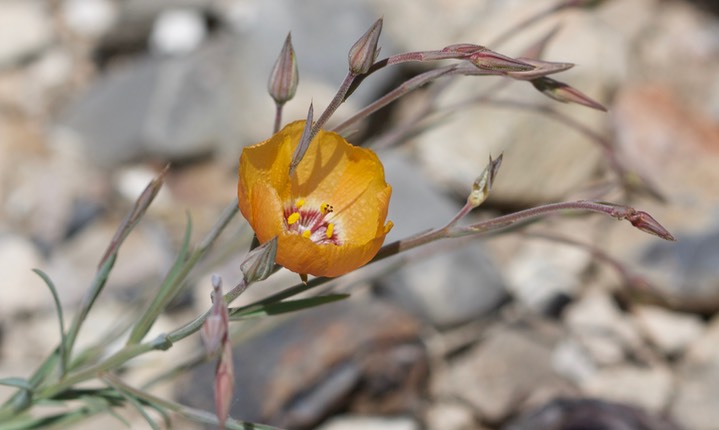
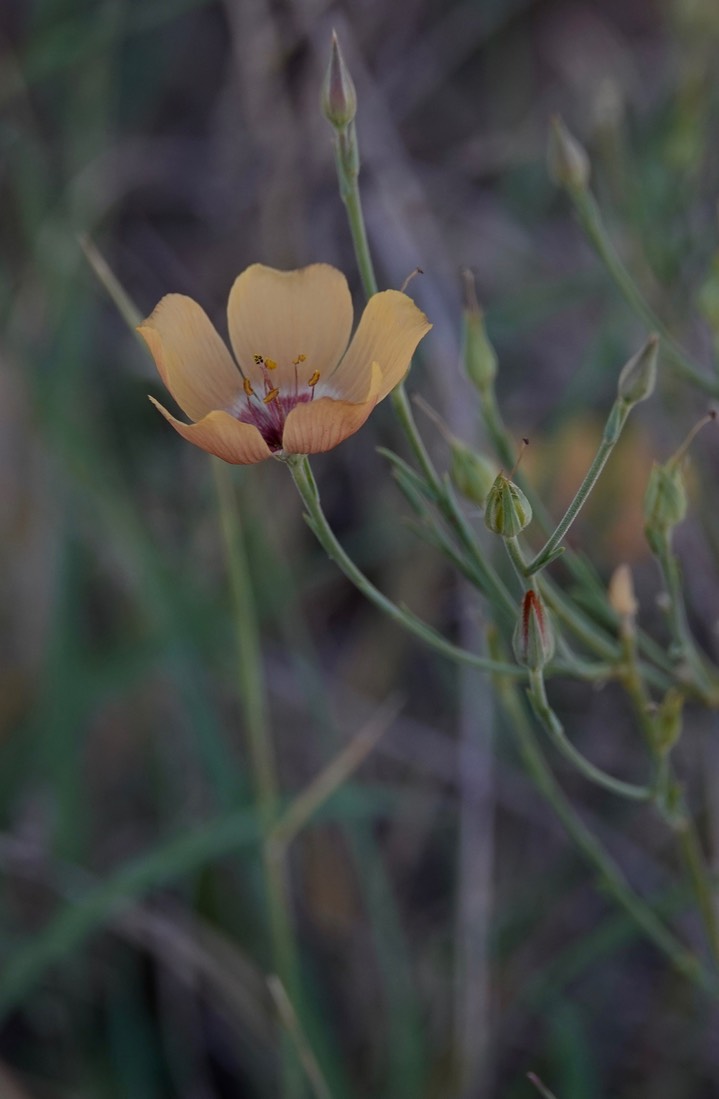
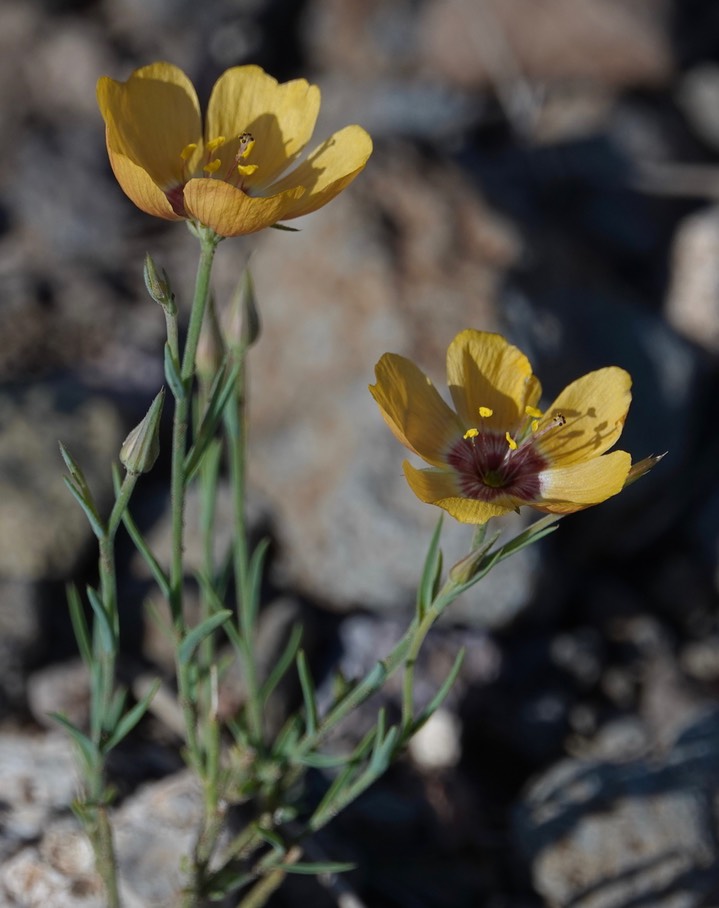
The best way to separate Plains Flax, Linum puberulum from Chihuahua Yellow Flax, Linum vernale, is the difference in the pubescence of the foliage. Linum vernale does not have pubescent foliage (covered in small hairs). In fact, all of the other 12 yellow flax flowers found in New Mexico lack pubescent foliage.
Linum puberulum, has a limited range within the United States, being found only in the west (Nevada, Utah, Wyoming, Nebraska, Colorado, New Mexico, Texas, and California [where it is rare]). In Mexico it is found in the north of Sonora and Chihuahua.
Scientific synonyms for this species include Cathartolinum puberulum, Cathartolinum vestitum, Mesynium puberulum, and Linum rigidum Pursh var. puberulum. The original description of the species was made by George Englemann, later modified by Amos Arthur Heller. It is also known as Hairy Yellow Flax and Desert Flax.
The Holotype Specimen was first described by E. O. Wooton & Standley as Cathartolinum vestitum. The specimen was collected by O. B. Metcalfe in 1901 at Mangas Springs, New Mexico. The Isotype Specimen of Linum rigidum var. puberulum was collected by A. Fendler in 1847, in northeastern New Mexico.
The Native American Ethnobotany Data Base lists several uses of the plant by the indigenous peoples of this area - but I have to wonder about it being used as an “infusion of plant taken to kill a swallowed red ant”.
Linum vernale
Chihuahua Yellow Flax -
East of Hillsboro
New Mexico
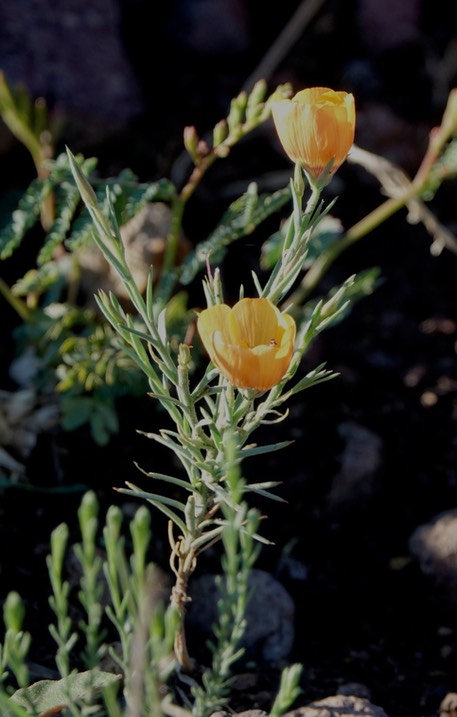
As its name implies, it is endemic to the Chihuahuan Desert. This species was first described by Elmer Wooton in 1898 from a species collected in Dona Ana County on April 22, 1893. See also, the discussion for Linum puberulum.
Lithospermum incisum
Puccoon
West of Berrenda Road
West of NM-27
South of Hillsboro
New Mexico
March
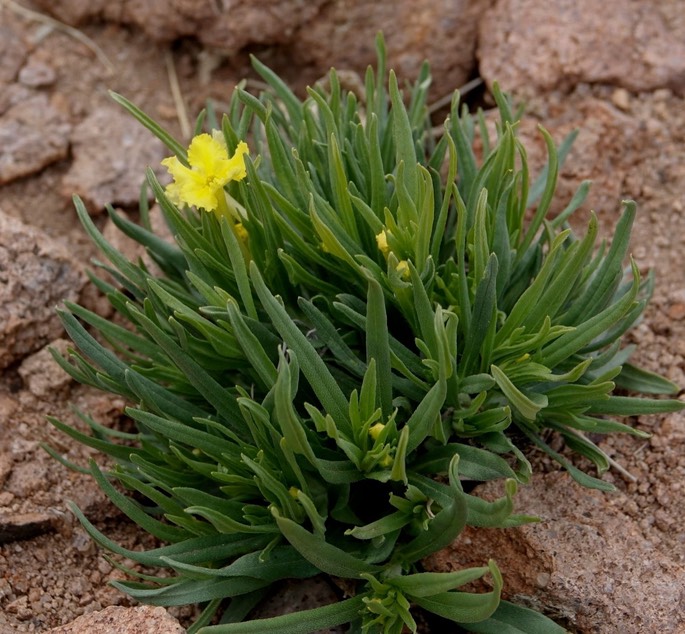
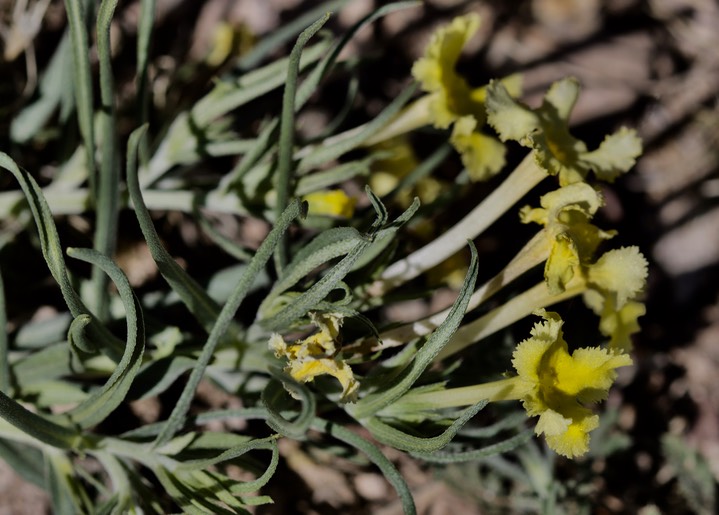
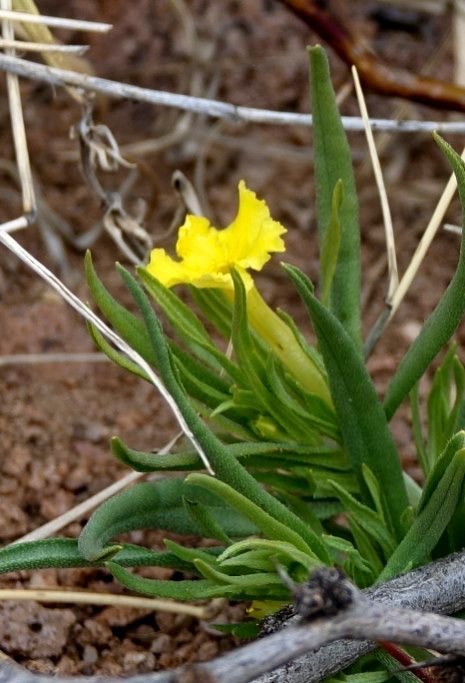
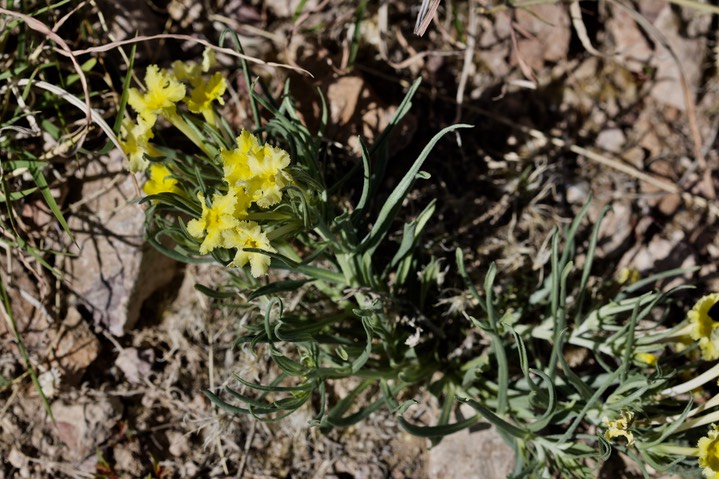
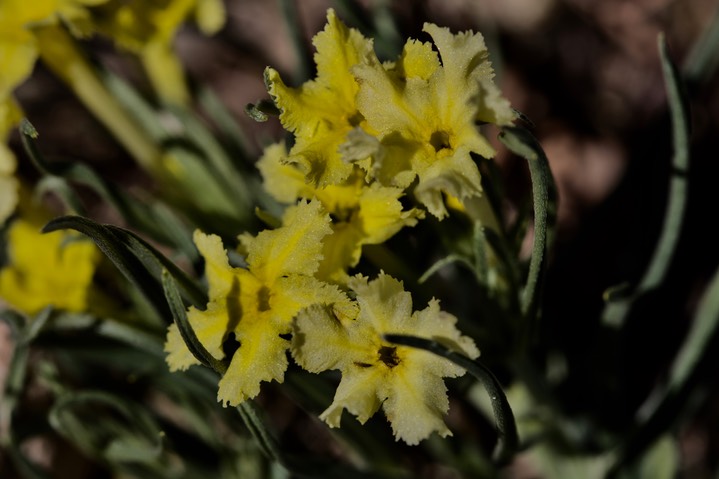
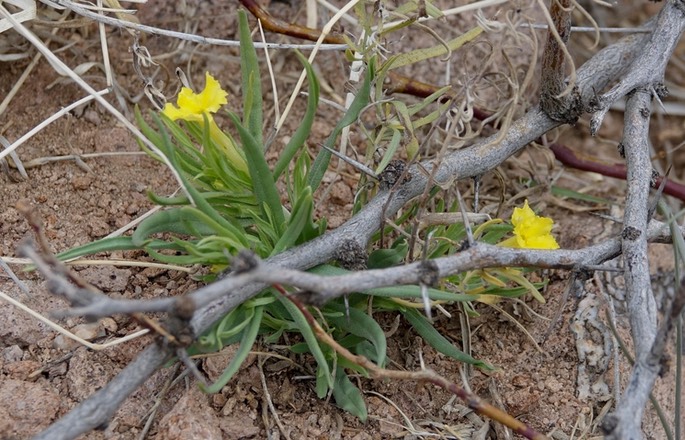
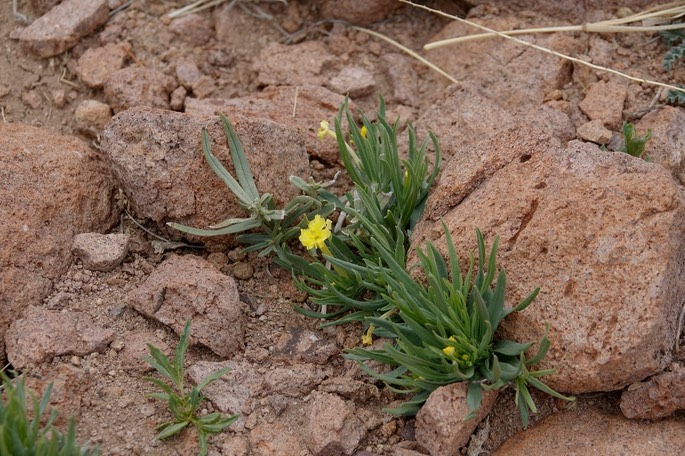
The Vascular Plants of the Gila website describes this species as: “Lithospermum incisum has a trumpet shaped symmetrical yellow corolla with crenate lobes. The leaves are linear with a strong central vein. Lithospermum incisum is found most frequently in canyons and streambanks, but it can adapt to various other habitats as well.”
The English Common names for this species include Puccoon, Golden Puccoon, Fringed Puccoon, Narrowleaf Puccoon, Narrow-leaved Puccoon, Narrowleaf Gromwell, Fringed Gromwell, and Narrowleaf Stoneseed.
Scientific synonyms for this species include Lithospermum angustifolium, Lithospermum linearifolium, Batschia linearifolia, Lithospermum mandanese, and Lithospermum oblongum.
This species was used by many of the indigenous tribes (including the Zuni, Navajo, Okanagon, Sioux, Shoshoni, the Thompson, Hopi, Great Basin Indians, Blackfoot, and the Cheyenne).
This species was described by Johann Georg Christian Lehmann, who was a German botanist (1792 - 1860), in 1818. The type specimen was collected by Andrew Michaux in 1803 “near the rapids of the Ohio”.
This species is found throughout the central part of the United States and Canada. In Mexico, it is found as far south as (at least) southern Coahuila. Discover Life indicates that the species is found as far south as the southern most states of Mexico. Many sources cut their range maps off at the southern border of the United States, but I strongly suspect that flora and fauna do not honor county, state, or national lines - or at least not until some idiot builds a wall.
Lithospermum multiflorum
Wayside Gromwell
Sawyer's Peak Trail
Black Range
New Mexico
June
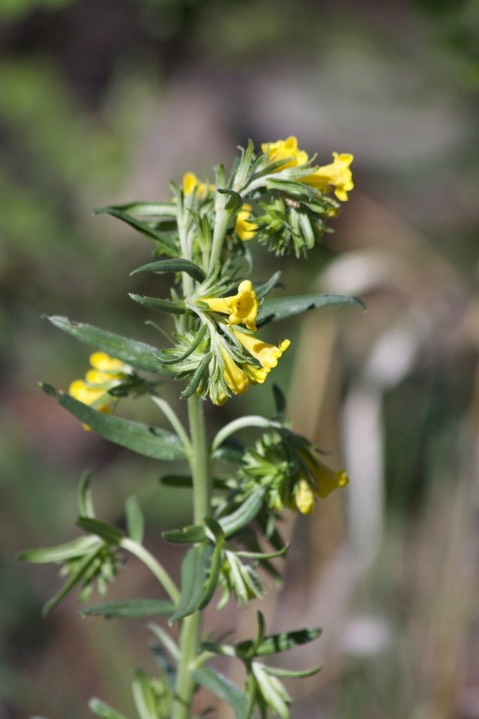
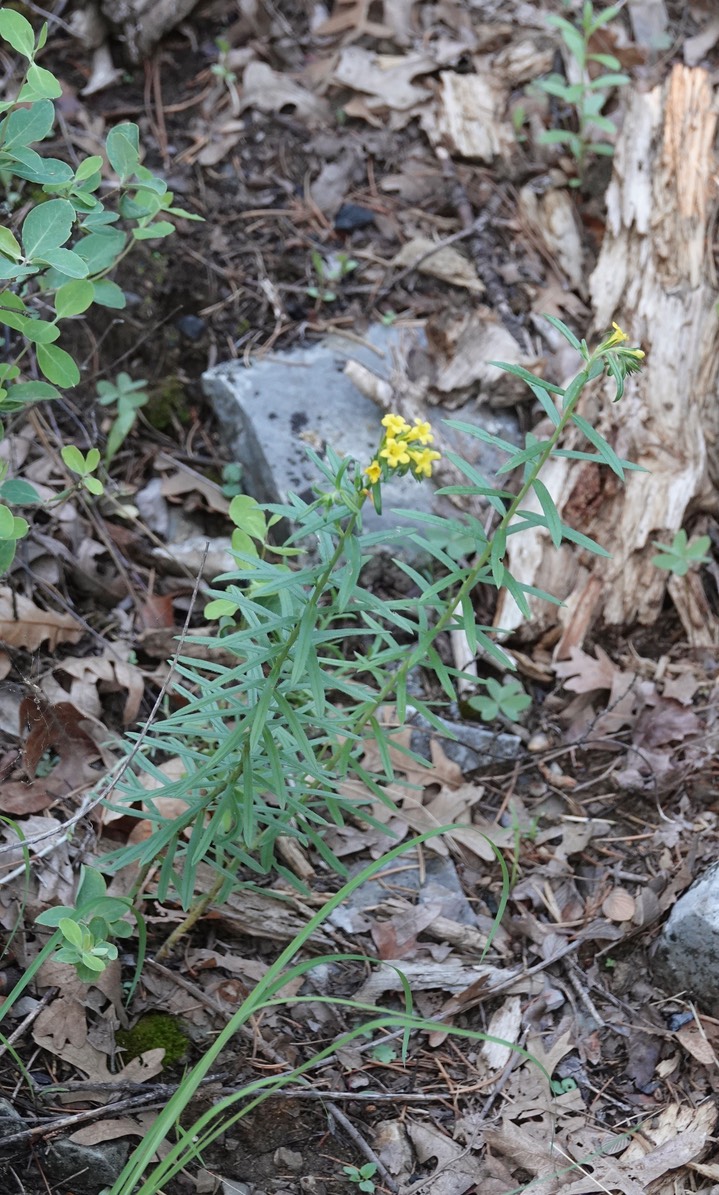
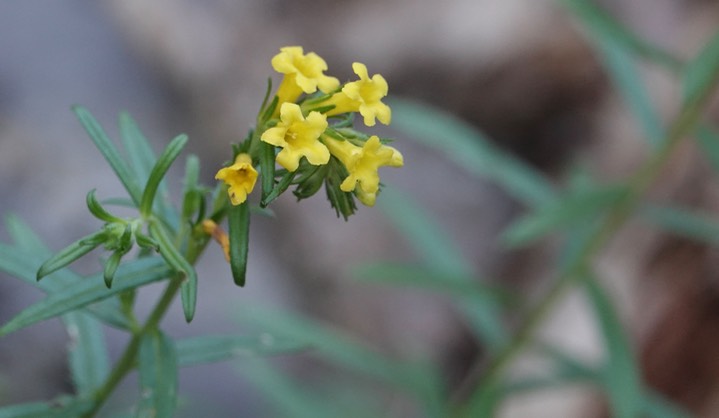
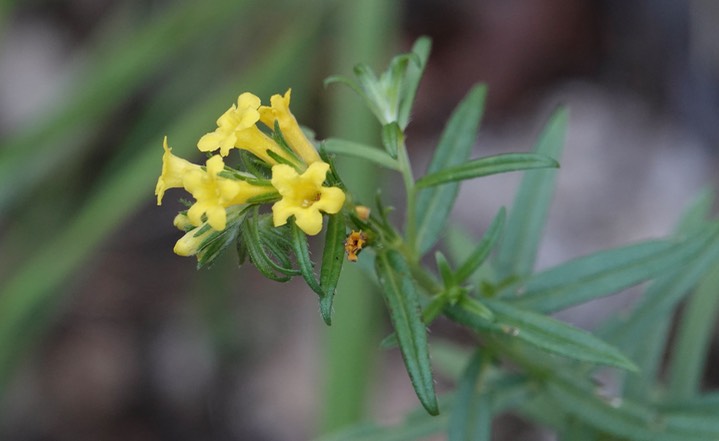
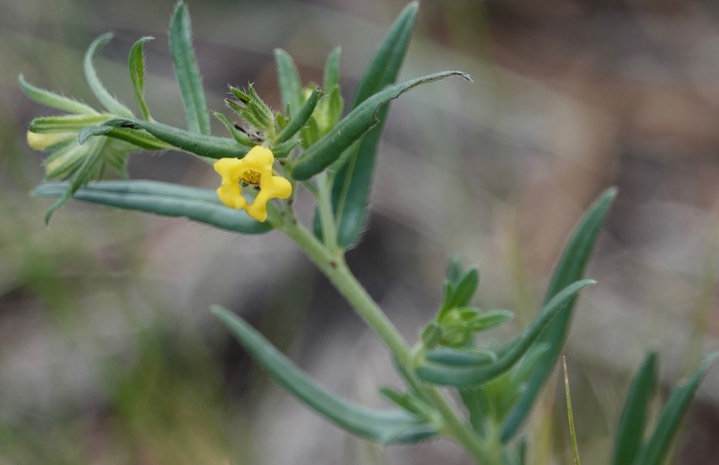
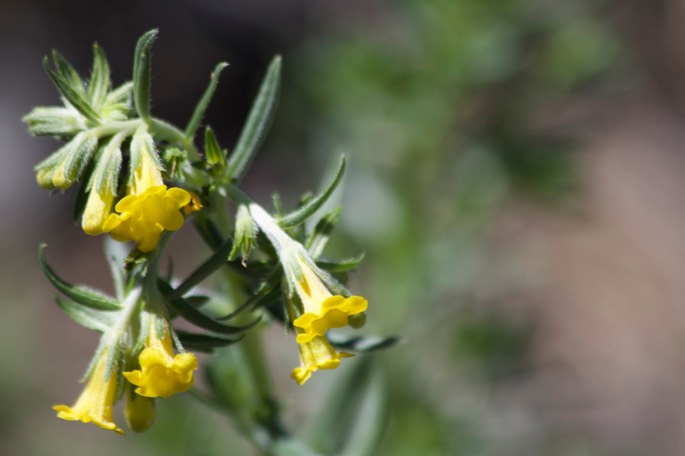
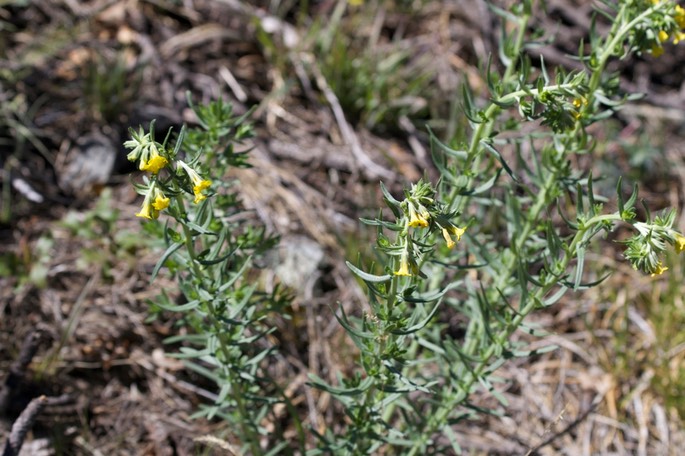
This species is found at higher elevations in the Black Range. We found it above 9,000’ and in Colorado, it usually grows between the elevations of 5,500’ and 11,000’. It is usually found in Ponderosa Pine forest.
This species has never been known by another scientific name but it has several other common names, including; Purple Pucoon, Manyflowered Gromwell, and Manyflowered Stoneseed.
In the United States, this species is found in Arizona, Utah, Colorado, New Mexico and a bit of western Oklahoma and Texas. The species is also found in the state of Chihuahua, Mexico. In Wooton and Standley’s, Flora of New Mexico, Lithospermum multiflorum is listed as “common in all the higher elevations”.
James Cohen, Amy Litt, and Jerrold Davis studied the growth patterns and influential factors in the development of three Lithospermum species, including the subject species. Much of the research which has been conducted on Lithospermum multiflorum has involved DNA and RNA sequencing and has been for medical purposes. Such studies have been going on for some time, see J. B. S. Norton’s “A coloring matter found in some Boraginaceae”, published in the American Journal of Pharmacy, 1898, No. 7, as an early example.
The Navajo used the root of this species for medicinal purposes, other tribes have used the root as a source of purple dye and the seeds were eaten as a food source.
The type specimen for this species was apparently collected during the Geological Exploration of the Fortieth Parallel, 1867 - 1869. Sereno Watson was responsible for “Volume V - Botany” of the report of that expedition.
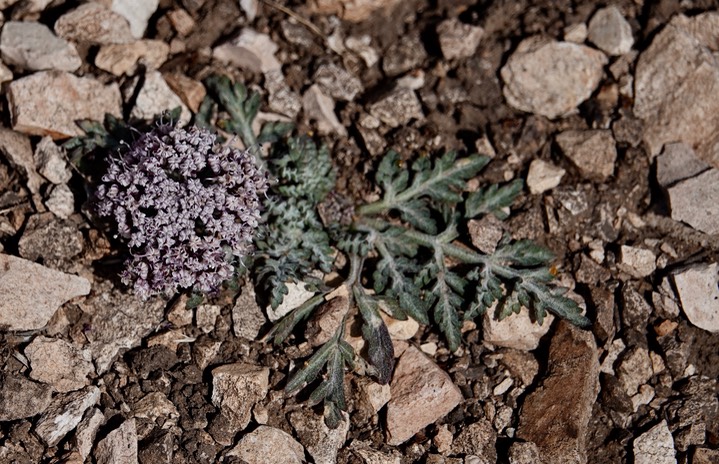
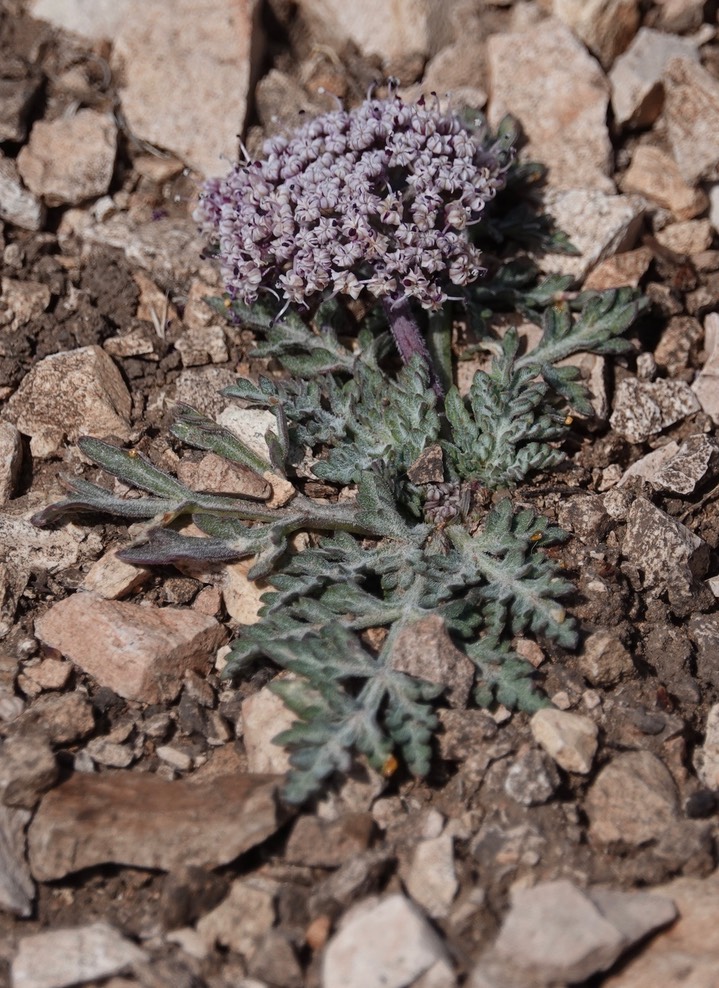
Lomatium nevadense
Biscuit Root
City of Rocks State Park
New Mexico
March
Lonicera arizonica
Arizona Honeysuckle
(Spanish: Madreselva)
Railroad Canyon
Black Range
June
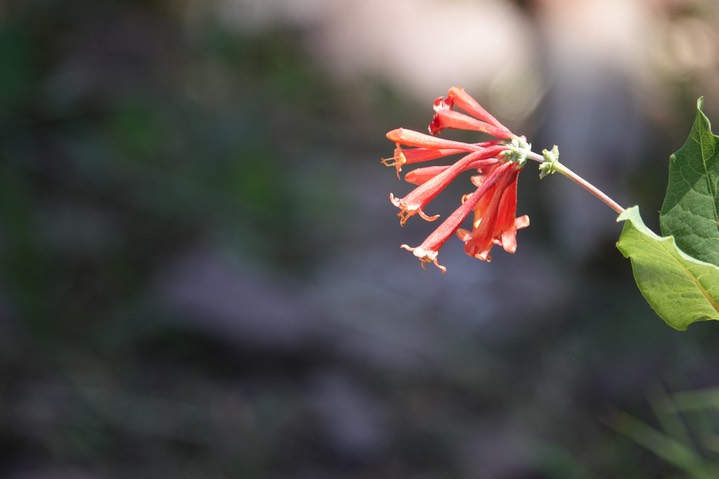
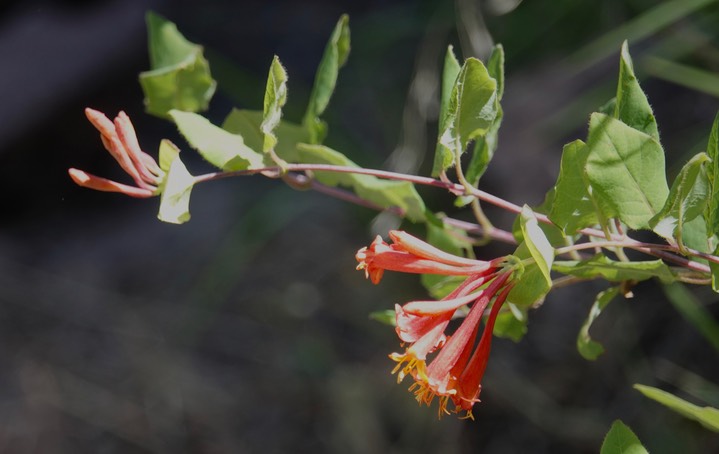
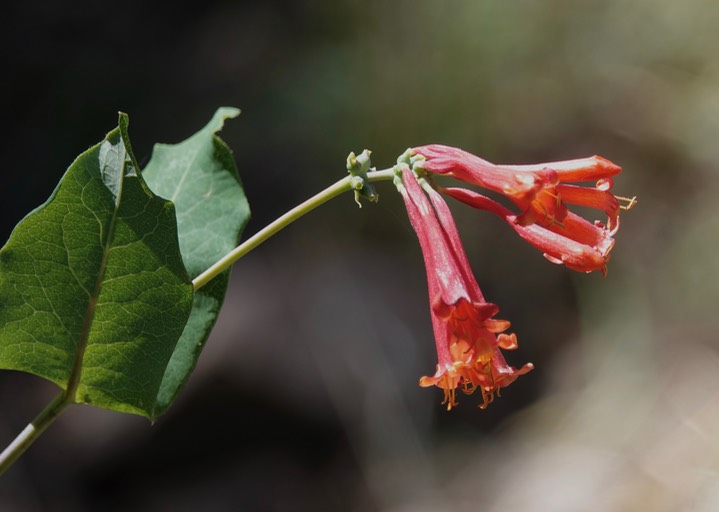
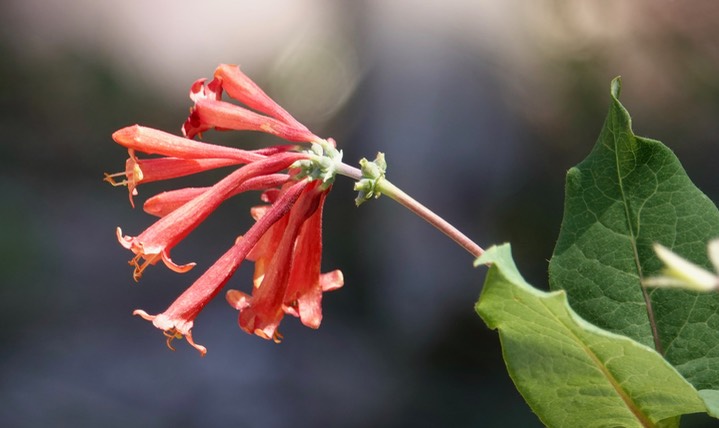
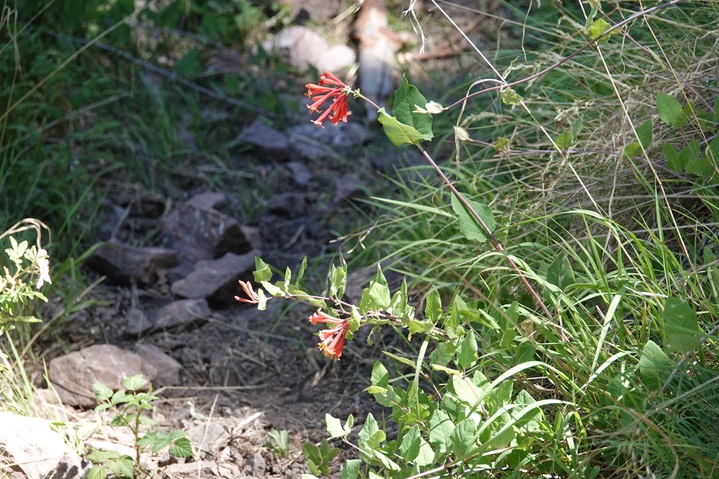
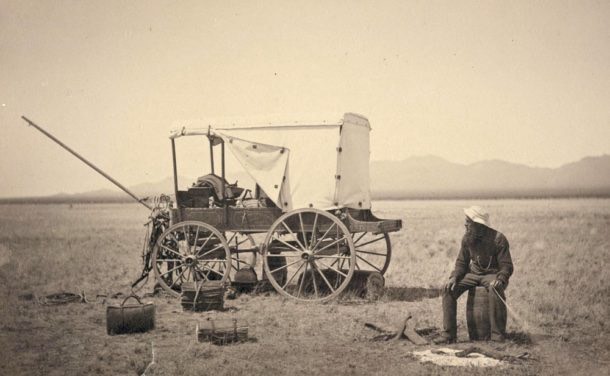
This species is the only orange-red honeysuckle found in the Black Range. Within the United States the range of this species is limited to Arizona, New Mexico, and a bit of southwest Texas. In Mexico, it is found in Chihuahua and Sonora. The genus name, Lonicera, honors the German botanist Adam Lonitzer (1528-1586) and the species name simply means of or from Arizona. The type specimen was collected by C. G. Pringle in the Rincon Mountains of Arizona on June 19, 1884. Pringle was one of the great collector/botanists on North America. In terms of species collected and described he ranks fifth in total numbers. Although he collected mostly in Mexico during the later part of his life. He did some collecting in New Mexico during earlier periods. The self-portrait shown in the gallery is from a collecting trip in Arizona and depicts the glamour of field work well.
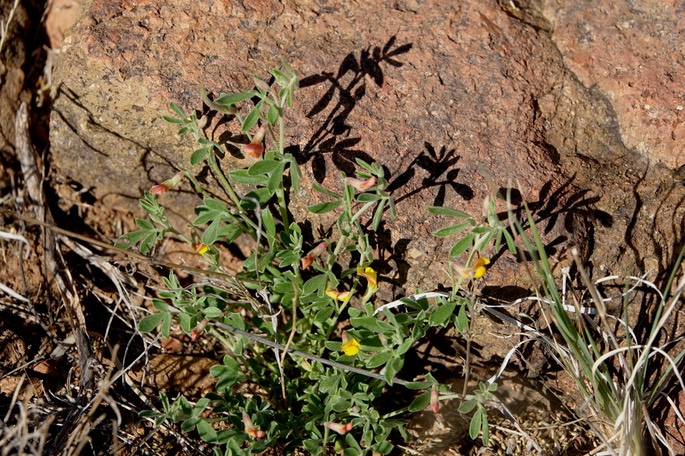
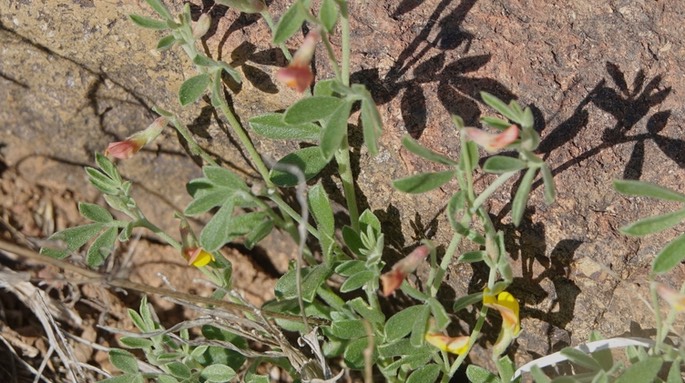
Lotus greenei
Deervetch
North Wicks Canyon
East of Hillsboro
Black Range
New Mexico
Lotus wrightii
(Acmispon wrightii)
Red and Yellow Pea
Gallinas Canyon
West Slope of Black Range
New Mexico
July
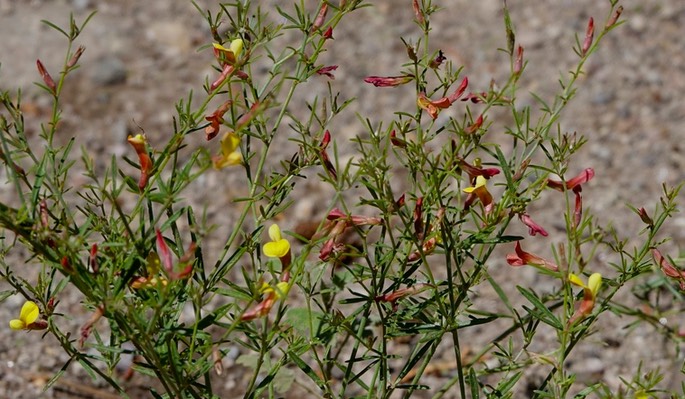
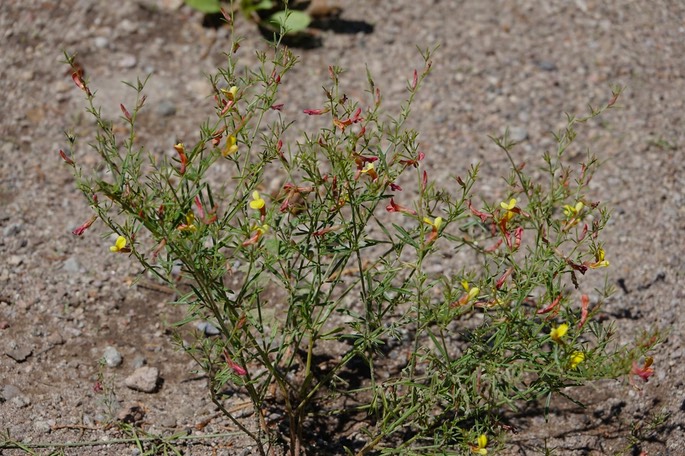
The Red and Yellow Pea, Lotus wrightii, shown here was photographed in Gallinas Canyon, below Lower Gallinas Campground, on the west slope of the Black Range on July 28. It is also known as Deervetch, Wright’s Deervetch, and Wright’s Trefoil. This species was first described by Asa Gray, as Hosackia wrightii - in honor of Charles Wright. Its current description is by Edward Lee Greene. Some sources list this species as Ottleya wrightii, described by D. D. Sokoloff in 1999.
Although it has been reported that this species is poisonous to animals it is a favorite browse for deer. The Native American Ethnobotany Data Base lists several uses of this species by the native peoples. This species is only found in the southwestern United States and northern Mexico. Southwest Colorado Wildflowers has an excellent page on this species.
Lupinus argenteus
Silvery Lupine
Gallinas Canyon Trail
Black Range
New Mexico
June