Ipomoea costellata
Crestrib Morning Glory
South of Iron Creek Cmpgrnd
and at Bald Hill (east slope)
Black Range
New Mexico
August
The “FLORA" of the Black Range
“I"
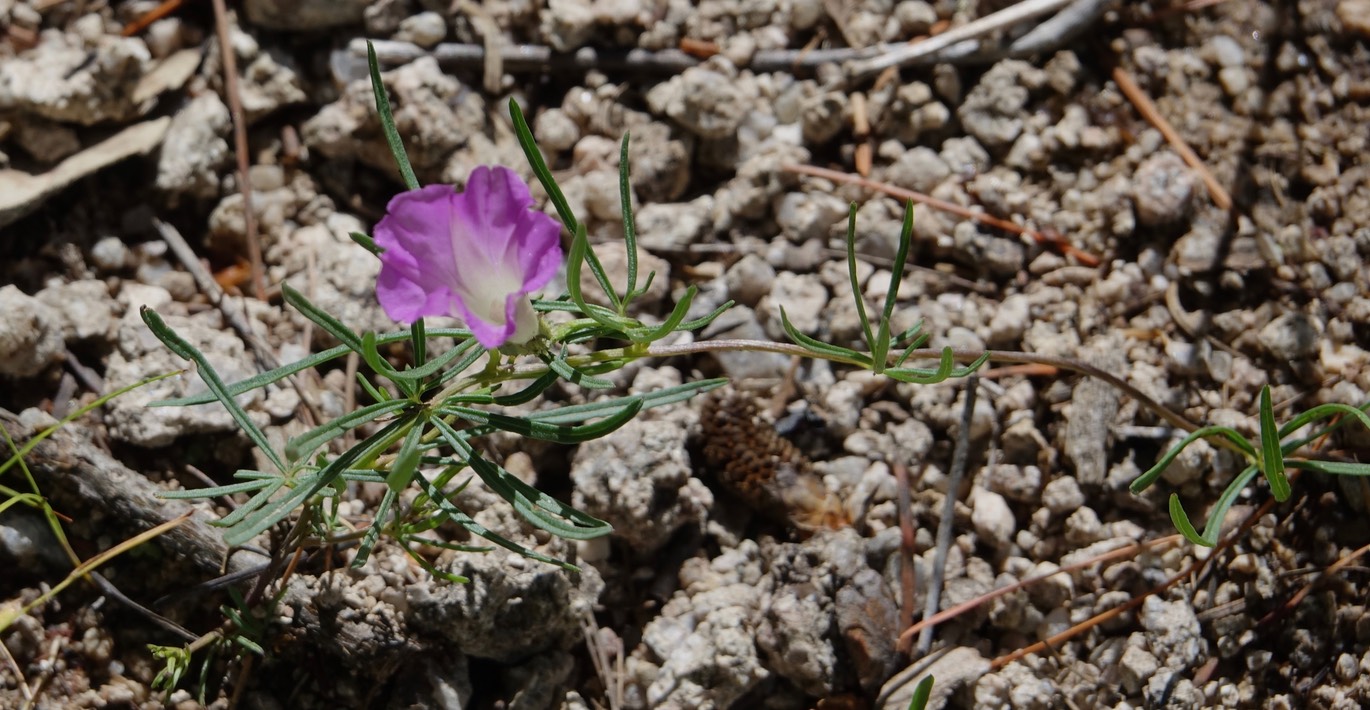
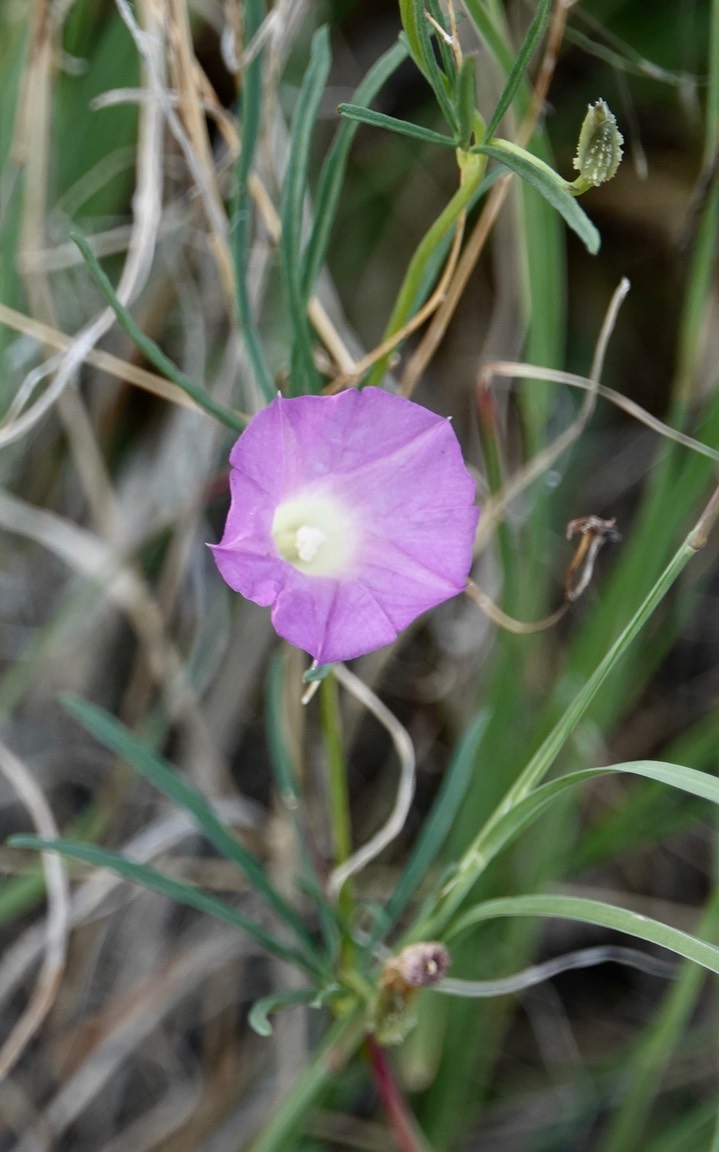
Ipomoea costellata
Crestrib Morning Glory
South of Iron Creek Cmpgrnd
and at Bald Hill (east slope)
Black Range
New Mexico
August
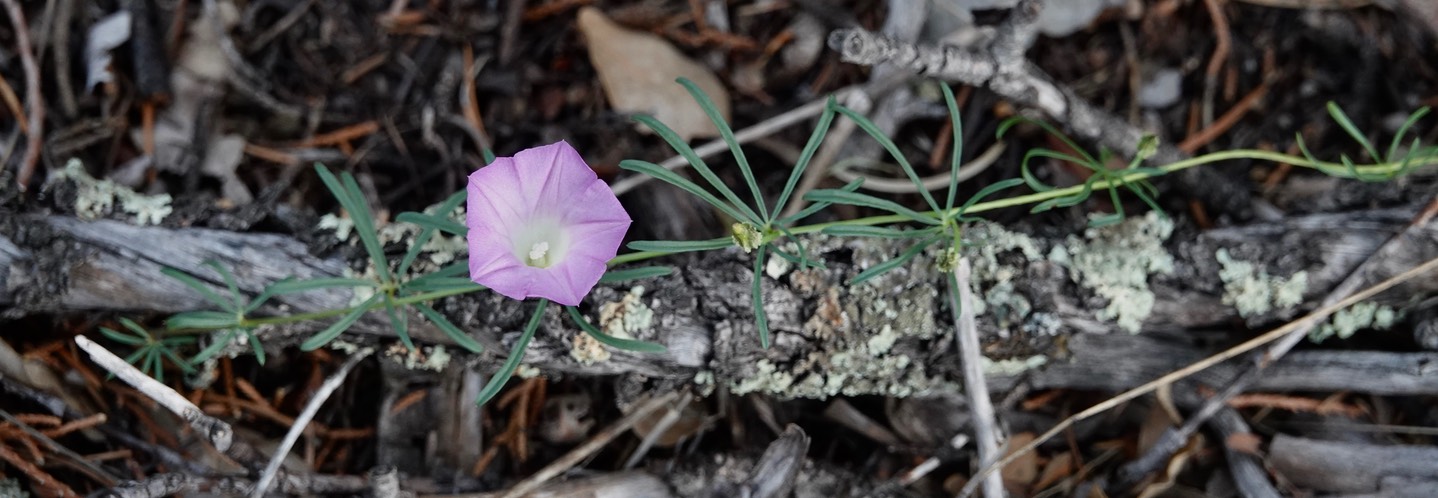
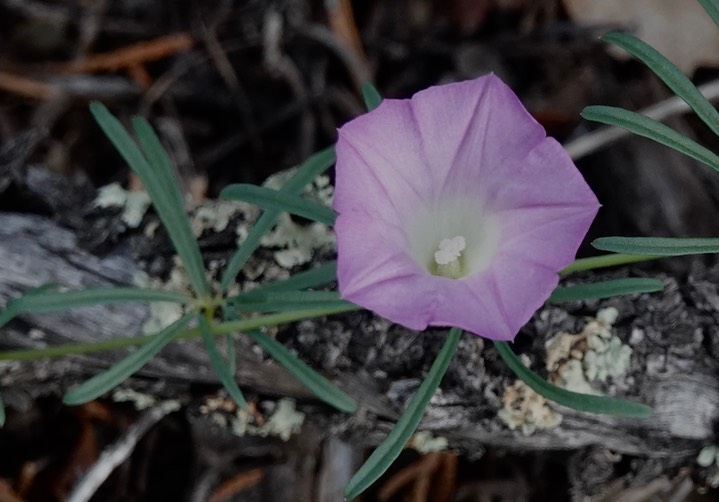
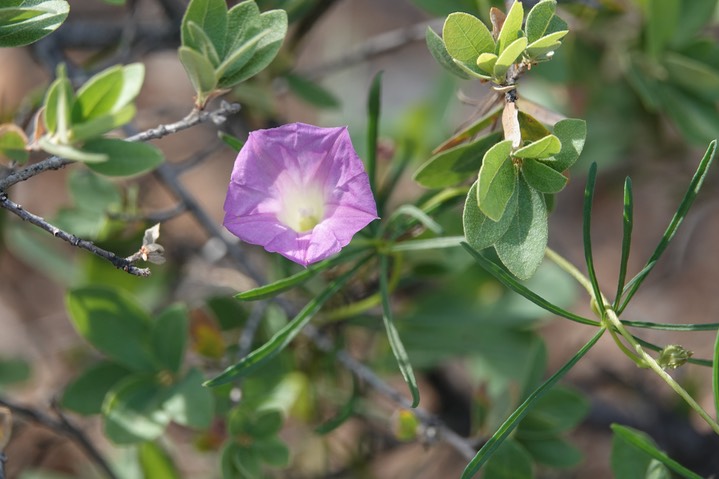
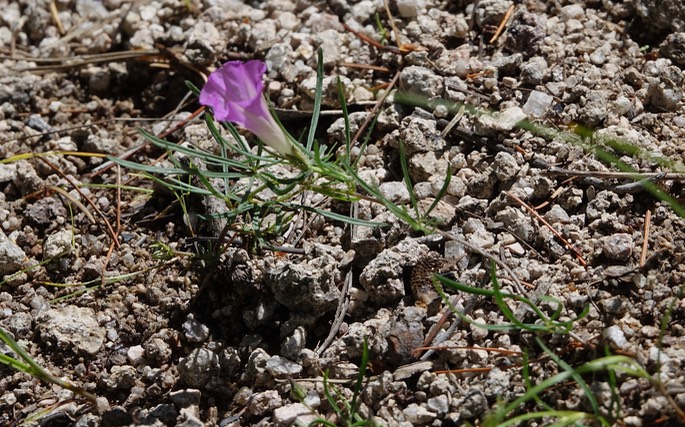
At Bald Hill, north of Kingston, and on a ridge at about 7,000 feet near NM-152 on the west side, we found Ipomoea costellata, Crestrib Morning-Glory, pictured here. It is also known as the Crested Morning Glory, and Trompillo in Spanish. The flower is rather small and quite dainty.
This is another of the species of the southwestern United States. The species is found in most of Mexico.
A complete description of this species can be found at the SEINet (Arizona and New Mexico Chapter) site. Torrey performed the first official description of the species.
Ipomoea cristulata
Scarlet Morning Glory
Dry Creek
West of Kingston
Black Range
New Mexico
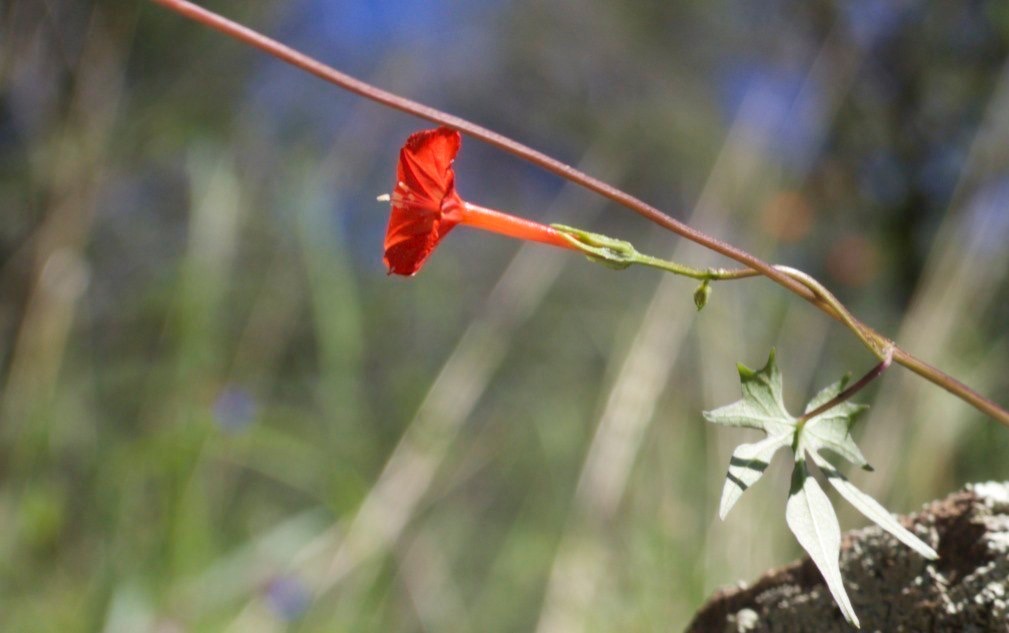
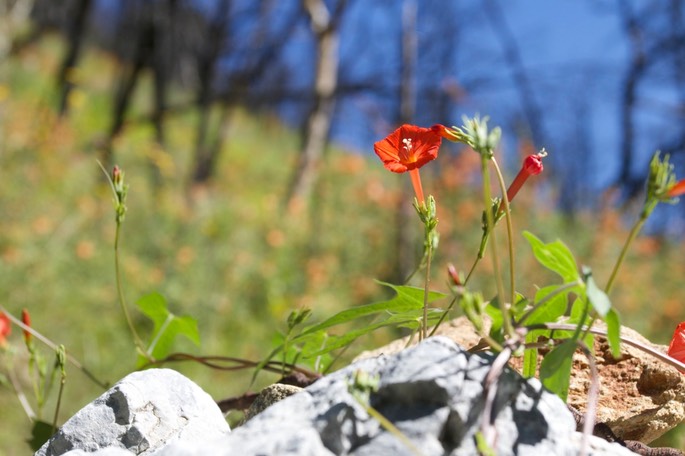
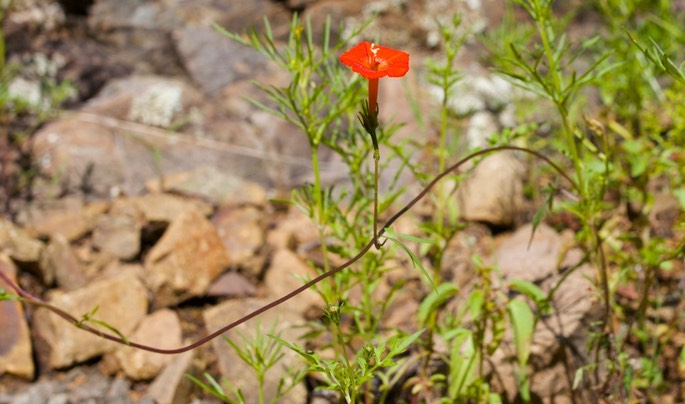
The Scarlet Morning Glory, Ipomoea cristulata, is a strikingly beautiful plant, both in color and in form. It is also known as Trans-Pecos Morning Glory, Scarlet Creeper, and Hummingbird Plant. Of course, a different species (I. coccinea) is also called Scarlet Morning Glory - oh the glory of English Common Names. Despite its beauty, Arizona considers this species to be a “prohibited noxious weed” - because it is an Ipomoea.
True to one of its common names, this plant is a favorite of hummingbirds. Because its long vines are typically low to the ground, it is reported that snakes in search of a hummingbird snack are occasionally found among the vines (I am assuming on more than a random basis). A full description of this species can be found at the Southwest Environmental Information Network (SEINet) site.
Although found in some other locales, the primary range of this species appears to be west Texas, New Mexico, Arizona, and northern Mexico (mountains).
This species was first described by Johannes Gottfried Hallier (botantical references refer to him as “Hallier f.”). Hallier spent four years (1893-1897) in Indonesia (Java, Boreno) and participated in an expedition to India, Sri Lanka, and the coastal areas of Southeast Asia in 1903-04. In 1899 he published Zur Convolvulaceenflora Amerika’s. People who do significant scientific work are not always “right minded”, however, and Hallier was a proponent of German racial superiority (which, I suppose, does make him right-wing minded).
Edgar A. Mearns collected a specimen of this species on August 17, 1893 at “Niggerhead Mountains” (now Cerro Gallardo) near International Border Monument 82 in Arizona (276 monuments where placed as part of border demarkation projects). His work was performed under the auspices of the International Boundary Commission which resurveyed and reconstructed (United States-Mexico) boundary monuments in accordance with the boundary Conventions of 1882 and 1884. A few days later, on August 31, Mearns bagged the first Broad-billed Hummingbird collected in New Mexico. Mearns is an important figure in the study of natural history of North America and particularly that of the American Southwest. In 1907, for instance, the Government Printing Office published his Mammals of the Mexican Boundary of the United States.
Ipomoea gilana
East slope of Bald Hill, Cave Creek
Black Range
New Mexico
August
Ipomoea hederacea
Possibly Ipomoea purpurea
Ivy-leaf Morning Glory
Bloodgood Spring Area
Near Kingston
New Mexico
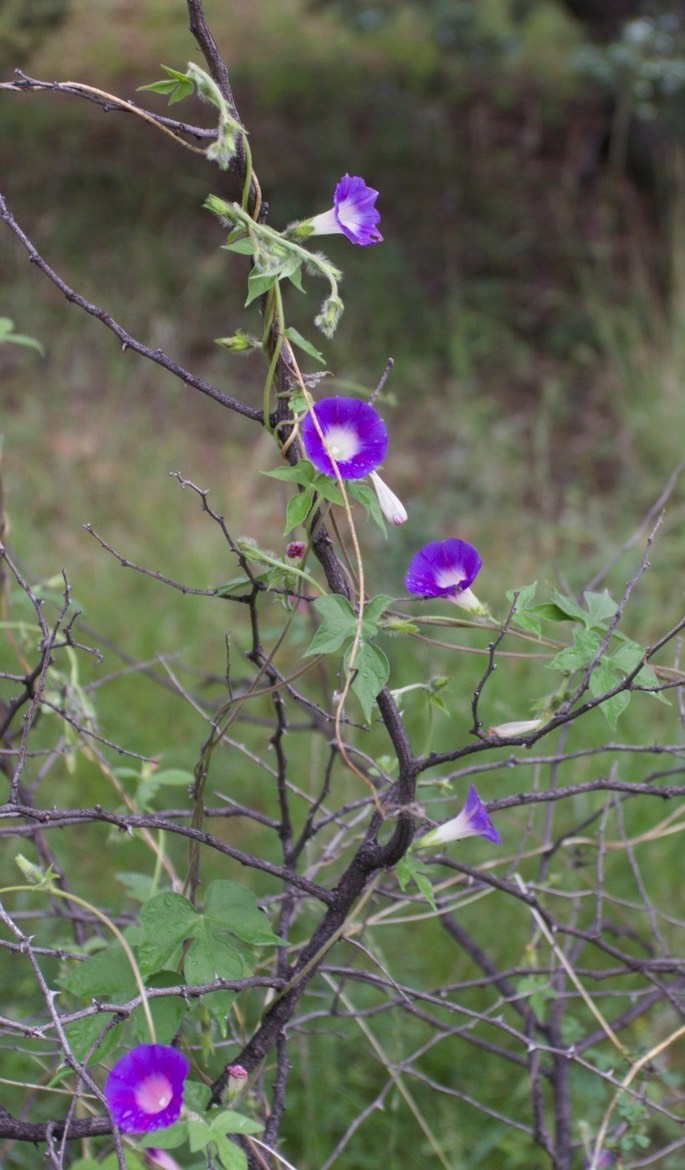
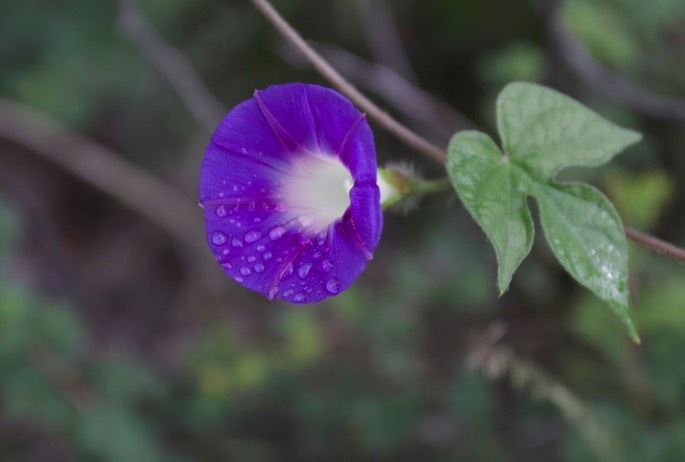
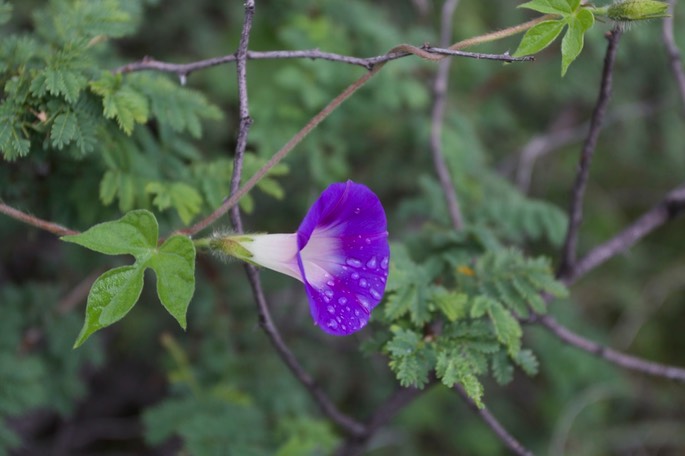
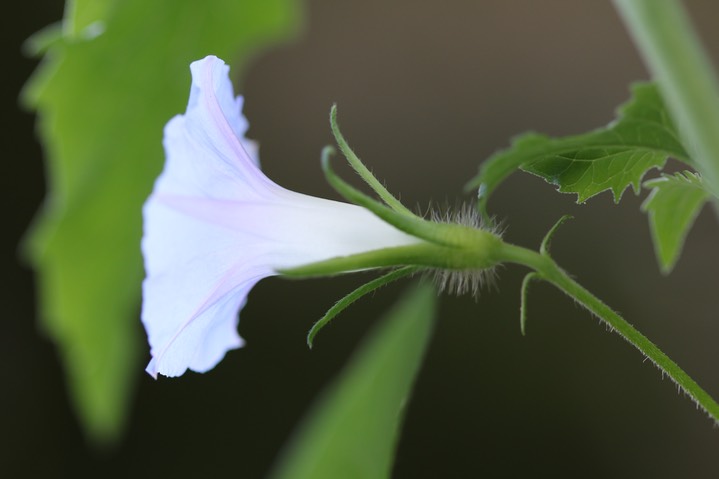
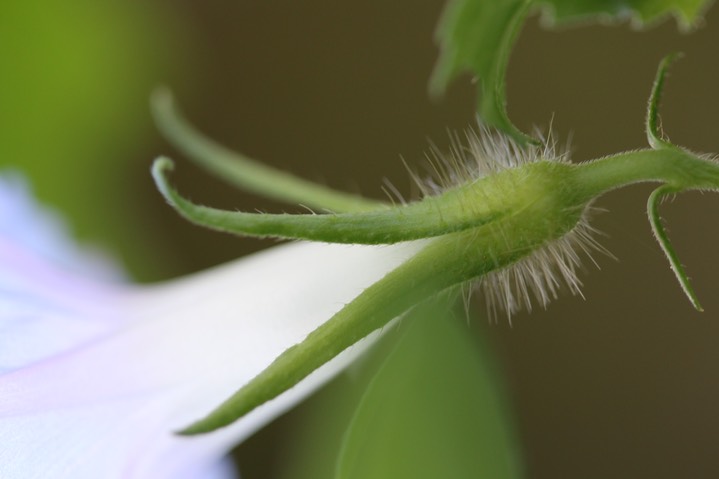
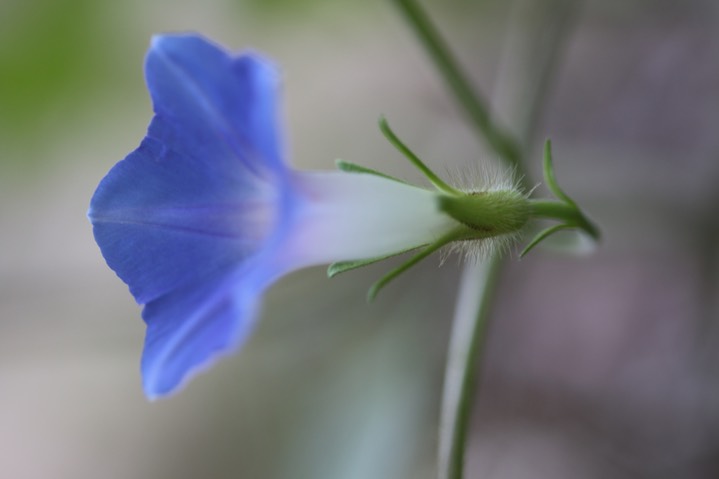
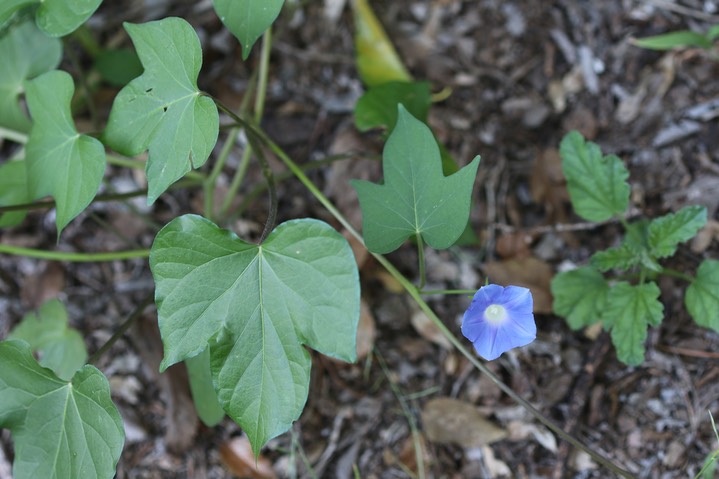
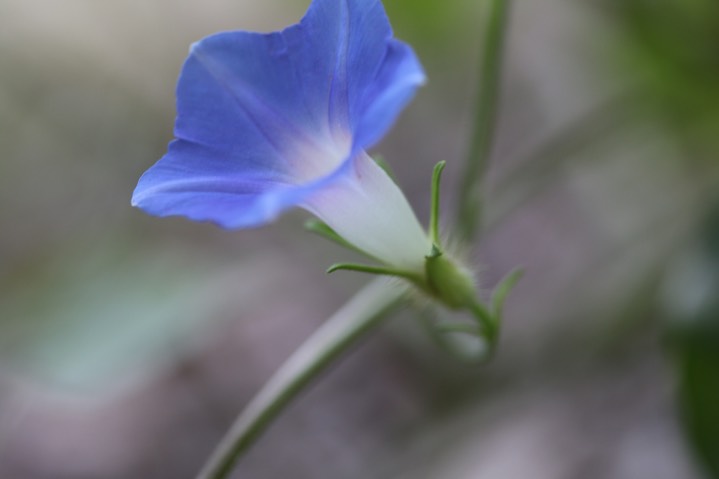
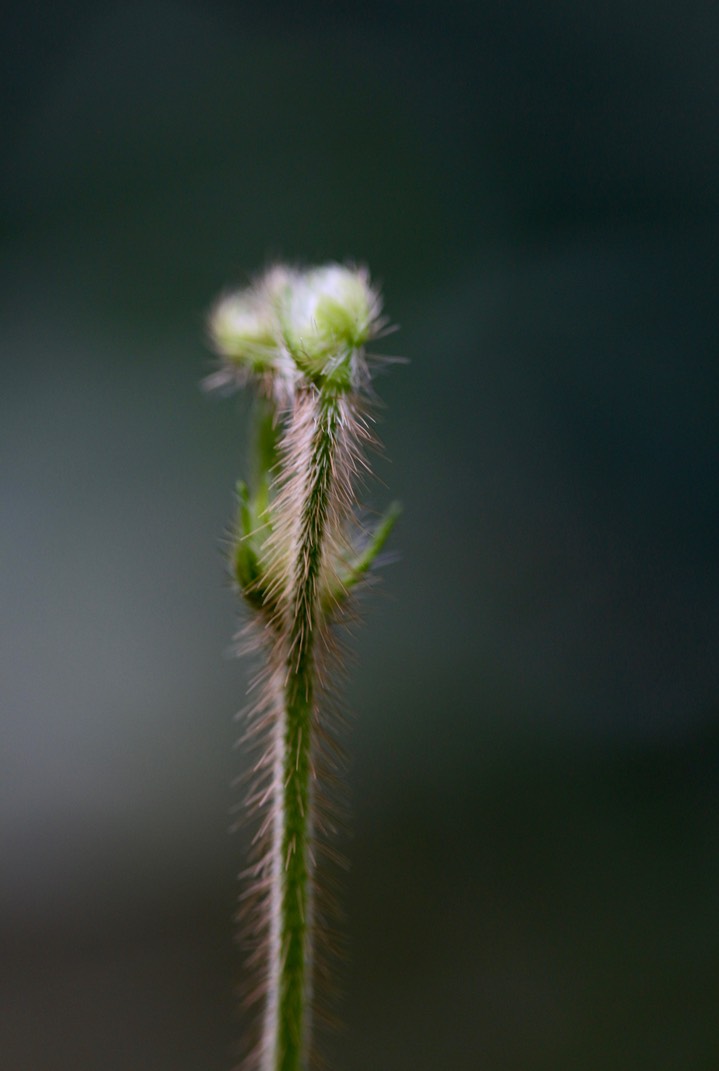
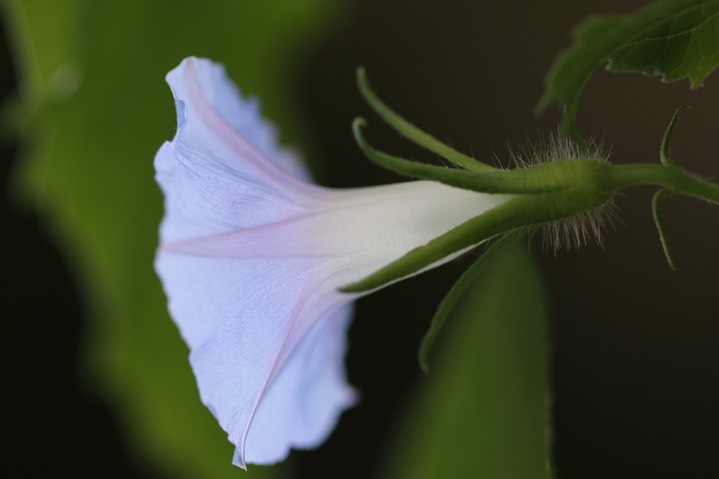
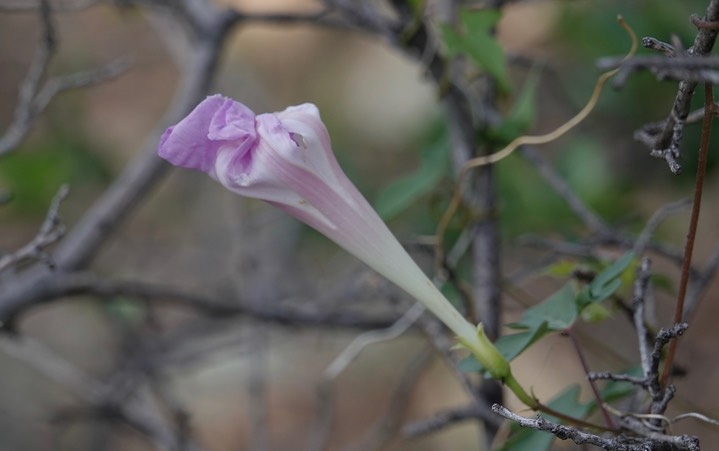
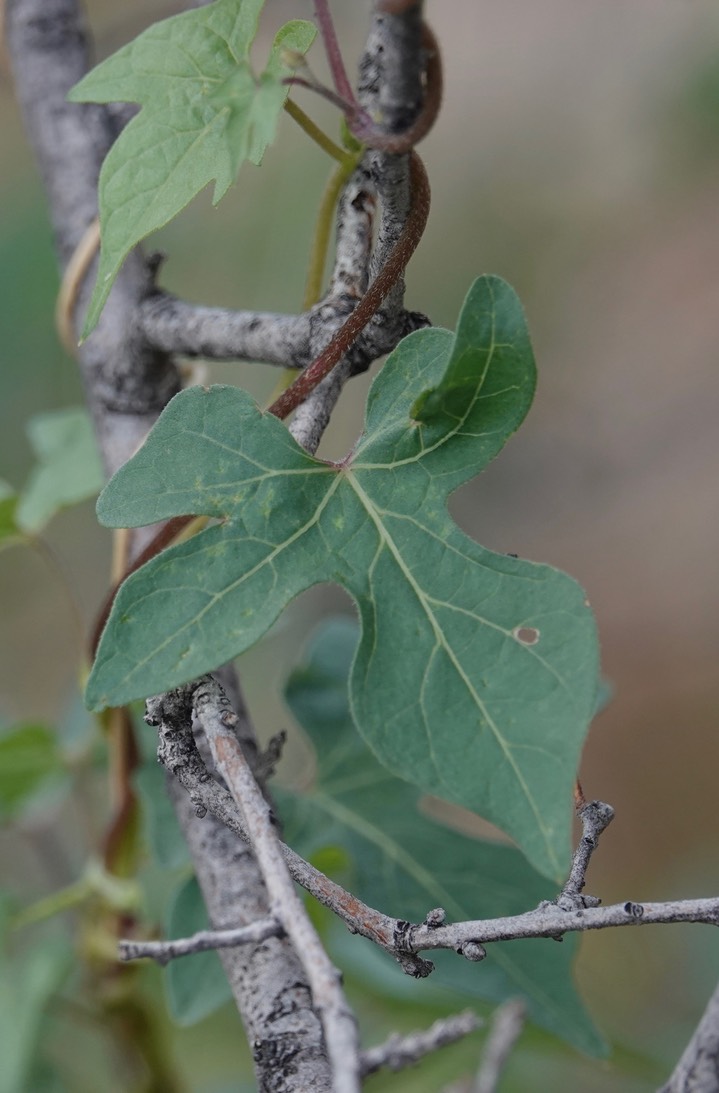
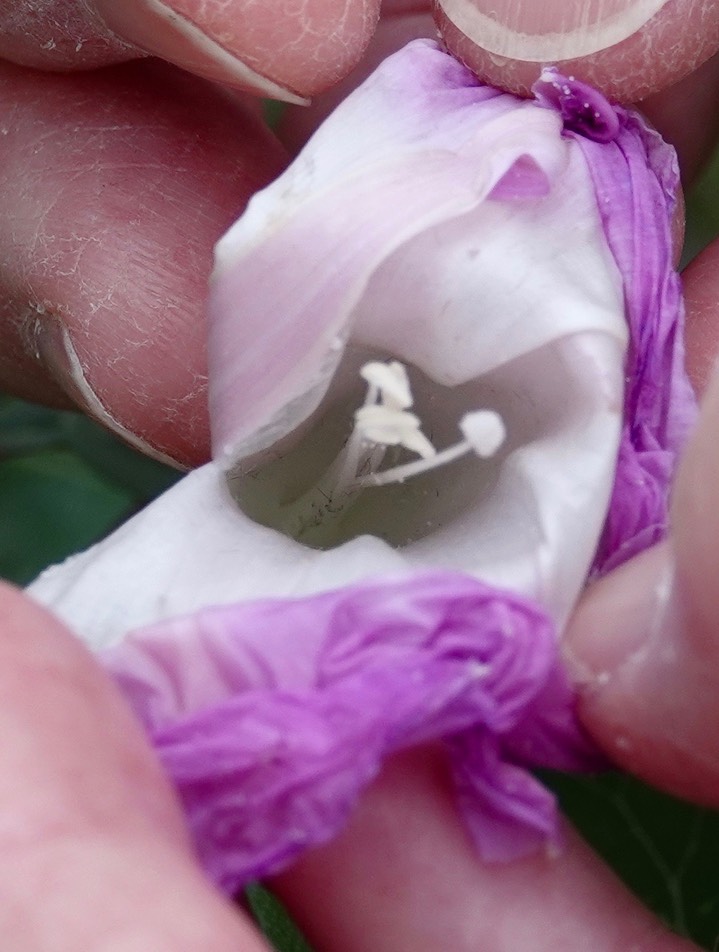
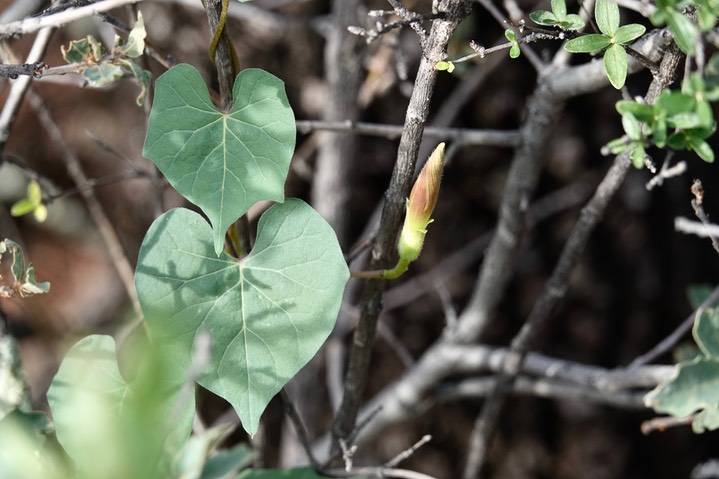
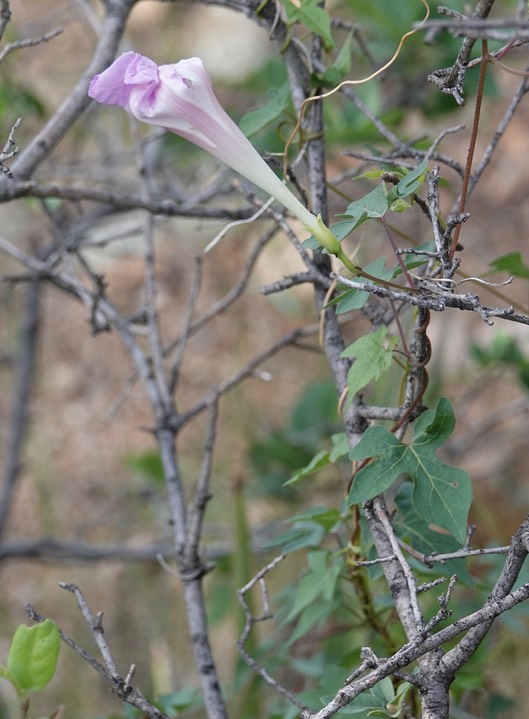
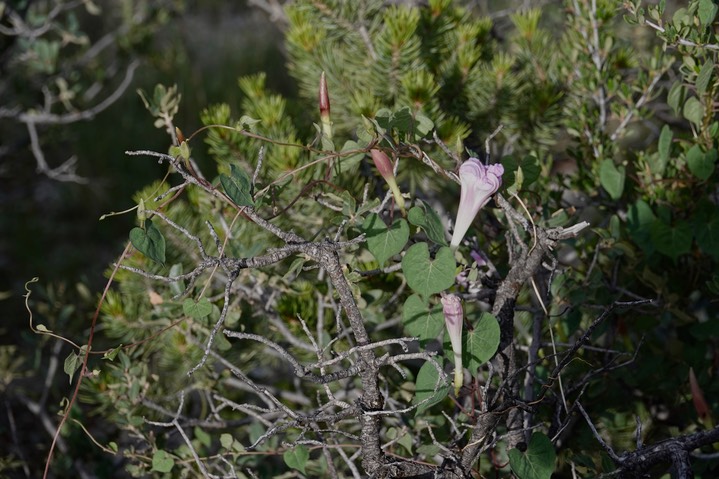
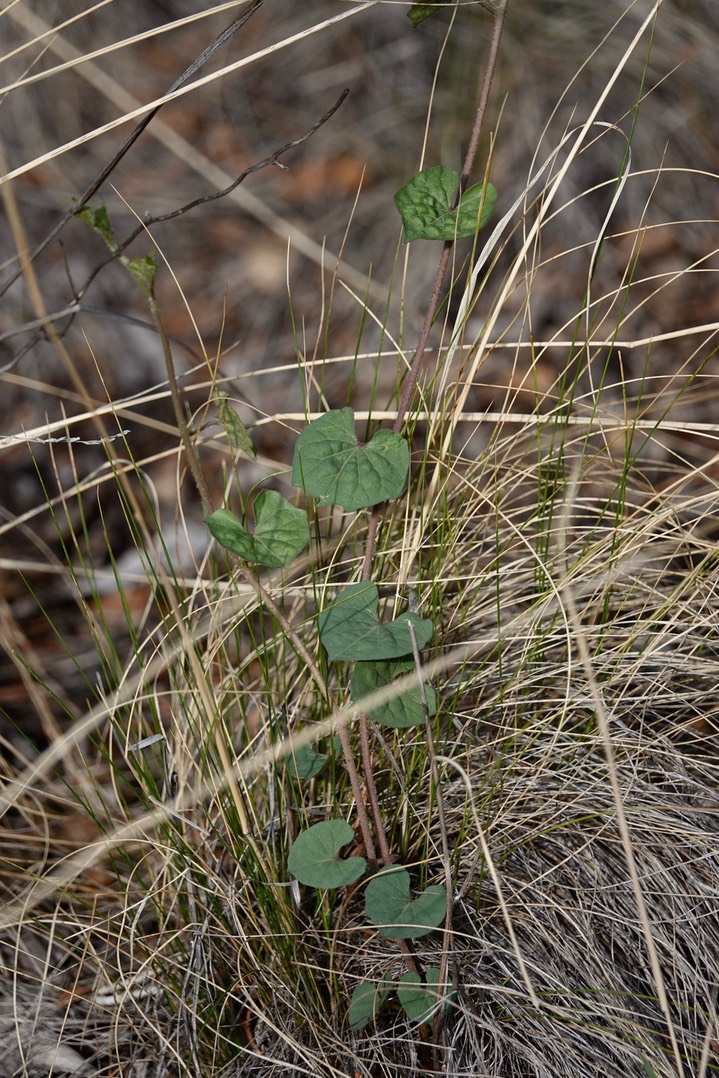
This Ivy-leaf Morning Glory, Ipomoea hederacea, is also called Ivy-leaved Morning Glory. This species is very similar to I. purpurea which has been domesticated widely and is a native of Mexico and Central America. The ranges of the two species overlap. The "abruptly elongate sepals", a useful characteristic in distinguishing the two species is visible in these photographs.
The range of Ivy-leaf Morning Glory extends from the eastern United States and Canada into New Mexico and Arizona.
Most, as high as 93% in some populations, Ivy-leaf Morning Glory plants self-pollinate. The character displacement which occurs in this species has been studied extensively. Of particular interest to me is the placement of the anthers and stigma in the flower of this species when the closely related Ipomoea purpurea is found nearby. Ipomoea purpurea pollen will pollinate a Ipomoea hederacea flower (producing sterile seed) but not the other way around. Where the two species are found together the stigmas of the Ipomoea hederacea are closely grouped around the anther, increasing the chances of self-pollination (and decreasing the chances of pollination from another flower). Where the two species are not found together the stigmas of the Ipomoea hederacea are much less tightly bound around the stigma, increasing the possibility of pollination from another flower.
This species was first described by Nikolaus Joseph von Jacquin in 1787. Between 1755 and 1759 he collected plants extensively in the West Indies and Central America. He was an academic with interests in Chemistry, Mineralogy, and Botany. Of interest to some is the fact that Mozart was a family friend. For instance the Kegelstatt Trio was first played at the Jacquins' house in August 1786.
Many individuals argue that Ipomoea species are weeds because of their tenacity and aggressive growth. Luckily we live in a stream bed with rock and sand for soil and nothing is tenacious or aggressive - just strikingly beautiful.
Ipomopsis aggregata subsp. formosissima
Skyrocket
Carbonate Creek Drainage
Black Range
New Mexico
August
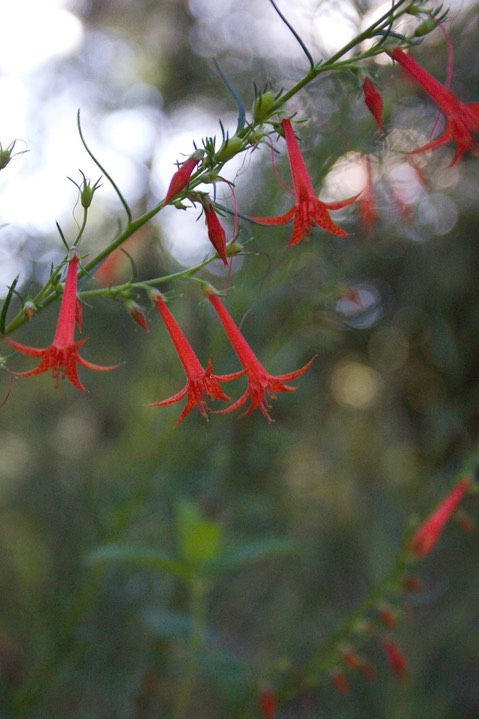
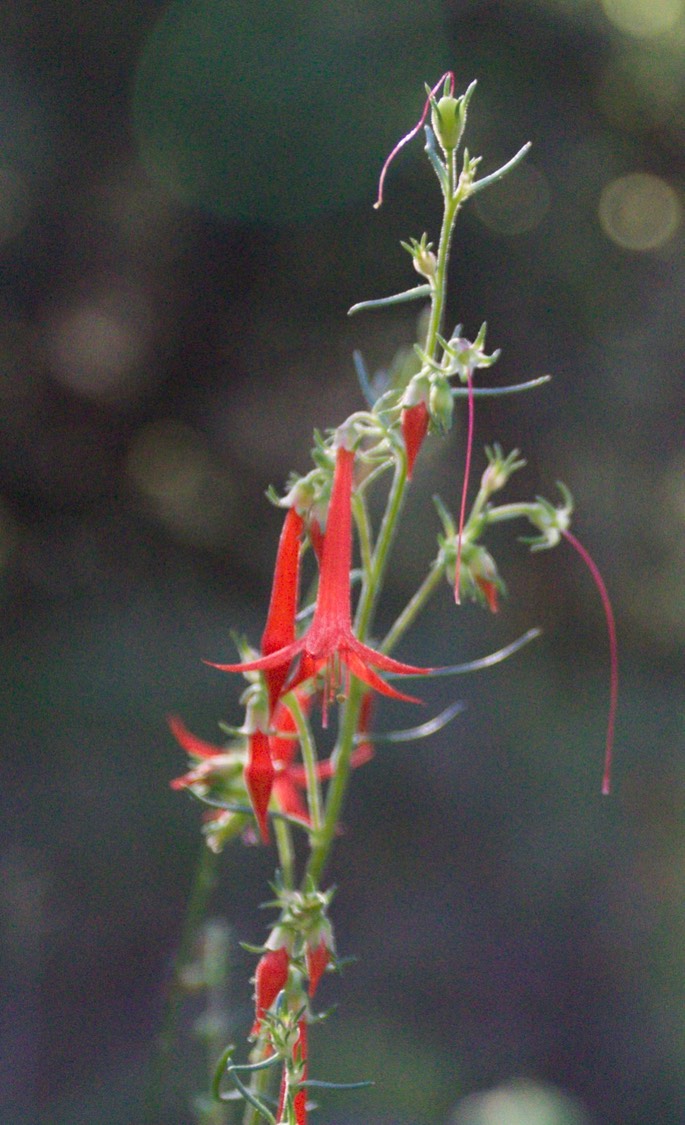
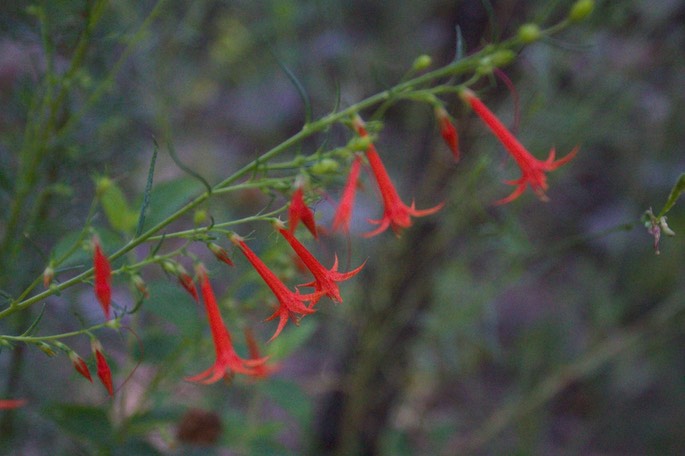
The Skyrockets, Ipomopsis aggregata subsp. formosissima, shown here were photographed along Carbonate Creek on the east side of the Black Range on August 11, 2015. This species has a number of scientific synonyms, most arising from the time it was placed in the Gilia genus. Its common names include Skyrocket, Scarlet Trumpet, Honeysuckle, and Scarlet Gilia. Ipomopsis means “similar to Ipomoea”. Ipomoea is the genus of Morning Glories.
This species is one of a select few which were first described from specimens collected in the Black Range. It was first described by Edward Lee Greene as Callisteris formosissima. Some sources consider the proper name of the first specimen to be “unresolved”, it was collected by Orrick Baylor (O. B.) Metcalfe at about 9,000’ on September 11, 1904.
The Missouri Botanical Garden, Tropicos, recognizes Callisteris formosissima and Ipomopsis aggregata subsp. formosissima as the same plant. The current classification of this plant was determined by Edgar Theodore Wherry.
The University of Michigan ethnobotany site does not have listings for this subspecies, but does have listings for the species. The various tribes used it for a variety of medicinal purposes, a few as a food source, and some to make glue.
The USDA-NRCS site lists the range of this subspecies as the west coast of the United States and the states of the American Southwest. The range of this subspecies extends into northern Mexico. This is a plant species of fairly high elevations, generally being found between 5,000’ and 10,000’.
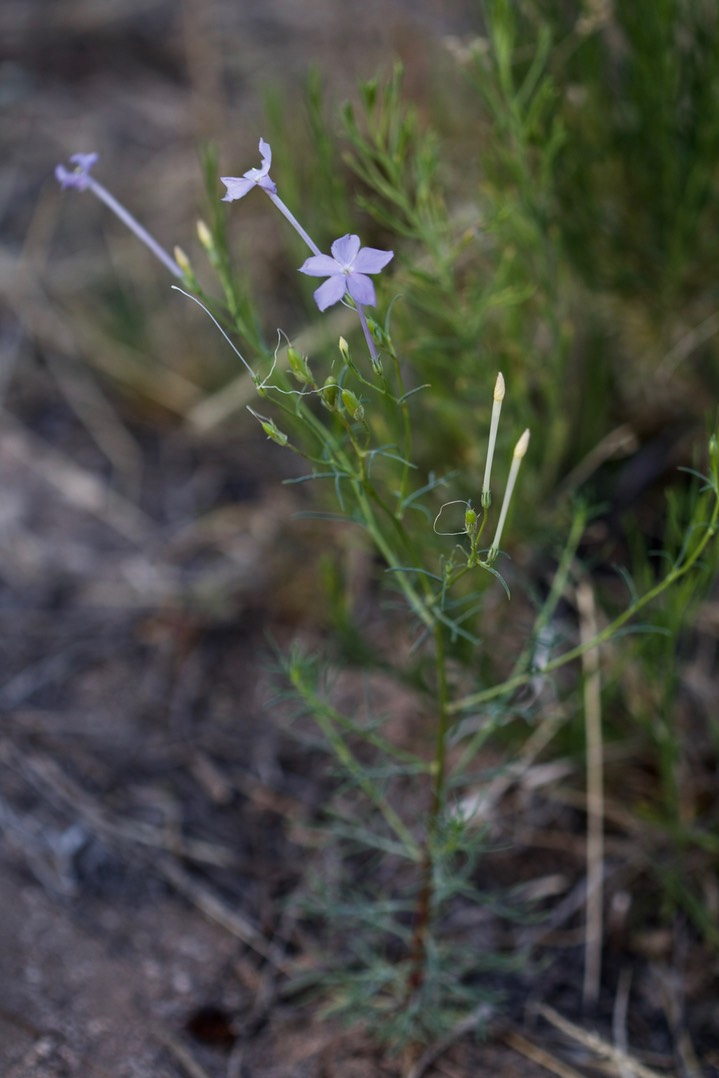
Ipomopis longiflora
Trumpet Gilia
East of Hillsboro
New Mexico
May
Iris missouriensis
Rocky Mountain Iris
Sawyer Peak Trail at Grandview saddle and at
McKnight Cabin
Black Range, New Mexico
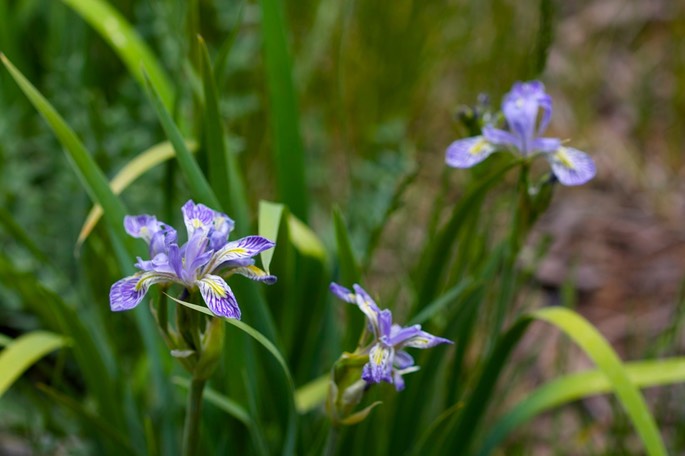
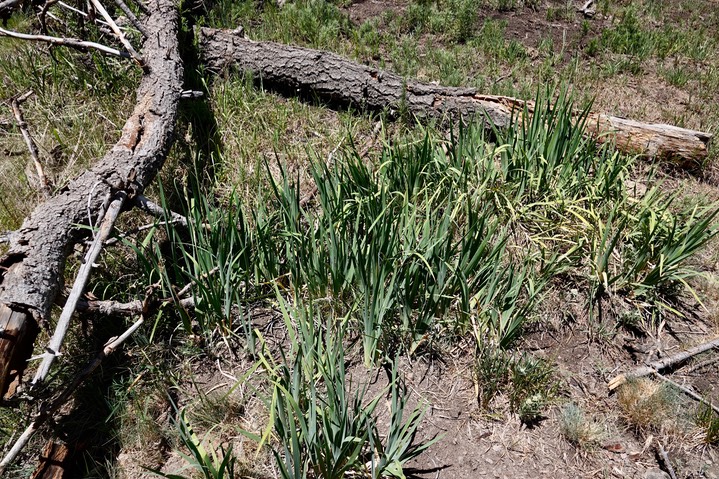
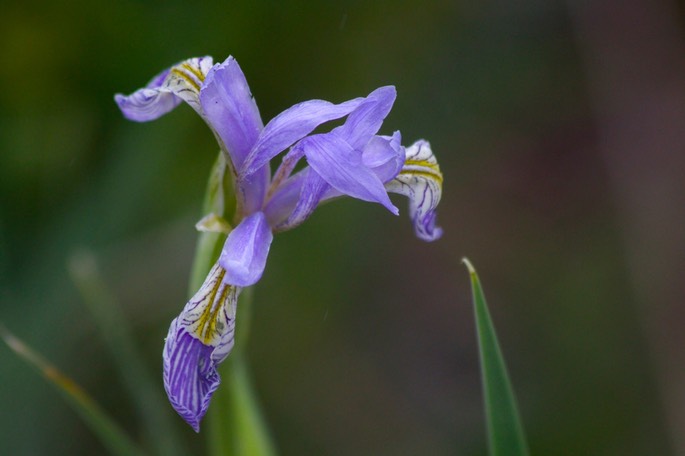
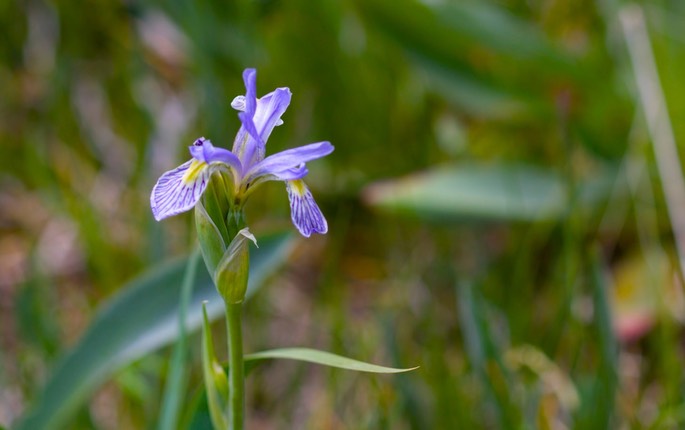
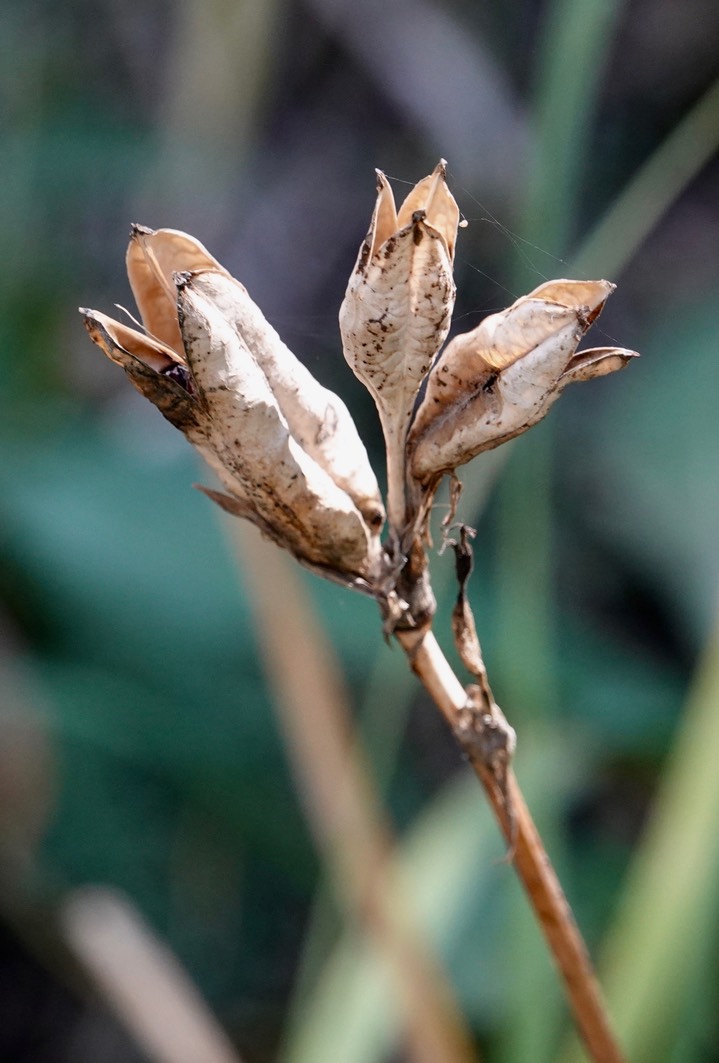
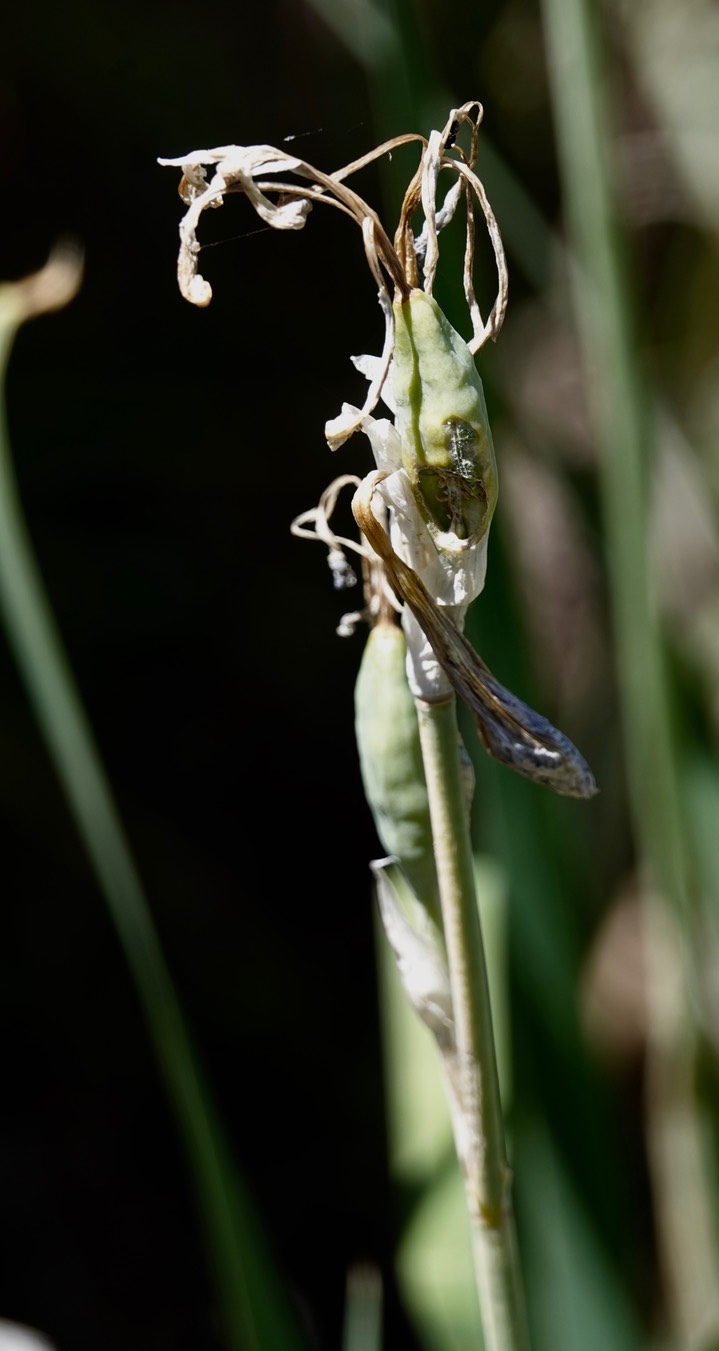
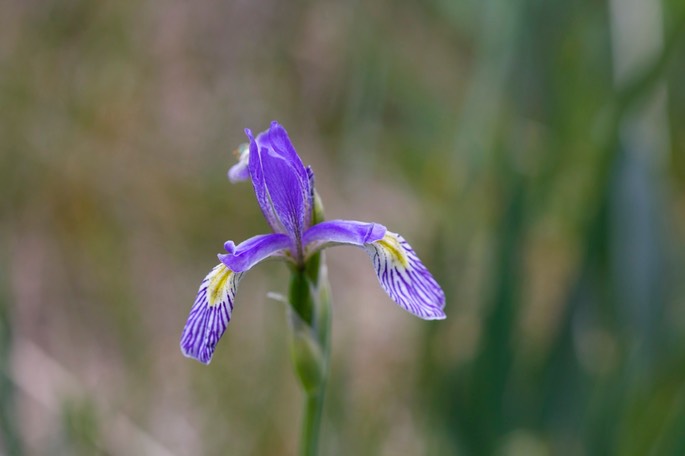
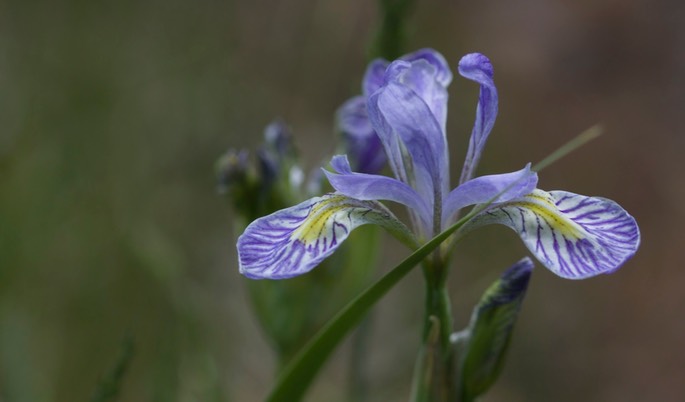
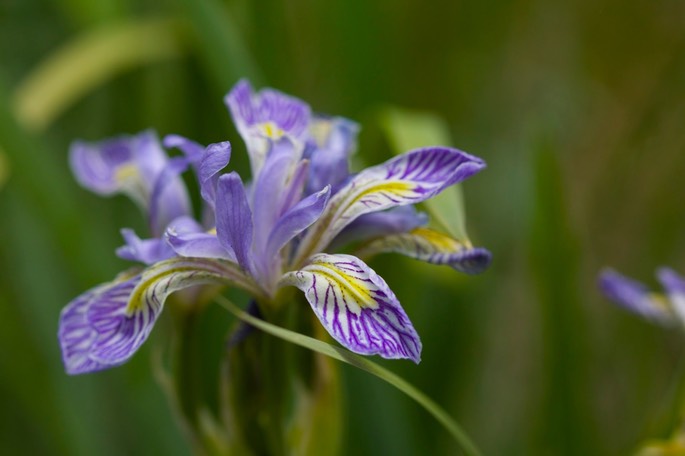
In early June, Rocky Mountain Iris, Iris missouriensis, is in bloom at McKnight Cabin and along Trail 79 to McKnight Mountain near the ridge crest of the Black Range. We have seen them at various points along the Black Range Crest Trail (Trail 79) over the years, most notably at McKnight Cabin and near Sawyer’s Peak, also on Trail 79.
This species is found throughout western North America, from the western provinces of Canada and the western states of the United States, into northern Mexico. It grows at a wide range of elevations, from 30 feet to 9,000 feet. I suspect that it might even grow at sea level and we found it above 9,000 feet at McKnight Cabin. It prefers very wet conditions prior to bloom and very dry thereafter. From the Flora of North America: “The ecological range of Iris missouriensis is probably more varied than that of any other North American species of the genus, extending from almost sea level in southern California to 3000 m in Montana and Wyoming. There is correspondingly wide variation in a number of characters, which has caused much confusion as to taxonomic circumscription.” As a result, it has a number of synonyms, including; Iris arizonica, Iris longipetala, Iris montana, Iris pariensis, Iris pelogonus, and Iris tolmiena.
The species was first described by Thomas Nuttall in 1834 from a specimen collected by Wyeth in 1833.