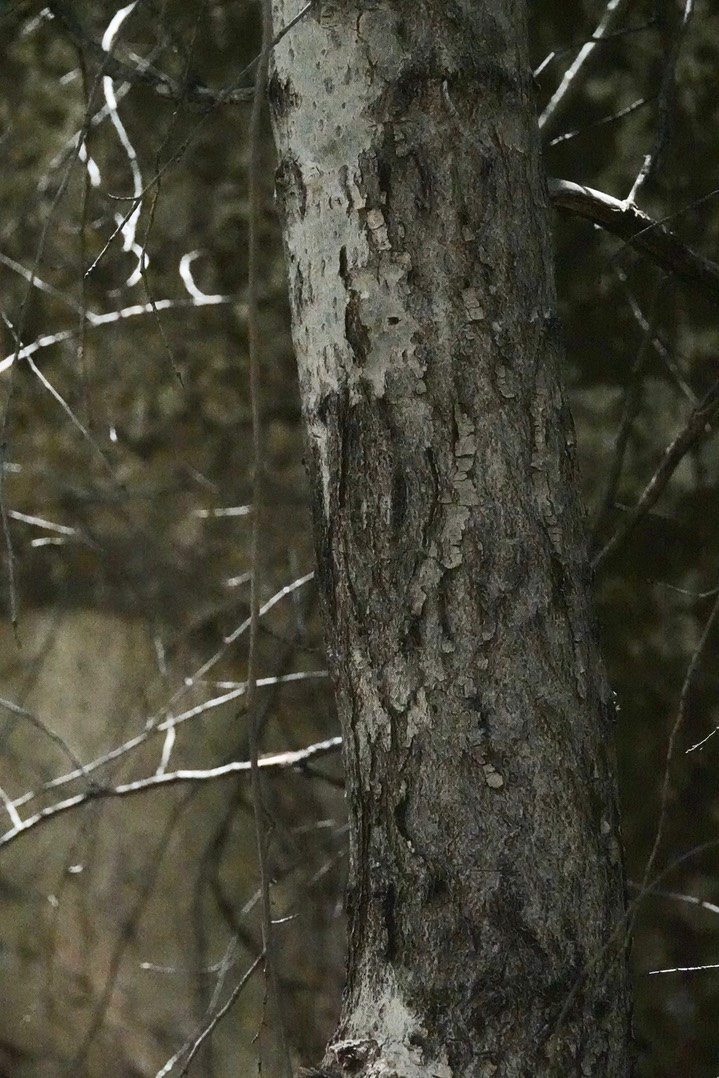
Salix gooddingii
Goodding's Willow
Trail 135
Black Range
New Mexico
April
The “FLORA" of the Black Range
“S"
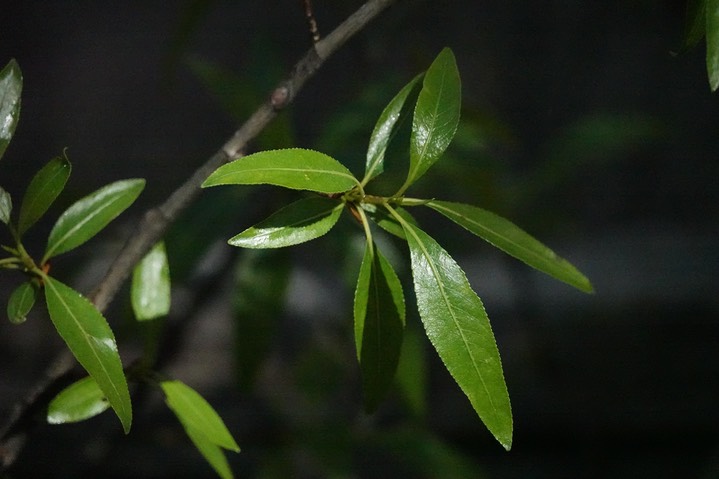
Salix gooddingii
Goodding's Willow
Trail 135
Black Range
New Mexico
April
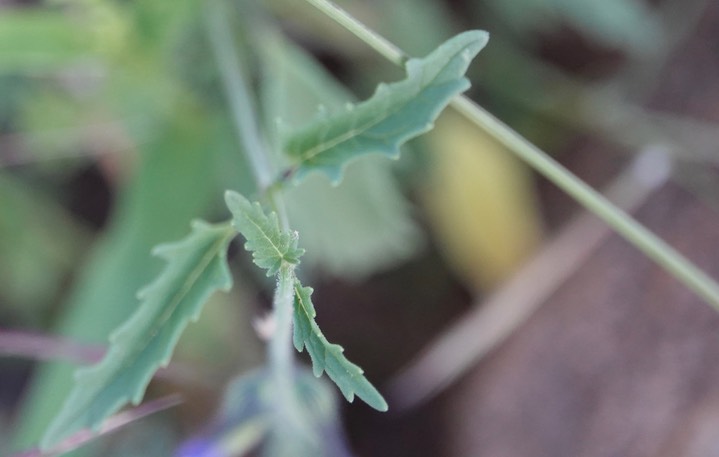
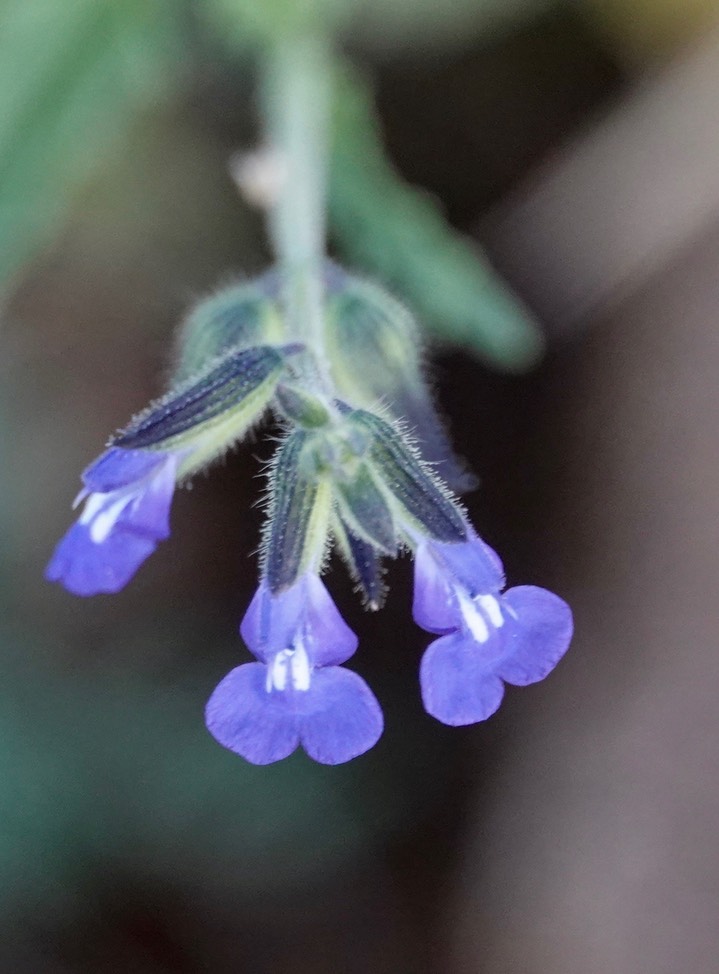
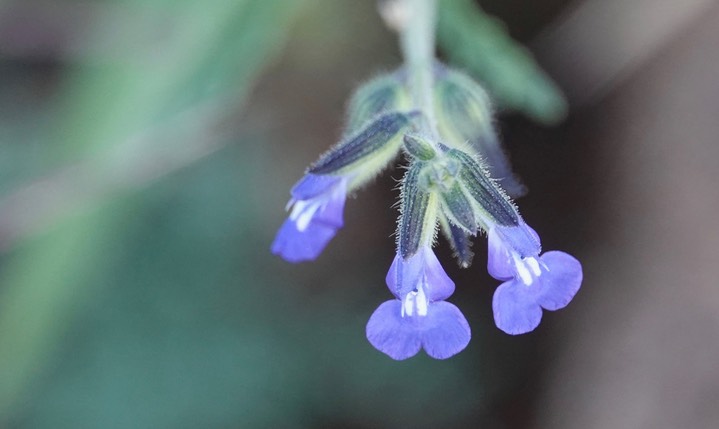
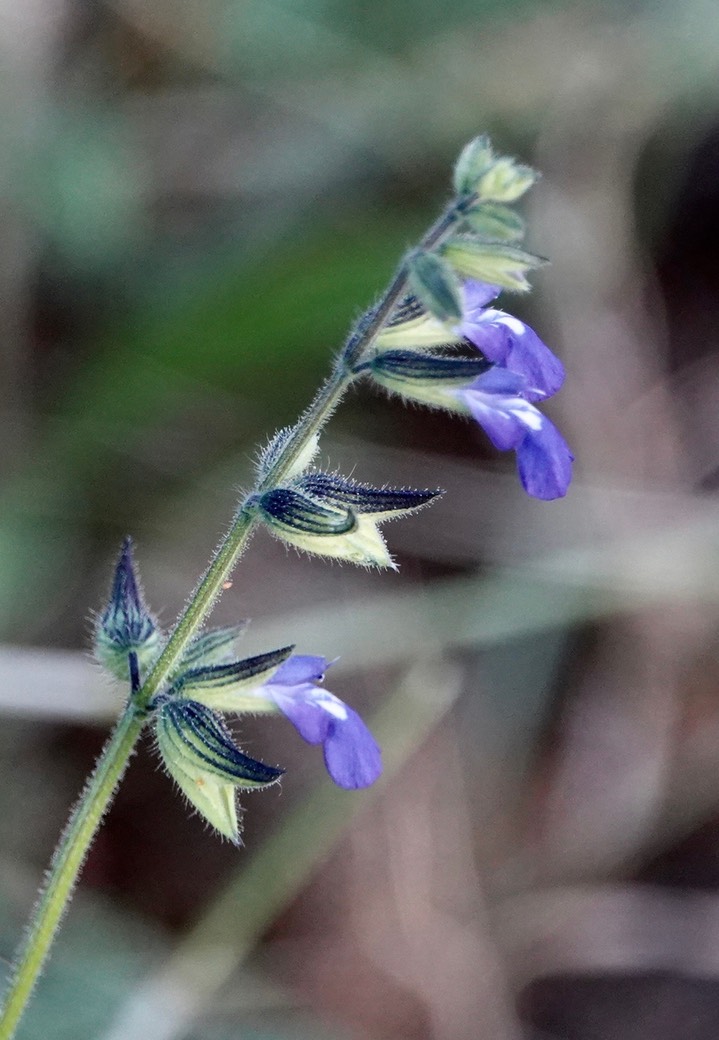
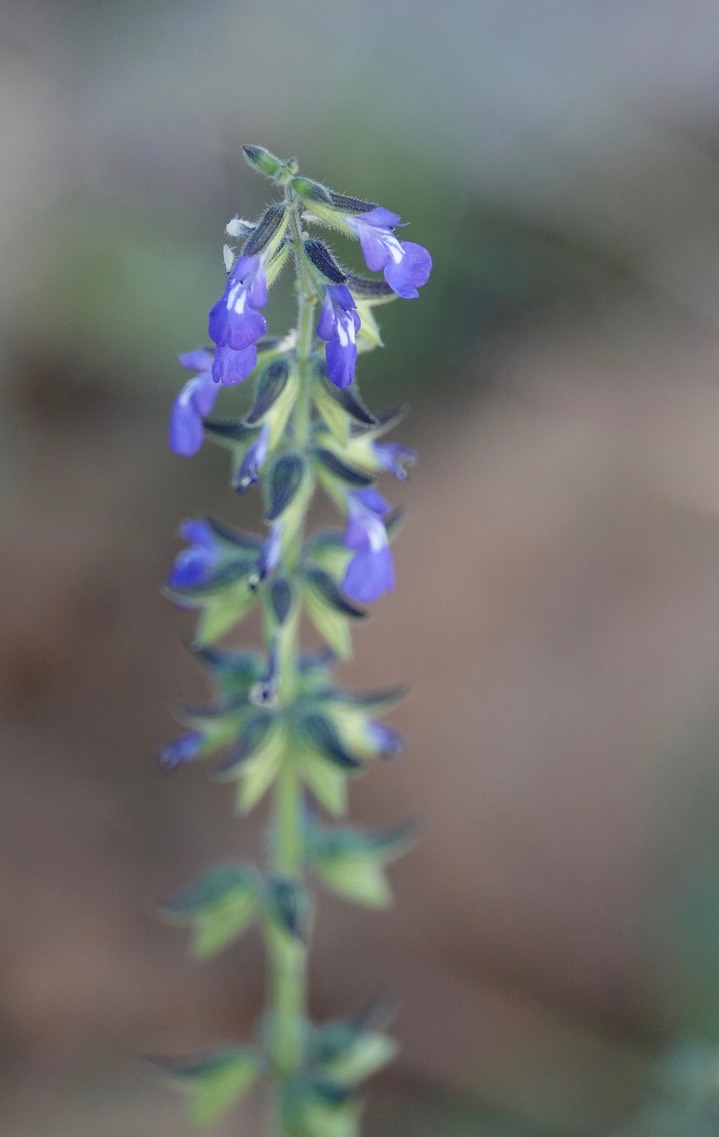
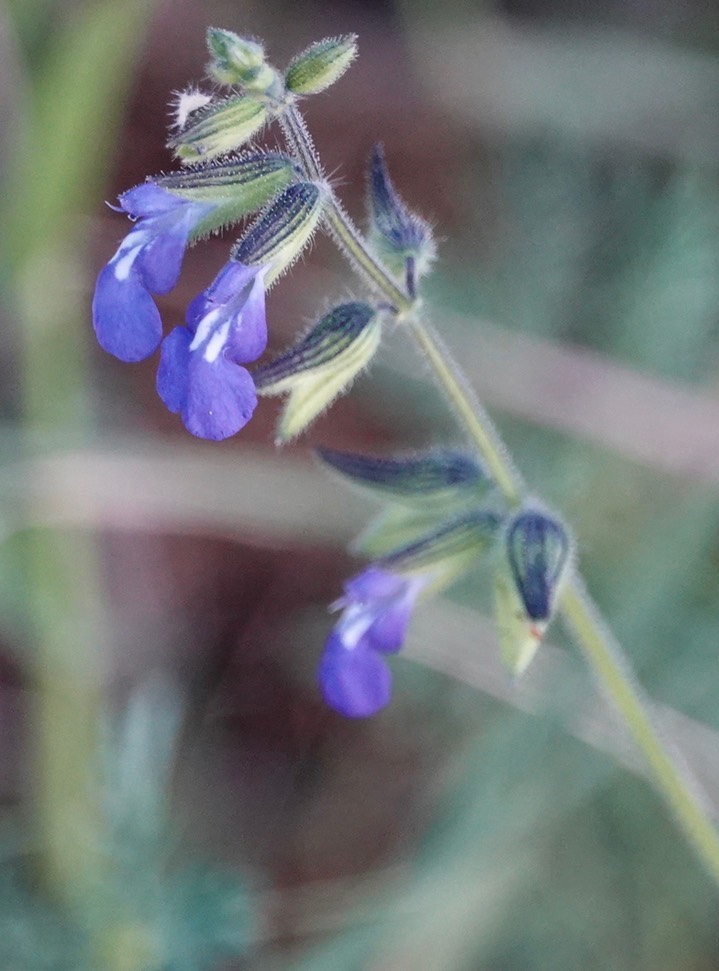
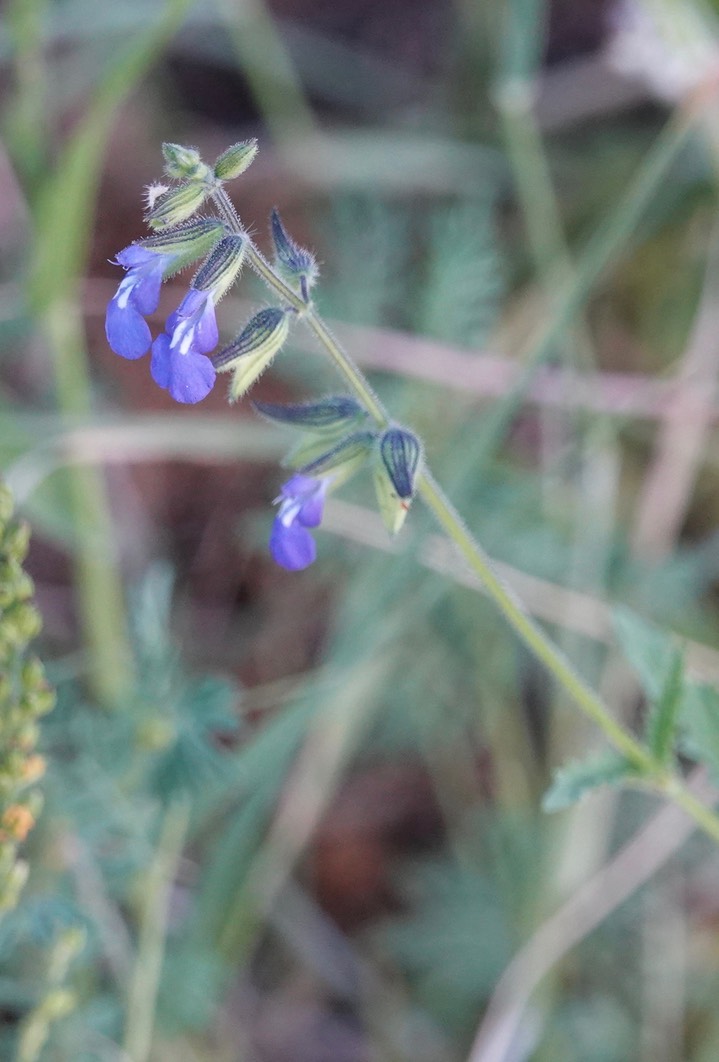
Salvia subincisa
Sharptooth Sage
East of Hillsboro
Black Range
New Mexico
August
Sambucus caerulea var. neomexicana
New Mexico Elder
Widespread at mid to high elevations
Black Range
New Mexico
May
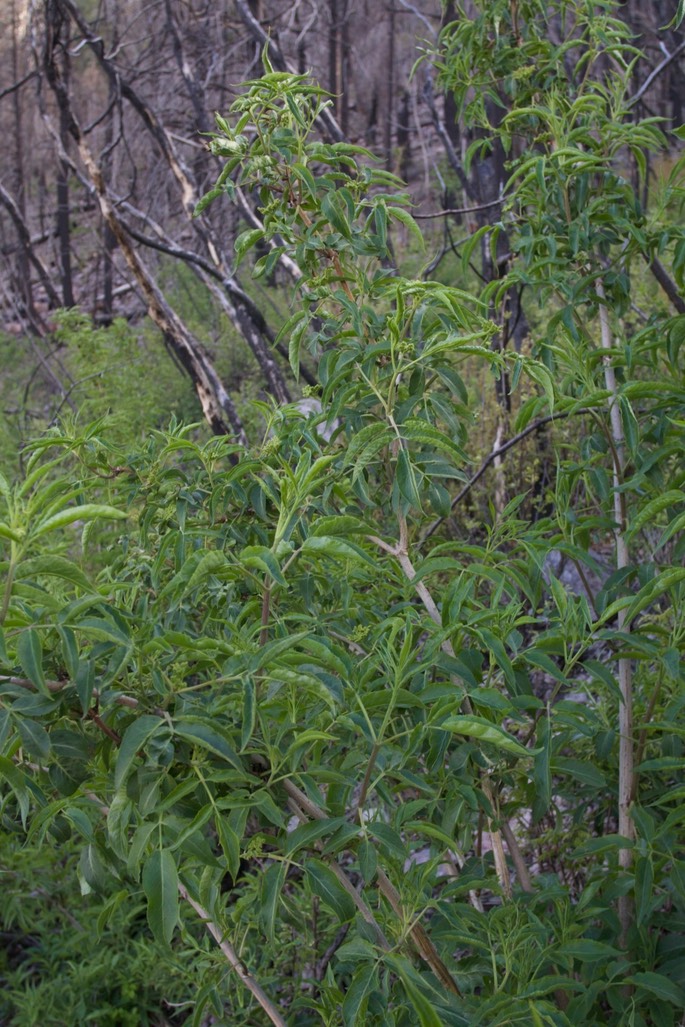
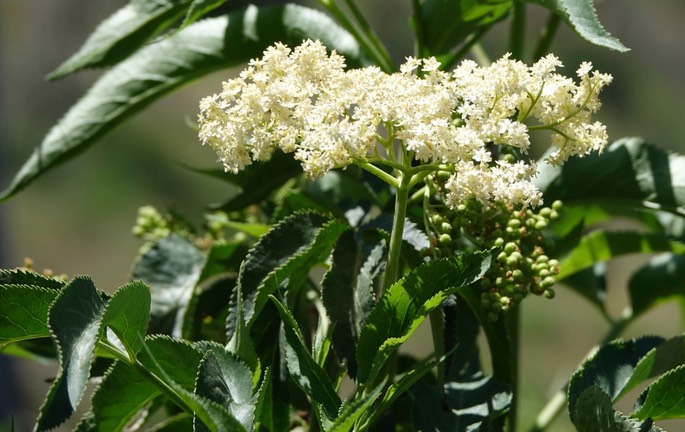
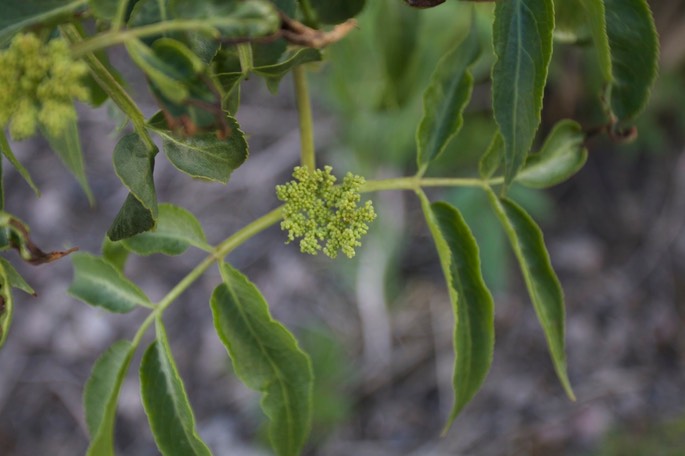
This species is also known by, at least, two other latin binomials at this time - Sambucus nigra subsp. cerulea and Sambucus mexicana. Other common names for the form found here may be Blue Elderberry, Blue Elder, and Southwestern Elderberry. Synonyms for the scientific name include; Sambucus caerulea, Sambucus caerulea var. velutina, Sambucus cerulea, Sambucus cerulea var. cerulea, Sambucus glauca, Sambucus mexicana ssp. caerulea, Sambucus mexicana var. caerulea, Sambucus mexicana ssp. cerulea, Sambucus mexicana var. cerulea, Sambucus neomexicana, Sambucus neomexicana var. vestita, Sambucus nigra ssp. caerulea, and Sambucus velutina -- and in several cases these are not synonyms in the classic sense - that is, past descriptors. Nay, many of these names are currently accepted by many authorities.
The indigenous people of our area found many uses for this plant species. Not only were the berries used for food and the rest of the plant used for various medicinal purposes but the pithy core of his branches made it ideal as a fire starter and as the basis of musical instruments.
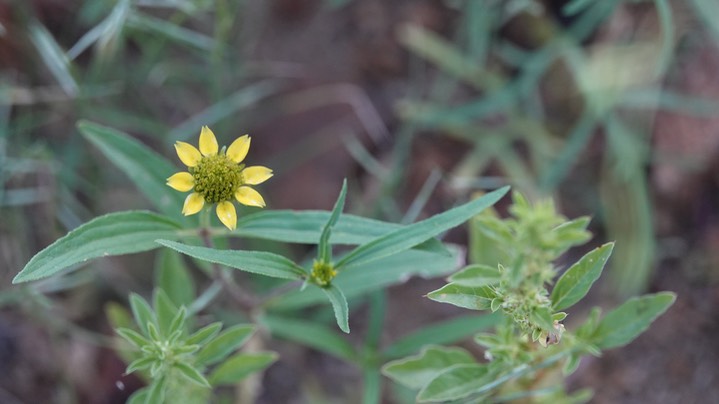
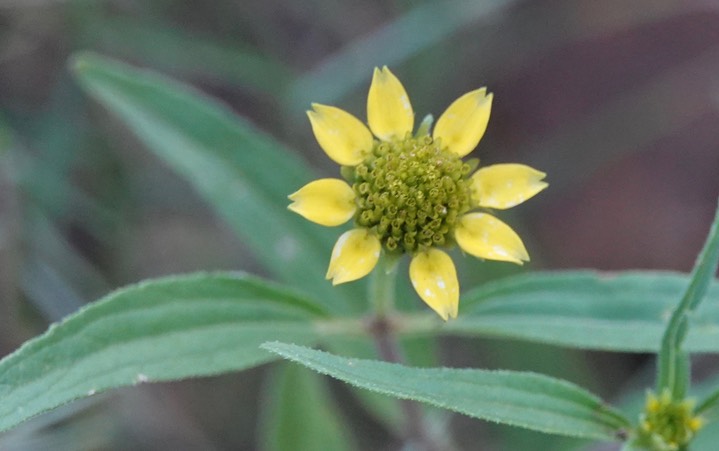
Sanvitalia abertii
Abert's Creeping Zinnia
East of Hillsboro
Black Range
New Mexico
August
Scrophularia macrantha
New Mexico Figwort
Railroad Canyon
Black Range
New Mexico
July, Sept., & Oct.
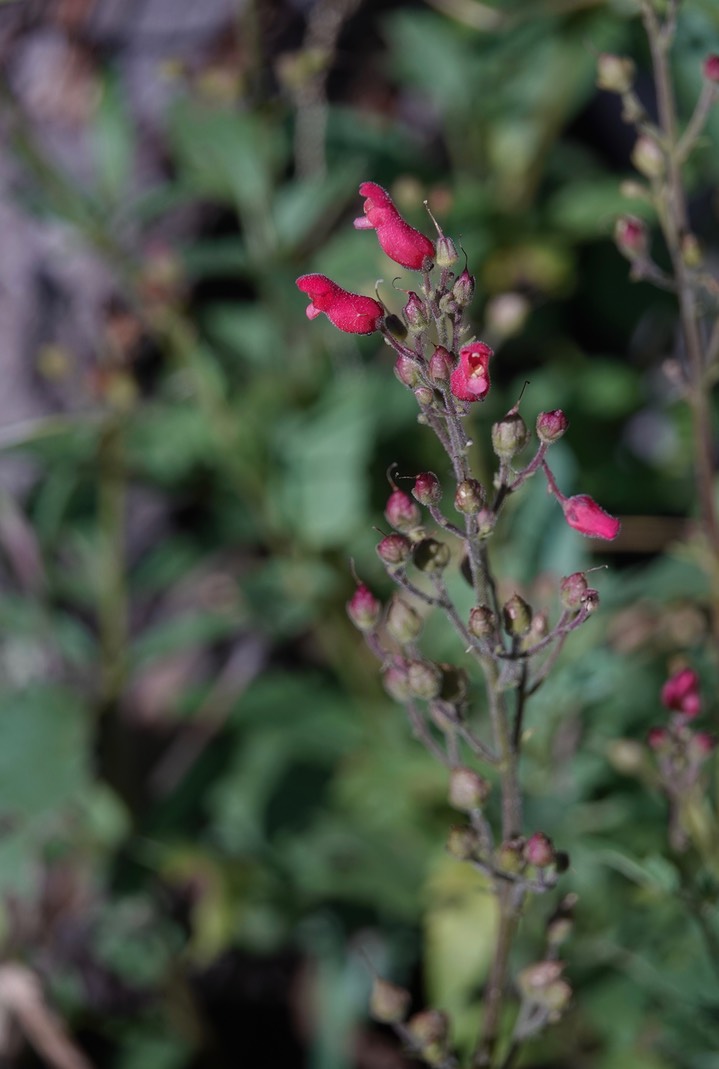
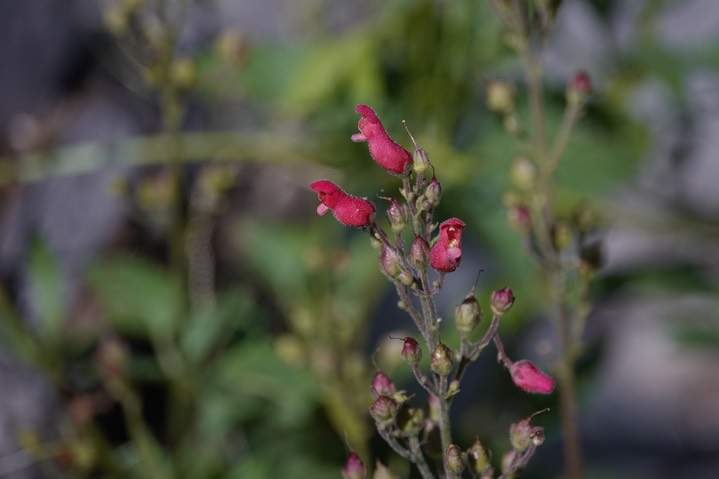
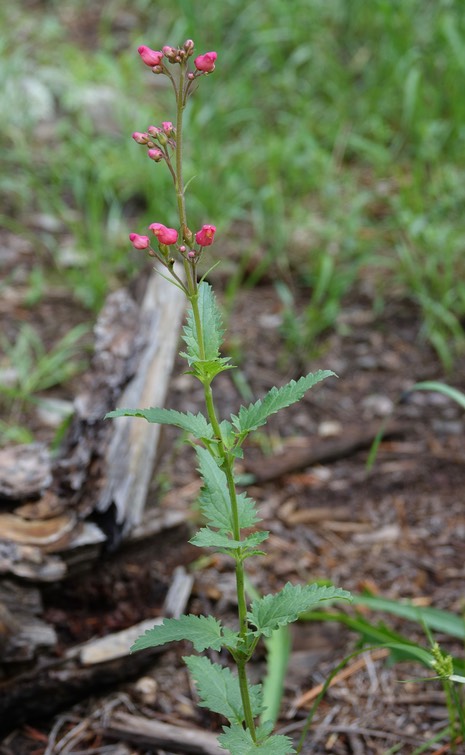
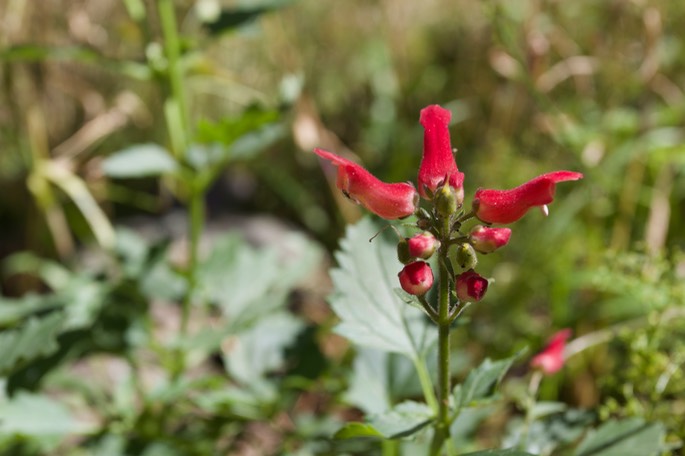
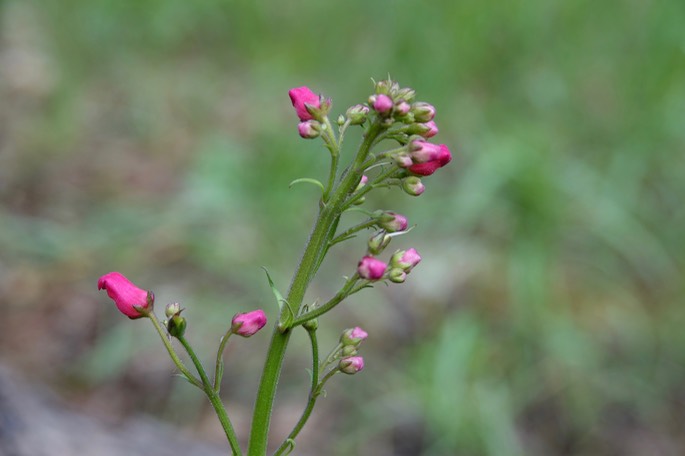
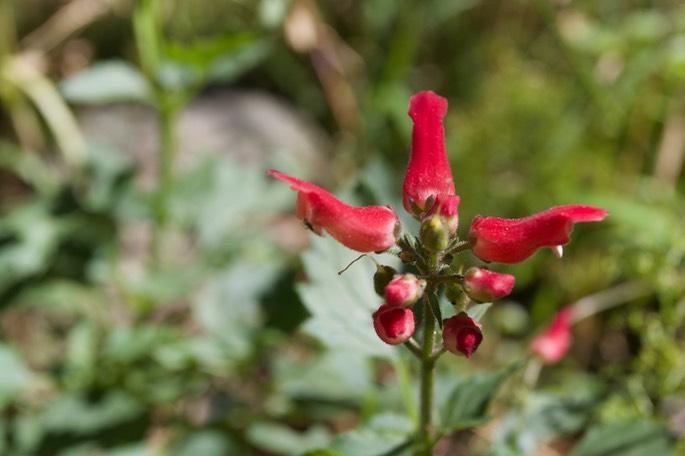
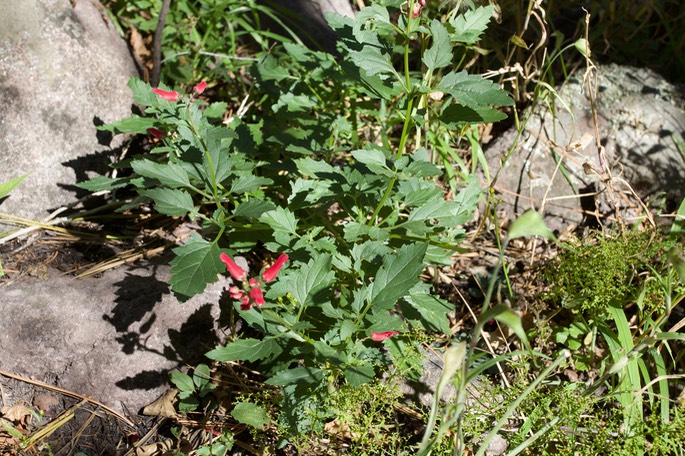
In the past this species has been known as Scrophularia coccinea (Gray) and S. neomexicana (Shaw). The US Fish and Wildlife Service considers it to be a Species of Concern, as does the State of New Mexico. The US Forest Service and the US BLM consider it a Sensitive Species. Natural Heritage of New Mexico considers the species to be Imperiled.
All of that sounds pretty sensational, but what does it mean. As a point of reference, Natural History of New Mexico considers a species imperiled when it is very vulnerable to extirpation from New Mexico. Since this species is found only in scattered locations in a few counties in New Mexico, and nowhere else, that means very vulnerable to extinction in this case. They generally make that assessment when there are 6 to 20 occurrences (locations where it is found) or between 1,000 and 3,000 individuals. This information from New Mexico Rare Plants.
The New Mexico Figwort is an herbaceous perennial which is being marketed in the plant trade as “Redbirds-in-a-tree”. High Country Gardens of Santa Fe initially marketed this species to the public. At times it has been known simply as Figwort. It is pollinated by hummingbirds and generally blooms between July and October. About this species, the Denver Botanic Gardens states that “few plants are more attractive to hummingbirds.”
Scutellaria p. potosina
Mexican Skullcap
South of Hillsboro
Black Range
New Mexico
May
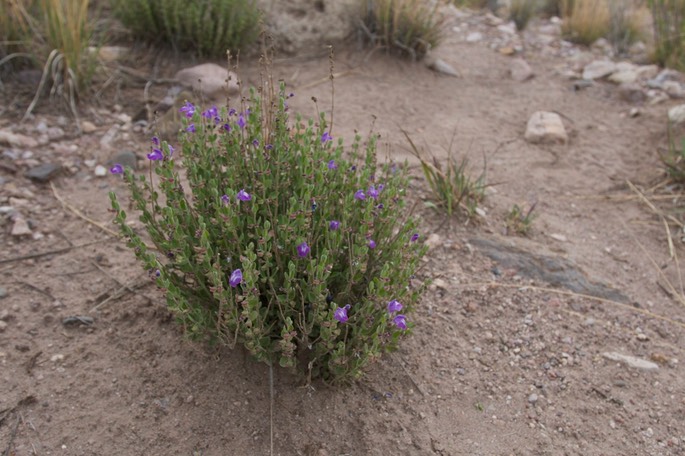
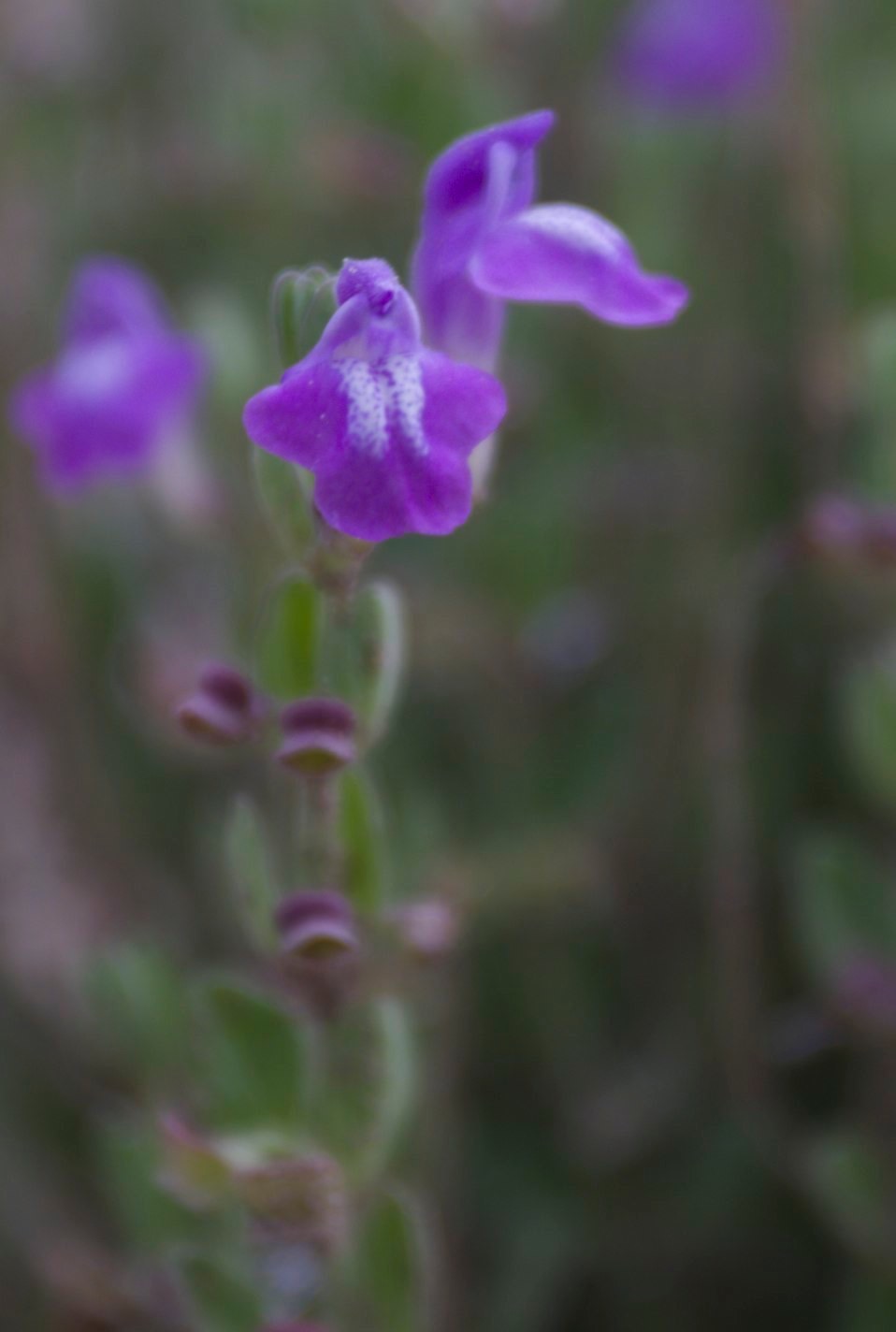
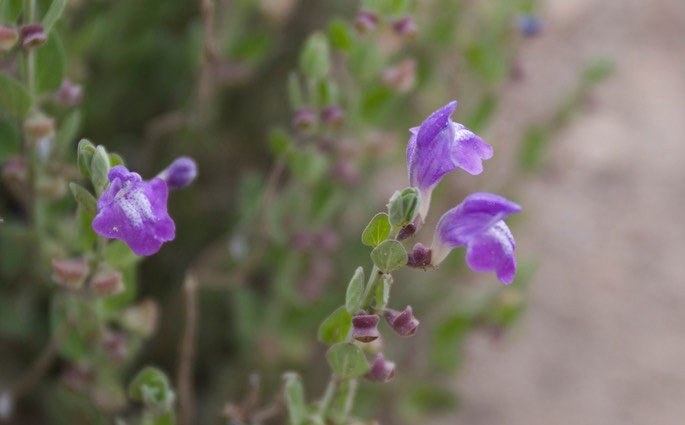
The specimen shown here was growing in sandy silt on the banks of an arroyo. It was perhaps eight inches high and about as wide, still in bloom in May but “going” fast.
The plant is Scutellaria potosina, or Mexican Skullcap. There are three subspecies of this plant in the United States where it is found in Arizona, New Mexico, and the Big Bend of Texas.. It is also found in Mexico. The one shown here is the nominate form S. p. p. var. tessellata. The synonyms for this subspecies include S. p. parviflora and S. tessellata (described as such by Carl Epling in 1939 from a specimen collected in Arizona). This variety is also known as Huachuca Mountains Skullcap.
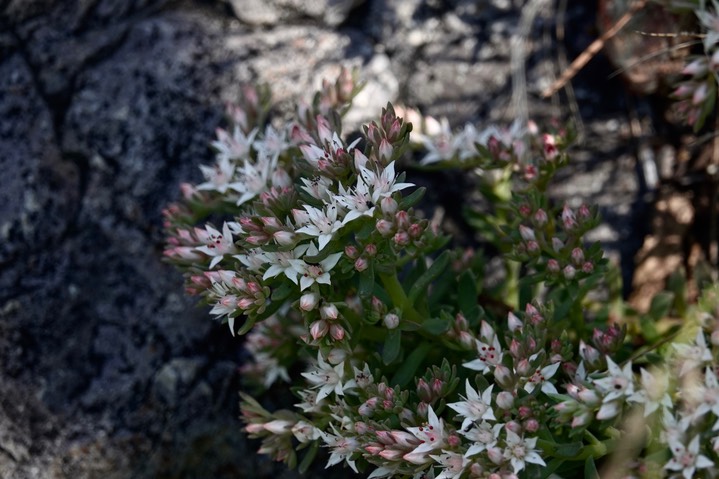
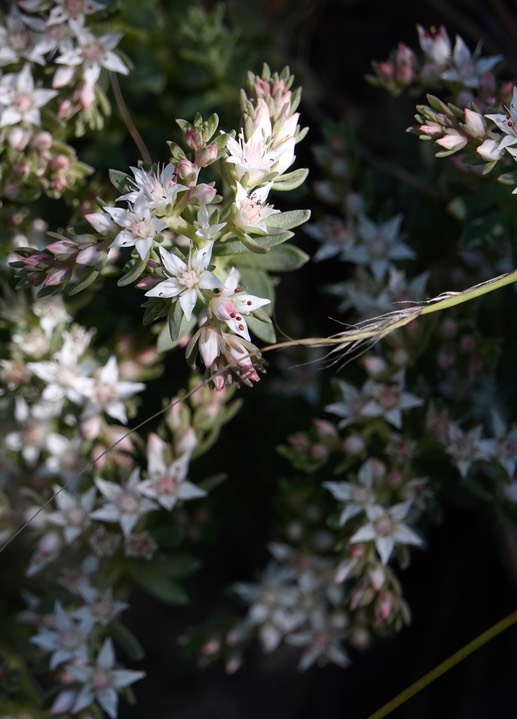
Sedum cockerellii
Cockerell's Stonecrop
Mid to High Elevations
Black Range
New Mexico
September
Senna bauhinioides
Twinleaf Senna
East of Hillsboro
Black Range
New Mexico
August
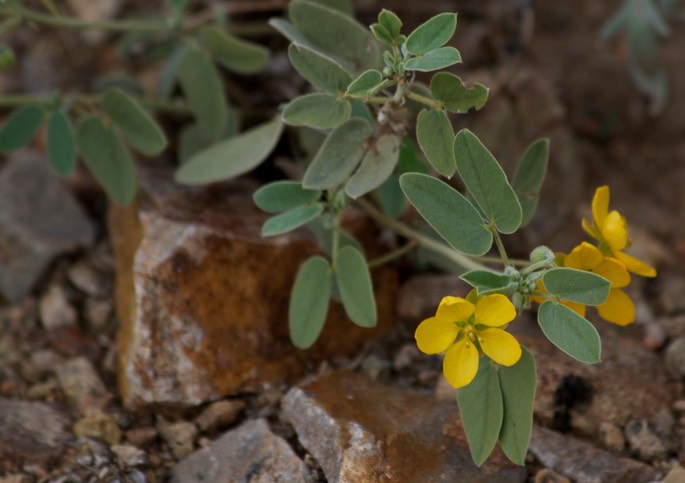
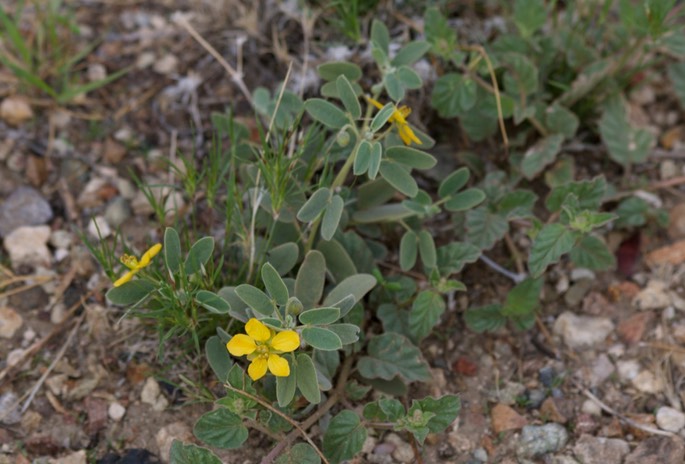
This Twinleaf Senna (aka Two Leaf Senna), Senna bauhinioides, was photographed a mile east of Hillsboro. This species was once placed in the Cassia genus. Its blooming season, which typically begins in April, generally ends in August. The developing flower buds shown on this individual may or may not develop.
The range of this species extends from northern Mexico (Chihuahua, Coahuila, Nuevo León, and Sonora), northward into Arizona, New Mexico, and Texas in the United States. This species is often (generally?) found growing on limestone strata, see “Flora of Chihuahuan Desertscrub on Limestone in Northeastern Sonora, Mexico” by Van Devender, Reina-Guerrero, and Sánchez-Escalante (USDA Forest Service Proceedings RMRS-P-67. 2013)
Senecio flaccidus var. flaccidus
Threadleaf Groundsel
East of Hillsboro
New Mexico
August
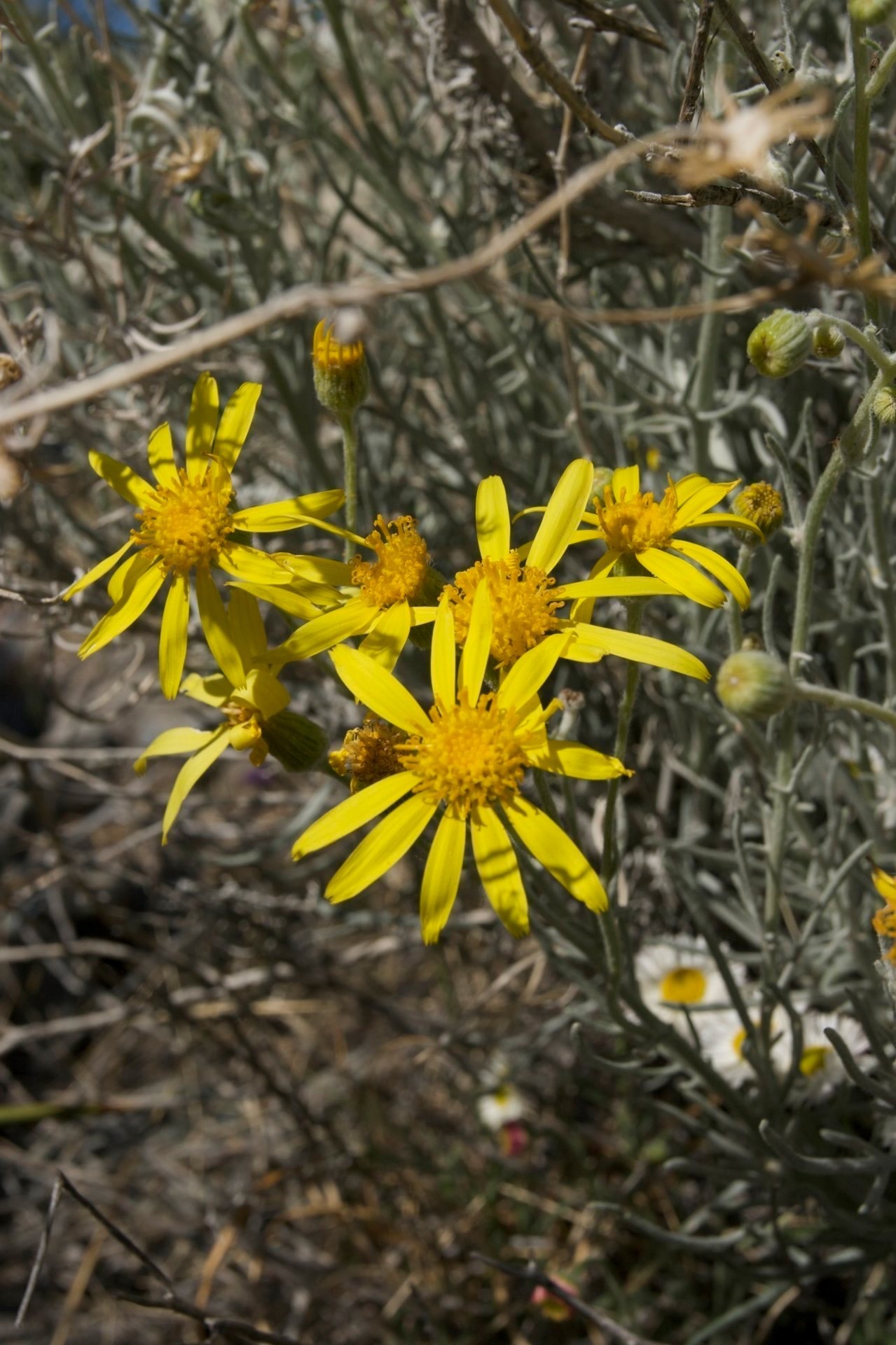
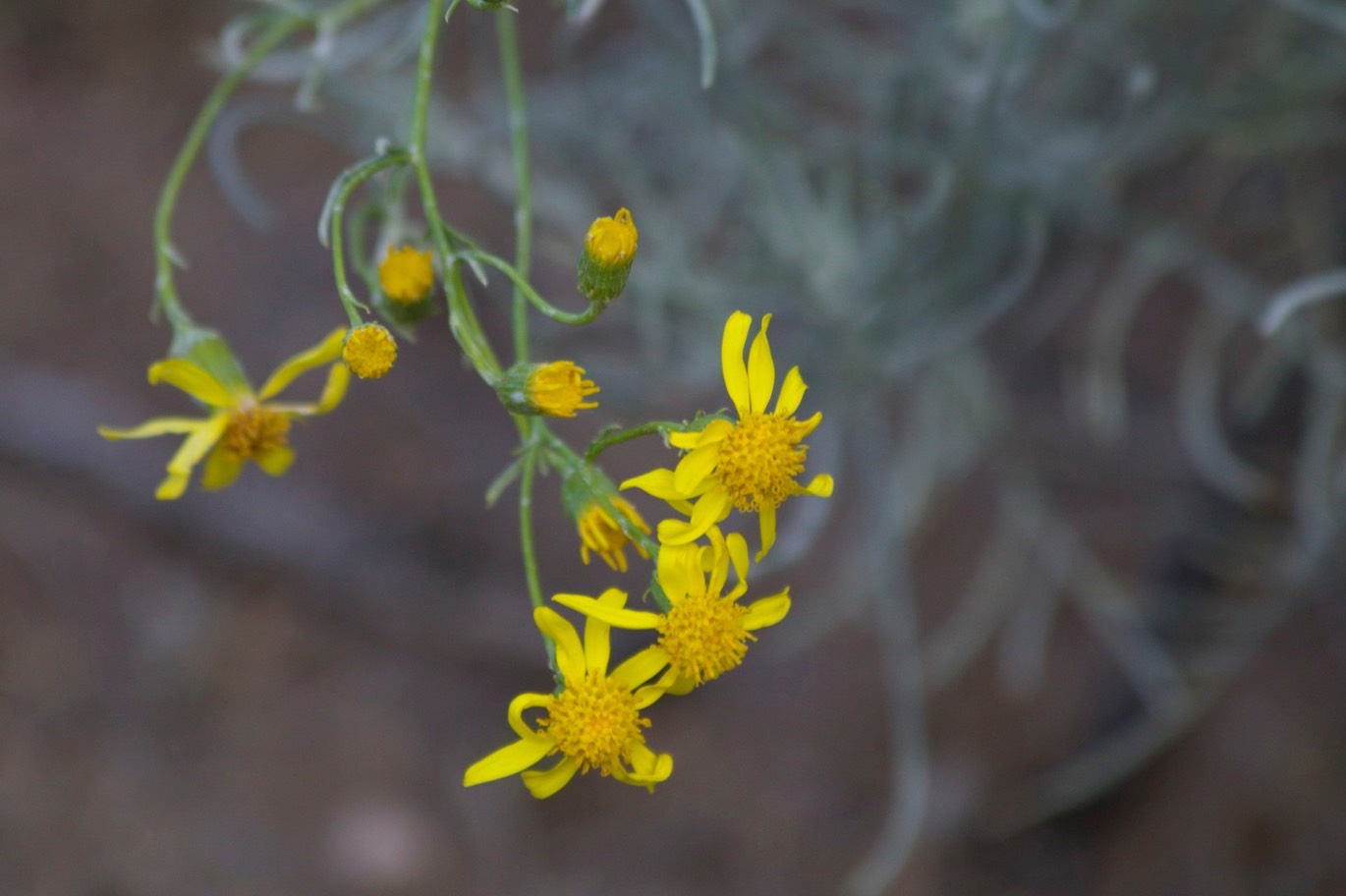
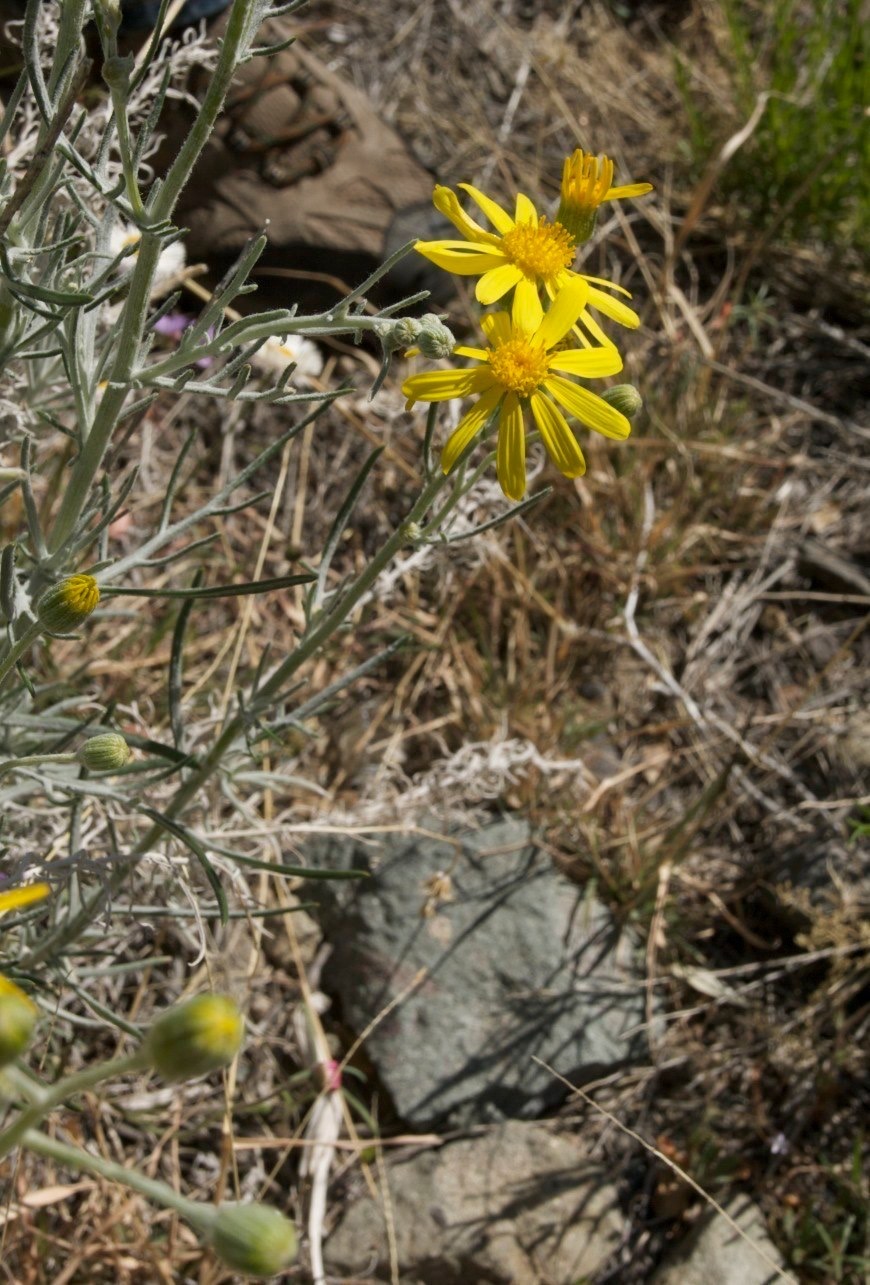
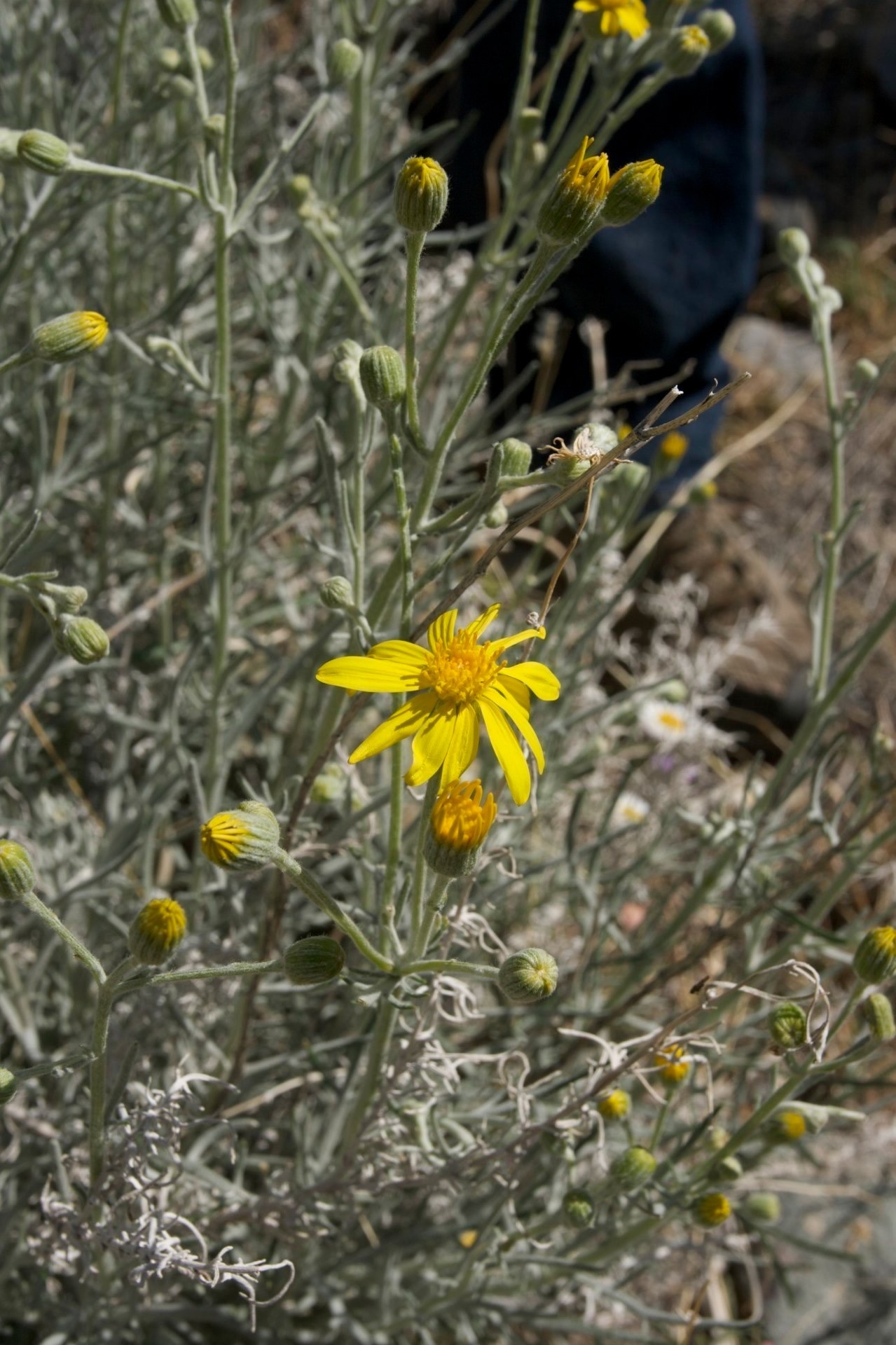
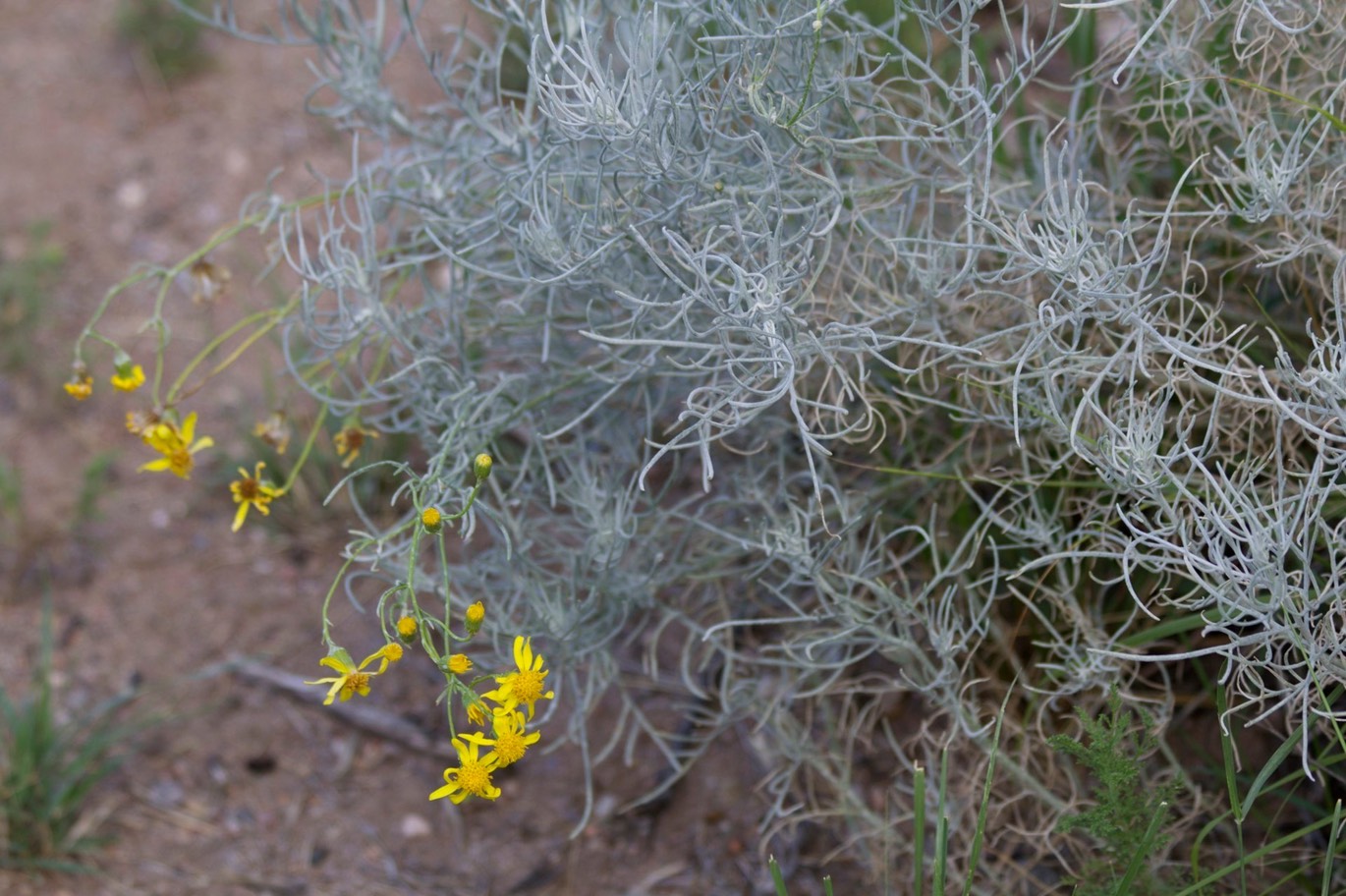
This Threadleaf Groundsel, Senecio flaccidus var. flaccidus, was found in the Percha drainage just west of the Percha Box (east of Hillsboro). It goes by a number of common names including Douglas Groundsel and Douglas Ragwort which recognize the famed botanist David Douglas. Threadleaf Groundsel has several scientific synonyms including Senecio douglasii. This species was first described by Christian Friedrich Lessing (1809 - 1862), an expert in the family Asteraceae in 1830. He did most of his work in Siberia.
This species is generally found in “disturbed” and over-grazed areas. In over-grazed areas this species presents a classic “Catch 22”, it holds the soil in place when there is little else to do that but cattlemen don’t like the plant because it contains several alkaloids - which could harm their cattle if eaten in large quantities. One of Threadleaf Groundsel’s early scientific synonyms was S. longilobus, recognizing the fact that it contained the alkaloid longilobine. In all likelihood, the plant is present only because everything else has been eaten. In what is, I am sure, an unintended commentary on the state of American Rangelands the Plants of Texas Rangelands site notes that: “Threadleaf Groundsel is a common range plant in Colorado and Utah and south to Texas and Mexico. It is common in the grassland areas of western Texas.”
In our area we are at about the top of its elevation tolerance (6,500’). It is found at elevations as low as 2,000’, so this plant can grow in the foothill and lowland areas surrounding the Black Range. The geographic range of this species within the United States is limited to the southwest, it is also found south into Central Mexico (Hidalgo, Jalisco, Veracruz, etc.).
Senecio wootonii
Wooton's Groundsel
Iron Creek Campground
Black Range
New Mexico
USA
March
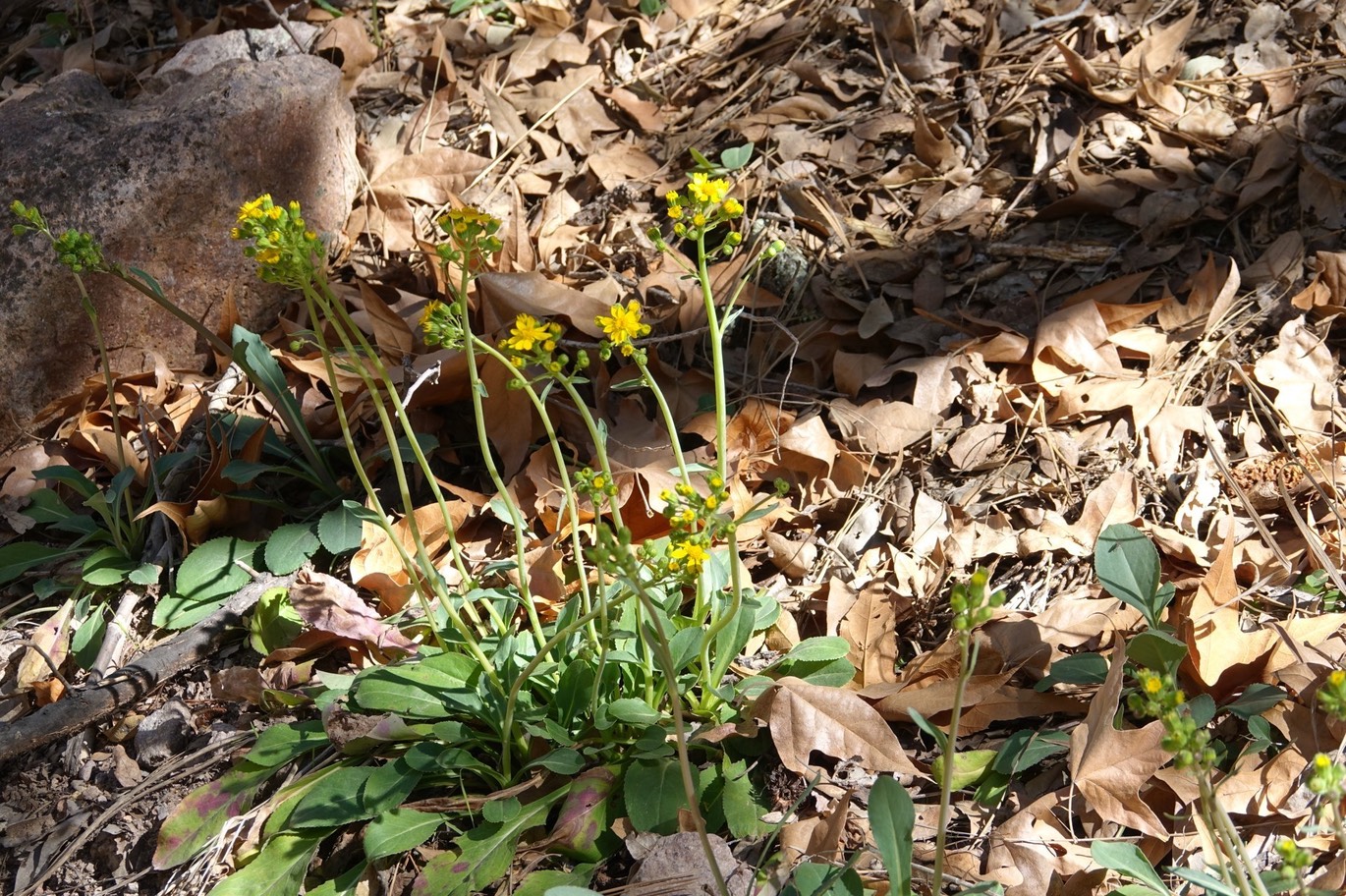
The range of Senecio wootonii, within the United States, is limited to the Rocky Mountain southwest. This species is also found in the states of Coahuila and Chihuahua in Mexico. All in all, a rather limited range. (To the south it appears to be replaced by Senecio toluccanus.)
Scientific synonyms for this species include Senecio anacletus (Greene). Other English Common Names include Wooton’s Ragwort.
This species was first described by Edward Lee Green. He is credited with naming or redescrbiing over 4,400 plant species in the western United States.
The type specimen for this species was collected by Wooton in the White Mountains of New Mexico on 15 August 1897. Elmer Ottis Wooton is one of the great botanists of the American southwest and he was the territory of New Mexico’s first Resident Plant Scientist, receiving that appointment in January 1890. His appointment was for service at the New Mexico College of Agriculture and Mechanic Arts in Las Cruces (now NMSU).
Sida abutifolia
Spreading Mallow
East of Hillsboro
Black Range
New Mexico
August
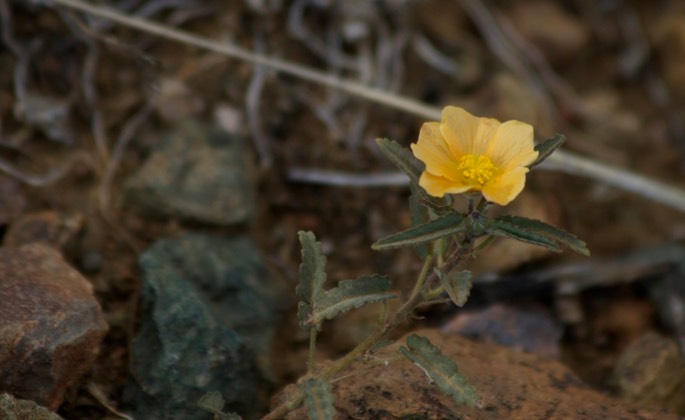
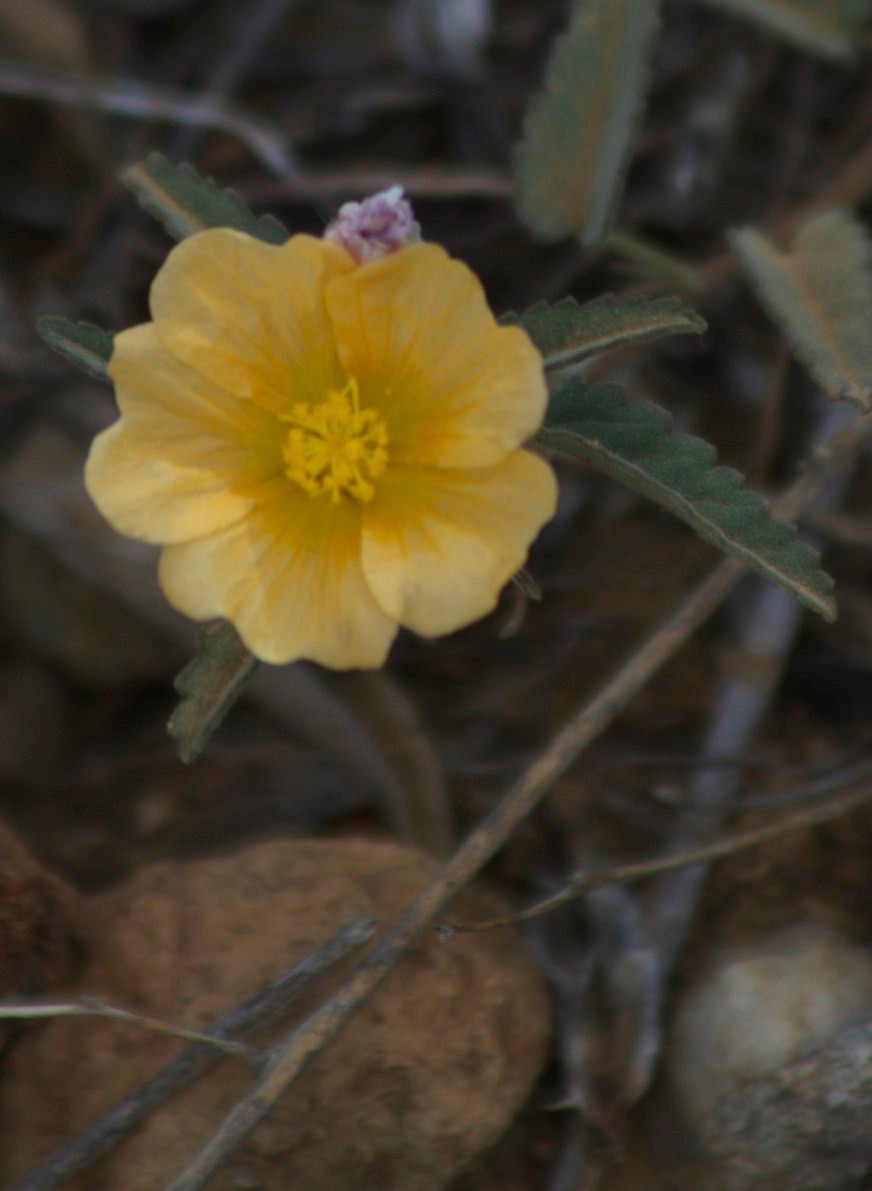
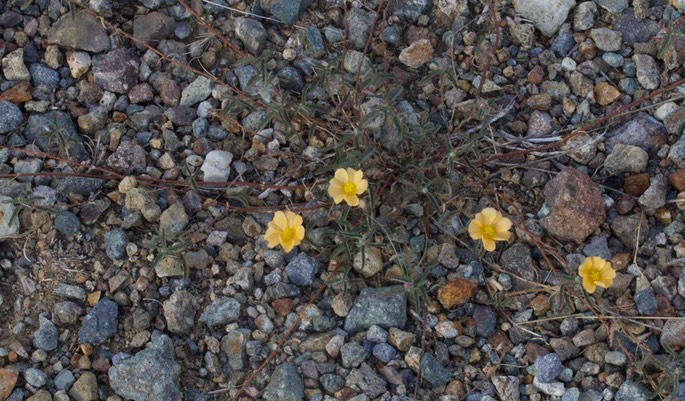
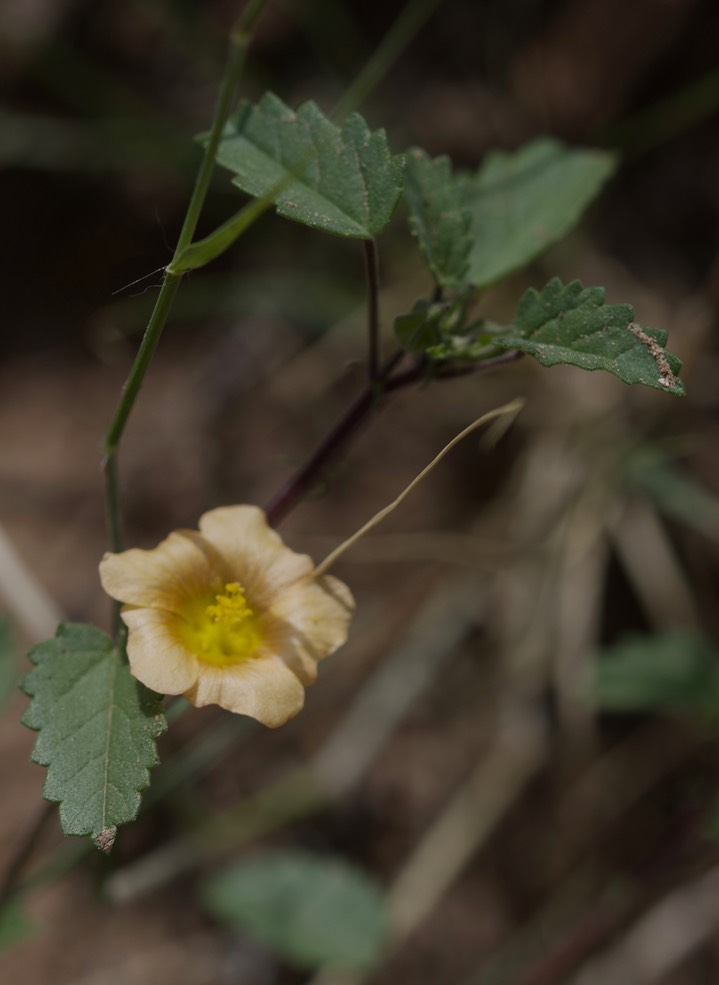
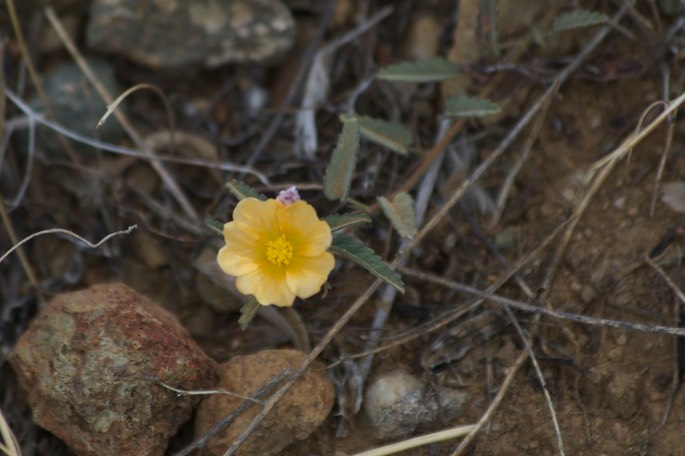
The English common names for Spreading Mallow, Sida abutifolia, include Sida and Spreading Fan Petal. In the Spanish speaking world it is known by a variety of common names, including; Huinare blanco, axocatzín, buendía, guinare, hierba del buen día, malva, and yerba de la viejita. It has several scientific synonyms, all in the Sida genus; filicaulis, filiformis, procumbens, and supina. Philip Miller, a Scottish botanist, first described the species in 1768. (For those of you who enjoy screw ups, the French edition of Miller’s “The Gardeners Dictionary”, published in 1787, had a portrait of the wrong Miller. Since Philip Miller had died 16 years earlier he did not mind.)
The United States range of this species is limited to Arizona, New Mexico, Texas, and bits of Oklahoma. It is also found in most of the American tropics.
The CONABIO site is an excellent source of information about this species. This site is extensive and has a substantial amount of information about the plants of Mexico, and by extension, our area of New Mexico.
If you have a particular interest in the systemic taxonomy of this species you may wish to read; Phylogenetic Relationships and Classification of the Sida Generic Alliance (Malvaceae) Based on nrDNA ITS Evidence, by Javier Fuertes Aguilar, Paul A. Fryxell, and Robert K. Jansen. This article, which describes their research and findings in this area, was published by The American Society of Plant Taxonomists and is available via BioOne.
Silene laciniata greggii
Mexican Catch-Fly or Cardinal Catchfly
Mid elevations
Black Range
New Mexico
July
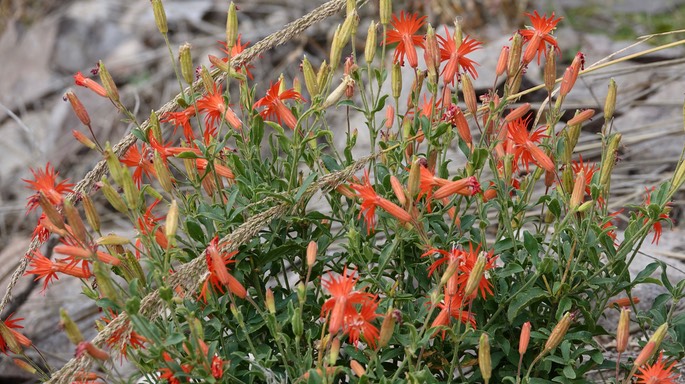
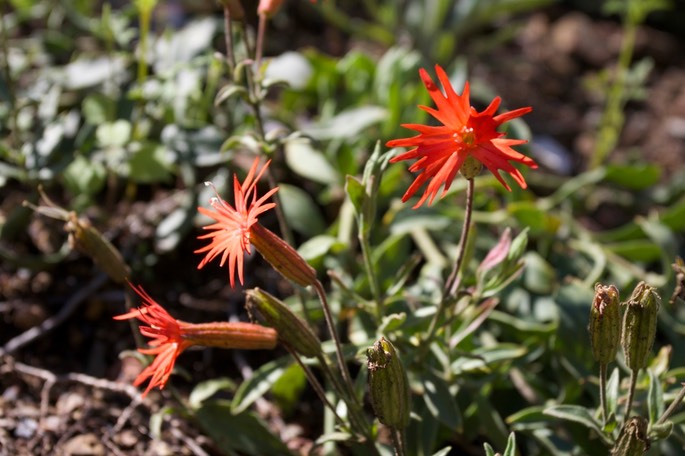
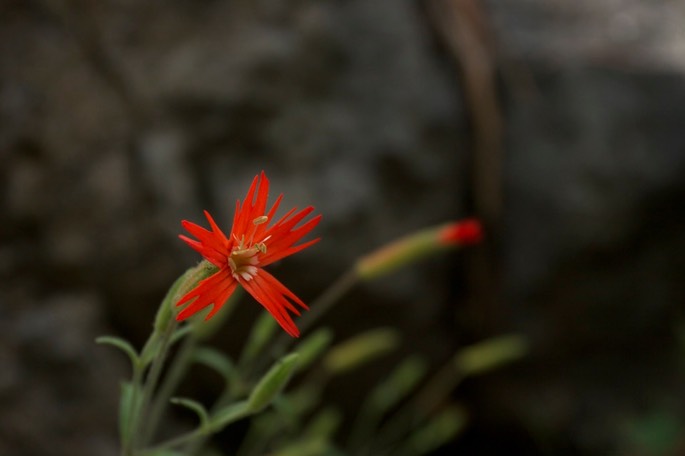
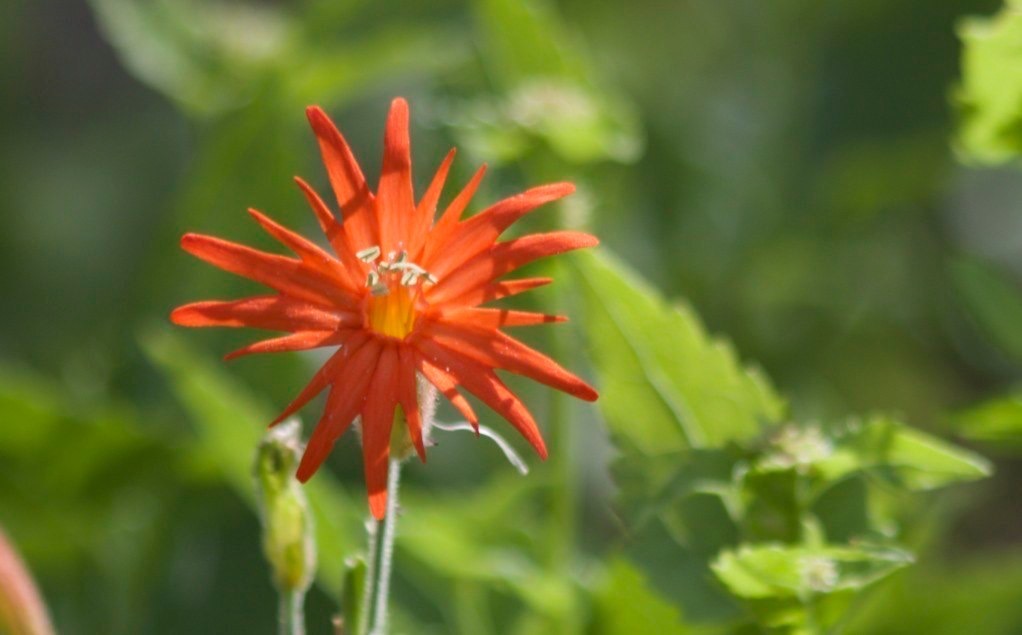
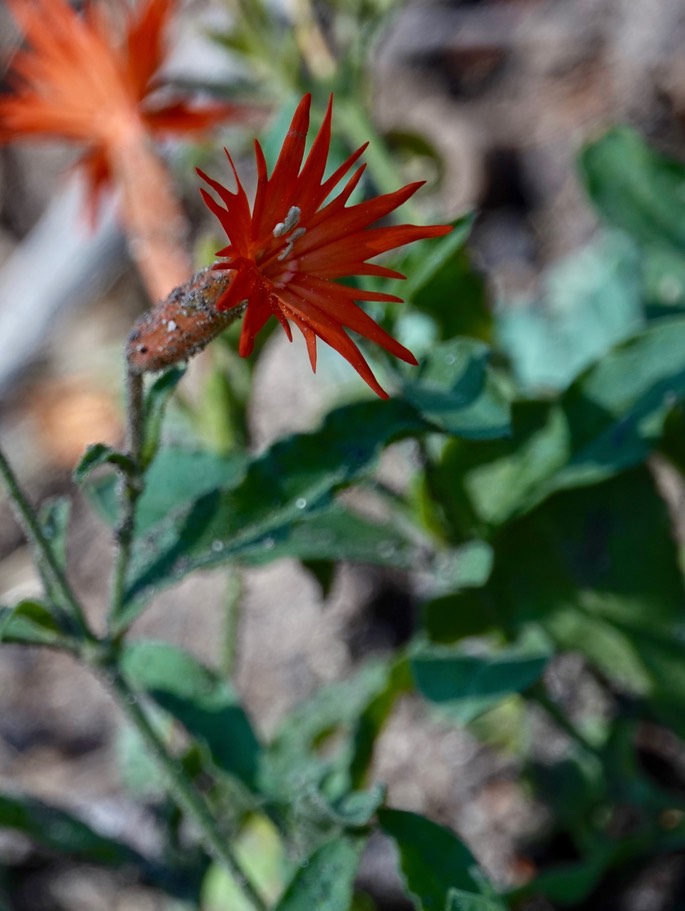
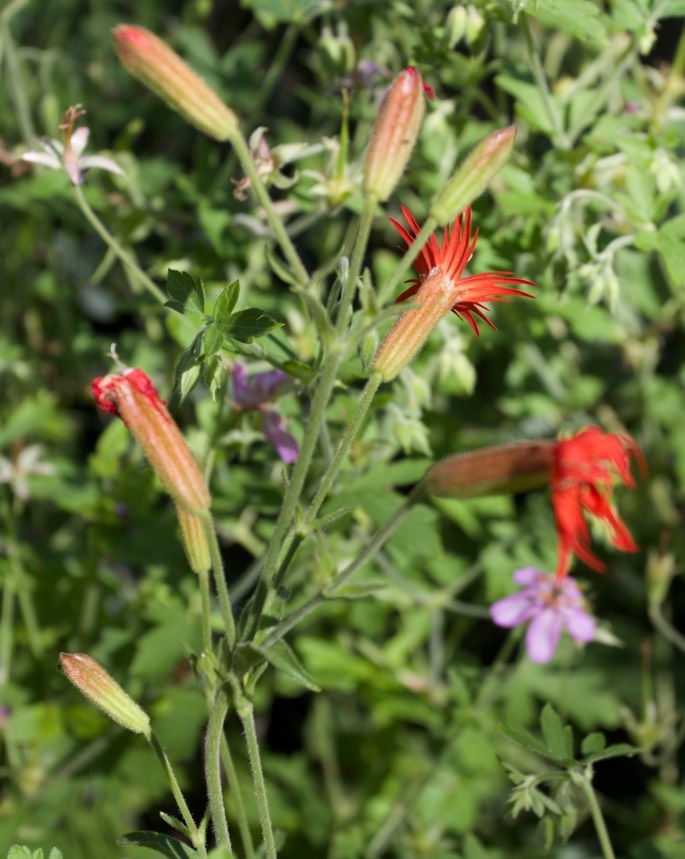
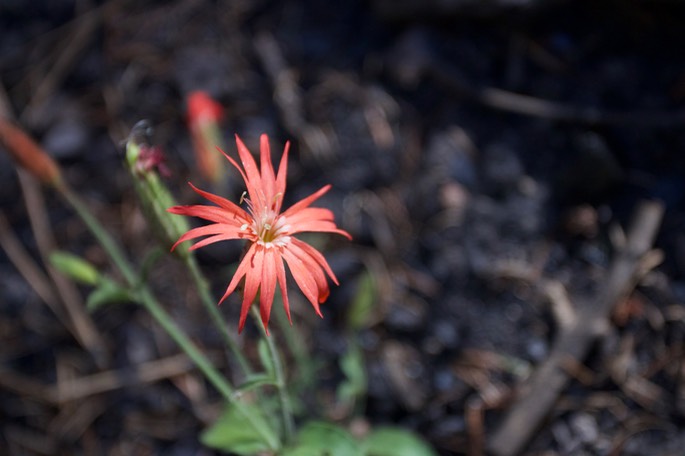
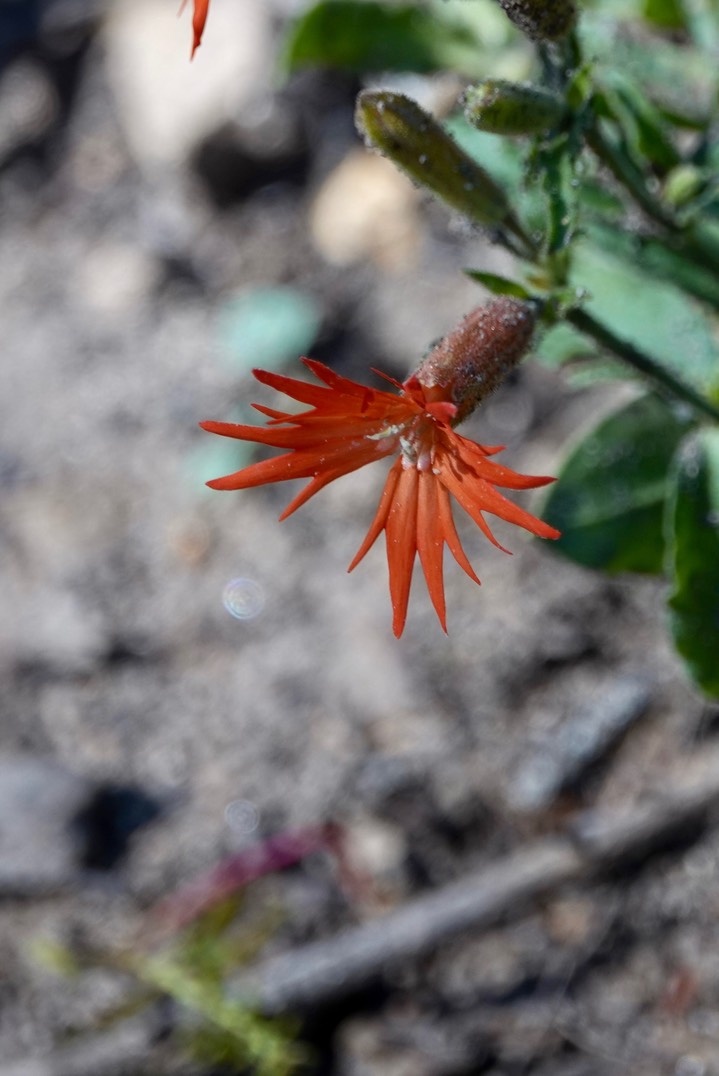
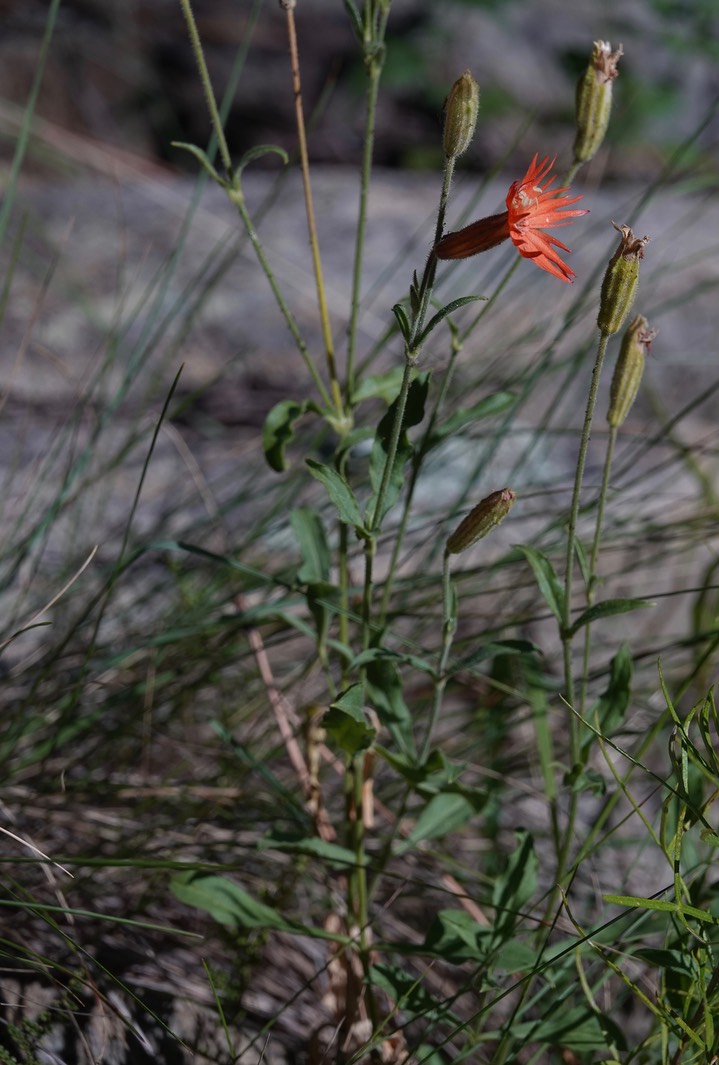
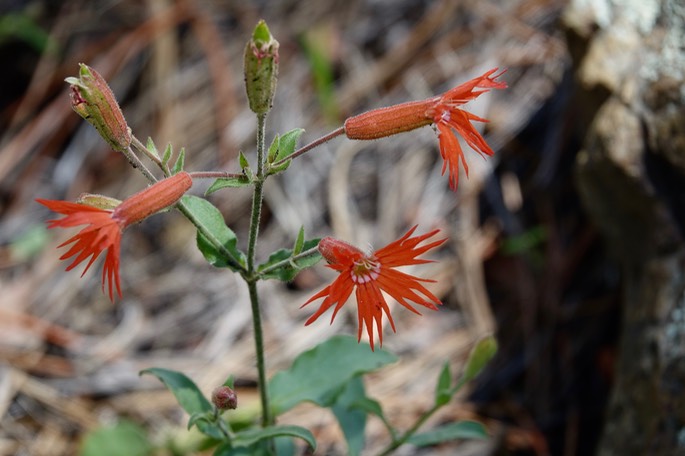
Silene laciniata, is known by many names in English: Cardinal Catchfly, Mexican Campion, Fringed Indian Pink, Mexican-pink, Campion, Indian Pink, Cardinal Catchfly, and in the case of this subspecies, Gregg’s Mexican Pink. This is, Silene laciniata greggii, there are two other subspecies. Like many plants its “official taxonomy” has bounced around, being initially described as a full species, Silene greggii, by Asa Gray, in 1853. Gray described more than 7,000 species and worked with numerous collectors including Engelmann, Fremont, Wright, Lemmon, Fendler, Watson, and Rothrock - names that dot the west. It was Sereno Watson who classified this plant as S. l. greggii, in 1875.
In the Black Range, this plant is generally found at mid to high elevation. I have seen it many times near Kingston in the Middle Percha and in Dry Creek. It is also common in Railroad Canyon, on the Sawyers Peak Trail, and along the Hillsboro Peak Trail. It is generally found in association with Ponderosa Pine, in those areas where sunlight is prevalent.
All of those flower rays are in fact five deeply divided petals (each with four lobes). Cardinal Catchfly can grow to 3 feet, although most of those that I see are shorter than that. A description of this species is available at Flora of North America.
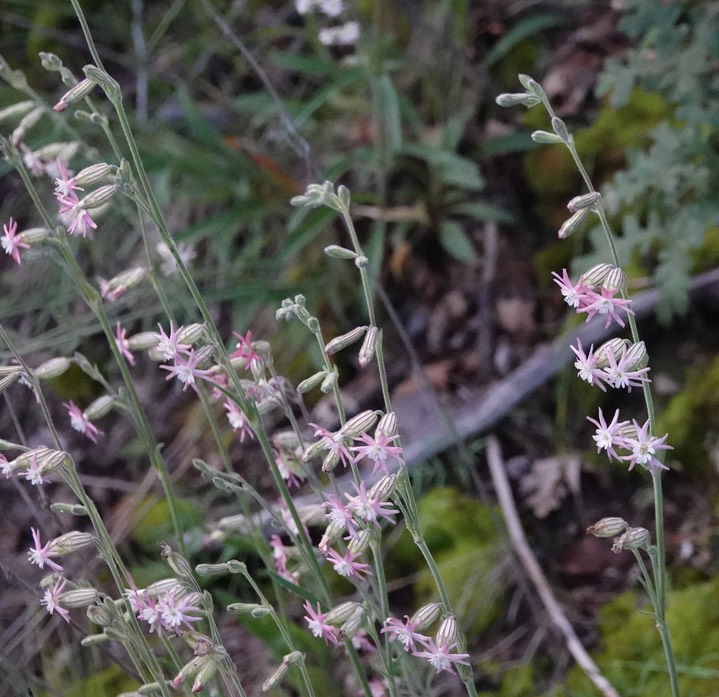
Silene scouleri
Pringle's Catchfly
Hillsboro Peak Trail
Black Range
New Mexico
August
Sisyrinchium demissum
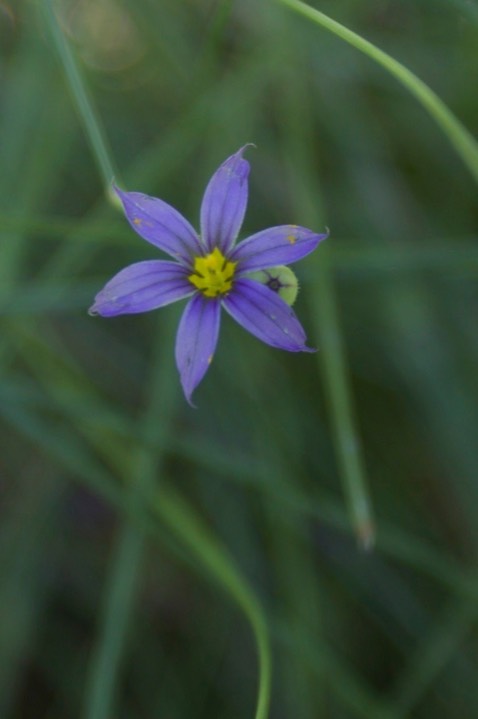
Stiff Blue-eyed Grass
The Spring at the Kingston Campground
Kingston
Black Range
New Mexico
Solanum elaeagnifolium
Silverleaf Nightshade
Foothills
Black Range
New Mexico
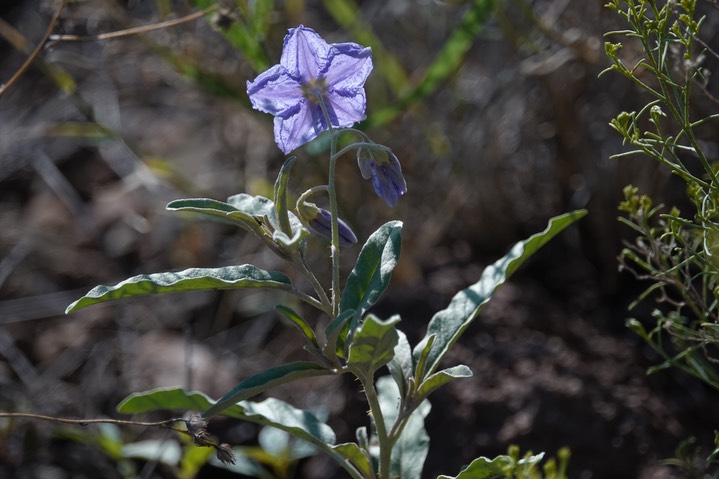
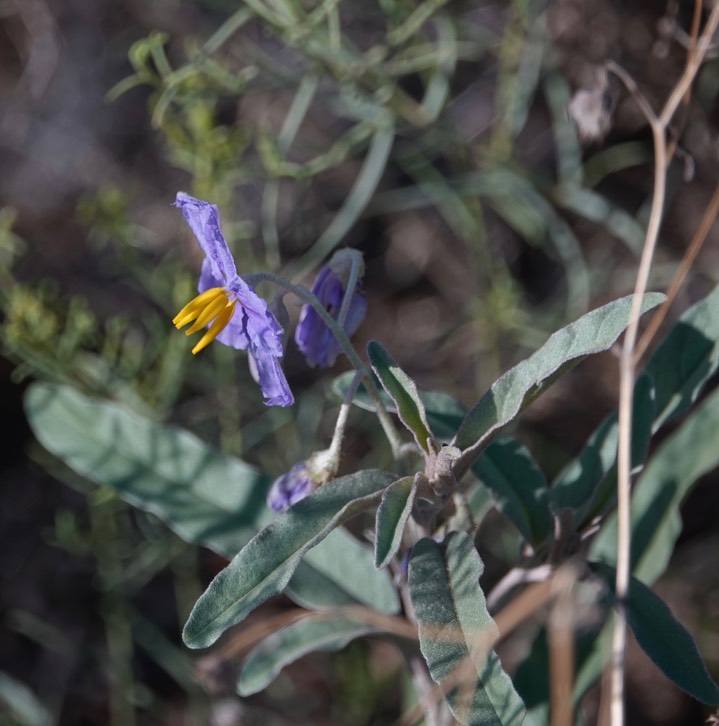
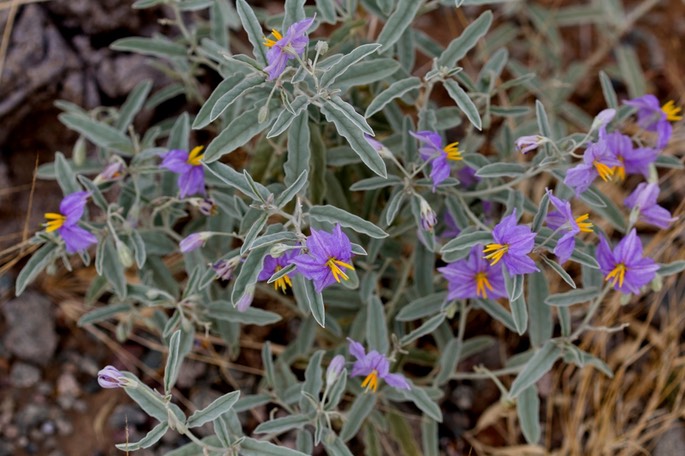
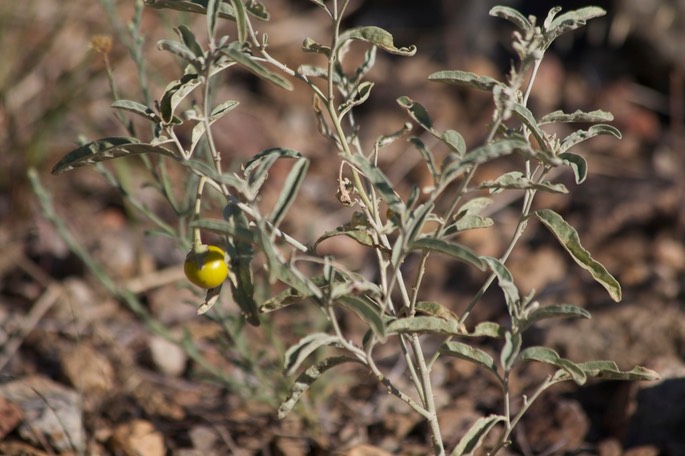
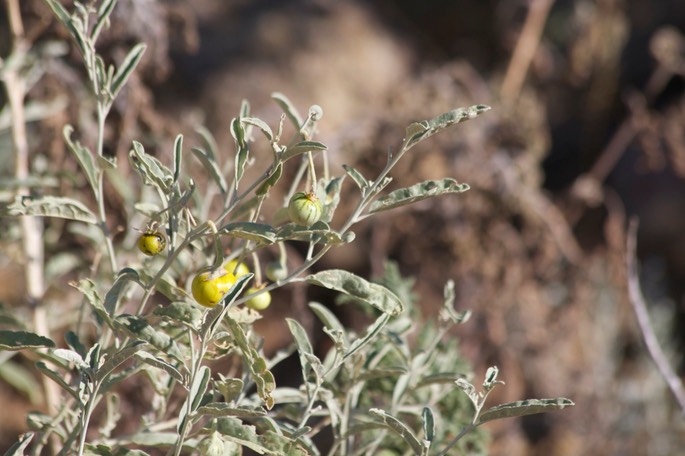
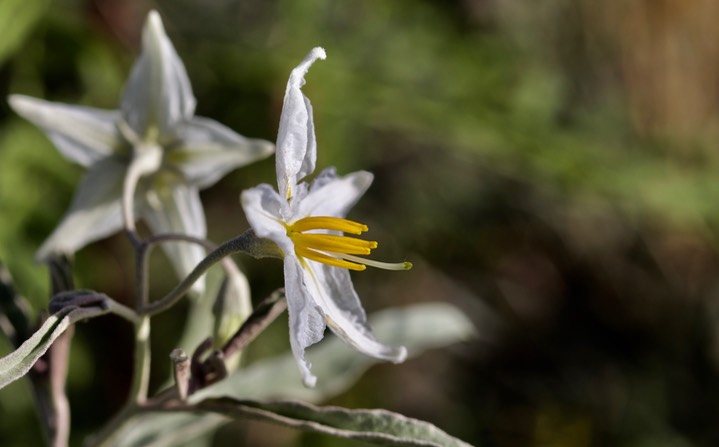
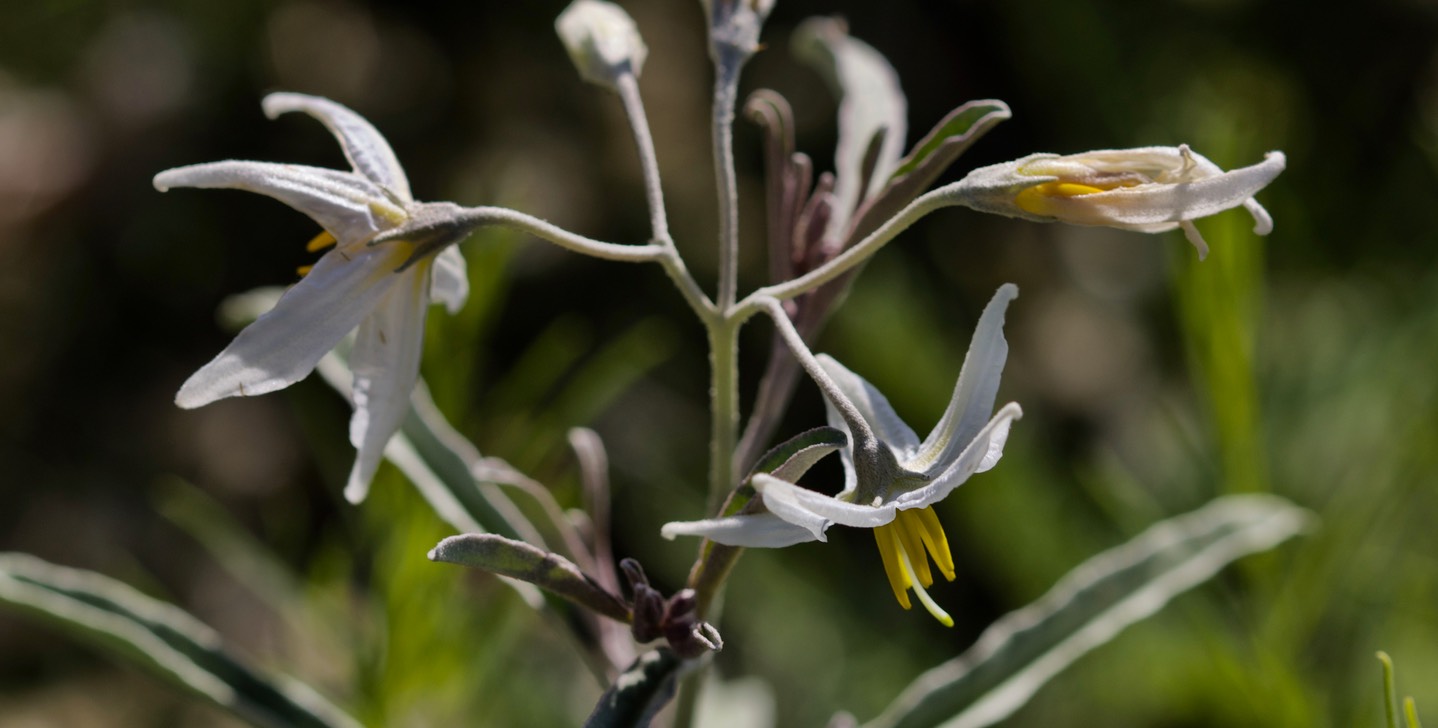
Silverleaf Nightshade (a.k.a. Purple Nightshade, Silver Nightshade, White Horsenettle, Silverleaf Nettle, and Prairie Berry), Solanum elaeagnifolium, is one of the most common plant species in the foothills of the Black Range. There are many scientific synonyms. There are both white and blue flower forms, the white form is less common.
In North America, this species is found throughout the western United States, from Kansas in the Great Plains, Southward, and natively to Louisiana; from the US border well into Mexico (at least as far as Oaxaca). It is also assumed to be native in Argentina, Chile, and Uruguay. It is not known if the species originated in North or South America. At this point, it has been introduced into many countries of the world - often to their chagrin.
All parts of this plant are poisonous and as with most poisons probably have medicinal applications. Native Americans used the root to neutralize rattlesnake venom, the berries were used to treat sore throat and toothache, and in many other applications - how effectively these applications worked is not known. The Pima, Navajo, and Cochiti all used crushed berries to curdle milk when making cheese.
Solanum heterodoxum
Melon Leaf Nightshade
Higher foothills
Black Range
New Mexico
July
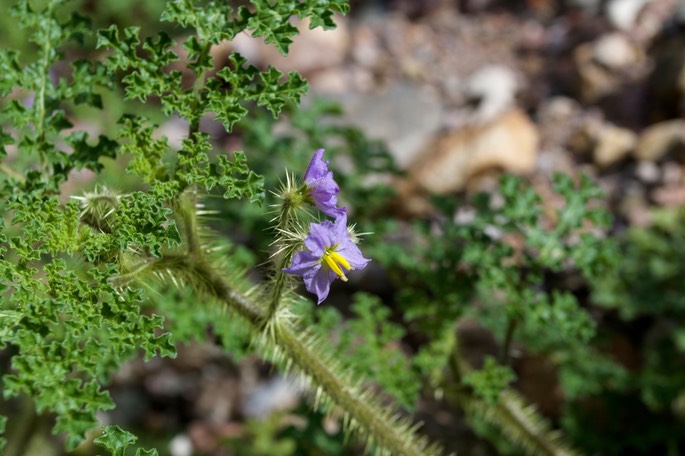
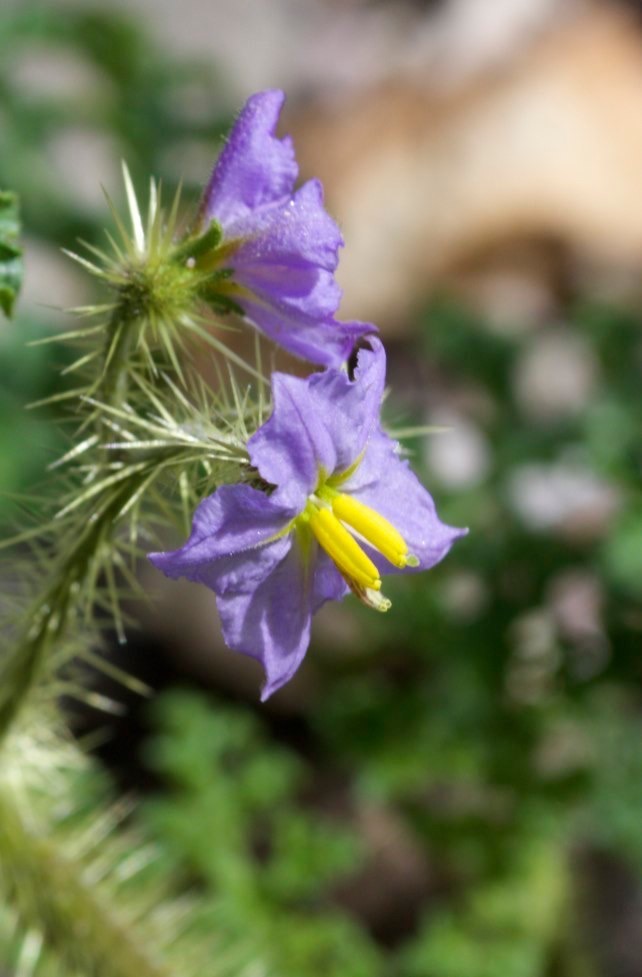
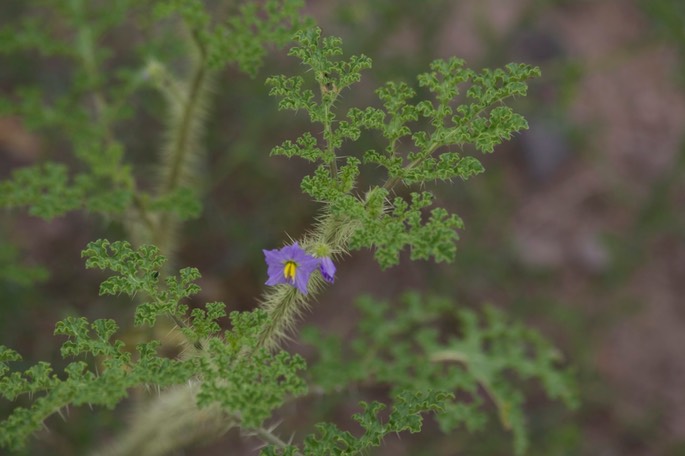
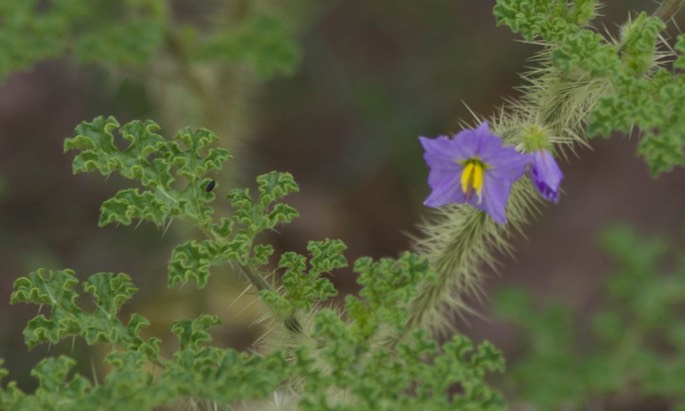
There are about 2,000 species in the Solanum genus, including all of those wonderful potatoes and tomatoes. There are three subspecies of this Nightshade, all are present in New Mexico, these particular plants appear to be S. h. var. setigeroides (Whalen).
The range of this species is limited in the United States (New Mexico, Arizona, Texas, and Colorado). Its range extends south into Mexico (Veracruz). It is, however, generally absent from the Chihuahuan Desert.
This species was first described by Michel Felix Dunal in 1813, who was the world’s expert on the Solanum genus at that time. It is not generally known by a different common name (other than “Melonleaf” is sometimes combined) and there are only two scientific synonyms; Androcera heterodoxa and Nycterium heterodoxum. Dunal was the first describer of 1215 species.
The type specimen for S. h. var. setigeroides was collected in Grant County, New Mexico (12 miles west of Silver City, near US-180).
Solanum rostratum
Buffalo Bur
Hillsboro Area
Black Range
New Mexico
August
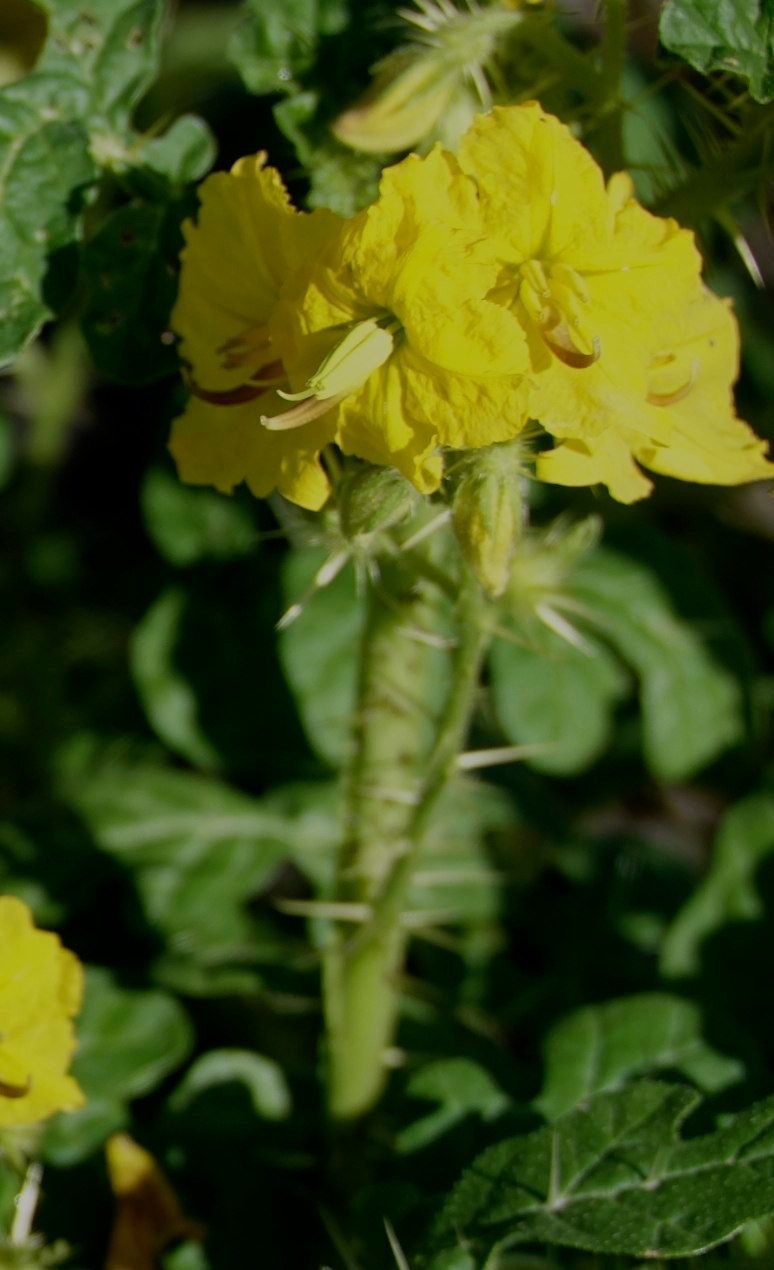
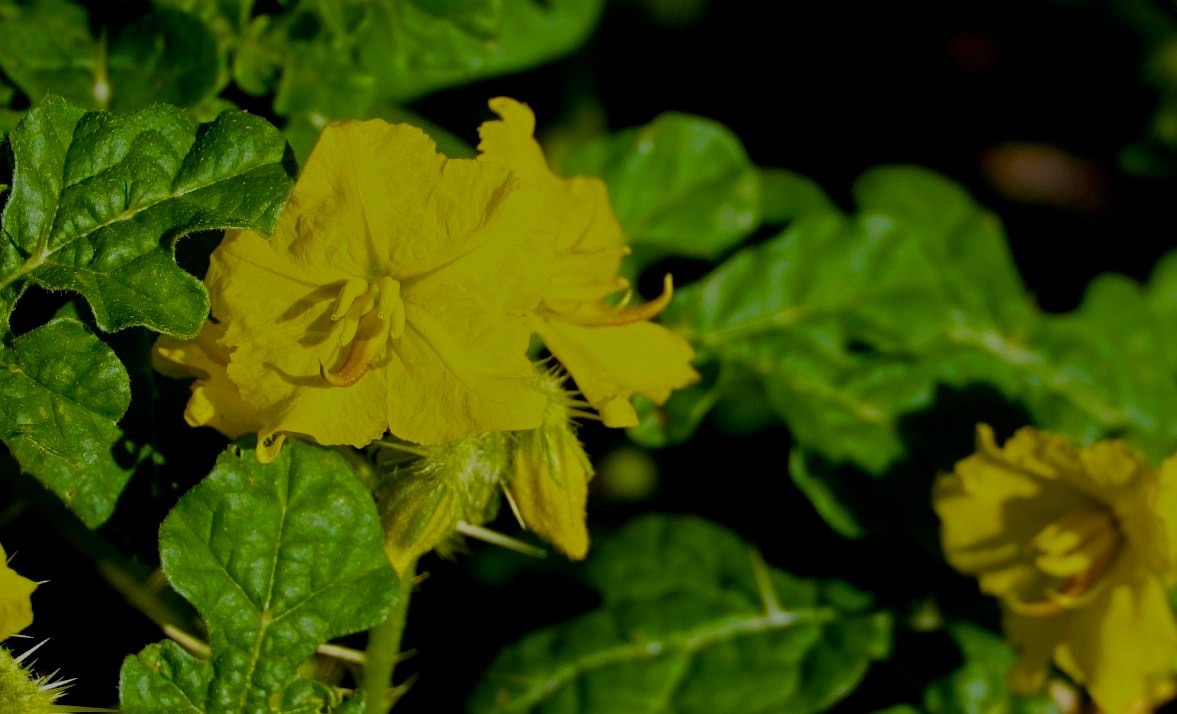
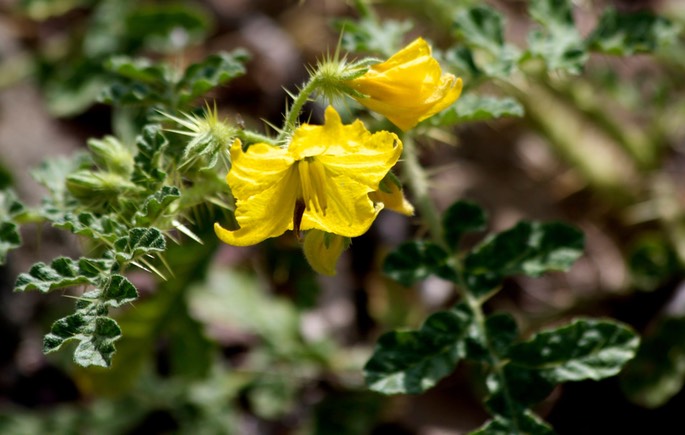
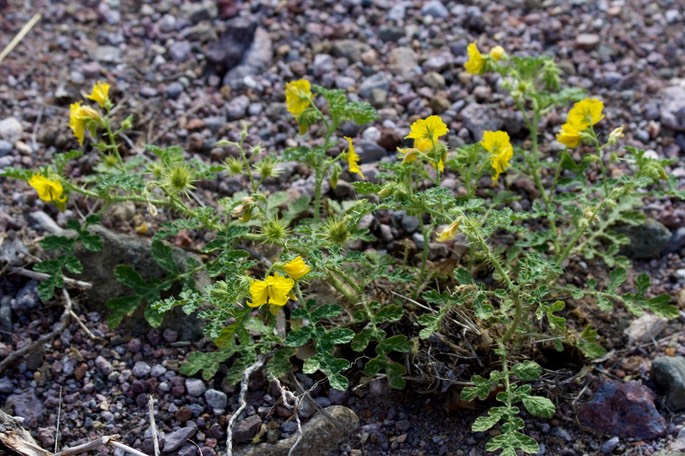
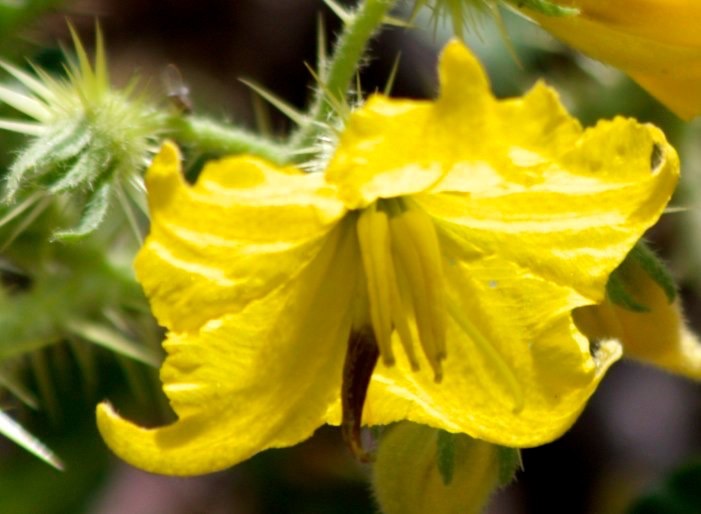
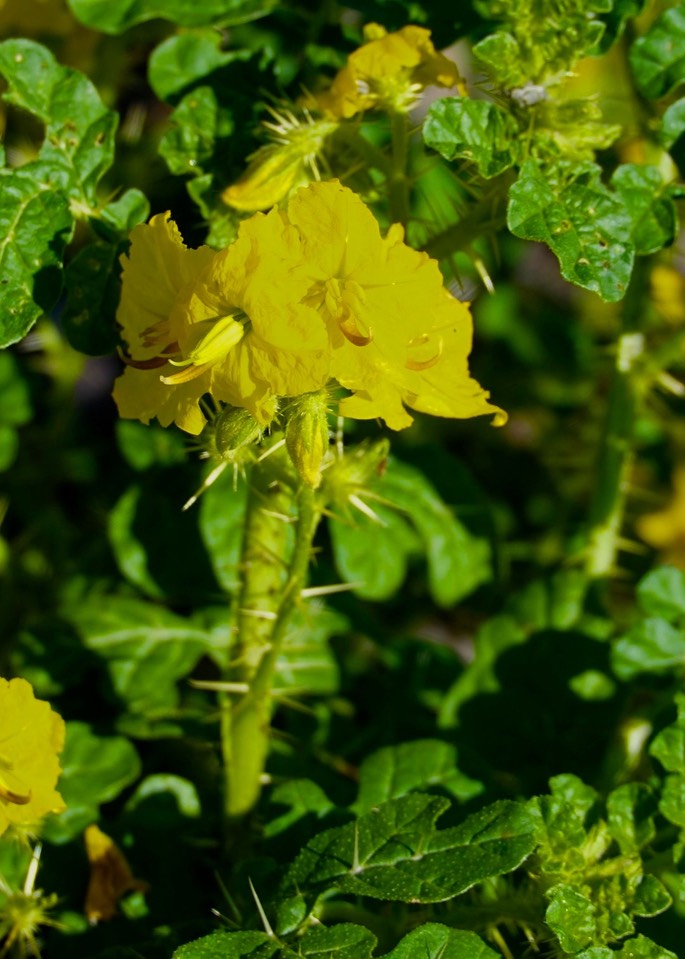
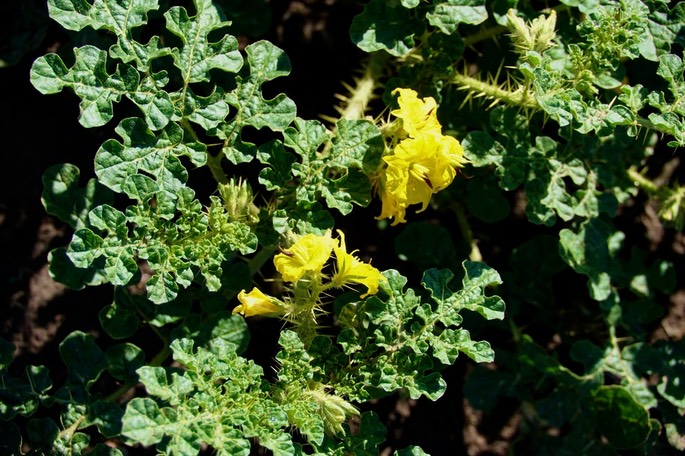
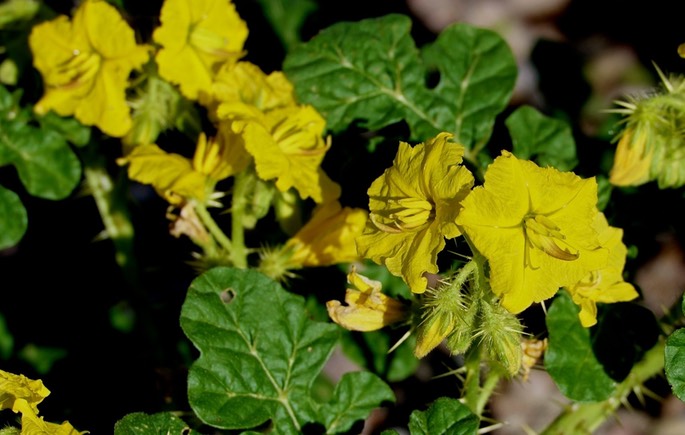
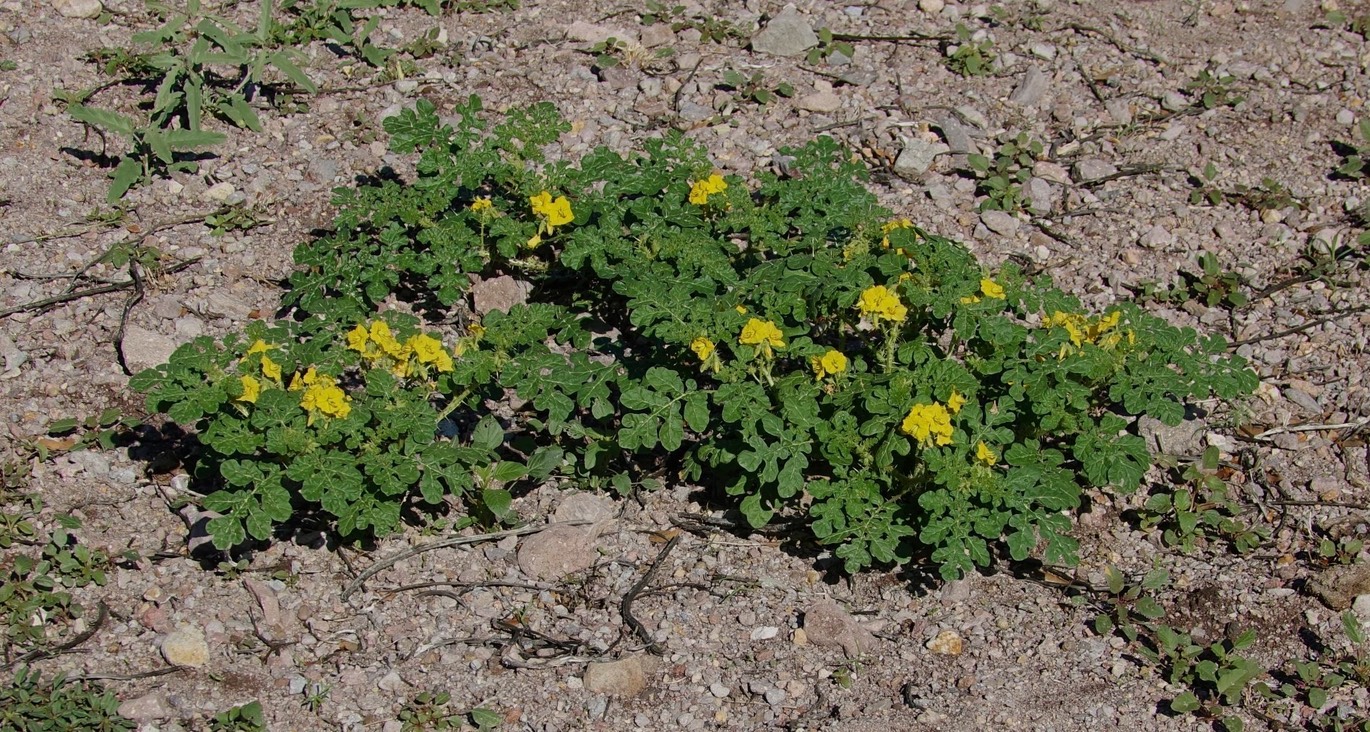
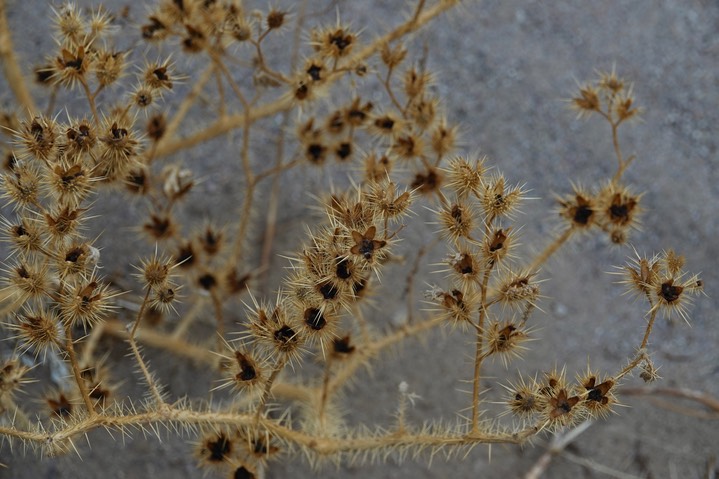
There are three nightshade species which are common in the Black Range; Solanum heterodoxum, Solanum elaegnifolium, and the Buffalo Bur, Solanum rostratum. The latter species goes by a variety of other common names including; Spiny Nightshade, Texas or Kansas or Mexican Thistle, and Colorado Bur.
The photographs show the spiny fruit from which the plant derives its common name. This species has an extensive range being found in much of the United States south into central Mexico.
This species offers a prime example of heteranthery in plants. Buffalo Bur does not develop nectar, instead (like many other plants) it uses pollen to both pollinate itself and to attract the pollinators which spread the pollen around. The pollinators are, however, attracted to the flower because they use the pollen as a food source. This creates a certain difficulty for the plant, if the pollinator eats all the pollen then the plant is not pollenated. In response to this situation, some species (like the Buffalo Bur) have developed two stamen types in each flower (in a photograph in the gallery, this is shown clearly - a thick dark stamen on the left and a yellow thin stamen on the right). These stamens are specialized. One is more attractive to pollinators as a food source, the other is the primary source of pollen for pollination. “Division of Labour Within Flowers: Heteranthery, a Floral Strategy to Reconcile Contrasting Pollen Fates” by Vallejo-Marin et al. describes the research conducted on heteranthery in this species. Charles Darwin was especially interested in heteranthery and had ordered seeds of this species so that he could study the natural selection process which led to it. (His death precluded any research, on his part, on this species.)
This species is noteworthy in the same manner that Typhoid Mary is memorable. Buffalo Bur is the natural host of the Colorado potato beetle. That beetle spread from the natural to the domesticated environment, choosing the domestic potato as a better host and causing significant crop destruction.
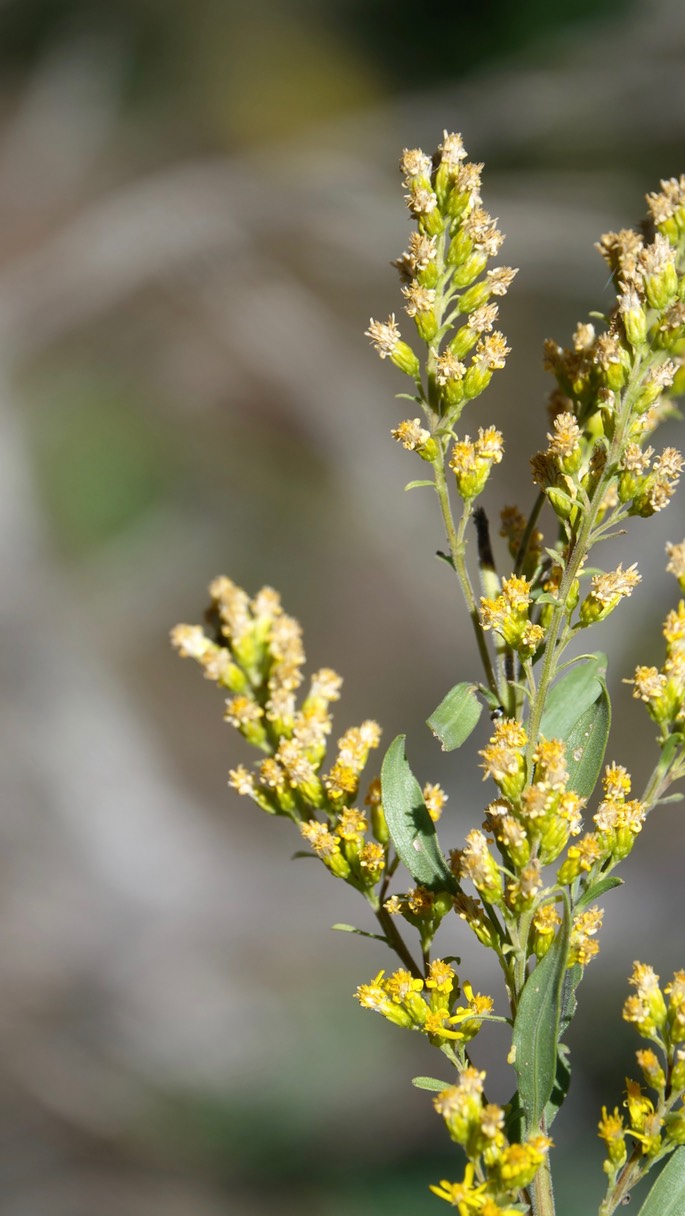
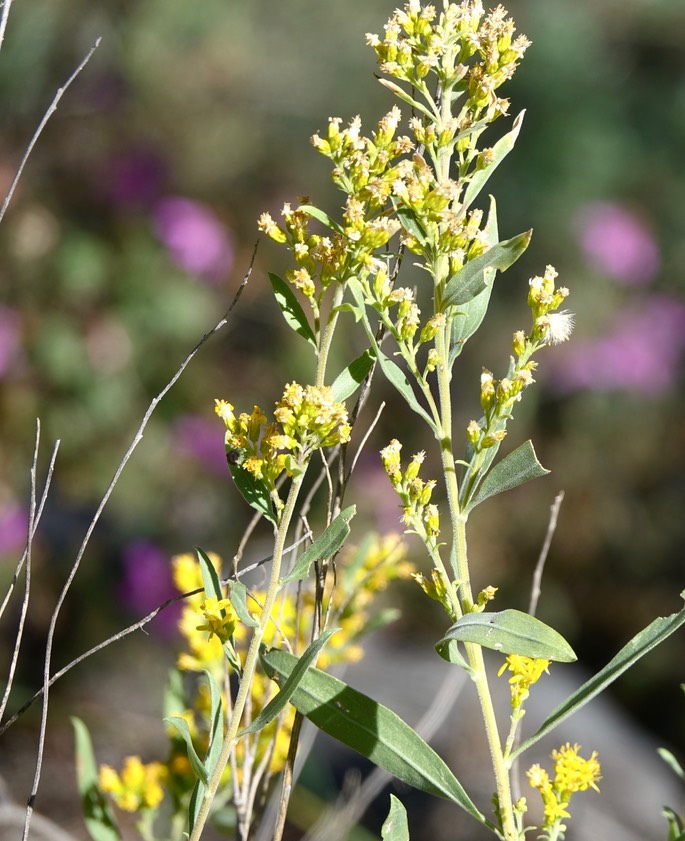
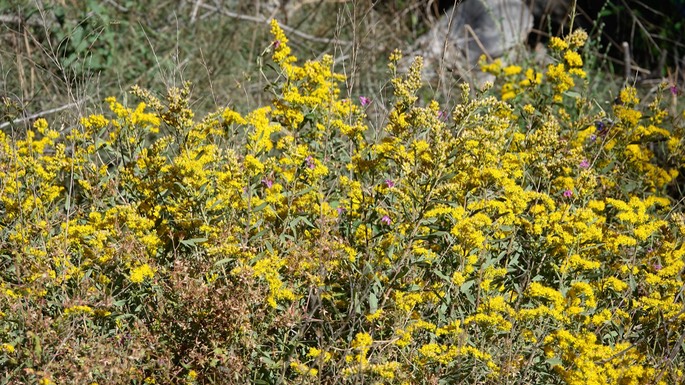
Solidago lepida
Western Goldenrod
Higher foothills
Black Range
New Mexico
September
Sophora nuttalliana
Silky Sophora
Warm Springs Wash
East of Hillsboro
Black Range
New Mexico
May
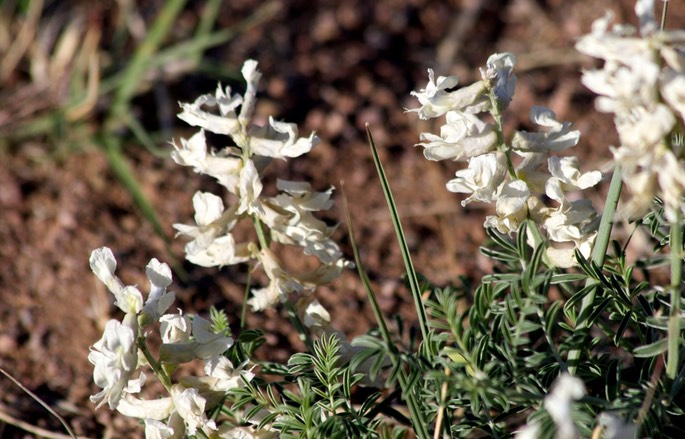
Sophora sericea was first described by Thomas Nuttall in 1818 in Genera of North American Plants. Bille Turner renamed the species, Sophora nuttalliana, in 1956.
Thomas Nuttall (1786 - 1859) was (is still) a preeminent student of the natural history of North America and is recognized in the names of many species (plant and animal). He was born in England but travelled to the United States in 1808. Almost immediately he began to study under Benjamin Barton, one of the great American naturalists of that time. Nuttall was more than a botanist. For instance, he published A Manual of the Ornithology of the United States and of Canada while Curator of the Harvard Botanical Garden. In 1834 he traveled west on one of this many exploring/collecting trips on an expedition led by Nathaniel Wyeth. On that trip, Nuttall took along his young friend, John Townsend. Townsend wrote Narrative of a Journey Across the Rocky Mountains to the Columbia River... in 1839. In his travels and work, Nuttall often faced hardship and danger, sometimes he just seemed out of place. Richard Henry Dana, in Two Years Before the Mast, describes a chance meeting with Nuttall in California: “[He]... was no one else than a gentleman whom I had known in my better days; and the last person I should have expected to have seen on the coast of California - Professor N -- -, of Cambridge. I had left him quietly seated in the chair of Botany and Ornithology, in Harvard University; and the next I saw of him, he was strolling about San Diego beach, in a sailor's pea-jacket, with a wide straw hat, and barefooted, with his trowsers rolled up to his knees, picking up stones and shells.... I was often amused to see the sailors puzzled to know what to make of him, and to hear their conjectures about him and his business.... The crew christened Mr. N., "Old Curious," from his zeal for curiosities, and some of them said that he was crazy, and [it was a shame] that his friends let him go about and amuse himself in this way. Why a rich man (sailors call every man rich who does not work with his hands, and wears a long coat and cravat) should leave a Christian country, and come to such a place as California, to pick up shells and stones, they could not understand.”
Thomas Nuttall, and many others of that era and ilk are my heroes. People who set out to understand the world, to appreciate it in its many facets, to revel in its mysteries.
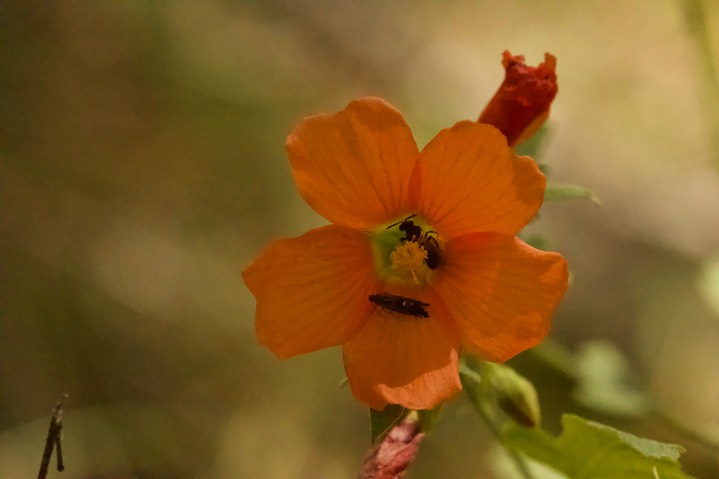
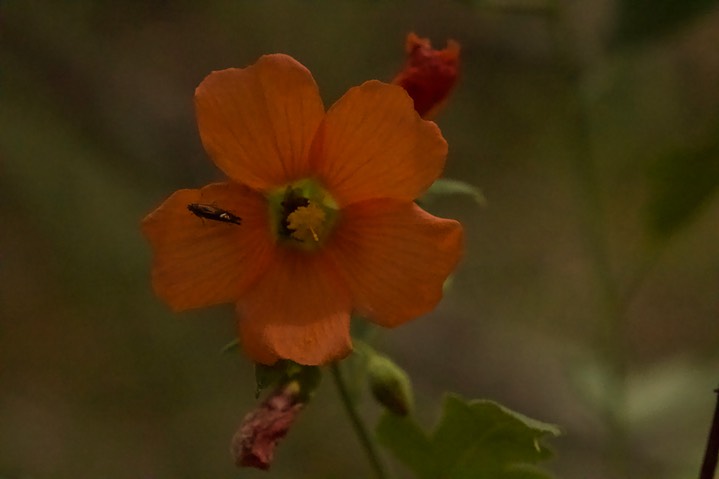
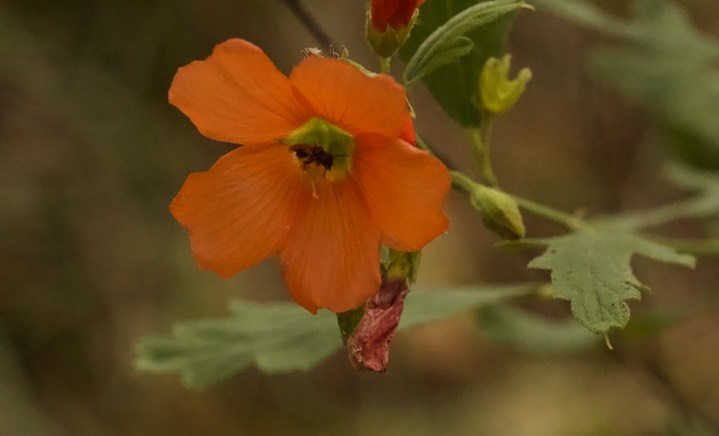
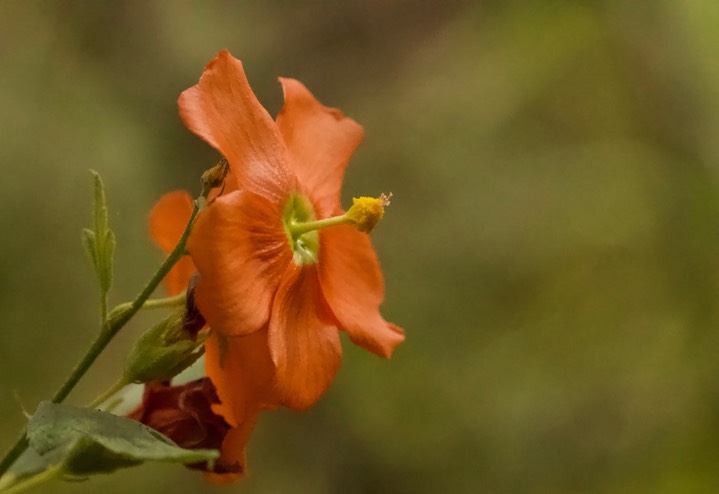
Sphaeralcea fendleri var. fendleri
Fendler Globemallow
Iron Creek Campground
Black Range
New Mexico
September
Stephanomeria pauciflora
Wire Lettuce
City of Rocks State Park
Black Range
New Mexico
May
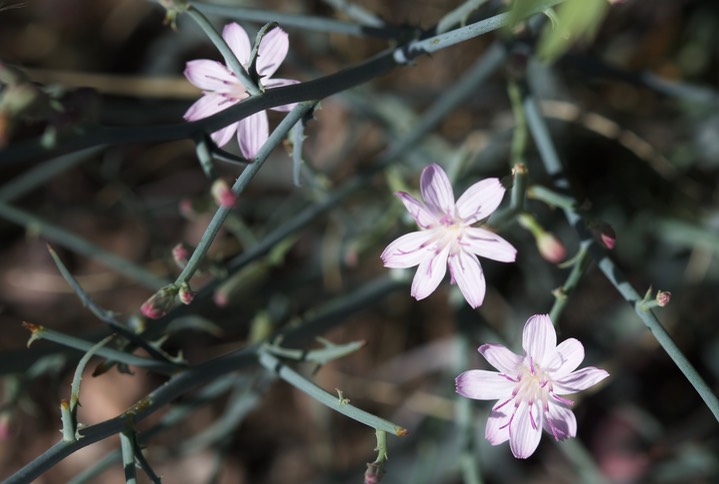
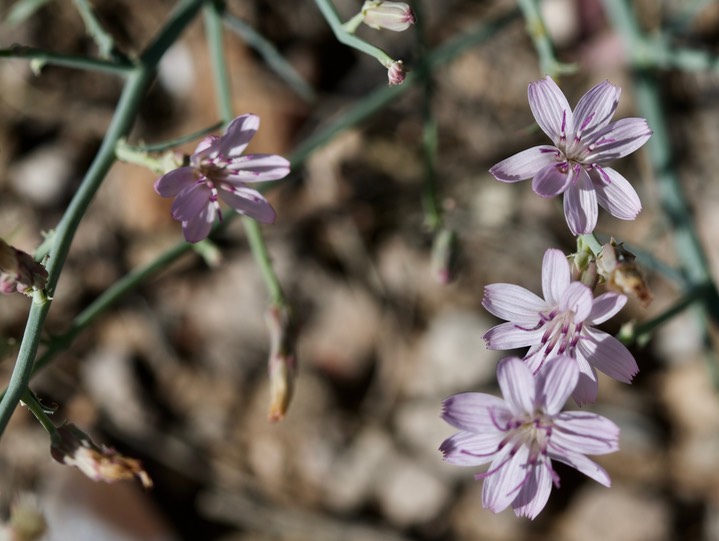
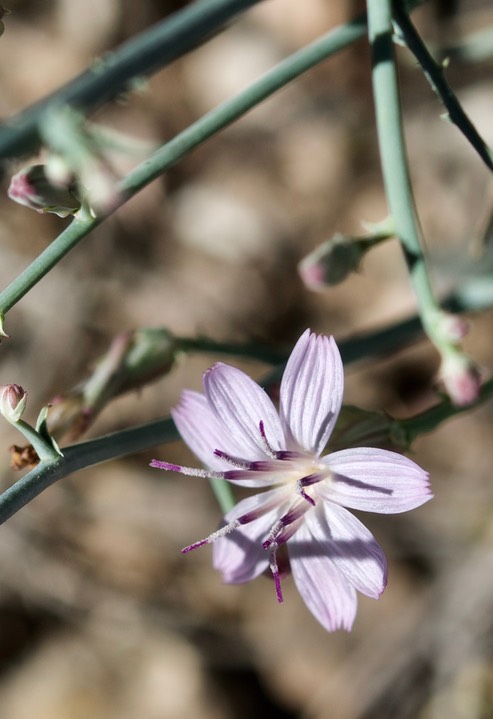
Wire Lettuce (aka Few-Flowered Wire Lettuce and Prairie Skeletonplant), Stephanomeria pauciflora, is found along the southern part of the Cienega Trail at City of Rocks State Park. The range of this genus is confined to the western United States and northern Mexico. This particular species is also found in Sonora and Chihuahua. Skeletonweed, which it may be confused with, is a noxious plant and is in a different genus. This species may hybridize with S. tenuifolia. Like many plants in our desert borderlands, this one has few leaves.
Streptanthus carinatus arizonicus
Arizona Jewel Flower
Pony Hills & east of Hillsboro
Black Range
New Mexico
March
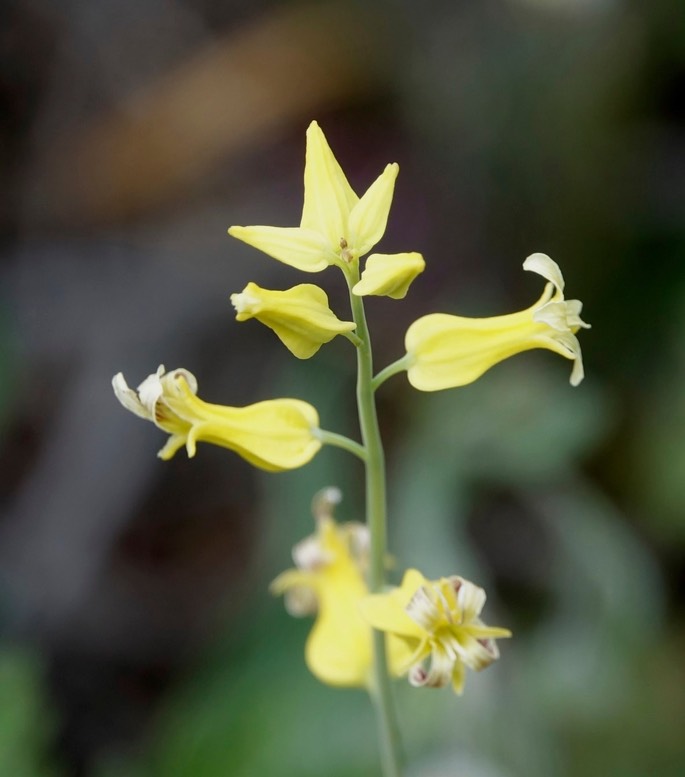
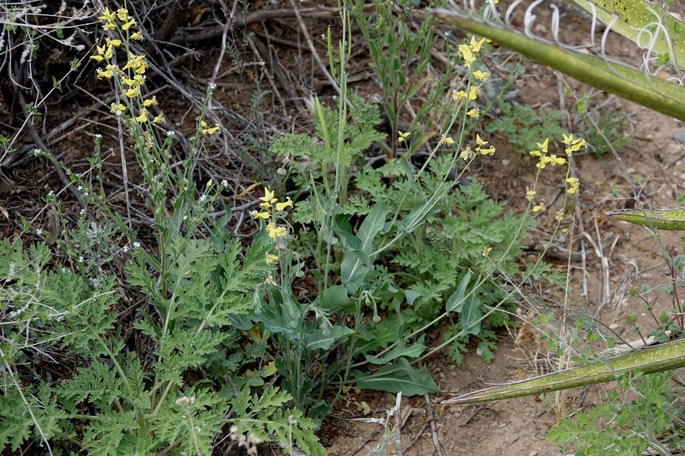
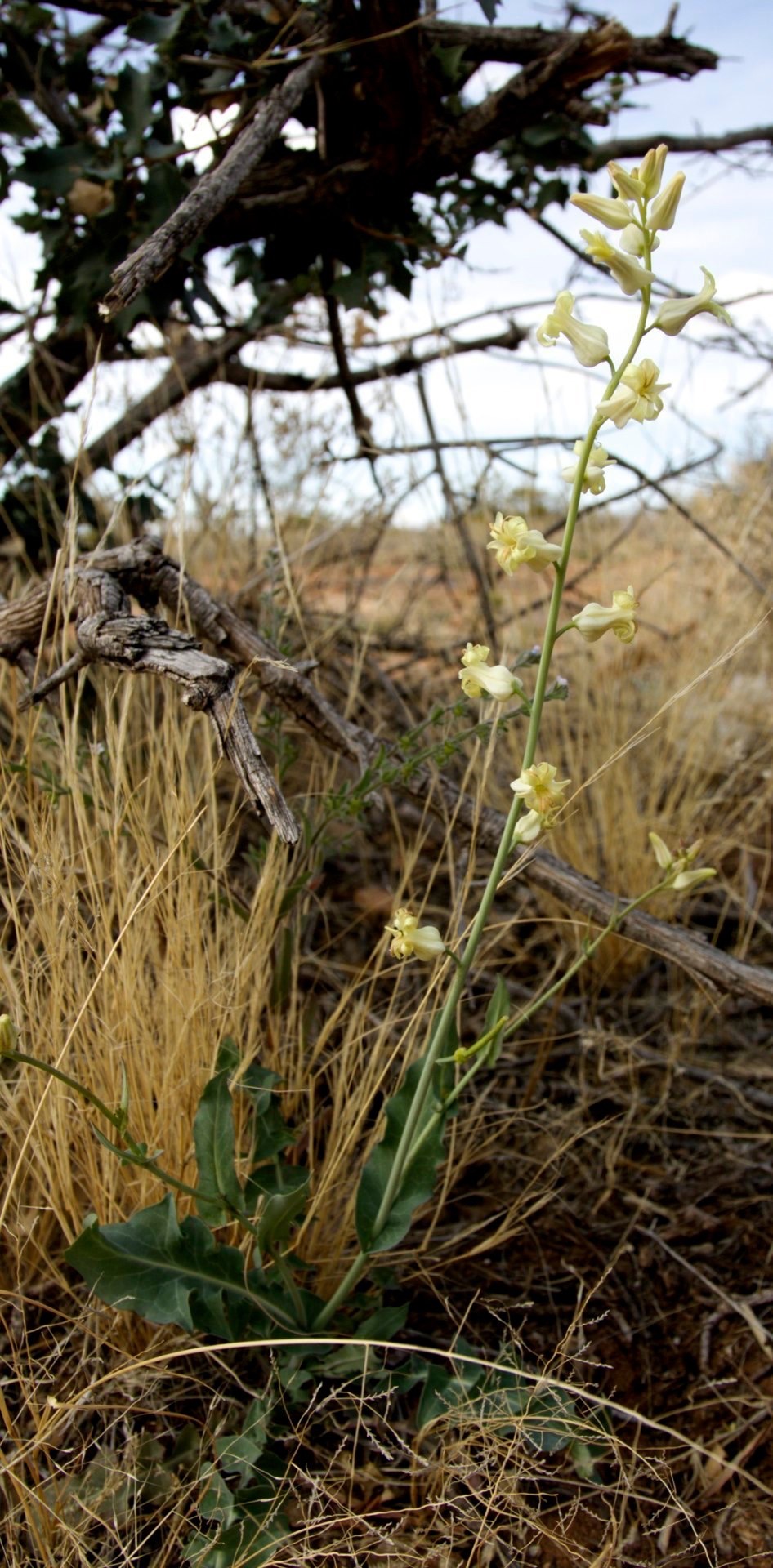
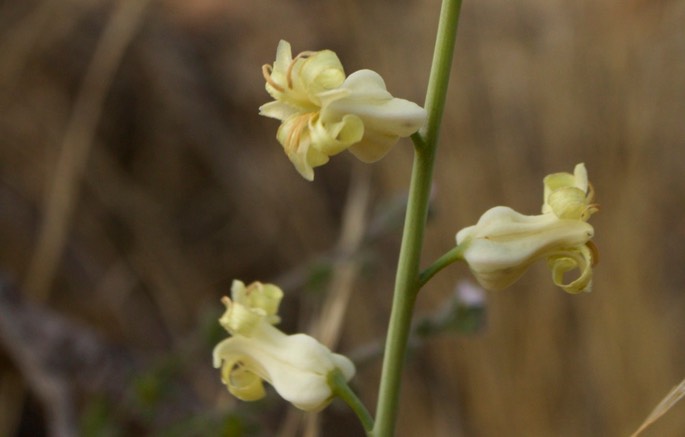
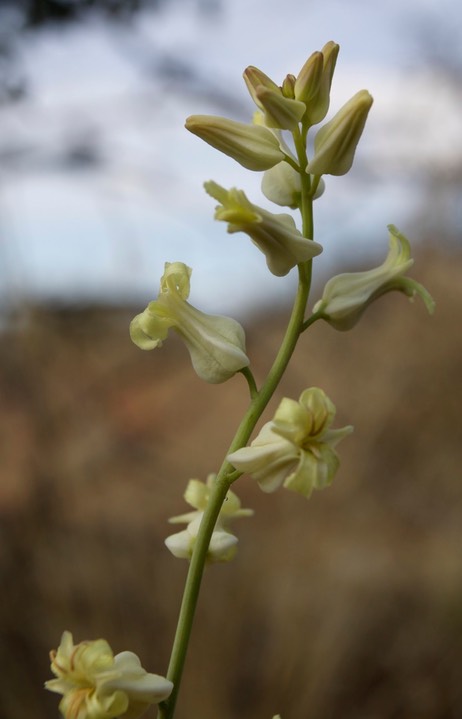
In amongst the petroglyphs at the Pony Hills site Arizona Jewel Flower, Streptanthus carinatus arizonicus, can often be found. The species (Lyreleaf Jewelflower) has a range limited to Arizona, New Mexico, and Texas (one record) in the United States and in Baja California and Chihuahua in Mexico. There are two subspecies, the one shown here and the nominate form. It is also called Arizona Twistflower.
This flower blooms early (February to April) in well drained sandy and rocky soils (which this area abounds in).
The subspecies was first described by Serano Watson (1826 to 1892) in 1890 as Streptanthus arizonicus and later as Disaccanthus arizonicus by Edward L. Greene. Still later it was designated as the subspecies by Kruckeberg, Rodman, and Worthington. At that time it was lumped with Streptanthus carinatus, which was first described by Charles (Carlos) Wright from a specimen he collected 60 miles below El Paso in March 1852.