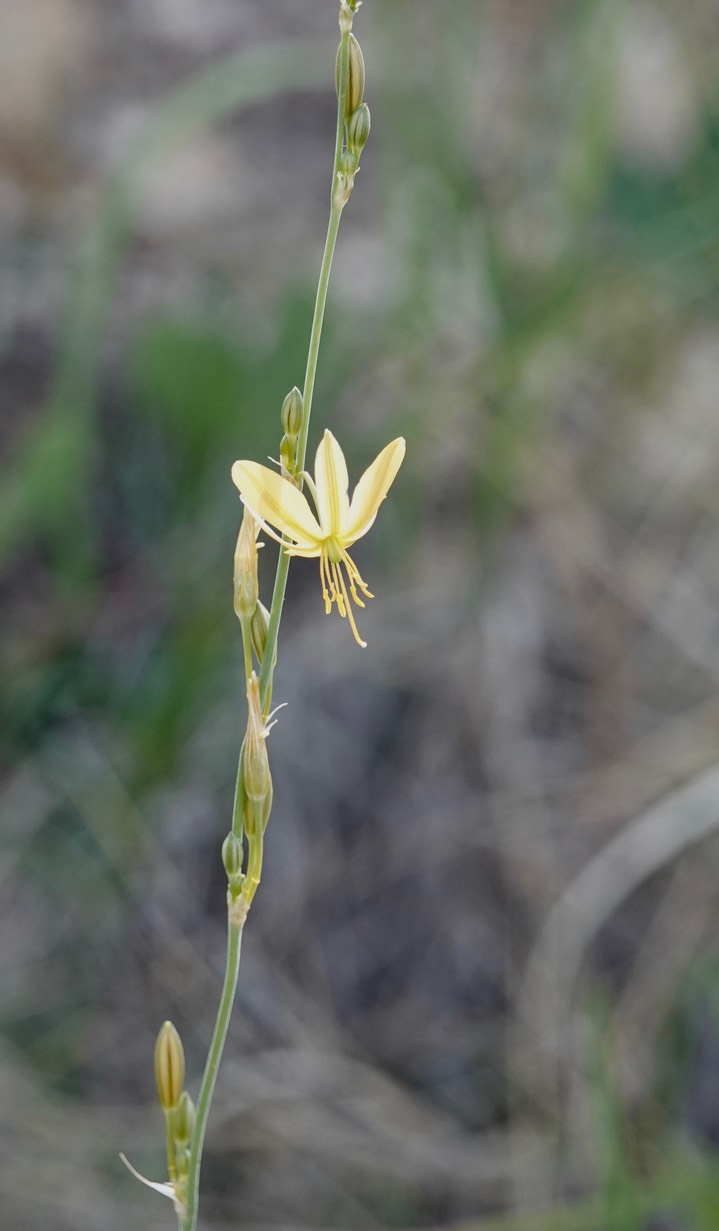
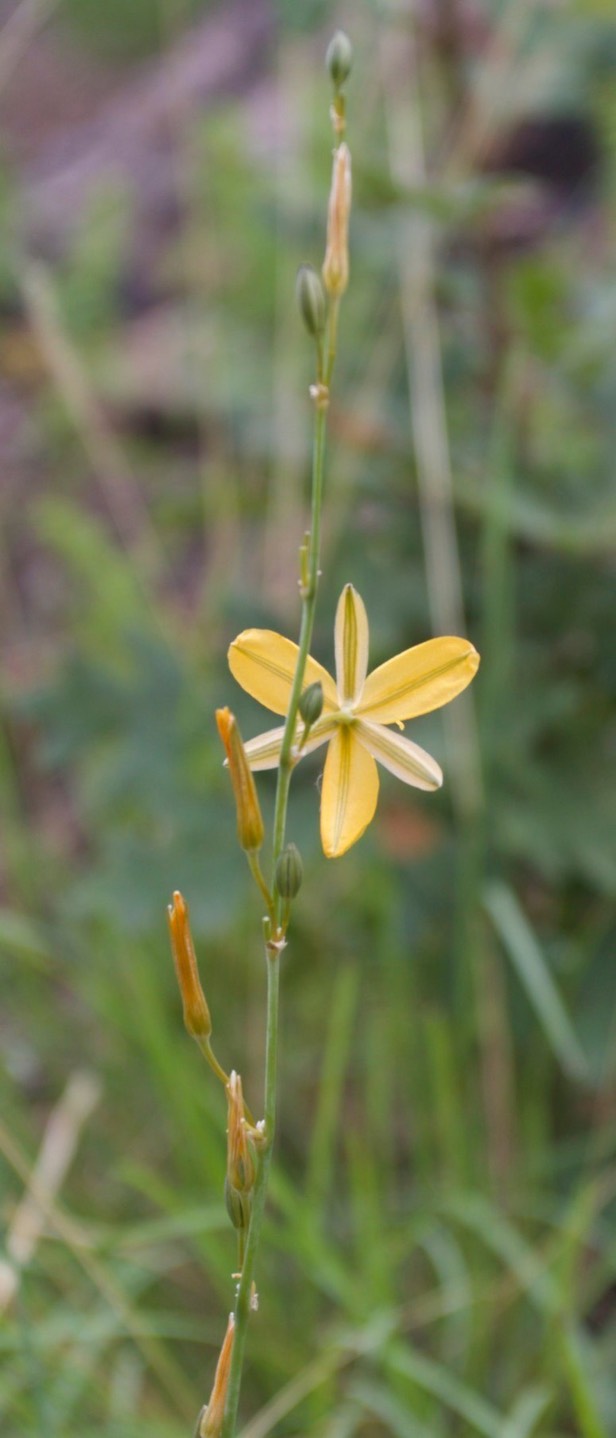
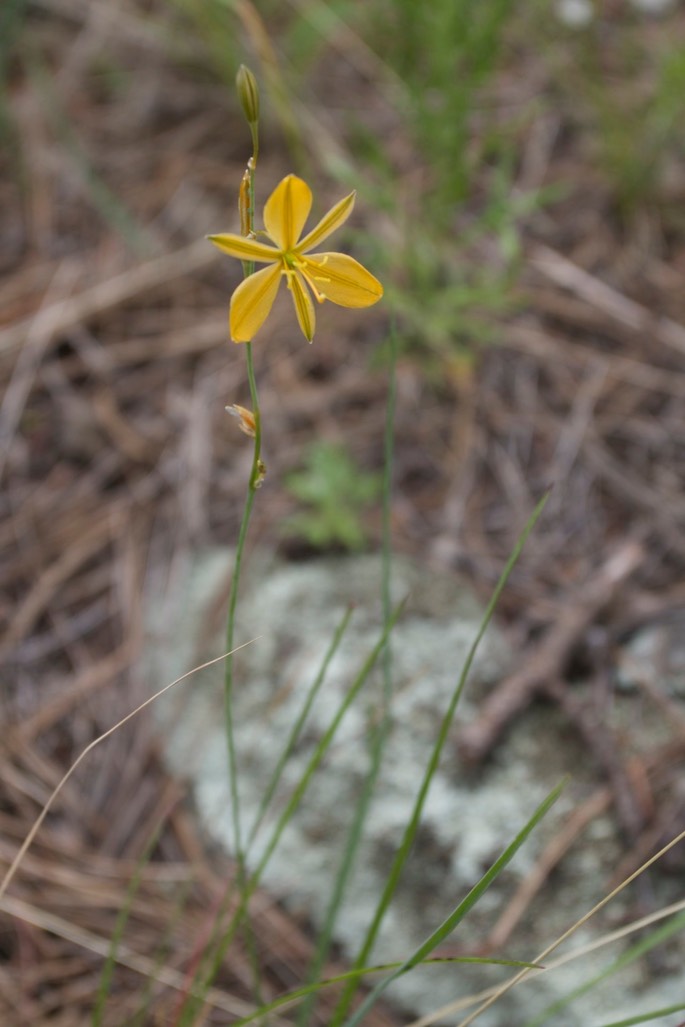
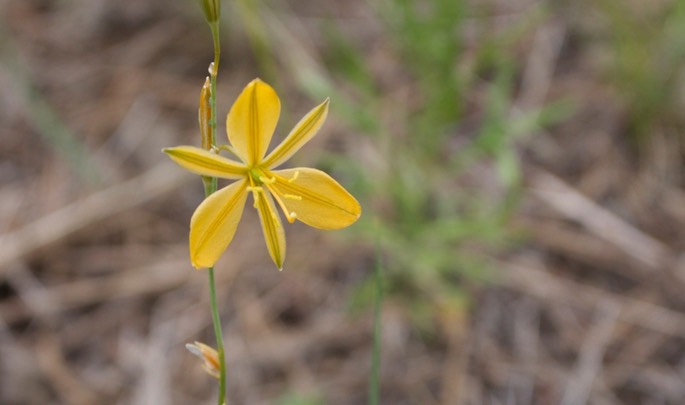
Echeandia flavescens
Crag Lily
Sawyers Peak Trail
& Bald Hill, east
slope of
Black Range
New Mexico
August
The “FLORA" of the Black Range
“E"
Echeandia flavescens
Crag Lily
Sawyers Peak Trail
& Bald Hill, east
slope of
Black Range
New Mexico
August
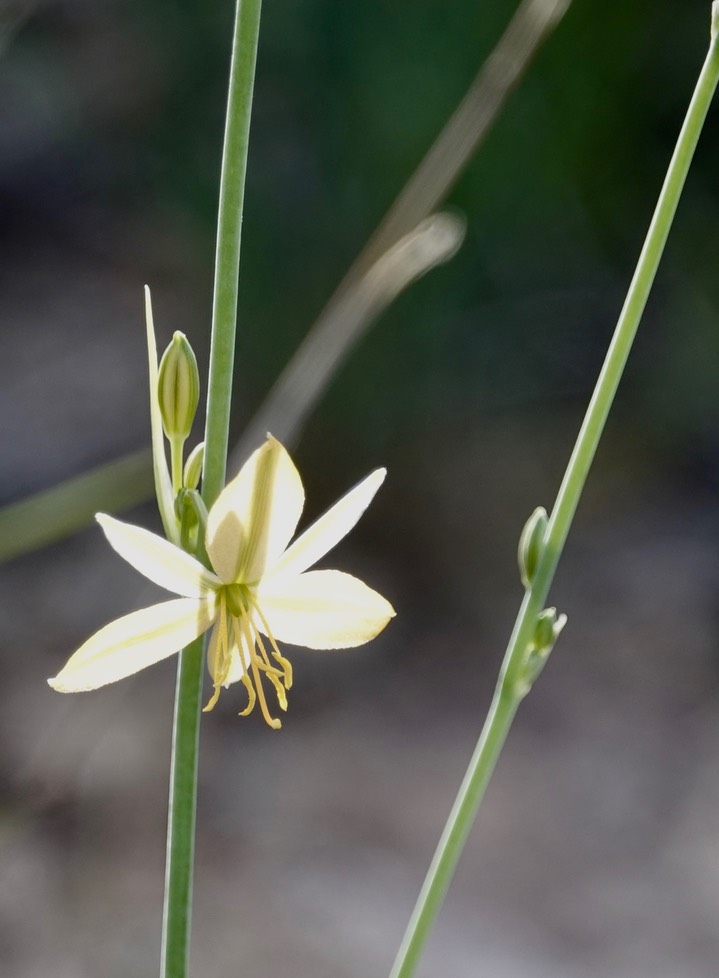
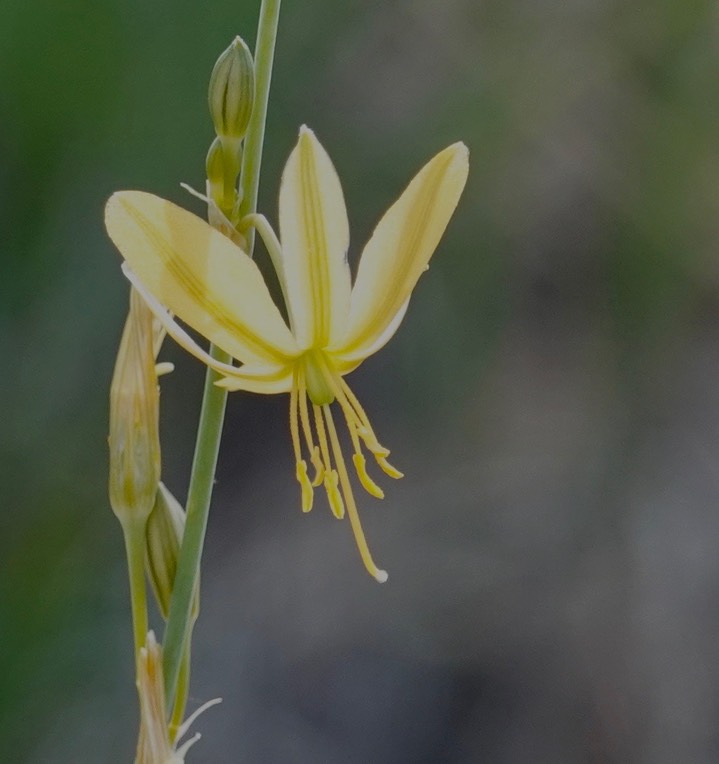
Torrey's Craglily (a.k.a. Crag Lily and/or Amberlily), Echeandia (Anthericum) flavescens is found in the southern parts of New Mexico and Arizona, parts of southwestern Texas, and throughout most of Mexico. The Black Range Crest Trail is close to the highest elevation that it grows. In Arizona this species is protected with a "salvage restricted" categorization. In general, this is a wide spread species which seems to grow well in a wide variety of habitats.
The flower of this species closes in the afternoon and reopens the following morning. Each of the three petals has a greenish stripe down the middle, as do the three similiar (but more narrow) sepals.
Echinocereus coccineus
Scarlet Beehive Cactus
Hillsboro Peak Trail,
e. of Hillsboro, & Apache Peak
Black Range
July
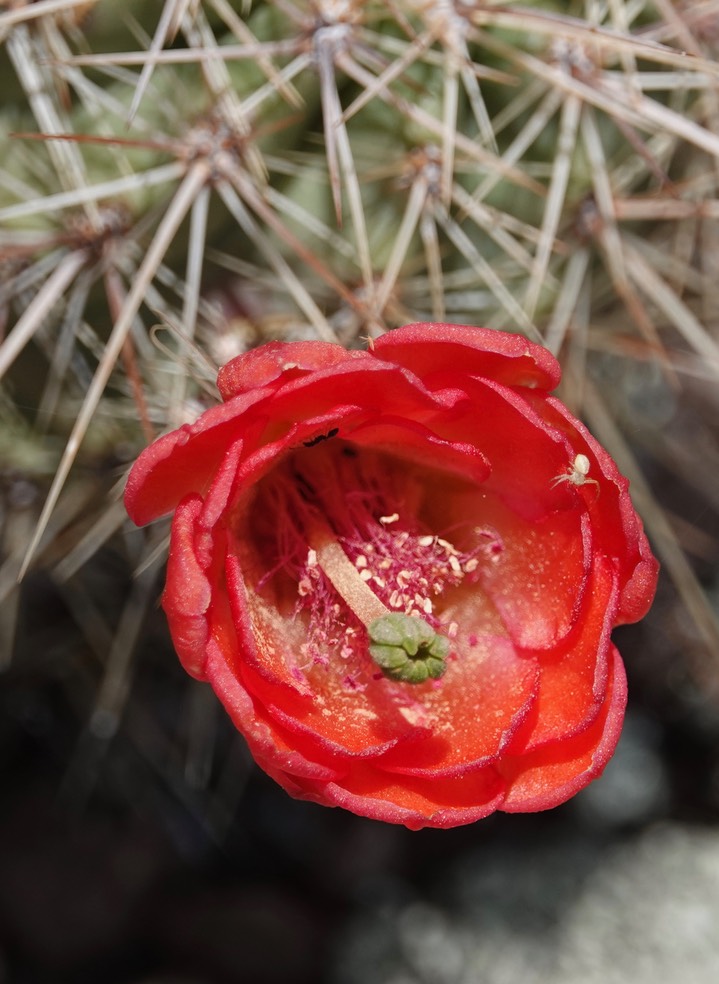
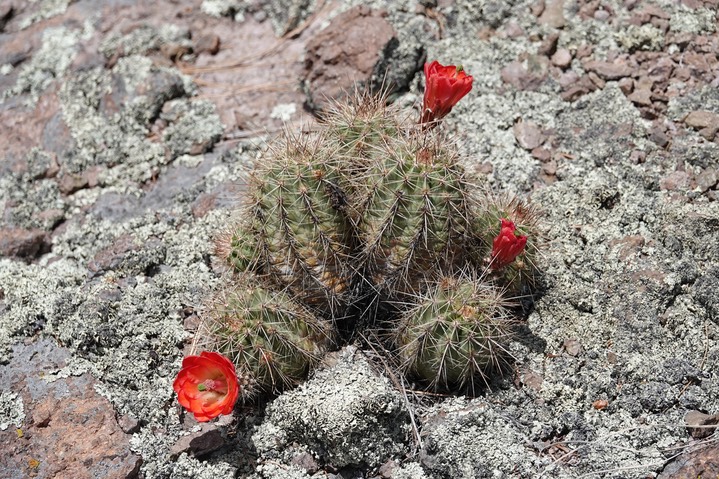
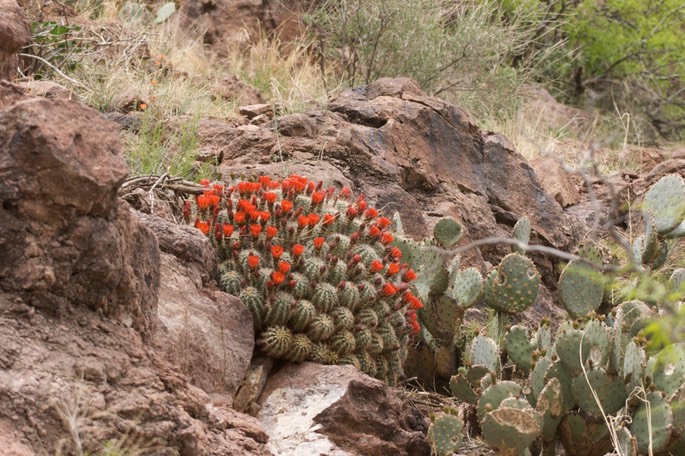
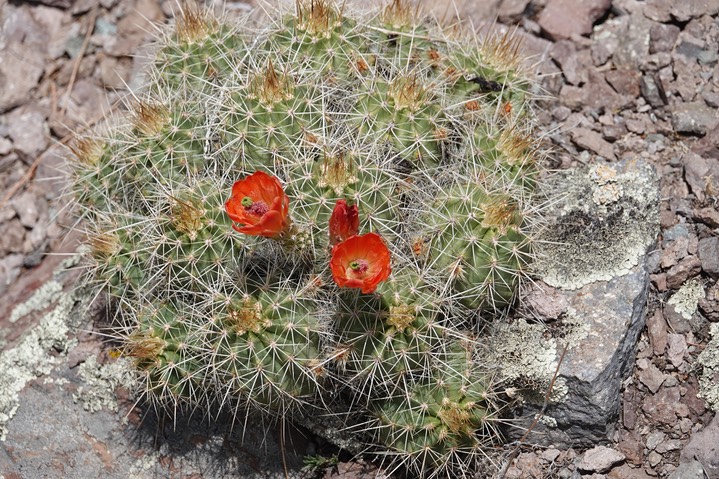
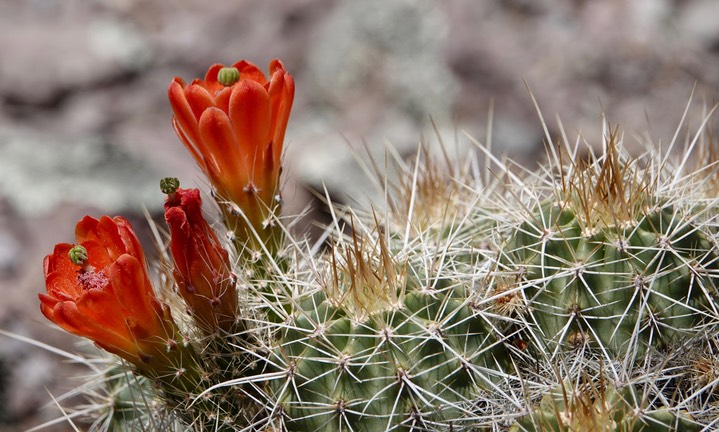
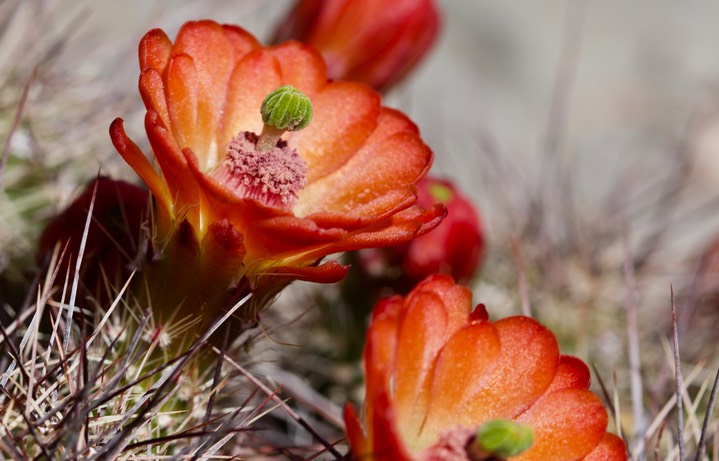
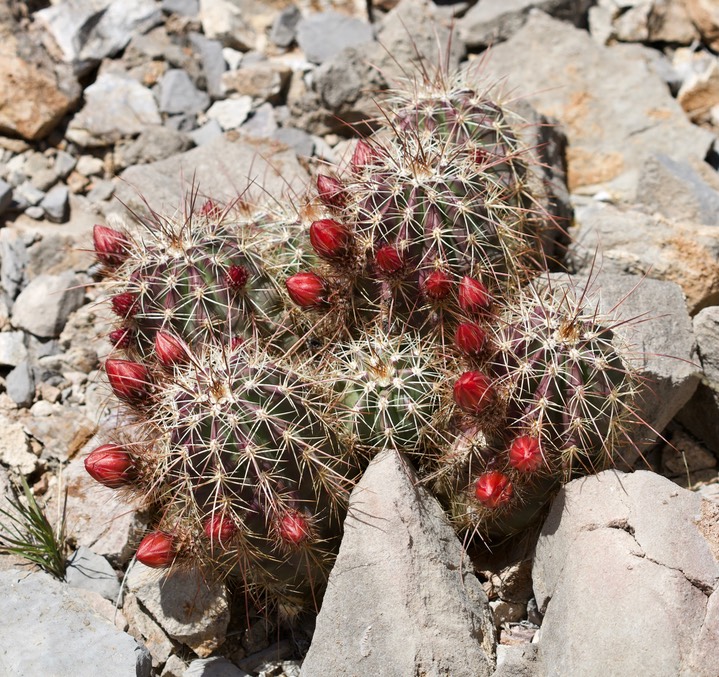
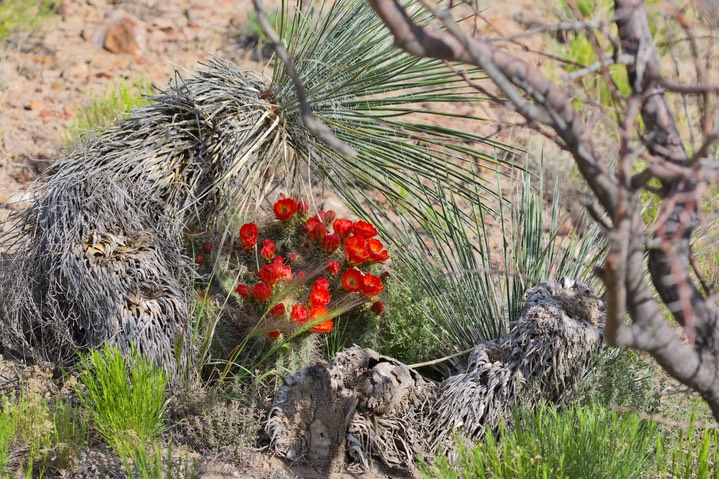
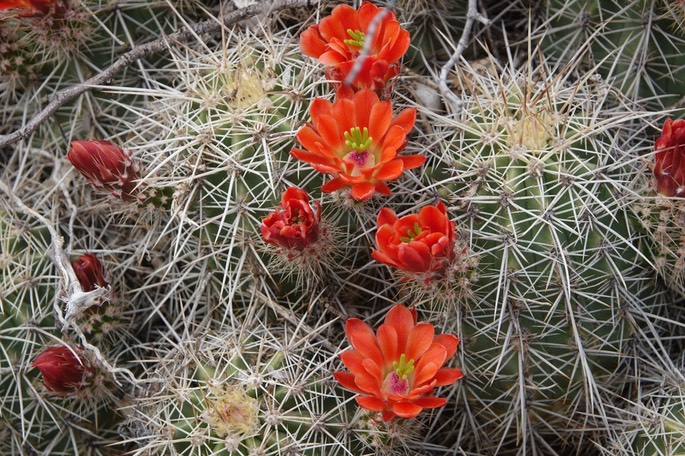
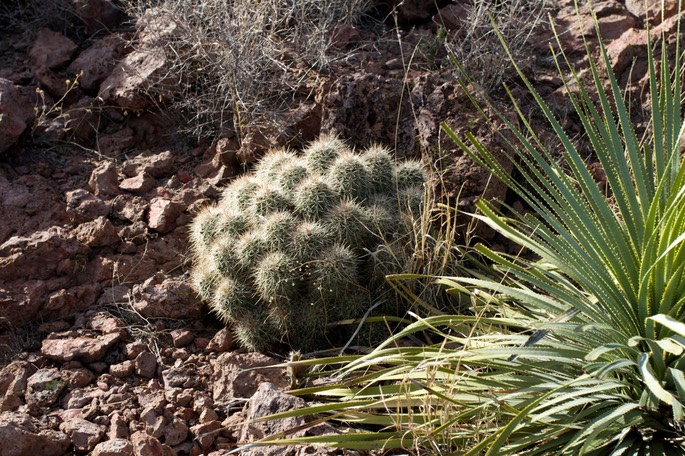
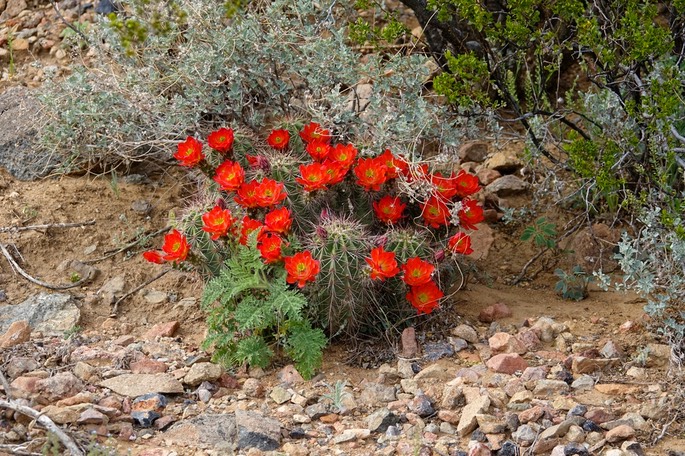
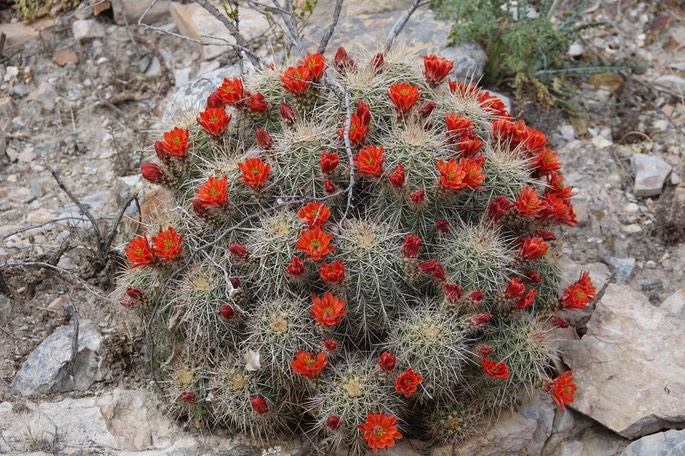
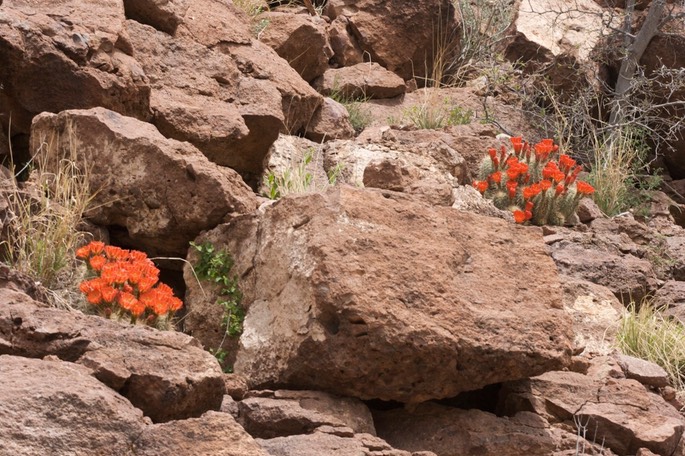
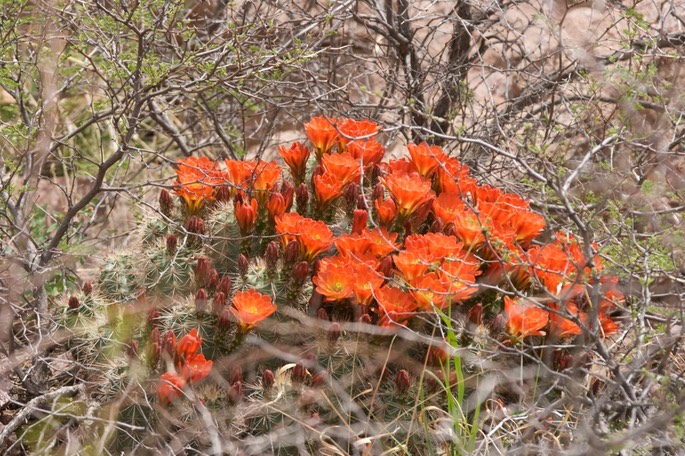
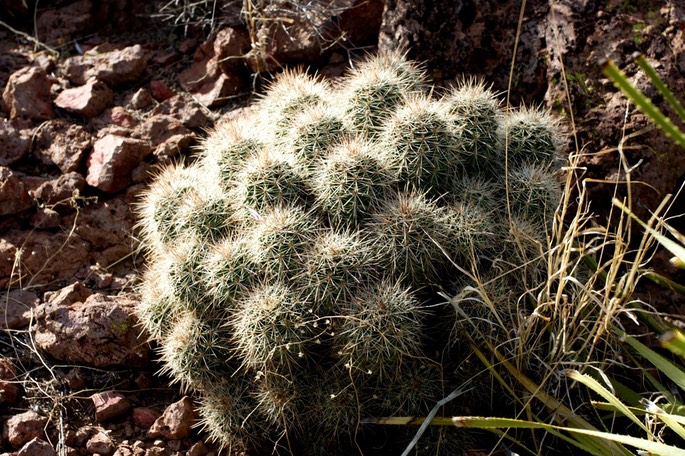
Like many cactus, this species has a plethora of common names. It is the common mounding cactus in our area.
Some of these images were originally misidentified as Echinocereus triglochidiatus. In correspondence of September 27, 2022, David Ferguson noted "very few people still follow the brief lumping of the two that was prevalent following Benson's publications. As far as I am aware, there are no populations of E. trichlochidiatus west of the Rio Grande this far south, though they reach south into the Sacramento Mountains (fairly high up) and into the Tularosa Basin (on gypsum). Some of the plants on the east slope of the Black Range resemble true E. trichochidiatus, but they represent the same few-ribbed variant of E. coccineus that occurs in the Trans-Pecos and in the Guadalupe and on the east side of the Sacramento Mountains (the name is debated - var. gurneyi is the oldest varietal name for these, but some say that is a hybrid and now there is a newer name - ssp. transpecosensis). In most of the rest of the Black Range the plants fit the rather weekly discriminated var. roseus or var. coccineus best. E. coccineus is tetraploid and mostly dioecious, while E. trichochidiatus is diploid and monoiecious. E. trichodiatus has generally sharper ribs, usually not over 7 in number, and stout spines that are usually angular in cross-section. E. coccineus usually has 7 or more (in most varieties 9 or more) ribs that tend to be more rounded, and spines are usually round in cross-section (they may be rather flattened though)."
Echinocereus fendleri
Fendler’s Hedgehog Cactus
Ready Pay Gulch
East of Hillsboro
New Mexico
March
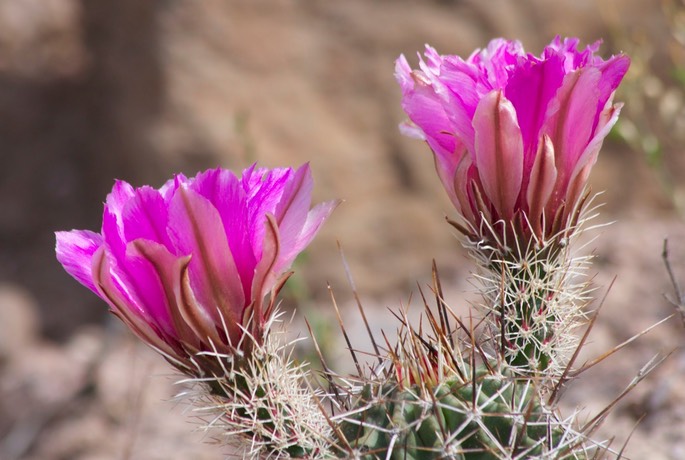
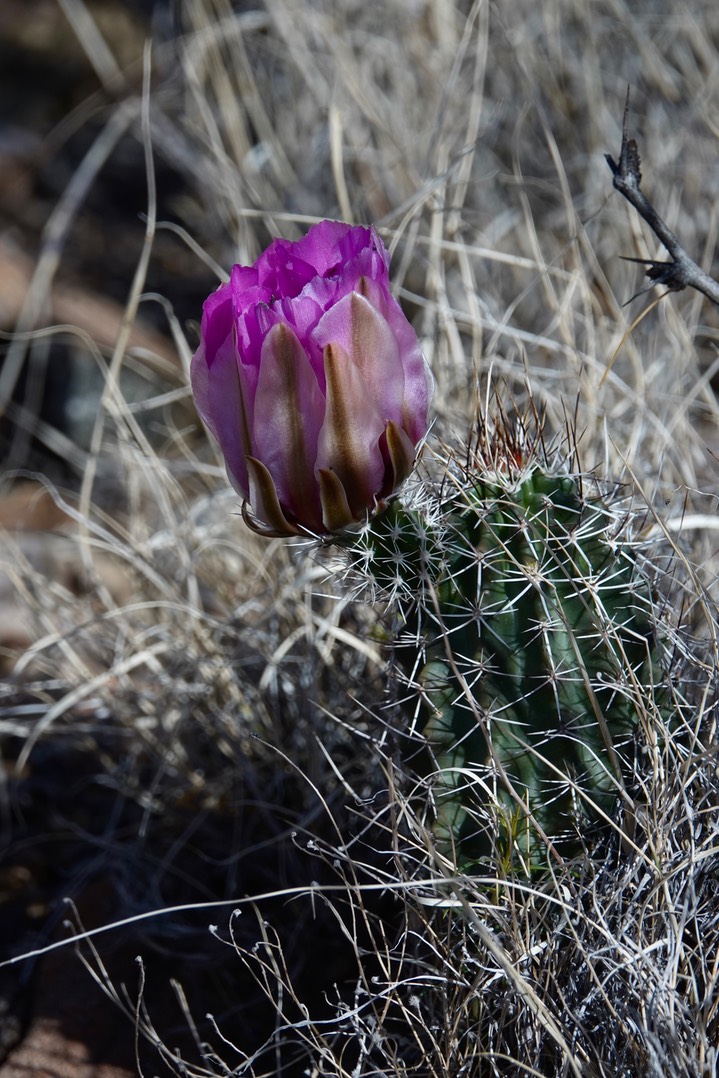
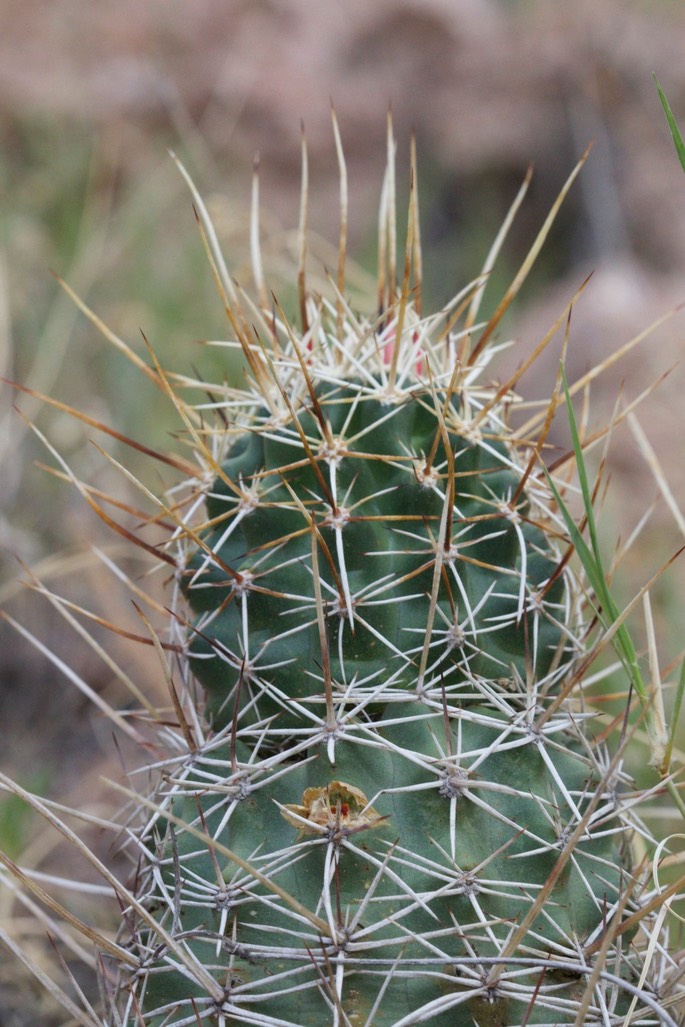
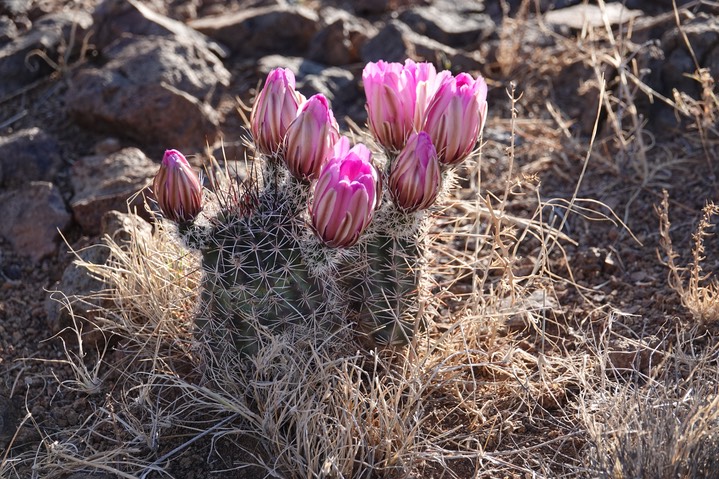
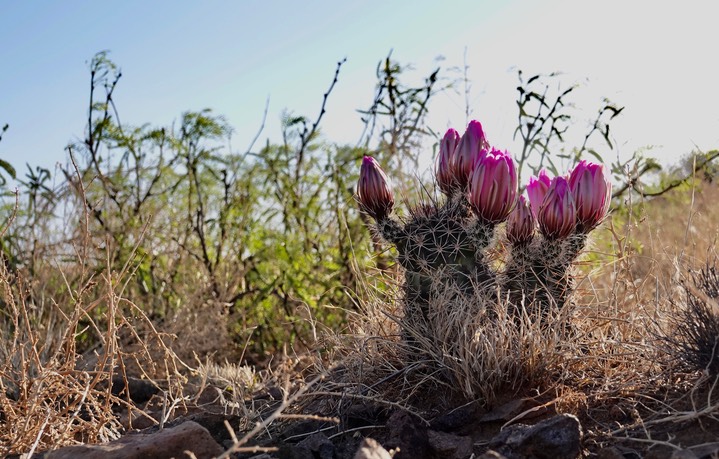
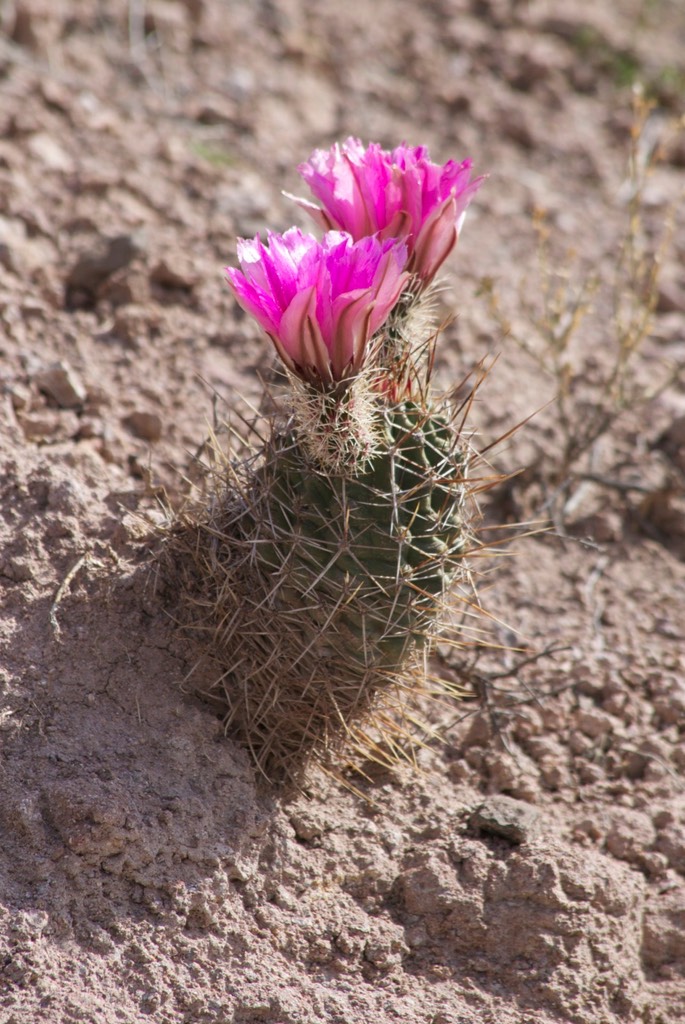
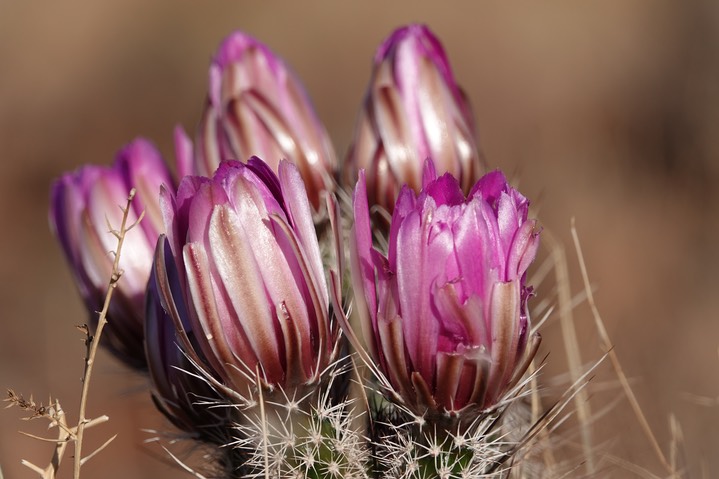
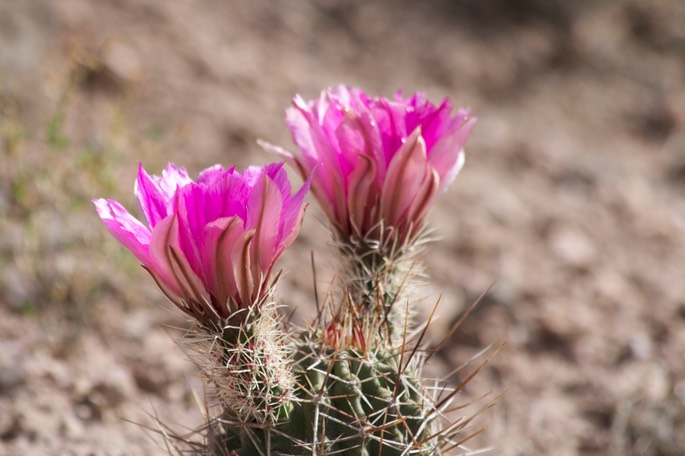
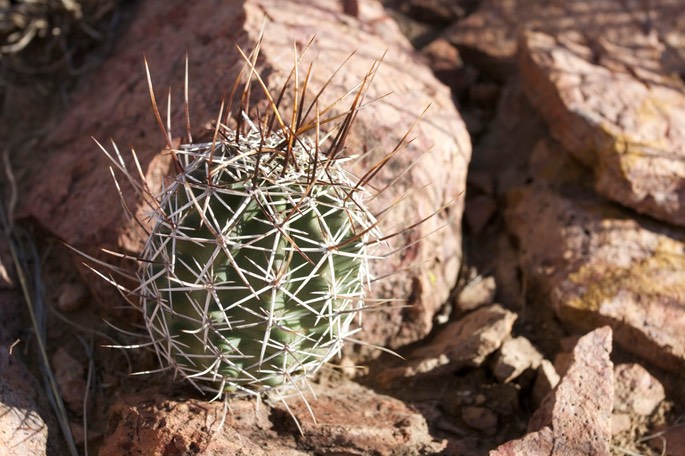
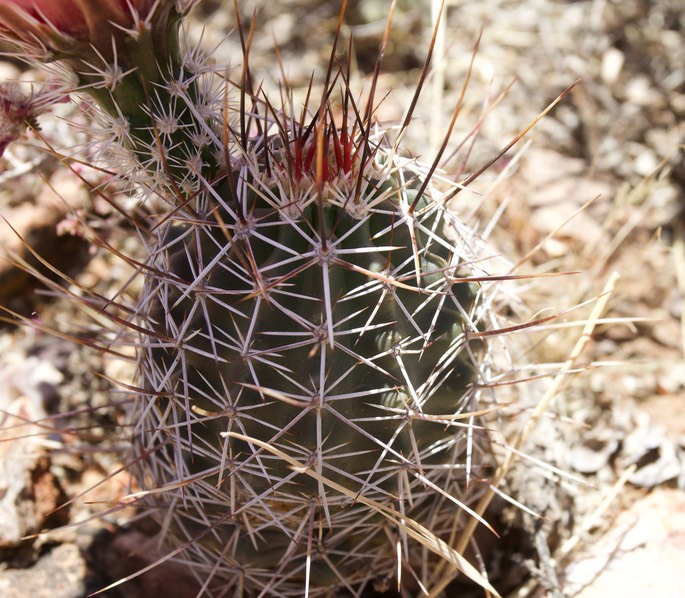
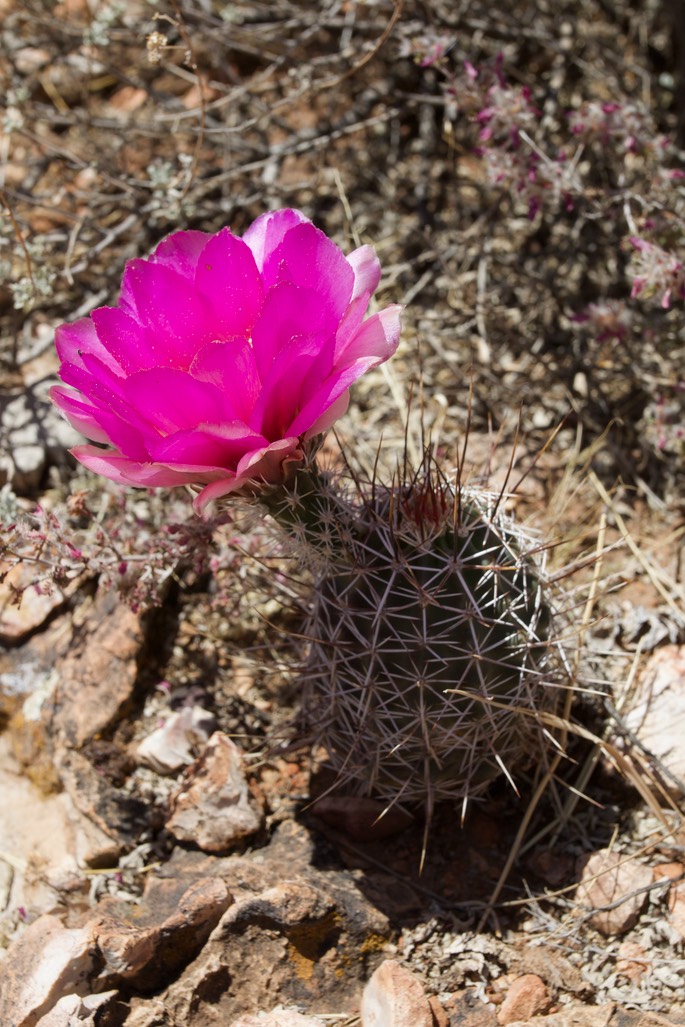
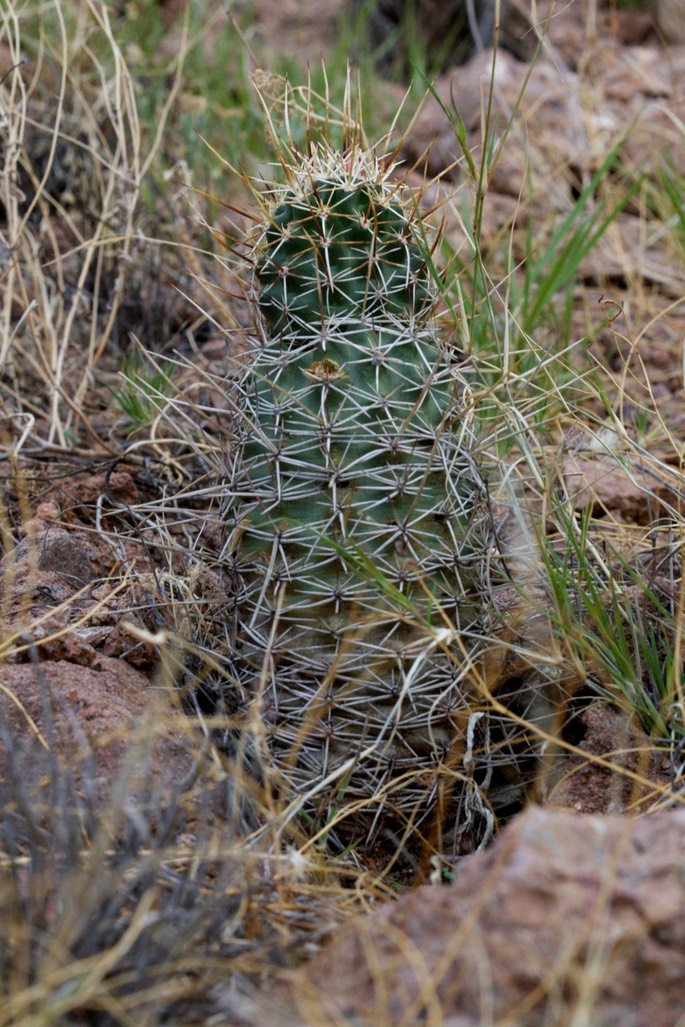
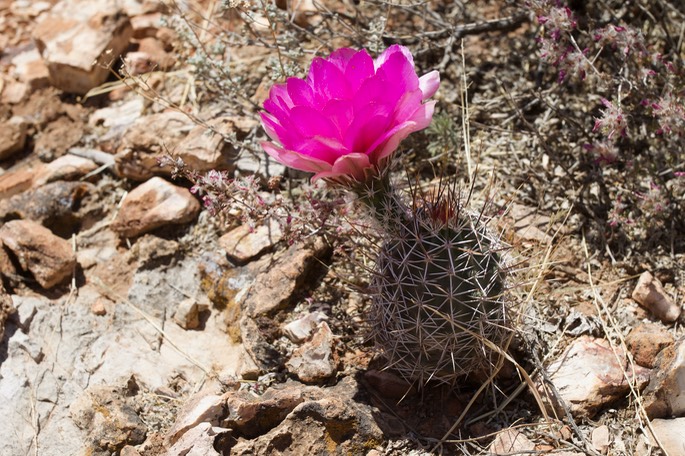
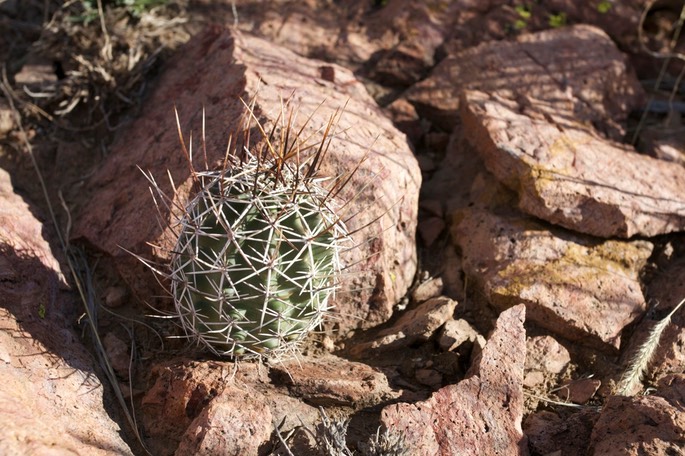
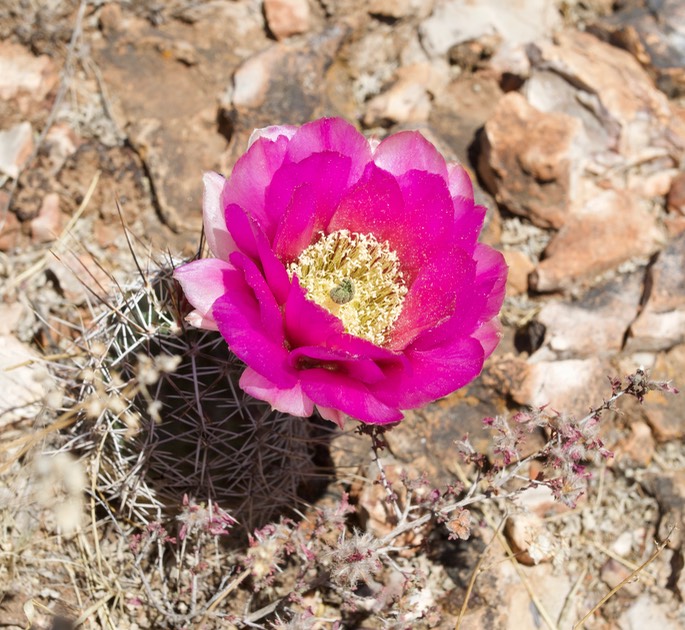
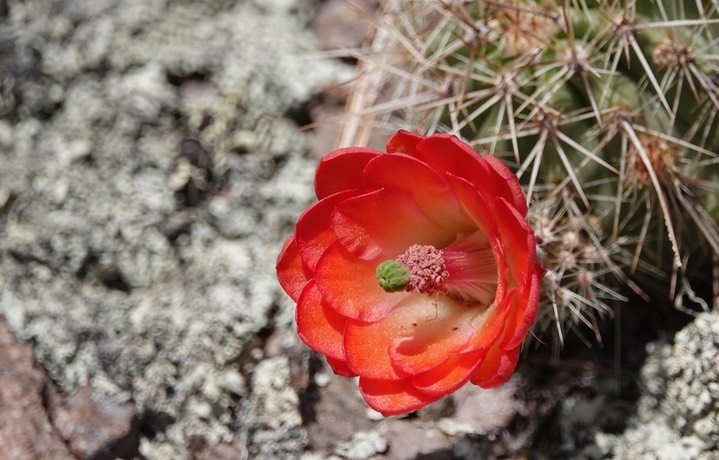
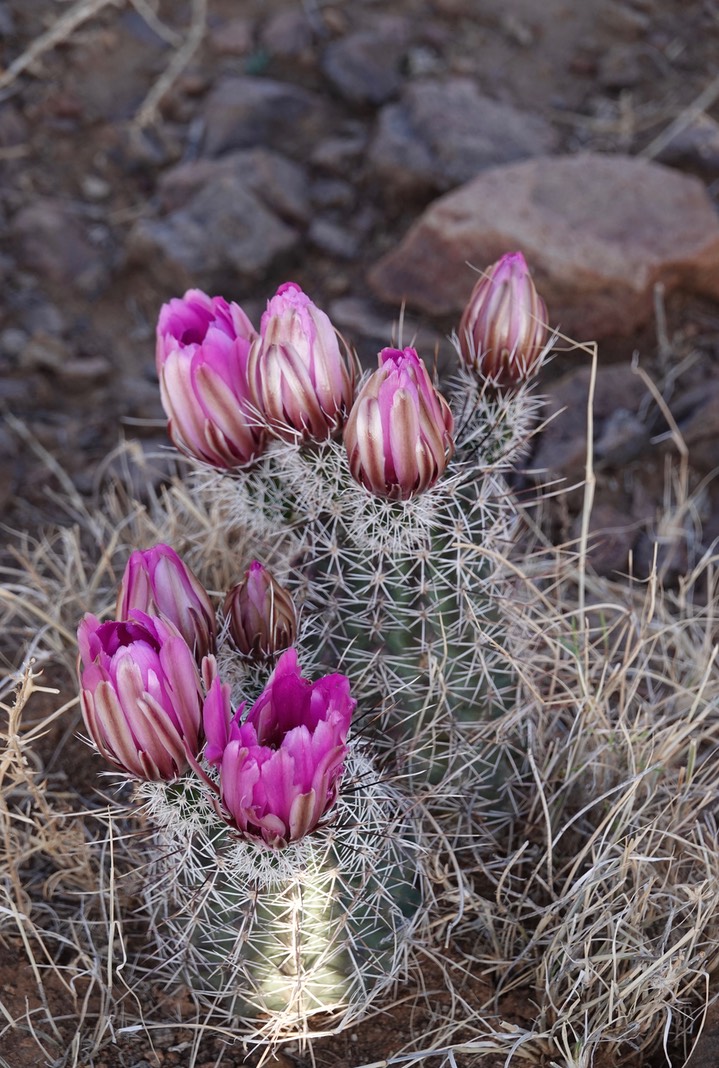
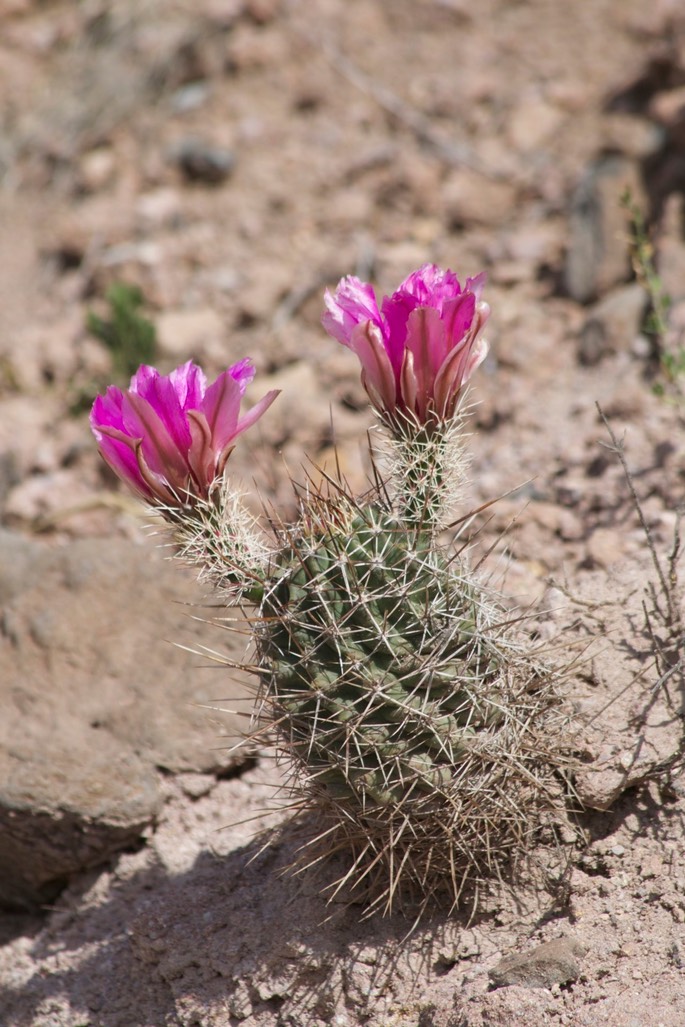
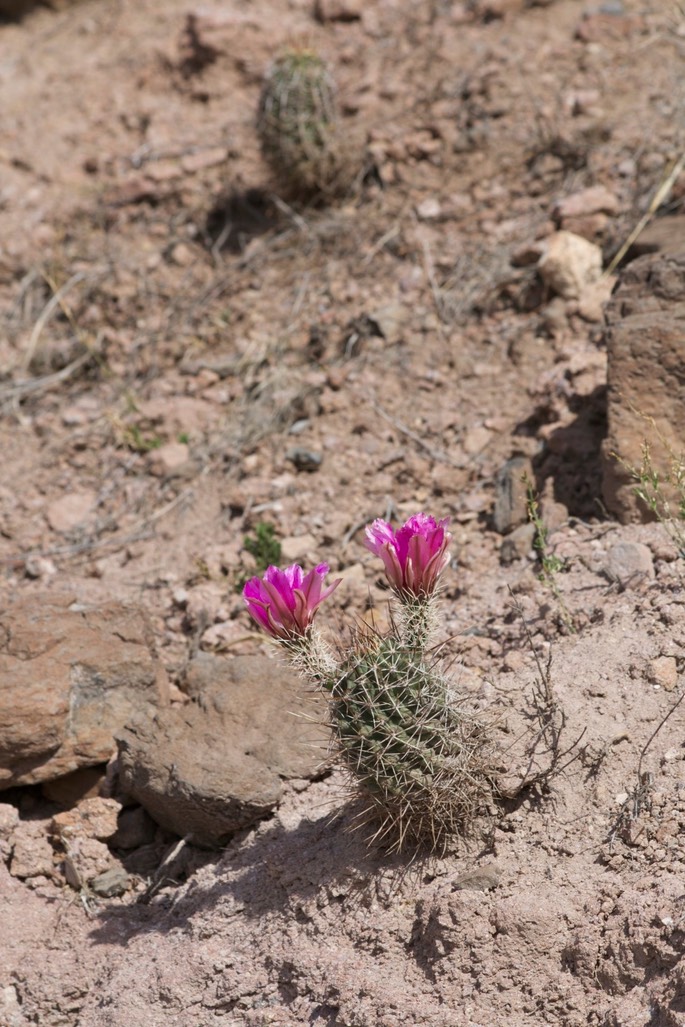
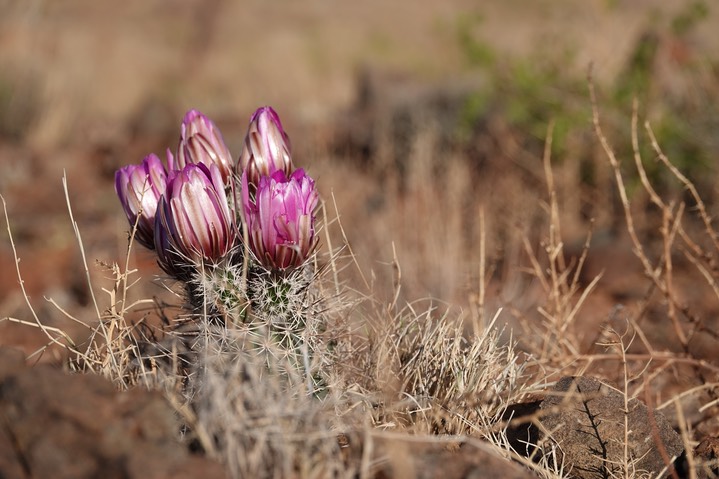
Echinocereus fendleri tends to grow at higher elevations than species like the Fishhook. Some authorities recognize as many as eight varieties of this species.
Cactus have adapted to the harsh environment found in the deserts of the America’s by developing a number of interesting features. We all know, for instance, that the surface of a cactus is waxy and hard. But it is thicker on the “sunny side” of the plant, increasing its protective value. And the spines, we all know they are to be avoided but in some species they are thick enough to provide shading to the surface of the cactus.
Cacti open their stoma at night so that oxygen and carbon dioxide can be exchanged. Carbon dioxide is required for photosynthesis and oxygen is a by-product of the process. The exchange of raw material occurs at night when there is less loss of water from the open stoma. During the day, when photosynthesis occurs, the stoma are closed.
In the United States, this species is found primarily in Arizona and New Mexico. In Mexico it is found in Chihuahua and Sonora. This species was first described by Engelmann in 1849 as Cereus fendleri. In 1860, Sencke redescribed it as Echinocereus fendleri. There are two recognized subspecies, the nominate form and E. f. rectispinus (which has been described as E. rectispinus and E. hempelii, in the past). It is also known as Pinkflower Hedgehog Cactus.
This species is listed in CITES Appendix II, its “trade (is) controlled to avoid use incompatible with species survival”.
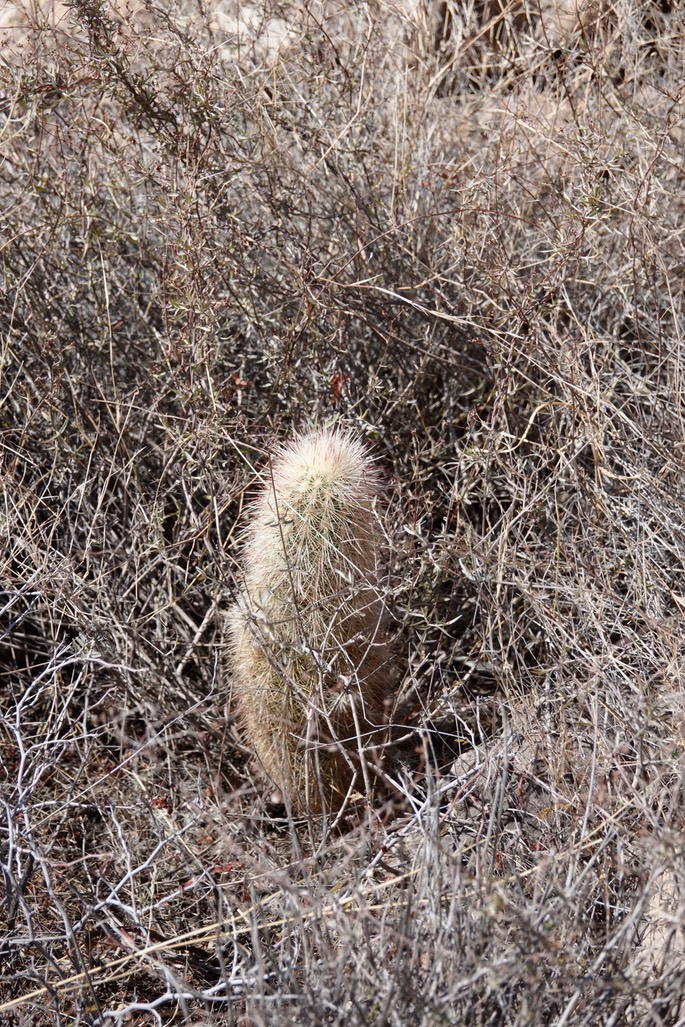
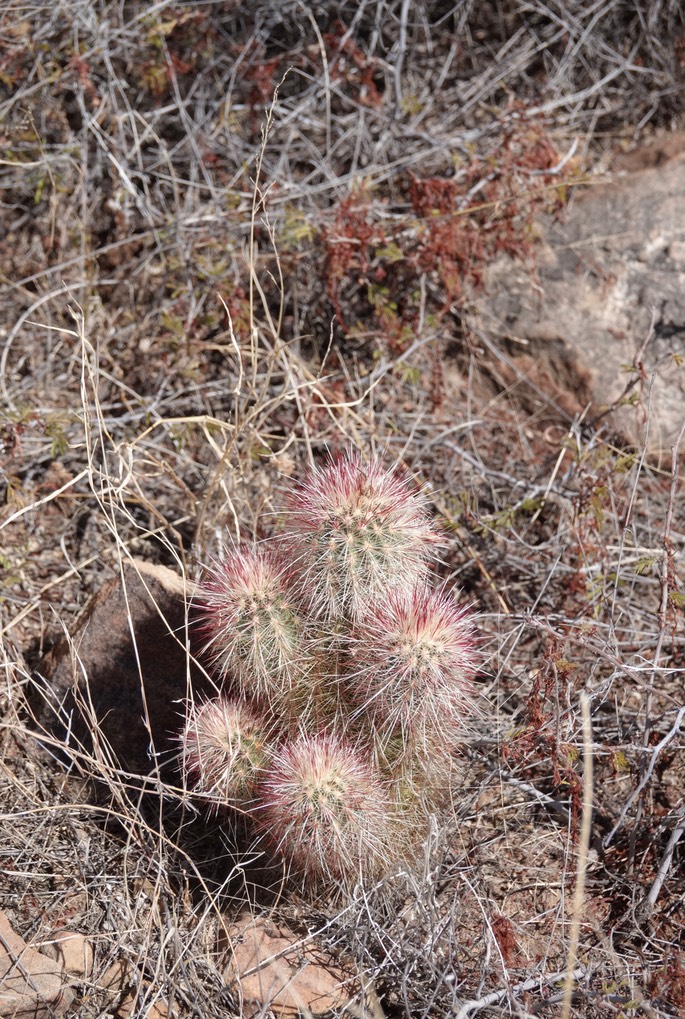
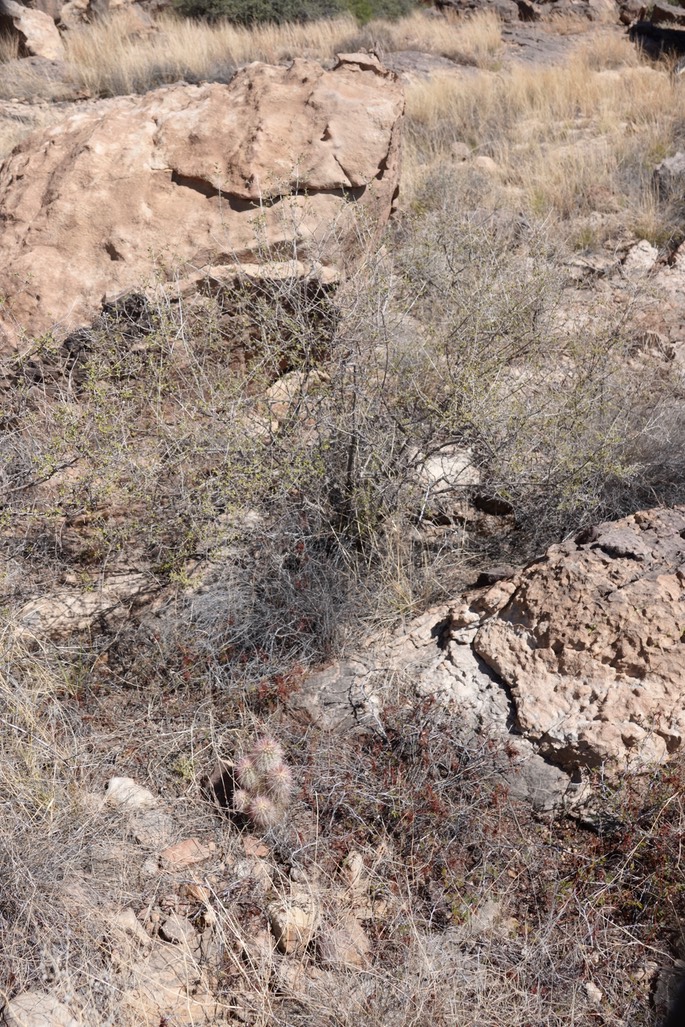
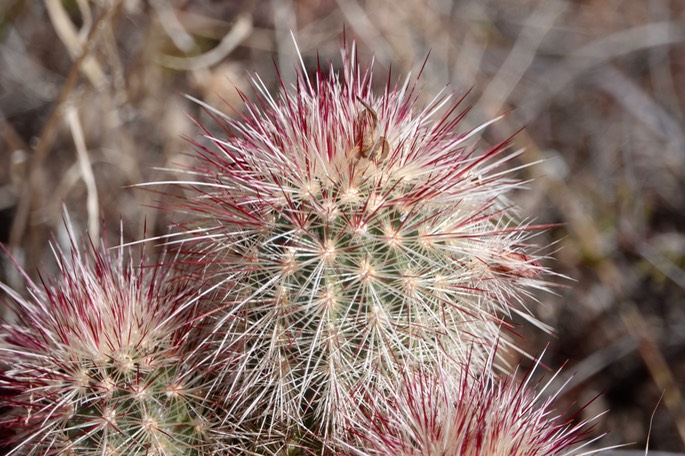
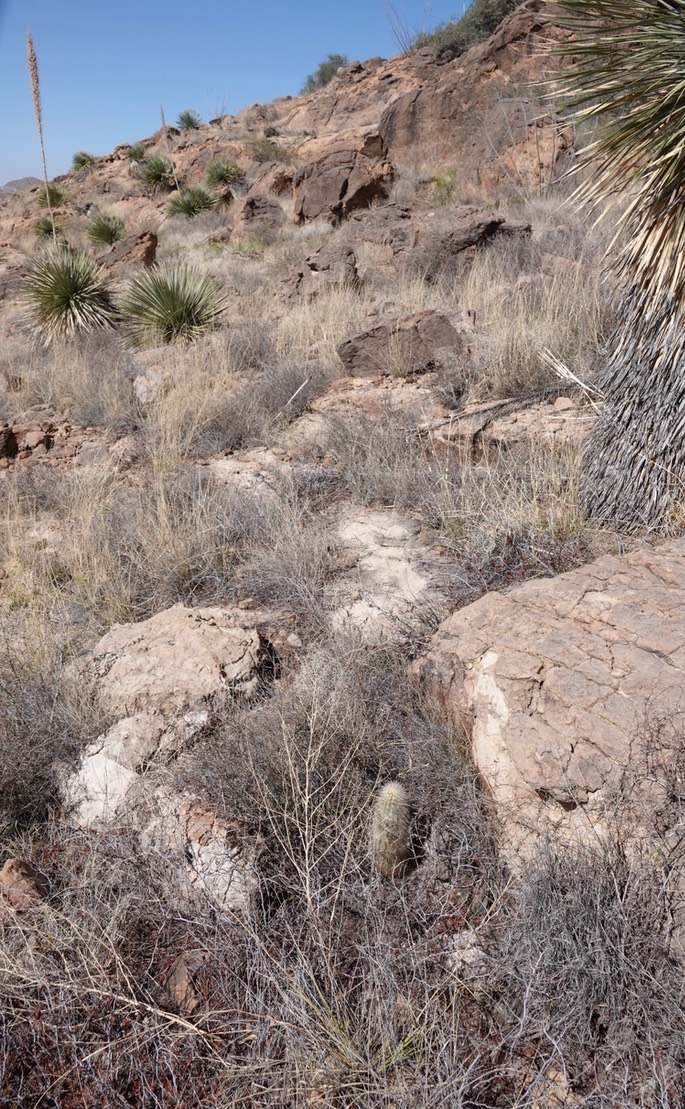
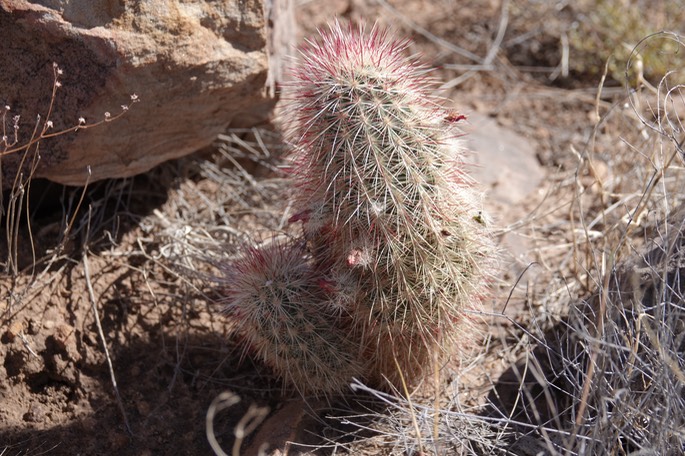
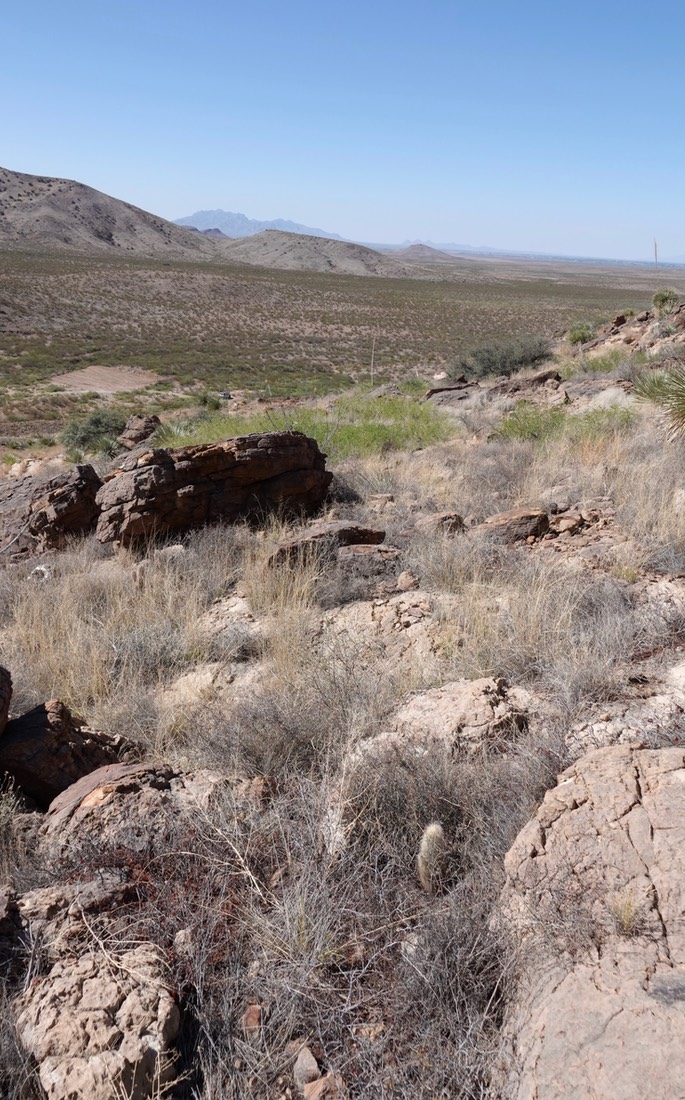
Echinocereus ryolithenis
Formerly E. chloranthus r. (split)
Frying Pan Canyon
sw section of Cooke’s Range
New Mexico
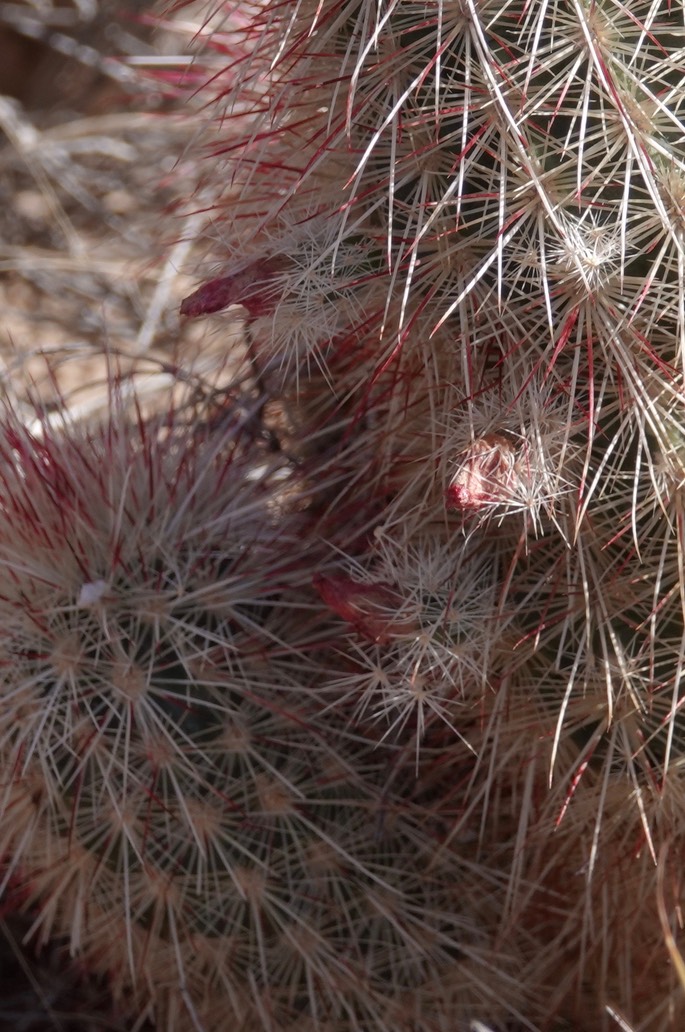
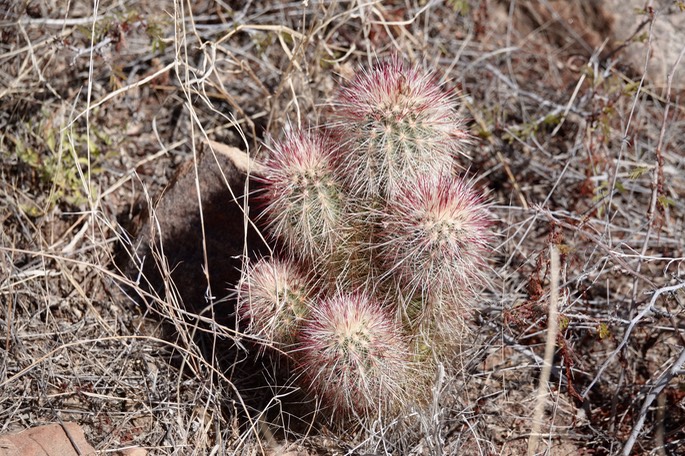
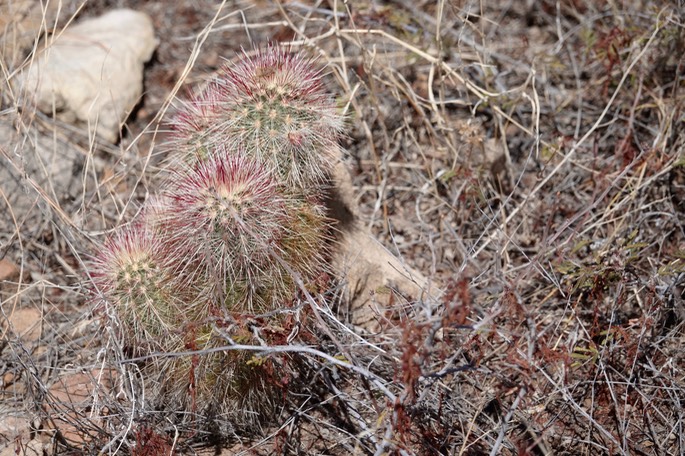
Echinomastus intertextus
Chihuahua Pinapple Cactus
North Wicks Canyon
East of Hillsboro
New Mexico
Mid-March
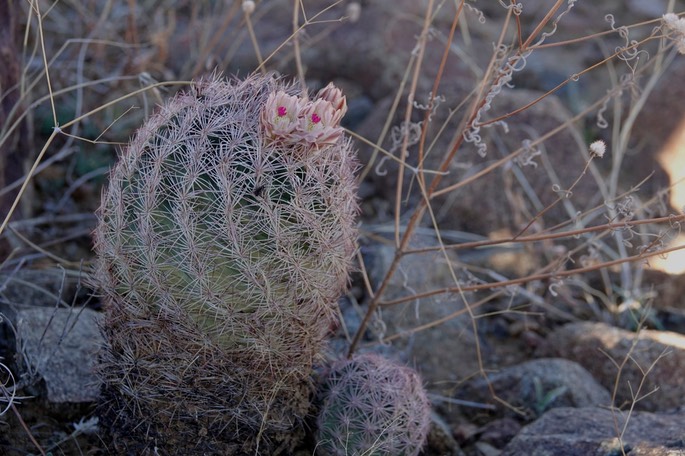
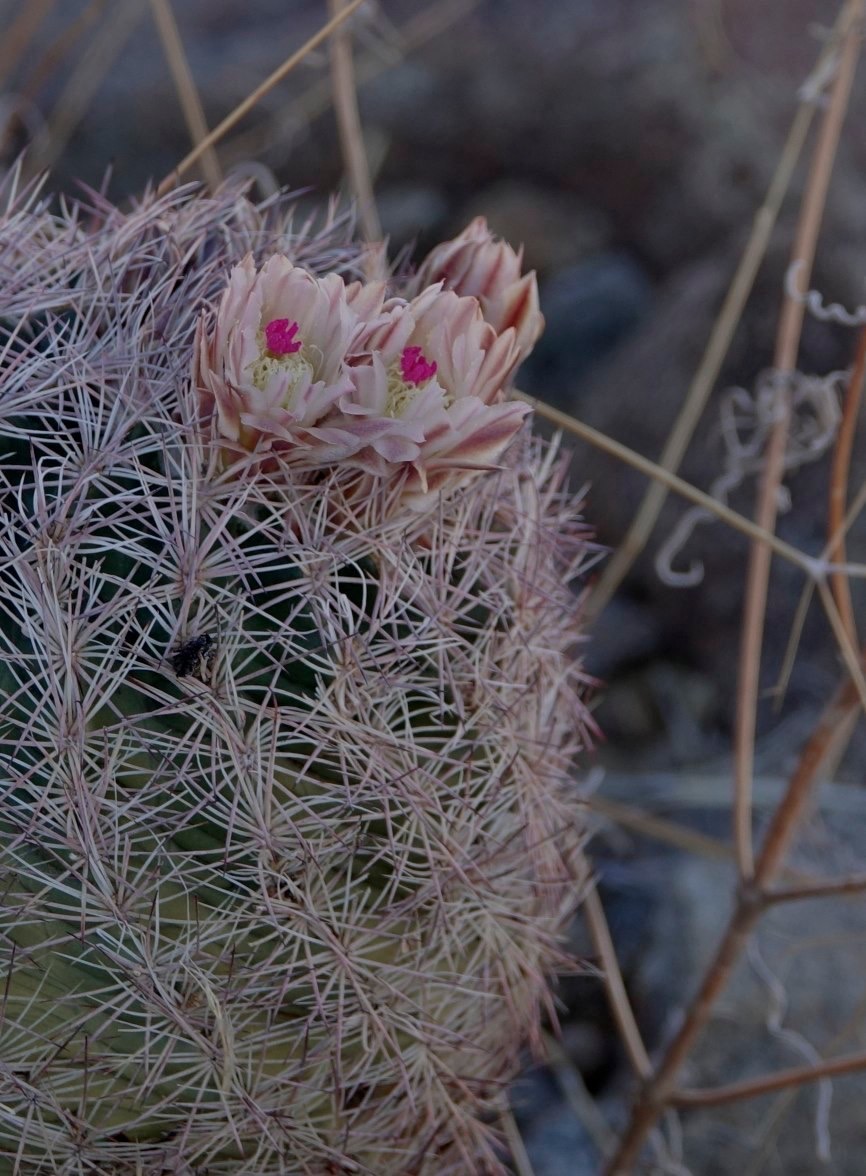
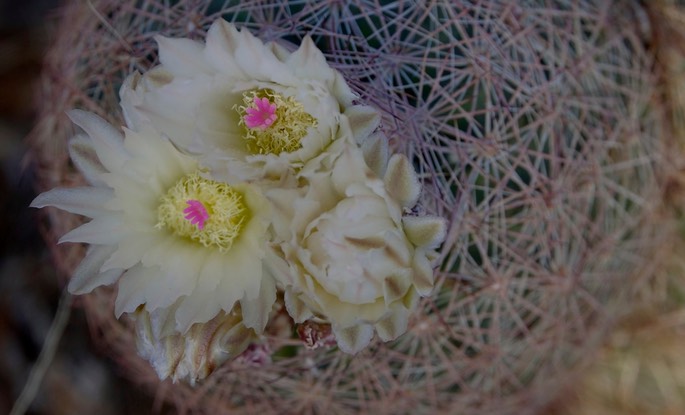
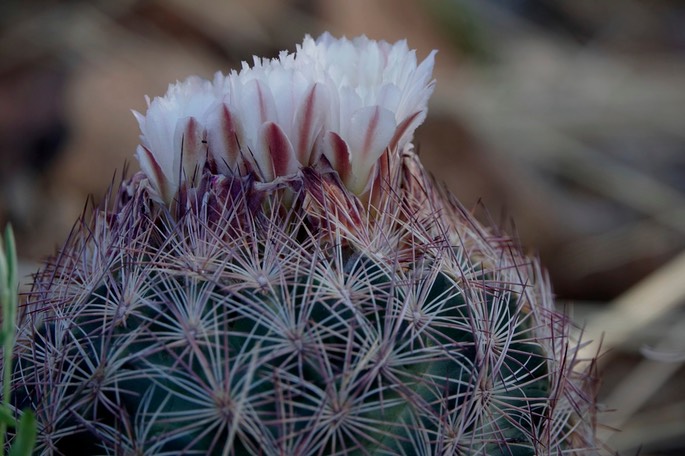
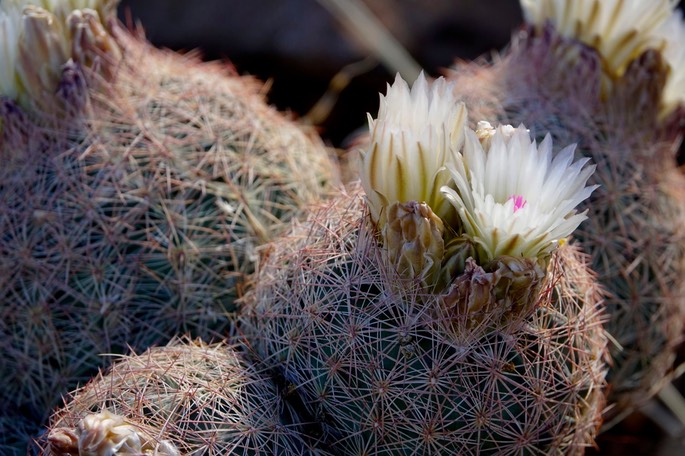
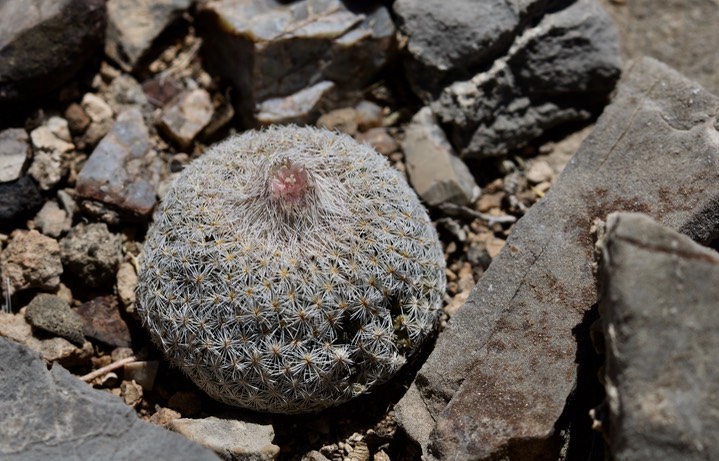
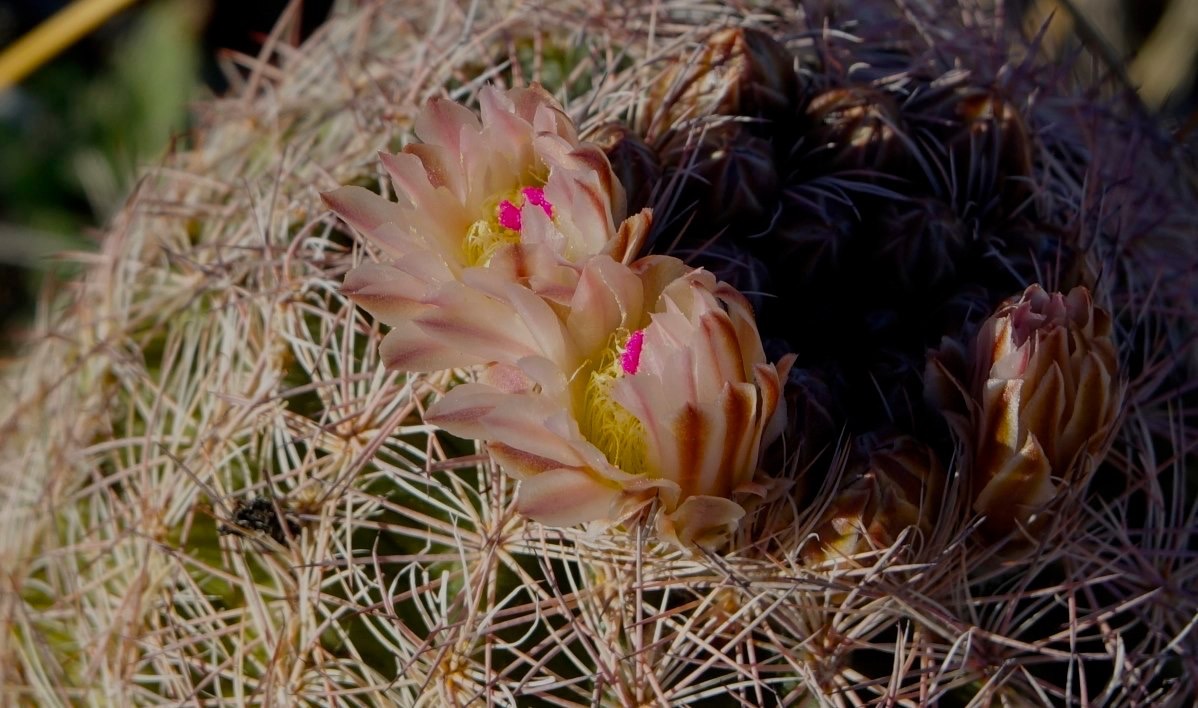
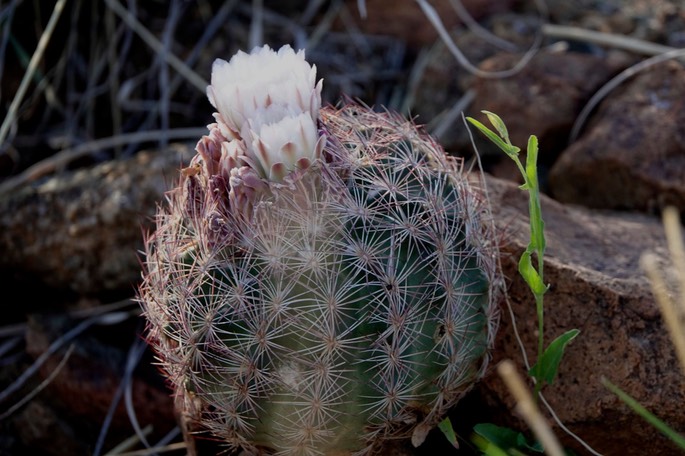
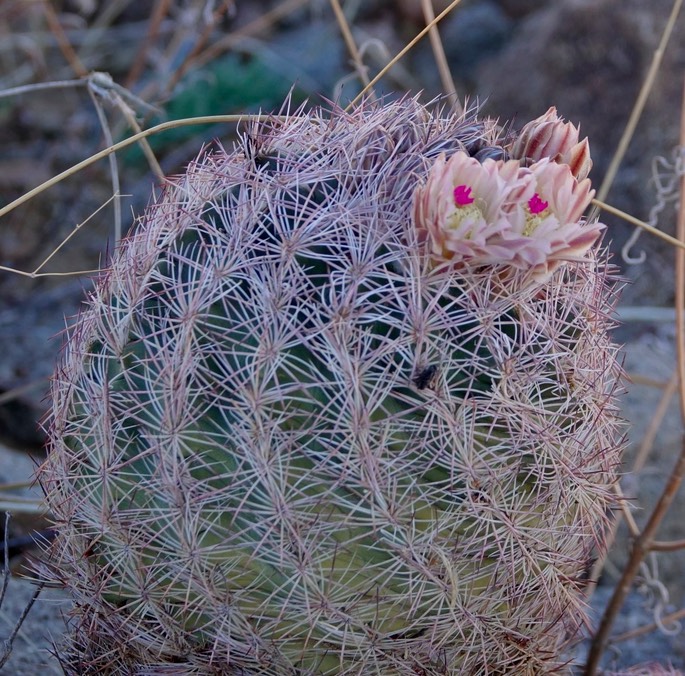
The Chihuahua Pinapple Cactus plants shown here started to bloom in mid-March. Scientific synonyms for Echinomastus intertextus include Echinocactus intertextus, Neolloydia intertexta, Scierocactus intertextus, Pediocactus intertextus, and Echinomastus dasyacanthus. Its English common names include Chihuahua Pinapple Cactus, Early-bloomer Cactus, White Fishhook Cactus, Interlacing Spine Cactus, White-flowered Viznagita, and Woven-spine Pineapple Cactus.
Within the United States this species is found primarily in New Mexico with a bit in the Big Bend area of Texas. It is also found in northern Mexico (Sonora, Chihuahua, and Coahuila).
This species was first described, as Echinocactus intertextus, by Englemann in 1856. There are two recognized varieties; E. i. var. dasyacanthus and E. i. var. intertextus. The current description of this species was made by N. L. Britton & J. N. Rose in 1922 in their four volume The Cactaceae - Descriptions and Illustrations of Plants of the Cactus Family. Volume 3, pages 149-150, describe this species and are shown below. The internet being what it is, all four volumes are available for free in digital form.
SEINet has several photographs of live plants and of specimen sheets of this species.
The Encyclopedia of Life is one of the sources which lists this species as Scierocactus intertextus.
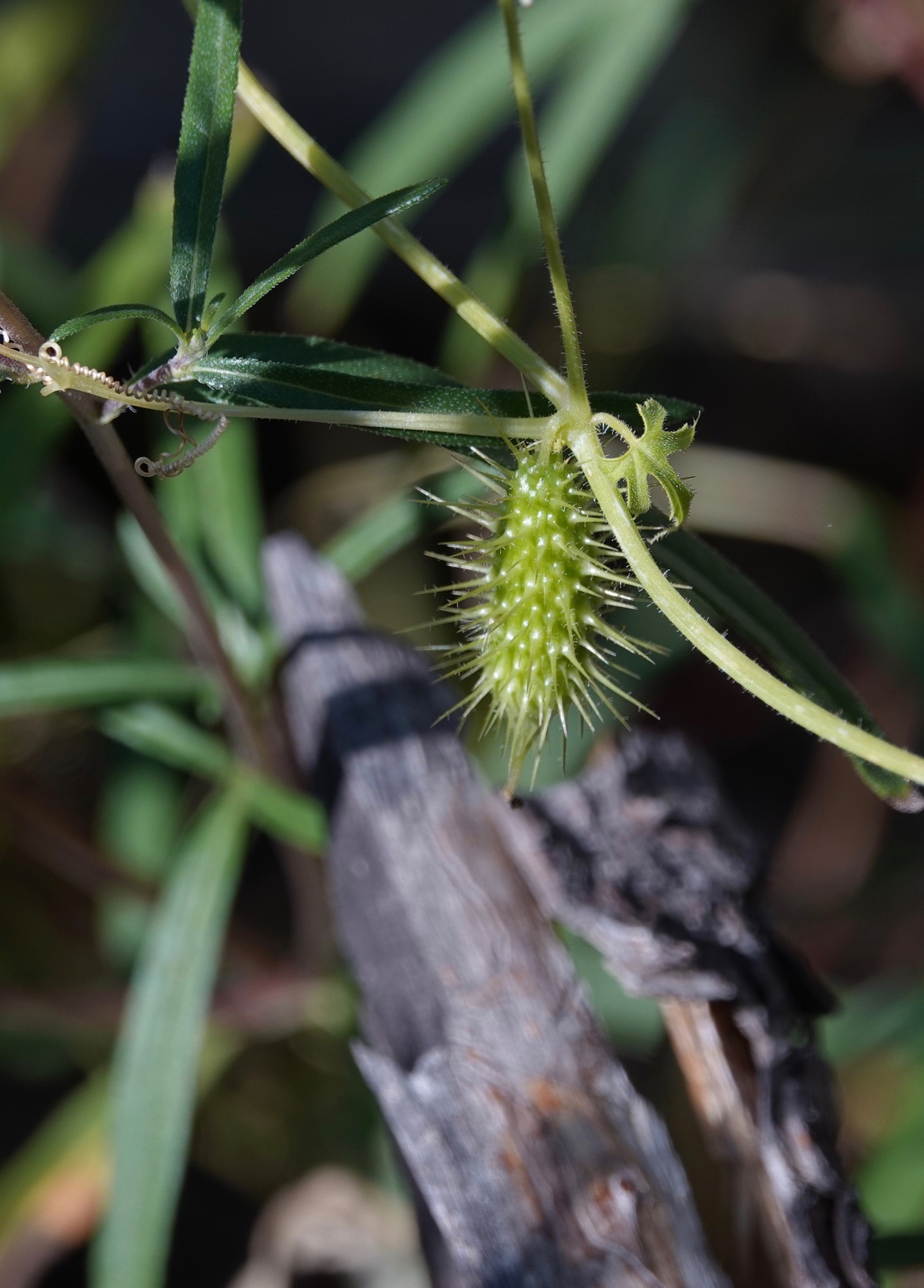
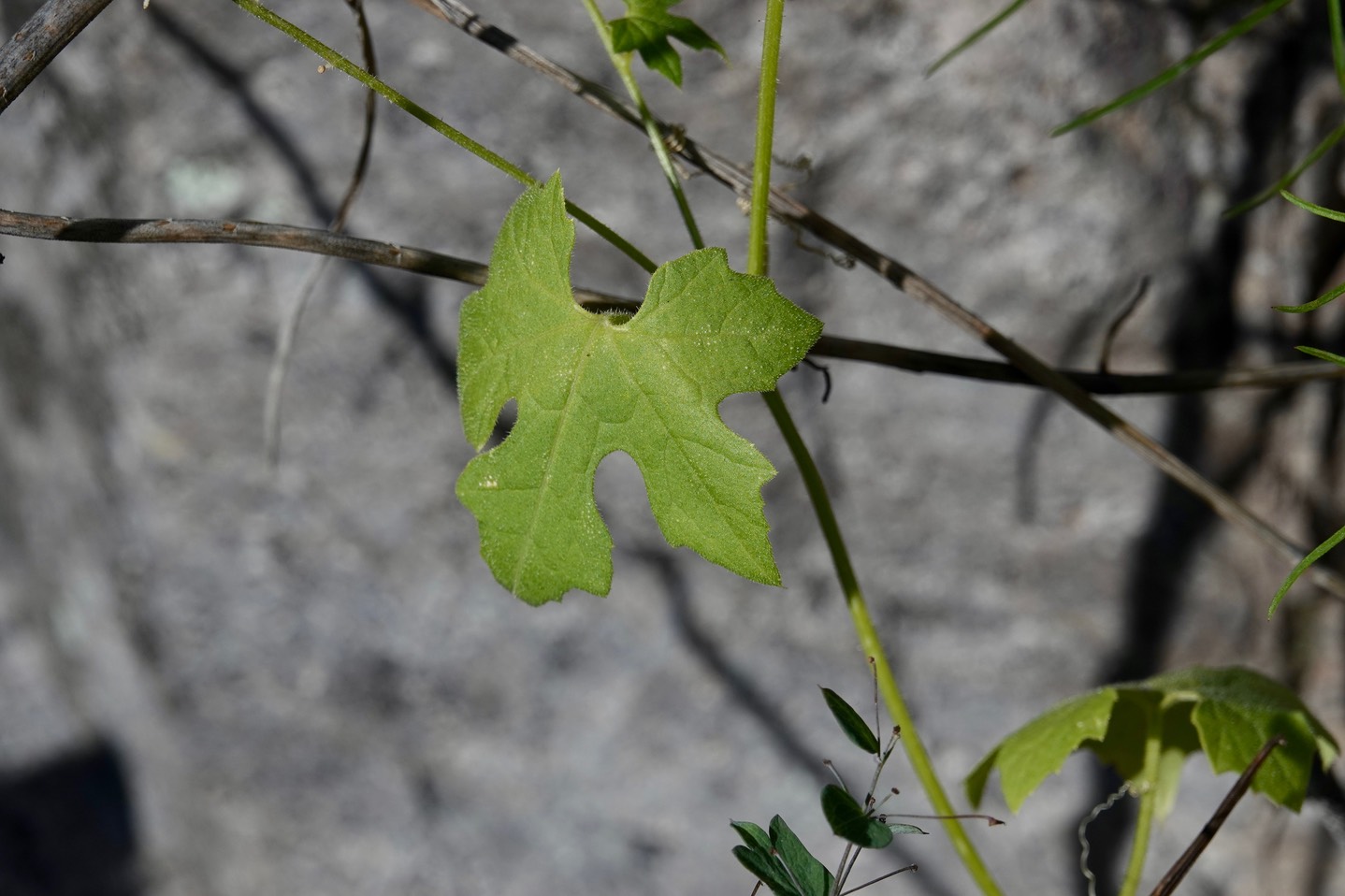
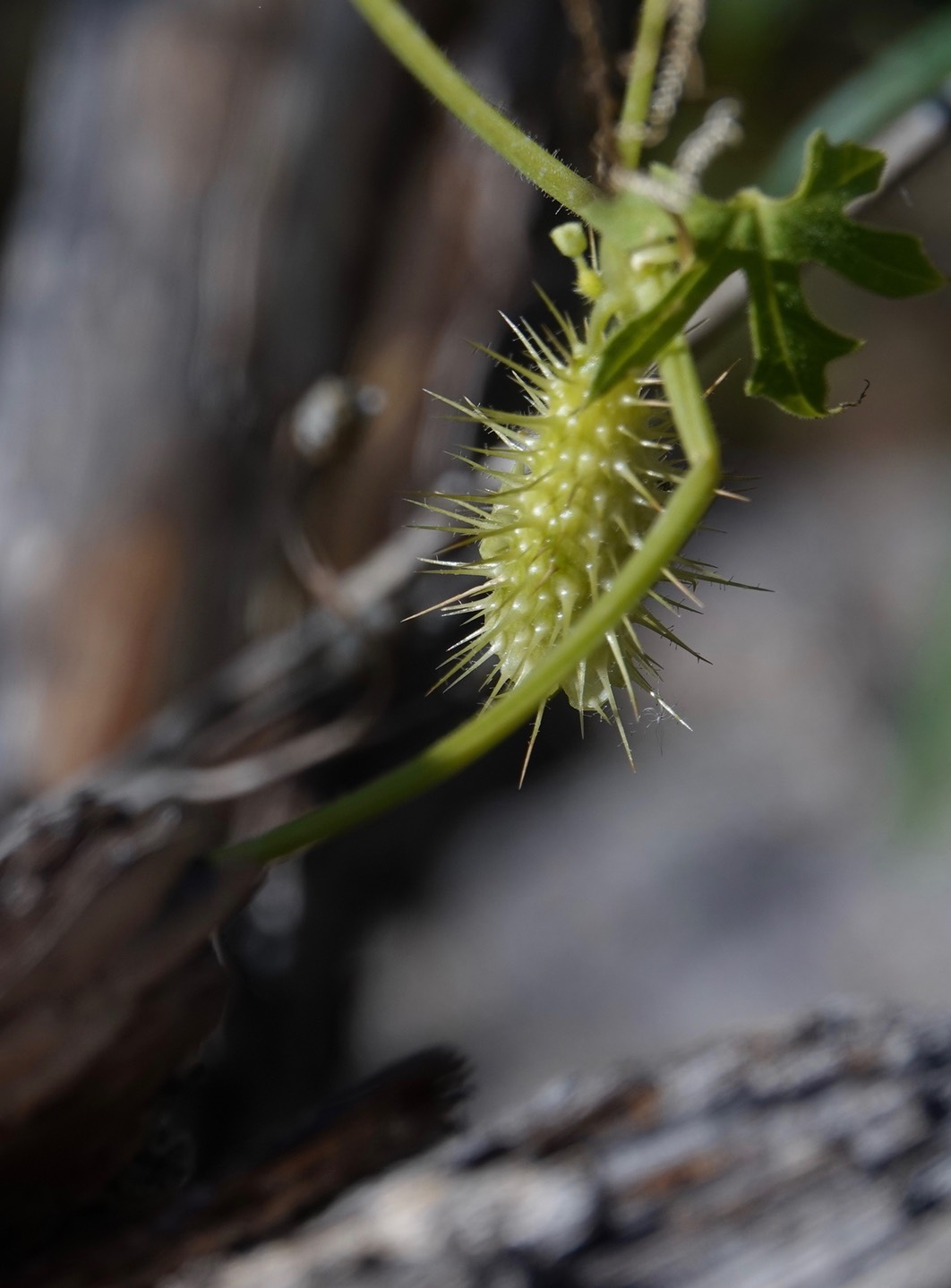
Echinopepon coulteri
Coulter's Balsam Apple
Railroad Canyon
Black Range
September
Ephedra trifurca
Mormon Tea
South of Hillsboro
New Mexico
May & September
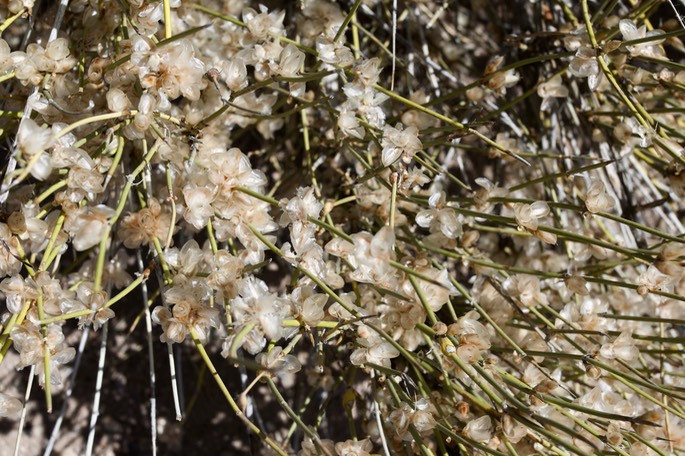
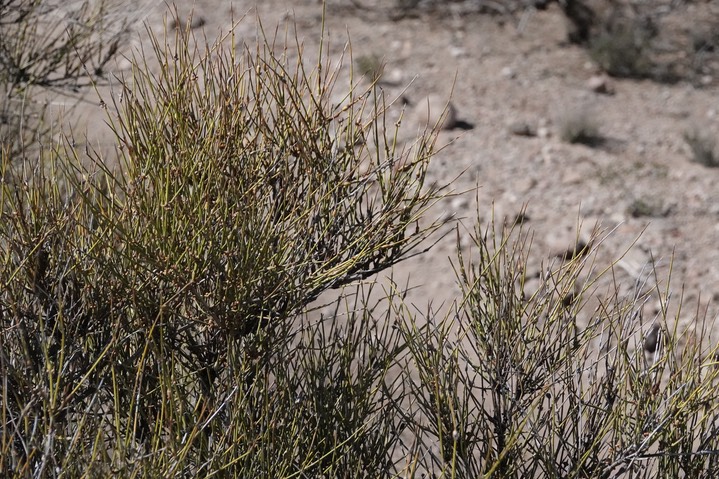
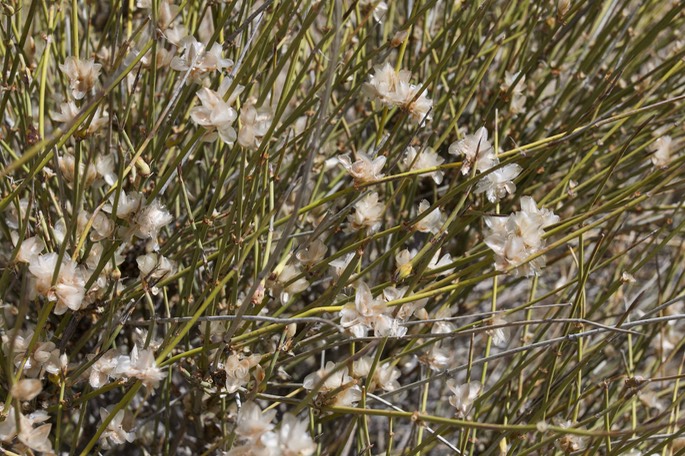
Trying to determine if these plants were Ephedra trifurca or E. torreyana was not that straight forward. Seems that Ephedra are cone bearing plants, they are in the Phylum Gentophyta. “The Gentophytes are vascular plants that appear to represent a stepping stone between gymnosperms and angiosperms...” (read Stephanie’s blog post on this for more information). Like so many desert species, in which photosynthesis occurs primarily in the stems - not the leaves - there being none. “Like flowering plants, they have a cuplike perianth, but like gymnosperms they have naked leaves.” They produce small cones which look like an odd fruit.
The common name, Mormon Tea, is self-explanatory as to origin. What might not be obvious is that the medical uses of Ephedra have been known for centuries - taken orally it can have a similar effect to that of injected adrenaline. The synthetic version of the Ephedra’s chemical base is called ephedrine and is a common treatment for allergies.
As for the identification - Southwest Colorado Wildflowers was very useful in eliminating E. torreyana as a candidate and Vascular Plants of the Gila, lists only E. trifurca. It is not apparent if the unlisted species are absent by commission or omission. Southwest Colorado Wildflowers has some nice close-ups of the stems of E. torreyana, however, and their blue-green color is diagnostic. The stems of the plant we found are a light green.
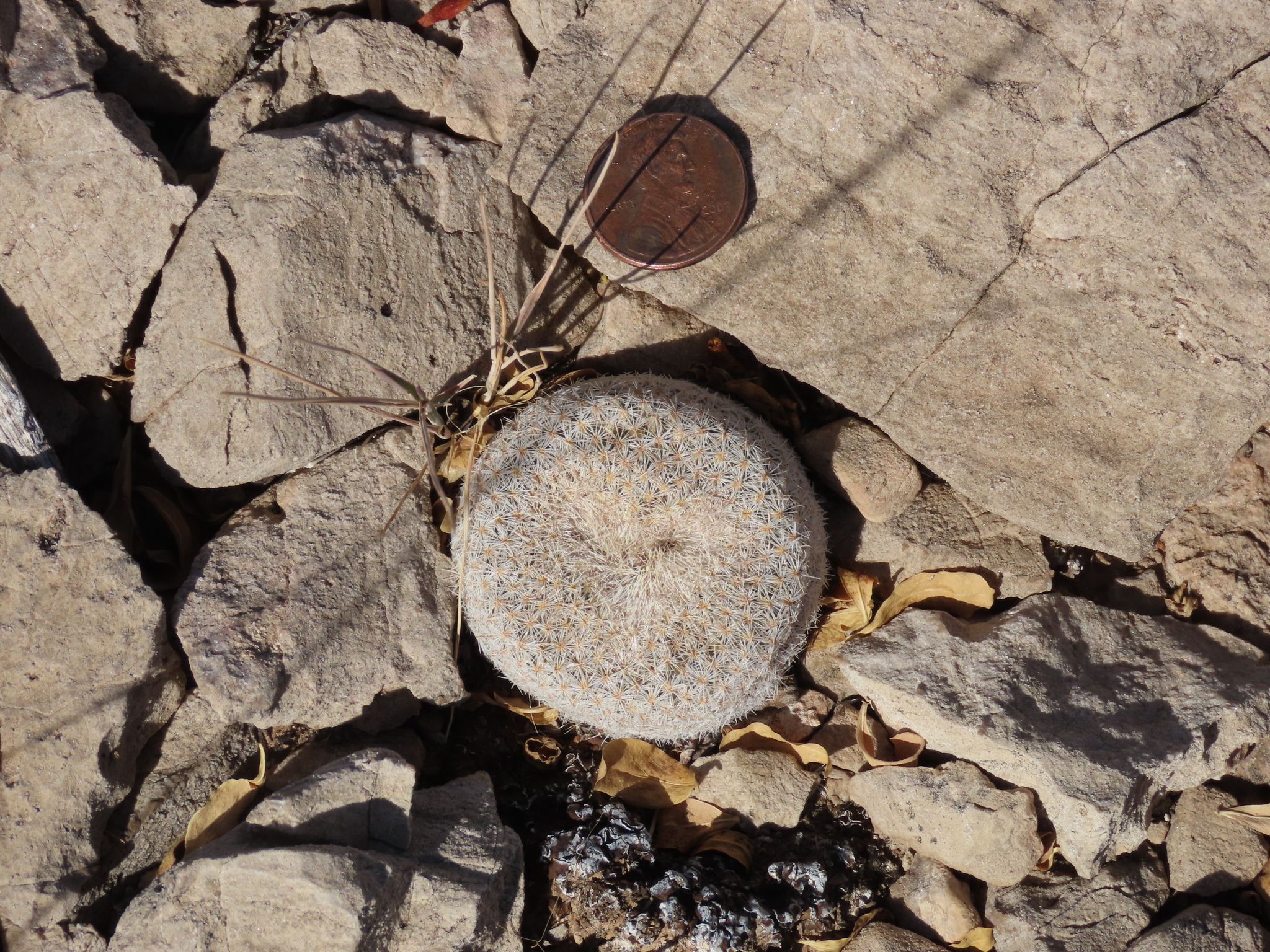
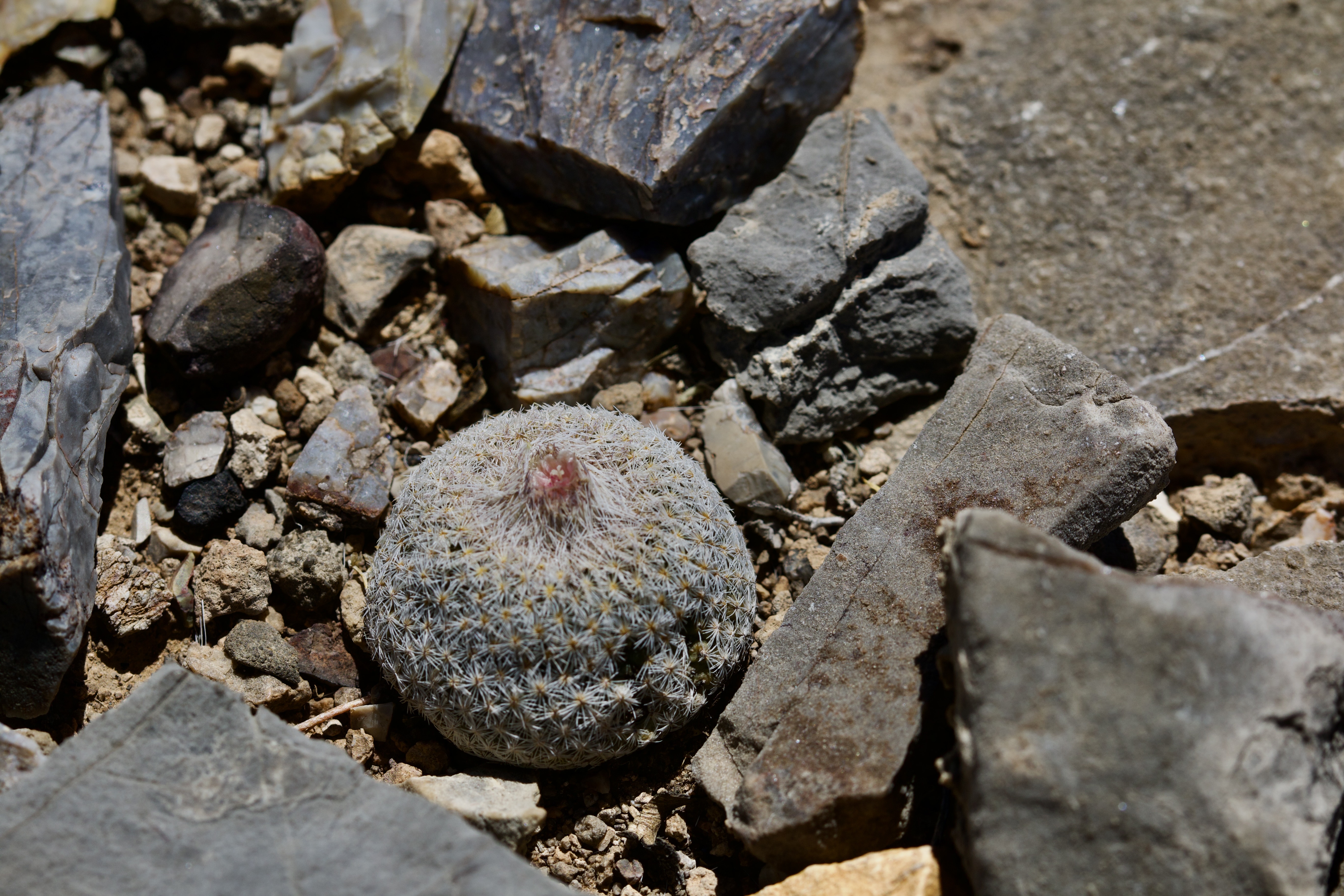
Epithelantha micromeris
Button Cactus
Black Range
December
First photograph by Mike Shoop
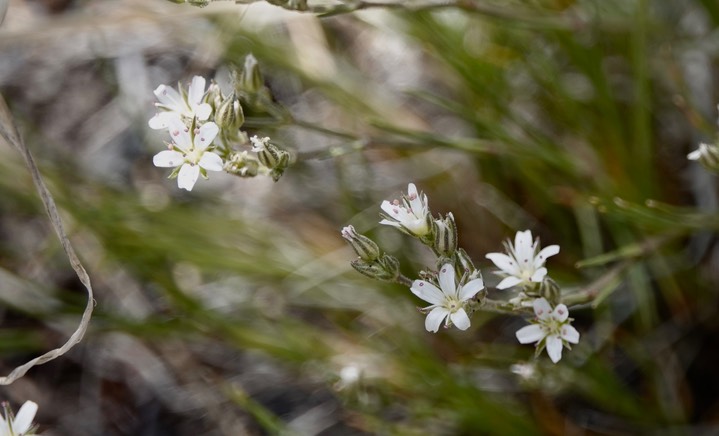
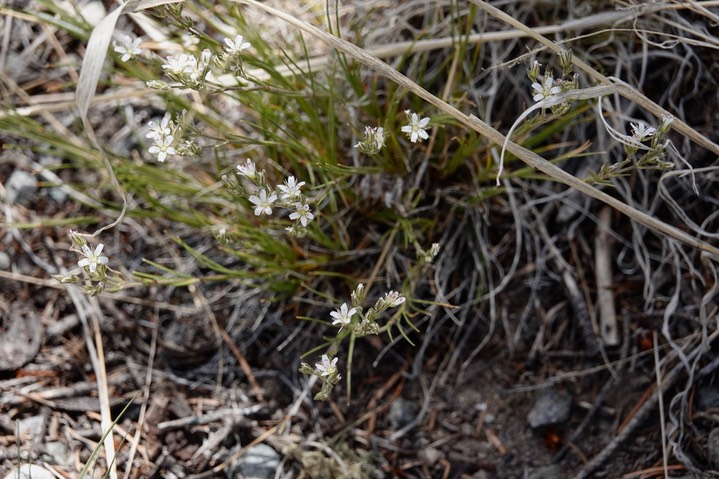
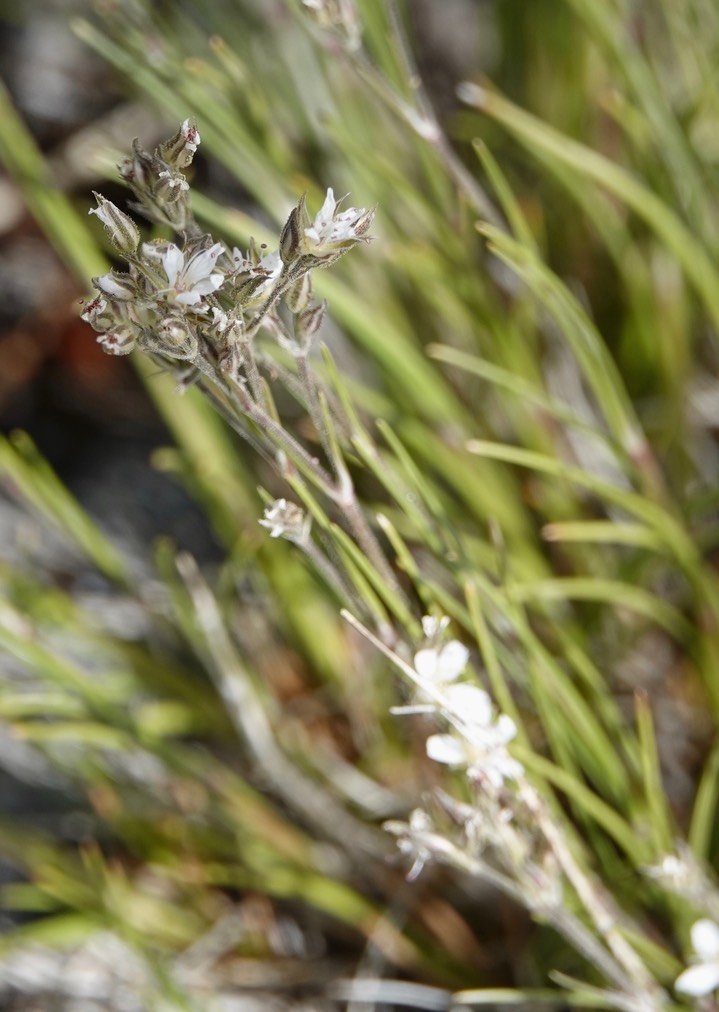
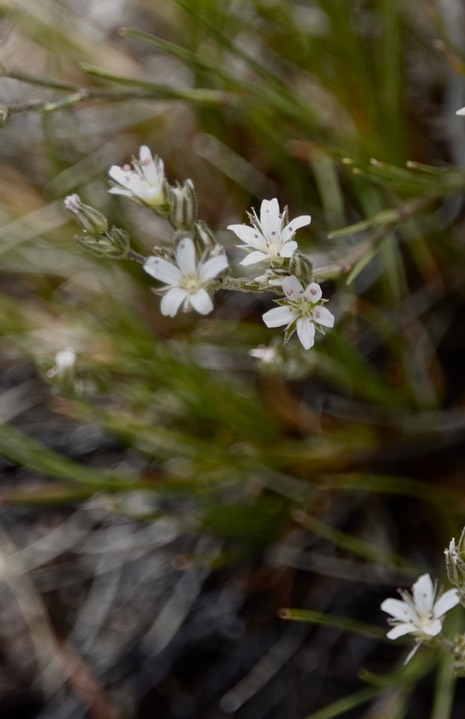
Eremogone fendleri
Fendler's Sandwort
Hillsboro Peak Trail
Black Range
New Mexico
July
Ericameria nauseosa
Rubber Rabbitbrush
Bald Hill Spring
Black Range
New Mexico
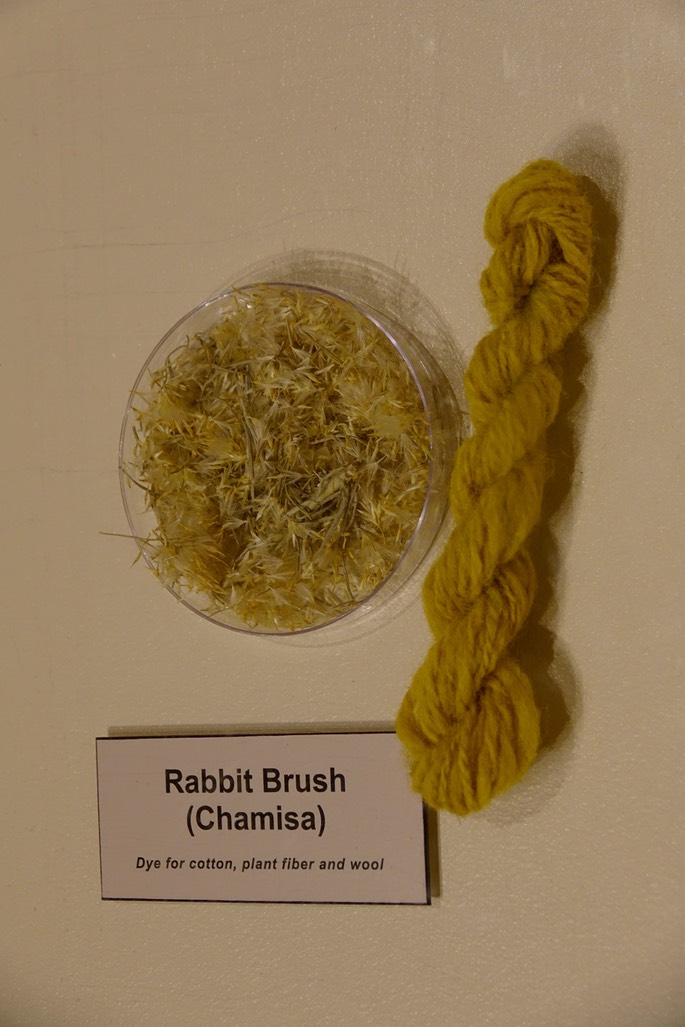
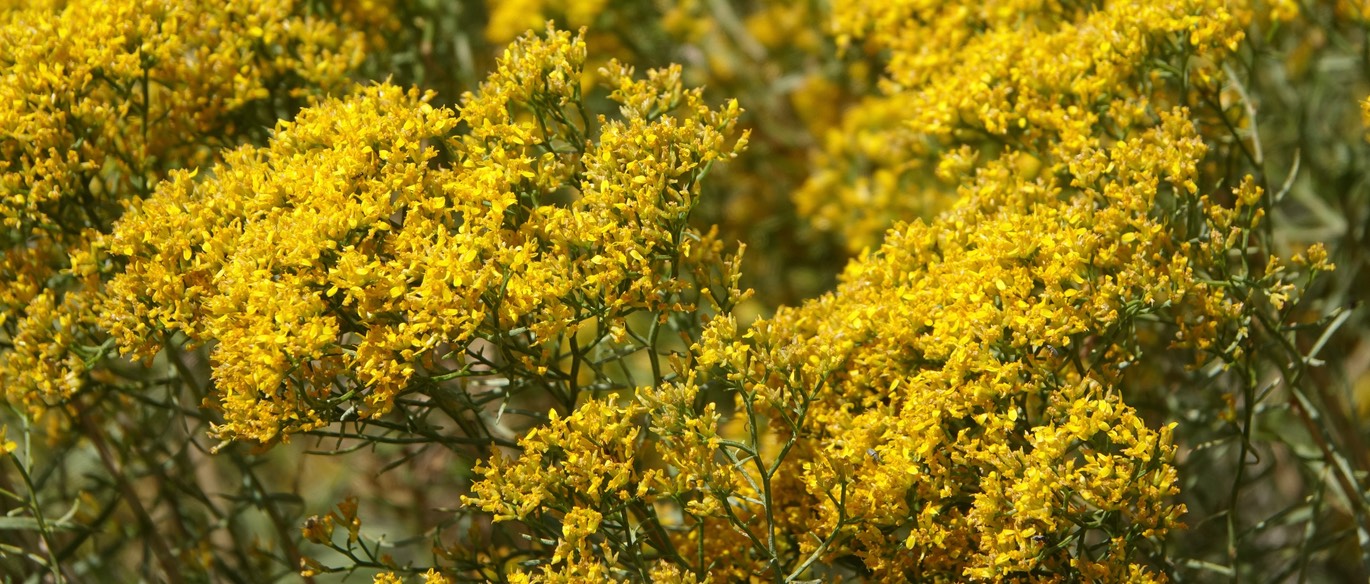
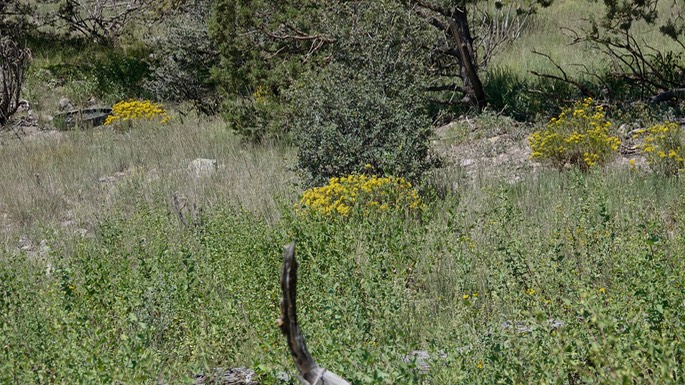
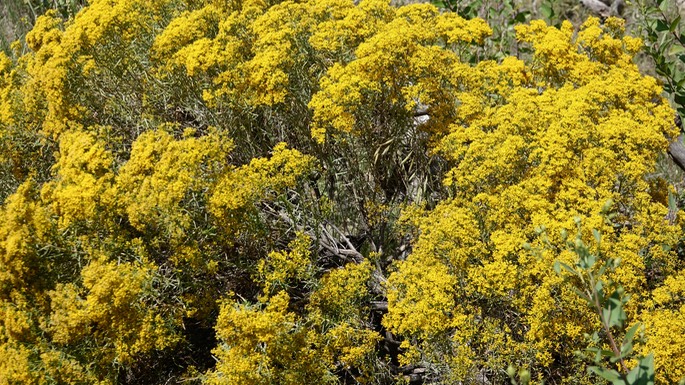
Rubber Rabbitbrush (aka Gray Rabbitbrush) is a plant of western North America, being found in the three southwestern provinces of Canada, the Plains and west in the United States, and northwestern Mexico. It has undergone significant evolutionary change, there are at least 24 subspecies/varieties, 13 of which are found in New Mexico - no attempt is made to identify this specimen below the species level. Some authorities argue that there are two subspecies, and all of the others, are varieties of one or the other of the two subspecies. This plant was used by (at least) the Apache as a dye, see gallery photo taken at the Farm & Ranch Museum in Las Cruces, New Mexico on March 24, 2017.
Erigeron sp.?
Hillsboro Peak Trail
Black Range
New Mexico
September
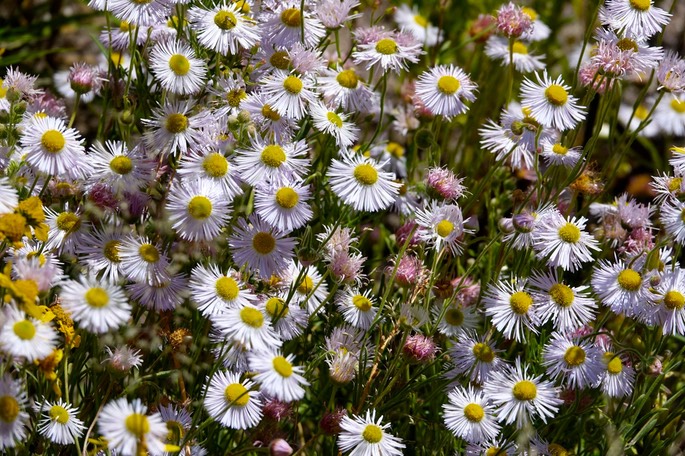
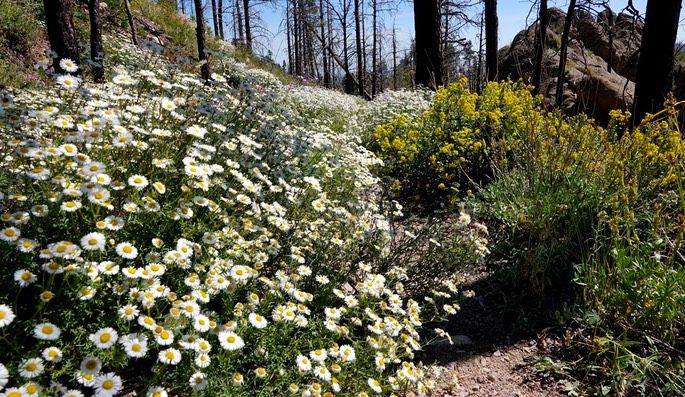
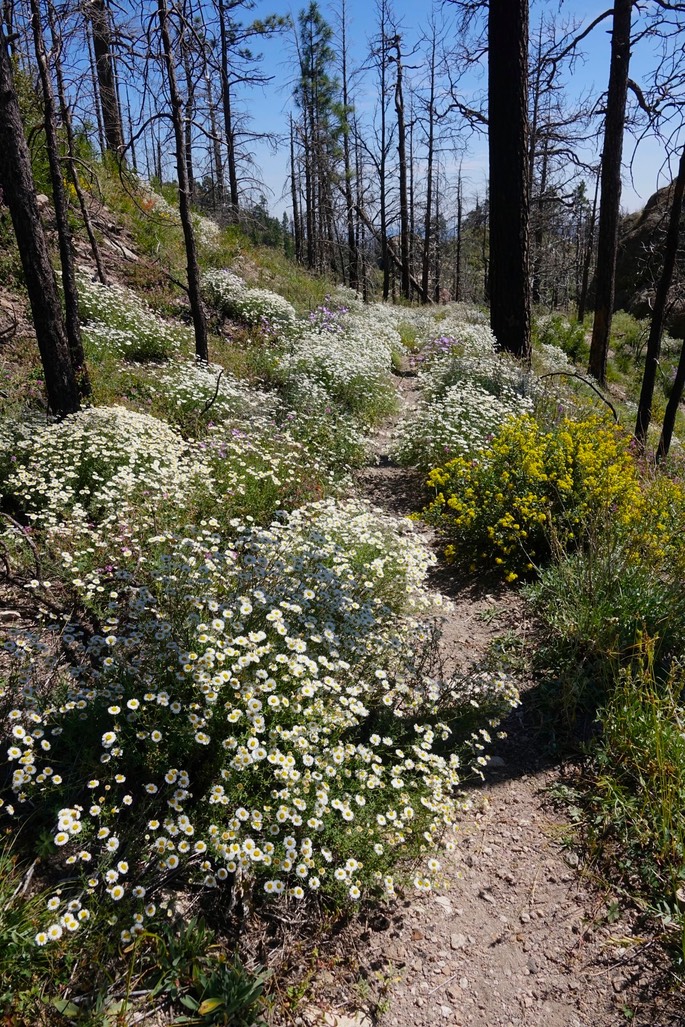
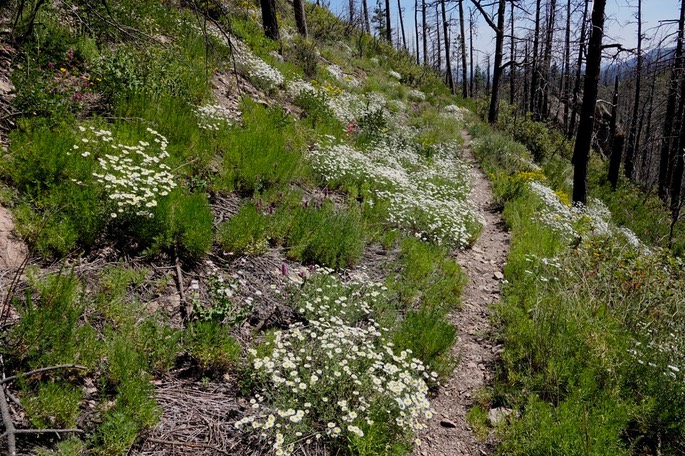
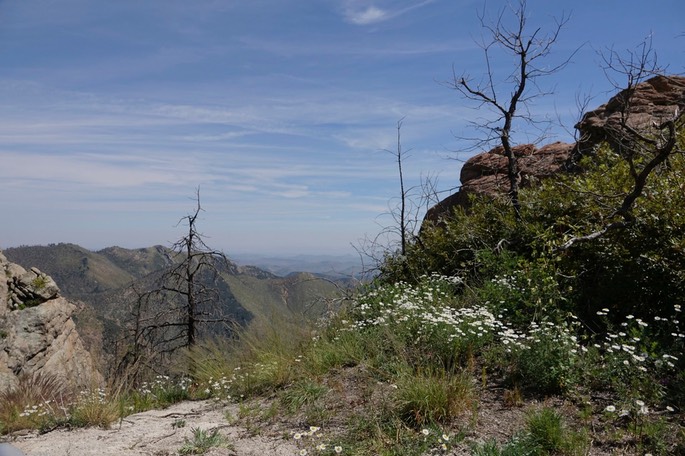
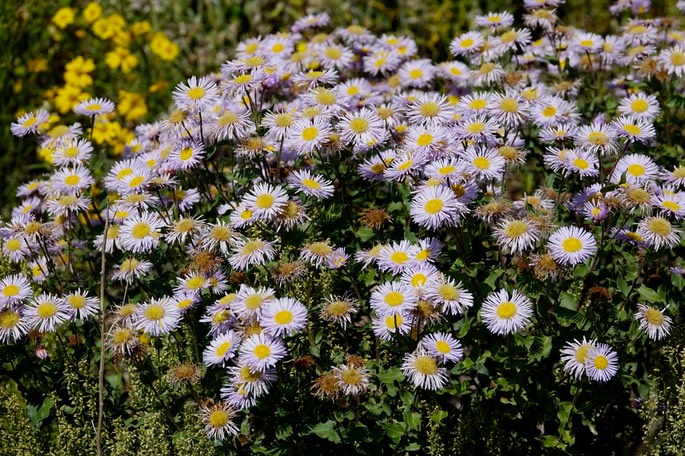
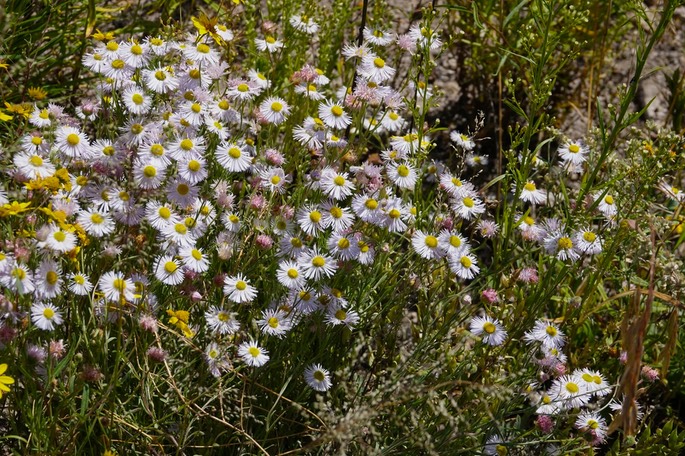
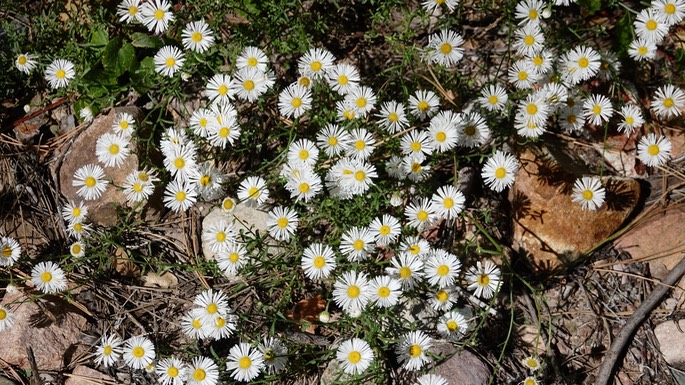
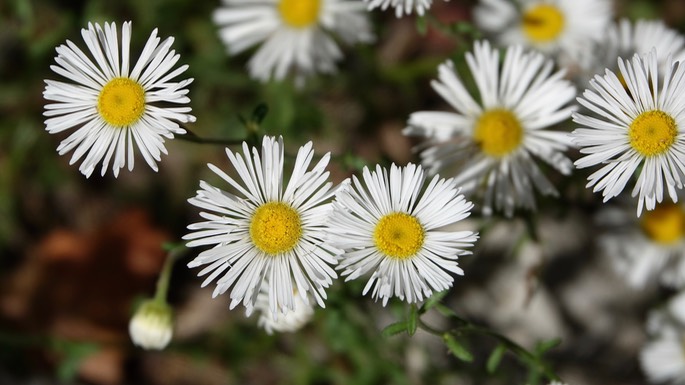
This entry is about a plant that I may never be able to identify to species. In fact, it is possible that two different species are presented here - thus the dilemma. These photographs were taken on the 19th of September 2016, along the trail to Hillsboro Peak (from Emory Pass). The most likely suspects are Erigeron eximius, Spruce Fir Fleabane, and Erigeron neomexicanus, New Mexico Daisy - but, at this point I have not a clue.
As can be seen from the trail shots, this is a tall plant (by Erigeron standards) and was growing in masses. It presents startling evidence that perceiving beauty does not require understanding or knowledge. For now, I leave you with white composites.
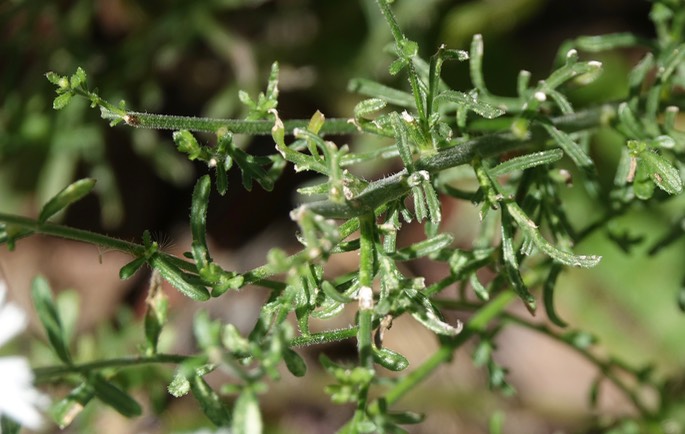
Erigeron divergens
Fleabane Daisy (aka Spreading Fleabane)
Mineral Creek
East side of the Black Range
New Mexico
September
Eriogonum pharnaceoides
Wirestem Wild Buckwheat
(a.k.a. Wright's Cudweed, Slender Cudweed)
Cienega Trail
City of Rocks S.P,
New Mexico
August
Eriogonum w. wrightii
Wright Buckwheat
Scenic Trail 796
Black Range
New Mexico
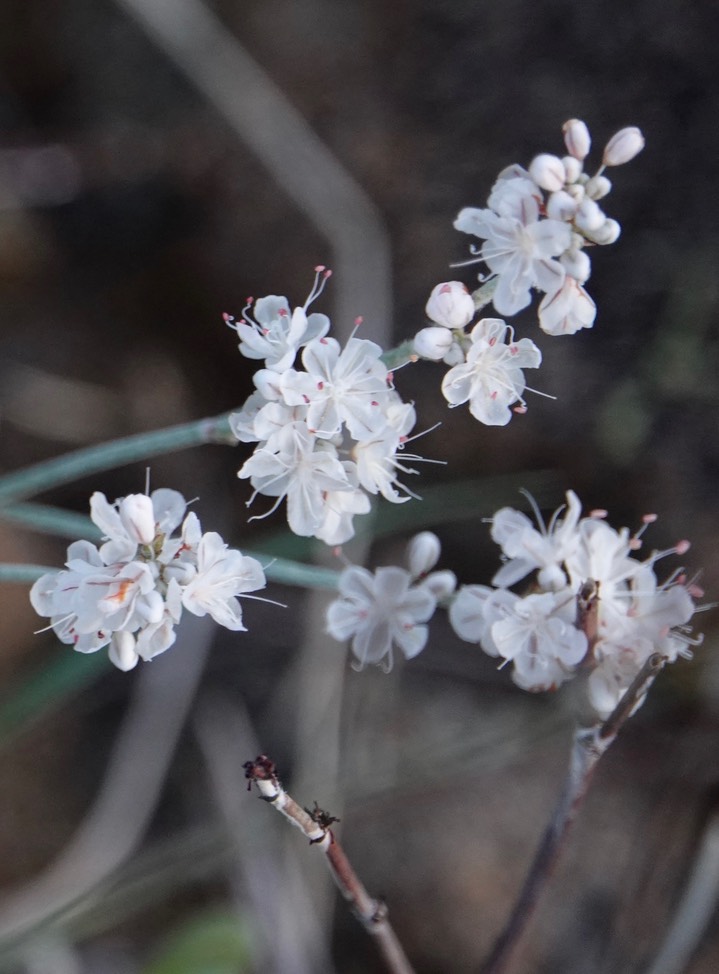
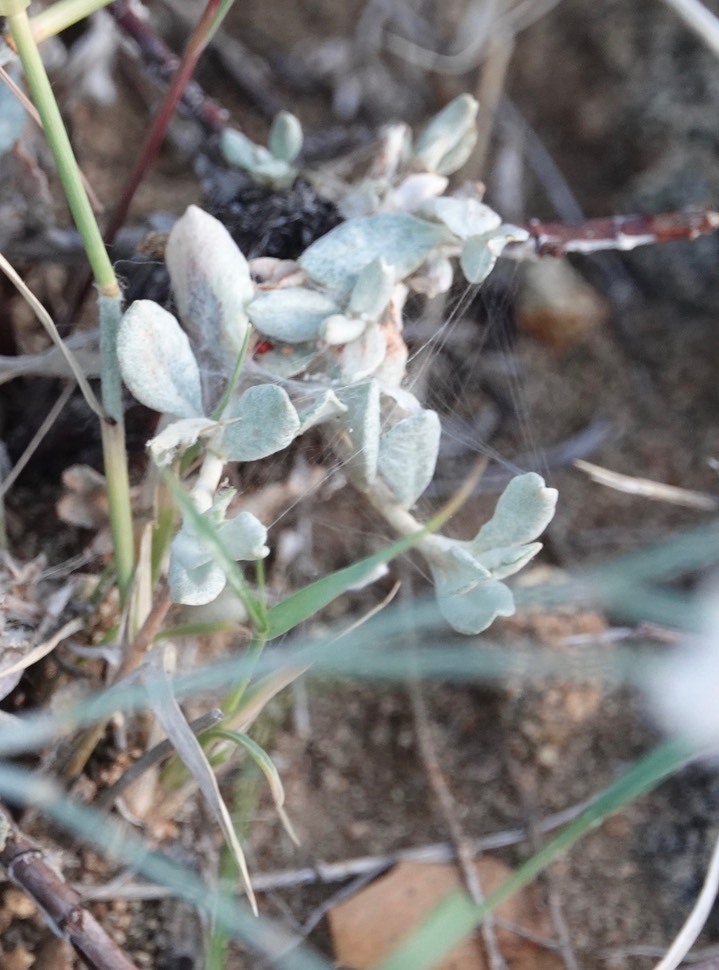
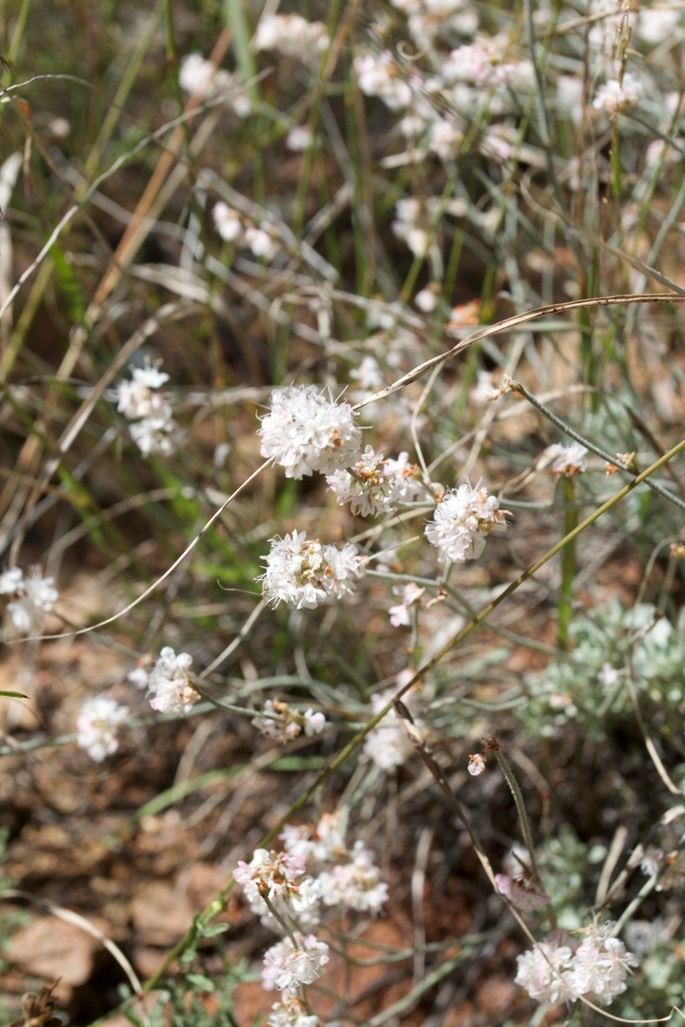
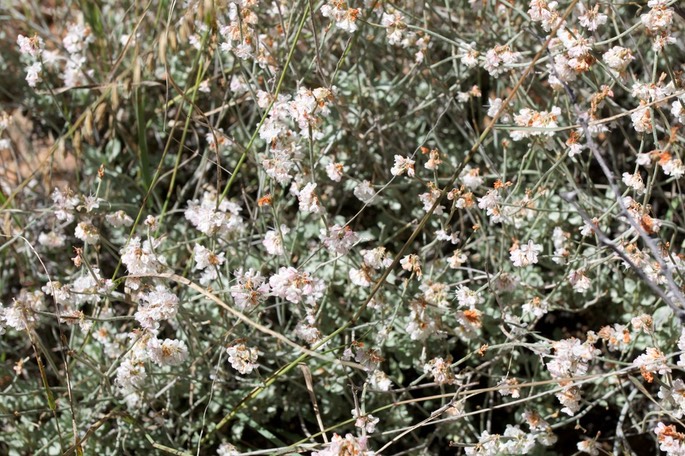
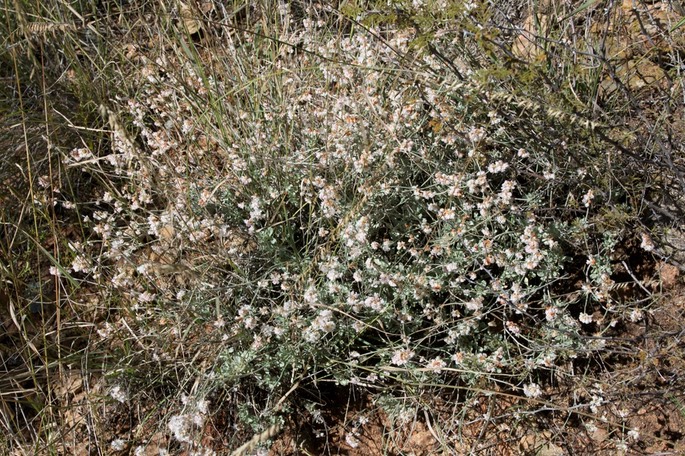
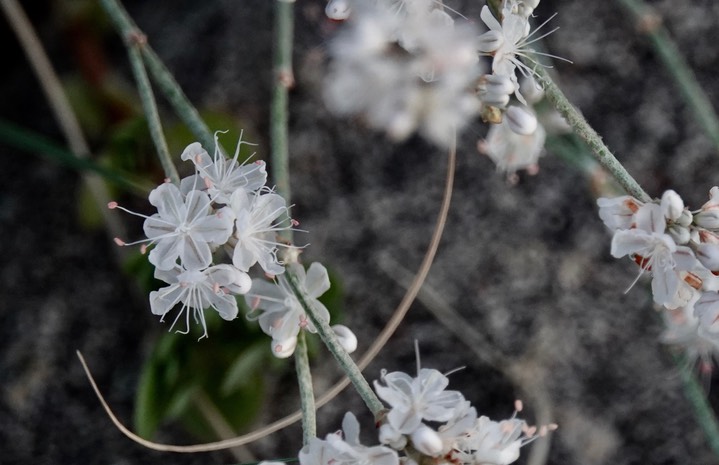
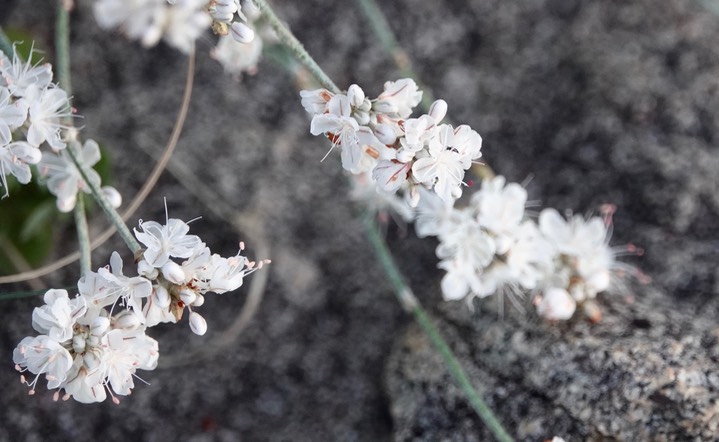
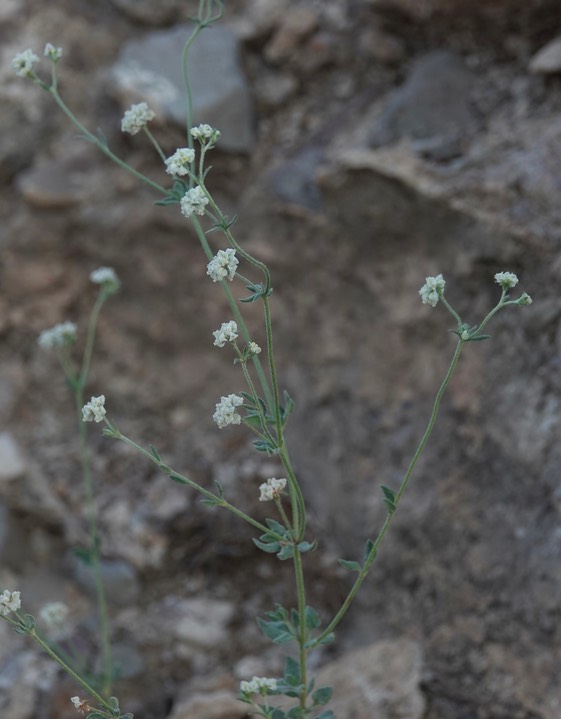
Wright Buckwheat, Eriogonum wrightii, stands out as a low mass of color. That mass of white is made up of hundreds of small white flowers, which in themselves are beautiful but - when you are tired and sweat is running into your eyes - difficult to photograph. It is the most common Buckwheat in the middle elevations of the Black Range and quite common along the lower and middle reaches of trails like Forest Service Trail 796, west of the Kingston Cemetery.
A description of the species is found at the Flora of North America site. There are nine varieties of this species, found in California, Nevada, Utah, Arizona, New Mexico, and Texas in the United States and in northwestern Mexico. The individuals found here are the nominate form Eriogonum wrightii wrightii. E. w. subscaposum is a synonym (no longer used) of this subspecies. There is some evidence that the subspecies intergrade. This species is sometimes called Bastardsage, Bastard Sage, Wild Buckwheat, Shrubby Buckwheat, and Wright's Bastardsage.
The subspecies found here was used by the Kayenta Navajo has an emetic. Native tribes used other subspecies as a food source, generally the seeds were pounded into a mash to eat or mix with water for a beverage.
This species was first described by Torrey in 1856. When looking at a botanical citation you sometimes see a citation like “Torr. ex Benth.” which is the case for this species. This citation means that (for some reason) the original description by John Torrey did not meet appropriate publication guidelines and that George Bentham published the description later (while citing Torrey) in a form that did meet those guidelines. Major contributors to the literature generally have their names abbreviated in a standard form. Bentham, was an important English systematic botanist. It is worth noting that our world of internet communication is not the first time that world-wide “collaboration” has occurred. This species was named after Charles Wright, a world-wide botanical collector who collected plants in Texas between 1837 and 1852. He also collected in this area as part of the boundary survey.
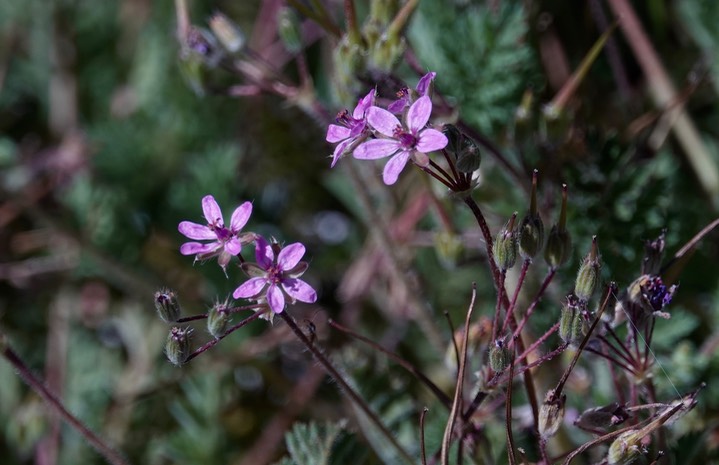
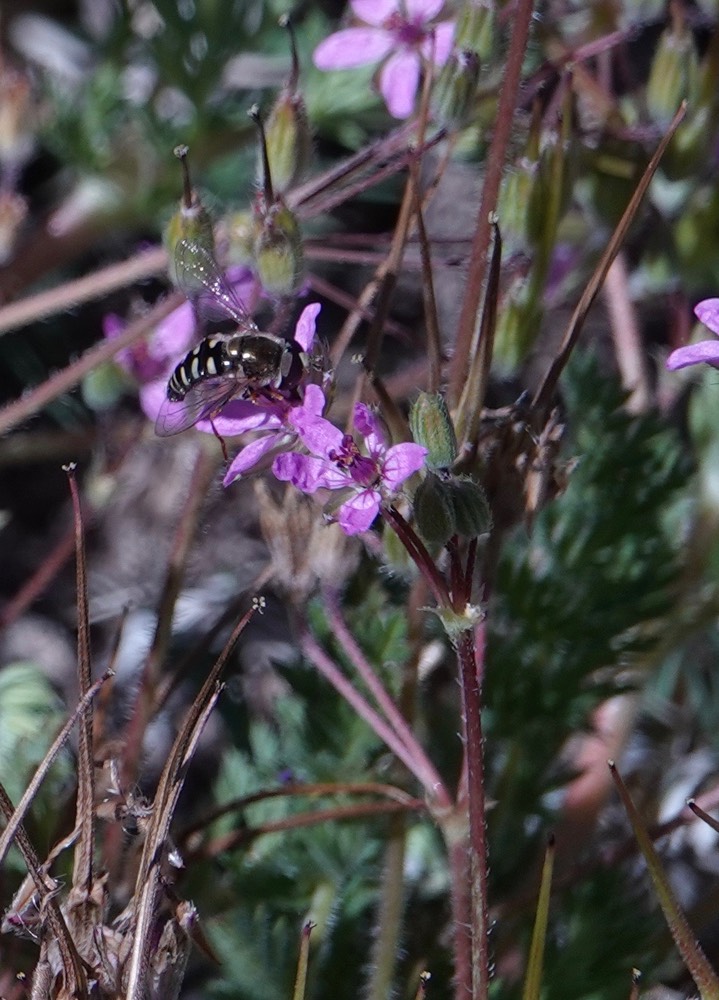
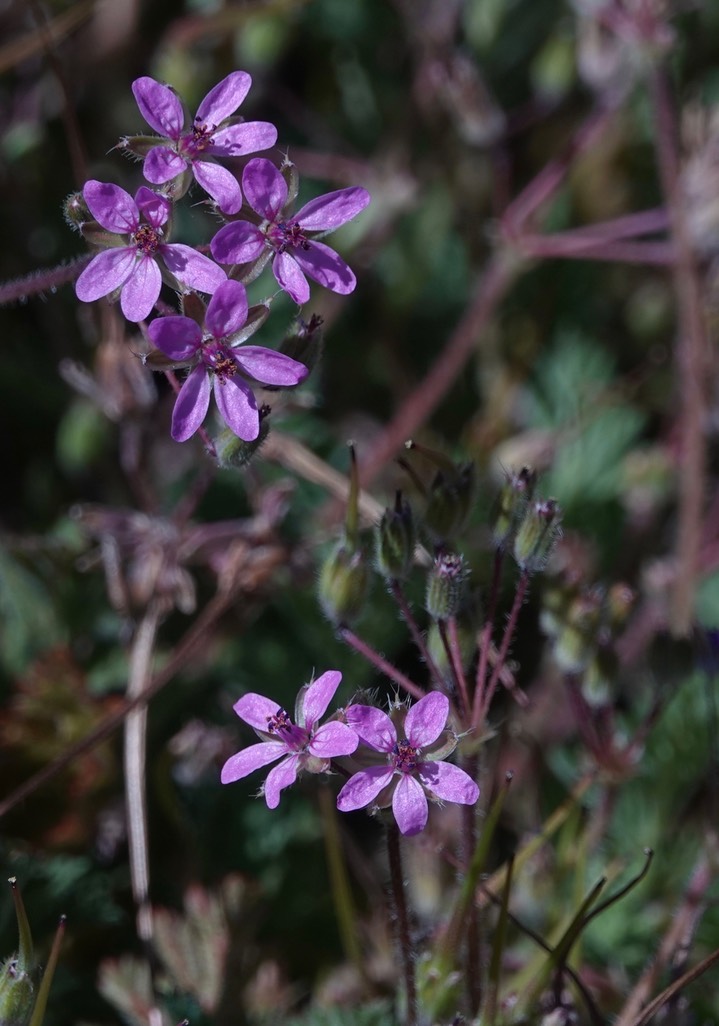
Erodium cicutarium
Red Stemmed Filaree
Trail 134, Tierra Blanca Road
Black Range
New Mexico
April
Erysimum capitatum
Western Wallflower
Sawyers Peak Trail
and many other
locations
Black Range
New Mexico
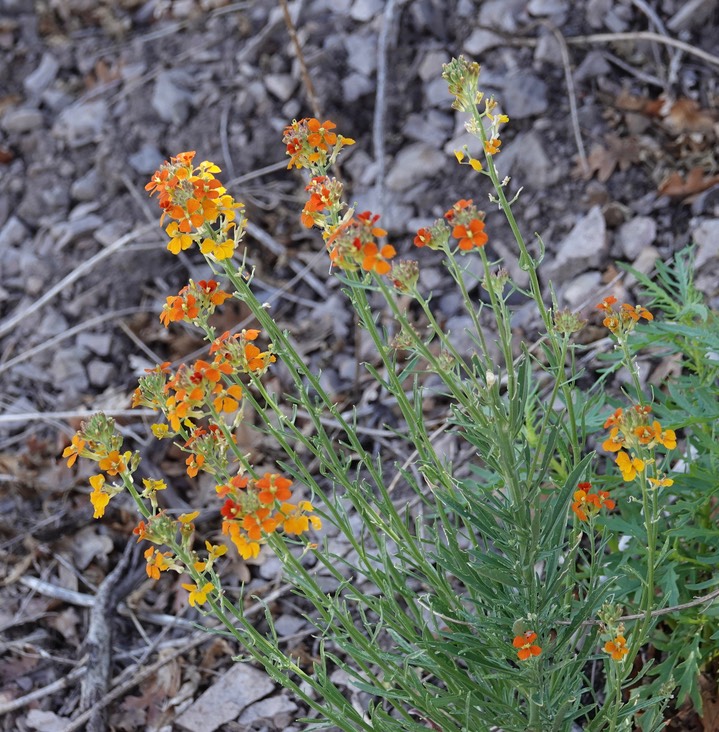
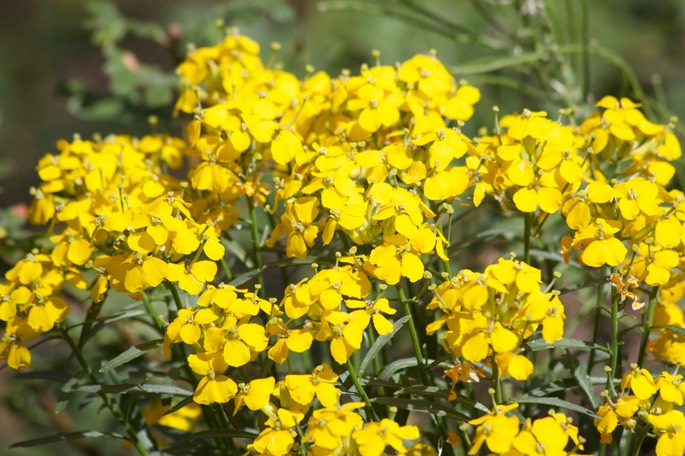
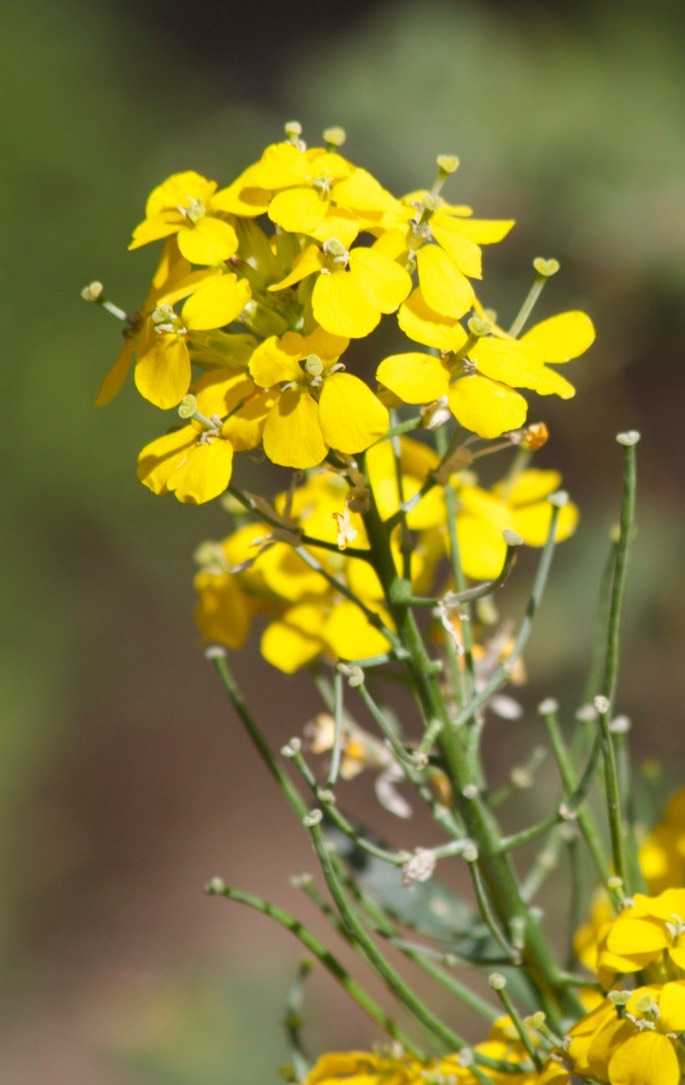
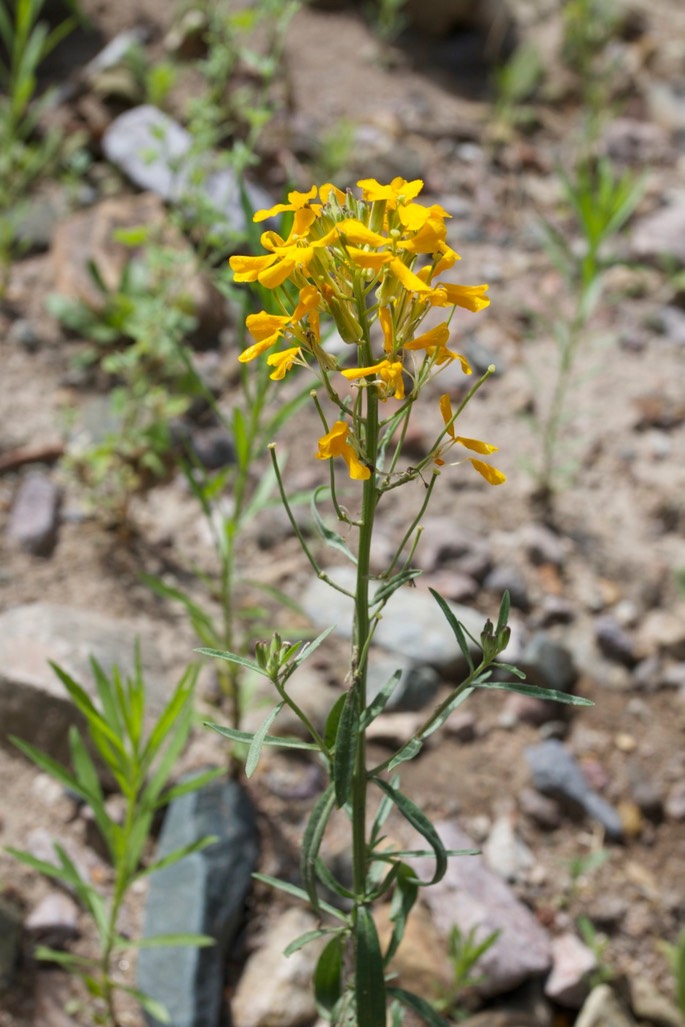
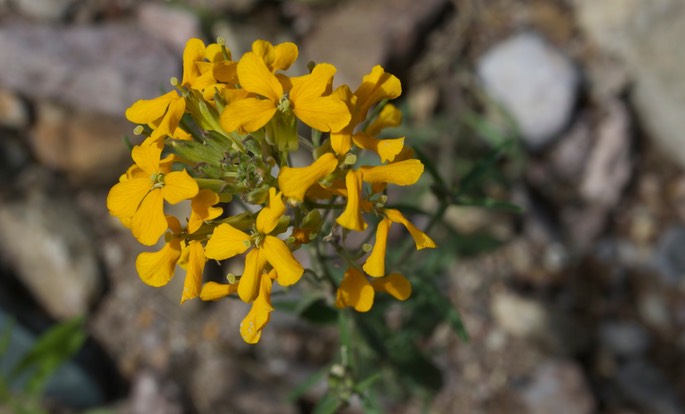
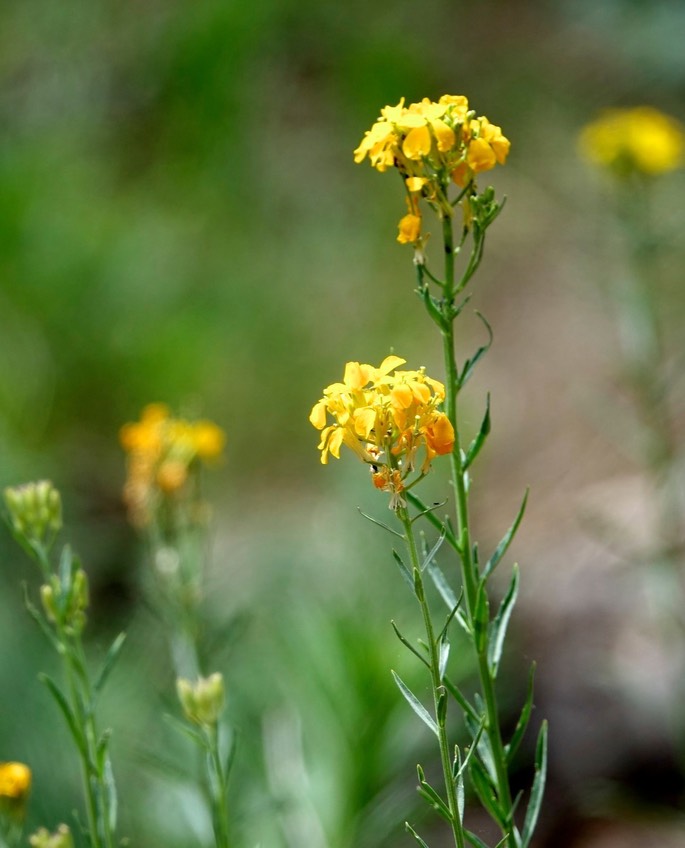
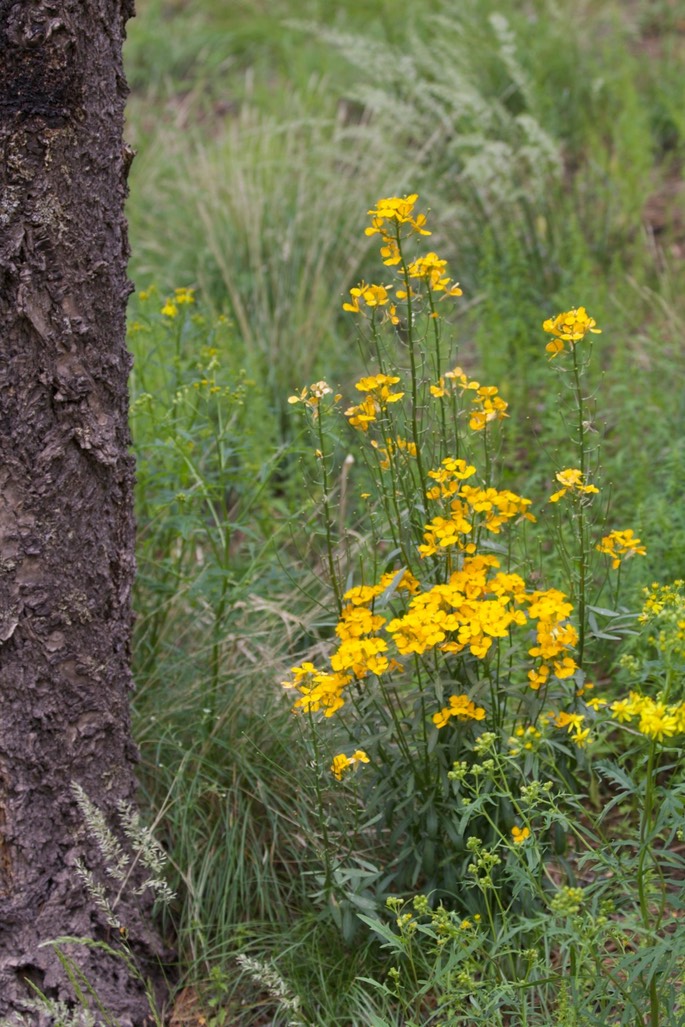
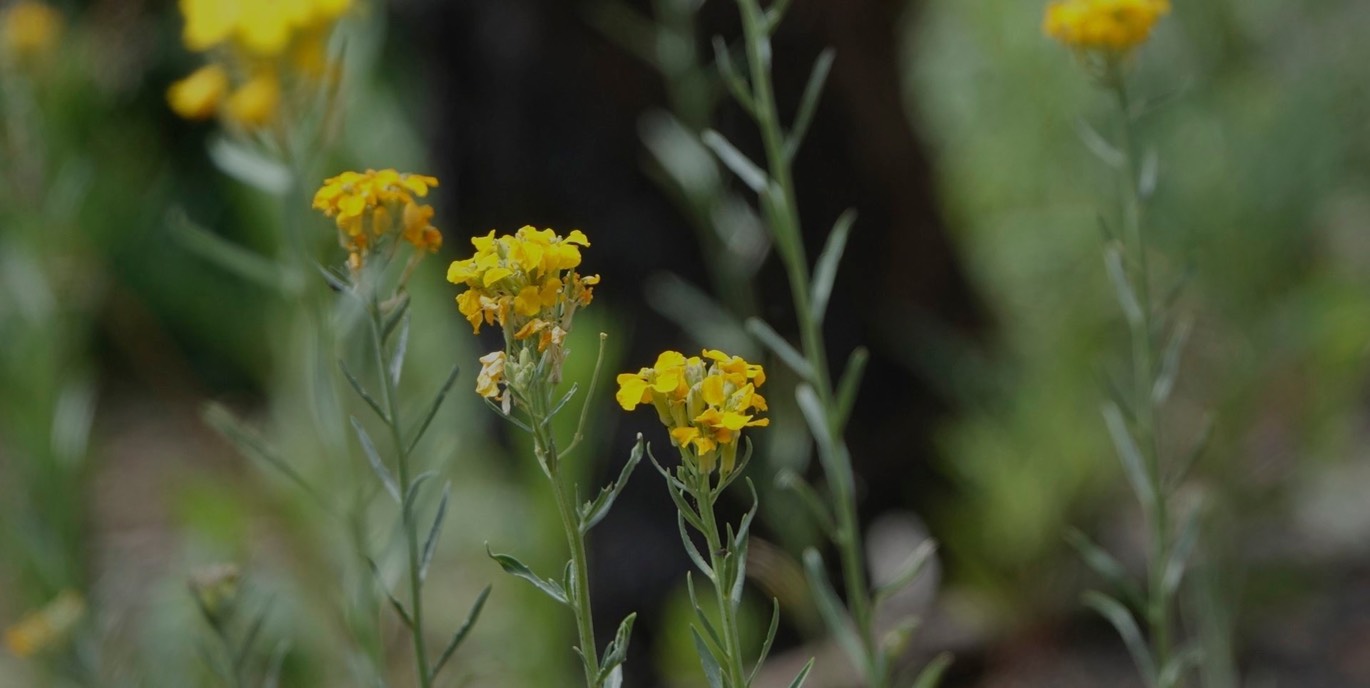
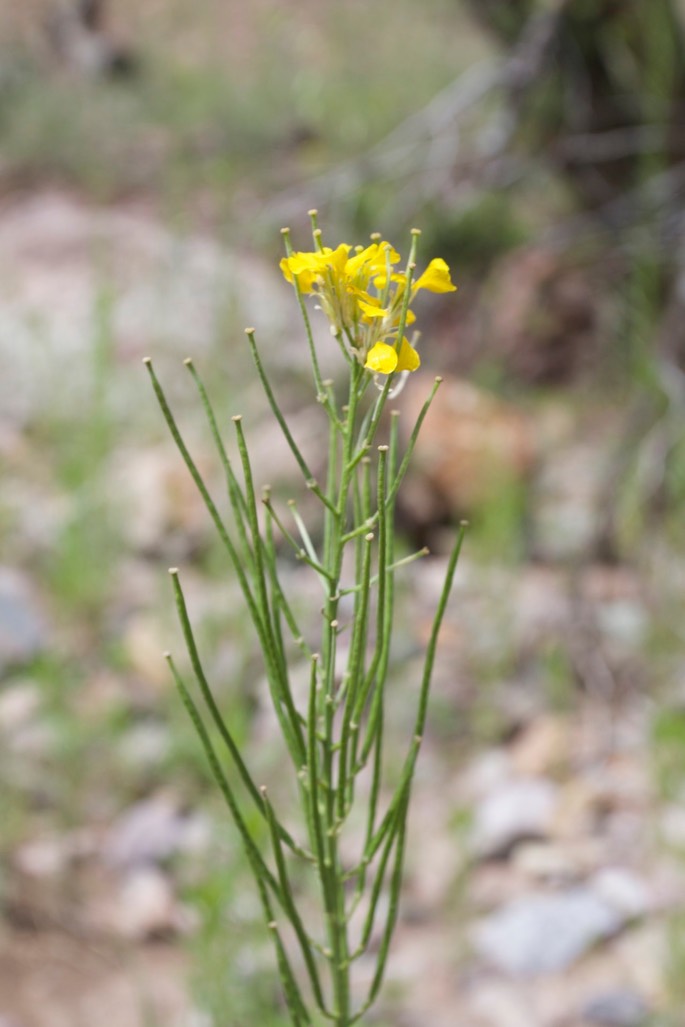
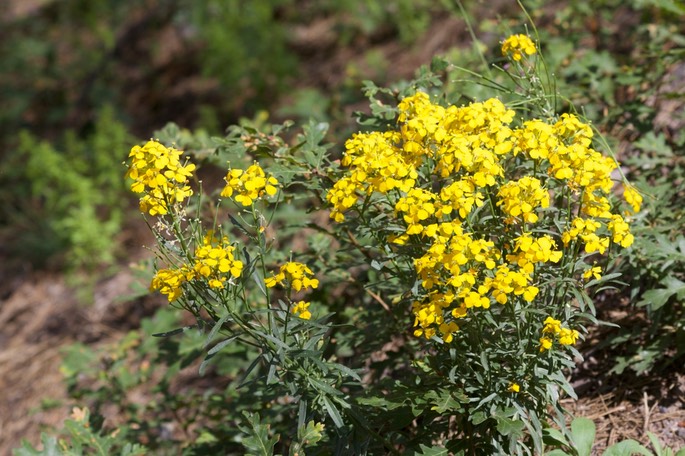
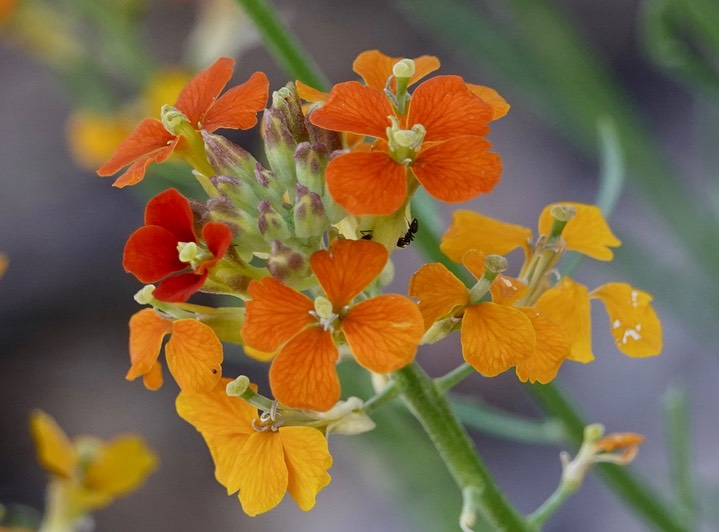
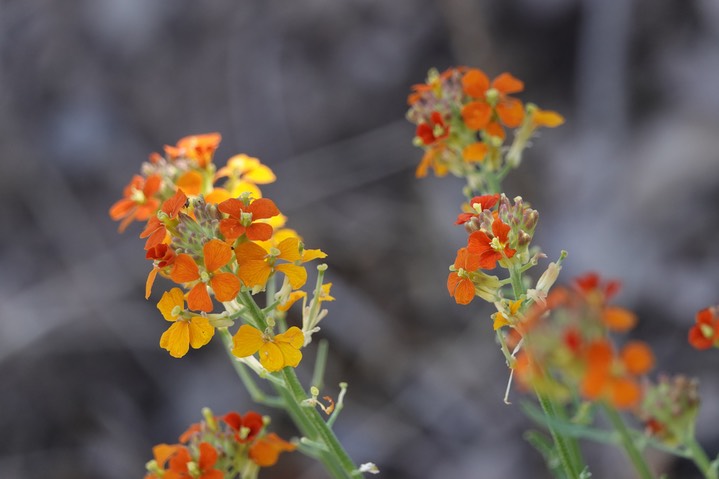
The Western Wallflower is known by a number of other English common names, including Wallflower, Sanddune Wallflower, and Prairie Rocket. This is probably E. c. purshii, but here I venture in to the netherworld of plant taxonomy, based on my experience, it is something I should avoid doing - especially when the taxonomy of a plant is unsettled as is the case here (there are 73 synonyms for this subspecies), including Cheirinia desertorum by Elmer Wooton, the New Mexican taxonomist. E. c. purshii is found in the western United States (except Oregon and Washington) as well as Alaska and Yukon, Canada, south into Mexico (Chihuahua, Michoacán, Sonora, and Zacatecas). It is found in a wide range of elevation, 3,000' to 11,500').
There is an apparent gradation in flower color from more yellow (lower elevations) to orange (higher elevations).
Ants are, apparently, the main pollinators of this species but there are significant numbers of other pollinators as well.
The Zuni used this plant in an external application for muscle aches.
This species was first described by David Douglas. Douglas, a Scottish botanist, is a legend in the Pacific Northwest of the United States where I have a lot of experience. He made several significant collecting trips in the Pacific Northwest, as well as to Hawaii. More than 80 plant species contain his name in recognition of his work, including the Douglas Fir. His travels in North America are detailed in Journal Kept By David Douglas in North America 1823-1827.
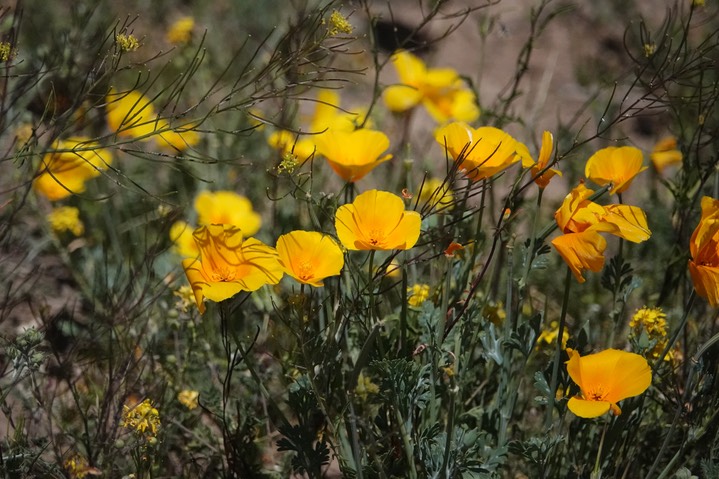
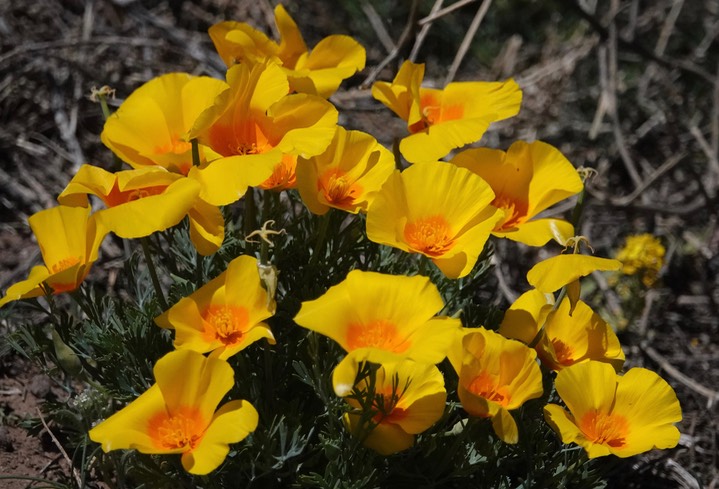
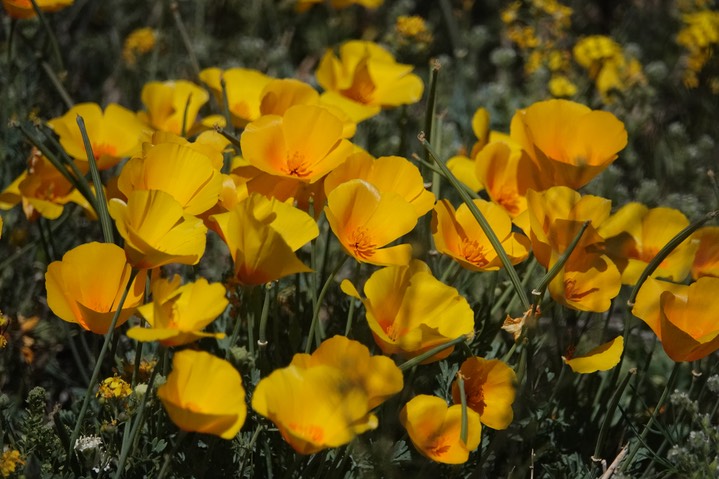
Eschscholzia californica subsp. mexicana
Mexican Poppy
North side of Hwy 26 west of Nutt
New Mexico
Euphorbia albomarginata
Rattlesnake Weed
Warm Springs Wash
NE of Hillsboro
New Mexico
August
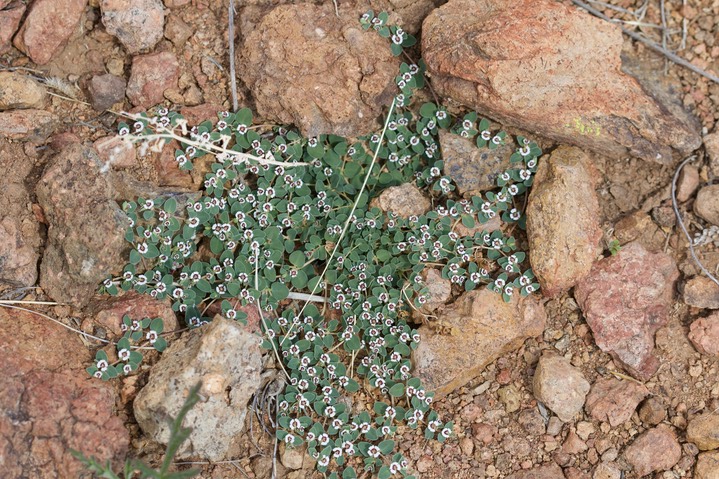
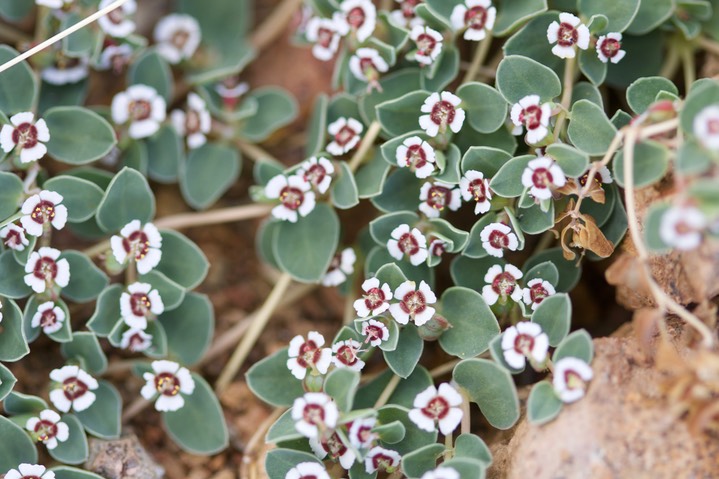
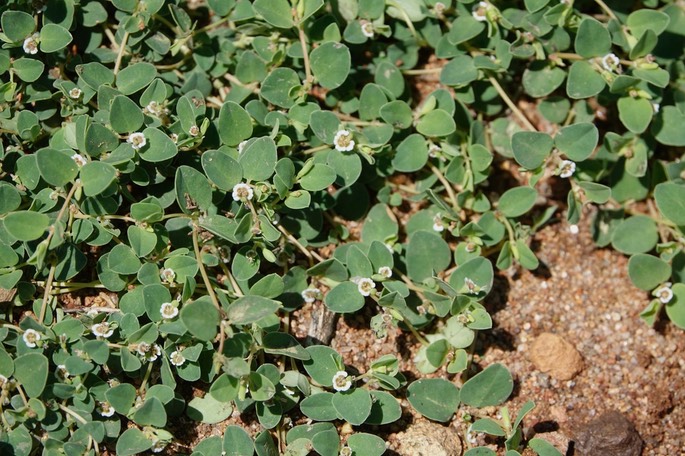
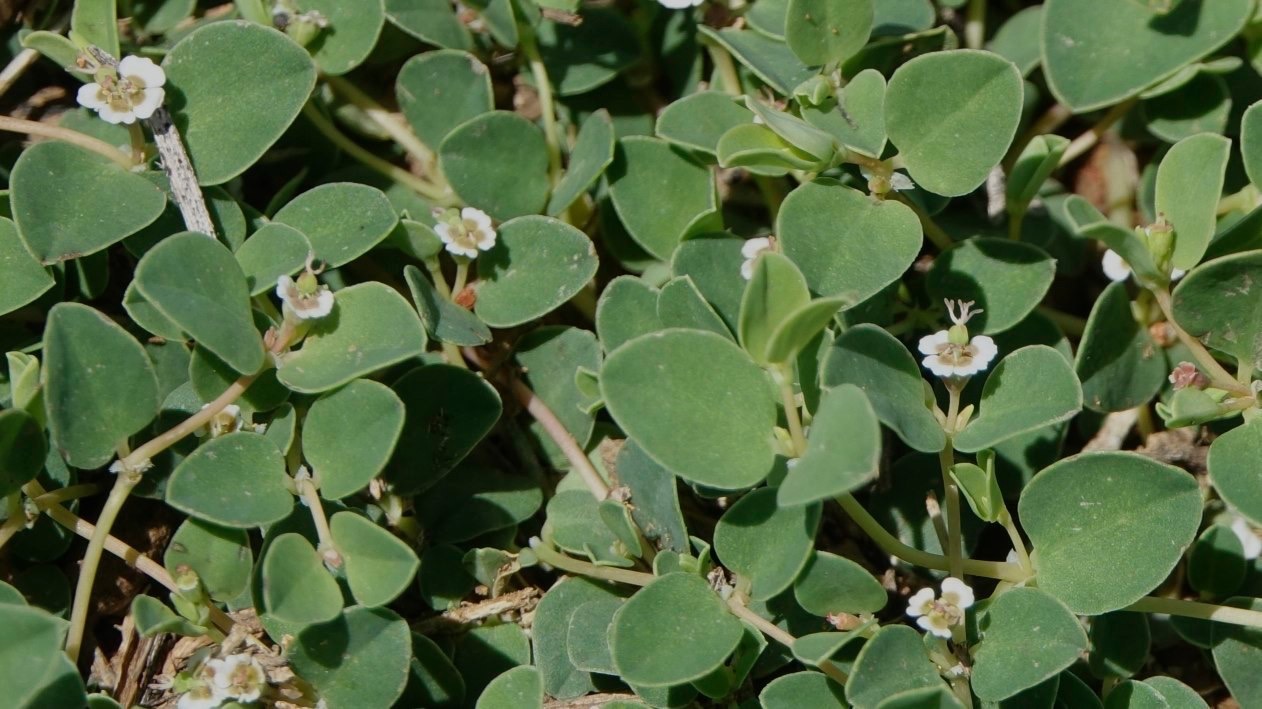
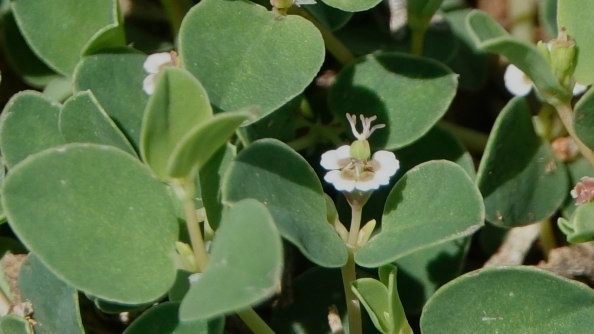
The “flower” of the Rattlesnake Weed is really a cup which has nectaries along its rim. Inside the cup is one female flower surrounded by several male flowers - the male flower is simply a stamen, the female flower is one pistil on a short stem.
It has a range which extends into northern Mexico, its range within the United States extends from California east to Louisiana.
Among the other Common English names for this species is Whitemargin Sandmat. In Spanish it is known as Golondrina (swallow) and Yerba de la vibora (viper grass).
This species had a number of uses in Native American Ethnobotany, including use as a salve for snakebites - thus, “Rattlesnake Weed”. Note, however, that its sap is poisonous.
The scientific synonyms for this species include Chamaesyce hartwegiana, Euphorbia hartwegiana, and Euphorbia stipulacea. It was first described by John Torrey and Asa Gray.
Euphorbia brachycera
Horned Spurge
Railroad Canyon
Black Range
New Mexico
May
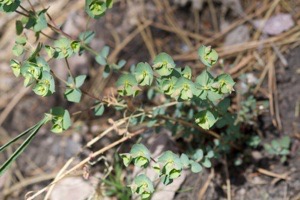
Euphorbia brachycera, Horned Spurge, is similar to Miner’s Lettuce, Claytonia perfoliata, which is a common (early blooming) plant of the Pacific Northwest. Both have what appear to be circular leaves, through which flowers and stems grow. In the case of the Horned Spurge this is somewhat deceiving because on closer inspection it is apparent that more than one leaf is involved.
Spurges ooze a milky latex type of material when injured or broken. This material contains diterpenes which can cause very painful inflammation when they come in contact with mucous membranes. As with most toxic substances many medical uses are being developed from the chemical bases of the latex.
Scientific synonyms for this species include E. lurida, E. montana, E. odontadenia, E. philora, E. robusta, Tithymalus brachycerus, T. luridus, T. mexicanus, T. montanus, and T. robustus.
The range of this species seems to be confined to the eastern and central Rocky Mountains in the United States. Flora of North America indicates that the species is found in the Mexican states of Chihuahua, Coahuila, and Sonora - but apparently also found in Durango.
Evolvulus nuttallianus
Prostrate Evolvulus
Mesa s of Hillsboro
New Mexico
August
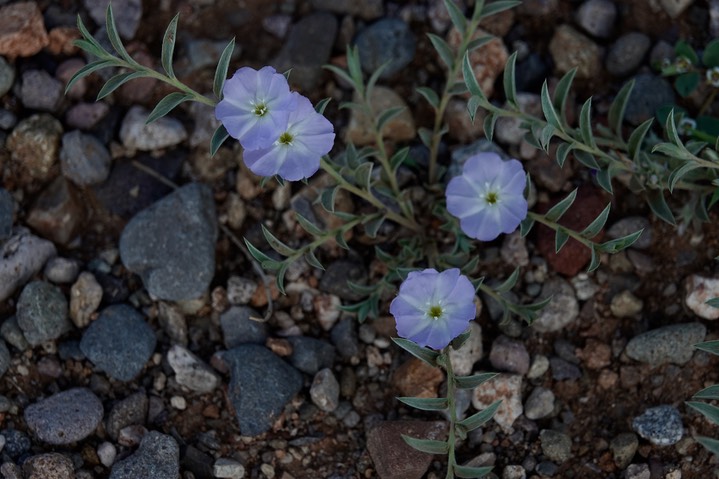
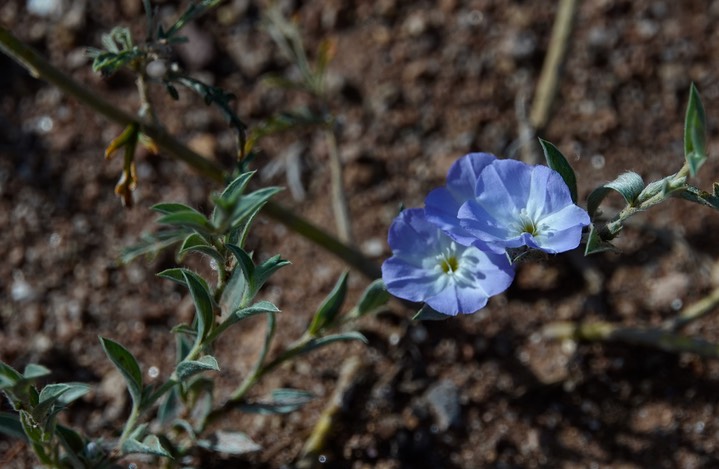
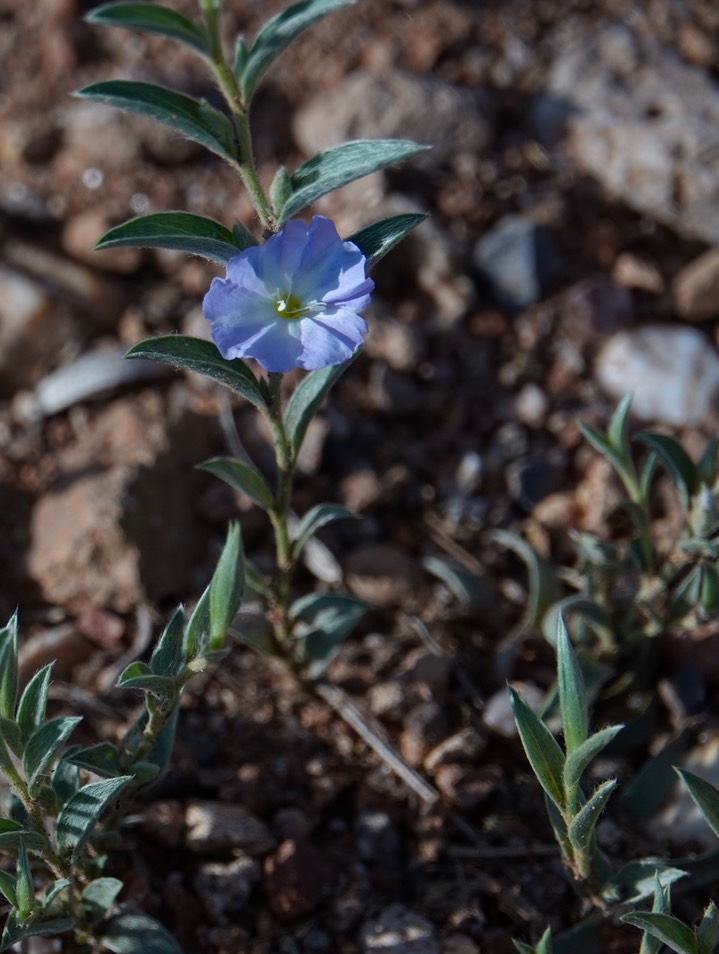
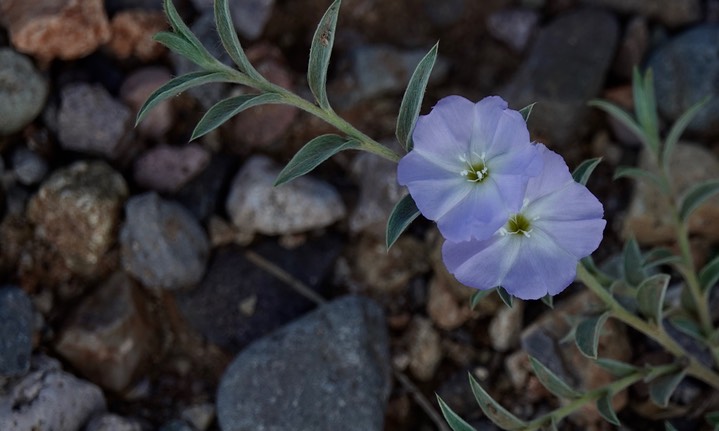
Evolvulus sericeus var. sericeus
Silky Evolvulus
South & East of Hillsboro
New Mexico
August
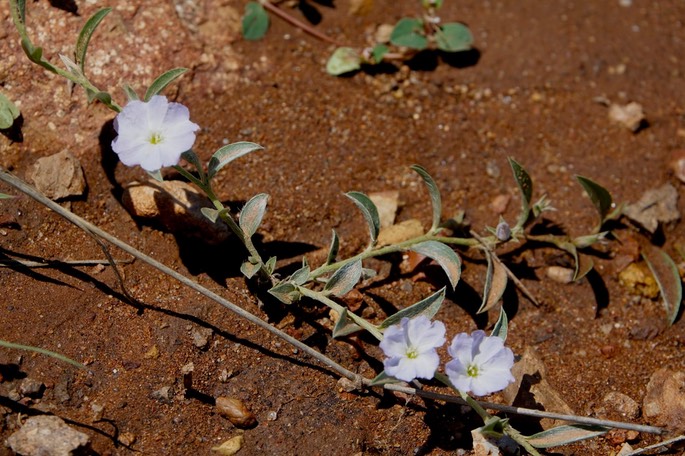
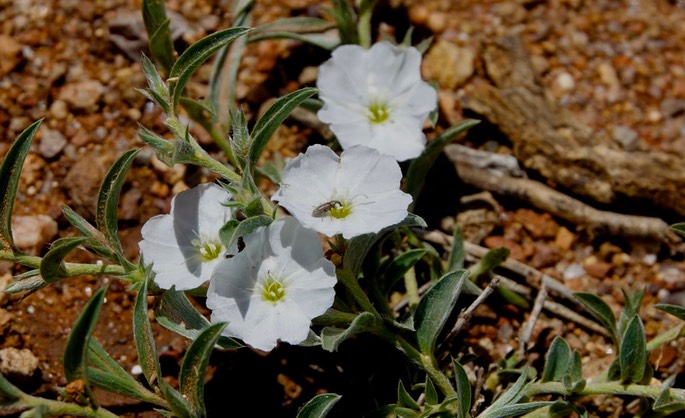
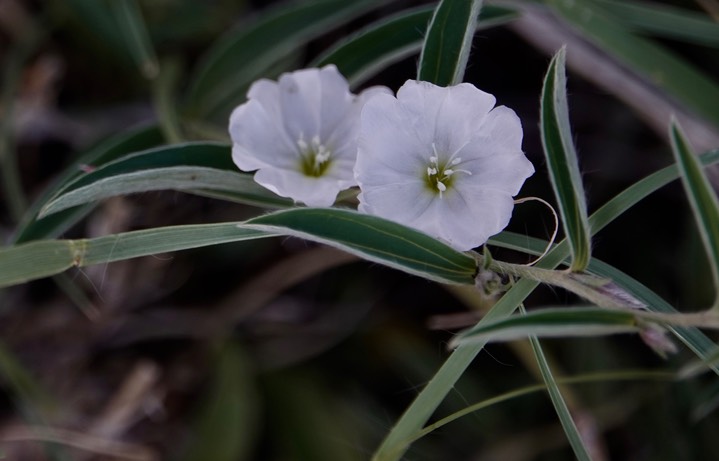
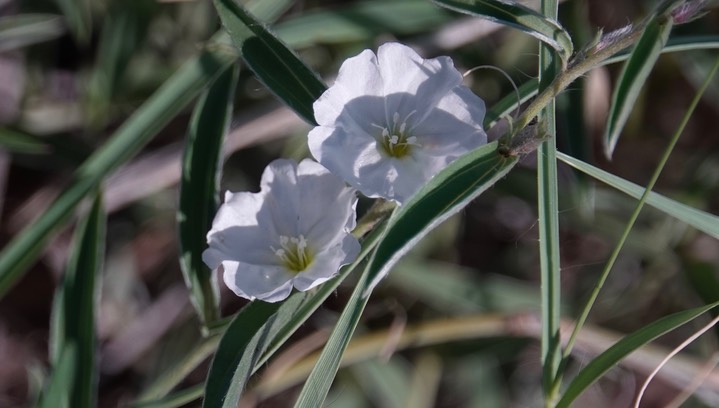
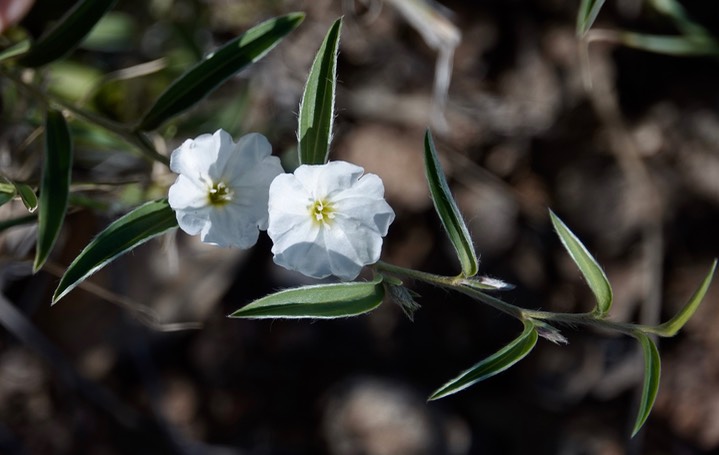
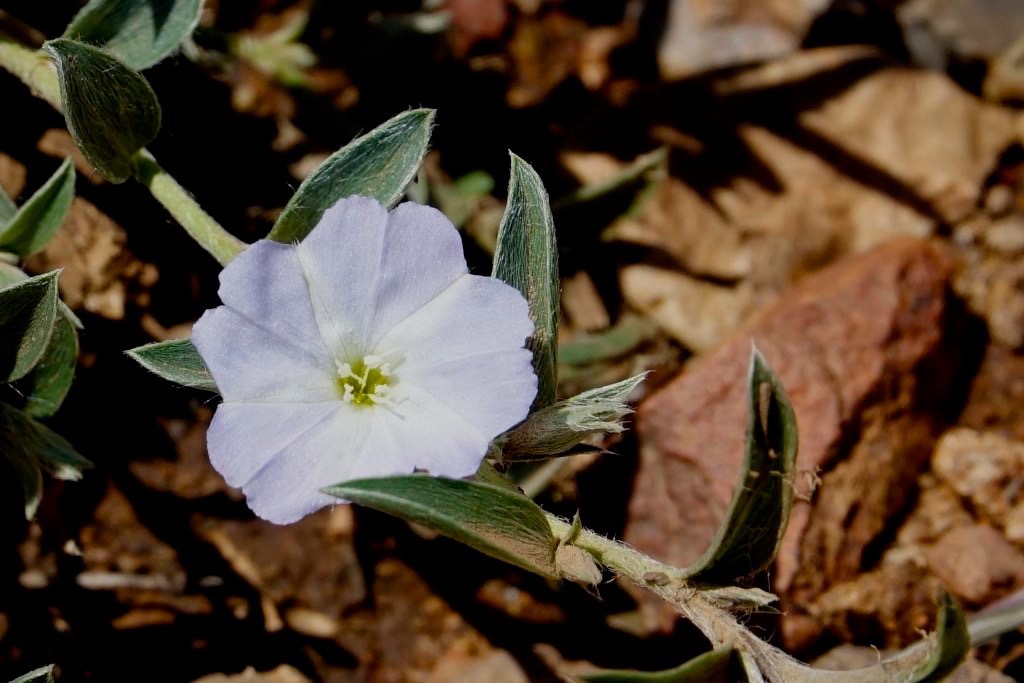
In the recent past, two varieties of this species (E. s. var. sericeus with purple flowers and E. s. discolor with white flowers) were recognized in our area, they have now been lumped into the nominate form referenced here. There are currently two recognized varieties of this species. E. s. var. glaberrimus is found only in Florida in the United States (the nominate form is also found in Florida). In the United States, this species is found in the most southerly states (except California). From the United States, the species is found southward to Argentina.
This species is also known by the English common name of Silvery Morning Glory, Silver Morning Glory, White Evolvulus, Silver False Morning-Glory, and Silver Dwarf Morning-Glory. This species was first described by Olof Swartz in 1788.