Dalea albiflora
Whiteflower Prairie Clover
Warm Springs Wash
NE of Hillsboro
New Mexico
The “FLORA" of the Black Range
“D"
Dalea albiflora
Whiteflower Prairie Clover
Warm Springs Wash
NE of Hillsboro
New Mexico
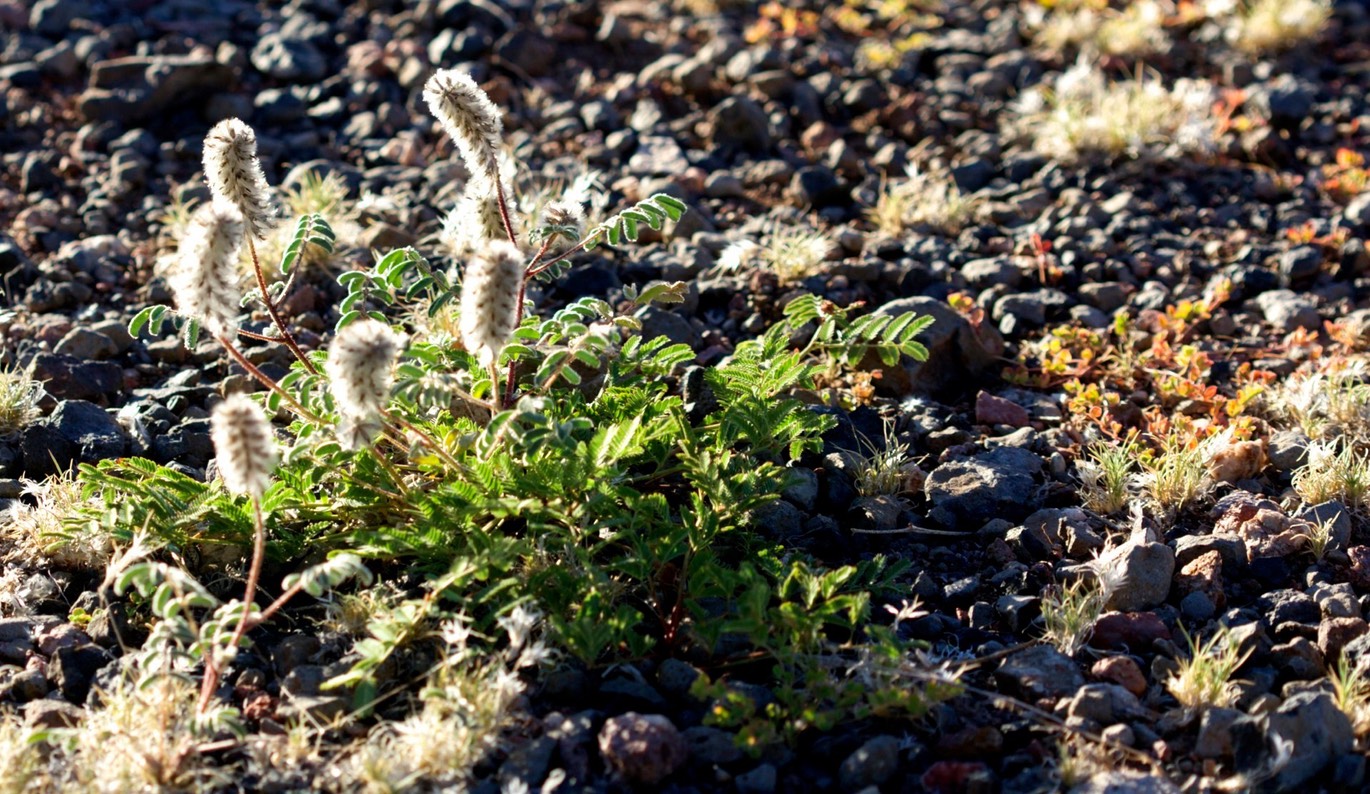
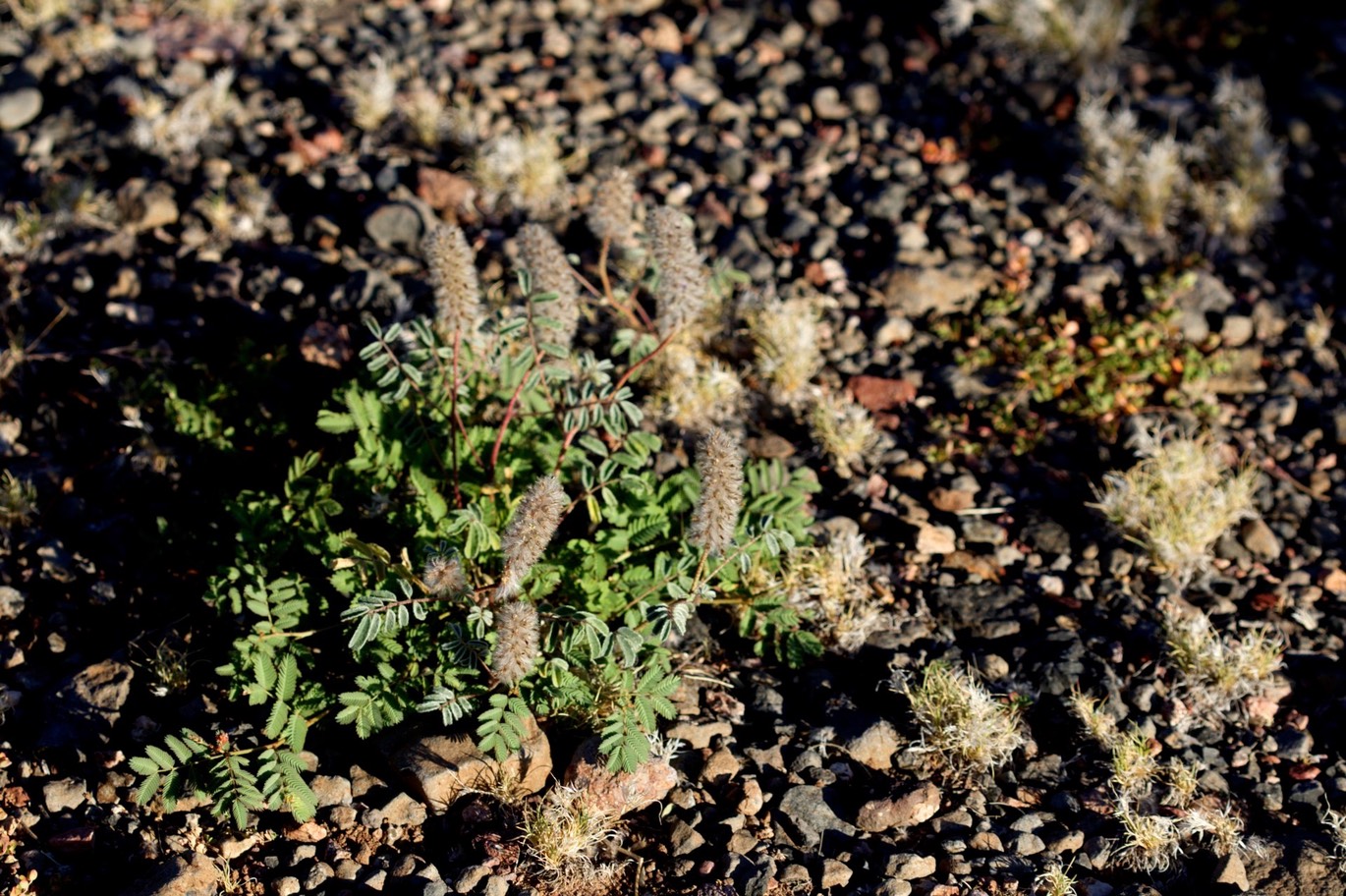
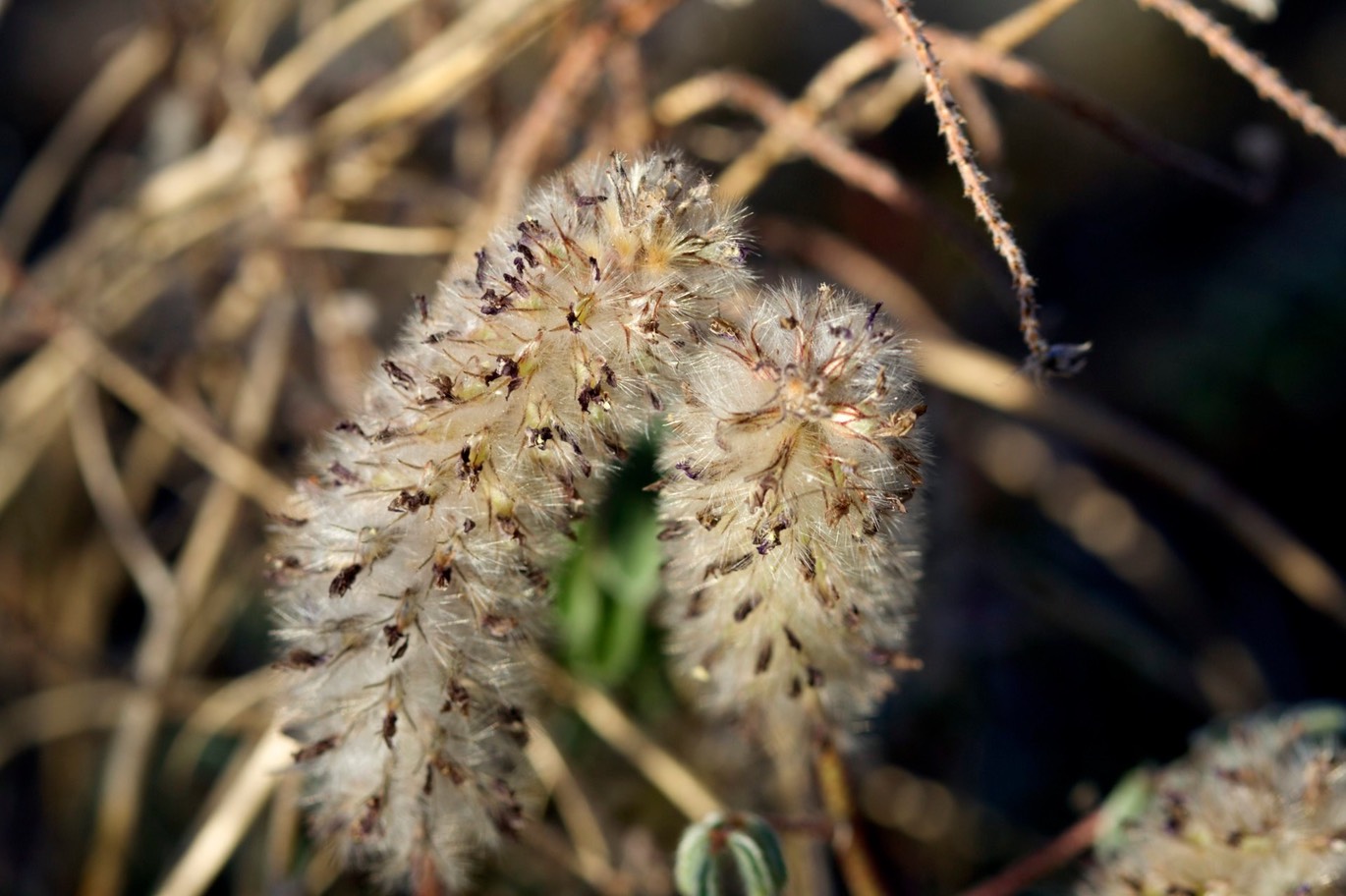
The Dalea albiflora, Whiteflower Prairie Clover, pictured here was going to seed (of course) when I photographed it on the road up to the Opportunity Mine from Warm Springs Wash, northeast of Hillsboro. This species is found in Arizona and New Mexico. Sierra County is at the eastern extreme of this species’ range. It is also found in the states of Sonora and Chihuahua in Mexico.
The scientific synonyms for this species include Dalea ordiae, Petalostemon pilosulus, Thornbera albiflora, and Thornbera villosa. It also goes by the English Common Names of Scruffy Prairie Clover, White Flower Dalea, White Dalea, Ord’s Prairie Clover, and Whiteflower Prairieclover.
This is an excellent butterfly attractor. The specimen isotype was collected in Sonora County (the part which is now included in Sierra County), New Mexico during September 1851 by Charles (Carlos) Wright.
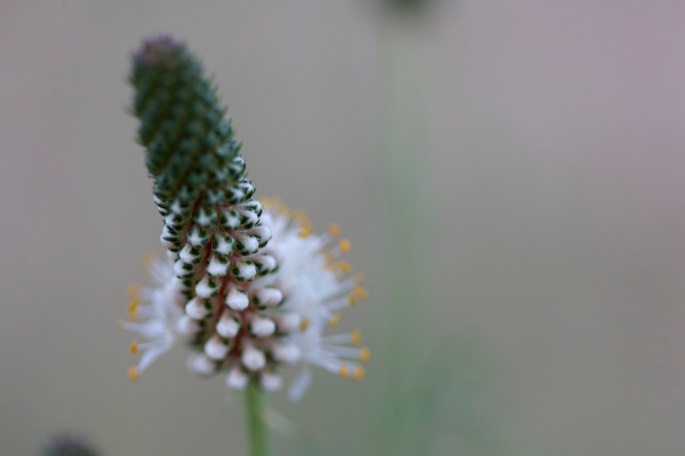
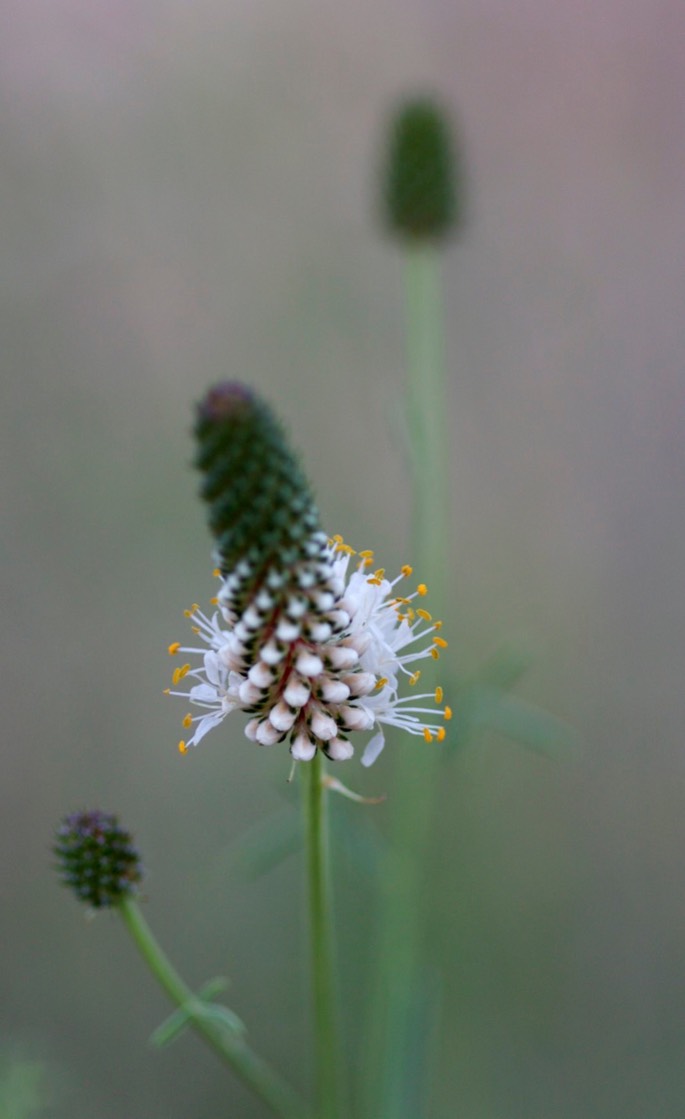
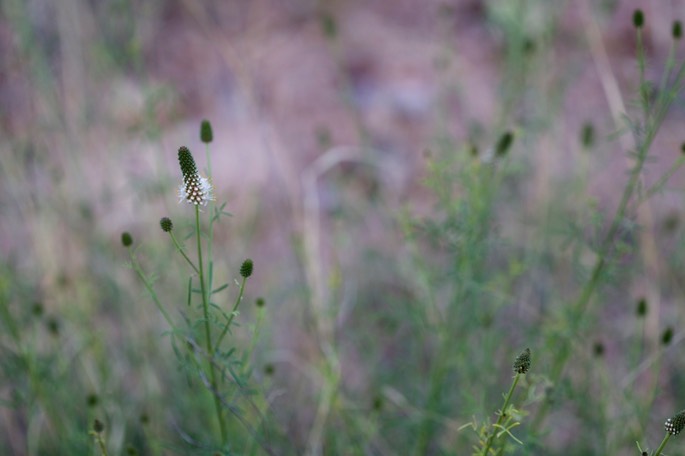
Dalea candida
White Prairie Clover
Warm Springs Wash
NE of Hillsboro, NM
Dalea formosa
Indigo Bush
North Wicks Canyon
East of Hillsboro
New Mexico
April
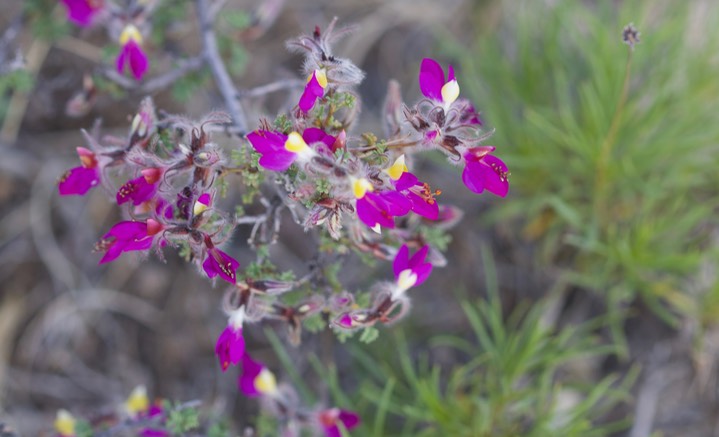
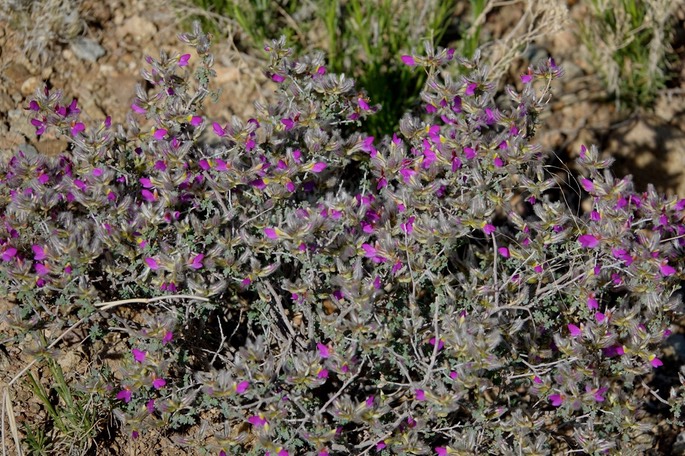
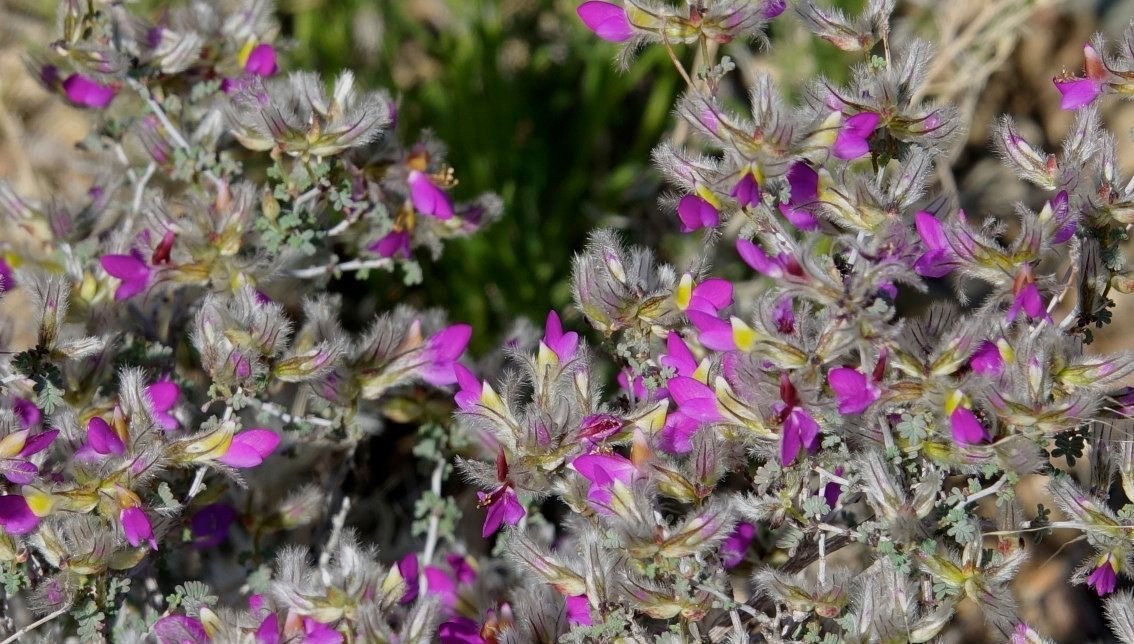
A scientific synonym of this species is Parosela formosa, and it is also known by the English Common Names of Featherplume, Feather Dalea, Feather Indigo, and Pea Bush. In Spanish it is known as Limoncillo and Yerba de Alonso García. It generally blooms between April and August. It typically grows at elevations between 2,000 feet and 6,500 feet - in rocky soil. There are 70+ species of Dalea in North America, several of which are difficult to distinguish from like species. This species is distinguished by being a small shrub.
The range of Dalea formosa, within the United States, is limited (Arizona, New Mexico, west Texas, Oklahoma, and Colorado. Its range extends southward into northern Mexico.
The Jemez and Keres Indians used this species as a cathartic, an emetic, a strengthener, and as a source of fuel.
It has an interesting fertilization adaptation. When the flower first blossoms it is yellow. After the flower has been visited by a bee, and no longer has any pollen, it turns maroon. Many other plant species drop the flower once it has been pollinated, not so the Indigobush. It has been posited that the species retains fertilized flowers so that it can more effectively attract the attention of passing bees (so that the non-fertilized flowers will have a better chance of being pollenated).
This species was first described by John Torrey in 1828. Dalea is a tribute to the English botanist Samuel Dale.
Dalea jamesii
James’s Prairie Clover
East of Hillsboro
New Mexico
May
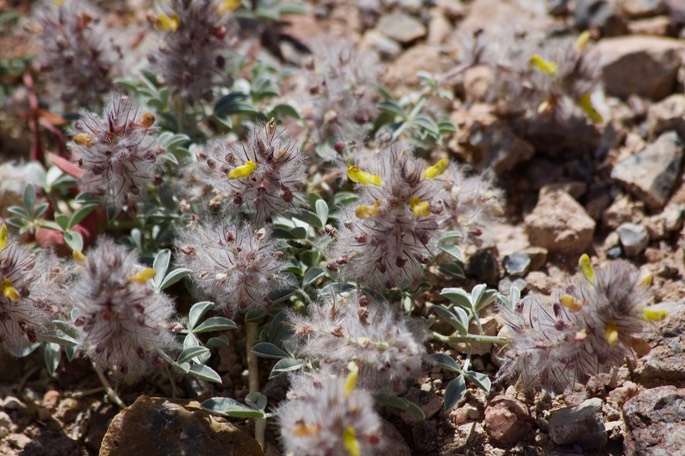
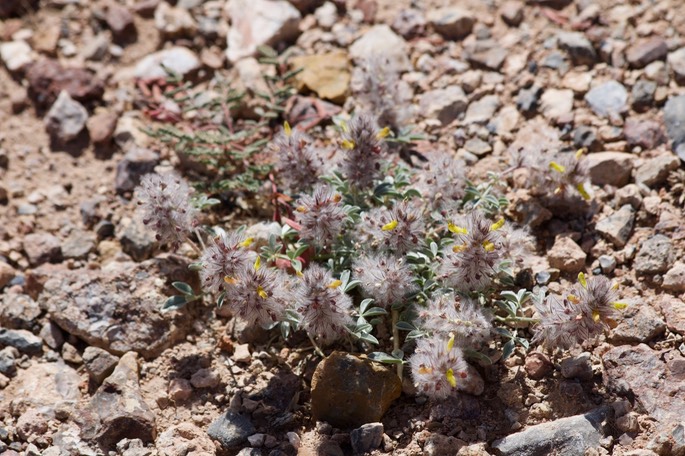
Dalea jamesii, James’s Prairie Clover, seems to thrive in dry sandy/rocky areas like this. Like D. formosa, the flowers of this plant start out yellow and turn red when fertilized.
The range of Dalea jamesii, within the United States is limited to Arizona, New Mexico, and western Kansas - south into northern Mexico.
O. B. Metcalf collected a specimen near Hillsboro on September 6, 1904.
Dasylirion wheeleri
Sotol
East of Hillsboro
New Mexico
April, June, & July
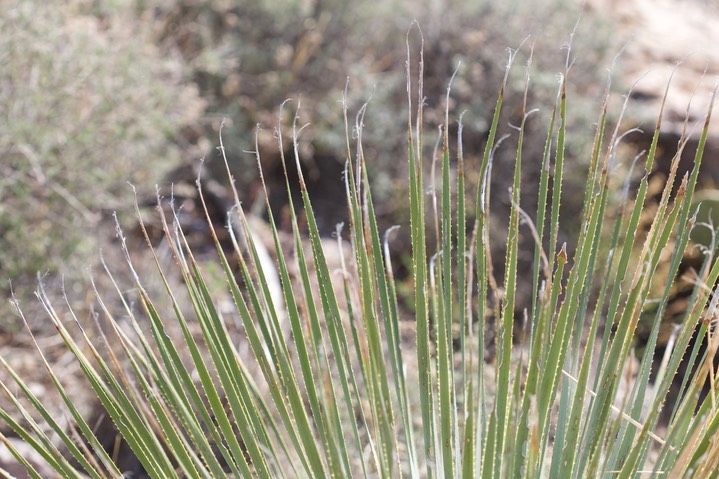
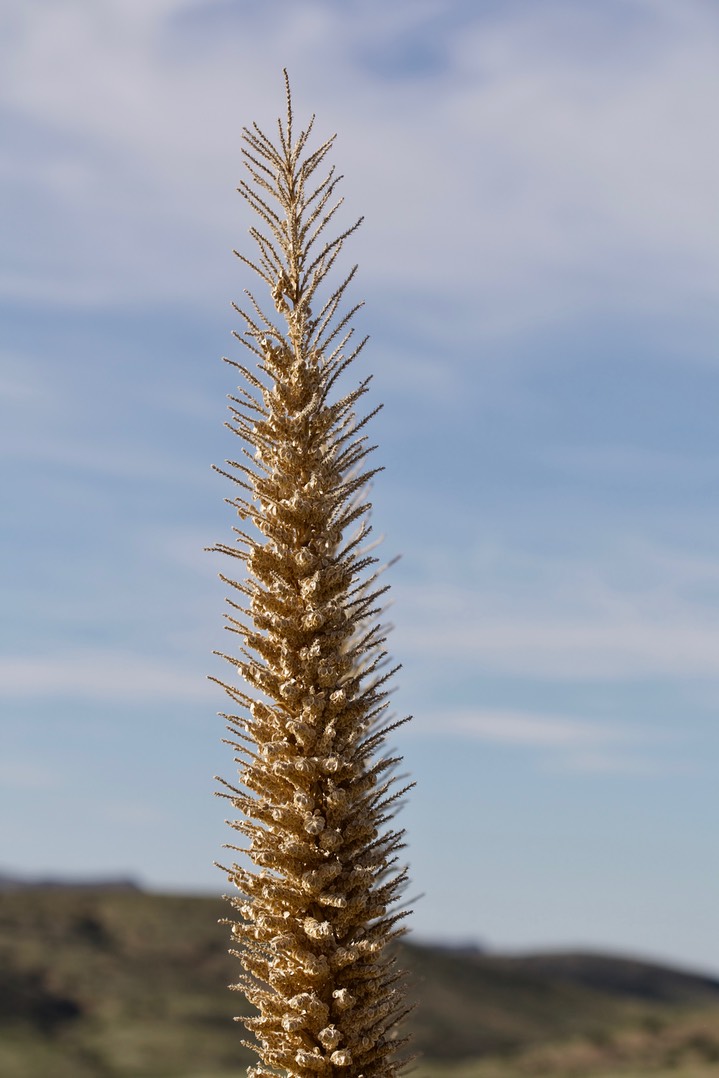
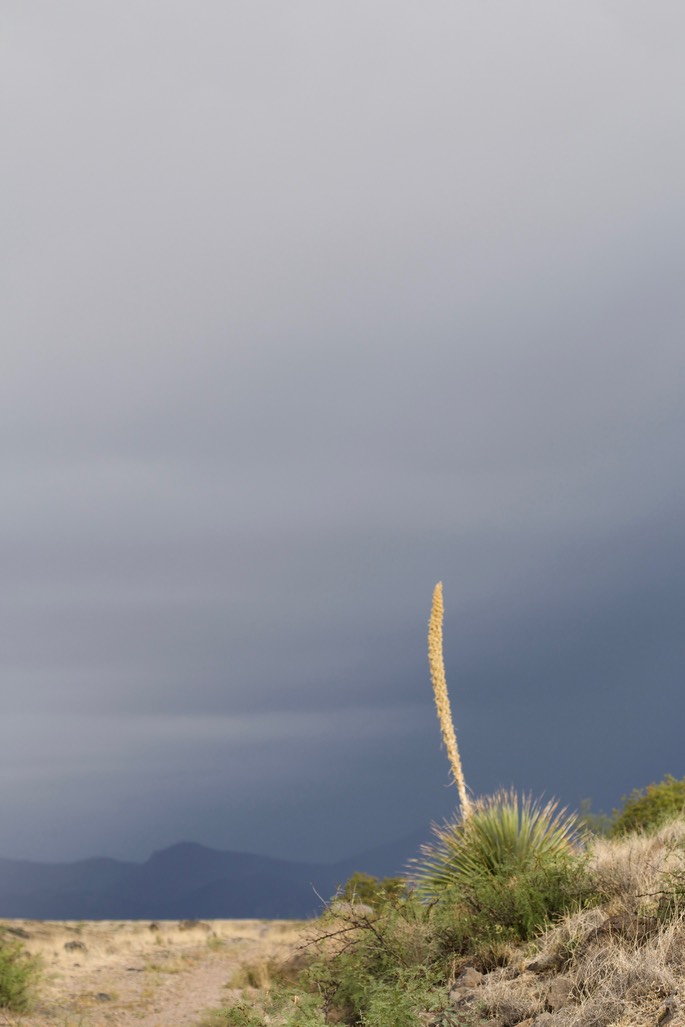
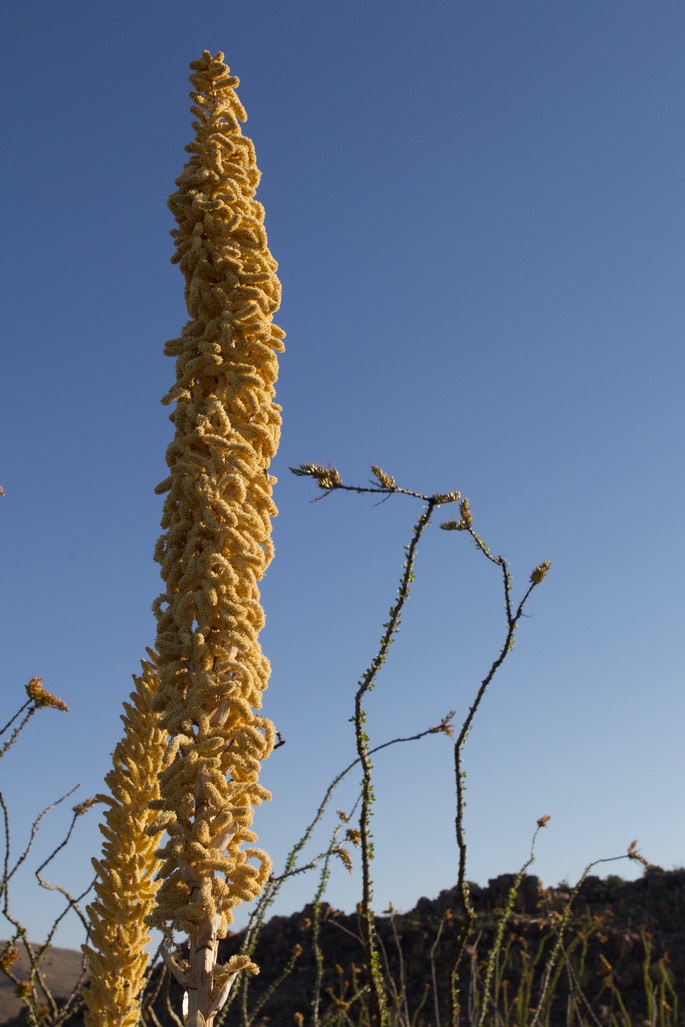
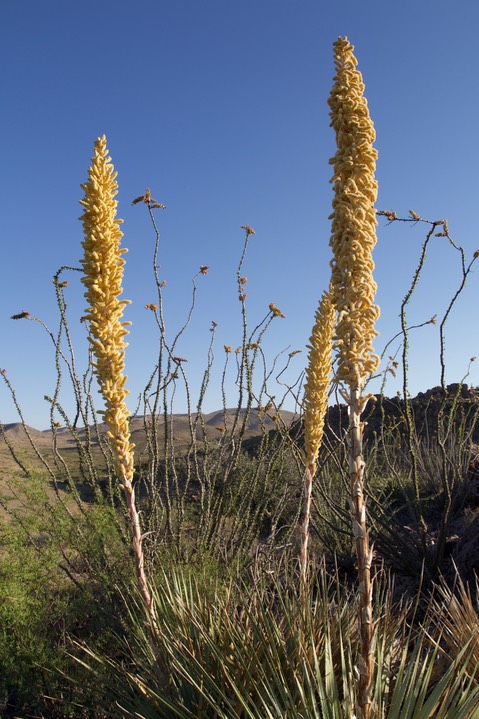
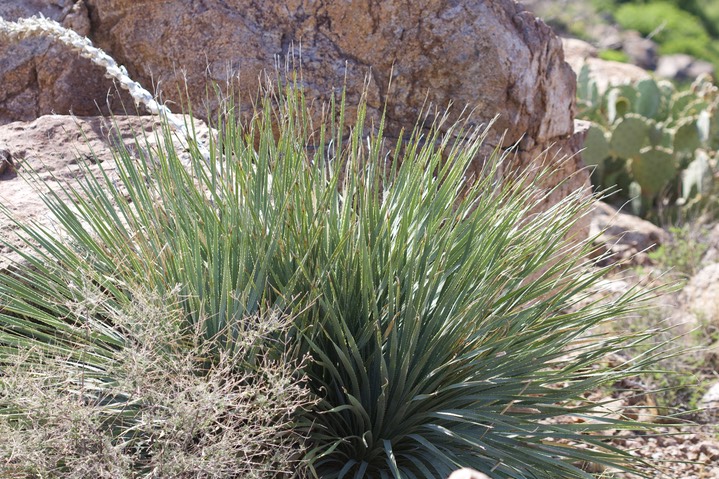
Sotol (a.k.a. Desert Spoon), Dasylirion wheeleri, is generally in bloom by May. Their tall slender stalks of flowers dot the hillsides adding, not only elegance, but a palette of color as they change from light green to the golden color pictured above. Humans have used Sotol for at least 9,000 years. It was used to make mats and baskets, used as hunting darts, distilled for the spirits, and cooked for food.
The gender of a Sotol can be determined by flower color, white for male and pink for female. The leaves of the Sotol are narrow and up to a meter long. The “thorns” on the leaves point away from the plant rather than back toward it, which is the case on Agave parryi and Agave palmeri leaves.
The range of the Sotol within the United States is limited to Arizona, New Mexico, and west Texas. In Mexico, it is found in Chihuahua and Sonora.
The alcoholic drink, Sotol, is made from the fermented plant matter of this species. The core of the plant is baked for food and the Tarahumara and Pima Bajo use the leaves in the weaving of baskets. The dried flower stalk of the Sotol is purported to be the best material for a fire plow in the American Southwest. A fire plow is used to create a fire from rubbing two sticks together.
Datura quercifolia
Oak Leaf Thorn Apple
Mimbres Culture
Heritage Site
Mimbres Valley
& Hillsboro
New Mexico
October
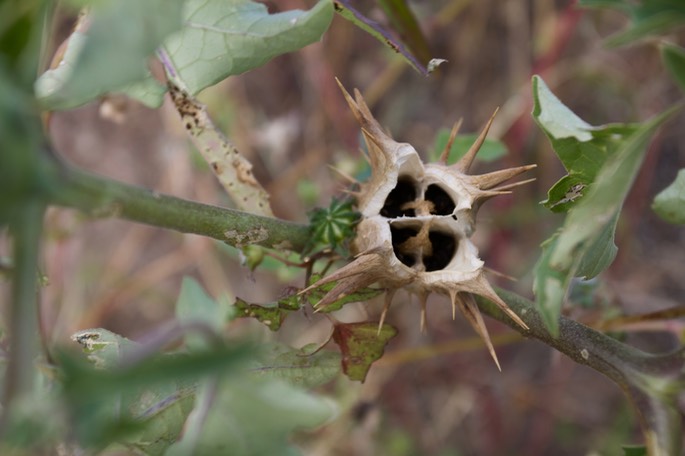
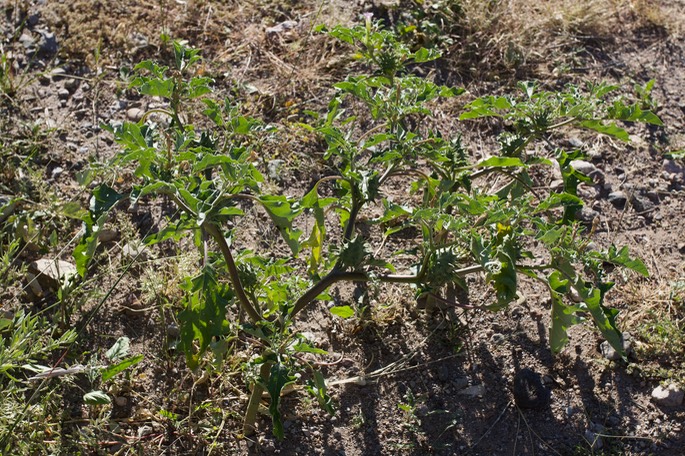
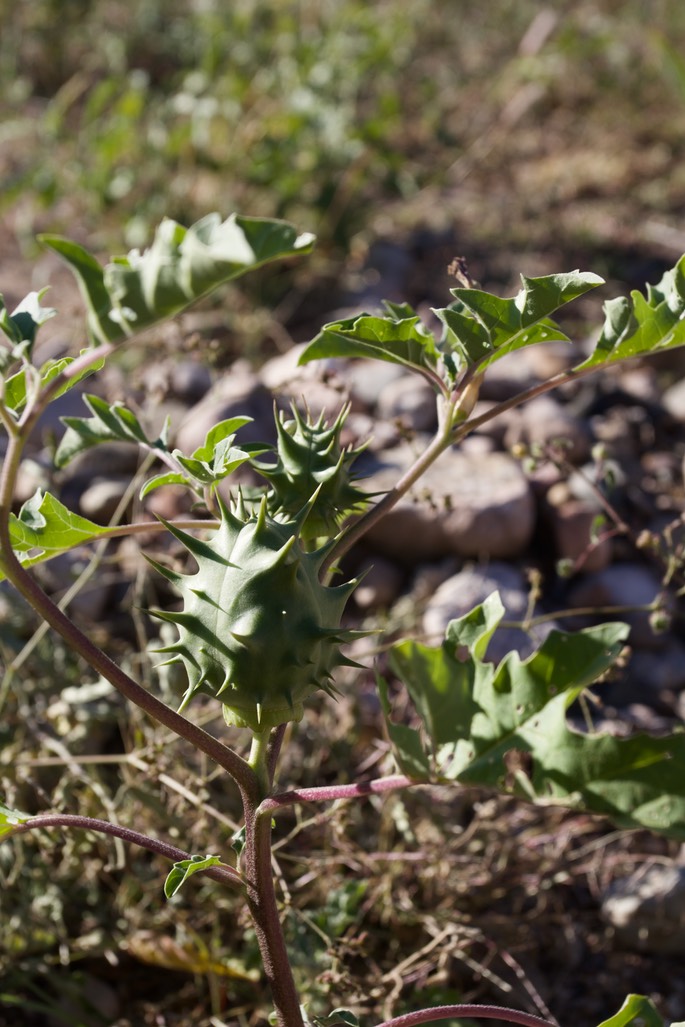
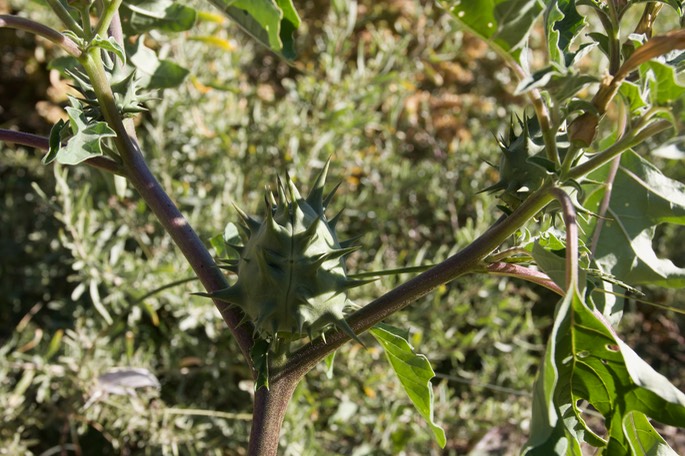
Datura quercifolia, Oak Leaf Thorn Apple, like all Daturas it has a very pretty flower and like all Daturas every bit of the plant is toxic to humans and most mammals - very toxic. Even handling the plant can cause an allergic reaction.
As with most plant species, there are multiple common names for this Datura species, among them are; Oak Leaf Datura and Chinese Thorn Apple. Datura ferox, Datura gigantea, and Datura villosa are scientific synonyms for this species.
The appearance of the seed of this particular Datura species is often likened to the human brain. A rather close resemblance.
This species has a limited range within the lower 48 of the United States, primarily in the west.
Datura wrightii
Jimsonweed
East fork of Ready
Pay Gulch, North
of NM-152
East of Hillsboro
& San Lorenzo
New Mexico
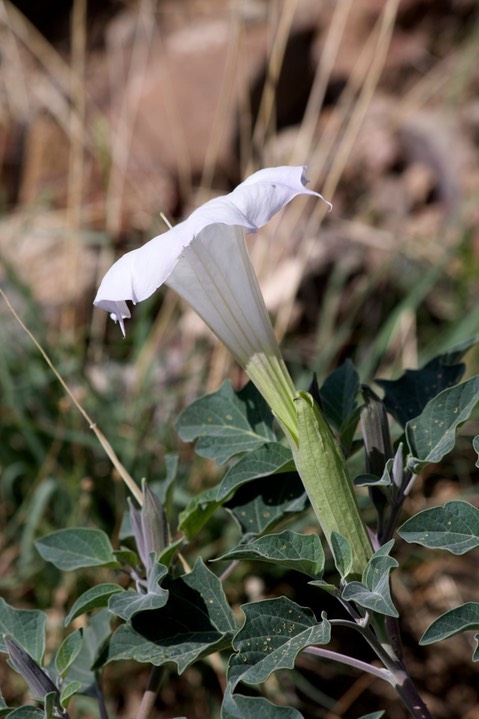
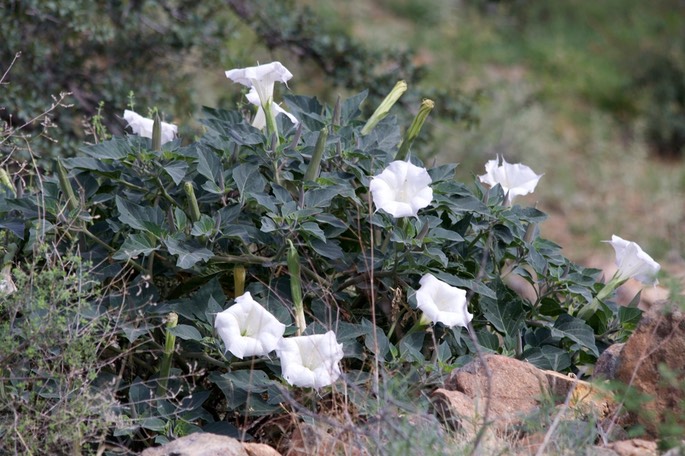
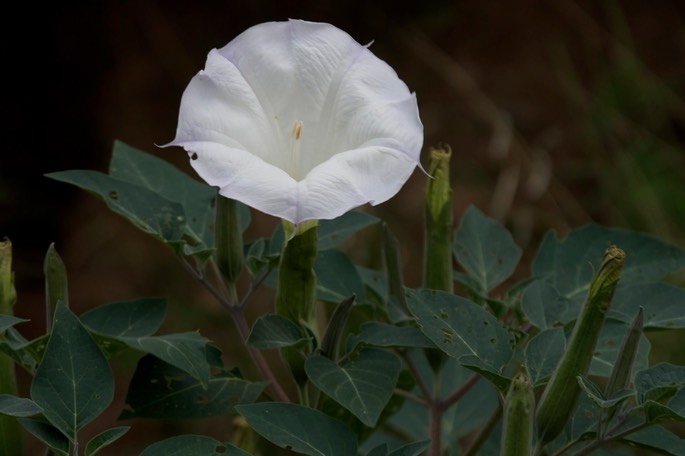
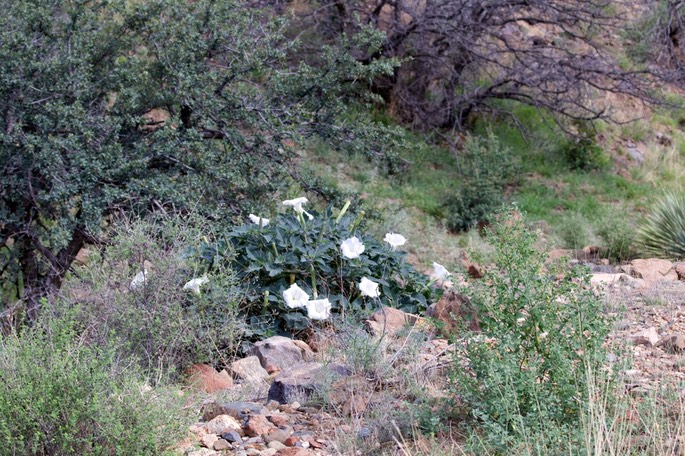
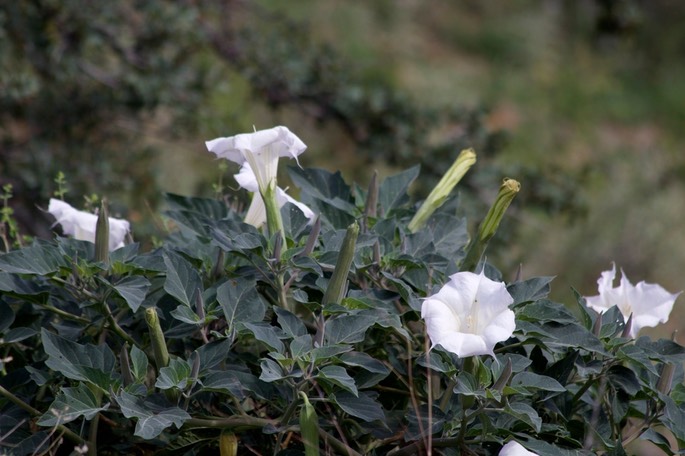
Datura wrightii, Jimsonweed (a.k.a. Sacred Datura, Sacred Thorn Apple), is found in many areas of the Black Range. It is an exceptionally striking and beautiful plant, especially when in flower. Because it grows well in situations where nutrients and water are limited it is often used in xeriscape gardening. The native range of this species is limited to northern Mexico and the states of the American Southwest, as far north as southern Utah.
This species contains chemical compounds (tropane alkaloids) which are hallucinogenic. In particular they are deliriant, a class of hallucinogen which cause delirium (as opposed to those which are psychedelics or dissociatives). The indigenous peoples who lived in the range of Datura wrightii used the plant (especially the seeds and roots, where the alkaloids are concentrated) for medicinal and religious purposes. It has also been used as a recreational drug. Use of this plant as a drug is especially dangerous because the concentrations of alkaloids vary with individual plants and the hallucinogenic state is slow to present, making a safe dosage difficult to determine. In addition, the effects are long lasting, include diminished sensory capability (including temporary blindness), and create panic - a rather dangerous combination. During ritual rites of passage practiced by some indigenous tribes, boys were given drinks made from the plant, they sometimes died during the ritual. That should be more than an ample warning for those who want to give it a try - in a knowledgeable environment with active support systems people die when using mixtures created from this plant.
Datura wrightii was originally described by Eduard August von Regel a German botanist who described more than 3,000 plant species. He was not a collector, most of the botanist who first described species during the 1700’s and 1800’s did not “discover” species, but rather were the first to describe and place them within a scientific structure. In von Regel’s case he ended his career as the Director of the Russian Imperial Botanical Garden of St. Petersburg, a position which gave him access to many undescribed specimens. The scientific name honors Charles (Carlos) Wright (1811-1885). Wright was an American plant collector who worked extensively in Texas, New Mexico, and Arizona, including time as the surveyor and botanist on the Mexican Boundary Survey of 1851-1853. He is honored in the names of many plant species.
One of the treats of summer is to sit by Datura at dusk and watch the Hawk Moths dive into the flowers.
Delphinium scopulorum
Rocky Mountain Larkspur
Various mid-elevation locations
Black Range
New Mexico
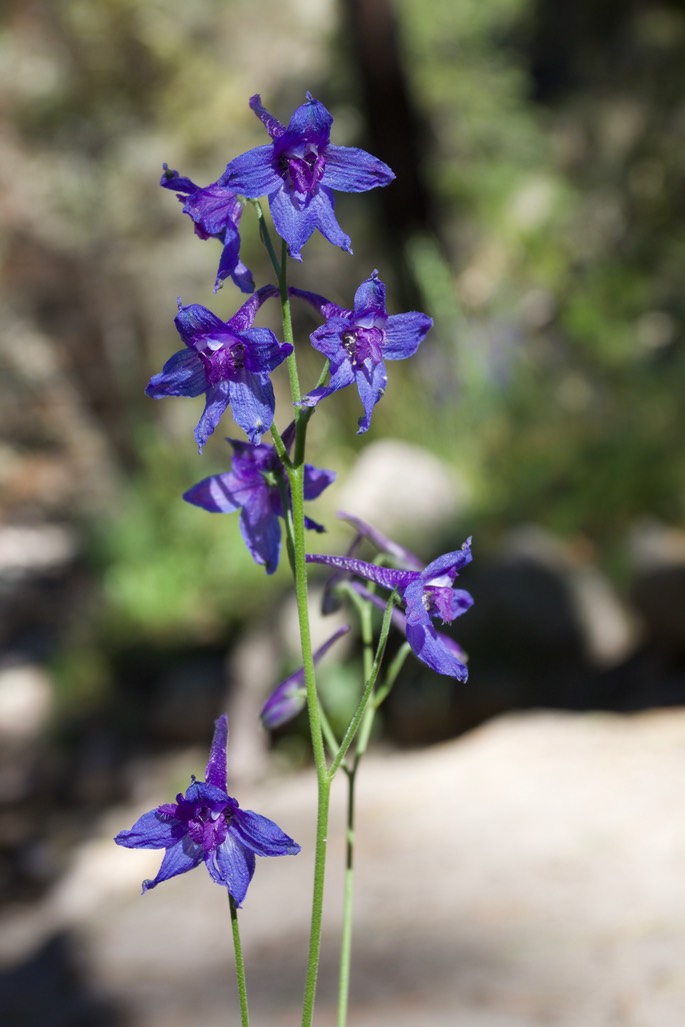
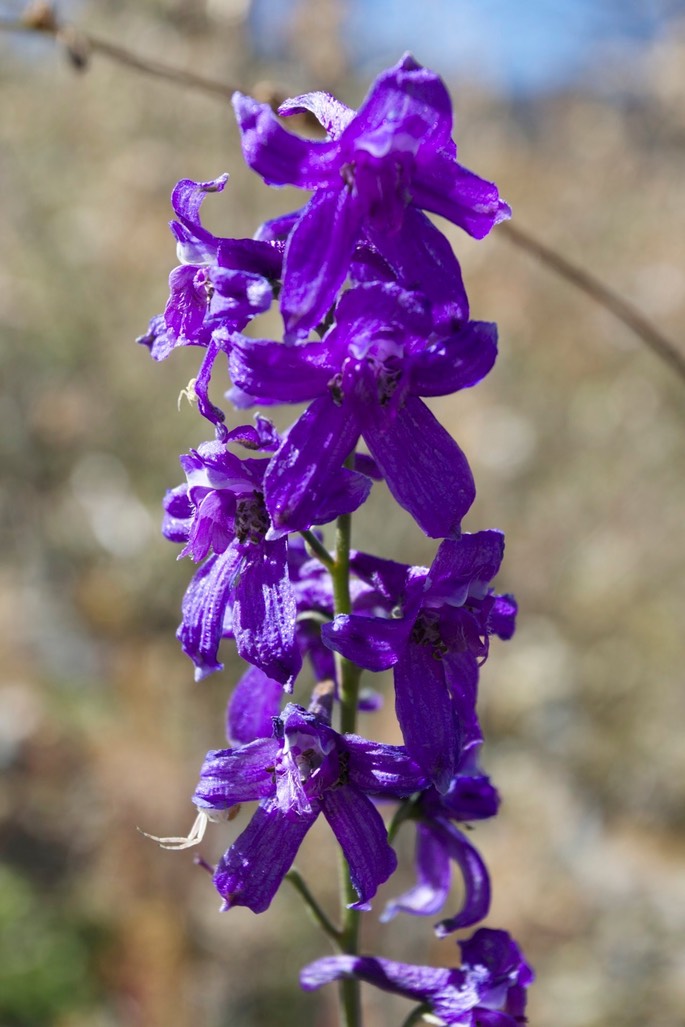
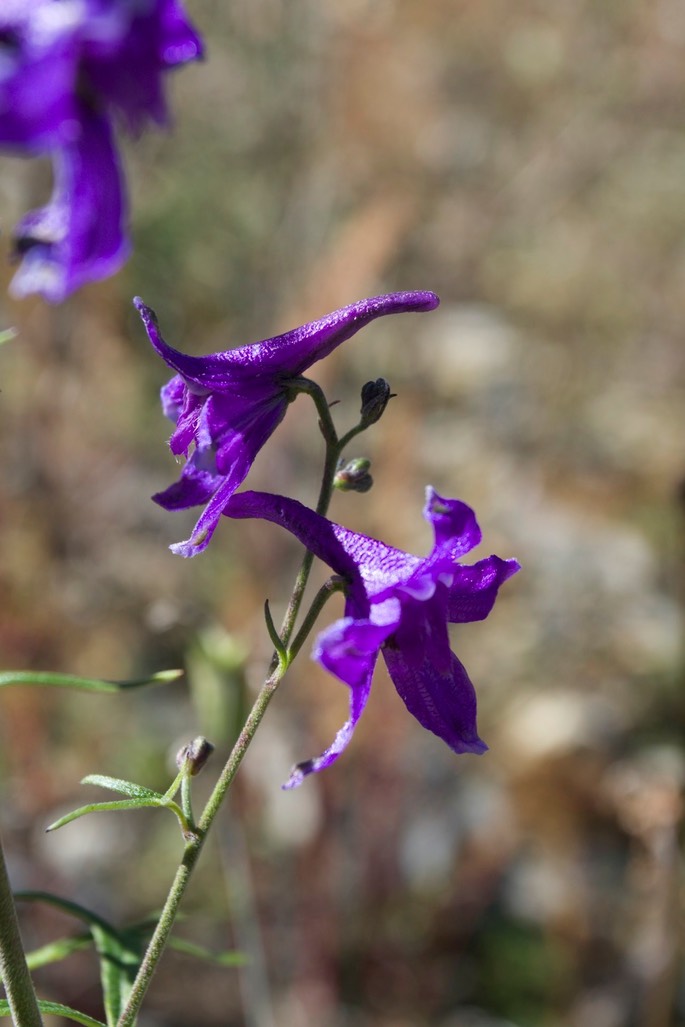
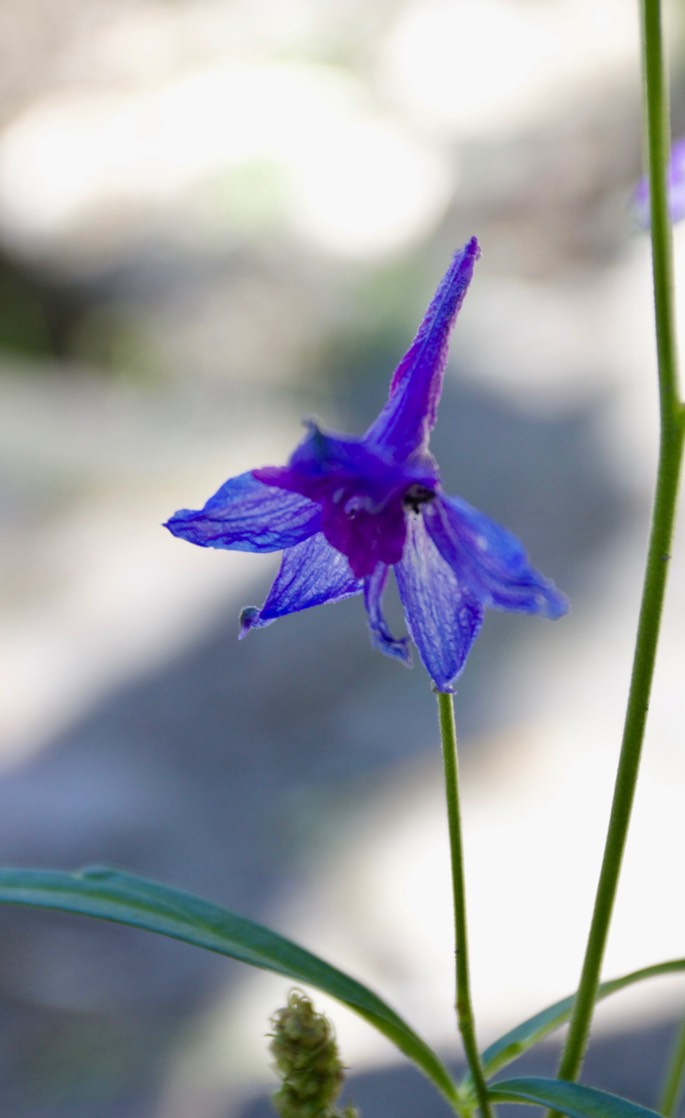
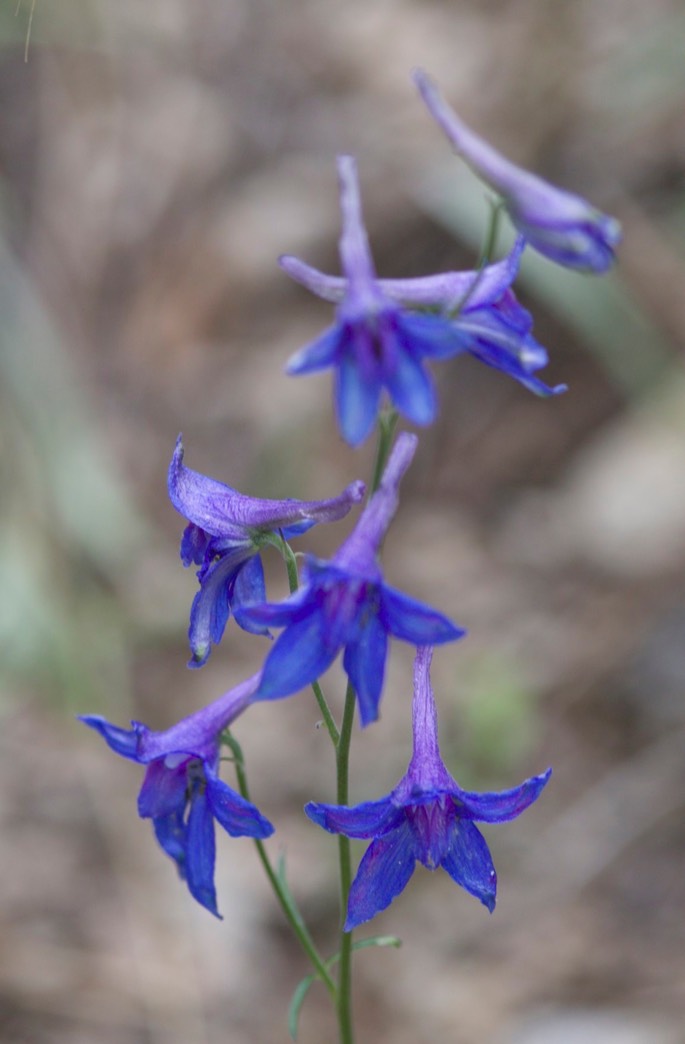
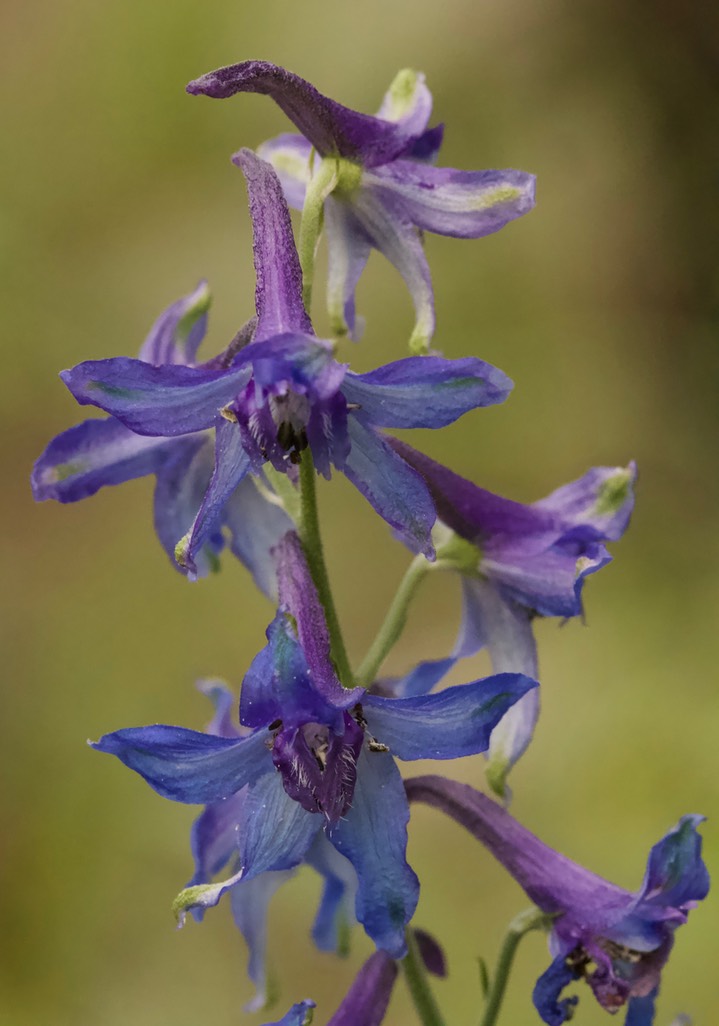
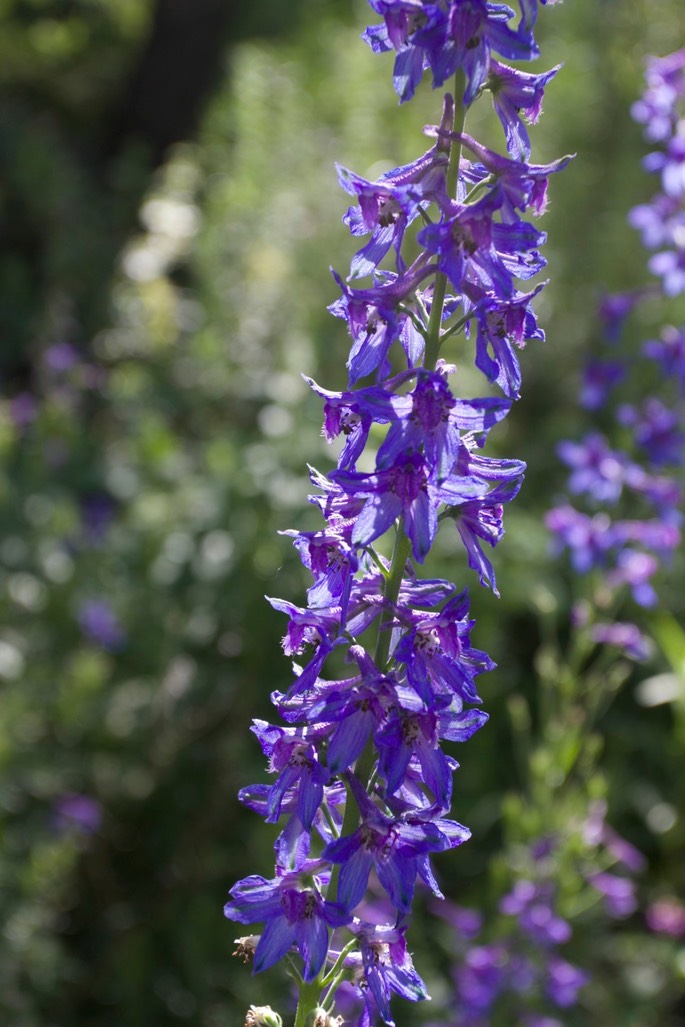
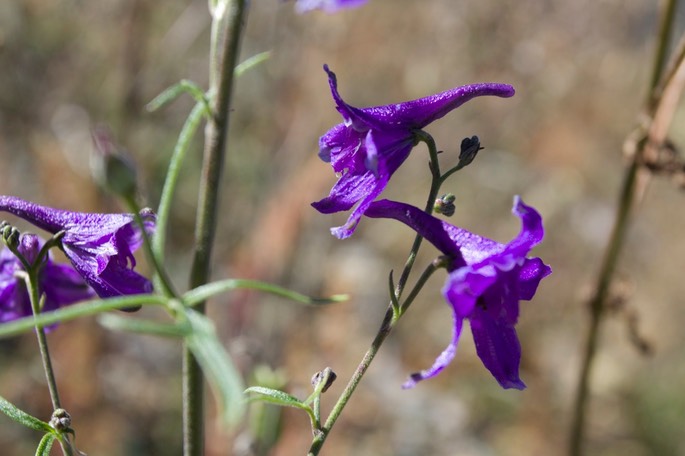
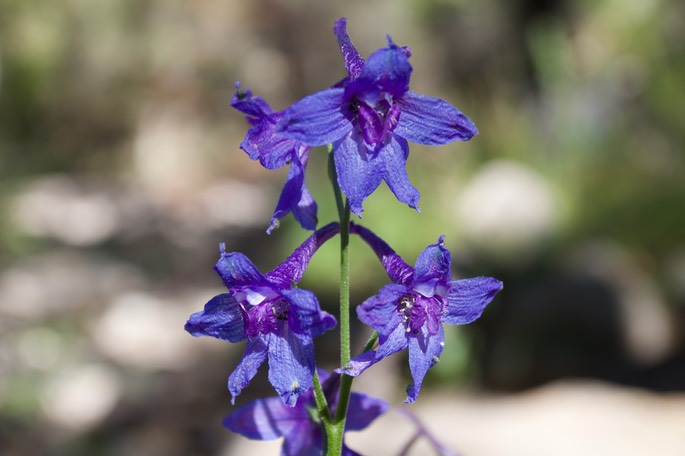
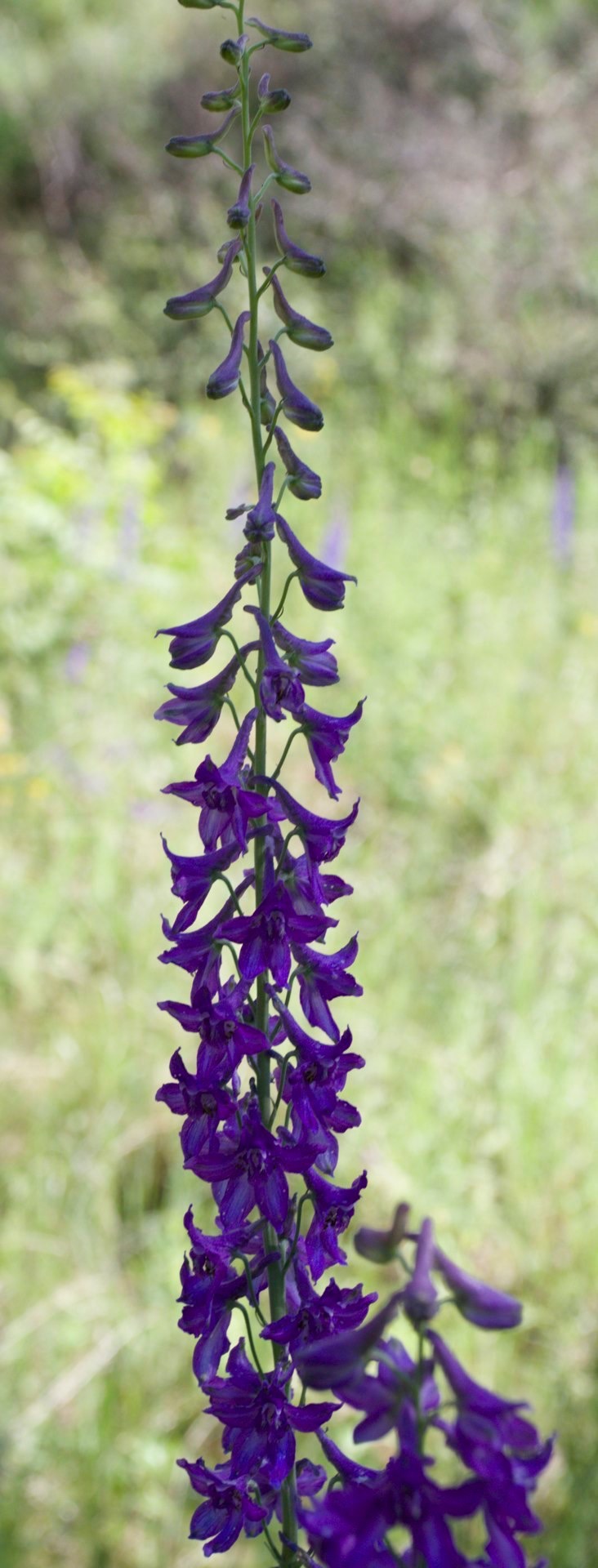
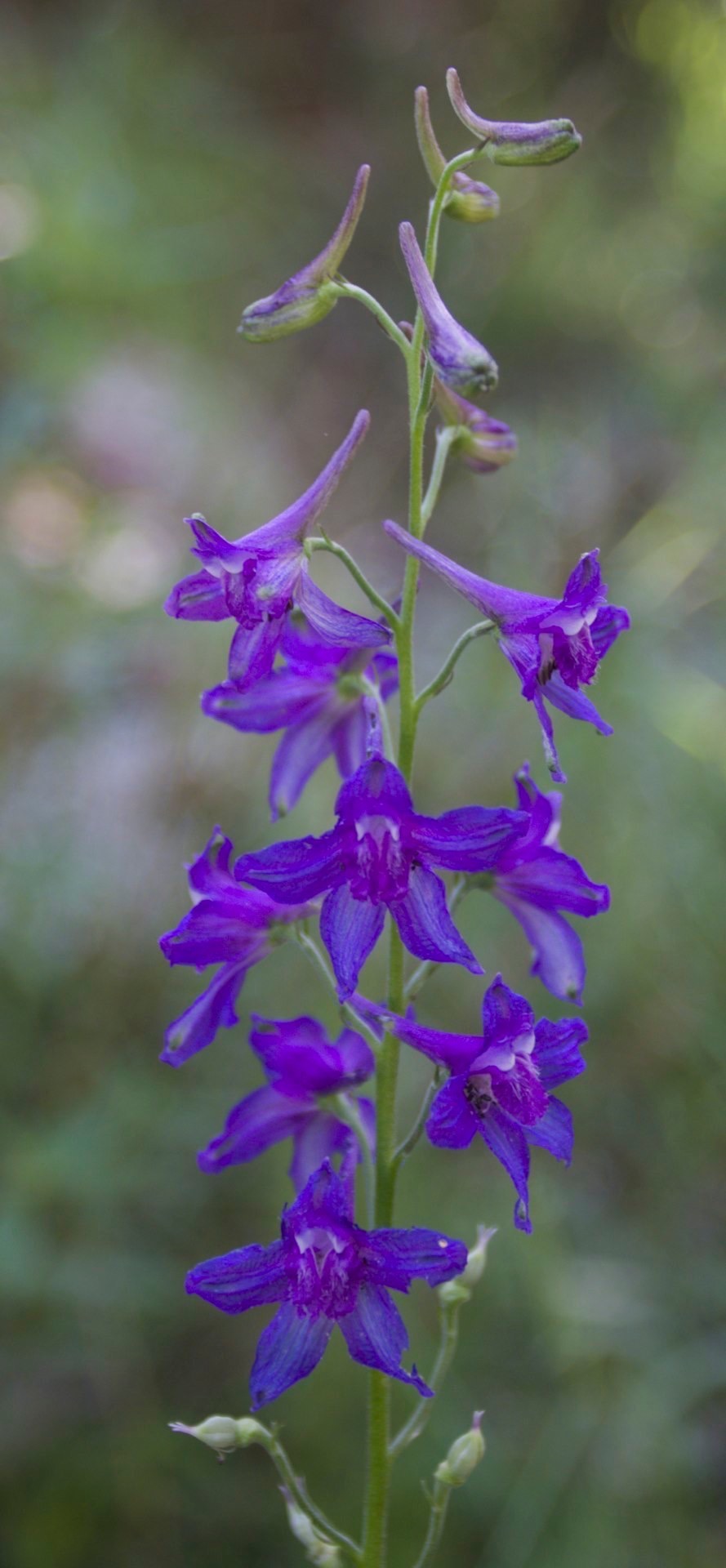
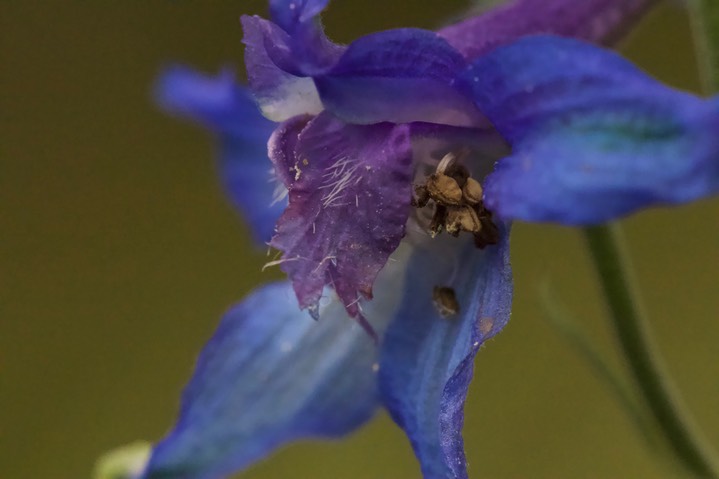
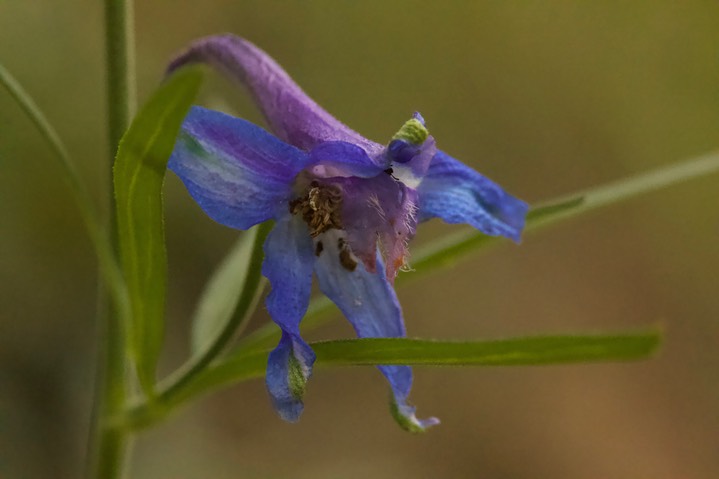
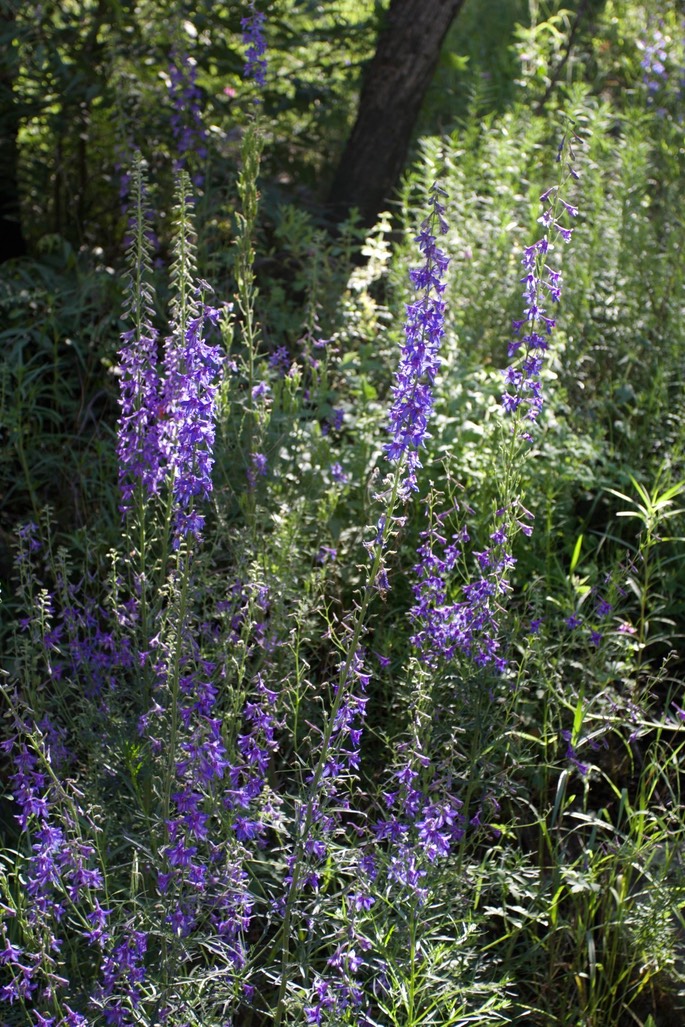
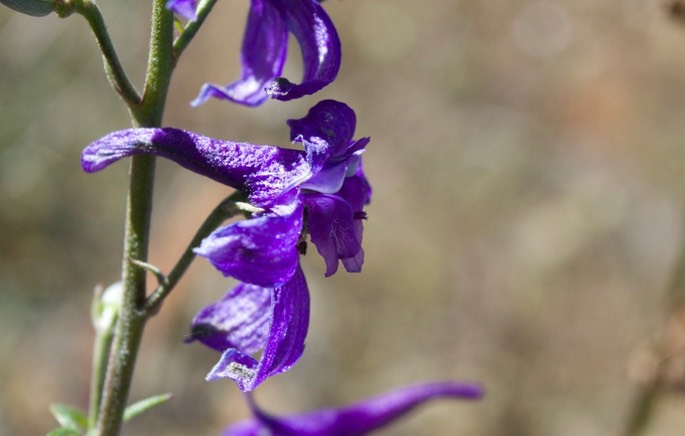
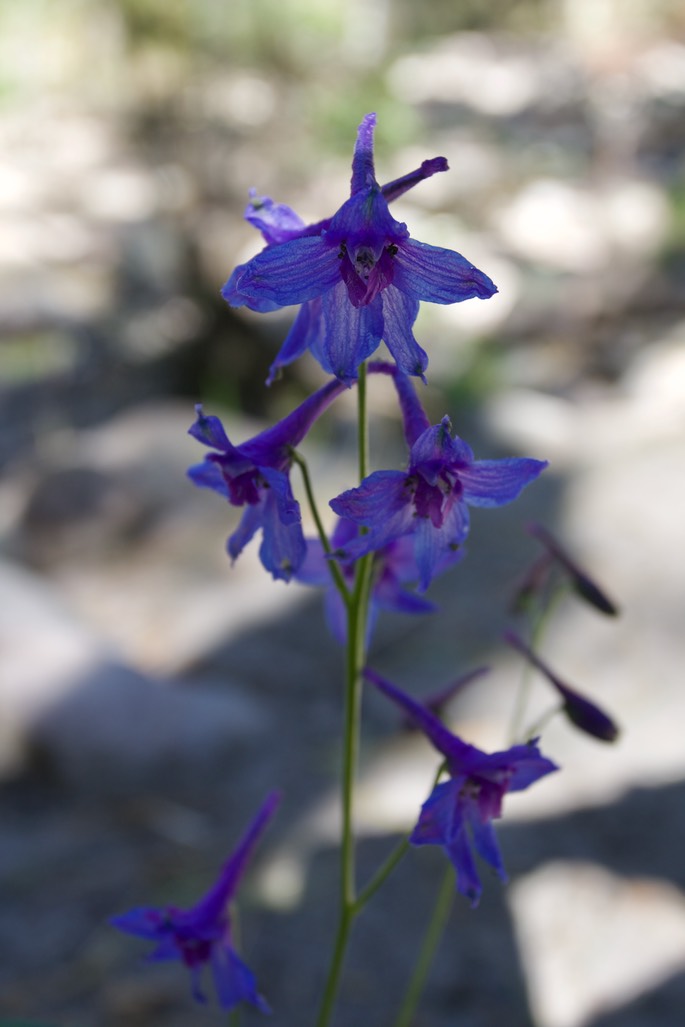
Rocky Mountain Larkspur, Delphinium scopulorum, is very noticeable at middle and higher elevations in the Black Range. It has a range restricted to southeastern Arizona and southwestern New Mexico in the United States and the adjoining areas in Sonora, Mexico. It was first described by Asa Gray in 1853. A nice description of the species can be found at the Flora of North America site. A number of subspecies have been described.
Synonyms include Delphinium macrophyllum which was described by Elmer Ottis Wooton based on a specimen he collected on Hillsboro Peak. Wooton studied the flora of New Mexico extensively, collecting more than 5,000 plants which he added to the New Mexico State University herbarium which he started in 1890. A different Larkspur, Organ Mountain Larkspur, Delphinium wootonii, is named in his honor (as well as a number of other plant species).
Speciation determinations in the genus Delphinium have been extensive and changing. That unsettled history leads to misstatements in some references - statements which may lead to some insight. For instance, the Wikipedia entry (10/15/2014) for this species notes the range described above and then goes on to note that many Canadian ranchers wait until late summer to move their cattle to higher elevations because of the toxicity of this species. Other than the fact that current speciation determinations for this species do not include a range in the “western prairies of Canada” the caution about toxicity is interesting and perhaps true of the genus - and thus the subject species. The Wikipedia article goes on to note that death can occur with a few hours of eating the plant and is caused by “neuromuscular blocking” and “cardiotoxic” effects of the toxin (alkaloids).
Delphinium wootonii
Organ Mountain Larkspur
Carbonate Creek
Black Range
New Mexico
July
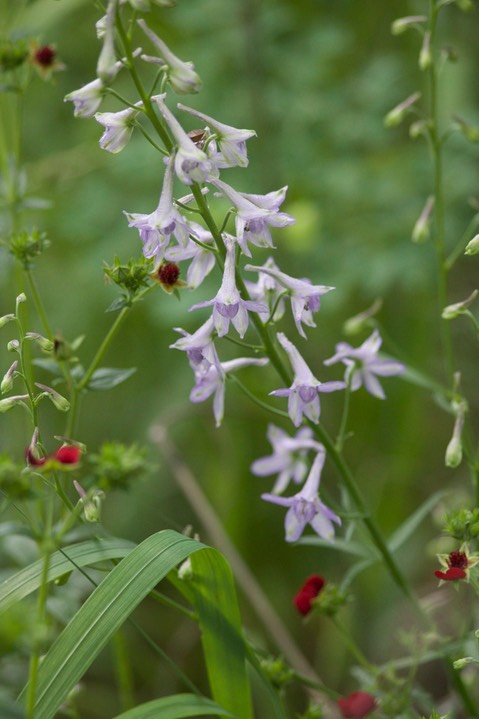
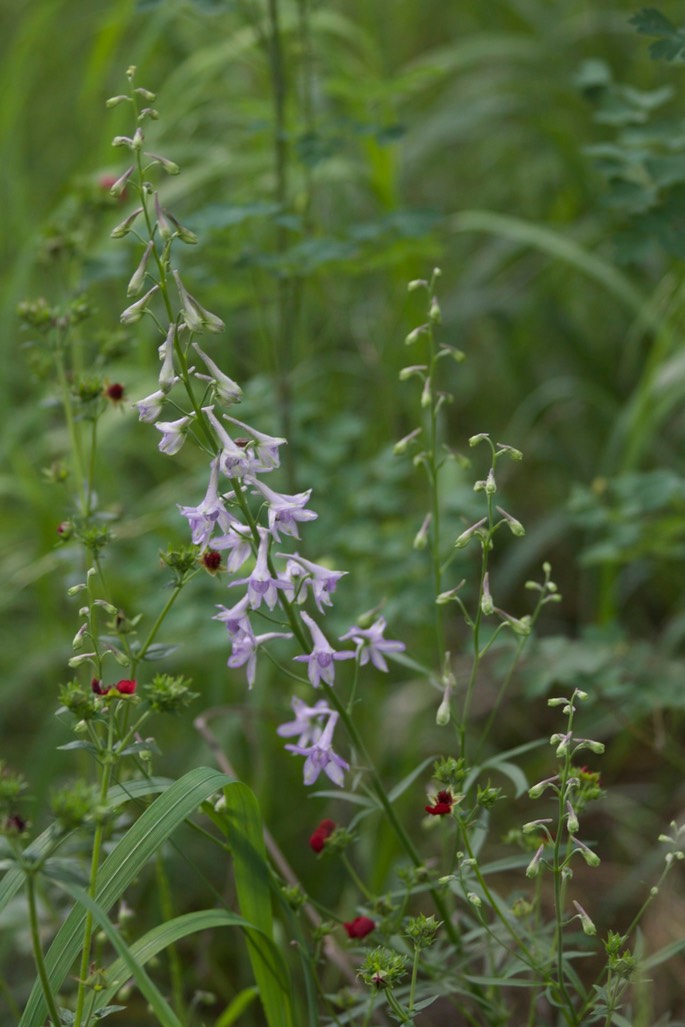
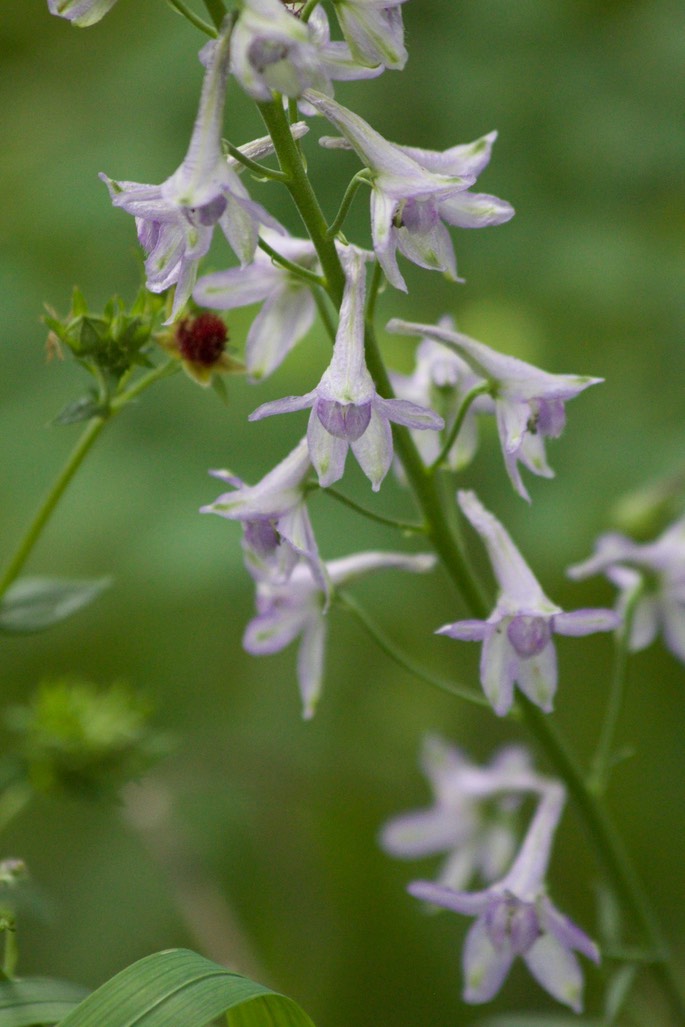
On July 27, 2015, I was lucky enough to photograph two species of Larkspur in the canyon of Carbonate Creek on the east side of the Black Range. One was the very common Rocky Mountain Larkspur, Delphinium scopulorum, which can be found easily in any mountain drainage in the Black Range at this time of year. The other was Delphinium wootonii, the Organ Mountain Larkspur, may be listed as a subspecies of D. geyeri or D. virescens in some references you use. It is much less common than the Rocky Mountain Larkspur.
Delphinium wootonii was first described by Per Axel Rydberg in 1900. During his life he was the first describer of about 1700 other plant species, he specialized in the plants of the Great Plains and Rocky Mountains. As is typical of many plant species, this one also has a common name, Wooton’s Larkspur, which is derived from the scientific name.
The United States range of the Organ Mountain Larkspur is limited to Arizona, New Mexico southern Colorado, and west Texas. In Mexico, it is found in Chihuahua, Coahuila, and Sonora.
This species is known to hybridize with both D. madrense (in the Big Bend region of Texas) and with D. carolinianum subsp. virescens. Note that D. virescens was once considered a full species and Delphinium wootonii was considered a subspecies of D. virescens.
Dieteria bigelovii
Bigelow's Tansyaster
Silver Creek Canyon Road
Black Range
New Mexico
September
Dimorphocarpa wislizeni
Spectacle Pod
San Lorenzo
New Mexico
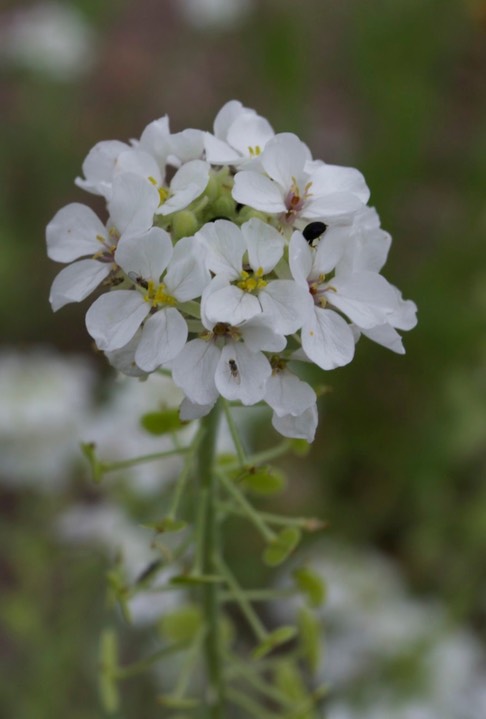
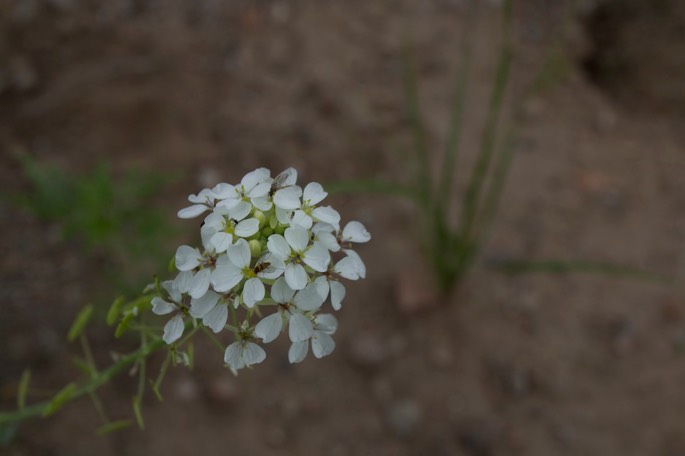
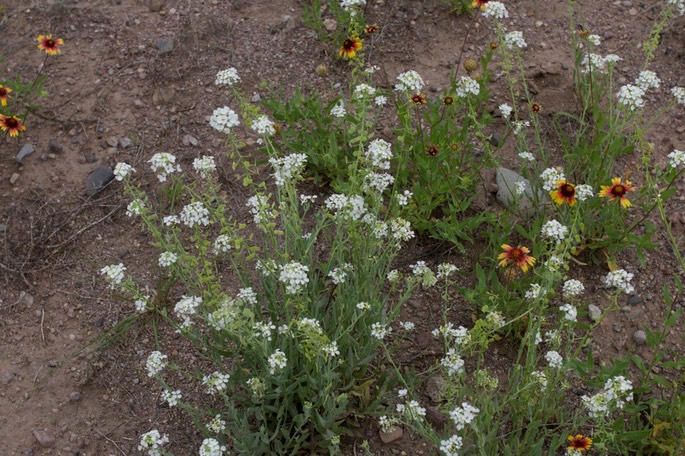
The fruit of the Spectacle Pod, Dimorphocarpa wislizeni, have the shape of stylized eye glasses. It is also called Tourist Plant. There are a limited number of scientific synonyms for this species, including; Dithyrea griffithsii, D. wislizeni, and D. w. var griffithsii. It was initially described as Dithyrea wislizeni by George Englemann in 1848. It was redescribed by Reed Clark Rollins and placed in its present status in 1979. The type specimen was collected by Friedrich Adolph Wislizenus in 1848. Wislizenus worked most extensively in what is now northern Mexico and New Mexico. There are two closely related species: D. candicans found in eastern New Mexico, northwestern Texas, and western Kansas; and D. pinnatifida found in Arizona and adjacent Mexico.
Within the United States the range of this species is restricted to the interior southwest. In Mexico, it is found in Baja California, Coahuila, Chihuahua, and Sonora.
This species was used for a variety of medicinal purposes by the indigenous peoples of North America.
